Quick Answer
AISi7Mg LPBF powder is an aluminum-silicon-magnesium powder used in laser powder bed fusion for parts that need low weight, good printability, solid mechanical performance, and useful thermal conductivity. It is usually chosen when engineers want a castable Al-Si-Mg chemistry adapted to additive manufacturing, especially for aerospace brackets, automotive housings, heat-transfer hardware, and functional prototypes. Compared with heavier ferrous or nickel alloys, it offers a stronger weight-to-performance balance for many structural and thermally loaded LPBF applications.
What Is AISi7Mg LPBF powder
In industry usage, AISi7Mg LPBF powder usually refers to the aluminum alloy more commonly designated AlSi7Mg or AlSi7Mg0.6 in material data sheets. That naming difference is worth clarifying because search behavior often uses “AISi7Mg,” while suppliers and standards literature more often use the “AlSi7Mg” form for the same alloy family. As an inference based on current supplier documentation, the target keyword maps most closely to an AlSi7Mg0.6-class aluminum powder intended for laser powder bed fusion rather than to a separate alloy designation.
This alloy sits within the heat-treatable Al-Si-Mg family used for lightweight engineering parts. Silicon improves castability and supports good melt behavior, while magnesium enables age hardening and helps raise post-build strength. In LPBF, that chemistry is attractive because it balances crack resistance, density achievement, machinability, and conductivity more effectively than many higher-strength wrought aluminum grades that are harder to print.
For additive manufacturing, AISi7Mg LPBF powder is best understood as a functional design alloy rather than a maximum-strength alloy. Users adopt it when they need lightweight, heat-treatable, and LPBF-friendly performance, especially in geometries where topology optimization, thin walls, lattice sections, or integrated cooling channels can offset the alloy’s lower absolute strength compared with steels or titanium. The vocabulary used for powder bed fusion and related AM categories is standardized in ISO/ASTM 52900 terminology.
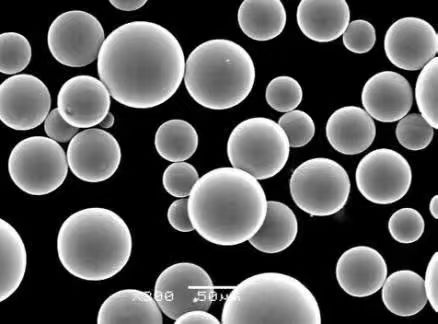
AISi7Mg LPBF Powder Within the Aluminum AM Family
Among aluminum AM feedstocks, AlSi7Mg is commonly compared with AlSi10Mg, A357 derivatives, and selected high-strength specialty aluminum powders. Relative to AlSi10Mg, the lower silicon level can improve electrical and thermal conductivity and may also support better anodizing behavior, while the magnesium content helps preserve competitive mechanical properties after appropriate post-processing. That makes AISi7Mg LPBF powder especially relevant where weight reduction and heat transfer matter together.
Why Designers Specify This Aluminum 3D Printing Powder
The alloy exists in powder form because conventional machining or casting becomes inefficient once parts require internal channels, part consolidation, or rapid design iteration. LPBF lets engineers convert a mature Al-Si-Mg chemistry into geometries that were previously impractical, including compact heat exchangers, lightweight mounting structures, fluid-handling components, and low-volume end-use hardware. For readers comparing it with adjacent materials, the broader aluminum alloy powder range shows where this chemistry sits within metal AM portfolios.
In aluminum LPBF, alloy selection is usually a trade-off among weight, conductivity, post-heat-treatment response, and crack-free printability.
Chemical Composition
AISi7Mg LPBF powder is supplied with a narrow chemistry window centered on aluminum with about 6.5-7.5 wt.% silicon and roughly 0.4-0.7 wt.% magnesium, depending on the producer and specification. Current supplier data sheets align the alloy either with EN AC-42200 or with A357/AlSi7Mg0.6-type chemistry, and both sources show the same core metallurgical pattern: moderate silicon, controlled magnesium, and low impurity levels to protect printability and part properties.
| Element | Typical Content (wt.%) | Typical Range / Limit | Metallurgical Role |
|---|---|---|---|
| Aluminum (Al) | Balance | Balance | Base metal providing low density, good corrosion behavior, and high specific stiffness |
| Silicon (Si) | 7.0 | 6.5-7.5 | Improves castability, reduces hot cracking tendency, supports fluid melt behavior in LPBF |
| Magnesium (Mg) | 0.6 | 0.4-0.7 or 0.5-0.7 | Enables precipitation hardening and strengthens the matrix after ageing |
| Iron (Fe) | 0.10 | 0.10-0.15 max | Residual impurity kept low because excess can form brittle intermetallics |
| Copper (Cu) | 0.03-0.10 | 0.03-0.20 max | Usually restricted to preserve corrosion resistance and chemistry stability |
| Manganese (Mn) | 0.05 | 0.10 max | Minor influence on intermetallic control and alloy cleanliness |
| Zinc (Zn) | 0.05 | 0.07-0.10 max | Kept low to avoid unwanted variability in mechanical and corrosion behavior |
| Titanium (Ti) | 0.10 | 0.04-0.20 or 0.18 max | Grain refinement support in feedstock metallurgy |
| Other / Total Residuals | trace | each and total limits apply | Controlled to maintain repeatability, density, and qualification confidence |
The Metallurgical Role of Silicon in AISi7Mg LPBF Powder
Silicon is the reason this alloy prints more easily than many high-strength aluminum compositions. It widens processing latitude, improves melt-pool stability, and lowers crack susceptibility relative to less silicon-rich wrought aluminum systems. In practice, that helps LPBF users achieve dense parts with fewer defects during parameter development.
Why Magnesium Matters in AlSi7Mg0.6-Class AM Powder
Magnesium is present at a much lower level than silicon, but it is critical because it gives the alloy its age-hardening response. Once printing is complete, stress relief, direct ageing, or T6-like heat treatment can shift the balance between strength, ductility, conductivity, and anisotropy. That post-processing flexibility is one reason AlSi7Mg0.6-class powders remain relevant for production-grade LPBF parts.
Residual Elements and Powder Cleanliness
Low impurity control is not only a chemistry issue; it is also a powder-quality issue. Oxygen, moisture exposure, and uncontrolled residuals can influence spreadability, porosity, and consistency in printed builds. The broader measurement challenge is exactly why the NIST powder metrology program emphasizes repeatable characterization methods for metal AM feedstocks.
Physical and Mechanical Properties
AISi7Mg LPBF powder is usually specified because it delivers a favorable property package after printing: low density, good thermal conductivity for an AM aluminum, and tensile properties strong enough for many structural lightweight applications. However, the actual numbers depend heavily on build orientation, layer thickness, scan parameters, relative density, and heat treatment condition, so the values below should be read as typical engineering ranges rather than universal guarantees.
| Property | Typical Value | Unit | Test Standard / Condition |
|---|---|---|---|
| Theoretical Density | 2.67-2.68 | g/cm³ | Typical alloy value from supplier data |
| Relative Part Density | >99.0 to >99.8 | % | Typical LPBF coupon density, optical evaluation |
| Melting Range | 557-613 | °C | Typical literature-based range reported in supplier datasheet |
| Ultimate Tensile Strength | 365-430 | MPa | Typical as-built / aged values, ASTM E8M or equivalent supplier reporting |
| Yield Strength (0.2%) | 211-250 | MPa | Typical as-built or heat-treated values |
| Elongation at Break | 6-8 | % | Typical reported build-condition range |
| Young’s Modulus | 59-76 | GPa | Typical orientation- and condition-dependent range |
| Hardness | 112 | HV10 | Typical as-built hardness |
| Thermal Conductivity | 120-190 | W/m·K | Depends strongly on heat-treatment condition |
| Coefficient of Thermal Expansion | typical 21.4 | µm/(m·°C) | Typical 20-100 °C value |
Strength, Ductility, and Build Condition
Supplier data show that AISi7Mg can land in a broad mechanical window depending on whether the sample is non-heat-treated, stress relieved, or directly aged. In 3D Systems data, ultimate strength is reported around 390-430 MPa depending on condition and direction, while EOS cites typical part values of about 365 MPa tensile strength, 250 MPa yield strength, and 6% elongation for its A357-derived grade. SLM Solutions reports lower as-built yield and elongation figures typical of an unaged condition, which highlights how strongly heat treatment changes design allowables.
Thermal Conductivity and Weight Efficiency
One of the alloy’s most practical advantages is its conductivity-to-weight ratio. 3D Systems reports thermal conductivity values from roughly 120-140 W/m·K in non-heat-treated condition up to about 180-190 W/m·K after stress relief, and SLM Solutions lists 150-170 W/m·K as a typical powder/material value. That makes AISi7Mg attractive for housings, heat exchangers, tooling inserts, and electronics-related structures where aluminum’s high specific strength and heat flow matter at the same time.
Surface Finish and Density Expectations
For qualified LPBF parameter sets, dense parts are achievable, but surface finish remains geometry dependent. SLM Solutions reports component density above 99.0% and as-built roughness values around Ra 6 µm and Rz 45 µm in its data sheet, while 3D Systems reports relative density above 99.2% with typical 99.8% under its defined processing conditions. Those numbers are solid for engineering use, but they do not remove the need for machining on sealing faces, bearing seats, or tight-tolerance interfaces.
Specifications and Available Grades
Powder specification for AISi7Mg LPBF powder is not just a chemistry statement. Buyers typically define a full incoming-powder envelope including particle size distribution, apparent density, tap density, flow behavior, oxygen limits, and morphology, then pair that envelope with a qualified LPBF parameter set for a given machine family. The exact test and reporting landscape continues to expand across the standards catalog collected in the ASTM additive manufacturing standards catalog.
| Grade / PSD Class | Typical Particle Size Distribution | Apparent Density | Tap Density | Hall Flow | Oxygen Content | Sphericity / Morphology | Typical Standards Cross-Reference |
|---|---|---|---|---|---|---|---|
| Fine LPBF Grade | 15-45 µm | typical 1.3-1.6 g/cm³ | typical 1.5-1.8 g/cm³ | typical 14-20 s/50 g | typically ≤0.15 wt.% | Highly spherical, low satellites preferred | Internal LPBF specs; powder characterization may reference ASTM/ISO feedstock methods |
| Standard LPBF Grade | 20-63 µm | typical 1.4-1.7 g/cm³ | typical 1.6-1.9 g/cm³ | typical 13-19 s/50 g | typically ≤0.15 wt.% | Spherical gas-atomized morphology | SLM Solutions lists 20-63 µm for AlSi7Mg0.6 powder |
| Broad Production Grade | 20-90 µm | typical 1.4-1.8 g/cm³ | typical 1.7-2.0 g/cm³ | typical 13-18 s/50 g | typically ≤0.15 wt.% | Spherical, classified for machine-specific reuse strategy | EOS lists generic 20-90 µm for AlF357 powder |
| Recycled / Blend-Managed LPBF Grade | machine specific | lot specific | lot specific | lot specific | tighter monitoring required | Requalified morphology and chemistry | Reuse limits are user-validated, not universal |
| Chemistry Cross-Reference Grade | AlSi7Mg / AlSi7Mg0.6 / A357 derivative | by PSD class | by PSD class | by PSD class | by purchase spec | by atomization route | Common references include EN AC-42200, EN AC-AlSi7Mg0.3, and SAE AMS 4289 in supplier data |
Particle Size Distribution for AISi7Mg LPBF Powder
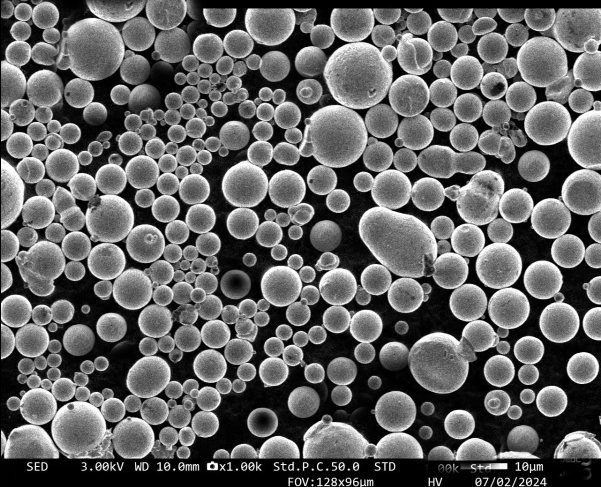
Particle size distribution strongly affects layer deposition, laser absorption behavior, and spatter sensitivity. SLM Solutions reports a 20-63 µm powder size for its AlSi7Mg0.6 feedstock, while EOS lists a generic 20-90 µm particle size distribution for AlF357, its A357-derived equivalent. That difference is not contradictory; it reflects the fact that powder producers and machine OEMs often optimize PSD around their own recoating strategy and parameter sets.
Flowability, Sphericity, and Powder Reuse
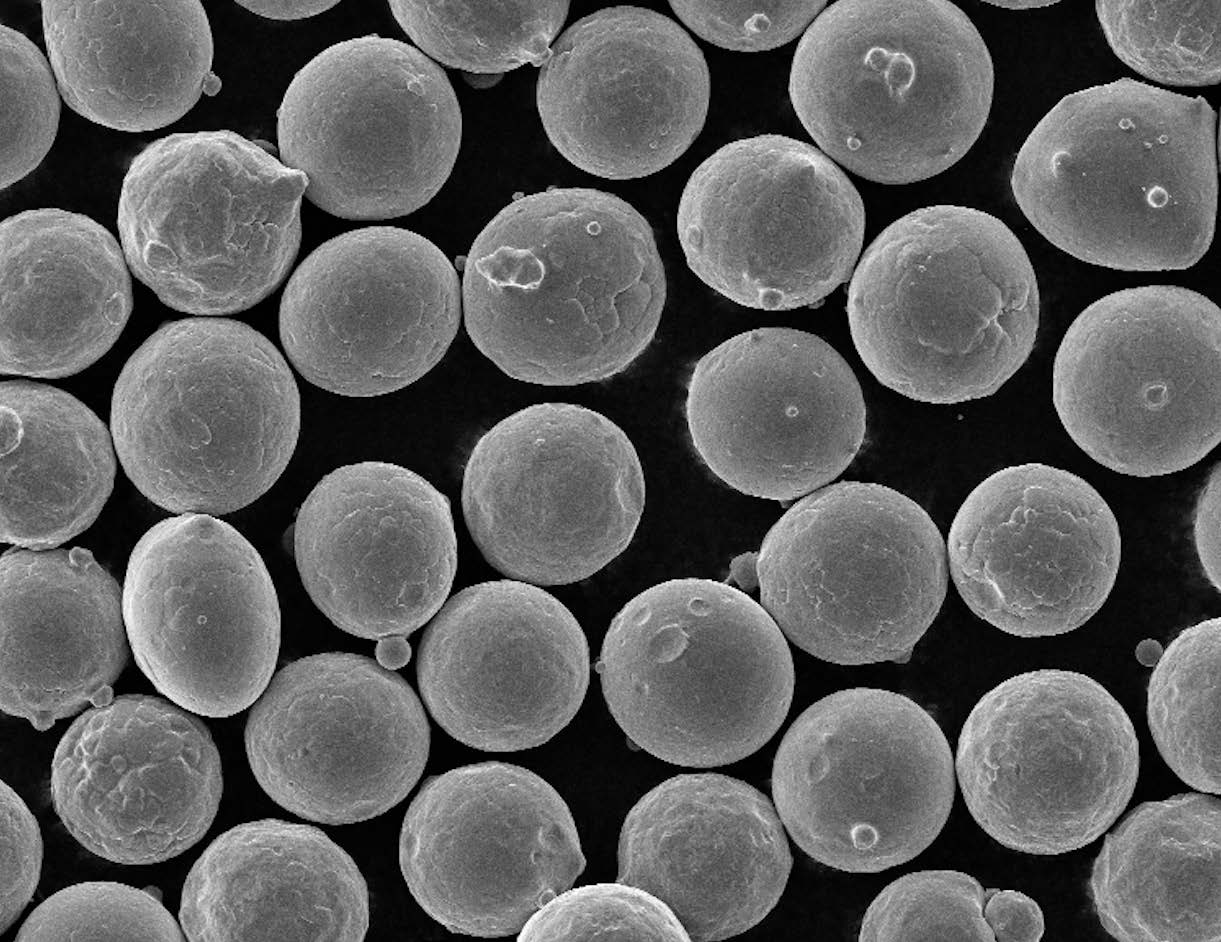
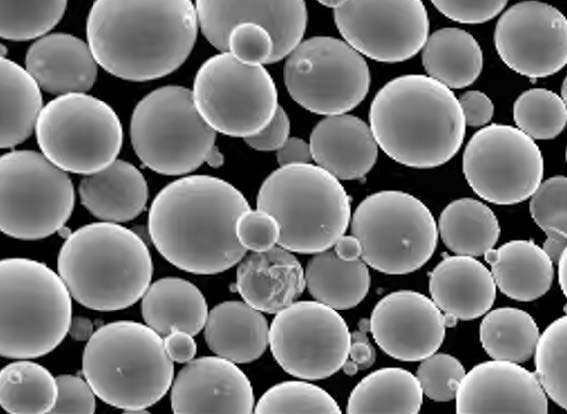
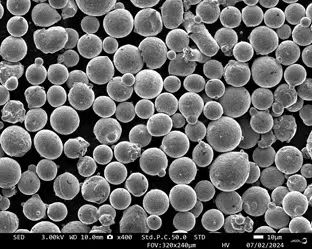
For aluminum LPBF, morphology control is critical because low-density powders can be more sensitive to spreading behavior than denser steel or nickel feedstocks. Users typically prefer spherical powder morphology with low satellite content, stable apparent density, and controlled oxygen pickup across reuse cycles. NIST’s AM powder work underscores why those feedstock metrics matter for repeatable production rather than just for incoming inspection.
Tolerance Standards and Qualification Practice
There is no single universal alloy specification that fully governs every AISi7Mg LPBF purchasing scenario. In practice, chemistry may reference EN AC or AMS conventions, while powder characterization, build qualification, and data reporting draw on AM-specific ASTM and ISO/ASTM documents. That hybrid approach is common in metal LPBF because feedstock quality, machine parameters, and post-processing are inseparable in final part performance.
Manufacturing Process
The manufacturing route used for AISi7Mg LPBF powder directly shapes particle roundness, oxide level, lot consistency, and spreadability. For aluminum alloys, inert-atmosphere atomization and post-atomization handling discipline are especially important because aluminum is highly reactive and surface oxides form readily if process control slips. As a result, the choice among GA, VIGA, PREP, and related routes is partly a quality decision and partly an economics decision.
| Process | Powder Shape / Sphericity | Oxygen Pickup | PSD Control | Throughput | Relative Cost | Typical AISi7Mg Use Case |
|---|---|---|---|---|---|---|
| Gas Atomization (GA) | High, some satellites possible | Low to moderate depending on atmosphere control | Good | High | Moderate | Main commercial route for aluminum LPBF powders |
| Vacuum Induction Gas Atomization (VIGA) | High and generally cleaner | Low | Very good | Medium to high | Moderate to high | Tighter chemistry and cleanliness control for premium lots |
| Plasma Rotating Electrode Process (PREP) | Very high sphericity | Very low | Moderate after classification | Medium | High | Less common for Al-Si-Mg, more relevant where exceptional morphology is prioritized |
| Electrode Induction Gas Atomization (EIGA) | Very high | Very low | Good to very good | Medium | High | High-purity or specialty alloy production with reduced contamination risk |
| Water Atomization | Irregular to semi-spherical | Higher oxide risk | Broad | High | Low | Generally unsuitable for LPBF-grade AISi7Mg powder |
Gas Atomization for Aluminum AM Powder
Gas atomization is the dominant route for AISi7Mg LPBF powder because it combines scalability with acceptable morphology and cost. Molten alloy is broken into droplets by high-pressure inert gas, then classified into the target PSD range for LPBF use. For most commercial Al-Si-Mg powders, this route is the baseline that balances quality and price effectively.
PREP, VIGA, and EIGA Trade-Offs
PREP produces extremely spherical particles with low contamination, but it is generally more expensive and less common for mainstream Al-Si-Mg feedstocks than for titanium or other premium alloys. VIGA and EIGA can offer improved cleanliness and tighter process control, which may matter for advanced aerospace or electronics applications, though many users still rely on well-made GA powder for production. The process categories themselves fit within the broader NIST additive manufacturing technology overview, which distinguishes powder bed fusion from directed energy deposition and other AM families.
Powder Conditioning and Packaging
After atomization, aluminum powder usually undergoes screening, blending, drying, and sealed packaging under inert or controlled conditions. That stage is not a secondary detail: PSD correction, tramp removal, and moisture control often determine whether a nominally correct alloy actually behaves like a reliable LPBF feedstock on the machine.
Applications by Industry
AISi7Mg LPBF powder is most valuable in industries that place a premium on mass reduction, thermal management, and complex geometry. It is less likely to be selected where the top priority is maximum strength at temperature or extreme corrosion resistance, but it performs well where lightweight metal design and printability are the central constraints.
Aerospace and Defense
Aerospace is a natural fit because every gram saved matters, yet many parts still need adequate stiffness, fatigue-aware design, and predictable heat-treatment response. Typical use cases include brackets, housings, ducting interfaces, instrument supports, and heat-transfer components with integrated channels. EOS explicitly lists aerospace applications among the typical use cases for its A357-derived AlF357 powder.
Automotive and E-Mobility
Automotive engineers use AISi7Mg LPBF powder for prototype housings, lightweight supports, thermal hardware, and motorsport or low-volume performance parts. 3D Systems and EOS both point to automotive relevance, which aligns with the alloy’s combination of low density, good mechanical properties, and thermal conductivity. In early-stage vehicle programs, LPBF is particularly useful before casting tools or high-volume production dies become economical.
Heat Exchangers, Tooling, and Electronics
The alloy is also well suited to compact heat exchangers and cooling-related hardware because its conductivity is materially better than many structural AM alloys. 3D Systems specifically highlights heat exchanger applications, and the lower silicon level relative to AlSi10Mg is reported to improve conductivity and anodization quality. That makes AISi7Mg relevant for thermal plates, electronics enclosures, and mold inserts where heat flow is central to function.
Industrial Equipment and Functional Prototyping
In industrial settings, AISi7Mg is often chosen for parts that need real mechanical and thermal performance but not the qualification burden of aerospace-critical hardware. Pump and valve subcomponents, machine covers, robotic end-effectors, and fixture elements are common examples. The mix of sectors served across additive manufacturing is broadly reflected in the industrial AM applications overview, which spans aerospace, medical, electronics, and other engineering fields.
Comparison with Alternative Materials
Material selection rarely happens in isolation. Engineers considering AISi7Mg LPBF powder usually compare it with AlSi10Mg, A357/AlF357 equivalents, titanium alloys, and sometimes copper alloys depending on whether the main target is weight reduction, conductivity, corrosion behavior, or absolute strength.
| Material | Density (g/cm³) | Typical Strength Level | Thermal Conductivity | Corrosion Resistance | Relative Cost | LPBF Printability | Best-Fit Use Case |
|---|---|---|---|---|---|---|---|
| AISi7Mg LPBF powder | 2.67-2.68 | Moderate to high for castable Al alloy | High for LPBF aluminum | Good | Medium | Good | Lightweight structural parts, heat-transfer hardware, housings |
| AlSi10Mg powder | ~2.67 | Moderate to high | Moderate, typically lower than AlSi7Mg-class | Good | Medium | Excellent | General-purpose aluminum LPBF parts |
| A357 / AlF357 powder | ~2.67 | Moderate to high, heat-treatable | High | Good | Medium to high | Good | Aerospace and automotive aluminum parts with similar chemistry |
| Ti-6Al-4V powder | ~4.43 | High | Low | Excellent | High | Excellent | High-strength lightweight parts where cost is secondary |
| Cu-based AM powder | ~8.9 | Low to moderate structurally | Very high | Good | Medium to high | More demanding due to reflectivity | Extreme thermal or electrical conductivity applications |
AISi7Mg Versus AlSi10Mg
This is the most common comparison. According to 3D Systems, the lower silicon content of AlSi7Mg0.6 can improve electrical and thermal conductivity relative to AlSi10Mg while preserving similar mechanical performance through magnesium-assisted strengthening. Designers who prioritize heat flow or anodized finish quality may therefore lean toward AISi7Mg, while users wanting the most widely qualified aluminum LPBF ecosystem may still default to AlSi10Mg.
AISi7Mg Versus A357-Derived Powders
In practice, many market offerings treat AlSi7Mg0.6 and A357-derived LPBF materials as very close relatives. EOS describes AlF357 as a beryllium-free derivative of A357 and states compliance with AlSi7Mg0.6 chemistry under SAE AMS 4289, which is why many buyers regard these products as part of the same functional selection space. Differences are more likely to appear in PSD, machine parameters, and heat-treatment data than in the base alloy concept.
AISi7Mg Versus Titanium or Copper
Titanium wins when absolute specific strength, temperature capability, and corrosion resistance justify much higher material cost and lower conductivity. Copper-based powders are the opposite extreme: excellent for thermal and electrical performance, but much heavier and often more difficult to process with stable LPBF productivity. In that context, AISi7Mg occupies a useful middle ground between thermal function and structural lightness. Readers planning alloy trade-offs across multiple families may also compare the titanium powder portfolio and copper alloy powder offerings when conductivity or specific strength becomes the dominant design driver.
Our Company
Shanghai Truer Technology Co., Ltd., the company behind am-printing.com, was established in 2009 and launched its additive manufacturing business in 2019. According to its published company information, Truer works across metal powder equipment and powder supply, including SEBM equipment, PREP powder-making equipment, GA-related powder production, and spherical powders spanning titanium-, nickel-, cobalt-, copper-, aluminum-, and stainless-based systems, alongside alloys such as TiNi, TiTa, TiAl, TiNbZr, and CoCrMo. Its stated operating scope also covers process support from testing through finished products for SLM, SEBM, DED, laser cladding, powder metallurgy, MIM, HIP, spraying, welding, and coating in sectors such as medical, aerospace, nuclear power, electronics, hand tools, and remote-control vehicle components, with additional corporate background on the company profile page.
FAQ
Q1. Is AISi7Mg LPBF powder the same as AlSi7Mg or AlSi7Mg0.6?
In most market usage, yes. Current supplier data sheets use AlSi7Mg or AlSi7Mg0.6 nomenclature, so “AISi7Mg LPBF powder” is best understood as a search-term variant that points to the same Al-Si-Mg alloy family rather than to a separate chemistry.
Q2. How does AISi7Mg LPBF powder compare with AlSi10Mg?
AISi7Mg is commonly chosen when users want conductivity and anodization behavior somewhat better than AlSi10Mg while still retaining strong LPBF processability. AlSi10Mg remains more ubiquitous in the AM market, but AlSi7Mg0.6-class materials can be a better fit for heat-transfer parts and some lightweight functional components.
Q3. What particle size range is typical for AISi7Mg LPBF powder?
Commercial LPBF grades are commonly centered around fine spherical fractions such as 20-63 µm, while some suppliers also report broader generic ranges such as 20-90 µm depending on machine strategy and powder management practice. Final acceptance limits should be tied to the actual printer platform and validated recoating behavior rather than copied from a generic data sheet alone.
Q4. Can AISi7Mg LPBF parts be heat treated after printing?
Yes. Supplier documentation describes stress relief, direct ageing, and T6-like heat-treatment approaches for AlSi7Mg0.6-class materials, and these routes can improve yield strength, ductility balance, conductivity, or anisotropy depending on the cycle used.
Q5. Which industries benefit most from AISi7Mg LPBF powder?
Aerospace, automotive, thermal-management, and industrial equipment users are among the strongest candidates because they value low mass, good printability, and meaningful thermal conductivity. The alloy is especially useful where internal channels, part consolidation, or low-volume production make LPBF more attractive than casting or machining.
Q6. When should engineers avoid AISi7Mg LPBF powder?
It is usually not the first choice when the job demands maximum high-temperature strength, ultra-high corrosion resistance, or conductivity far beyond aluminum-alloy levels. In those cases, titanium, nickel, stainless, or copper-based AM powders may be more appropriate, even though they carry different cost, density, and process trade-offs. For application-specific material screening or powder availability, users typically move from alloy review to the engineering contact page after defining geometry, property targets, and machine type.