Quick Answer
4340 alloy steel powder is a nickel-chromium-molybdenum low-alloy steel feedstock used in metal additive manufacturing when designers need high hardenability, strong post-heat-treatment performance, and reliable toughness in demanding parts. It is usually the right choice for high-strength AM components such as gears, shafts, tooling, and aerospace hardware that must handle heavy loads or impact. Compared with simpler carbon steels, it offers a better balance of strength, toughness, and section hardening, especially after quench-and-temper processing.
What Is 4340 alloy steel powder
4340 alloy steel powder is the powder form of AISI/SAE 4340, a medium-carbon nickel-chromium-molybdenum steel widely known for its use in highly stressed engineering parts. In conventional manufacturing, 4340 has long been specified for aircraft landing gear parts, transmission elements, crankshafts, connecting rods, and heavy-duty fasteners because it combines through-hardening capability with good impact resistance. In additive manufacturing, the same metallurgical logic carries over: users choose it when the finished part must be strong, heat treatable, and structurally dependable.
Within steel taxonomy, 4340 belongs to the family often described as an ultra-high-strength low-alloy steel when processed to elevated hardness and strength levels. It is not a stainless steel, tool steel, or maraging steel, although it overlaps with those classes in some applications. What distinguishes it is its combination of moderate carbon content with nickel, chromium, and molybdenum additions that support strong hardenability and useful toughness after heat treatment.
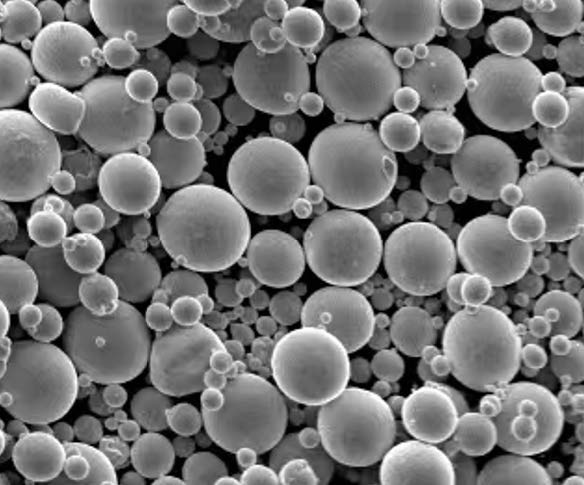
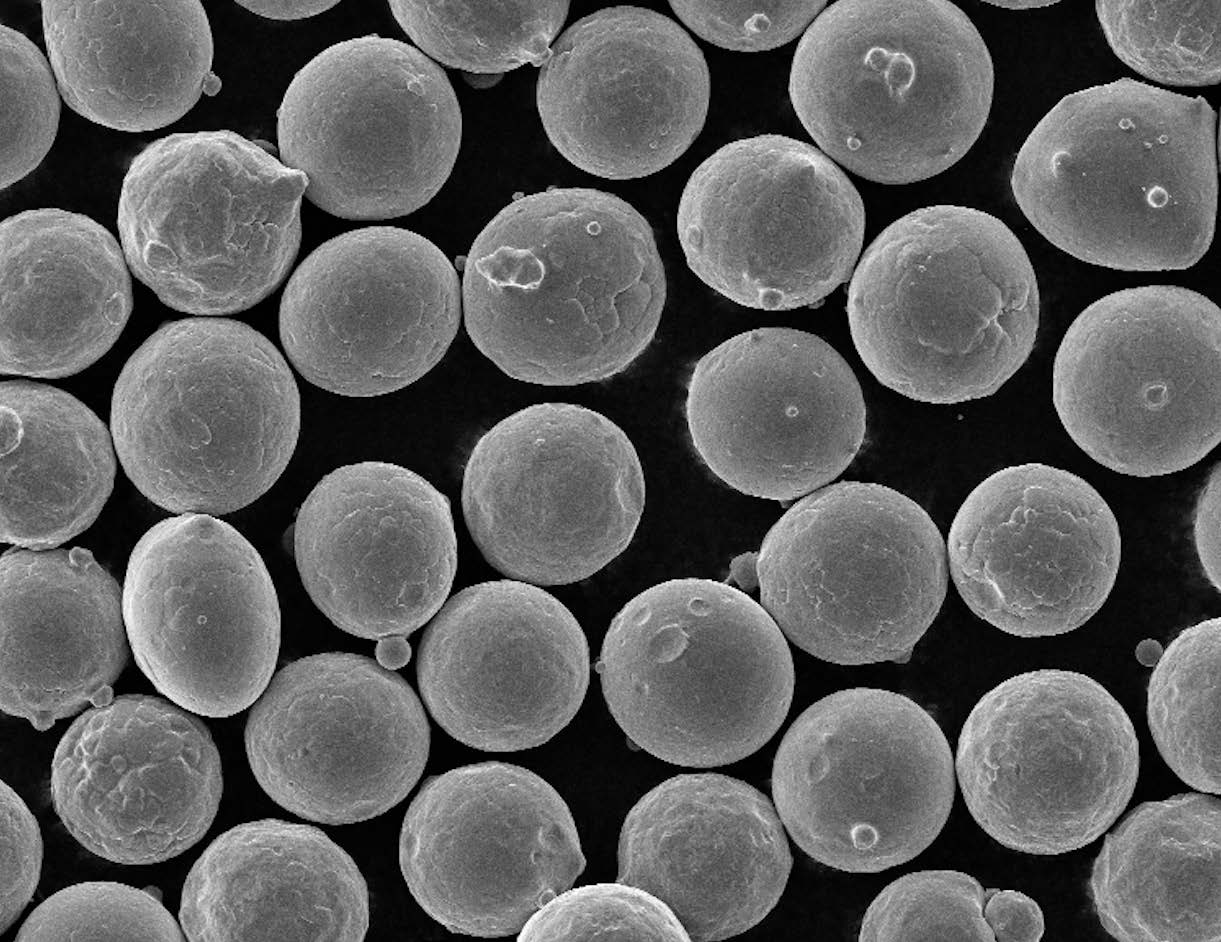
For additive manufacturing, 4340 is typically supplied as a spherical AM powder for laser powder bed fusion, directed energy deposition, binder jetting, or related powder-based processes. The powder form allows the alloy to be built into complex geometries that would be expensive to machine from billet, especially when internal features, mass optimization, near-net-shape blanks, or repairable high-value components are involved. In metal AM terminology defined by ISO/ASTM 52900 terminology, the feedstock is part of the broader category of metallic powder used in powder bed fusion and directed energy deposition.
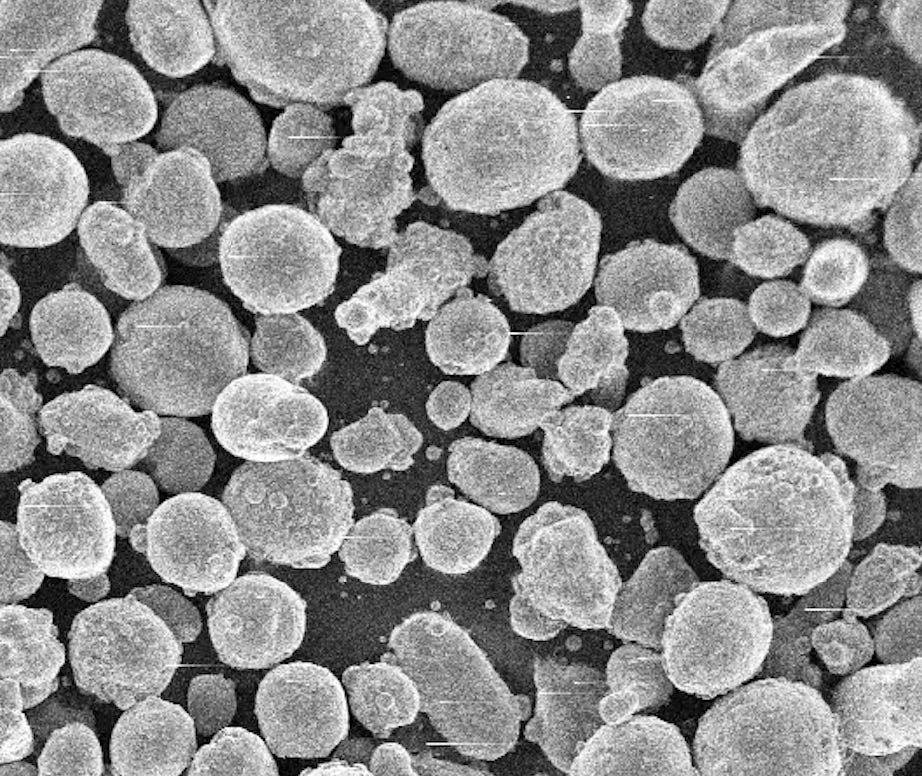
4340 Alloy Steel Powder in the Low-Alloy Steel Family
Compared with 4140, 4130, or 8620, 4340 generally sits higher on the performance ladder for severe-duty parts. Nickel improves toughness, chromium contributes hardenability and wear response, and molybdenum helps strength retention while reducing temper embrittlement sensitivity. That combination gives 4340 a reputation for deep hardenability, meaning larger or more complex sections can develop useful properties farther from the surface after quench and temper.
Why This 3D Printing Powder Exists
The case for 4340 in AM is strongest when geometry and performance matter at the same time. Conventional forging and machining are still efficient for simple shafts or blocks, but AM becomes attractive when the part needs internal oil passages, lightweight webs, repair geometry, design consolidation, or rapid iteration before tooling is justified. Engineers comparing this grade with adjacent ferrous options often start from a broader iron-based alloy powder catalog to decide whether low-alloy steel, stainless steel, or another system better fits the load case.
Distinguishing Features Versus Other AM Steels
Unlike martensitic stainless grades, 4340 does not offer corrosion resistance as a primary attribute. Unlike maraging steels, it does not rely on a very low-carbon precipitation-hardening route. Its value is more traditional and still highly relevant: a robust Ni-Cr-Mo chemistry, wide heat-treatment flexibility, and a heat-treat response that can be tuned for toughness, wear, or maximum strength depending on section size and duty cycle.
4340 is selected less for corrosion resistance and more for the ability to reach high strength without giving up practical toughness.
Chemical Composition
The chemistry of 4340 alloy steel powder is closely controlled because the alloy’s behavior depends on maintaining the right balance between carbon, nickel, chromium, molybdenum, manganese, and silicon. Powder producers usually target the standard wrought 4340 composition window while also monitoring oxygen, nitrogen, and trace contamination that can affect flowability, fusion behavior, and final mechanical consistency in additive manufacturing.
| Element | Typical Content (wt.%) | Standard Range / Limit | Metallurgical Role |
|---|---|---|---|
| Carbon (C) | 0.40 | 0.38–0.43 | Enables martensite formation, raises hardness and strength after quench and temper |
| Manganese (Mn) | 0.75 | 0.60–0.80 | Improves hardenability and supports deoxidation during melting |
| Silicon (Si) | 0.25 | 0.15–0.30 | Acts as a deoxidizer and contributes modest strength |
| Nickel (Ni) | 1.80 | 1.65–2.00 | Improves toughness, hardenability, and fatigue resistance |
| Chromium (Cr) | 0.80 | 0.70–0.90 | Increases hardenability, wear response, and tempering performance |
| Molybdenum (Mo) | 0.25 | 0.20–0.30 | Supports strength at hardness, resists softening, reduces temper embrittlement tendency |
| Phosphorus (P) | 0.015 | 0.035 max | Controlled impurity; excess harms toughness |
| Sulfur (S) | 0.010 | 0.040 max | Controlled impurity; excess can reduce ductility and fatigue performance |
| Iron (Fe) | Balance | Balance | Base metal matrix |
Carbon and Martensitic Potential in 4340 Alloy Steel Powder
Carbon is central to the alloy’s final property envelope. At roughly 0.40 wt.%, it gives 4340 enough carbon to develop high hardness and strength after quenching, while still retaining a workable toughness range when tempered properly. In AM parts, that matters because designers often depend on post-build heat treatment to transform the as-built microstructure into a service-ready condition.
Why Nickel, Chromium, and Molybdenum Matter
The Ni-Cr-Mo combination is what separates 4340 from simpler medium-carbon steels. Nickel improves notch toughness and fatigue performance, chromium raises hardenability and supports wear behavior, and molybdenum helps the steel maintain strength after tempering. Together they produce the strength-to-toughness balance that keeps 4340 relevant in high-duty mechanical systems.
Residual Control in Additive Manufacturing Powder
In powder form, chemistry control extends beyond the classic bulk alloy range. Oxygen, nitrogen, moisture exposure, and nonmetallic inclusions can affect spreadability, porosity, and crack sensitivity during processing. That is why AM users treat powder characterization as a process-control issue, not just a purchasing specification, an approach consistent with NIST additive manufacturing research.
Physical and Mechanical Properties
The physical and mechanical properties of 4340 alloy steel powder-derived parts depend strongly on build route and post-processing. As-built laser powder bed fusion material may show residual stress, directional microstructure, and hardness levels that differ from wrought bar, while stress relief, quench-and-temper, or hot isostatic pressing can move the alloy toward more conventional 4340 performance. For that reason, the values below should be read as typical engineering ranges for the alloy system rather than single guaranteed numbers for every AM machine and heat-treatment route.
| Property | Typical Value | Unit | Test Standard / Condition |
|---|---|---|---|
| Density | 7.83–7.85 | g/cm³ | Typical alloy value |
| Solidus / Melting Onset | around 1415 | °C | Typical alloy range |
| Liquidus / Complete Melting | around 1460 | °C | Typical alloy range |
| Ultimate Tensile Strength | 1080–1965 | MPa | Typical quenched-and-tempered range, condition dependent |
| Yield Strength (0.2%) | 745–1650 | MPa | Typical quenched-and-tempered range |
| Elongation at Break | 8–18 | % | Depends on hardness and temper condition |
| Hardness | 28–55 | HRC | Heat-treatment dependent |
| Young’s Modulus | around 205 | GPa | Typical room-temperature value |
| Thermal Conductivity | around 42–45 | W/m·K | Typical room-temperature value |
| Impact Toughness | condition dependent | J | Usually verified by Charpy testing where required |
Strength and Toughness Window
A major reason engineers use 4340 is that it can occupy a very broad strength range. Lower tempering hardness supports better ductility and toughness for shock-loaded parts, while higher hardness conditions can push strength much higher when section size, stress state, and fatigue design permit it. This flexibility gives AM users room to optimize the same near-net-shape geometry for different service conditions without changing the alloy family.
Hardness, Wear, and Heat Treatment
As-built 4340 AM parts are rarely left in the raw condition for demanding applications. Typical routes include stress relief after printing, followed by austenitizing, quenching, and tempering to achieve the target hardness and core strength. If the component also needs surface wear resistance, additional finishing steps such as nitriding, carburizing alternatives, or coating may be considered depending on distortion limits and final dimensions.
Thermal and Structural Behavior
4340 is much denser than aluminum or titanium powders, but that density comes with high stiffness and solid load-bearing capability. Its thermal conductivity is moderate for a steel, high enough to support predictable heat-treatment response but not high enough to make it a thermal-management alloy. In practice, designers select it for heavily loaded mechanical duty rather than for lightweighting or heat exchanger service.
Specifications and Available Grades
In purchasing terms, 4340 alloy steel powder is defined by more than chemistry alone. Users typically specify particle size distribution, apparent density, tap density, Hall flow, oxygen content, morphology, lot traceability, and intended AM process route. Because standards for wrought 4340 are mature while AM feedstock standards are still process-focused, qualification often combines conventional alloy references with machine-specific powder acceptance criteria and internal build-validation protocols.
| Grade / PSD Class | Typical Particle Size Distribution | Apparent Density | Tap Density | Hall Flow | Oxygen Content | Sphericity / Morphology | Typical Standards Cross-Reference |
|---|---|---|---|---|---|---|---|
| Fine LPBF Grade | 15–45 µm | 4.2–4.8 g/cm³ | 4.8–5.4 g/cm³ | 15–22 s/50 g | typically ≤0.10 wt.% | Highly spherical, low satellites preferred | Chemistry aligned to AISI/SAE 4340; AM feedstock qualified to user procedure |
| Standard LPBF Grade | 15–53 µm | 4.3–4.9 g/cm³ | 4.9–5.5 g/cm³ | 14–21 s/50 g | typically ≤0.10 wt.% | Spherical gas-atomized powder | Used for many laser powder bed systems |
| DED Grade | 45–105 µm | 4.4–5.0 g/cm³ | 5.0–5.7 g/cm³ | 13–20 s/50 g | typically ≤0.12 wt.% | Spherical to near-spherical | Sized for blown-powder deposition |
| Coarse AM / Cladding Grade | 53–150 µm | 4.5–5.1 g/cm³ | 5.1–5.8 g/cm³ | 13–19 s/50 g | typically ≤0.12 wt.% | Spherical, broader distribution | Used in laser cladding and some repair workflows |
| Chemistry Cross-Reference | process specific | process specific | process specific | process specific | by purchase spec | by atomization route | Common references include AISI 4340, SAE 4340, UNS G43400, with approximate parallels to EN24 or 34CrNiMo6 depending on procurement practice |
Particle Size Distribution for 4340 Alloy Steel Powder
Particle size distribution directly affects layer thickness, packing behavior, laser absorption, and recoating consistency. Fine 15–45 µm or 15–53 µm cuts are typical for laser powder bed fusion, while coarser fractions are more suitable for DED, cladding, or repair. The same chemistry can therefore be sold in multiple PSD classes, each intended for a different energy-delivery method.
Standards, Equivalents, and Qualification Practice
4340 is fundamentally a well-known wrought alloy, but additive manufacturing qualification is still specific to machine, parameter set, and post-processing route. Buyers may reference AISI or SAE composition, use internal powder-acceptance methods aligned with ASTM materials standards, and verify process terminology against the AM vocabulary used in international standards. Equivalent commercial naming may also vary by region, so the exact purchase specification should identify chemistry, PSD, morphology, and target process in the same document.
Supply Forms and Related Steel Powder Families
Suppliers may offer 4340 as virgin LPBF powder, DED powder, or broader powder-engineering grades for cladding and repair. It often sits alongside maraging steels, stainless steels, and other low-alloy systems used for high-strength builds. Readers reviewing cross-family options can compare it with other metal AM categories through the industrial powder application pages, especially when the part may be redesigned around a different alloy class.
Manufacturing Process
The quality of 4340 alloy steel powder depends heavily on how the powder is made. Because AM feedstock must flow consistently, pack uniformly, and melt predictably, particle morphology and surface chemistry are as important as alloy composition. In practice, the most relevant industrial routes are gas atomization and its vacuum-controlled variants, while PREP and EIGA are used more selectively when exceptional cleanliness or morphology is needed.
| Process | Powder Shape / Sphericity | Oxygen Pickup | PSD Control | Throughput | Relative Cost | Typical 4340 Use Case |
|---|---|---|---|---|---|---|
| Gas Atomization (GA) | High, some satellites possible | Low to moderate | Good | High | Moderate | Main commercial route for LPBF, DED, and cladding grades |
| Vacuum Induction Gas Atomization (VIGA) | Very high, cleaner surface condition | Low | Very good | Medium to high | Moderate to high | Premium lots needing tight cleanliness and consistency |
| Plasma Rotating Electrode Process (PREP) | Excellent sphericity, very smooth particles | Very low | Moderate after classification | Medium | High | Specialty spherical powder where morphology is prioritized |
| Electrode Induction Gas Atomization (EIGA) | Very high | Very low | Good to very good | Medium | High | High-purity specialty production with low contamination risk |
| Water Atomization | Irregular to semi-irregular | Higher oxide risk | Broad | High | Low | Usually unsuitable for LPBF-grade 4340 |
Gas Atomization for 4340 Additive Manufacturing Powder
Gas atomization is the baseline route for most commercial 4340 AM powder. Molten alloy is disintegrated by high-pressure inert gas into droplets that solidify into mostly spherical particles, then screened and classified into the required PSD. The method scales well, supports good lot economics, and is usually the first choice for laser powder bed fusion and directed energy deposition grades.
PREP, VIGA, and EIGA Trade-Offs
PREP can generate exceptionally round particles with low contamination, which is useful when flowability and cleanliness are prioritized over cost. VIGA improves melt cleanliness and atmosphere control, which can be important for critical mechanical applications or research-grade feedstock. EIGA offers another low-contamination route, though for 4340 the decision is often economic because high-quality GA powder already satisfies many industrial needs.
Conditioning, Screening, and Packaging
Atomization alone does not make a finished AM powder. Producers still need to screen out oversize and undersize fractions, remove agglomerates, verify flow and density, and package the lot to limit moisture uptake and contamination. Companies active across equipment and metal feedstocks, including those with experience in PREP and GA systems such as the company background section, typically treat powder conditioning as part of the total process rather than as an afterthought.
Why Morphology Matters for 4340 Powder
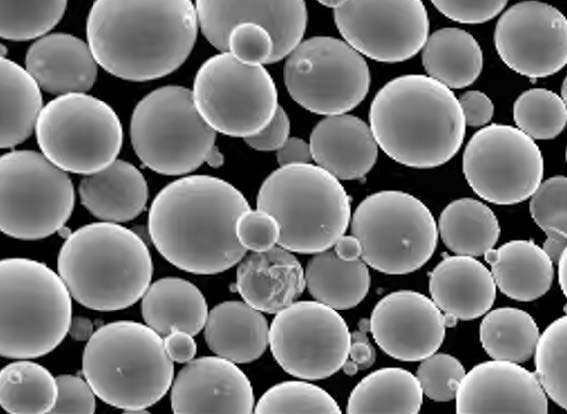
Powder shape influences both machine behavior and final part quality. More spherical particles tend to spread more evenly, build denser layers, and reduce the risk of inconsistent local energy absorption. The relationship between feedstock quality and powder bed behavior is one reason engineers often consult a powder bed fusion process overview when comparing LPBF feedstocks across steel, aluminum, and titanium systems.
Applications by Industry
4340 alloy steel powder is most valuable in industries that need high strength, good fatigue resistance, and reliable heat-treatment response in parts with difficult geometry. It is not the default choice for corrosive chemical exposure or biomedical implants, but it is a strong candidate for severe-duty structural hardware where mechanical loading dominates material selection.
Aerospace and Defense Hardware
Aerospace has used wrought 4340 for decades in heavily stressed hardware, and that heritage makes the alloy attractive for selected AM parts as well. Likely use cases include secondary structural brackets, actuator subcomponents, load-bearing fittings, gearbox elements, and repairable hardware where toughness matters. Qualification is stricter than for prototype work, but the alloy’s conventional pedigree helps engineers understand the heat-treatment pathway and failure modes.
Automotive, Motorsports, and Driveline Components
In automotive and motorsports environments, 4340 is relevant for gears, shafts, hubs, yokes, and highly loaded fixtures. Additive manufacturing is especially compelling when internal lubrication paths, weight-optimized webs, or low-volume variants are needed. Instead of machining complex blanks from oversized forgings, users can print near-net-shape geometries and then finish-machine critical surfaces.
Tooling, Fixtures, and Industrial Machinery
Tooling is another practical use case, particularly for custom dies, jigs, grippers, repair sleeves, and wear-prone machine components that need a tough steel core. 4340 can also serve as a base material for hybrid manufacturing, where a steel preform is additively built and then machined, heat treated, or surface engineered. In production environments, the alloy’s familiar post-processing behavior lowers the qualification barrier compared with less common steel chemistries.
Oil and Gas, Energy, and Heavy Equipment
High-load shafts, couplings, pump parts, and field-repair hardware are potential candidates in energy and oil-and-gas service, provided corrosion conditions are compatible with low-alloy steel. The alloy is particularly useful where impact, shock loading, or fatigue matters more than exposure to chloride or sour environments. In more aggressive media, stainless or nickel-based alternatives may still be preferred.
Medical and Specialized Sectors
4340 is generally not a primary medical implant alloy because corrosion resistance and biocompatibility requirements typically favor titanium, cobalt-chromium, or stainless systems designed for implant service. However, it may still be used for external tooling, orthopedic instrument fixtures, or non-implant mechanical hardware. When application needs shift toward corrosion-resistant or biocompatible systems, users often compare with a titanium alloy powder range rather than trying to force-fit 4340 into unsuitable environments.
Comparison with Alternative Materials
Choosing 4340 alloy steel powder usually means comparing it with other ferrous and nonferrous AM materials that solve similar problems in different ways. The key questions are whether the design needs more corrosion resistance, lower density, simpler heat treatment, or lower raw material cost. The table below frames 4340 against common alternatives used in metal additive manufacturing.
| Material | Density (g/cm³) | Typical Strength Level | Heat-Treatability | Corrosion Resistance | Relative Cost | AM Printability | Best-Fit Use Case |
|---|---|---|---|---|---|---|---|
| 4340 alloy steel powder | 7.83–7.85 | High to very high | Excellent, quench and temper | Low to moderate | Medium | Good with qualified parameters | High-load gears, shafts, fittings, tooling |
| 4140 alloy steel powder | around 7.85 | Moderate to high | Very good | Low to moderate | Lower | Good | General engineering parts with lower alloy cost |
| Maraging steel powder | around 8.0 | Very high | Excellent, age hardening | Moderate | High | Excellent | Precision tooling and very high-strength AM parts |
| 17-4 PH stainless powder | around 7.75 | High | Good, precipitation hardening | Good | Medium to high | Very good | Structural parts needing strength plus corrosion resistance |
| Ti-6Al-4V powder | around 4.43 | High specific strength | Good | Excellent | High | Excellent | Lightweight aerospace or medical components |
4340 Versus 4140
4140 is a logical lower-cost comparison because it is also a Cr-Mo steel with broad industrial use. The trade-off is that 4340 generally offers better hardenability and toughness at high strength because of its nickel addition. For small, lightly stressed parts the difference may be modest, but for thicker sections or shock-loaded duty 4340 often earns its premium.
4340 Versus Maraging Steel
Maraging steel is a common AM benchmark because it prints well and reaches very high strength after ageing. However, maraging systems are more specialized and often costlier, while 4340 remains attractive where conventional quench-and-temper behavior is acceptable and the user wants a familiar engineering steel rather than a dedicated tooling alloy. The choice often depends on whether dimensional stability during ageing outweighs the appeal of a more traditional low-alloy steel route.
4340 Versus 17-4 PH Stainless
If corrosion resistance matters, 17-4 PH can be a better fit than 4340 while still providing strong mechanical performance. But where the environment is controlled and peak toughness or hardened-section performance is the priority, 4340 can remain preferable. Designers balancing these trade-offs may also review adjacent classes such as nickel-based alloy powders when both strength and harsh-environment resistance become critical.
Our Company
Shanghai Truer Technology Co., Ltd., which operates am-printing.com, was established in 2009 and created its additive manufacturing business in 2019. According to its company information, the business integrates 3D printing powder-making equipment and related services with metal powder supply, including SEBM equipment, PREP powder-making equipment, GA-related powder production, and spherical powders across titanium-, nickel-, cobalt-, copper-, aluminum-, and stainless steel systems, as well as alloys such as TiNi, TiTa, TiAl, TiNbZr, and CoCrMo. Its stated process scope includes SLM, SEBM, DED, laser cladding, powder metallurgy, MIM, HIP, cold and hot spraying, welding, and coating, serving sectors such as medical, aerospace, nuclear power, 3C electronics, hand tools, and remote control car components.
FAQ
Q1. Is 4340 alloy steel powder suitable for laser powder bed fusion?
Yes, 4340 alloy steel powder can be used in laser powder bed fusion when supplied with the right particle size distribution, morphology, and cleanliness. Success depends on parameter development, residual-stress control, and a post-build heat-treatment plan rather than on chemistry alone.
Q2. How does 4340 alloy steel powder compare with 4140 powder?
4340 generally offers higher hardenability and better toughness at elevated strength levels because it contains nickel in addition to chromium and molybdenum. For highly stressed parts or thicker sections, that difference can be significant after quench and temper.
Q3. What particle size is typical for 4340 alloy steel powder in AM?
For LPBF, common cuts are around 15–45 µm or 15–53 µm, while DED and cladding often use 45–105 µm or 53–150 µm. The right range depends on layer thickness, nozzle design, energy input, and the intended machine platform.
Q4. Does 4340 alloy steel powder require heat treatment after printing?
In most demanding applications, yes. Stress relief is commonly followed by austenitizing, quenching, and tempering so the part can achieve the required hardness, strength, and toughness balance.
Q5. Is 4340 alloy steel powder corrosion resistant?
Not in the way stainless or nickel-based alloys are. It has only limited inherent corrosion resistance, so surface protection, controlled environments, or a different alloy family may be necessary if the part will face moisture, salts, or aggressive process media.
Q6. Which industries benefit most from 4340 alloy steel powder?
Aerospace, motorsports, industrial tooling, heavy machinery, and selected energy applications are among the strongest fits. These sectors value the alloy when parts must handle high loads, impact, or fatigue and when additive manufacturing can reduce machining waste or enable more complex geometry.