Quick Answer
Hastelloy C276 welding powder is a nickel-molybdenum-chromium alloy powder used for welding, cladding, repair, and metal additive manufacturing in highly corrosive environments. It is typically chosen when components must resist pitting, crevice corrosion, chloride attack, and reducing media that would quickly damage standard stainless steels. For industrial users, the main reason to select this powder is its unusually broad corrosion resistance combined with good weldability, making it a practical option for chemical processing, offshore, pollution-control, and high-reliability repair applications.
What Is Hastelloy C276 welding powder
Hastelloy C276 welding powder is the powder form of alloy C-276, a well-known corrosion-resistant nickel alloy usually identified with UNS N10276. In industrial materials language, it belongs to the family of nickel-molybdenum-chromium alloys developed for severe chemical service rather than for maximum hardness or lightweighting. The powder is used as a feedstock for thermal spray, laser cladding, directed energy deposition, powder welding, and in some cases additive manufacturing routes that require highly corrosion-resistant nickel alloys.
The alloy became important because many process industries needed one material that could tolerate both oxidizing and reducing environments, especially where local corrosion mechanisms were more dangerous than general metal loss. C276 earned that role because its nickel-rich matrix supports broad chemical stability, while molybdenum and chromium improve resistance to localized attack in aggressive media. That balance gives the powder a clear identity: it is less about extreme high-temperature strength than about durable service in hostile wet-corrosion and mixed-chemistry systems.
Hastelloy C276 Welding Powder in the Nickel-Alloy Family
Within the nickel alloy family, C276 sits closer to corrosion-service materials than to precipitation-hardened aerospace superalloys. Engineers do not normally choose it for the same reasons they choose Inconel 718 or similar structural AM powders. Instead, they specify it when the service environment includes chlorides, acids, contaminated process streams, or scrubber chemistry that threatens ordinary stainless and many lower-alloy filler metals.
Why This Corrosion-Resistant Powder Exists
The alloy was designed to solve multi-environment corrosion problems without forcing users to switch materials from one section of plant equipment to another. In practical terms, that means it is often selected for overlay repair, weld buildup, and near-net-shape features on vessels, valves, pumps, flanges, nozzles, and piping hardware. Under the terminology used by ISO/ASTM 52900 additive manufacturing vocabulary, powder feedstock quality and process route are critical because particle morphology directly affects deposition stability and defect control.
What Distinguishes C276 from Related Alloys
The most important distinction is breadth of corrosion resistance. Alloy 625 is often easier to source and offers good weldability, but C276 is usually preferred in harsher reducing environments and in applications where localized chloride corrosion is a major design concern. That is why broad-spectrum corrosion resistance is the phrase most often associated with Hastelloy C276 welding powder.
In severe process service, the best filler metal is often the one that prevents localized attack rather than the one with the highest headline strength.
Chemical Composition
The chemistry of Hastelloy C276 welding powder is built around nickel, molybdenum, chromium, and tungsten, with iron controlled as a secondary constituent and carbon and silicon held at low levels. This combination is deliberate: nickel provides the corrosion-resistant matrix, molybdenum greatly improves resistance to pitting and crevice corrosion, chromium supports oxidizing media resistance, and tungsten enhances performance in reducing chemical environments. For welding powder users, minor-element control matters because excessive residuals can affect weld soundness, cracking tendency, and corrosion consistency from lot to lot.
| Element | Typical Content (wt.%) | Standard Range / Limit | Metallurgical Role |
|---|---|---|---|
| Nickel (Ni) | Balance | Balance | Base matrix; provides overall corrosion resistance and metallurgical stability |
| Molybdenum (Mo) | 16.0 | 15.0–17.0 | Major contributor to pitting, crevice, and reducing-acid resistance |
| Chromium (Cr) | 15.5 | 14.5–16.5 | Improves oxidizing corrosion resistance and supports passive film formation |
| Iron (Fe) | 5.0 | 4.0–7.0 | Controlled constituent that influences cost and processing without dominating behavior |
| Tungsten (W) | 3.8 | 3.0–4.5 | Supports resistance in aggressive reducing environments and localized corrosion |
| Cobalt (Co) | 1.0 | 2.5 max | Minor constituent; usually residual or controlled low addition |
| Manganese (Mn) | 0.3 | 1.0 max | Deoxidation support during melting and powder production |
| Vanadium (V) | 0.2 | 0.35 max | Minor controlled element; limited effect at standard levels |
| Silicon (Si) | 0.05 | 0.08 max | Controlled low to preserve corrosion and weldability balance |
| Carbon (C) | 0.005 | 0.01 max | Very low to reduce harmful carbide precipitation and corrosion sensitization |
The Role of Nickel, Molybdenum, and Chromium
The alloy’s performance is driven mainly by the Ni-Mo-Cr system. Nickel gives the matrix stability needed across a wide chemical range, while molybdenum raises resistance to localized chloride attack and to reducing acids. Chromium then broadens the service envelope by improving behavior in oxidizing conditions where some Ni-Mo alloys alone would be less robust.
Low Carbon and Weldability
C276 is notable for its very low carbon content. That chemistry helps reduce the risk of harmful grain-boundary precipitation during welding, especially in thermal cycles that would sensitize some other corrosion-resistant materials. For welding powder, this is one of the reasons the alloy is widely regarded as a low-carbon nickel welding alloy with dependable fabrication behavior.
Residual Control in Powder Production
For powder users, composition control extends beyond the major alloying elements. Oxygen, nitrogen, moisture pickup, and contamination from handling can all affect deposit quality and corrosion response. Process engineers often align internal test methods with broader NIST materials measurement resources when developing powder acceptance plans for critical applications.
Physical and Mechanical Properties
Hastelloy C276 welding powder is not selected because it delivers the highest strength in the nickel-alloy category. Its value comes from combining useful mechanical performance with exceptional resistance to chemically aggressive environments after welding or deposition. As with all powder-fed processes, final properties depend on deposition route, dilution, porosity, post-deposition heat treatment, and whether the result is a clad layer, repair zone, or fully built geometry.
| Property | Typical Value | Unit | Test Standard / Condition |
|---|---|---|---|
| Density | 8.85–8.90 | g/cm³ | Typical alloy value at room temperature |
| Melting Range | 1325–1370 | °C | Typical alloy melting interval |
| Ultimate Tensile Strength | 690–790 | MPa | Typical room-temperature deposited or wrought-equivalent range |
| Yield Strength (0.2%) | 280–355 | MPa | Typical room-temperature range |
| Elongation | 35–50 | % | Typical ductility in properly processed condition |
| Hardness | 85–100 | HRB | Typical alloy condition, process dependent |
| Young’s Modulus | around 205 | GPa | Typical room-temperature value |
| Thermal Conductivity | around 9.5–11 | W/m·K | Typical near room temperature |
| Electrical Resistivity | around 1.25–1.30 | µΩ·m | Typical room-temperature value |
| Maximum Useful Oxidation Service | up to about 1040 | °C | Oxidizing service, application dependent |
Strength Profile of Hastelloy C276 Welding Powder
At room temperature, the alloy offers moderate-to-good tensile properties with relatively high ductility for a highly alloyed corrosion-resistant material. This makes it suitable for overlays and weld deposits that need to absorb stress without brittle failure. In most real installations, however, corrosion life matters far more than the last increment of strength.
Corrosion Service Versus Structural Superalloy Duty
C276 can tolerate elevated temperatures, but it is not primarily a turbine-disc or creep-dominant structural alloy. Users should think of it first as a chemical-service alloy and only secondarily as a heat-resistant material. That distinction helps prevent misapplication when comparing it with precipitation-strengthened nickel AM powders.
Hardness, Dilution, and Deposit Behavior
The hardness of a C276 deposit is usually modest unless dilution, work hardening, or service exposure alters the microstructure. For cladding and repair, substrate mixing can shift the final chemistry enough to influence both hardness and corrosion behavior. That is why welding procedure development for corrosion-critical overlays usually focuses on both chemistry retention and defect control rather than on hardness alone.
Specifications and Available Grades
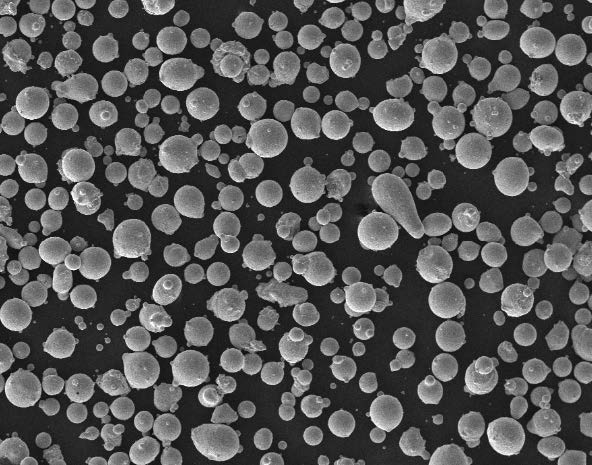
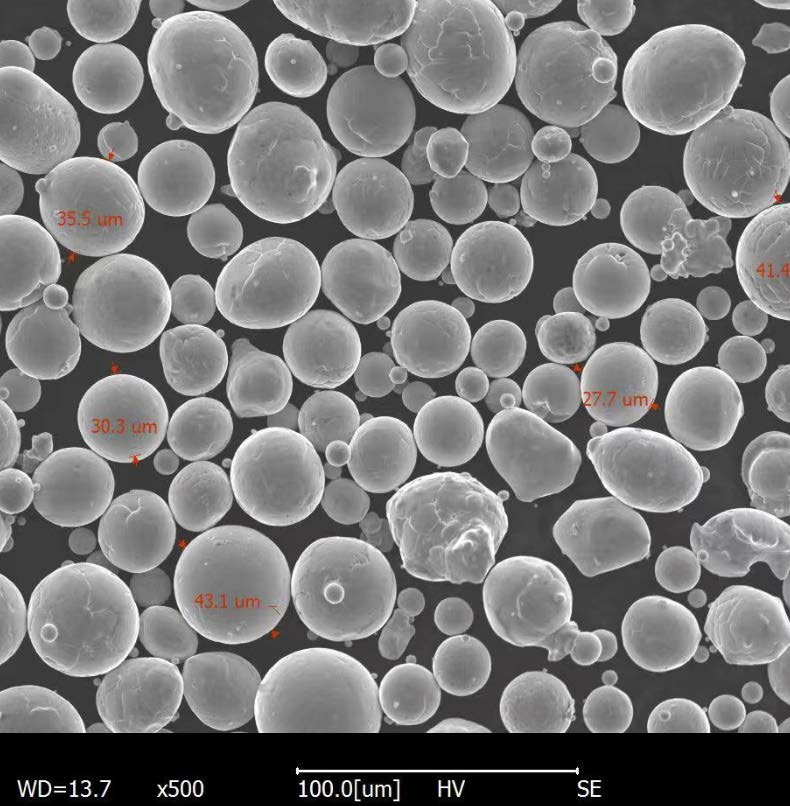
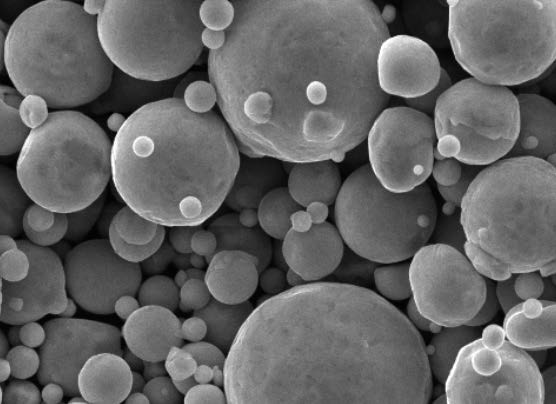
Commercial Hastelloy C276 welding powder is usually ordered by chemistry, particle size distribution, morphology, oxygen level, and intended process route. Fine spherical powder is favored for laser-based additive and cladding systems, while coarser cuts are common in plasma transferred arc, laser deposition, and some thermal spray workflows. Buyers frequently supplement nominal alloy designation with internal requirements for Hall flow, apparent density, tap density, and allowable residual gases.
| Grade / PSD Class | Typical Particle Size Distribution | Apparent Density | Tap Density | Hall Flow | Oxygen Content | Sphericity / Morphology | Typical Standards Cross-Reference |
|---|---|---|---|---|---|---|---|
| Fine Laser Grade | 15–45 µm | 4.6–5.3 g/cm³ | 5.0–5.8 g/cm³ | 14–22 s/50 g | typically ≤0.08 wt.% | Highly spherical, low satellites preferred | Chemistry aligned to UNS N10276 and common Ni alloy procurement practice |
| Standard AM Grade | 15–53 µm | 4.7–5.4 g/cm³ | 5.1–5.9 g/cm³ | 14–21 s/50 g | typically ≤0.08 wt.% | Spherical gas-atomized powder | Used for LPBF research, laser deposition, and fine cladding |
| DED / PTA Grade | 45–105 µm | 4.8–5.5 g/cm³ | 5.2–6.0 g/cm³ | 13–20 s/50 g | typically ≤0.10 wt.% | Spherical to near-spherical | Common for directed deposition and powder-fed welding |
| Coarse Cladding Grade | 53–150 µm | 4.9–5.6 g/cm³ | 5.4–6.1 g/cm³ | 13–19 s/50 g | typically ≤0.10 wt.% | Spherical, broader PSD accepted | Used for laser cladding and wear/corrosion overlays |
| Standards Row | process specific | method specific | method specific | method specific | purchase-spec based | route specific | Test practice may reference ASTM powder test methods and related ISO powder characterization approaches |
Hastelloy C276 Welding Powder PSD Selection
Powder size must match the process physics. Fine distributions offer better layer spreading and more stable melt interaction in laser powder bed or fine-beam applications, but they may carry greater oxidation sensitivity and handling risk. Coarser cuts feed more reliably in nozzle-based deposition and generally support higher build or repair rates.
Common Quality Metrics for Spherical Powder
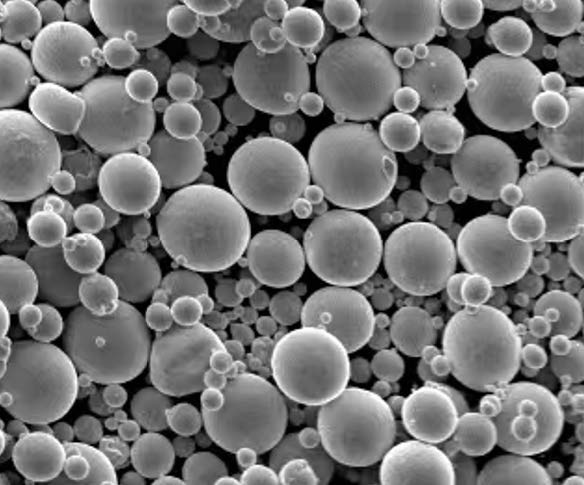
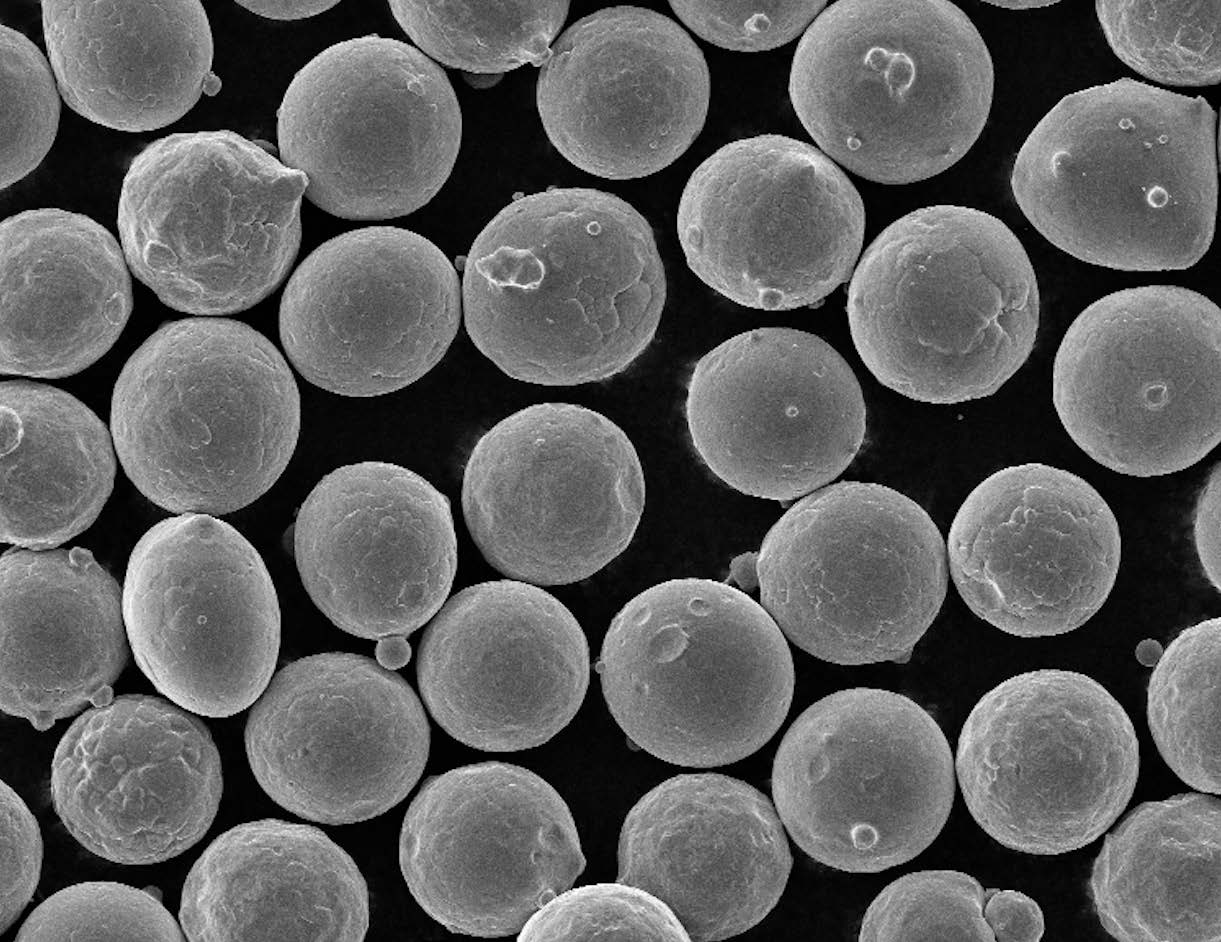
Beyond chemistry, users usually care about morphology, internal porosity, satellite content, and flow consistency. Apparent density and tap density help predict packing behavior, while Hall flow offers a quick view of feedability in powder delivery systems. For critical corrosion overlays, lot-to-lot reproducibility is often more valuable than squeezing one more percentage point of deposition efficiency.
Available Grades in a Broader Powder Portfolio
Suppliers active in chemical-service and welding powders often carry C276 alongside complementary nickel grades for cladding, DED, and additive manufacturing. Buyers comparing corrosion-focused alloys with heat-resistant or general-purpose Ni systems frequently review a broader nickel-based powder catalog before final material selection.
Manufacturing Process
The route used to make Hastelloy C276 welding powder strongly influences morphology, cleanliness, flowability, and cost. Because corrosion-resistant nickel alloys are sensitive to contamination and process consistency, powder manufacturing is usually performed under controlled atmospheres with tight post-atomization classification. The most relevant routes are gas atomization, vacuum induction gas atomization, PREP, and EIGA, while water atomization is generally unsuitable for premium spherical welding and AM feedstocks.
| Process | Powder Shape / Sphericity | Oxygen Pickup | PSD Control | Throughput | Relative Cost | Typical C276 Use Case |
|---|---|---|---|---|---|---|
| Gas Atomization (GA) | High, some satellites possible | Low to moderate | Good | High | Moderate | Mainstream welding, cladding, and AM powder production |
| Vacuum Induction Gas Atomization (VIGA) | Very high and cleaner | Low | Very good | Medium to high | Moderate to high | Premium corrosion-service spherical powder |
| Plasma Rotating Electrode Process (PREP) | Excellent smooth spheres | Very low | Moderate after sieving | Medium | High | Specialty high-flow powder for demanding deposition |
| Electrode Induction Gas Atomization (EIGA) | Very high | Very low | Good to very good | Medium | High | Low-contamination powder for critical applications |
| Water Atomization | Irregular to semi-irregular | Higher oxide risk | Broad | High | Low | Usually not preferred for high-end C276 welding powder |
Gas Atomization for Hastelloy C276 Welding Powder
Gas atomization remains the most practical route for commercial volumes because it balances cost, quality, and scalable production. Molten alloy is disintegrated by high-pressure inert gas and solidifies into mostly spherical particles, which are then sieved into target fractions. For most laser cladding and deposition work, this route offers a good combination of flowability and economic efficiency.
PREP, VIGA, and EIGA Trade-Offs
Vacuum-assisted methods reduce contamination risk and often improve consistency, which matters when corrosion performance has little tolerance for chemistry drift. PREP can produce very round particles with strong flow behavior, but it is typically more expensive and may require tighter control of usable size yield. In real procurement decisions, the best route depends on whether the priority is deposition cost, morphology, low oxygen, or premium reproducibility.
Post-Processing of Spherical Nickel Powder
After primary powder production, sieving, blending, magnetic separation where appropriate, and controlled packaging are essential steps. Even a chemically correct alloy can underperform if the size distribution is too broad or if the powder absorbs contamination during storage and handling. Providers with both equipment and feedstock experience, as outlined on the supplier background page, often place strong emphasis on this downstream conditioning stage.
Why Manufacturing Route Affects Corrosion Performance
Powder quality does not only affect buildability; it can indirectly affect the final corrosion result through porosity, unmelted particles, inclusion content, and dilution sensitivity. In corrosive service, small metallurgical defects can become initiation sites for localized attack. That is why powder cleanliness and morphology are part of the corrosion discussion, not just the production discussion.
Applications by Industry
Hastelloy C276 welding powder is used where repairability and corrosion resistance are more valuable than low raw-material cost. In many industries, the powder serves as a surfacing or restoration material rather than as a bulk structural alloy. This application logic is especially strong in plants where replacing a large component is more expensive than rebuilding its exposed surface with a qualified corrosion-resistant deposit.
Chemical Processing and Fine Chemicals
Chemical processing is the most natural home for C276 welding powder. Reactors, scrubbers, flue-gas handling systems, vessels, impellers, pumps, and pipe transitions often face mixed-acid or chloride-bearing conditions that challenge stainless steels. Powder-fed cladding allows engineers to protect critical surfaces while limiting the use of expensive full-section alloy.
Oil, Gas, and Offshore Systems
Offshore and upstream service environments can combine chlorides, sour conditions, stagnant crevices, and corrosion-fatigue concerns. C276 overlays are used on valves, seal areas, and repair zones where local corrosion resistance is more important than base-metal strength alone. In subsea or coastal systems, this can extend service life in areas vulnerable to localized attack.
Environmental and Pollution-Control Equipment
Wet scrubbers, ducting, stack liners, and waste-treatment hardware often operate in chemically variable environments. Those conditions reward materials that do not fail when the chemistry shifts from oxidizing to reducing or when contaminants concentrate in crevices. C276 has long been associated with that kind of uncertainty-tolerant corrosion performance.
Power, Nuclear, and Heavy Industry
Certain components in power generation and related heavy industries use nickel alloy overlays to handle corrosive process condensates, high-purity water excursions, or aggressive maintenance cycles. The powder is also relevant to rebuilds on expensive components where a corrosion-resistant surface is sufficient. Users comparing such applications with other material classes sometimes also review adjacent systems such as cobalt alloy powder options or refractory metal powder families when heat, wear, or chemistry priorities shift.
Additive Manufacturing and Repair-First Use Cases
Although C276 can be used in AM workflows, its strongest industrial role is often hybrid: build, repair, clad, or reinforce only the area that needs premium corrosion resistance. This makes it well suited to low-volume industrial parts, maintenance operations, and geometry restoration. In those cases, process qualification must consider dilution, substrate compatibility, and service-specific corrosion testing.
Comparison with Alternative Materials
Material selection for Hastelloy C276 welding powder usually involves a narrow set of corrosion-resistant nickel alloys and premium stainless alternatives. The real question is rarely whether C276 is “good,” but whether its corrosion advantage justifies its higher cost and density. For many users, the answer depends on the severity of chlorides, acids, stagnant crevices, and multi-chemistry exposure.
| Material | Density (g/cm³) | Corrosion Resistance | Relative Strength | Relative Cost | Printability / Weldability | Typical Best-Fit Use Case |
|---|---|---|---|---|---|---|
| Hastelloy C276 welding powder | 8.85–8.90 | Excellent in broad chemical service | Moderate to good | High | Good to very good | Severe chemical processing, scrubbers, overlays, repair |
| Inconel 625 powder | around 8.44 | Very good | Good | Medium to high | Excellent | Marine, general corrosion service, versatile AM and cladding |
| Hastelloy C22 powder | around 8.69 | Excellent, especially oxidizing chlorides | Moderate to good | High | Good | Highly oxidizing plus chloride environments |
| 316L stainless steel powder | around 8.0 | Moderate | Moderate | Low | Excellent | General corrosion service and cost-sensitive builds |
| Alloy 59 powder | around 8.6 | Excellent | Moderate | High | Good | Strong corrosion resistance in oxidizing media |
C276 Versus Inconel 625
Inconel 625 is widely used because it balances corrosion resistance, weldability, and availability. However, in severe reducing environments or where pitting and crevice resistance must be pushed further, C276 often becomes the safer option. The trade-off is usually higher raw-material cost.
C276 Versus Hastelloy C22
C22 and C276 are frequently compared because both are premium corrosion-resistant nickel alloys. C22 is especially strong in oxidizing aqueous environments, while C276 is often chosen as the broader all-around alloy when both reducing and oxidizing conditions may appear in the same service history. Final selection depends on the actual process chemistry, not just the alloy family name.
C276 Versus Stainless Steel
For many engineers, the first screening step is whether high-alloy nickel is needed at all. If the environment is only mildly corrosive, duplex or austenitic stainless steels can be more economical. But once chloride-driven localized corrosion, mixed acids, or upset conditions enter the picture, localized corrosion resistance often becomes the decisive reason to move from stainless to C276.
Our Company
Shanghai Truer Technology Co., Ltd., which operates am-printing.com, was established in 2009 and created its additive manufacturing business in 2019. Based on the company information provided, its scope combines 3D printing powder-making equipment and powder supply, including SEBM equipment, PREP powder-making equipment, GA-related capabilities, and spherical metal powders covering nickel-based, cobalt-based, titanium-based, copper-based, aluminum-based, stainless steel, and named alloy systems such as TiNi, TiTa, TiAl, TiNbZr, and CoCrMo. The stated process coverage includes SLM, SEBM, DED, laser cladding, powder metallurgy, MIM, HIP, cold and hot spraying, welding, and coating, serving sectors such as medical, aerospace, nuclear power, 3C electronics, hand tools, and remote control cars; its published operating model also includes testing, customization, and scale manufacturing support, with inquiries handled through the technical contact channel.
FAQ
Q1. Is Hastelloy C276 welding powder mainly for additive manufacturing or for cladding and repair?
It is used in both, but industrially it is more often associated with cladding, overlay welding, and repair than with large-scale serial AM production. That is because many users only need C276 on the exposed surface rather than throughout the full cross-section of a part.
Q2. What makes Hastelloy C276 welding powder better than 316L stainless for harsh chemical service?
The key difference is resistance to pitting, crevice corrosion, and aggressive mixed chemistries that can overwhelm standard stainless steels. In chloride-rich or acid-bearing environments, C276 usually provides a much larger safety margin against localized attack.
Q3. Which particle sizes are common for Hastelloy C276 welding powder?
Fine grades such as 15–45 µm or 15–53 µm are typical for laser-based additive and precision cladding processes. Coarser fractions such as 45–105 µm or 53–150 µm are commonly used for directed energy deposition, plasma transferred arc, and higher-deposition cladding work.
Q4. Does Hastelloy C276 welding powder require heat treatment after deposition?
It depends on the process, dilution level, residual stress, and service requirement. Many overlays are used in the as-deposited or stress-relieved condition, but critical components may still require post-deposition thermal treatment and corrosion qualification testing.
Q5. Can Hastelloy C276 welding powder handle hydrochloric acid and chlorides?
It is widely chosen for chloride-bearing and many reducing-acid environments because of its strong resistance to localized corrosion. Even so, real performance depends on concentration, temperature, aeration, contamination, and whether the attack is continuous, cyclic, or crevice-driven.
Q6. Is Hastelloy C276 welding powder expensive compared with other welding alloys?
Yes, it is generally a premium nickel alloy powder, especially when supplied as tightly controlled spherical feedstock for laser or additive processes. Users usually justify the cost when failure risk, downtime, or replacement expense is far higher than the extra cost of a corrosion-resistant deposit.