간단한 답변
7075 Aluminium alloy powder is a high-strength Al-Zn-Mg-Cu feedstock developed for lightweight metal additive manufacturing parts that need stronger mechanical performance than common cast-style aluminum AM alloys. It is chosen for 3D printing when low weight, high specific strength, and post-heat-treatment potential matter more than maximum printability. In practice, it is most attractive for aerospace, motorsport, performance tooling, and advanced industrial components, but it demands tight control of powder quality, processing parameters, and cracking mitigation.
What Is 7075 Aluminium alloy powder
7075 Aluminium alloy powder is the powder-metallurgy and additive-manufacturing form of the well-known 7xxx wrought aluminum alloy family, whose strength is primarily derived from zinc as the main alloying element, with magnesium and copper supporting age hardening. In conventional metallurgy, 7075 is associated with aircraft-grade bar, plate, and forged products because it combines relatively low density with very high strength after heat treatment. Turning that chemistry into a printable spherical powder is attractive because it promises lighter, stronger AM parts than many silicon-rich aluminum powders can deliver.
The importance of this alloy lies in its position between classic aluminum lightweighting and high-performance structural engineering. Whereas AlSi10Mg became the mainstream AM aluminum because it prints reliably, 7075 entered additive manufacturing as a more demanding but more ambitious material. Engineers evaluate it when the design target is not merely “an aluminum part” but a weight-critical part that needs 높은 비강도 and the freedom of near-net-shape printing.
7075 Aluminium Alloy Powder Within the 7xxx Family
The 7xxx family is defined by zinc-rich aluminum chemistries designed for precipitation hardening. In wrought form, 7075 is one of the best-known representatives of that family and is often discussed alongside 7050, 7068, and related aerospace alloys. Powder versions aim to preserve that strength potential while adjusting morphology, particle size distribution, and oxygen control to suit laser powder bed fusion, directed energy deposition, and other AM routes.
Why 7075 Is Different from AlSi10Mg and Other Common AM Aluminum Powders
The key distinction is metallurgical behavior during solidification. Silicon-rich alloys such as AlSi10Mg were widely adopted because they solidify with less cracking and a broader process window. By contrast, 7075 has a more difficult freezing range and is much more prone to solidification cracking, evaporation losses, and microsegregation, which is why it remains a specialist material even though its strength potential is higher.
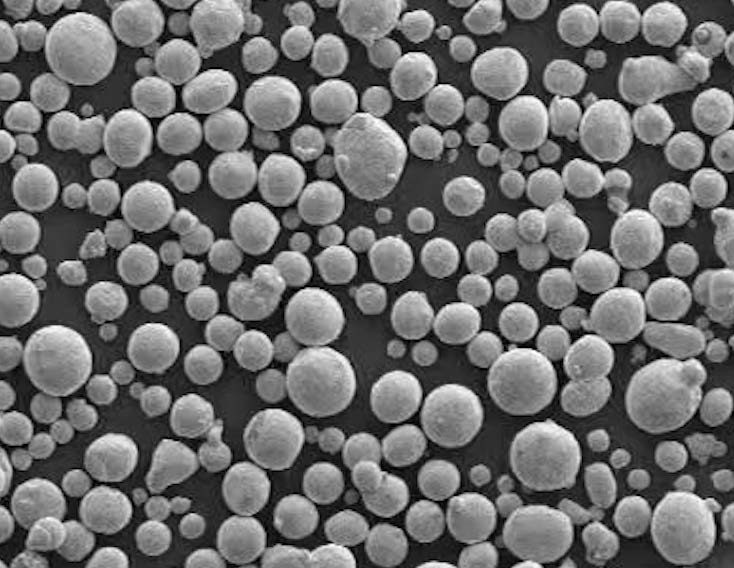
Why the Powder Form Matters
Powder form makes 7075 viable for geometries that are impractical in forged or machined stock, such as lightweight brackets with organic topology, integrated lattice supports, internal cooling structures, and multi-function housings. The AM process language used to describe these routes is standardized in the ISO/ASTM 52900 terminology framework, which helps buyers distinguish between powder bed fusion, directed energy deposition, and related process families. For 7075, powder is not just a feedstock format; it is the route that allows aerospace-style strength ambitions to intersect with geometry-driven design.
In aluminum AM, 7075 is valued less for ease of printing than for the possibility of pairing low mass with much higher strength than silicon-rich alloys typically provide.
화학 성분
7075 Aluminium alloy powder follows the chemistry envelope of the conventional 7075 alloy system, though powder suppliers may control certain residuals more tightly for additive manufacturing. The alloy is fundamentally an Al-Zn-Mg-Cu material, with chromium used in small amounts for grain-structure control and resistance to stress-corrosion tendencies in wrought metallurgy. In AM powder qualification, chemistry must be evaluated both against nominal alloy limits and against the practical realities of vaporization, oxidation, and process-induced composition drift.
| 요소 | 대표적인 구성 (wt.%) | Common Range (wt.%) | 야금학적 역할 |
|---|---|---|---|
| 알루미늄(Al) | balance | balance | Primary matrix; provides low density, corrosion behavior, and base ductility |
| 아연(Zn) | 5.6–6.1 | 5.1–6.1 | Main strengthening element; drives precipitation hardening with Mg |
| 마그네슘(Mg) | 2.1–2.5 | 2.1–2.9 | Works with Zn to form strengthening phases; improves age-hardening response |
| 구리(Cu) | 1.3–1.8 | 1.2–2.0 | Raises strength and hardness; influences heat-treatment response |
| 크롬(Cr) | 0.18–0.25 | 0.18–0.28 | Helps control grain structure and supports microstructural stability |
| 철(Fe) | 0.15 max typical | 최대 0.50 | Residual impurity; excess can reduce toughness and ductility |
| 실리콘(Si) | 0.10 max typical | 최대 0.40 | Residual impurity in 7075; unlike AlSi alloys, it is not the primary design feature |
| Manganese / Titanium / Others | 추적 | low controlled residuals | Secondary grain control or residual effects depending on melt practice |
The chemistry explains why 7075 behaves so differently from more common AM aluminum grades. Zinc and magnesium create the precipitation-hardening potential that makes the alloy valuable, but they also contribute to a narrower processing window during rapid melting and resolidification. That is why suppliers of spherical feedstock pay attention not only to alloy percentages but also to lot-to-lot stability, evaporation-sensitive elements, and oxygen pickup.
Role of Zinc in 7075 Aluminium Alloy Powder
Zinc is the main strength-building addition in 7075. Along with magnesium, it forms the basis for age-hardening reactions that deliver the alloy’s high-performance reputation. In powder-bed fusion, however, zinc-rich chemistry also raises concern about vaporization and composition shifts at high energy density, so print development often balances density against excessive evaporation.
Role of Magnesium and Copper in 7075 AM Powder
Magnesium supports the precipitation sequence and strongly affects attainable strength after post-build heat treatment. Copper contributes additional hardening, but it can also influence corrosion behavior and process sensitivity. Together, these elements are responsible for 7075’s reputation as a precipitation hardening alloy rather than a simple castable aluminum chemistry.
Why Residual Control Matters
Residual elements such as iron and silicon are not usually the headline features of 7075, yet they can materially affect toughness, ductility, and cracking tendency. For that reason, serious powder qualification looks beyond nominal chemistry tables and includes internal limits on contamination, oxide burden, and fines management. Readers comparing alloy families often use a broader aluminum AM powder catalog to see how 7075 sits relative to AlSi10Mg, AlSi12, and other established options.
물리적 및 기계적 특성
The appeal of 7075 Aluminium alloy powder is rooted in its potential to produce light parts with significantly higher strength than standard cast-like AM aluminum alloys. That said, reported properties vary widely because build strategy, density, crack control, support design, and post-processing all influence the final result. In other words, the material’s data sheet matters, but the qualified process window matters even more.
| 속성 | 일반 값 | 단위 | 시험 기준 / 조건 |
|---|---|---|---|
| 밀도 | 2.80–2.81 | g/cm³ | 일반적인 실온에서의 물리적 특성 |
| 솔리더스 온도 | about 477 | °C | Typical alloy reference value |
| 액화 온도 | about 635 | °C | Typical alloy reference value |
| 궁극의 인장 강도 | 500–570 | MPa | Typical heat-treated dense material; process dependent |
| 수율 강도 | 430–505 | MPa | Typical heat-treated dense material; process dependent |
| 신장 | 4–11 | % | Typical qualified AM condition; orientation dependent |
| 경도 | 150–180 | HB or equivalent | Typical aged condition |
| 열 전도성 | 120–135 | W/m-K | Typical alloy-level reference range |
| 탄성 계수 | 71–72 | GPa | Typical room-temperature property |
These values should be read as realistic engineering ranges rather than universal guarantees. Fully qualified 7075 builds can approach the performance profile expected of high-strength wrought aluminum, but only when porosity, hot cracking, and microstructural inconsistency are tightly controlled. By contrast, poorly optimized builds may show strong local hardness but insufficient ductility or anisotropic behavior that limits certification.
Mechanical Strength and Post-Processing
7075’s strength depends on heat treatment more than on as-built condition alone. Solution treatment, quenching, and artificial aging are often used to unlock the alloy’s full potential, although some AM routes require tailored schedules to avoid distortion or residual stress buildup. This is one reason engineers see 7075 as a development-grade material rather than a plug-and-play replacement for AlSi10Mg.
Thermal Behavior of 7075 Aluminium Alloy Powder Builds
Thermally, 7075 remains an aluminum alloy with the advantages of low density and useful conductivity, but its main advantage is structural rather than heat-transfer-driven. It is not typically selected for maximum thermal conductivity, nor is it the first choice for sustained elevated-temperature service. Instead, it is chosen where mass efficiency, stiffness, and strength must be combined in a part whose operating temperature remains within the alloy’s practical range.
Process-Property Variability
The biggest caution is variability. Laser absorptivity, evaporation of alloying elements, scan strategy, hatch spacing, and platform temperature all affect the final microstructure. As a result, hot-cracking sensitivity is not just a processing issue; it is a property issue because any crack-control compromise shows up later in fatigue life, ductility, and inspection yield.
사양 및 제공 등급
Commercially, 7075 Aluminium alloy powder is usually supplied according to internal AM feedstock specifications rather than a single universally adopted AM grade standard. Buyers typically review chemistry, particle size distribution, flowability, bulk behavior, oxygen content, and morphology together, then qualify the powder against the intended machine and parameter set. This approach is common for advanced aluminum alloys whose process windows are narrower than those of more mature AM materials.
| 성적 / 학용품 신청서 | 일반적인 PSD | 겉보기 밀도 | 탭 밀도 | 홀 흐름 | 산소 함량 | 구형도 / 형태 | Cross-Reference / Notes |
|---|---|---|---|---|---|---|---|
| LPBF 파인 등급 | 15-53 µm | 1.35–1.60 g/cm³ | 1.55–1.85 g/cm³ | 16–28초/50g | 일반적으로 200~1000 ppm | highly spherical, low-satellite preferred | Used for thin-layer laser powder bed fusion |
| LPBF Standard Grade | 20–63 µm | 1.35–1.65 g/cm³ | 1.55–1.90 g/cm³ | 15–27초/50g | supplier-controlled low oxygen | 구형 가스 분무 분말 | Common for general PBF qualification |
| DED / 클래딩 등급 | 45-105 µm | 1.40–1.70 g/cm³ | 1.60–1.95 g/cm³ | 14–26 s/50 g | process-specific | 구형에서 거의 구형에 가까운 | Better suited to blown-powder delivery |
| Coarse Engineering Grade | 53-150 µm | 1.45–1.75 g/cm³ | 1.65–2.00 g/cm³ | 14–25 s/50 g | 계약별 | classified spherical powder | Used in DED, spray, and some PM routes |
| Standards Reference Row | 사용자 정의 | measured per recognized method | measured per recognized method | assessed for free-flowing powders | set by internal spec | 이미지 분석 / SEM 검토 완료 | Often aligned with ASTM powder tests, ISO terminology, AMS and DIN/GB naming where relevant |
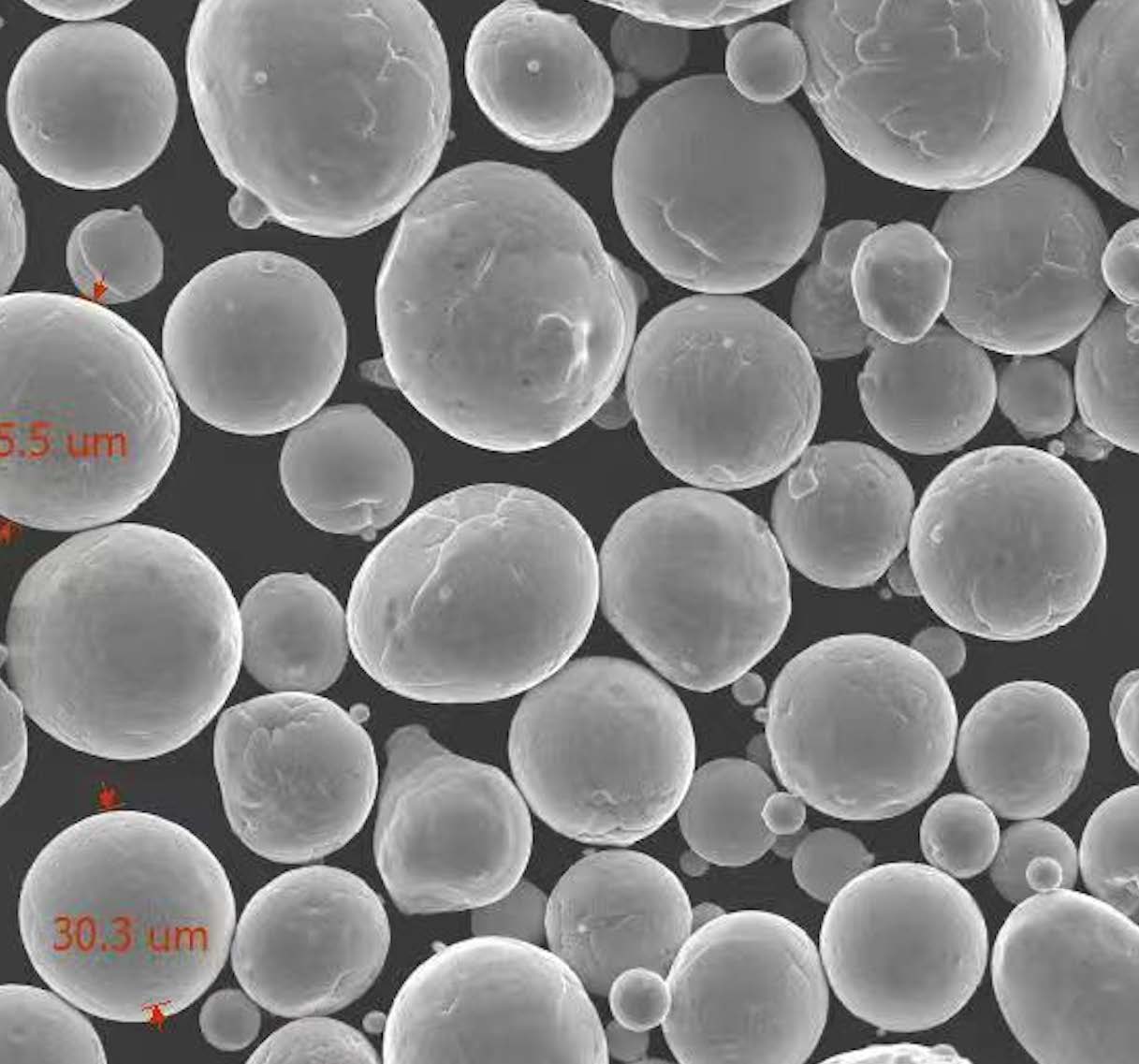
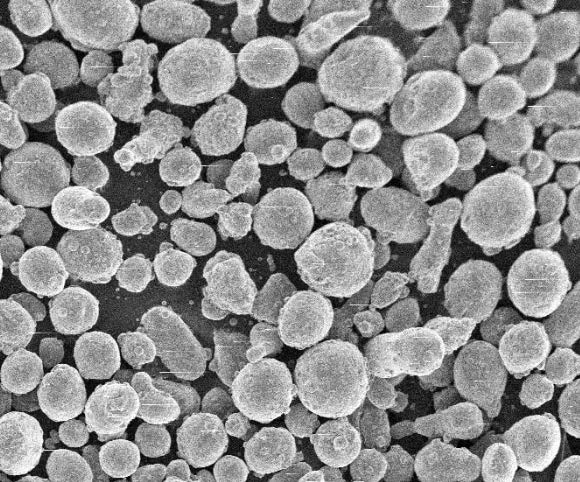
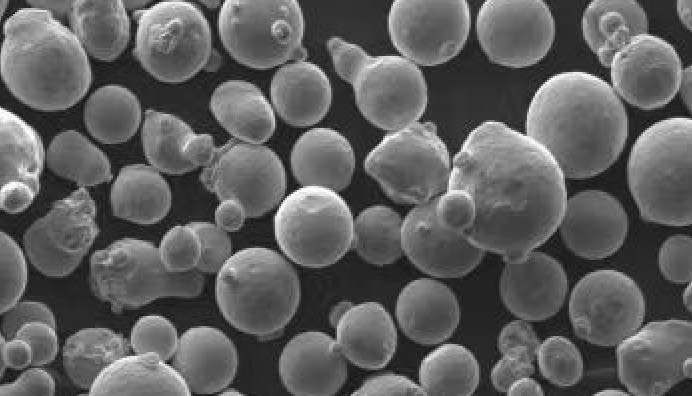
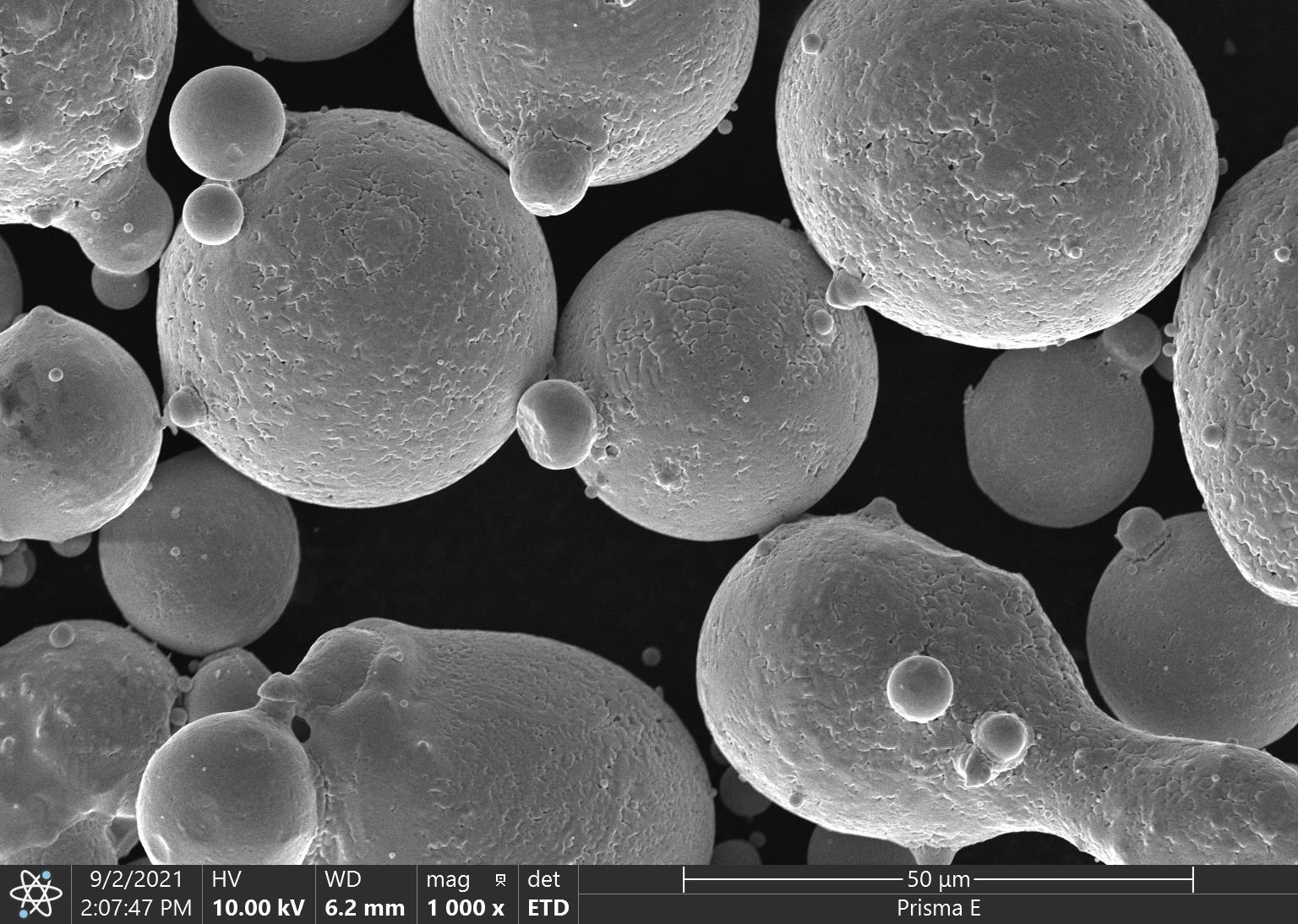
For most purchasers, the real specification package is a combination of chemistry certificate, sieve analysis, morphology report, and build-trial evidence. Free-flowing behavior matters because recoating uniformity and powder-layer packing strongly influence defects. A supplier may also provide laser diffraction data, SEM imagery, and internal reuse recommendations.
7075 Aluminium Alloy Powder PSD Selection
Fine cuts are generally chosen for laser powder bed fusion because they spread more uniformly and support thin layers. Coarser fractions work better in directed energy deposition, where feeder stability and powder catch efficiency matter more than ultra-smooth spreading. In either case, the target PSD is not arbitrary; it is chosen to align with melt-pool size, layer thickness, and machine optics.
Testing Metrics for Spherical AM Powder
Apparent density, tap density, and Hall flow remain widely used shop-floor indicators for powder consistency. The ASTM metal powder test methods portal is commonly referenced when buyers map their incoming inspection methods to recognized practice, even if final qualification is still machine-specific. For a crack-sensitive alloy such as 7075, powder morphology and fines control are often just as important as nominal PSD.
Grade Naming and International Cross-Reference
7075 may appear under UNS, EN, or DIN-style naming systems depending on region and documentation path, but the AM buyer should not rely on names alone. Powder behavior is shaped by atomization method, residual gas pickup, and post-sieving condition, so a nominally equivalent 7075 chemistry can still behave differently from one lot to another. That is why serious qualification relies on both certificate review and print validation.
제조 프로세스
7075 Aluminium alloy powder is most commonly produced by gas atomization under controlled atmosphere, because the process can deliver high sphericity, commercially useful throughput, and good control over particle size after classification. Other atomization routes may be used for specialized requirements, but for most AM feedstocks the key manufacturing objective is to produce consistent, low-oxide, spherical particles that spread well and do not excessively segregate. Compared with many titanium or nickel alloys, aluminum powders demand especially careful control of oxidation and handling because their surface chemistry changes quickly.
| 프로세스 | 구형성 | 산소 픽업 | PSD 제어 | 처리량 | 상대적 비용 | Typical Relevance to 7075 |
|---|---|---|---|---|---|---|
| 가스 분무(GA) | 높음 | 낮음에서 보통 | 양호 | 높음 | 보통 | Primary industrial route for spherical 7075 AM powder |
| Vacuum Inert Gas Atomization (VIGA) | 매우 높음 | 낮음 | 매우 좋음 | 중간에서 높음 | 보통에서 높음 | Preferred where atmosphere control is tightened |
| 전극 유도 가스 분무법 (EIGA) | 매우 높음 | 매우 낮음 | 좋음 ~ 매우 좋음 | Medium | 높음 | Used for premium, cleaner specialty feedstock |
| 플라즈마 회전 전극 공정(PREP) | 우수 | 매우 낮음 | 분류 후 ‘보통’ | Medium | 높음 | Less common for 7075; premium morphology route |
| 물 분무 | 낮음에서 보통 | 더 높음 | 광범위 | 높음 | Lower | Generally unsuitable for premium LPBF feedstock |
Gas atomization remains the practical baseline because it balances cost and quality. Molten alloy is broken up by high-pressure inert gas into droplets that solidify rapidly into mostly spherical particles. The better the control of melt practice, gas purity, and classification, the more predictable the downstream powder behavior becomes.
GA Versus PREP for 7075 Aluminium Alloy Powder
PREP is often associated with exceptionally spherical powders and low contamination, but it is less common for mainstream aluminum AM feedstock because of cost and process economics. For 7075, gas atomization usually offers the best commercial balance, while PREP may be considered for narrow premium requirements where morphology is prioritized above throughput. This same trade-off appears when comparing aluminum powders with specialized refractory metal feedstocks that also depend heavily on purity and particle shape.
Why Process Control Is Harder for 7075
The challenge is not only making the powder but preserving the chemistry and consistency that printing requires. Zinc and magnesium can be sensitive during melting and remelting, and aluminum surfaces oxidize readily. That means powder manufacturing, classification, packaging, and handling form a single control chain rather than separate steps.
Reuse, Storage, and Powder Lifecycle
Powder reuse policy matters greatly for 7075. Repeated thermal exposure, blending of virgin and reclaimed powder, humidity control, and fines removal all affect oxygen burden and flow behavior. Since 7075 already operates with a narrow process window, conservative reuse rules are often more appropriate than those used for more forgiving aluminum alloys.
Process Terminology and Industry Context
When AM teams discuss powder bed fusion versus directed energy deposition, they are using industry terms that are standardized rather than informal. That common language is useful when a buyer compares 7075 to alternative materials such as aerospace-focused titanium alloy powder grades or more mature nickel systems, because it keeps the conversation centered on process compatibility rather than just alloy names.
산업별 적용 사례
7075 Aluminium alloy powder is best suited to applications where lightweighting and structural efficiency are central to part performance. It is not the most forgiving aluminum powder to process, so it is usually chosen where the engineering upside justifies a more complex qualification path. As a result, the most credible use cases are high-value components rather than commodity brackets.
Aerospace Structures and Flight Hardware
Aerospace is the natural reference point because 7075 has long been associated with high-strength aircraft aluminum in conventional manufacturing. In AM, the target components include lightweight brackets, housings, supports, and topology-optimized structural parts where lower mass directly improves system efficiency. The opportunity is strongest where part consolidation and shape optimization create value that machining from plate or forging cannot easily match.
Motorsport and Performance Automotive Components
Performance automotive engineering values low mass and high stiffness in much the same way aerospace does. 7075 powder becomes relevant for custom mounts, suspension-adjacent prototypes, motorsport fixtures, and low-volume structural hardware where designers want stronger aluminum than AlSi10Mg can usually provide. The alloy is particularly attractive in prototyping and small-batch racing applications where design iteration matters as much as final weight.
Tooling, Robotics, and Industrial Automation
Advanced fixtures, robotic end effectors, and performance tooling can benefit from 7075 when every gram matters but polymer tools lack stiffness. AM also enables integrated cable paths, lattice reinforcement, and custom interfaces that reduce assembly count. In this space, the case for 7075 often rests on total system design rather than on raw tensile strength alone.
Defense and Unmanned Systems
Drones, portable systems, and lightweight enclosures are plausible candidates because structural mass has a direct effect on endurance and payload fraction. Here, 7075 competes not only with other aluminum powders but also with machined wrought stock, magnesium concepts, and titanium alternatives. AM becomes more attractive as geometry complexity rises.
Medical and Consumer Devices
Medical use is far more limited because 7075 is not the standard route for implantable applications, and corrosion and biocompatibility expectations point elsewhere. Consumer and professional devices, however, may use the alloy in lightweight structural components, hand tools, and advanced housings when higher performance is needed than general-purpose aluminum grades can deliver. The broader end-use landscape for such parts overlaps with the sectors outlined in this industrial application casebook.
대체 소재와의 비교
7075 Aluminium alloy powder should be evaluated against established AM alloys, not judged in isolation. In most engineering studies, it sits between easy-to-print cast-style aluminum alloys and more difficult but stronger structural metals. That makes it an attractive but selective option: higher upside than AlSi10Mg in strength terms, but more development work to unlock it.
| 재질 | 밀도(g/cm³) | 근력 잠재력 | 인쇄 가능성 | 내식성 | 상대적 비용 | 가장 적합한 사용 사례 |
|---|---|---|---|---|---|---|
| 7075 Aluminium alloy powder | 2.80–2.81 | High after heat treatment | 도전적 | 보통 | 중간에서 높음 | Weight-critical structural AM parts |
| AlSi10Mg 분말 | about 2.67 | 보통 | 우수 | 양호 | Medium | General-purpose aluminum LPBF components |
| AlSi12 분말 | about 2.66 | Moderate to lower than 7075 | 매우 좋음 | 양호 | Medium | Cast-like geometries and high print stability |
| Ti-6Al-4V 분말 | about 4.43 | 매우 높음 | Mature but costlier | 매우 좋음 | 높음 | Premium aerospace and medical structures |
| 6061-type aluminum powder | about 2.70 | Medium | Moderate to difficult | 양호 | Medium | General lightweight engineering where 7075 strength is not required |
The practical question is not whether 7075 is “better” than these alloys, but whether its stronger mechanical ceiling offsets its more complex processing demands. If the answer is yes, it can be an excellent fit. If not, AlSi10Mg usually remains the easier and lower-risk production choice.
7075 Versus AlSi10Mg
AlSi10Mg is the benchmark because it is the most established aluminum AM material. It offers reliable printability, predictable parameter sets, and broad machine compatibility. 7075 can surpass it in strength potential, but achieving that benefit requires much stricter control of cracking, heat treatment, and powder quality.
7075 Versus Titanium Alloys
Titanium still outperforms 7075 in many high-end structural applications, especially where corrosion resistance and temperature capability matter. However, titanium is denser, much more expensive, and often unnecessary if the required performance can be met with aluminum. In that sense, 7075 competes as a lighter and less costly option for selected aerospace and mobility parts.
7075 Versus 6061 and Other Medium-Strength Aluminum Alloys
6061-type AM alloys offer a more moderate property profile and may be easier to justify for less critical parts. Yet they do not usually reach the same strength level as 7075. Where the design brief explicitly targets maximum strength at aluminum density, 7075 remains a qualification-first alloy rather than a general-purpose one.
당사
Shanghai Truer Technology Co., Ltd., which operates am-printing.com, was established in 2009 and created its additive manufacturing business in 2019. According to the company context provided, Truer integrates 3D printing powder-making equipment and powder supply, with capabilities centered on SEBM equipment, PREP powder-making equipment, and gas atomization-related processes; its portfolio includes TiNi, TiTa, TiAl, TiNbZr, CoCrMo, and spherical nickel-based, cobalt-based, titanium-based, copper-based, aluminum-based, and stainless steel powders used in SLM, SEBM, DED, laser cladding, powder metallurgy, MIM, HIP, cold or hot spraying, welding, and coating. The company also states that it works through a joint innovation center for metal 3D printing with laboratories and subject-matter experts, and serves industries including 3C electronics, hand tools, remote control cars, medical, aerospace, and nuclear power, with background available on its corporate overview page.
자주 묻는 질문
Q1. Is 7075 Aluminium alloy powder hard to print?
Yes. Compared with AlSi10Mg and similar aluminum AM grades, 7075 is significantly more sensitive to solidification cracking, residual stress, and chemistry drift. That does not make it unusable, but it does mean successful printing depends on a narrower and more carefully qualified process window.
Q2. Why do engineers choose 7075 Aluminium alloy powder instead of AlSi10Mg?
They choose it when the design target is higher strength at very low weight rather than the easiest possible print job. AlSi10Mg is usually the safer production choice, while 7075 is evaluated when stronger structural performance justifies added development effort.
Q3. What particle size is typical for 7075 Aluminium alloy powder in LPBF?
A common LPBF range is 15–53 µm or 20–63 µm, depending on machine setup and layer thickness. Coarser fractions such as 45–105 µm are more typical for directed energy deposition or cladding rather than fine-layer powder bed fusion.
Q4. Does 7075 Aluminium alloy powder need heat treatment after printing?
In most cases, yes. The alloy’s value comes from age-hardening behavior, so post-build thermal treatment is usually needed to achieve the intended balance of strength, hardness, and dimensional stability. Exact cycles vary with the as-built microstructure and the amount of residual stress present.
Q5. Is 7075 Aluminium alloy powder suitable for aerospace parts?
It can be, especially for lightweight structural components where aluminum density and high strength are both important. However, aerospace use requires rigorous qualification because 7075 AM parts are more process-sensitive than mainstream aluminum feedstocks and cannot be treated as drop-in substitutes for wrought products.
Q6. How does 7075 Aluminium alloy powder compare with titanium powder for lightweight parts?
7075 is lighter and usually less expensive than titanium, but it does not match titanium’s corrosion resistance, temperature capability, or ultimate performance envelope. It becomes the better choice when aluminum-level density and cost are more important than the broader materials capability that titanium offers.