Kurzantwort
316L metal additive manufacturing powder is a low-carbon austenitic stainless steel feedstock designed for powder-based processes such as laser powder bed fusion, binder jetting, directed energy deposition, and metal injection molding. It is widely chosen because it offers an unusually strong balance of corrosion resistance, printability, ductility, and post-processing flexibility. For many production teams, it is the default stainless AM powder when parts must build densely, machine cleanly, resist chloride-bearing environments, and remain easier to qualify than higher-strength or higher-temperature specialty alloys.
What Is 316L metal additive manufacturing powder
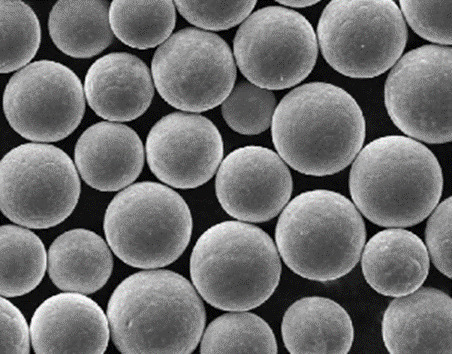
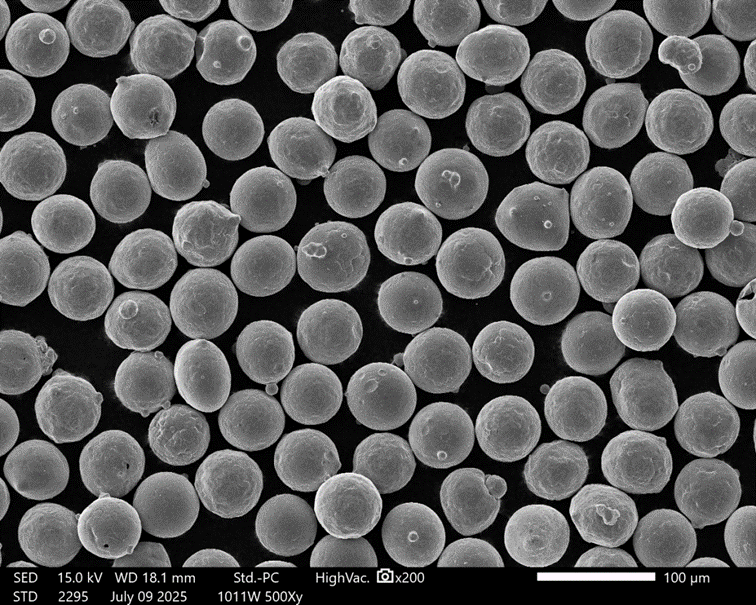
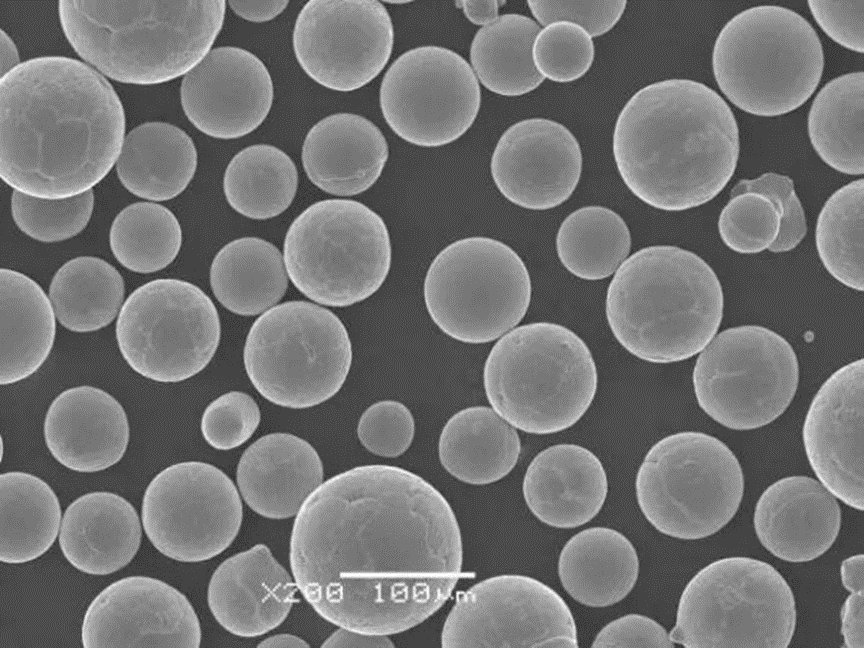
316L metal additive manufacturing powder is the powder-engineered form of 316L stainless steel, produced with controlled chemistry, particle morphology, and particle size distribution for additive and adjacent powder-processing routes. It is not simply crushed stainless steel. In AM practice, the powder must be designed to spread consistently, feed predictably, and consolidate into dense parts with acceptable chemistry retention and stable mechanical performance.
The alloy belongs to the chromium-nickel-molybdenum austenitic stainless family. The “316” grade indicates improved localized corrosion resistance relative to 304-type stainless steels because of its molybdenum content. The “L” suffix indicates low carbon, which helps reduce sensitization risk and supports corrosion resistance after repeated thermal exposure, welding, or layer-by-layer remelting.
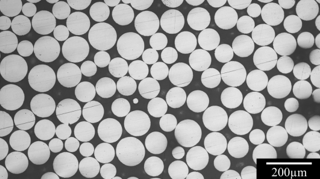
Why 316L Became a Standard Stainless AM Powder
316L is one of the most established metal AM alloys because it offers a broad process window. Many alloys exceed it in one category such as strength, hardness, or elevated-temperature capability, but fewer combine stainless corrosion behavior, ductility, crack resistance, and routine processability as effectively. That balance lowers development risk during machine setup, parameter optimization, and part qualification.
In real production, engineers often prefer a material that prints consistently over one that looks superior only on a specification sheet. 316L metal additive manufacturing powder fits that reality well. It tolerates a range of geometries, responds predictably to post-processing, and is widely understood by designers, machinists, and quality teams outside additive manufacturing.
What Makes 316L Different from Conventional Stainless Feedstock
Conventional 316L is bought as bar, sheet, tube, plate, or wire and then shaped by machining, welding, forming, or casting. Powder feedstock adds another level of engineering. Particle roundness, satellite content, surface oxidation, apparent density, tap density, and flow rate all become essential because the powder itself is part of the manufacturing system.
That is why buyers do not qualify AM powder by chemistry alone. A lot can fall inside the standard 316L chemistry range yet still produce poor layer uniformity if its morphology or size distribution is not tightly controlled. This is especially important in laser powder bed fusion, where powder behavior directly affects part density and surface quality.
Core Characteristics of 316L Metal Additive Manufacturing Powder
The most useful characteristics are corrosion resistance, low-carbon chemistry, ductility, weldability, and stable powder flow when the material is properly atomized and classified. These properties make 316L suitable for intricate channels, thin walls, functional prototypes, low-volume production parts, and stainless components that need polishing or machining after printing.
A second advantage is familiarity. Unlike some advanced AM alloys, 316L does not require the user to educate every downstream stakeholder from scratch. Its metallurgy, corrosion mechanisms, and finishing methods are already well understood across manufacturing industries. That makes the transition from conventional stainless production to AM more practical.
In metal AM, 316L is often selected because it offers the safest balance between stainless performance and manufacturing reliability.
Where 316L Fits in a Wider Powder Portfolio
In a multi-alloy environment, 316L often serves as the baseline stainless option before teams move to precipitation-hardening steels, titanium, cobalt, or nickel systems. Engineers screening broader ferrous options typically start with an iron-based alloy powder range and then narrow the choice according to corrosion, strength, and service temperature requirements.
Chemische Zusammensetzung
The chemical composition of 316L is the reason the alloy performs so well in corrosion-sensitive applications. Chromium forms the passive surface film associated with stainless steels, nickel stabilizes the austenitic matrix, molybdenum improves resistance to pitting and crevice attack, and low carbon helps preserve corrosion behavior after thermal cycling. In powder form, these same metallurgical roles remain central, but the manufacturer must also control residual interstitials and surface oxidation.
| Element | Typical Content (wt%) | Common Standard Range (wt%) | Rolle in der Metallurgie |
|---|---|---|---|
| Fe | Bilanz | Bilanz | Base matrix supporting the stainless alloy system |
| Cr | 16.5–18.0 | 16.0–18.0 | Forms passive film and provides general corrosion resistance |
| Ni | 10.0–14.0 | 10.0–14.0 | Stabilizes austenite, improves ductility, toughness, and weldability |
| Mo | 2.0–3.0 | 2.0–3.0 | Improves pitting and crevice corrosion resistance |
| Mn | 0.5–2.0 | ≤ 2.0 | Assists deoxidation and supports melt processing |
| Si | 0.3–1.0 | ≤ 1.0 | Acts as a deoxidizer and influences oxidation behavior |
| C | 0.01–0.03 | ≤ 0.03 | Low carbon reduces carbide precipitation and sensitization risk |
| P | 0.01–0.03 | ≤ 0.045 | Residual element; excess can reduce toughness |
| S | 0.001–0.01 | ≤ 0.03 | Residual element; excess can impair ductility and corrosion performance |
| N | 0.03–0.10 | Variabel | Can strengthen austenite and influence phase stability |
The Function of Chromium, Nickel, and Molybdenum in 316L Powder
Chromium is the defining element behind stainless behavior because it forms a thin, self-protecting oxide film on the alloy surface. That passive film is what gives 316L its resistance to atmospheric corrosion and many wet-service environments. If chromium content falls too low, the alloy cannot maintain that protective behavior reliably.
Nickel preserves the austenitic structure and contributes to toughness, formability, and weldability. Molybdenum is the key differentiator between 316L and lower-alloy stainless grades such as 304L. Its presence improves resistance to pitting and crevice corrosion, especially in chloride-bearing environments, which is one reason 316L is widely used in process, marine-adjacent, and medical cleaning conditions.
Why the Low-Carbon “L” Grade Matters in AM
The “L” designation is especially important in additive manufacturing because printed parts experience repeated local reheating. Carbon that is too high can promote chromium carbide precipitation at grain boundaries during thermal exposure, which may reduce corrosion resistance in critical regions. By keeping carbon low, 316L better preserves its stainless character after printing, welding, or stress-relief cycles.
For that reason, 316L is often preferred over standard 316 in powder form. In AM, repeated thermal cycles are unavoidable, so the low-carbon grade is not just traditional nomenclature; it is a practical process safeguard.
Chemistry Control Beyond Major Alloying Elements
Powder quality also depends on oxygen, sulfur, phosphorus, and nitrogen control. Oxygen is especially important because oxide burden affects both flow behavior and melt-pool interaction. Sulfur and phosphorus are kept low because excessive levels can reduce ductility and make performance less predictable.
Terminology for feedstock and process classification is commonly organized under ISO additive manufacturing terminology, which helps users separate alloy chemistry requirements from powder characterization and part-level acceptance criteria. That distinction matters because AM powder is evaluated as both a material and a process input.
Physikalische und mechanische Eigenschaften
The performance of 316L metal additive manufacturing powder has to be understood in two states. Powder-state properties determine how the material spreads, feeds, and packs before consolidation. Final-part properties determine whether the printed or sintered component meets strength, corrosion, and finishing requirements in service.
| Eigentum | Typischer Wert | Einheit | Test Standard / Basis |
|---|---|---|---|
| Echte Dichte | 7.95–8.00 | g/cm³ | Typical 316L alloy reference value |
| Scheinbare Dichte | 4.2–4.8 | g/cm³ | Typical powder characterization basis |
| Dichte des Gewindebohrers | 4.8–5.6 | g/cm³ | Typical tapped powder measurement |
| Schmelzbereich | 1370–1400 | °C | Typical 316L alloy interval |
| Ultimate tensile strength | 540–720 | MPa | Typical dense AM-built or HIPed condition |
| Streckgrenze | 170–520 | MPa | Process route and heat treatment dependent |
| Dehnung bei Bruch | 25–55 | % | Typical dense consolidated condition |
| Härte | 140–220 | HV | Typical as-built or annealed range |
| Wärmeleitfähigkeit | 13–16 | W/m-K | Approximate room-temperature value |
Powder-State Performance of 316L AM Powder
Apparent density and tap density are useful indicators of how efficiently the powder occupies volume before melting or sintering. In powder bed systems, more stable packing generally supports more uniform layers and more consistent energy absorption. In feeder-based systems, powder mobility and discharge stability are equally important.
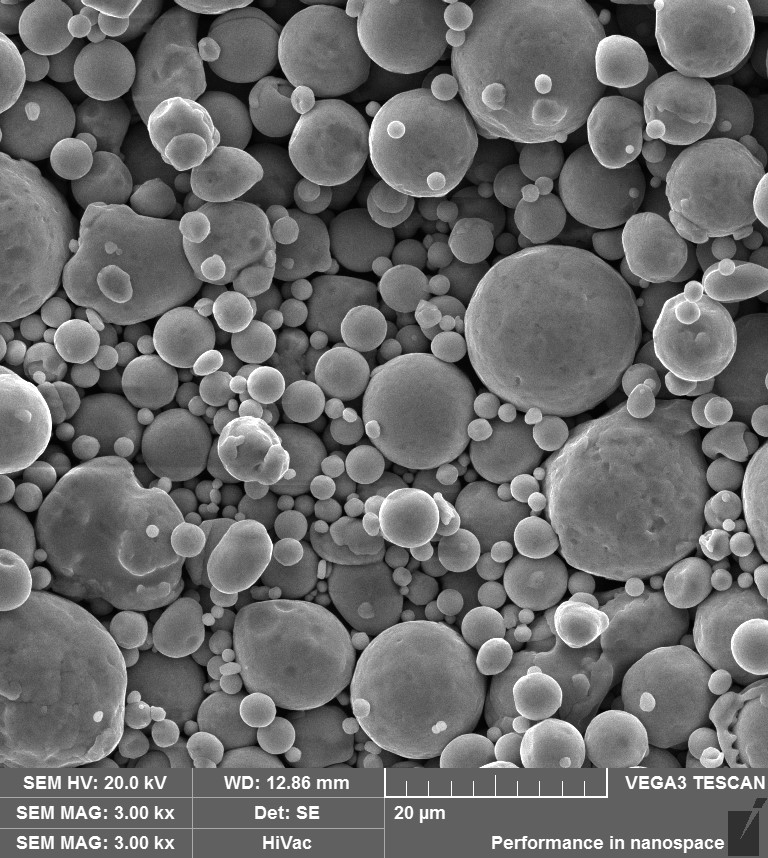
Round, well-classified particles improve that behavior. Powders that contain excessive fines, irregular shapes, or unstable satellite populations often spread less evenly and increase the risk of porosity or process variability. That is why morphology and size control are as important as chemistry when assessing powder suitability.
Mechanical Properties After Additive Processing
Consolidated 316L is known for moderate strength combined with strong ductility and toughness. In laser powder bed fusion, fine solidification structures can produce tensile and yield values above those of annealed wrought 316L, though the exact result depends heavily on scan strategy, build orientation, density, and post-processing. Binder-jetted or PM-derived 316L parts may show different strengths because densification mechanisms differ.
For many users, the more important advantage is not peak strength but reliability. 316L is less prone to brittle behavior than many high-strength steels, and it is more forgiving during support removal, machining, and finishing. This helps reduce scrap risk in complex builds.
Thermal and Service Behavior
316L is not a superalloy and should not be chosen for demanding elevated-temperature service where nickel alloys dominate. Its thermal conductivity is moderate, and its density is typical of austenitic stainless steels. However, at room temperature and moderately elevated service temperatures, it provides an effective combination of corrosion resistance, toughness, and manufacturability.
This makes it well suited to fluid components, housings, instrumentation hardware, tooling, and low- to medium-load structural parts. Designers often accept slightly lower strength in exchange for easier printing and better corrosion tolerance.
How to Read Property Ranges Correctly
Published ranges for 316L can look broad because the term includes multiple consolidation routes. A laser-built test coupon, a hot isostatically pressed part, a sintered MIM component, and a DED wall can all be legitimate 316L while showing significantly different yield strength, elongation, and hardness. Process route matters almost as much as the alloy itself.
Organizations that formalize AM acceptance criteria often use broader guidance from NIST engineering measurement resources when defining repeatability, metrology, and material-control frameworks. In practice, a powder data sheet is only the starting point; the process route determines the final property envelope.
Technische Daten und verfügbare Güteklassen
Commercial 316L powder is usually specified by chemistry, particle size distribution, morphology, oxygen level, apparent density, tap density, and flowability. The same 316L chemistry may therefore appear in several supply grades depending on whether the intended process is LPBF, SLM, binder jetting, directed energy deposition, laser cladding, MIM, PM, or thermal spray. For procurement teams, the process-specific grade designation is often more important than the nominal alloy name alone.
| Typical Grade | PSD Range (µm) | Scheinbare Dichte (g/cm³) | Tap Density (g/cm³) | Hall Flow (s/50 g) | Oxygen Content (wt%) | Sphericity / Standards Cross-Reference |
|---|---|---|---|---|---|---|
| 316L Fine AM Grade | 15-45 | 4.2–4.5 | 4.9–5.2 | 16–24 | 0.03–0.08 | High; fine-layer LPBF grade; typically aligned with internal ASTM and ISO purchasing criteria |
| 316L Standard PBF Grade | 15-53 | 4.3–4.7 | 5.0–5.4 | 14–21 | 0.02–0.07 | High; common SLM and LPBF grade for balanced flow and resolution |
| 316L Medium-Cut Grade | 20-63 | 4.4–4.8 | 5.1–5.5 | 13–19 | 0.02–0.06 | High to very high; used in broader AM trials and selected binder-based routes |
| 316L Coarse Feed Grade | 45-105 | 4.5–4.9 | 5.2–5.7 | 11–17 | 0.01–0.05 | Very good flow; suited to DED, cladding, spray, and nozzle-fed processes |
| 316L Cross-Reference Practice | By process specification | By lot | By lot | By lot | By lot | Typically reviewed against ASTM, AMS, GB, ISO, and DIN customer requirements |
Particle Size Distribution for 316L Metal Additive Manufacturing Powder
Fine cuts such as 15–45 µm and 15–53 µm are widely used in laser powder bed fusion because they support thin layers and better feature resolution. These grades can produce excellent surface quality and fine detail, but they also bring higher surface area and therefore greater sensitivity to oxidation and powder aging.
Coarser distributions such as 20–63 µm and 45–105 µm are more common in directed energy deposition and laser cladding. They generally feed more easily through nozzles and are better suited to high-deposition-rate processes, though they are not ideal for thin powder-bed layers or highly detailed parts.
Standards Logic and Tolerance Interpretation
There is no single universal 316L AM powder standard that replaces process-specific purchasing specifications. In practice, users combine chemistry limits with D10, D50, D90, oxygen, flow, density, morphology, and packaging requirements. That means two powders described as “316L AM powder” may not be interchangeable if their size distribution or flow behavior differs materially.
For broader materials context, many readers cross-check the grade background in the 316L stainless steel overview. That is useful for understanding the alloy family, but AM procurement still requires powder-specific acceptance data beyond generic alloy descriptions.
Supply Grades in Multi-Alloy Development Programs
When 316L is used as a baseline material, engineers often compare it with titanium, cobalt, nickel, or aluminum systems during design selection. A team focused on lightweighting, for example, may evaluate a titanium-based powder portfolio once the limits of stainless density become important. That comparison is usually driven by component function rather than by any single powder metric.
Herstellungsprozess
The manufacturing route strongly affects the behavior of 316L metal additive manufacturing powder. Two lots with nearly identical chemistry can differ in flowability, oxygen content, satellite population, and reuse stability because of differences in melting method, atomization conditions, classification discipline, and packaging atmosphere. In AM, process route is part of the material identity.
| Prozess | Typical Sphericity | Oxygen Pickup Risk | PSD-Steuerung | Durchsatz | Relative Kosten | Typical Fit |
|---|---|---|---|---|---|---|
| GA (Gas Atomization) | Hoch | Low to moderate with inert handling | Gut | Hoch | Mittel | Mainstream production for LPBF, DED, PM, and cladding |
| VIGA (Vacuum Induction Gas Atomization) | Hoch | Niedrig | Gut bis sehr gut | Mittel | Mittel-hoch | Cleaner melt handling and better control of interstitials |
| EIGA (Electrode Induction Gas Atomization) | Sehr hoch | Niedrig | Sehr gut | Mittel | Hoch | High-cleanliness powder with reduced crucible interaction |
| PREP (Plasma-Rotations-Elektroden-Verfahren) | Sehr hoch | Sehr niedrig | Narrow, often coarser | Niedrig bis mittel | Hoch | Premium morphology and low satellite content |
| Wasserzerstäubung | Niedrig bis mittel | Höher | Good for bulk PM | Hoch | Unter | Economical PM route, usually less suitable for premium AM |
Gas Atomization for 316L AM Feedstock
Gas atomization is the dominant route for industrial 316L AM powder. In this process, molten alloy is disintegrated by high-pressure inert gas into fine droplets that rapidly solidify into near-spherical particles. The powder is then collected, screened, classified, and packaged under controlled conditions.
This route is popular because it offers a strong balance between quality, throughput, and cost. With well-managed process conditions, gas atomization can deliver the sphericity, oxygen control, and size consistency needed for mainstream additive manufacturing without the premium pricing of more specialized methods.
Abwägungen zwischen PREP, VIGA und EIGA
PREP is often associated with excellent roundness and low satellite content because the powder is produced from a rotating electrode melted by plasma. VIGA improves melt cleanliness by combining vacuum induction melting with gas atomization, while EIGA can reduce contamination risks linked to crucible interaction and support high-purity spherical powder production.
These benefits are real, but they are not free. PREP, VIGA, and EIGA typically increase cost and may reduce throughput relative to conventional gas atomization. For 316L, which already has a forgiving process window, the best route depends on whether the application truly needs premium morphology or simply reliable industrial-grade performance.
Process Variables That Matter More Than the Acronym
Users sometimes focus too much on whether the powder is GA, PREP, or EIGA. In reality, outcome quality often depends more on execution details: melt superheat, atomization gas purity, chamber atmosphere, nozzle design, sieving accuracy, and packaging discipline. Low oxygen and tight PSD often matter more in daily production than the marketing label attached to the process.
That is why powder qualification should emphasize measured characteristics rather than process names alone. A well-made gas-atomized lot can outperform a poorly handled premium-process lot if flow, morphology, and cleanliness are better controlled.
Powder Handling After Production
Even high-quality 316L powder can degrade if it is badly stored or repeatedly recycled without controls. Humidity exposure, uncontrolled sieving, fines segregation, and contamination during reuse can alter flowability and oxygen content over time. For many quality teams, incoming inspection and powder lifecycle rules are as important as the atomization route itself.
When service temperatures exceed the practical range of 316L, teams often move toward a nickel superalloy powder selection rather than trying to force stainless into a high-heat role it was never designed to fill.
Anwendungen nach Branche
316L metal additive manufacturing powder is one of the most versatile stainless feedstocks used in AM. It appears across sectors that need corrosion resistance, geometric freedom, low-to-moderate structural performance, and manageable qualification risk. Its role is strongest where post-processing familiarity and reliable build behavior are as important as the final part’s mechanical properties.
Medical, Dental, and Laboratory Hardware
316L is widely used for instruments, trays, housings, lab fixtures, fluid-contact hardware, and customized low-volume components. Its corrosion resistance and finishability make it suitable for environments that require cleaning, sterilization-adjacent handling, or smooth polished surfaces. In AM, the alloy is especially useful for custom geometries that would be difficult or uneconomical to machine from solid stock.
That said, “medical use” is a broad term. General medical equipment, tooling, and non-implant hardware have very different qualification burdens from regulated implants. Engineers must match the powder and part route to the intended regulatory pathway rather than assuming all 316L applications are equivalent.
Chemical Processing, Oil and Gas, and Energy Equipment
Because 316L contains molybdenum, it performs better than 304-type stainless in many chloride-bearing and mildly aggressive process environments. This makes it a frequent choice for manifolds, sensor housings, couplings, valves, nozzles, pump-related parts, and corrosion-exposed industrial hardware. Additive manufacturing becomes particularly attractive when those parts also benefit from internal channels, consolidation, or low-volume customization.
In energy applications, 316L often provides sufficient corrosion performance without the expense of a nickel alloy. Where exposure becomes hotter or more chemically severe, the material comparison shifts accordingly.
Automotive, Consumer, and Industrial Manufacturing
In automotive and industrial settings, 316L is used for brackets, fixtures, manifolds, grippers, test hardware, functional prototypes, and low-volume production parts. The alloy machines, drills, and polishes relatively easily after printing, which supports hybrid manufacturing workflows. This is useful in factories where printed parts are brought to final tolerance through conventional finishing.
Its practical advantage is not only the printed geometry but also the ease of integrating that geometry into existing production environments. Teams can adopt 316L AM parts without reinventing every downstream process.
Aerospace and Advanced Development Programs
316L is not the standard choice for weight-critical flight structures or extreme-temperature engine hardware, but it remains useful in aerospace tooling, ducting prototypes, fluid-handling parts, support brackets, and development work. Many organizations use it as an early qualification alloy because it prints reliably and reveals machine behavior without the added complexity of titanium or nickel superalloys.
Where wear resistance, biomedical wear performance, or hot corrosion becomes more important, users may branch into cobalt-based alloy powders. That transition is typically driven by service condition, not by any deficiency in 316L as a general-purpose AM stainless.
Where 316L Delivers the Best Return
316L is most valuable when the design brief combines corrosion resistance, moderate strength, geometric complexity, and repeatable manufacturability. It is less compelling when extreme lightweighting, maximum hardness, or prolonged high-temperature performance dominate the requirement. In those cases, another AM alloy may justify its extra cost and qualification burden.
Vergleich mit alternativen Materialien
Material selection in additive manufacturing is inherently comparative. Engineers do not ask whether 316L is good in isolation; they ask whether it is better than 304L, 17-4 PH, nickel alloys, titanium alloys, or other realistic alternatives for the same geometry and service environment. In that comparison, 316L often wins by being the most balanced rather than the most extreme.
| Material | Dichte (g/cm³) | Typisches Leistungsniveau | Druckbarkeit | Korrosionsbeständigkeit | Relative Kosten | Best-Fit Application |
|---|---|---|---|---|---|---|
| 316L metal additive manufacturing powder | 7.95–8.00 | Moderate with high ductility | Ausgezeichnet | Hoch | Mittel | General corrosion-resistant AM parts |
| 304L stainless steel powder | 7.9–8.0 | Mäßig | Sehr gut | Gut | Mittel | Less aggressive environments and cost-sensitive stainless components |
| 17-4 PH stainless steel powder | 7.7–7.8 | High after aging | Sehr gut | Mäßig bis gut | Mittel | Structural parts requiring higher strength |
| Inconel 625-Pulver | 8.4–8.5 | Mäßig bis hoch | Gut | Sehr hoch | Hoch | Elevated temperature and severe corrosion service |
| Ti-6Al-4V-Pulver | 4.4–4.5 | Hohe spezifische Festigkeit | Sehr gut | Hoch | Hoch | Lightweight aerospace and medical applications |
316L vs 304L Stainless
Compared with 304L, 316L usually costs somewhat more but offers better resistance to pitting and crevice corrosion because of its molybdenum content. In humid, chloride-bearing, or chemically cleaned environments, that difference can determine the life of the component. If the service environment is mild, 304L may still be sufficient.
316L vs 17-4 PH Stainless
17-4 PH is stronger after age hardening and is often preferred for highly loaded structural parts. However, it typically offers less corrosion tolerance and a more demanding heat-treatment route than 316L. If the application prioritizes stainless corrosion resistance and predictable manufacturability over peak strength, 316L is often the simpler and safer choice.
316L vs Nickel and Titanium Alloys
Nickel alloys outperform 316L in higher-temperature and harsher corrosive service, while titanium alloys deliver a much better strength-to-weight ratio. Yet both alternatives are normally more expensive and can complicate machining or production economics. For a large share of industrial AM applications, 316L remains the most balanced stainless option rather than the highest-performing specialty alloy.
Unser Unternehmen
Shanghai Truer Technology Co., Ltd., which operates am-printing.com, was established in 2009 and created its additive manufacturing business in 2019. According to the company profile, its activities include integrating 3D printing powder-making equipment and related services with spherical metal powder supply for engineering applications of additive manufacturing. The company states that its core technologies include Selective Electron Beam Melting equipment, Plasma Rotating Electrode Process powder-making equipment, and gas atomization capability, and that its powder portfolio includes TiNi, TiTa, TiAl, TiNbZr, CoCrMo, plus nickel-based, cobalt-based, titanium-based, copper-based, aluminum-based, and stainless steel powders used in SLM, SEBM, DED, laser cladding, PM, MIM, HIP, spraying, welding, and coating across sectors such as 3C electronics, hand tools, remote control cars, medical, aerospace, and nuclear power. Additional factual background is provided on the company information page.
FAQ
Q1. Is 316L metal additive manufacturing powder better than 304L powder for AM?
In many corrosive environments, yes. 316L contains molybdenum, which improves resistance to pitting and crevice corrosion relative to 304L, especially where chlorides are present. If the application is less aggressive and cost sensitivity is higher, 304L may still be adequate.
Q2. What particle size is typical for 316L metal additive manufacturing powder?
For laser powder bed fusion, common commercial cuts are 15–45 µm and 15–53 µm. Directed energy deposition, laser cladding, and some feeder-based processes more often use coarser cuts such as 45–105 µm. The right distribution depends on layer thickness, feature resolution, and powder delivery method.
Q3. Why is 316L so common in metal additive manufacturing?
It combines corrosion resistance, ductility, weldability, and a comparatively forgiving process window. Many other alloys outperform it in one specific category, but few match its balance of manufacturability and service reliability. That balance makes it a common baseline material for both process development and production.
Q4. Can 316L metal additive manufacturing powder be reused after printing?
Yes, but reuse should be controlled through a defined powder management procedure. Users normally track oxygen pickup, particle size drift, contamination, and changes in flow behavior before blending recycled powder back into production. Uncontrolled reuse can reduce consistency even when chemistry still appears nominally acceptable.
Q5. Does 316L AM powder require heat treatment after printing?
Often it does, although the purpose depends on the process and the part. Stress relief is common after LPBF, while annealing, hot isostatic pressing, passivation, machining, or polishing may follow depending on density targets and service conditions. Compared with many higher-strength AM alloys, 316L is generally straightforward to post-process.
Q6. Which industries use 316L metal additive manufacturing powder most often?
Common users include medical-adjacent manufacturing, chemical processing, energy, tooling, automotive, and general industrial equipment. These sectors value its corrosion resistance, ductility, and relatively stable printing behavior. It is especially useful for low- to medium-volume parts with complex geometry and stainless service requirements.