Kurzantwort
CM247LC powder for directed energy deposition is a nickel-based superalloy powder engineered for high-temperature additive repair and near-net-shape deposition. It is chosen when parts must retain strength, creep resistance, and oxidation resistance in turbine-class service rather than simply print easily. For directed energy deposition, CM247LC is especially relevant in hot-section repair, feature rebuilding, and high-value component restoration because its alloy design favors elevated-temperature durability, provided powder quality, thermal management, and post-processing are tightly controlled.
What Is CM247LC powder for directed energy deposition
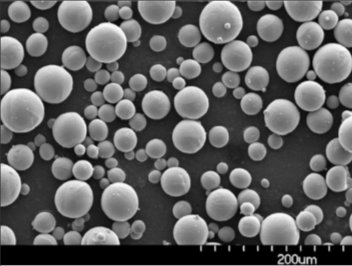
CM247LC powder for directed energy deposition is the powder-feed form of CM247LC, a cast nickel superalloy developed for severe thermal service in gas-turbine environments. In additive manufacturing, the alloy is supplied as a spherical powder with a particle size distribution suited to powder-fed deposition heads rather than the finer fractions commonly used in laser powder bed fusion.
CM247LC as a Nickel Superalloy Family Member
CM247LC belongs to the broader group of precipitation-hardened nickel superalloys. Its strengthening strategy relies on a high volume fraction of gamma-prime precipitates, supported by cobalt, tungsten, tantalum, titanium, hafnium, and chromium additions that help the alloy remain stable under long exposures to heat and stress.
This places CM247LC in a more demanding category than general-purpose AM nickel grades. Buyers reviewing broader nickel-based powder categories typically encounter CM247LC only when the application requires a hotter service envelope than Inconel 625 or Inconel 718 can comfortably provide.
Why the Alloy Exists
The alloy was designed to solve a specific engineering problem: maintaining structural integrity in components exposed to high temperature, thermal cycling, and sustained mechanical loading. In conventional manufacturing, that made CM247LC relevant to cast hot-section parts such as turbine blades, vanes, and related hardware.
In additive manufacturing, the same logic still applies. The material is not selected because it is forgiving; it is selected because it can deliver the sort of high-temperature performance that easier-to-process alloys may not sustain over the same duty cycle.
What Directed Energy Deposition Changes
Directed energy deposition, as described in the Wikipedia overview of directed energy deposition, feeds powder into a focused energy source where it is melted during deposition. That process favors coarser, highly flowable powder cuts and makes powder stream stability, feeder consistency, and melt-pool control central to success.
For CM247LC, this matters because metallurgy and process physics interact strongly. A crack-prone high-temperature alloy can only perform as intended if the powder feed is stable, chemistry is controlled, and the thermal history is matched to the substrate and repair geometry.
Core Characteristics of CM247LC Powder for Directed Energy Deposition
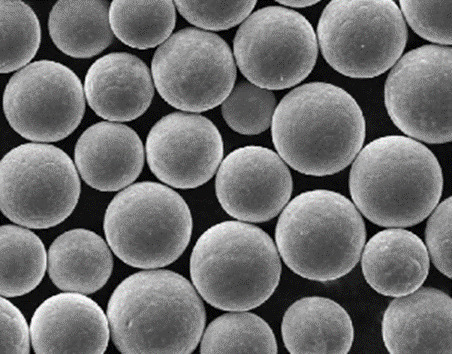
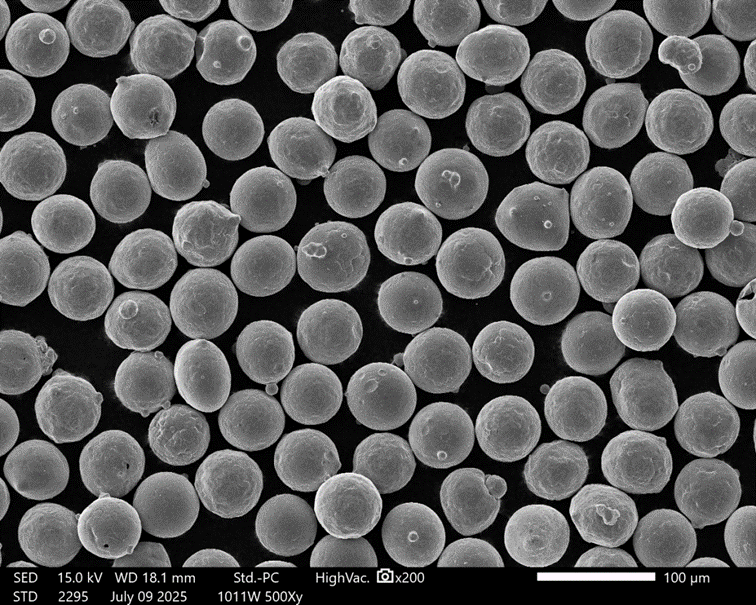
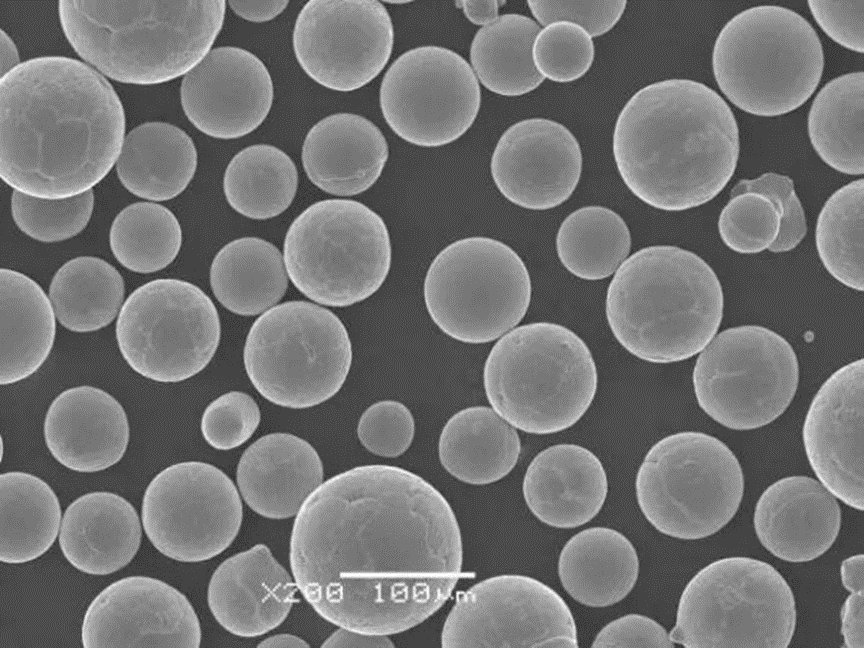
The defining features of this feedstock are high-temperature strength, oxidation resistance, and suitability for repair-style deposition on expensive components. The powder is normally produced with high sphericity and relatively low fines so that it can travel consistently through the delivery system and enter the melt pool with predictable efficiency.
gamma-prime-strengthened nickel superalloy is the most accurate shorthand for the material. That phrase explains both its value and its challenge: excellent hot performance, but a narrower process window than more ductile AM alloys.
Chemische Zusammensetzung
CM247LC is chemically complex because its performance comes from a coordinated balance of matrix strength, precipitate strengthening, carbide formation, and grain-boundary control. Small changes in chemistry can influence cracking behavior, heat-treatment response, oxidation resistance, and long-term creep performance.
| Element | Typical Content (wt%) | Practical Range (wt%) | Rolle in der Metallurgie |
|---|---|---|---|
| Nickel (Ni) | Bilanz | Bilanz | Matrix phase providing high-temperature structural stability |
| Kobalt (Co) | 9.0–9.5 | 8.5–10.0 | Raises hot strength and influences gamma-prime stability |
| Chrom (Cr) | 7.8–8.5 | 7.5–8.5 | Supports oxidation and hot-corrosion resistance |
| Wolfram (W) | 9.0–10.0 | 8.5–10.5 | Strong solid-solution strengthener for creep resistance |
| Aluminium (Al) | 5.3–5.8 | 5.2–5.9 | Principal gamma-prime former |
| Tantal (Ta) | 3.0–3.4 | 2.8–3.5 | Reinforces gamma-prime and contributes to carbide stability |
| Hafnium (Hf) | 1.2–1.5 | 1.0–1.5 | Improves grain-boundary strength and high-temperature durability |
| Titan (Ti) | 0.7–1.0 | 0.6–1.1 | Additional gamma-prime formation and strengthening |
| Molybdän (Mo) | 0.4–0.7 | 0.3–0.8 | Supplemental matrix strengthening |
| Kohlenstoff (C) | 0.07–0.10 | 0.06–0.10 | Carbide former supporting grain-boundary integrity |
| Bor (B) | 0.01–0.02 | 0.005–0.02 | Enhances grain-boundary cohesion |
| Zirkonium (Zr) | 0.005–0.02 | 0.003–0.02 | Helps boundary strengthening and structural stability |
Why Each Alloying Group Matters
The chemistry can be understood in functional groups. Nickel forms the matrix, cobalt and tungsten reinforce it, and aluminum, titanium, and tantalum generate the gamma-prime precipitates that make the alloy useful at elevated temperature.
Chromium contributes oxidation resistance, while hafnium, carbon, boron, and zirconium help govern boundary behavior. In a DED environment where thermal gradients are large and reheating is frequent, those boundary-sensitive additions have an outsized effect on whether the deposit remains structurally sound.
CM247LC Powder for Directed Energy Deposition and Chemistry Control
For powder-fed additive work, chemistry is not only a materials certificate issue. Oxygen pickup, minor-element drift, contamination, and recycled-powder handling can all influence how the final deposit solidifies and whether cracking risk increases during or after deposition.
That is why CM247LC powder for directed energy deposition is normally treated as a tightly controlled process material rather than a commodity alloy. Compared with simpler nickel powders, it tolerates less variation before deposition quality begins to move.
How CM247LC Differs from Easier Nickel Grades
Inconel 625 gains much of its appeal from corrosion resistance and broad fabrication tolerance. Inconel 718 is valued for a favorable combination of strength and relative printability. CM247LC moves the balance further toward elevated-temperature capability, accepting reduced processing latitude in exchange.
This distinction matters during powder selection. If the application does not truly require a turbine-class thermal capability, the chemistry package of CM247LC may represent unnecessary complexity rather than a benefit.
Physikalische und mechanische Eigenschaften
Property values for CM247LC deposits are strongly route dependent. Powder quality, deposition parameters, dilution from the substrate, residual stress management, heat treatment, and final defect population all influence the measured outcome, so published figures should be read as typical engineering ranges rather than guaranteed values for every build.
| Eigentum | Typischer Wert | Einheit | Test Standard / Basis |
|---|---|---|---|
| Dichte | 8.5–8.6 | g/cm³ | Nominal alloy value, consolidated material |
| Solidustemperatur | 1310–1330 | °C | Typical literature range |
| Liquidustemperatur | 1360–1375 | °C | Typical literature range |
| Endgültige Zugfestigkeit | 900–1250 | MPa | Typical room-temperature range after suitable processing |
| Streckgrenze | 650–1050 | MPa | Typical 0.2% offset value |
| Dehnung | 3–8 | % | Typical route-dependent ductility range |
| Härte | 380–450 | HV | Typical aged or heat-treated condition |
| Wärmeleitfähigkeit | 10-14 | W/m-K | Ungefährer Bereich der Raumtemperatur |
| Kriechwiderstand | Hoch | Qualitative | Superior to general-purpose AM nickel grades at elevated temperature |
Interpreting Typical Property Values
These numbers describe the alloy’s engineering profile, not a fixed certificate promise. DED deposits can show different grain structures from cast or wrought product because thermal gradients, bead overlap, and repeated reheating shape the final microstructure layer by layer.
As a result, tensile data should always be tied to the process route and heat treatment used to obtain it. A well-controlled build and post-process sequence can approach the intended material behavior, while a poorly controlled sequence may leave porosity, cracking, segregation, or undesirable residual stress.
CM247LC Powder for Directed Energy Deposition in Repair Conditions
Repair applications add a second layer of complexity because the deposited metal interacts with a pre-existing substrate. If the base material is compositionally similar, final chemistry in the repair zone may stay close to target; if it is different, dilution can shift local phase balance and alter strength, hardness, or crack sensitivity.
This is why repair qualification is often more demanding than greenfield deposition. The powder may be excellent, but the repair outcome still depends on joint geometry, base-metal condition, preheat strategy, interpass temperature, and post-repair heat treatment.
In high-temperature DED repair, the deposit, substrate, and thermal cycle function as one metallurgical system.
Why Elevated-Temperature Performance Dominates Material Selection
CM247LC is rarely chosen because it offers the highest room-temperature ductility. Its value lies in its ability to retain useful strength under service conditions that would erode the creep margin of more printable alloys.
crack-sensitive high-temperature alloy is therefore a fair description. It is technically demanding, but its performance potential justifies the difficulty in the right thermal regime.
Technische Daten und verfügbare Güteklassen
Powder specifications for directed energy deposition emphasize chemistry consistency, flow behavior, morphology, and a particle size distribution aligned with feeder and nozzle design. The same nominal alloy can behave very differently in practice if fines content, oxygen level, or particle roundness drift outside the window expected by the deposition system.
| Grade / Standard Reference | PSD Range (µm) | Scheinbare Dichte (g/cm³) | Tap Density (g/cm³) | Hall Flow (s/50 g) | Oxygen (wt%) | Sphericity / Note |
|---|---|---|---|---|---|---|
| Fine DED Grade | 45–90 | 4.8–5.3 | 5.4–5.9 | 12–18 | 0.02–0.08 | High sphericity for smaller nozzles and tighter tracks |
| Standard DED Grade | 45-105 | 4.9–5.4 | 5.5–6.0 | 11–17 | 0.02–0.07 | Common general-purpose deposition range |
| Coarse DED Grade | 53-150 | 5.0–5.5 | 5.6–6.2 | 10–16 | 0.02–0.06 | Supports higher mass flow and wider beads |
| Laserauftragschweiß-Güteklasse | 75–150 | 5.1–5.6 | 5.7–6.3 | 10-15 | 0.02–0.06 | Typical for robust repair and surface build-up |
| ASTM Reporting Practice | By purchase spec | Lot specific | Lot specific | Lot specific | Lot specific | Often aligned with powder test methods and AM vocabulary |
| ISO / DIN / GB / AMS Cross-Reference | By project requirement | Lot specific | Lot specific | Lot specific | Lot specific | Used for documentation alignment rather than a single universal CM247LC code |
Typical Particle Size Distribution Windows
DED usually favors coarser powder than powder bed fusion because the powder must move reliably through a feeder and emerge as a coherent powder stream. A 45–105 µm cut is often a useful baseline, while 53–150 µm is common when higher deposition rates or larger spot sizes are required.
Very fine powder fractions can improve melt-in behavior in some cases, but they can also reduce flow consistency and raise handling sensitivity. For CM247LC, that trade-off often works against the stability needed for repeatable deposition.
Standards Context for CM247LC Powder for Directed Energy Deposition
Many buyers structure specifications using general additive manufacturing and powder-characterization language rather than a single dedicated CM247LC DED standard. The work of the ASTM F42 additive manufacturing committee is often relevant to how users define terminology, powder reporting, and qualification logic for metal AM programs.
In addition, internal aerospace or energy-sector procedures may control acceptance limits more tightly than public standards. This is especially common for repair programs, where the geometry, substrate, and service duty of the part drive the qualification plan.
Supply Grades and End-Use Matching
In a real supply chain, not every CM247LC powder lot should be treated as interchangeable. DED repair powder, laser cladding powder, and fine AM powder may share the same nominal alloy chemistry while differing in PSD, flow behavior, and feeder compatibility.
A supplier that supports multiple process routes usually separates those grades deliberately. The same logic applies when comparing neighboring categories such as cobalt repair alloy powders for wear-focused jobs or nickel superalloys for heat-focused jobs.
Herstellungsprozess
The powder-making route has a direct impact on particle morphology, internal porosity, surface oxidation, and contamination risk. For CM247LC, those variables are not secondary quality markers; they influence how consistently powder feeds and how predictably it behaves in the melt pool.
| Prozess | Typical Sphericity | Oxygen Pickup Risk | PSD-Steuerung | Durchsatz | Relative Kosten | Practical Comment |
|---|---|---|---|---|---|---|
| Gaszerstäubung (GA) | Hoch | Gering bis mäßig | Gut | Hoch | Mittel | Industrial mainstream route with scalable output |
| PREP | Sehr hoch | Sehr niedrig | Gut | Niedrig bis mittel | Hoch | Excellent particle roundness and cleanliness |
| VIGA | Hoch bis sehr hoch | Niedrig | Gut bis sehr gut | Mittel | Mittel-hoch | Vacuum induction plus gas atomization helps control contamination |
| EIGA | Sehr hoch | Sehr niedrig | Sehr gut | Mittel | Hoch | Electrode melting route for high-purity spherical powder |
| Specialty Plasma Routes | Hoch bis sehr hoch | Niedrig | Gut | Niedrig | Hoch | Used where premium morphology or purity outweighs cost |
Gas Atomization for Spherical DED Powder
Gas atomization remains the most common commercial route for nickel-alloy AM powder because it balances volume, cost, and performance. Properly controlled GA powder can achieve the morphology and chemistry consistency required for directed energy deposition, especially where deposition rates and supply reliability matter.
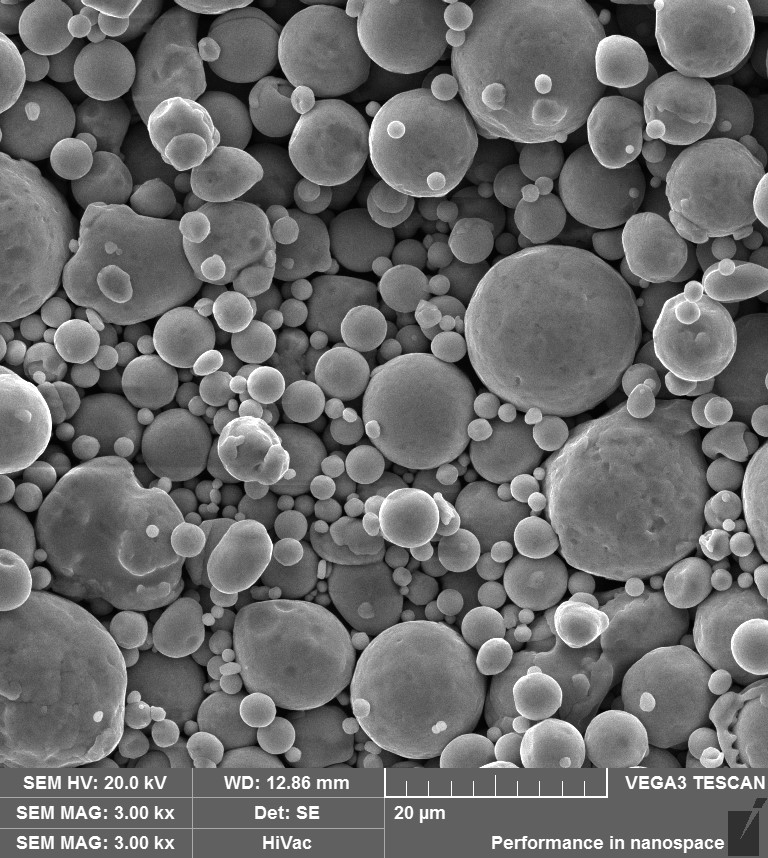
For CM247LC, the key is not simply whether the powder is atomized, but how well satellites, internal porosity, and oxygen are controlled. A nominally correct alloy with unstable morphology can undermine feeder performance and bead consistency.
Abwägungen zwischen PREP, VIGA und EIGA
PREP is valued for producing very spherical particles with low contamination risk, making it attractive for demanding additive programs. VIGA and EIGA also occupy the premium segment, often delivering strong chemistry control and cleaner particle surfaces than more conventional routes.
The trade-off is economic. These methods typically cost more and may offer lower throughput, so they are most attractive when the cost of a failed repair or rejected hot-section component is far higher than the extra powder cost.
Why Powder Route Matters in CM247LC Powder for Directed Energy Deposition
DED does not spread powder into a thin bed, but it still depends on powder quality in a very direct way. Stream focus, powder catchment efficiency, and bead geometry all respond to morphology, density, and flow consistency.
spherical DED powder morphology is therefore a performance variable, not just a catalog descriptor. Stable particle shape and controlled PSD support consistent deposition and help reduce one source of variation in an already demanding alloy system.
Process Qualification Beyond the Powder
Even premium powder cannot compensate for an unsuitable deposition setup. Laser power, powder feed rate, shield gas selection, preheat practice, stand-off distance, substrate restraint, and post-build stress relief all affect whether CM247LC can be deposited without unacceptable cracking or distortion.
This broader qualification burden is normal for high-performance superalloys. The powder route sets the starting quality level, but final success depends on integrating that powder into a controlled manufacturing process.
Anwendungen nach Branche
CM247LC powder for directed energy deposition is relevant where high-temperature performance and component value outweigh the material’s processing difficulty. It is seldom the first-choice alloy for routine production parts, but it becomes attractive when repairability and service temperature create a strong economic case.
Aerospace Hot-Section Repair
Aerospace is the clearest use case. Turbine blades, vanes, shrouds, seal segments, and related hot-section components often justify repair because replacement costs are high and the service environment is severe.
In these applications, DED can restore worn geometry, rebuild edges, replace locally damaged material, or add sacrificial stock for final machining. CM247LC is chosen when the rebuilt zone must continue to tolerate high heat, oxidation, and time-dependent deformation.
Industrial Gas Turbines and Power Generation
Land-based energy hardware faces similar logic, especially in gas turbines where operators aim to extend life between replacement cycles. DED enables localized restoration while limiting the amount of premium superalloy required, which can be particularly valuable for large, expensive components.
The alloy is relevant when the deposit must support hot-service durability rather than just room-temperature dimensional restoration. That distinction separates CM247LC from lower-cost repair materials used in moderate-temperature maintenance work.
Oil, Gas, and High-Temperature Process Equipment
Some oil and gas hardware, burners, and process-industry components operate in corrosive and thermally aggressive zones where a high-temperature superalloy repair is justified. While wear-focused cobalt alloys are common in many field repairs, CM247LC becomes more relevant when long exposure to heat, rather than abrasion alone, is the dominant design challenge.
This is one reason material selection must begin with failure analysis. A hardfacing alloy may solve a wear problem efficiently, but it may not deliver the same creep or oxidation resistance as CM247LC under sustained thermal load.
Tooling, Hybrid Manufacturing, and Feature Addition
DED is not limited to classic repair. It can also add high-temperature features onto pre-machined substrates or build near-net-shape superalloy sections that are later finish-machined to tolerance.
This approach is useful when only selected zones of a component need premium thermal capability. Rather than manufacture the entire part from a demanding alloy, engineers can localize the material to where temperature and stress are highest.
Why Medical and Automotive Use Is More Limited
CM247LC is not a mainstream medical alloy and is rarely a primary automotive lightweighting material. In those sectors, titanium, stainless, cobalt-chromium, or aluminum powders are usually better aligned with biocompatibility, density, cost, or production-volume requirements.
Readers comparing adjacent material families can see that contrast in broader metal AM application sectors. For weight-sensitive systems, titanium or aluminum frequently makes more sense; for ultra-hot sections, CM247LC has a more defensible role.
Vergleich mit alternativen Materialien
No powder should be evaluated in isolation. CM247LC competes with other nickel superalloys, cobalt-based repair materials, and in some cases iron-based alternatives where service temperature is less extreme and deposition ease becomes a bigger priority.
| Material | Dichte (g/cm³) | Strength Profile | Directed Energy Deposition Printability | High-Temperature Capability | Corrosion / Oxidation Resistance | Relative Kosten |
|---|---|---|---|---|---|---|
| CM247LC powder for directed energy deposition | 8.5–8.6 | Very high at elevated temperature | Moderate to difficult | Ausgezeichnet | Strong oxidation and hot-corrosion resistance | Hoch |
| Inconel 718-Pulver | 8.1–8.2 | High general structural strength | Gut bis sehr gut | Gut bis sehr gut | Gute Korrosions- und Oxidationsbeständigkeit | Mittel-hoch |
| Inconel 625-Pulver | 8.4–8.5 | Mäßig bis hoch | Gut | Mäßig bis gut | Ausgezeichnete Korrosionsbeständigkeit | Mittel-hoch |
| CoCr-based DED powder | 8.3–8.8 | Hohe Härte und Verschleißfestigkeit | Gut | Mäßig bis gut | Very good wear and corrosion behavior | Hoch |
| Iron-based repair powder | 7.7–7.9 | Mäßig | Sehr gut | Mäßig | Mäßig | Niedrig bis mittel |
CM247LC Versus Inconel 718
Inconel 718 is usually easier to qualify in AM because its processing window is broader and its cracking tendency is generally lower. It remains one of the most practical high-strength nickel alloys for additive manufacturing, especially where service temperature is demanding but not at the upper edge of superalloy duty.
CM247LC becomes more compelling when creep strength and hot-section durability are more important than deposition convenience. If the application does not require that extra thermal margin, 718 is often the more efficient material choice.
CM247LC Versus Inconel 625
Inconel 625 is widely used for corrosion-driven service and repair work because it combines good ductility with reliable processability. It can be an excellent DED material where chemical resistance matters more than the highest possible elevated-temperature strength.
CM247LC occupies a different niche. Its harder processing route is justified only when the part’s thermal exposure exceeds the range where 625 remains an economical long-term option.
CM247LC Versus Cobalt and Iron-Based Materials
Cobalt-based powders can outperform nickel superalloys in certain wear, galling, or hot-corrosion scenarios, while iron-based repair powders often dominate on cost and ease of deposition in moderate-service applications. Neither class directly replaces CM247LC in severe turbine-duty conditions, but both can outperform it when the failure mode is different.
This is why comparison must stay application specific. A lower-cost iron-based option may be entirely suitable for a moderate-temperature shaft repair, while a cobalt alloy may be superior for hardfacing a wear surface.
Where CM247LC Wins
CM247LC wins when service temperature, oxidation resistance, and creep performance define the application more strongly than productivity or ease of qualification. Its best use cases are therefore concentrated in hot-section restoration, premium repair, and selective deposition on expensive hardware.
hot-section repair economics often determine final material choice. If extending component life saves more value than the added cost of superalloy powder development and qualification, CM247LC becomes a rational engineering material rather than a specialty indulgence.
Unser Unternehmen
Shanghai Truer Technology Co., Ltd., which operates am-printing.com, was established in 2009 and created its additive manufacturing business in 2019. According to the company information provided, Truer integrates 3D printing powder-making equipment and powder services, with capabilities in Selective Electron Beam Melting equipment, Plasma Rotating Electrode Process powder-making equipment, and gas atomization, while supplying spherical metal powders including TiNi, TiTa, TiAl, TiNbZr, CoCrMo, and broader nickel-, cobalt-, titanium-, copper-, aluminum-, and stainless-based grades for SLM, SEBM, DED, laser cladding, powder metallurgy, MIM, HIP, cold and hot spraying, welding, and coating across sectors such as medical, aerospace, nuclear power, 3C electronics, hand tools, and remote-control vehicles. Additional background on the business structure and history appears on the Unternehmensprofilseite.
FAQ
Q1. What particle size is typically used for CM247LC powder for directed energy deposition?
A common starting range is 45–105 µm because it balances feeder stability, stream coherence, and deposition efficiency for many powder-fed systems. Some equipment performs better with 53–150 µm for larger nozzles and higher build rates. The correct range should always be matched to nozzle design, laser power, and target bead geometry.
Q2. Is CM247LC powder for directed energy deposition mainly used for repair or for new builds?
It is used for both, but repair is often the stronger economic case. High-value turbine hardware, hot-section components, and feature restoration work benefit from the ability to add material only where needed. New builds are possible, yet they usually require careful qualification because the alloy is less forgiving than mainstream AM nickel grades.
Q3. Why is CM247LC more difficult to process than Inconel 718 or 625?
CM247LC contains a stronger gamma-prime-forming chemistry, which improves elevated-temperature strength but narrows the processing window. That chemistry increases sensitivity to residual stress, thermal cracking, and reheating effects during deposition. In practice, it demands tighter control of preheat, interpass temperature, shielding, and post-process heat treatment.
Q4. Can CM247LC powder for directed energy deposition be reused after a build?
Reuse may be possible under controlled procedures, but it is usually more restrictive than with easier alloys. Oxygen pickup, fines generation, contamination, and PSD drift can change feeding behavior and deposition quality. Programs handling critical parts normally define explicit sieving, blending, and lot-tracking rules before powder reuse is approved.
Q5. Which quality checks matter most when buying CM247LC powder for directed energy deposition?
Chemistry, PSD, oxygen level, morphology, apparent density, tap density, and Hall flow are the core checks. For DED, feeder behavior and stream consistency are especially important because unstable powder delivery quickly affects bead shape and dilution. Buyers should also review documentation on production route, lot traceability, and recommended application windows.
Q6. Which industries benefit most from CM247LC powder for directed energy deposition?
Aerospace and industrial gas turbines are the most natural fit because they combine extreme service temperatures with very high component value. Selected oil and gas, energy, and hybrid-manufacturing applications can also justify the alloy when hot strength outweighs printability concerns. It is far less common in lightweight automotive structures or mainstream medical implants, where other powders usually provide a better property-to-cost balance.