Kurzantwort
CoCrMo powder for dental 3D printing is a spherical cobalt-chromium-molybdenum alloy feedstock used to manufacture crowns, bridges, copings, and removable partial denture frameworks by laser powder bed fusion. It is widely chosen because it combines high stiffness, strong corrosion resistance in the oral environment, reliable thin-wall printability, and good post-polishing performance. For dental labs and AM manufacturers that prioritize fit, repeatability, and durable framework strength, CoCrMo remains one of the most practical metal powder choices in digital dentistry.
What Is CoCrMo powder for dental 3D printing
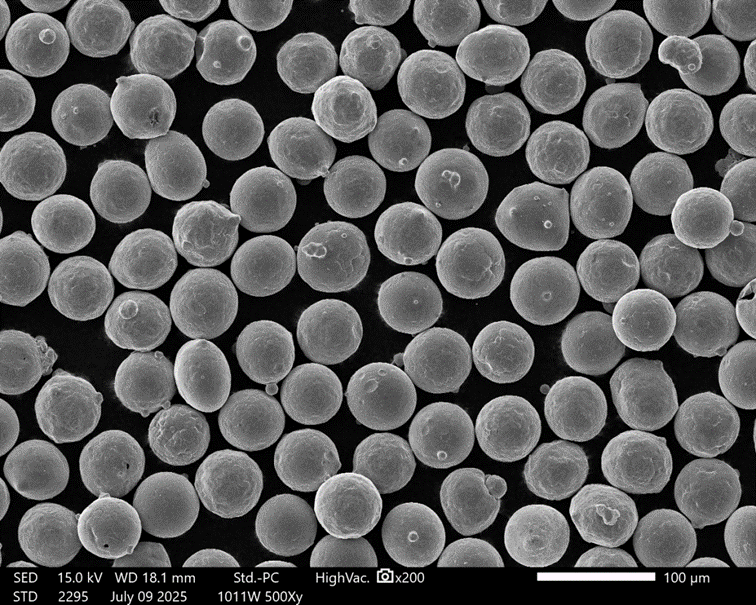
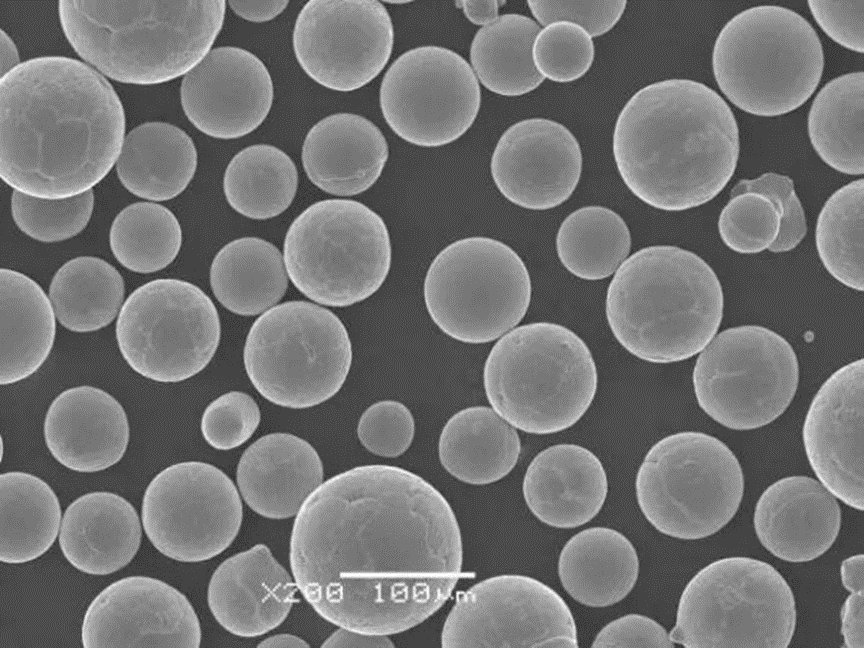
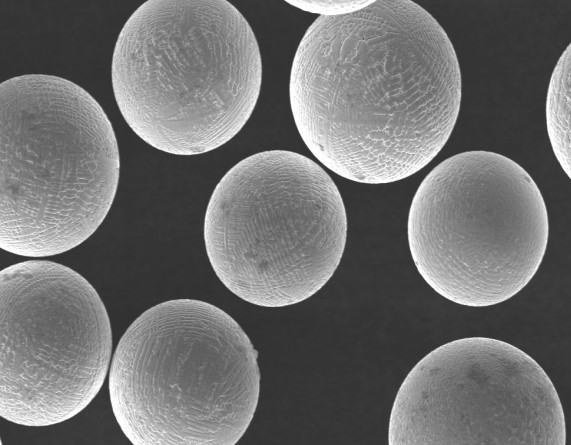
CoCrMo powder for dental 3D printing is a pre-alloyed metal powder based on the cobalt-chromium-molybdenum family that has long been used in biomedical and dental metallurgy. In additive manufacturing, it is typically supplied as a fine, highly spherical powder optimized for laser powder bed fusion, where stable recoating, uniform energy absorption, and predictable densification are essential. Dental users rely on this alloy because it supports complex geometries that are difficult to cast consistently at small scale.
CoCrMo powder for dental 3D printing within the cobalt alloy family
This material belongs to the broader category of cobalt-based engineering alloys rather than titanium, stainless steel, or nickel systems. Its base matrix is cobalt, while chromium and molybdenum are added to improve corrosion resistance, strength, and wear behavior. Within the wider family of cobalt-based spherical alloy powders, dental CoCrMo is one of the most established compositions for precision oral prosthetic work.
Why the dental sector uses CoCrMo instead of relying only on casting
Traditional dental casting can produce good restorations, but it also introduces shrinkage variables, investment handling, finishing variability, and operator-dependent outcomes. Metal additive manufacturing shifts more of the process into the digital chain, from scan to CAD to nesting to print to finishing. That change matters most when many customized parts must be built with consistent marginal fit and minimal geometry drift across thin sections.
Core characteristics of the alloy
The appeal of CoCrMo begins with rigidity. Dental frameworks often need to resist deformation under cyclic bite forces, clasp loading, and daily handling, so modulus and strength are often more important than low density. The alloy also forms a chromium-rich passive surface film that supports corrosion resistance in saliva-exposed service, while molybdenum improves localized corrosion performance and contributes to overall mechanical stability.

How CoCrMo differs from nearby dental alloy families
CoCrMo should not be confused with every cobalt-chrome dental alloy on the market. Some grades include tungsten as a more prominent strengthening addition, while others tune carbon or residual element levels for casting versus additive manufacturing. For AM, the most important distinction is not only the nominal chemistry but the combination of chemistry, particle morphology, and powder quality control that makes the alloy suitable for consistent layer-by-layer fusion.
In dental metal AM, part quality starts with powder behavior before the first laser track is scanned.
Chemische Zusammensetzung
The chemistry of CoCrMo powder for dental 3D printing typically aligns with the well-known cobalt-28 chromium-6 molybdenum alloy family, although commercial AM grades may narrow certain residuals or interstitial limits to improve powder cleanliness and reproducibility. In practice, buyers should treat published chemistry ranges as a framework rather than as the complete qualification package. Powder for dental AM is evaluated not only by bulk composition but also by oxygen level, contamination control, and consistency from lot to lot.
| Element | Typical Content (wt%) | Typical Control Range (wt%) | Rolle in der Metallurgie | Effect in Dental AM |
|---|---|---|---|---|
| Kobalt (Co) | Bilanz | Bilanz | Base matrix, hot strength, wear resistance | Provides structural backbone and stiffness |
| Chrom (Cr) | 27.0–30.0 | 27.0–30.0 | Passive-film formation, oxidation and corrosion resistance | Improves resistance to saliva-related corrosion |
| Molybdän (Mo) | 5.0–7.0 | 5.0–7.0 | Solid-solution strengthening, pitting resistance | Supports strength and service durability |
| Kohlenstoff (C) | 0.02–0.25 | 0,35 max | Carbide formation, hardness influence | Higher content can raise hardness but lower ductility |
| Silizium (Si) | 0.2–1.0 | 1,0 max | Deoxidation, melt cleanliness support | Affects process metallurgy and toughness balance |
| Mangan (Mn) | 0.1–1.0 | 1,0 max | Deoxidation and alloy processing support | Helps maintain stable metallurgy during melting |
| Eisen (Fe) | 0.1–0.75 | 0.75 max | Residual impurity control | Excess may reduce corrosion stability |
| Nickel (Ni) | Spurensuche | 0.5 max typical | Residual element usually minimized | Kept low for material consistency and dental suitability |
| Nitrogen / Oxygen | Process controlled | Product specific | Interstitial control | Influences powder cleanliness and fusion response |
Chromium as the corrosion-resistance driver
Chromium is the most important alloying element for passive surface protection. In the oral cavity, restorations are exposed to moisture, changing pH, food acids, and temperature variation, so long-term stability depends heavily on a robust passive oxide layer. That is why dental CoCrMo compositions maintain a relatively high chromium level and are often discussed in relation to the ASTM F75 cobalt-chromium-molybdenum implant alloy standard, even though dental AM products are qualified through more than chemistry alone.
Molybdenum and framework durability
Molybdenum strengthens the matrix and improves resistance to localized corrosion. In dental frameworks, this is especially relevant at thin connectors and high-stress junctions, where rigidity and structural reliability matter more than decorative appearance. Proper molybdenum control helps the alloy remain robust without making post-processing or finishing impractical.
Carbon, carbides, and the ductility trade-off
Carbon is one of the most sensitive elements in CoCrMo metallurgy because it influences carbide formation, hardness, and wear resistance. A modest carbon level can be beneficial, but excessive carbide formation can reduce elongation and increase brittleness in critical features. For dental AM, producers therefore watch carbon not as an isolated number but as part of a broader microstructure strategy that includes thermal history and post-build heat treatment.
Residual elements and process cleanliness
Residual limits for nickel, iron, sulfur, phosphorus, and interstitial oxygen matter because dental parts are small, stress-bearing, and expected to be reproducible over many builds. A powder that is nominally in chemistry but contaminated by oxidation or handling may still spread poorly or fuse inconsistently. This is why Reinheit des Pulvers is a practical performance issue, not just a certificate checkbox.
Physikalische und mechanische Eigenschaften
CoCrMo powder for dental 3D printing is valued because its final printed parts offer a strong balance of hardness, elastic modulus, corrosion performance, and dimensional stability. Actual part properties depend on build orientation, volumetric energy density, layer thickness, support strategy, heat treatment, and finishing route. Even so, the typical property window below reflects why this alloy remains a standard choice for crowns, bridges, bars, and removable partial denture structures.
| Eigentum | Typischer Wert | Einheit | Test Standard / Reference Basis |
|---|---|---|---|
| Dichte | 8.2–8.5 | g/cm³ | Typical CoCrMo alloy range |
| Solidustemperatur | 1,280–1,350 | °C | Typical alloy reference range |
| Liquidustemperatur | 1,350–1,450 | °C | Typical alloy reference range |
| Endgültige Zugfestigkeit | 900–1,350 | MPa | Typical AM-built and heat-treated range |
| Streckgrenze | 600–1,000 | MPa | Typical AM-built and heat-treated range |
| Dehnung beim Bruch | 3–12 | % | Process and orientation dependent |
| Härte | 300–450 | HV | Typical printed and finished range |
| Elastischer Modul | 190–230 | GPa | Typical cobalt alloy range |
| Wärmeleitfähigkeit | 12–18 | W/m-K | Typischer Raumtemperaturbereich |
Why stiffness matters in dental structures
Dental frameworks are not judged only by tensile strength. Many clinically relevant parts are thin, elongated, or clasped, which means resistance to flexure is central to performance. CoCrMo offers a high modulus compared with titanium alloys, helping preserve shape in bridges and removable partial denture frameworks where excessive deflection can compromise function.
Hardness, polishing, and wear behavior
As-built CoCrMo can be relatively hard, and post-processing routes are chosen accordingly. After support removal, heat treatment, blasting, machining, and polishing, the alloy can achieve the surface quality expected for dental substructures while preserving its mechanical backbone. That hardness also supports good wear behavior in applications where repeated contact and handling are unavoidable.
Corrosion performance in the oral environment
In dentistry, corrosion resistance is not an abstract material property; it is a direct service requirement. Saliva exposure, thermal cycling from food and beverages, and cleaning agents all challenge metallic restorations over time. The chromium-rich passive film and the role of molybdenum in localized corrosion resistance explain why CoCrMo continues to be accepted as a durable dental framework material.
Why printed property numbers vary more than brochure values suggest
Mechanical data published for CoCrMo often span a wide range because additive manufacturing creates local thermal histories that differ from casting and wrought processing. A vertical thin-wall bridge, a dense support block, and a bar with large cross-sections will not cool in exactly the same way. For that reason, experienced users qualify properties at the part-family level rather than assuming one test coupon reflects every clinical geometry.
Technische Daten und verfügbare Güteklassen
For dental production, powder specification is usually more important than nominal alloy name. Two suppliers may both offer CoCrMo, yet only one may provide the narrow particle size distribution, morphology, flowability, and low oxygen content required for reliable fine-feature laser powder bed fusion. Material buyers therefore look at PSD, apparent density, tap density, Hall flow, interstitial control, and reuse behavior together.
| Klassenstufe / Anmeldeformular | Typical PSD (µm) | Scheinbare Dichte (g/cm³) | Tap Density (g/cm³) | Hall Flow (s/50 g) | Sauerstoffgehalt | Sphericity / Cross-Reference |
|---|---|---|---|---|---|---|
| Ultra-Fine Dental LPBF Grade | 10-30 | 4.2–4.8 | 4.8–5.5 | 13–20 | Low, product specific | Very high sphericity for fine-layer printing |
| Standard Dental LPBF Grade | 15-45 | 4.3–4.9 | 4.9–5.6 | 12–19 | Low, product specific | Common dental production grade |
| General LPBF Grade | 15-53 | 4.2–4.8 | 4.8–5.5 | 13–20 | Low, product specific | Broad AM powder window |
| DED / Verkleidungsgüte | 45-105 | 4.5–5.2 | 5.1–5.9 | 11–17 | Product specific | More common outside fine dental work |
| Coarse Engineering Grade | 53-150 | 4.6–5.3 | 5.2–6.0 | 10–16 | Product specific | Typically not used for detailed dental LPBF |
| Standards Cross-Reference Set | Product specific | Measured by method | Measured by method | Measured by method | Product specific | Ordered to ASTM, ISO, GB, DIN, or internal AM specs |
Fine powder cuts for dental CoCrMo production
The most common dental builds use fine distributions such as 10–30 µm or 15–45 µm. These ranges support thin layers, better contour definition, and more stable production of small features like margins, connector zones, and clasp details. Coarser powders can improve productivity in other AM routes, but they usually do not deliver the same geometric fidelity in dental laser systems.
Standards language and grade referencing
Dental CoCrMo powders are frequently described using chemistry families derived from implant or surgical alloy references, even when the powder itself is tailored for additive manufacturing. Standard AM vocabulary is commonly aligned with the ISO/ASTM 52900 – Terminologie der additiven Fertigung, while chemistry discussions often reference ISO 5832-4 cobalt-chromium-molybdenum alloy requirements. In commercial practice, these references are combined with supplier-specific powder metrics and machine qualification data.
Flowability and packing behavior
A dental LPBF powder should spread smoothly, resist segregation, and form consistent layers across repeated recoating cycles. Apparent density and tap density indicate how the powder packs, while Hall flow gives a practical view of flow performance under standardized conditions. None of these values should be interpreted alone, but together they reveal whether a powder is likely to support uniform bed formation.
Why reuse control belongs in the specification file
Reused powder can remain useful, but only within defined process limits. Over many cycles, the powder population may shift due to spatters, oxidized fines, or gradual changes in particle-size balance. For dental parts where feature fidelity is critical, narrow PSD control and documented virgin-to-recycled blending rules are part of sound production discipline.
Herstellungsprozess
The manufacturing route used to produce CoCrMo powder has a direct effect on particle shape, satellite formation, internal porosity, oxygen pickup, and ultimately the way the powder behaves in a dental printer. Gas atomization is the mainstream choice because it can combine high sphericity with industrial-scale output, but premium routes such as PREP, VIGA, and EIGA also appear in the AM supply chain. The best choice depends on the required balance among morphology, cleanliness, throughput, and cost.
| Prozess | Sphärizität | Oxygen Pickup Risk | PSD-Steuerung | Durchsatz | Relative Kosten | Typical Relevance to Dental CoCrMo |
|---|---|---|---|---|---|---|
| Gaszerstäubung (GA) | Hoch | Low with inert control | Gut bis sehr gut | Hoch | Mäßig | Mainstream route for dental LPBF powder |
| PREP | Sehr hoch | Niedrig | Mäßig | Gering bis mäßig | Hoch | Premium spherical powder route |
| VIGA | Hoch | Very low to low | Gut bis sehr gut | Mäßig | Mäßig bis hoch | Clean melt handling for high-quality AM powders |
| EIGA | Hoch bis sehr hoch | Sehr niedrig | Gut | Mäßig | Hoch | Specialty route for premium cleanliness |
| Wasserzerstäubung | Gering bis mäßig | Höher | Mäßig | Hoch | Niedrig | Generally unsuitable for fine dental LPBF |
Gas atomization for CoCrMo powder for dental 3D printing
In gas atomization, molten alloy is disintegrated by high-velocity inert gas into fine droplets that rapidly solidify into spherical particles. The powder is then sieved or air-classified into target size fractions suitable for laser powder bed fusion. For dental applications, GA is attractive because it offers a practical balance of morphology, availability, and cost.
PREP and ultra-spherical powder production
Plasma Rotating Electrode Process generates powder by melting the end of a rapidly spinning alloy electrode and flinging droplets outward, where they solidify into highly spherical particles. This route can produce powder with very low satellite content and excellent flow behavior. However, PREP generally has lower throughput and higher cost than gas atomization, so it is often reserved for applications where morphology advantages justify the premium.
VIGA and EIGA trade-offs
Vacuum induction gas atomization and electrode induction gas atomization are both relevant when users want tighter atmosphere control and high powder cleanliness. These methods can reduce contamination risk and improve melt handling discipline, which is important for premium biomedical and aerospace-grade powders. In the broader context of dental manufacturing, the decision usually comes down to whether the additional cleanliness gain produces measurable improvement in print stability or part quality.
What matters most to the end user
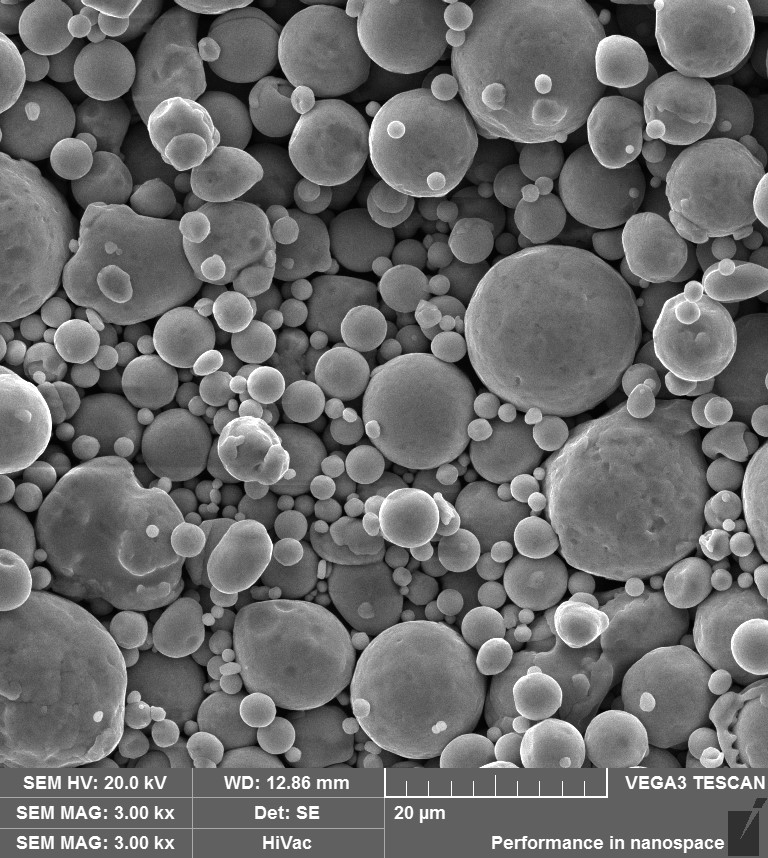
The process name alone does not guarantee better powder. Buyers should focus on sphericity, satellite content, oxygen level, flowability, and repeatability across batches, all of which influence recoating and melt-pool consistency. NIST discussions of metal powder characterization for additive manufacturing reinforce the point that powder properties are central to AM process control, especially when fine features and tight tolerances are involved.
Anwendungen nach Branche
Although the keyword focuses on dental work, the alloy family behind CoCrMo powder is relevant across several industrial sectors where corrosion resistance, strength, and wear behavior matter. The dental version is usually optimized for fine LPBF, but the same cobalt-based metallurgy has a wider footprint in medical and engineering manufacturing.
Dental laboratories and restorative manufacturing
This is the primary application area. CoCrMo powder is used to print crowns, copings, bridge frameworks, bars, and removable partial denture frameworks where precision and rigidity are more important than low density. The alloy performs well in digitally managed workflows that require many customized geometries with repeatable build quality.
Medical and biomedical component development
The cobalt-chromium-molybdenum family has longstanding relevance in biomedical metallurgy, which is why dental CoCrMo is often discussed in the same technical language as implant-grade cobalt alloys. Even when a dental powder is not intended for implant manufacture, its material science is closely related to medical engineering concerns such as passivation, corrosion stability, and lot traceability. That overlap makes the alloy familiar to laboratories working across restorative and medical-adjacent metal AM programs.
Tooling, wear parts, and engineering prototypes
Cobalt-based alloys are also valued in non-dental settings for their wear resistance and structural strength. Fine dental grades are not always the most economical choice for large industrial parts, but they can still be used in R&D, benchmark printing, and specialized small components where surface quality and fine detail matter. Comparisons with titanium alloy powder systems oder nickel superalloy powder families usually highlight the very different design priorities of each material class.
Broader additive manufacturing workflows
The same company ecosystems that supply dental LPBF powder often serve multiple AM routes, including SLM, SEBM, DED, laser cladding, HIP, and powder metallurgy. That matters because powder suppliers with broader end-use application coverage tend to understand how particle size, morphology, and chemistry must shift across processes. Dental CoCrMo is therefore part of a larger industrial conversation about spherical powder design, not an isolated niche material.
Vergleich mit alternativen Materialien
Material selection in dental additive manufacturing is rarely binary. Engineers and dental technicians compare stiffness, printability, corrosion resistance, finishing behavior, and cost while also considering machine compatibility and part geometry. CoCrMo remains strong in framework applications, but it competes with titanium, stainless steel, and alternative cobalt alloy variants depending on the indication.
| Material | Dichte (g/cm³) | Typisches Leistungsniveau | Druckbarkeit | Korrosionsbeständigkeit | Relative Kosten | Typical Best Fit |
|---|---|---|---|---|---|---|
| CoCrMo powder for dental 3D printing | 8.2–8.5 | Hoch | Very good in LPBF | Hoch | Mäßig | Dental frameworks, copings, bridges, RPD structures |
| Ti-6Al-4V-Pulver | 4.4–4.5 | Hoch | Gut | Ausgezeichnet | Hoch | Lightweight medical and implant-related parts |
| 316L-Edelstahlpulver | 7.9–8.0 | Mäßig | Ausgezeichnet | Sehr gut | Moderate to low | General corrosion-resistant parts and prototyping |
| CoCrW dental alloy powder | 8.3–8.7 | Hoch | Gut bis sehr gut | Hoch | Mäßig bis hoch | Rigid dental structures with variant alloy balance |
| Nickel-based superalloy powder | 8.1–8.5 | High at elevated temperature | Gut | Hoch | Hoch | Heat-resistant industrial parts rather than routine dental frameworks |
Where CoCrMo outperforms common alternatives
CoCrMo’s main advantage is the combination of stiffness, corrosion resistance, and mature dental process history. In thin frameworks, it often offers a more rigid solution than titanium, which can be helpful in structures where deflection must be minimized. It also occupies a more dental-specific niche than stainless steel, which is excellent for many industrial AM tasks but less central to high-performance prosthetic framework work.
Where titanium may be the better choice
Titanium is significantly lighter and has an excellent reputation in biomedical applications. If low mass or implant-oriented material strategy is the dominant requirement, titanium may be preferable despite its lower modulus. That is why some manufacturers maintain both titanium and CoCrMo process capability rather than treating one as a universal replacement for the other.
Why the best material depends on geometry and workflow
A full-arch bar, a delicate clasped framework, and a ceramic-supported coping do not impose identical material demands. Build orientation, support strategy, polishing route, and heat treatment can also shift the practical ranking of materials. In production, lot-to-lot consistency often matters as much as the headline strength number in a comparison chart.
Unser Unternehmen
Shanghai Truer Technology Co., Ltd was established in 2009 and created its additive manufacturing business in 2019. Operating am-printing.com, the company states that it integrates 3D printing powder-making equipment and services with spherical metal powder supply, including CoCrMo, TiNi, TiTa, TiAl, TiNbZr, nickel-based, cobalt-based, titanium-based, copper-based, aluminum-based, and stainless steel powders. Its published technical scope includes Selective Electron Beam Melting equipment, Plasma Rotating Electrode Process powder-making equipment, and gas atomization-related capabilities, along with additive manufacturing services spanning SLM, SEBM, DED, laser cladding, powder metallurgy, MIM, HIP, cold and hot spraying, welding, and coating. The company also describes a joint innovation center for metal 3D printing with laboratories and experts, and a more detailed corporate overview appears on its company information page.
FAQ
Q1. Is CoCrMo powder for dental 3D printing suitable for crowns and bridges?
Yes. It is widely used for crowns, copings, bridge frameworks, and other dental substructures because it offers high rigidity, good corrosion resistance, and reliable fine-feature printability. Final suitability still depends on the machine parameter set, heat treatment, and finishing route used by the lab.
Q2. What particle size is best for CoCrMo powder in dental laser printing?
Fine cuts such as 10–30 µm or 15–45 µm are commonly preferred for dental laser powder bed fusion. They generally support thinner layer spreading and better edge definition than coarser distributions. The best range depends on recoater design, layer thickness, and the validated settings of the specific printer.
Q3. Why is CoCrMo powder preferred over cast CoCr for many digital workflows?
Additive manufacturing reduces several casting-related variables, including wax handling, investment expansion effects, and shrinkage-related fit variation. It also allows many customized parts to be nested and produced in one build with good repeatability. For labs running a digital scan-to-print process, that production consistency is a major advantage.
Q4. Can CoCrMo powder for dental 3D printing be reused after a build?
It can be reused in many workflows, but only under controlled procedures. Users typically sieve the powder, remove spatter contamination, and apply defined virgin-to-recycled blending ratios. Reuse policy should be based on validated production data, not on informal shop practice.
Q5. How does CoCrMo compare with titanium for dental frameworks?
CoCrMo is denser, but it is also generally stiffer, which is useful in frameworks where deflection must be limited. Titanium is lighter and highly relevant in implant-centered manufacturing, yet its lower modulus changes how thin structures behave. The correct material depends on design, indication, and finishing requirements.
Q6. What should buyers verify before ordering CoCrMo powder for dental 3D printing?
They should confirm chemistry, particle size distribution, oxygen control, apparent density, tap density, Hall flow, morphology, and packaging integrity. It is also important to verify whether the powder is qualified for dental LPBF rather than supplied as a broader industrial CoCrMo grade. For repeat production, machine compatibility and documented reuse rules are just as important as nominal alloy composition.