Verbundwerkstoff aus 430L und TiC-Pulver
The composite materials are obtained by ball milling process using mixed powders of 430L stainless steel powder with TiC powder, and then performing hot isostatic pressing.
Pre-treatment of Powder:
This study utilized two types of raw materials of powders:
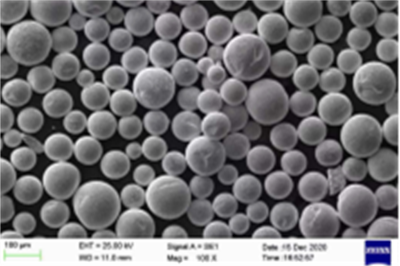
430L stainless steel powder (particle size 45-150 μm) by gas atomization.
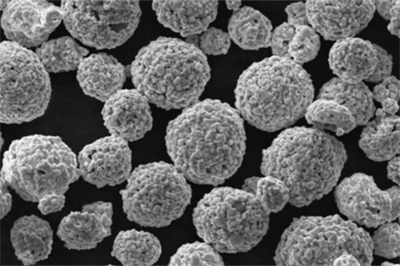
TiC powder (particle size 15-53 μm) produced by spray granulation.
Mixed powder:
Under an argon atmosphere (with a purity of 99.9%), a powder mixture with the composition of 430L stainless steel powder and TiC (by 20 wt%) powder, was prepared by mechanical mixing using a ball milling (without using any grinding media).
Chemistry of 430L powder:
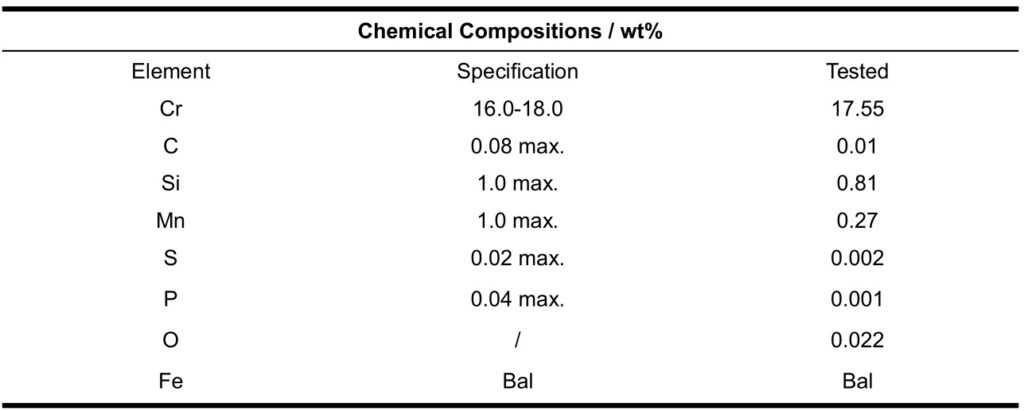
Tested value from Lot No. 20250704-02 of TRUER
Chemistry of 430L powder and TiC powder:
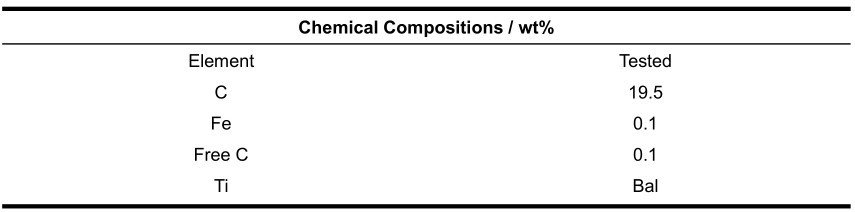
Tested value from Lot No. 20250113-03 of TRUER
Kugelmahlen:
The mixed powders are prepared by ball milling, and under argon protection, rotation speed 300 rpm, and the duration 4 hours.
To prevent cold welding of ductile powder during the ball milling process, 0.8 wt% stearic acid was added to the powder mixture as a process control agent.
The Microstructure of Mixed Powder:
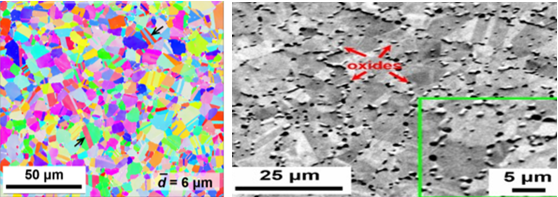
The mixed powder by ball milling were subjected to hot isostatic pressing under the same process conditions (1150 °C, 103 MPa, 0.5 h), and exhibited a completely dense microstructure, mainly composed of typical equiaxed recrystallized grains.
Retracted twins with parallel straight edges were observed within the equiaxed grains. These retailed twins were formed under the conditions of high temperature and isostatic pressure in hot isostatic pressing, along with the grain growth during the recrystallization process.
The average grain size of the alloy produced by hot isostatic pressing of ground powder is approximately 6 μm.
The current research results indicate that under the given HIP process conditions, the initial grain size of the raw powder significantly affects the final grain size of the alloy. The shorter time ball milling process (4 hours) adopted in this study effectively refined the powder particle size and the initial grain size through the dominant effect of powder fragmentation, which is directly related to the observation of finer grains in the HIP alloy prepared by ball-milled powder.
A large amount of micron-sized (approximately 1-3 μm) precipitation is mainly distributed along the grain boundaries.
It is particularly important to note that by adding titanium carbide powder during the ball milling process can reduce the oxygen content of the system due to its strong oxygen affinity, compared to the unball-milled powder, the surface oxygen affinity of the ball-milled activated powder is significantly enhanced, resulting in an increase in the oxygen absorption of fine-grained alloys and the coarsening of oxides.
Although titanium-containing oxides, such as TiO₂ were not observed, their existence cannot be ruled out due to their low volume fraction, fine dispersion, or overlapping with other oxides, they may exceed the detection limit of current characterization techniques.
The role of twin boundaries:
On the one hand, the twin boundaries, as low-energy, coherent interfaces, hinder the movement of dislocations and thus contribute to enhancing the strength.
On the other hand, its coherency enables the twin boundary to absorb and transmit dislocations, which helps to coordinate plastic deformation and delay strain localization, thereby simultaneously enhancing ductility and strain hardening ability.
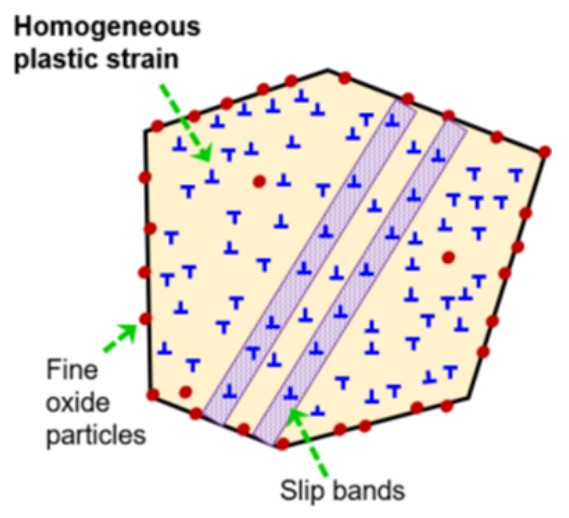
Fracture Surface:
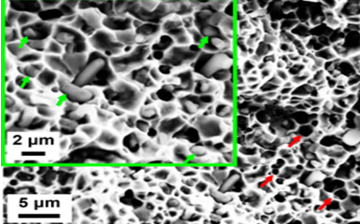
The fracture surface is mainly characterized by ductile pits, indicating that they possess superior ductility.
In the fracture crevices of the samples, in addition to the main fine crevices, particles with a size of approximately 1-3 micrometers can often be observed. This further confirms that these micrometer-sized particles in fine-grained steel act as crack initiation points, resulting in a significant reduction in tensile ductility.