Kurzantwort
Gas atomized iron powder is an iron-based feedstock produced by disintegrating molten iron with high-pressure inert gas to create near-spherical particles with controlled size distribution. It is chosen for metal 3D printing when users need better flowability, more uniform powder-bed spreading, higher apparent density, and cleaner chemistry than irregular iron powders typically provide. In practice, it is most valuable for additive manufacturing development, binder jetting, laser cladding, magnetic components, and powder metallurgy routes that benefit from tight control over particle shape, oxygen level, and repeatable processing behavior.
What Is gas atomized iron powder
Gas atomized iron powder is a category of iron or iron-dominant metal powder manufactured by atomizing a molten stream into droplets that solidify into mostly spherical particles. Within the broader ferrous powder family, it sits between commodity irregular powders made for conventional press-and-sinter use and highly specialized alloy powders designed for demanding AM, thermal spray, or feedstock-engineered applications. The defining feature is not simply that the powder contains iron, but that its morphology, cleanliness, and particle size distribution are engineered for advanced processing.
The term can cover both commercially pure iron grades and low-alloy iron grades, depending on the specification. In the context of additive manufacturing and precision powder metallurgy, buyers often use “gas atomized iron powder” to mean a relatively clean, spherical iron powder with controlled interstitials, stable flow behavior, and a process-specific PSD. That distinguishes it from water-atomized or sponge iron products, which are generally more irregular in shape and less optimized for recoating or fine powder feeding.
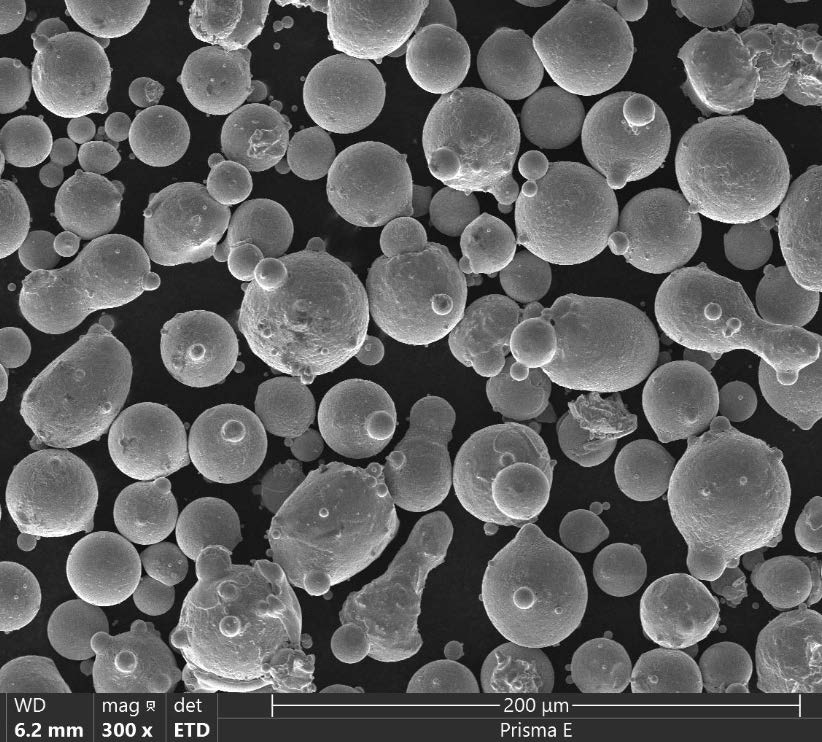
Gas Atomized Iron Powder in the Ferrous Powder Family
Ferrous powders are not interchangeable simply because iron is the principal element. Stainless steel powder, tool steel powder, low-alloy steel powder, and unalloyed iron powder all behave differently in printing, sintering, and post-processing. Gas atomized iron powder occupies a useful middle ground for users who want a simple iron matrix, good packing behavior, and lower raw-material complexity than stainless or nickel systems.
This is especially relevant in applications where corrosion resistance is not the first design driver. For structural parts exposed to ambient humidity, stainless often wins. For magnetic, developmental, cladding, and feedstock-blending work, however, iron powder can be more appropriate because the chemistry is easier to tune and the base material cost is usually lower.
Core Characteristics of Spherical Iron AM Powder
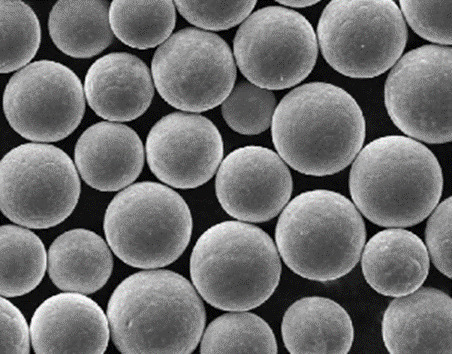
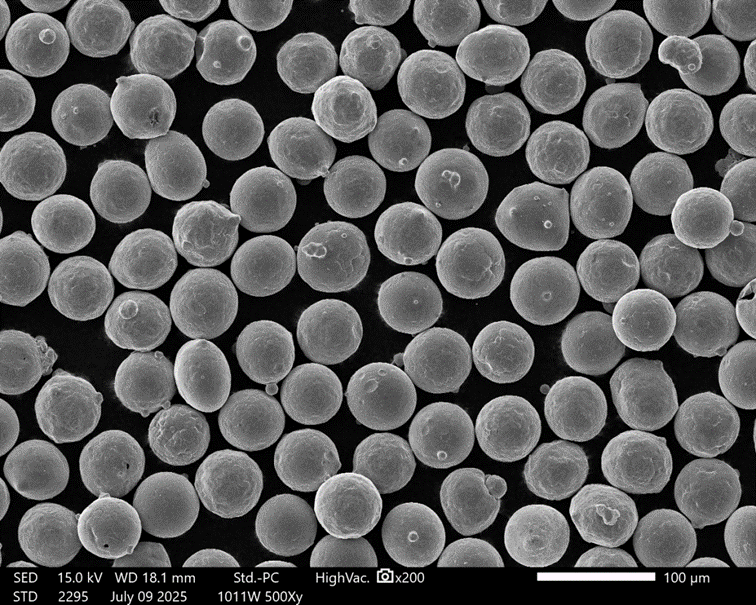
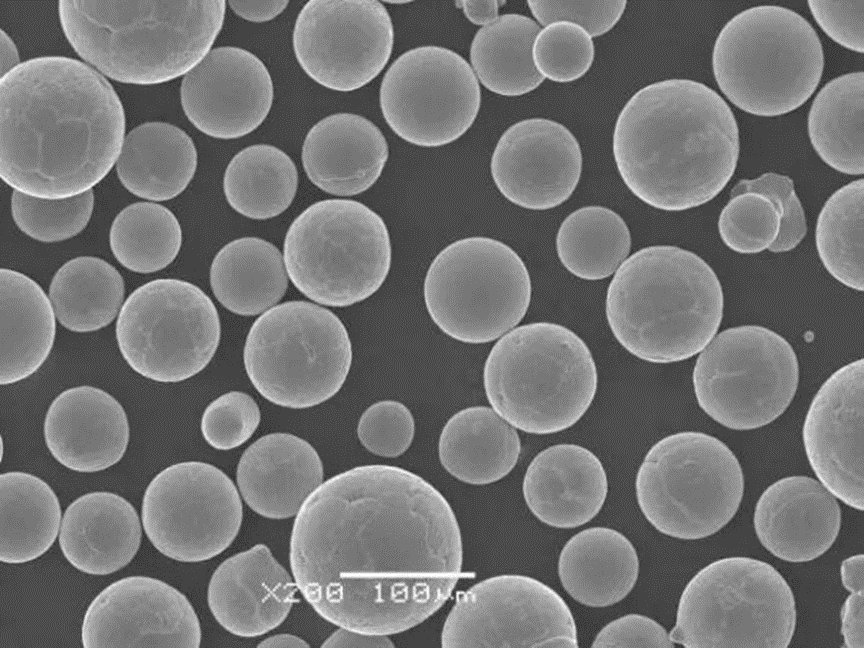
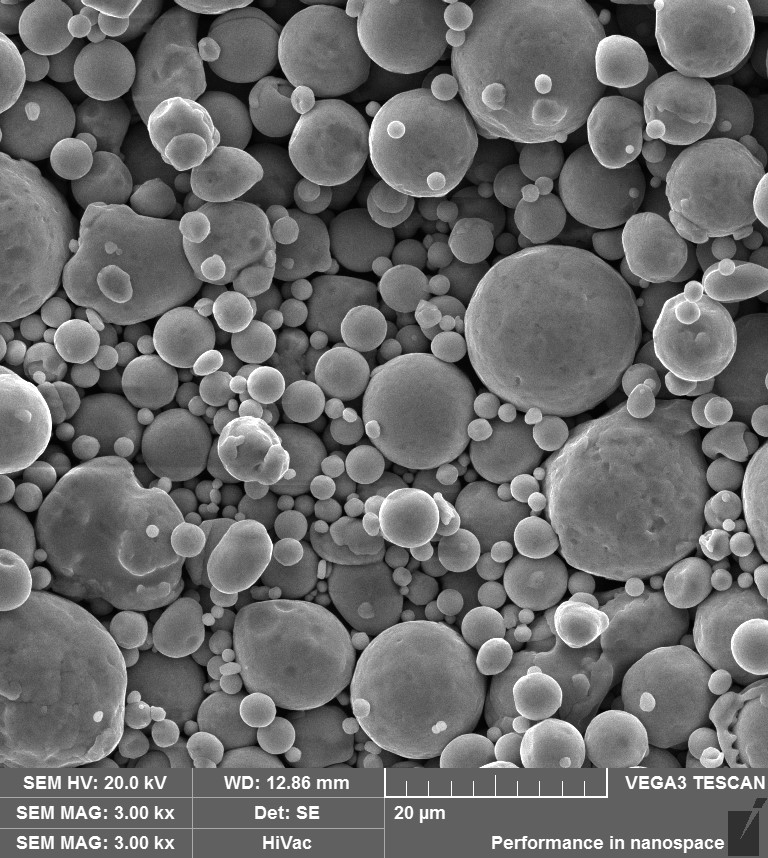
The most important performance traits of this material are particle sphericity, narrow or controlled PSD, relatively low oxygen, and consistent batch-to-batch flow. These characteristics improve powder delivery in additive manufacturing and also support better filling behavior in MIM, HIP blending, spraying, and related powder routes.
Partikelmorphologie matters because powder behavior begins long before melting. If a powder does not discharge predictably from the hopper or spread evenly across the build plane, part quality becomes harder to stabilize. Spherical gas-atomized particles reduce friction between particles, which supports smoother recoating and more uniform layer formation.
Why This Material Exists
Traditional iron powders were developed mainly for die compaction and sintering, not for laser recoaters, fine-layer powder beds, or precision nozzles. As additive manufacturing expanded, the market needed iron powders that behaved more like premium AM feedstocks and less like bulk PM commodity powders. Gas atomized iron powder exists to meet that need.
For readers comparing ferrous feedstocks more broadly, a useful starting point is the wider iron-based powder portfolio, where unalloyed and alloyed iron systems can be placed in context against stainless and specialty ferrous grades.
In metal AM, the powder is not just a raw material; it is part of the process window.
Chemische Zusammensetzung
Gas atomized iron powder is often specified as iron balance with tightly controlled residual elements. The exact certificate depends on whether the grade is intended as pure iron, low-carbon iron, or a custom iron-base composition, but most high-quality lots share the same logic: maximize iron while suppressing carbon, oxygen, sulfur, phosphorus, and other impurities that affect printability or final properties.
| Element | Typical Content (wt%) | Typical Limit/Range | Rolle in der Metallurgie |
|---|---|---|---|
| Fe | Bilanz | ≥ 99.0 to ≥ 99.7 | Base matrix providing ferromagnetism, thermal conductivity, and the core mechanical framework |
| C | 0.005–0.050 | Low residual | Raises hardness and strength if increased, but may reduce ductility and alter magnetic response |
| O | 0.020–0.120 | Controlled residual | Reflects oxide condition; influences wetting, inclusion risk, and process cleanliness |
| N | 0.001–0.030 | Low residual | Can contribute slight strengthening, but excessive nitrogen may reduce ductility and consistency |
| S | 0.002–0.015 | Very low residual | Generally undesirable; may promote inclusions and impair hot processing behavior |
| P | 0.002–0.030 | Very low residual | Can increase strength slightly, but excessive levels reduce toughness and formability |
Why Residual Chemistry Matters in Gas Atomized Iron Powder
For unalloyed or lightly alloyed iron powders, the residual elements often determine whether the powder behaves as a premium AM feedstock or merely as a chemically acceptable iron product. Carbon is especially important because even small changes can affect hardness, phase evolution, and shrinkage behavior during thermal cycles. For soft-magnetic or high-ductility use, the target is usually a very low carbon range.
Oxygen is equally critical because iron powder has a strong relationship between surface area and oxide burden. Finer PSD grades generally show higher oxygen than coarser grades because there is more total particle surface per kilogram. In metal AM, oxygen does not only affect the chemistry certificate; it also influences melt-pool stability, inclusion risk, and the achievable elongation of the consolidated part.
Trace Elements and Process Stability
Sulfur and phosphorus are normally monitored as harmful residuals rather than useful additions. Sulfur can contribute to hot shortness and undesirable inclusion behavior, while phosphorus tends to strengthen and embrittle if it rises too far. Nitrogen is also watched closely, particularly when the powder is intended for applications that demand stable ductility or magnetic performance.
When procurement teams define a feedstock, they often combine chemistry limits with terminology recognized in ISO/ASTM 52900 – Terminologie der additiven Fertigung, which helps separate powder characteristics from process classifications and finished-part performance requirements.
Chemistry Control vs. End-Use Chemistry
It is important to distinguish powder chemistry from final part chemistry. Recycled powder, repeated thermal exposure, or mixing with support contamination can change the chemistry seen by the build. For that reason, powder users treat gas atomized iron powder as a controlled system rather than as a static material certificate.
Physikalische und mechanische Eigenschaften
The performance of gas atomized iron powder must be assessed in two states: as loose powder and as consolidated metal. Powder metrics such as apparent density, tap density, and Hall flow describe handling and spreadability. Mechanical properties such as tensile strength, yield strength, elongation, and hardness describe the part after printing, sintering, HIP, or heat treatment. The two are related, but they are not interchangeable.
| Eigentum | Typischer Wert | Einheit | Test Standard / Basis |
|---|---|---|---|
| True density of iron | 7.86–7.87 | g/cm³ | Reference value for iron |
| Scheinbare Dichte | 4.1–4.9 | g/cm³ | Typical Hall-type powder measurement |
| Dichte des Gewindebohrers | 4.8–5.6 | g/cm³ | Typical powder tap-density measurement |
| Schmelzpunkt | 1535–1538 | °C | Reference value for iron |
| Ultimate tensile strength | 250–420 | MPa | Typical consolidated iron, process dependent |
| Streckgrenze | 170–300 | MPa | Typical printed or sintered condition |
| Dehnung | 15–40 | % | Strongly density- and heat-treatment-dependent |
| Härte | 80–140 | HV | Typical for low-carbon iron-base material |
| Wärmeleitfähigkeit | 65–80 | W/m-K | Approximate room-temperature value |
Powder Properties and Printability
For additive manufacturing, the powder properties are often the first qualification gate. A powder with low apparent density, excessive fines, or unstable flow can produce poor layer quality even if its chemistry is excellent. Conversely, good flow does not guarantee good parts, because oxidation, moisture, and packing heterogeneity can still reduce density or ductility after processing.
Apparent density and tap density matter because they indicate how efficiently the powder packs under loose and mechanically agitated conditions. Higher values generally correlate with better bed homogeneity, although the relationship is not perfect. The most meaningful interpretation comes when these values are reviewed together with PSD and morphology.
Consolidated Part Performance
The mechanical values associated with printed or sintered iron parts vary widely with route. Laser powder bed fusion can achieve high density, but parameter development is needed to control porosity and oxygen-related inclusions. Binder jetting and sintering may show lower as-sintered density unless infiltration, hot isostatic pressing, or optimized thermal cycles are used.
Flowability and packing are often the hidden enablers of final part performance. If the powder forms even layers and stable feed behavior, the process has a much better chance of reaching consistent final density. That is why experienced users qualify powder handling metrics as carefully as tensile coupons.
Interpreting Typical Values
Because gas atomized iron powder is a feedstock category rather than a single standardized alloy, all mechanical values should be treated as indicative. Buyers should expect the supplier to define whether a number applies to powder, green compact, sintered specimen, or AM-built coupon. Where powder testing methods are concerned, many labs rely on frameworks grouped under ASTM powder characterization methods for apparent density, flow rate, and related metrics.
Technische Daten und verfügbare Güteklassen
Commercial gas atomized iron powder is usually sold by particle size distribution, chemistry band, and end-process suitability. The same base melt can be classified into several PSD windows for powder bed fusion, directed energy deposition, MIM, powder metallurgy, thermal spray, or laser cladding. As a result, grade naming is often supplier-specific even when the underlying iron chemistry is similar.
| Typical Grade | PSD Range (µm) | Scheinbare Dichte (g/cm³) | Tap Density (g/cm³) | Hall Flow (s/50 g) | Oxygen Content (wt%) | Sphericity / Cross-Reference |
|---|---|---|---|---|---|---|
| Fe-GA-15/45 | 15-45 | 4.1–4.5 | 4.8–5.2 | 16–24 | 0.05–0.12 | High; fine laser PBF grade; powder tests commonly aligned with ASTM/ISO/GB/DIN practice |
| Fe-GA-15/53 | 15-53 | 4.2–4.6 | 4.9–5.3 | 15–22 | 0.04–0.10 | High; balanced AM grade; often used for recoating-sensitive systems |
| Fe-GA-20/63 | 20-63 | 4.3–4.7 | 5.0–5.4 | 14–20 | 0.03–0.08 | High to very high; suitable for laser AM and binder-based development |
| Fe-GA-45/105 | 45-105 | 4.4–4.9 | 5.1–5.6 | 12–18 | 0.02–0.06 | Very good flow; used in DED, cladding, PM blending, and spray routes |
PSD Selection for Additive Manufacturing Powder
Fine grades such as 15–45 µm and 15–53 µm are most relevant for laser powder bed fusion because they support thin layers and relatively smooth bed formation. These powders, however, have greater surface area and are therefore more sensitive to oxidation, moisture pickup, and powder-aging effects during reuse.
Mid-range and coarse grades such as 20–63 µm and 45–105 µm are commonly selected for directed energy deposition, laser cladding, thermal spray, and feedstock blending. They usually flow better and are less sensitive to oxygen increase during handling, although they are less suitable for very thin powder layers.
Standards, Tolerances, and Cross-Reference Practice
Unlike some titanium or stainless AM grades, gas atomized iron powder does not always map neatly to one globally dominant product standard. Procurement documents therefore tend to be modular. They combine chemistry limits, PSD windows, morphology expectations, packing metrics, and packaging rules into a customer-specific specification.
A typical quality sheet for gas atomized iron powder defines:
- iron balance and residual-element maximums
- D10, D50, and D90 particle size targets
- apparent density and tap density ranges
- Hall or Carney flow where applicable
- oxygen, nitrogen, and moisture limits
- particle morphology acceptance criteria
- lot traceability and packaging atmosphere
Available Grades and Adjacent Materials
Many users assess gas atomized iron powder alongside other metallic systems before locking a development route. Lightweight components may push engineers toward an Sortiment an Aluminiumlegierungspulvern, while high-temperature service can shift evaluation toward more oxidation-resistant materials. The iron grade remains attractive when magnetic behavior, low-alloy development, or cost-sensitive functional prototyping is the priority.
Herstellungsprozess
The “gas atomized” label refers directly to the powder-making route. In this process, molten iron is broken into droplets by high-pressure gas, typically under carefully controlled atmospheric conditions, and the droplets solidify into spherical or near-spherical particles. Alternative premium routes such as VIGA, EIGA, and PREP are relevant because they influence cleanliness, particle perfection, throughput, and cost.
| Prozess | Typical Sphericity | Oxygen Pickup Risk | PSD-Steuerung | Durchsatz | Relative Kosten | Best Fit |
|---|---|---|---|---|---|---|
| GA (Gas Atomization) | Hoch | Moderate to low with inert handling | Gut | Hoch | Mittel | Mainstream AM, PM, cladding, and spray-grade iron powder |
| VIGA (Vacuum Induction Gas Atomization) | Hoch | Niedrig | Gut bis sehr gut | Mittel | Mittel-hoch | Cleaner chemistry, lower gas content, tighter process control |
| EIGA (Electrode Induction Gas Atomization) | Sehr hoch | Niedrig | Sehr gut | Mittel | Hoch | High-cleanliness spherical powder with limited contamination pathways |
| PREP (Plasma-Rotations-Elektroden-Verfahren) | Sehr hoch | Sehr niedrig | Narrow, often coarser | Niedrig bis mittel | Hoch | Premium morphology, low satellites, specialized applications |
How Gas Atomization Produces Iron Powder
In gas atomization, the melt is prepared in a furnace, superheated to a controlled temperature, and poured through a nozzle into a gas jet field. The gas disrupts the liquid stream into droplets, which cool rapidly as they fall through the atomization chamber. The solidified particles are then collected, sieved, classified, and packaged under controlled conditions.
The main variables are melt superheat, nozzle design, atomizing gas pressure, chamber atmosphere, and downstream classification strategy. These govern sphericity, satellite content, fines generation, and oxygen pickup. For iron powders intended for AM, process discipline after atomization is nearly as important as the atomization event itself.
VIGA, EIGA, and PREP as Comparison Routes
VIGA adds vacuum induction melting before gas atomization, which can improve melt cleanliness and help suppress dissolved gases. That is useful for higher-purity iron grades or specialty applications where interstitial control matters more than maximum throughput.
EIGA reduces contact with crucible materials by using electrode-based melting before atomization. Although more common in reactive-alloy discussions, it remains a useful benchmark for contamination control. PREP, by contrast, produces powder from a rotating consumable electrode and is known for excellent sphericity and very low satellite content, but usually at higher cost and lower productivity than conventional gas atomization.
Process Trade-Offs in Additive Manufacturing Powder
For most industrial users, gas atomization offers the best balance of quality, scale, and price. PREP can deliver superior morphology, but the economics are difficult to justify for many iron applications. VIGA and EIGA occupy the premium middle ground where users need extra cleanliness without moving all the way to the highest-cost route.
This is why oxygen control and post-atomization handling are central to grade quality. Two powders may both be described as gas atomized iron powder, yet perform differently if one lot is tightly classified, low in satellites, and inert-packaged while the other is not.
Anwendungen nach Branche
Gas atomized iron powder serves multiple industries, but not always in the same role. In some sectors it is a finished feedstock for additive manufacturing; in others it is a base material for sintering, cladding, thermal spray, or alloy-development work. The unifying theme is that users value spherical iron powder when they need controlled flow, repeatable chemistry, and a simple iron matrix.
Gas Atomized Iron Powder in Additive Manufacturing R&D
Research centers and industrial AM teams use this material as a baseline iron system for studying scan strategy, densification, heat treatment, and alloy additions. Because the chemistry is simpler than stainless or nickel superalloys, it is easier to isolate process effects from alloy-composition effects. That makes it useful for parameter development, diffusion studies, and custom material design.
Automotive and General Industrial Components
In automotive prototyping and industrial hardware, gas atomized iron powder is relevant for fixtures, inserts, near-net-shape development parts, and selected functional components where corrosion resistance is not the first requirement. It can also be used in PM hybrids that combine additive shaping with sintering or HIP to reach target density and geometry more efficiently.
Magnetic and Electromagnetic Applications
A major technical use case is magnetic hardware. Pure or low-alloy iron powders can support magnetic flux paths, actuator components, and custom geometries for sensors or electromagnetic devices. In these applications, the relatively simple iron chemistry can be an advantage over stainless grades, especially when the design goal is magnetic response rather than environmental durability.
Oil, Gas, Energy, and Tooling Uses
Coarser gas atomized iron powders are used in laser cladding, repair deposition, and specialty coatings where controlled feed rate matters. Energy and tooling sectors may also employ them as a clean base for custom overlays or as a platform for blended compositions. Application diversity across metal powders is broader than iron alone, and many of these downstream sectors also appear across the industrial process applications associated with powder-bed, DED, cladding, and PM routes.
When Another Powder Category Is Better
If the service environment is corrosive, stainless or nickel powders usually provide a safer path. When heat resistance is the key requirement, a nickel superalloy powder catalog is usually more appropriate than iron. If conductivity drives the design, copper-based powders often outperform iron by a wide margin.
Vergleich mit alternativen Materialien
Gas atomized iron powder is rarely selected in isolation. Engineers compare it with stainless steel, low-alloy steel, copper, and sometimes aluminum or soft-magnetic specialty powders before defining the best manufacturing route. The right choice depends on the balance among cost, corrosion resistance, printability, magnetic behavior, and post-processing burden.
| Material | Dichte (g/cm³) | Typisches Leistungsniveau | Druckbarkeit | Korrosionsbeständigkeit | Relative Kosten | Bester Anwendungsfall |
|---|---|---|---|---|---|---|
| Gas atomized iron powder | 7.86 | Low to moderate unless alloyed or densified further | Good with controlled PSD and oxygen | Niedrig | Niedrig bis mittel | Magnetic parts, cladding feedstock, PM hybrids, AM development |
| 316L-Edelstahlpulver | 7.9–8.0 | Moderate with high ductility | Excellent and widely qualified | Hoch | Mittel | General-purpose AM components in corrosive environments |
| Low-alloy steel powder | 7.7–7.9 | Moderate to high after heat treatment | Gut bis sehr gut | Gering bis mäßig | Mittel | Structural parts needing higher strength than pure iron |
| Copper alloy powder | 8.3–8.9 | Gering bis mäßig | Moderate; reflective in laser AM | Mäßig | Mittel bis hoch | Thermal and electrical conductivity-focused parts |
| Aluminum alloy powder | 2.6–2.8 | Mäßig | Good but oxide-sensitive | Mäßig | Mittel | Lightweight components where mass reduction matters |
Comparative Strengths of Gas Atomized Iron Powder
The strongest case for gas atomized iron powder is when a user wants a simple iron chemistry, relatively low feedstock cost, and better powder behavior than irregular iron products can offer. It is also useful as a developmental platform because it can be blended, infiltrated, or post-processed without the complexity of corrosion-resistant or high-temperature alloys.
Comparative Weaknesses
It is not the best all-purpose AM metal powder. Stainless grades are easier to justify when corrosion is a concern, low-alloy steels are generally better for structural strength, and aluminum wins when lightweighting matters. Public reference data used in comparative screening often comes from sources such as NIST engineering materials resources, especially when teams are building internal qualification matrices across multiple metal systems.
Unser Unternehmen
Shanghai Truer Technology Co., Ltd., which operates am-printing.com, was established in 2009 and created its additive manufacturing business in 2019. Its activities include integrating 3D printing powder-making equipment and services with metal powder supply for engineering applications of additive manufacturing. The company’s stated core technologies include Selective Electron Beam Melting equipment, Plasma Rotating Electrode Process powder-making equipment, and gas atomization-related capability, while its powder portfolio includes TiNi, TiTa, TiAl, TiNbZr, CoCrMo, and spherical nickel-based, cobalt-based, titanium-based, copper-based, aluminum-based, and stainless steel powders used in SLM, SEBM, DED, laser cladding, powder metallurgy, MIM, HIP, spraying, welding, and coating. Additional background is provided on the company information page.
FAQ
Q1. Is gas atomized iron powder better than water atomized iron powder for AM?
For most additive manufacturing routes, yes. Gas atomized iron powder is usually more spherical, flows more consistently, and packs more uniformly in a powder bed or feeder. Water atomized powder is often less expensive, but its irregular shape can make spreading, feeding, and repeatable densification more difficult.
Q2. What particle size is typical for gas atomized iron powder in 3D printing?
Laser powder bed fusion commonly uses fine ranges such as 15–45 µm or 15–53 µm, while directed energy deposition and cladding often use coarser fractions like 45–105 µm. The ideal PSD depends on layer thickness, recoater design, nozzle geometry, and the oxygen sensitivity of the process. A narrower and cleaner fraction usually improves consistency, but it may also increase material cost.
Q3. Can gas atomized iron powder be used for magnetic parts?
Yes, that is one of its most relevant technical uses. Pure or low-alloy iron grades can support soft-magnetic applications, especially where the design benefits from complex geometry. Final magnetic performance depends not only on chemistry, but also on porosity, grain structure, thermal history, and any post-build annealing treatment.
Q4. Why is oxygen content important in gas atomized iron powder?
Oxygen is a proxy for oxide burden on the particle surface, and excessive oxide can reduce ductility, increase inclusions, and complicate melting behavior. Fine powders are particularly sensitive because they have much higher surface area per unit mass. That is why oxygen limits, inert packaging, and powder reuse control are standard parts of a serious procurement specification.
Q5. Is gas atomized iron powder suitable for binder jetting and powder metallurgy?
Yes, especially when the application benefits from consistent filling, narrow PSD, and improved packing compared with irregular powders. Binder jetting, MIM development, and PM hybrid routes can all benefit from spherical morphology, although sintering response still depends on chemistry, size distribution, and thermal cycle design. Buyers should evaluate the powder for the exact route rather than assuming one iron grade fits every process.
Q6. What should buyers ask for when sourcing gas atomized iron powder?
They should request chemistry limits, PSD data, apparent density, tap density, Hall flow, oxygen and nitrogen values, morphology images, packaging details, and lot traceability. It is also important to confirm whether the grade is intended for PBF, DED, binder jetting, MIM, PM, or cladding, because similar-looking powders can behave very differently in service. One of the most overlooked issues is powder recycling control, since reused fine iron powder can gain oxygen and drift outside its original process window.