Kurzantwort
Gas atomized spherical AlSi10Mg powder is an aluminum-silicon-magnesium feedstock engineered for metal additive manufacturing, especially laser powder bed fusion and related powder-based processes. It is widely chosen because it combines low density, good printability, strong as-built and heat-treated performance, and reliable corrosion resistance in a single alloy system. For many aerospace, automotive, tooling, and industrial parts, it offers the most practical balance between lightweighting, dimensional accuracy, and production-ready AM process stability.
What Is gas atomized spherical AlSi10Mg powder
Gas atomized spherical AlSi10Mg powder is a pre-alloyed aluminum powder in which aluminum is the base element and silicon plus magnesium are the principal alloying additions. In additive manufacturing, the grade is best known as one of the standard aluminum workhorse materials for powder bed fusion because it solidifies predictably, shows relatively good crack resistance, and supports thin-wall, lightweight geometries that are difficult to machine or cast conventionally.
The designation AlSi10Mg indicates an aluminum alloy containing roughly 10 wt% silicon and a smaller magnesium addition. In practical terms, silicon improves castability-like flow and reduces hot-cracking sensitivity during rapid solidification, while magnesium contributes to age-hardening response and strength development after thermal treatment. That combination explains why the alloy became a mainstream option in metal 3D printing well before many higher-strength wrought aluminum grades became routinely printable.
Why spherical AlSi10Mg powder matters in additive manufacturing
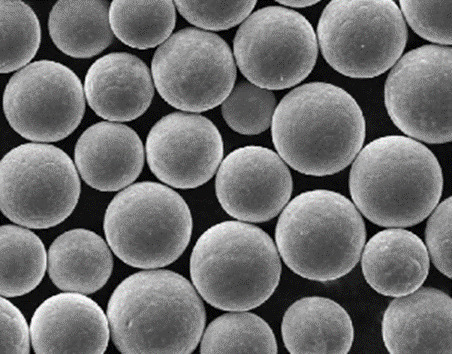
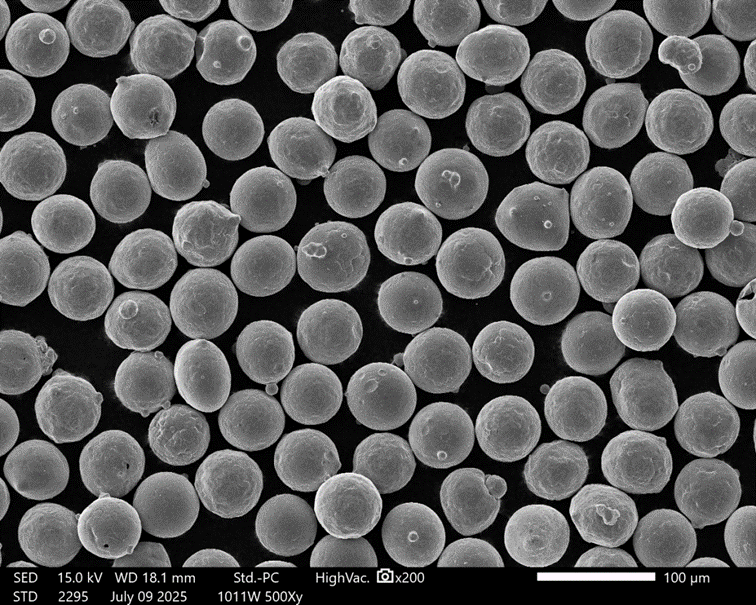
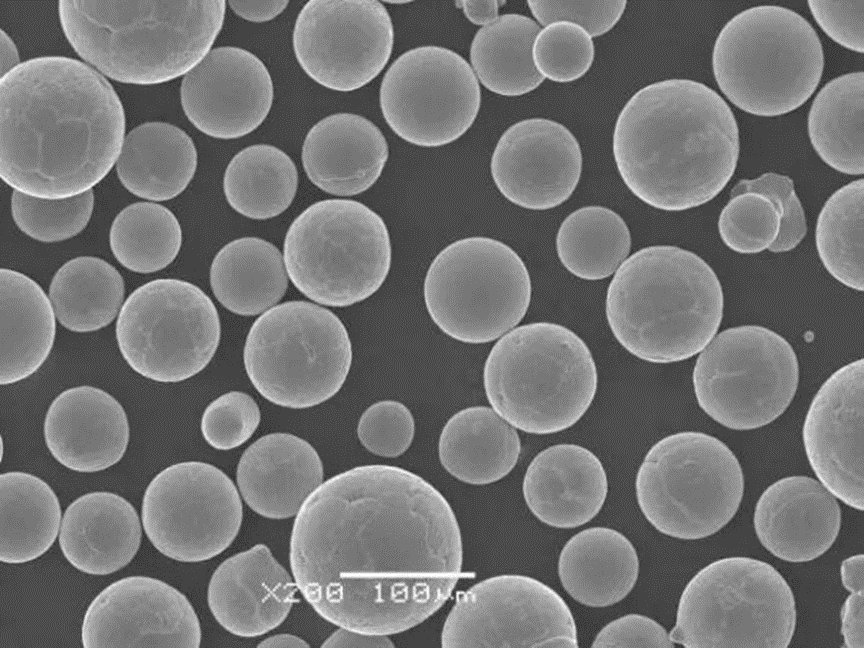
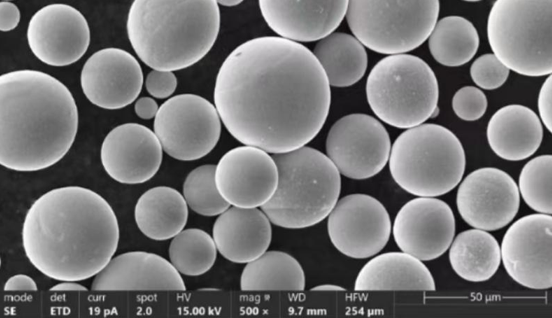
Not all AlSi10Mg powders are suitable for metal AM. The powder must be spherical enough to spread uniformly across the build plate, dense enough to pack consistently, and clean enough to avoid excessive oxide-related defects. Gas atomization is used because it produces near-spherical particles with better flow behavior than irregular powders generated for conventional press-and-sinter routes.
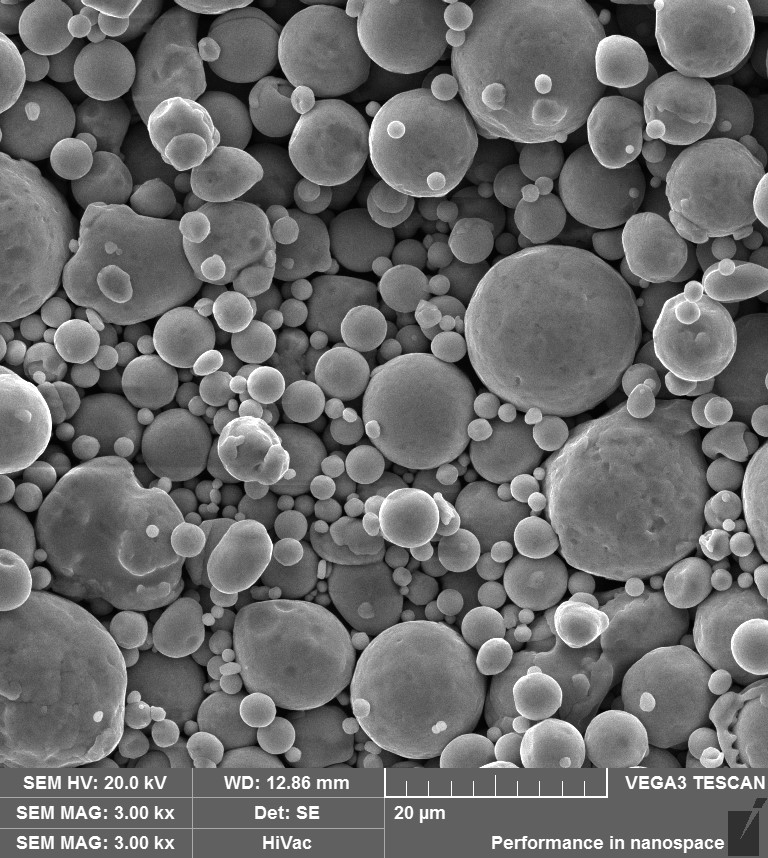
In the AM environment, powder quality has a direct effect on layer formation. If the particles bridge, segregate, or carry too many satellites, the build can suffer from poor recoating, inconsistent density, and unstable melt behavior. That is why gas atomized spherical AlSi10Mg powder is evaluated as a process material, not just as a chemical composition.
Where AlSi10Mg sits within the aluminum AM family
Within the broader portfolio of aluminum AM materials, AlSi10Mg is generally positioned between easy-to-process foundry-style alloys and higher-strength but less forgiving aerospace alloys. It is more printable than many 2xxx or 7xxx families, though it does not match them on peak strength. Its advantage is balance: low mass, decent mechanical performance, established parameter availability, and compatibility with internal channels, lattice features, and topology-optimized parts.
This balance is one reason the alloy appears so often in prototyping and serial production discussions. Engineers use it not because it is the strongest aluminum possible, but because it frequently offers the best overall manufacturing outcome.
Historical and industrial context
AlSi10Mg came into AM from a metallurgical logic that was already well understood in casting: aluminum-silicon systems are comparatively tolerant of complex solidification behavior. Additive manufacturing intensified those thermal cycles, but the alloy remained workable. Over time, it became a benchmark aluminum grade for selective laser melting and related platforms, especially in applications where lower weight, corrosion resistance, and good dimensional control are more important than ultra-high temperature strength.
For aluminum AM, the most successful powders are usually the ones that balance flowability, solidification control, and post-build strength response.
Chemische Zusammensetzung
The chemistry of AlSi10Mg is deliberately simple, but each element plays a clear metallurgical role. Silicon is the dominant alloying addition, magnesium supports strengthening, and impurities must be controlled because aluminum powders are naturally sensitive to oxide formation and contamination.
| Element | Typical Content (wt%) | Usual Specification Range | Rolle in der Metallurgie | Effect on AM Behavior |
|---|---|---|---|---|
| Al | Bilanz | Restbetrag | Base metal providing low density and corrosion resistance | Governs lightweighting and general alloy matrix behavior |
| Si | 9.0–11.0 | Typically 9.0–11.0 | Improves fluidity, reduces hot cracking, refines solidification structure | Enhances printability and dimensional consistency |
| Mg | 0.20–0.45 | Typically 0.20–0.45 | Enables precipitation strengthening after heat treatment | Raises strength and hardness response |
| Fe | 0.15 max typical | Usually limited | Residual impurity from raw materials and handling | Excess can reduce ductility and form brittle intermetallics |
| Cu | 0.05 max typical | Usually limited | Residual element, not a primary addition in this grade | Higher content can affect corrosion behavior |
| Mn | 0.45 max typical | Usually limited | Secondary impurity/control element | Can modify intermetallic formation at low levels |
| Zn | 0.10 max typical | Usually limited | Verbleibende Verunreinigung | Usually controlled to preserve consistency |
| Ti | 0.15 max typical | Usually limited | Grain-refining residual in some melt practices | May influence nucleation and microstructure |
| O | Process controlled, low | Not usually part of nominal alloy chemistry | Surface oxide indicator rather than alloy addition | Critical for powder cleanliness and fusion quality |
The role of silicon in AlSi10Mg AM powder
Silicon is the feature that makes this alloy family so useful in powder-bed fusion. It reduces solidification shrinkage stresses and lowers the tendency toward hot tearing compared with many other aluminum grades. In rapidly cooled AM microstructures, silicon also contributes to fine eutectic networks that support consistent dimensional outcomes.
Magnesium and age-hardening response
Magnesium is present at much lower levels than silicon, but it matters greatly for strength. In the right thermal condition, it contributes to precipitation hardening, allowing printed parts to move from acceptable as-built strength to significantly improved mechanical performance after stress relief, T5-like, or T6-like schedules depending on the process route and qualification plan.
Impurity control in gas atomized spherical AlSi10Mg powder
For AM users, impurity control is not limited to the metallic elements listed in a chemistry certificate. Oxygen, moisture pickup, and surface oxide condition can influence laser absorption, spatter tendency, and consolidation behavior. This is why batch release criteria often combine alloy chemistry with powder handling and morphological metrics rather than treating them separately.
Physikalische und mechanische Eigenschaften
The practical appeal of AlSi10Mg comes from a favorable density-to-strength ratio. It is much lighter than steels, cobalt alloys, and nickel superalloys, yet it still delivers useful structural performance for brackets, housings, heat-management components, and lightweight assemblies.
| Eigentum | Typischer Wert | Einheit | Test Standard / Reference |
|---|---|---|---|
| Dichte | 2.65–2.68 | g/cm³ | Typical dense material value |
| Solidus temperature | 557–570 | °C | Typical alloy reference range |
| Liquidus temperature | 595–610 | °C | Typical alloy reference range |
| Ultimate tensile strength, as-built | 320–430 | MPa | Typical AM test coupon range |
| Yield strength, as-built | 180–260 | MPa | Typical AM test coupon range |
| Ultimate tensile strength, heat treated | 380–460 | MPa | Typical stress-relieved to age-hardened range |
| Dehnung bei Bruch | 3–10 | % | Typical, process and heat treatment dependent |
| Härte | 95–130 | HB / HV equivalent range | Typical for printed and heat-treated states |
| Wärmeleitfähigkeit | 110–150 | W/m-K | Typischer Raumtemperaturbereich |
| Elektrische Leitfähigkeit | 25–35 | % IACS | Typical for AM AlSi10Mg |
| Elastizitätsmodul | 68–76 | GPa | Typical aluminum alloy range |
Strength-to-weight advantage
The central engineering value of lightweight structural performance is easy to quantify. AlSi10Mg parts are roughly one-third the density of steel and significantly lighter than copper- or nickel-based AM alloys. For UAV structures, housings, tooling inserts, and vehicle components, that mass reduction often matters more than absolute maximum strength.
Thermal performance in context
AlSi10Mg is not a substitute for pure copper where peak thermal conductivity is required, but it is often good enough for thermal management components that also need weight reduction and complex internal channels. This trade-off is one reason it appears in electronics housings, heat-dissipating supports, and compact cooling designs.
Why printed properties vary
The property ranges above are typical rather than absolute because additive manufacturing introduces many variables. Layer thickness, volumetric energy density, scan strategy, build orientation, hatch overlap, platform preheating, and post-processing all influence the final outcome. Definitions used across these AM workflows are commonly aligned with [ISO/ASTM 52900 terminology], while reference materials data are often benchmarked against [NIST materials measurement resources].
Technische Daten und verfügbare Güteklassen
Powder specification is where many successful AM programs are won or lost. A chemically correct alloy can still underperform if its particle size distribution is wrong for the machine, or if flow and tap behavior drift from lot to lot.
Common particle size distributions for AlSi10Mg 3D printing powder
For laser powder bed fusion, the most common commercial cuts are 15–45 µm and 15–53 µm. Finer distributions can improve feature resolution and surface finish, but they may also be more sensitive to oxygen pickup and handling losses. Coarser cuts such as 20–63 µm or 45–105 µm are more often used in higher-layer-thickness processes, DED, or thermal spray-adjacent applications.
| Grade / Reference | Typical PSD (µm) | Scheinbare Dichte (g/cm³) | Tap Density (g/cm³) | Hall Flow (s/50 g) | Sauerstoffgehalt | Sphericity / Cross-Reference |
|---|---|---|---|---|---|---|
| Fine LPBF grade | 15-45 | 1.30–1.55 | 1.55–1.75 | 14–22 | Low, typical AM control | High sphericity for thin layers |
| Standard LPBF grade | 15-53 | 1.28–1.52 | 1.52–1.72 | 15-23 | Low, typical AM control | General-purpose powder-bed grade |
| Wide-cut AM grade | 20-63 | 1.32–1.58 | 1.56–1.78 | 14–21 | Low, typical AM control | Balanced spreadability and packing |
| DED / spray grade | 45-105 | 1.40–1.70 | 1.65–1.90 | 12–19 | Controlled for route | Coarser spherical feedstock |
| Standards cross-reference row | Product specific | Measured per method | Measured per method | Measured per method | Product specific | Typically aligned with ASTM powder tests, ISO terminology, GB and DIN internal purchase drawings |
| Custom screened batch | By agreement | By agreement | By agreement | By agreement | By agreement | Narrow PSD for validated builds |
Standards and specification logic
No single universal product standard covers every AlSi10Mg AM powder format, so most buyers build a layered specification. That usually includes alloy chemistry, sieve or laser diffraction PSD, oxygen level, apparent density, tap density, and flowability, alongside morphology requirements and packaging conditions. Powder test methods are often selected from the [ASTM standards framework for metal powders] because AM quality control depends heavily on reproducible measurement.
Available grade strategy
Suppliers generally classify AlSi10Mg by intended process route and powder cut rather than by one generic stock number. A 15–45 µm grade may be chosen for thin layers and fine features, while a 45–105 µm grade may suit DED nozzles or cladding systems better. Users comparing aluminum feedstocks across the wider [aluminum AM powder portfolio] often look first at PSD suitability, not just alloy identity.
Packaging and reuse considerations
Gas atomized spherical AlSi10Mg powder is usually packed under controlled conditions because aluminum powder surfaces oxidize readily. For repeat-use programs, the specification often includes reuse protocol boundaries such as sieve mesh, maximum exposure time, blend ratio with virgin powder, and oxygen drift limits. These details are especially important in regulated sectors and serial manufacturing.
Herstellungsprozess
The phrase gas atomized spherical AlSi10Mg powder already points to the preferred production route. Even so, understanding alternative routes helps buyers interpret cost, morphology, and cleanliness trade-offs.
Why gas atomization is the mainstream route
In gas atomization, a molten pre-alloyed AlSi10Mg stream is disintegrated by high-velocity inert gas into droplets that solidify in flight. This produces near-spherical particles with relatively smooth surfaces, controllable particle size bands, and production throughput suited to commercial powder supply. For aluminum alloys, inert atmosphere control is especially important because reactive surfaces can oxidize quickly.
The method aligns well with AM requirements because it can generate powders with the flowability needed for recoating and the size distribution needed for stable layer deposition. It also scales better than more specialized routes when demand rises from prototyping into serial production.
PREP and why it is less common for AlSi10Mg
Plasma Rotating Electrode Process can generate highly spherical particles with low satellite content, but it is more commonly associated with high-value reactive alloys than with cast-style aluminum systems. PREP requires a consumable electrode, and that production logic is not usually the most economical path for AlSi10Mg feedstock.
For this reason, PREP is technically relevant but commercially secondary in the AlSi10Mg market. It may matter in niche discussions around premium morphology, yet gas atomization remains the dominant supply route.
VIGA and EIGA in aluminum powder discussions
Vacuum Induction Melting Inert Gas Atomization, or VIGA, adds tighter melt cleanliness control before atomization. For aluminum alloys, it can help reduce contamination risk and support narrower batch-to-batch variation. Electrode Induction Melting Gas Atomization, or EIGA, minimizes contact with refractory components, though it is used more often with highly reactive specialty alloys than with mainstream AlSi10Mg.
| Prozess | Sphärizität | Oxygen Pickup Risk | PSD-Steuerung | Durchsatz | Relative Kosten | Typical Relevance to AlSi10Mg |
|---|---|---|---|---|---|---|
| GA | Hoch | Low with good inert control | Gut bis sehr gut | Hoch | Mäßig | Primary industrial route |
| PREP | Sehr hoch | Niedrig | Mäßig | Gering bis mäßig | Hoch | Niche, usually not default for AlSi10Mg |
| VIGA | Hoch | Very low to low | Gut bis sehr gut | Mäßig bis hoch | Mäßig bis hoch | Cleaner-melt variant of gas atomization |
| EIGA | Hoch bis sehr hoch | Sehr niedrig | Gut | Mäßig | Hoch | Specialty route, less common for this alloy |
| Wasserzerstäubung | Gering bis mäßig | Höher | Mäßig | Hoch | Niedrig | Usually unsuitable for demanding powder-bed AM |
Process trade-offs that affect final powder performance
For most buyers, the important question is not which route sounds most advanced, but which route produces repeatable powder for the intended machine and build strategy. Gas atomization usually wins that comparison because it balances sphericity, economics, and supply scale effectively. That is also why many AM users compare AlSi10Mg against nearby options such as [iron-based metal powders] or nickel alloys only after powder route suitability is confirmed.
Anwendungen nach Branche
Gas atomized spherical AlSi10Mg powder is used where geometry and mass efficiency create more value than maximum high-temperature strength. The alloy is especially strong in applications that benefit from topology optimization, integrated functions, and reduced assembly count.
Aerospace and UAV structures
AlSi10Mg is widely used for brackets, housings, ducts, antenna supports, thermal enclosures, and lightweight secondary structures. Aerospace engineers value the alloy because it enables weight reduction without the print-cracking risks associated with many higher-strength aluminum families. For many low- to medium-load components, that reliability is more important than chasing the highest possible tensile number.
Automotive and e-mobility hardware
The alloy appears in motorsport parts, EV thermal components, lightweight fixtures, battery-adjacent housings, and prototype structural elements. Its low density helps reduce mass, while AM lets designers consolidate multiple parts into a single geometry. In powertrain or thermal systems, internal channels and optimized wall sections are often the decisive benefit.
Tooling, jigs, and fixtures
AlSi10Mg is not a classical tool steel replacement, but it is very effective for lightweight fixtures, robotic end effectors, and mold components where reduced inertia matters. Complex cooling channels and ergonomic mass reduction can improve line efficiency even when the component is not heavily loaded.
Industrial equipment and electronics
Industrial users specify AlSi10Mg for instrument housings, customized machine parts, heat-spreading supports, and compact enclosures. Its corrosion resistance and machinability after printing make it suitable for hybrid manufacturing routes in which critical surfaces are finished conventionally.
Medical-adjacent and consumer hardware
While titanium remains the dominant implant material, AlSi10Mg appears in medical-device housings, lab equipment, and instrument supports where low mass and complex form are useful. In broader product development, it is frequently considered alongside [titanium alloy powder options] for lightweight high-value parts, even though the application drivers are different.
Vergleich mit alternativen Materialien
Material selection always involves compromise. AlSi10Mg is rarely the best alloy in every metric, but it is often the best-balanced option when printability, mass reduction, and cost discipline must coexist.
| Material | Dichte (g/cm³) | Typisches Leistungsniveau | Druckbarkeit | Korrosionsbeständigkeit | Relative Kosten | Typical Best Fit |
|---|---|---|---|---|---|---|
| gas atomized spherical AlSi10Mg powder | 2.65–2.68 | Moderate to high for AM aluminum | Sehr gut | Gut | Mäßig | Lightweight structural AM parts |
| Ti-6Al-4V-Pulver | 4.40–4.45 | Hoch | Gut | Ausgezeichnet | Hoch | High-specific-strength aerospace and medical parts |
| 316L-Edelstahlpulver | 7.90–8.00 | Mäßig | Ausgezeichnet | Sehr gut | Mäßig | General-purpose corrosion-resistant components |
| Inconel 718-Pulver | 8.10–8.20 | High, especially at temperature | Gut | Ausgezeichnet | Hoch | Hot-section and severe-service applications |
| CuCrZr or pure copper powder | 8.80–8.96 | Gering bis mäßig | Mäßig | Gut | Mäßig bis hoch | Conductive thermal and electrical parts |
When AlSi10Mg is the most rational choice
If a designer needs a combination of low density, mature printability, good corrosion resistance, and decent mechanical performance, AlSi10Mg is often the most economical AM answer. It is particularly strong in parts that must be light, geometrically complex, and manufacturable at repeatable yields.
When another powder may be better
Titanium is stronger on a specific-strength basis and more suitable for highly critical aerospace or medical structural service. Stainless steel is easier for many shops to qualify and may be preferable where weight is less important. Nickel superalloys dominate at elevated temperature, while copper alloys outperform AlSi10Mg in thermal and electrical conductivity.
Unser Unternehmen
Shanghai Truer Technology Co., Ltd was established in 2009 and created its additive manufacturing business in 2019. Operating am-printing.com, the company works with powder-making equipment and metal powder supply, including Selective Electron Beam Melting equipment, Plasma Rotating Electrode Process powder-making equipment, and gas atomization systems. Its published powder range includes TiNi, TiTa, TiAl, TiNbZr, CoCrMo, and broader nickel-based, cobalt-based, titanium-based, copper-based, aluminum-based, and stainless steel spherical powders used in SLM, SEBM, DED, laser cladding, powder metallurgy, MIM, HIP, cold and hot spraying, welding, and coating. The company also states that it operates a joint innovation center for metal 3D printing with laboratories and external experts, and it serves sectors including 3C electronics, hand tools, remote control cars, medical, aerospace, and nuclear power; further company background is presented on the [company profile page], while sector use cases are outlined through its [industry application overview].
FAQ
Q1. Is gas atomized spherical AlSi10Mg powder the standard aluminum powder for laser powder bed fusion?
In many AM environments, yes. It is one of the most established aluminum powders because it prints more predictably than many higher-strength wrought aluminum grades and supports good density and dimensional control. That makes it a common baseline for qualifying aluminum parts in powder-bed systems.
Q2. Why is gas atomized spherical AlSi10Mg powder preferred over irregular aluminum powder?
Spherical particles spread more evenly, pack more consistently, and feed more reliably through AM equipment. Irregular powders may be acceptable for some powder metallurgy routes, but they usually create more challenges in recoating and layer uniformity. For powder-bed fusion, particle shape is a process-critical feature.
Q3. What particle size is most common for gas atomized spherical AlSi10Mg powder?
For LPBF, 15–45 µm and 15–53 µm are the most widely used cuts. These ranges balance flowability, layer formation, and fine-feature capability in many commercial machines. Coarser cuts are more common in DED and related deposition processes.
Q4. Can AlSi10Mg parts be heat treated after printing?
Yes, and many users do so. Stress relief is common to reduce residual stress, while age-hardening or T6-like routes may be used to improve strength depending on the application and qualification procedure. The exact schedule should be validated because heat treatment can also affect ductility, dimensional stability, and conductivity.
Q5. Is gas atomized spherical AlSi10Mg powder suitable for aerospace parts?
Yes, especially for secondary structures, housings, ducts, brackets, and lightweight functional hardware. Its value in aerospace comes from printability and weight reduction rather than from matching the highest strengths available in wrought titanium systems. Qualification still depends on the specific part class, inspection plan, and process control level.
Q6. What should buyers check before ordering gas atomized spherical AlSi10Mg powder?
Buyers should review chemistry, particle size distribution, oxygen level, apparent density, tap density, Hall flow, morphology, and packaging condition rather than relying on alloy name alone. They should also match the powder cut to the intended process, such as LPBF or DED, and define reuse limits if recycled powder will be blended into production. For production use, lot-to-lot consistency is usually as important as the nominal alloy specification.