Kurzantwort
Gas atomized spherical pure iron powder is a high-purity ferrous additive manufacturing feedstock engineered for good flowability, dense powder-bed packing, and predictable melting behavior. It is chosen in AM when users need soft-magnetic performance, straightforward alloy design from a clean iron base, or lower-cost iron chemistry compared with premium alloyed powders. In practice, it fits prototyping, magnetic components, research alloys, metal injection molding feedstock development, and selected powder metallurgy or laser-based 3D printing routes where purity, sphericity, and controlled oxygen matter more than corrosion resistance.
What Is gas atomized spherical pure iron powder
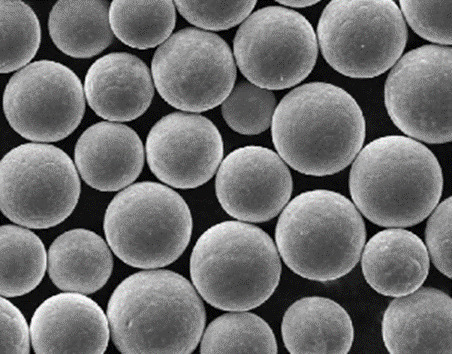
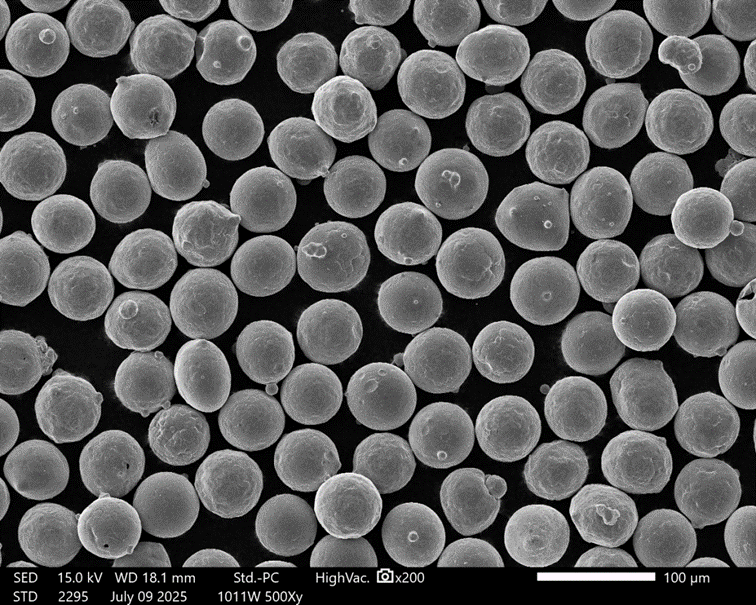
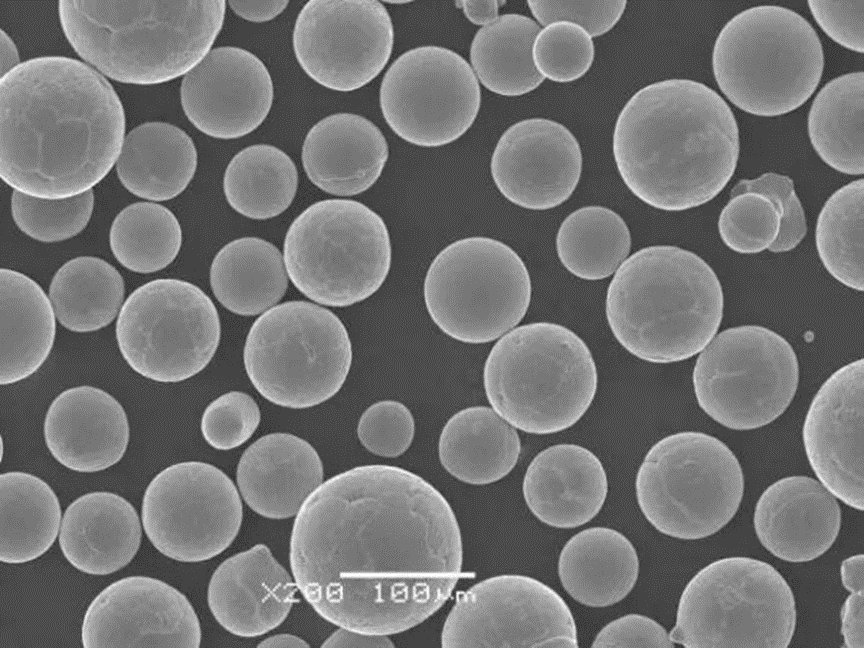
Gas atomized spherical pure iron powder is an iron-rich metal powder produced by disintegrating a molten iron stream with high-pressure inert gas so that the droplets solidify into near-spherical particles. In additive manufacturing language, it sits within the broader family of spherical ferrous powders used for powder bed fusion, directed energy deposition feedstock blending, binder jetting, and high-end powder metallurgy. Relative to irregular reduced iron powder or water-atomized iron powder, the spherical form is designed first for flow, spreadability, and uniform layer formation.
The phrase “pure iron” does not mean chemically absolute iron. In industrial practice, it usually refers to iron powder with iron as the balance and only low residual levels of carbon, oxygen, nitrogen, sulfur, phosphorus, and trace metallic impurities. Those impurity limits matter because even small changes can alter magnetic permeability, sintering behavior, ductility, and oxygen pickup during printing or downstream heat treatment.
Within metal AM, pure iron powder fills a distinct niche. It is not the default choice for highly loaded structural parts, where stainless steels, nickel superalloys, titanium alloys, or precipitation-hardening steels are more common. Instead, it is valuable when engineers want a clean iron matrix for subsequent alloying, a magnetic response closer to low-carbon iron than to stainless grades, or a powder that can serve both additive manufacturing and adjacent processes such as MIM, HIP blending, thermal spraying, and research-scale powder development.
A useful way to think about this material is as a platform powder. Compared with more alloyed ferrous options on an iron powder product range, pure iron offers lower compositional complexity and a narrower metallurgy problem during melting. That can simplify process development, especially in laboratories evaluating diffusion alloying, infiltration, or mixed-powder strategies.
Core Characteristics of Spherical Pure Iron AM Powder
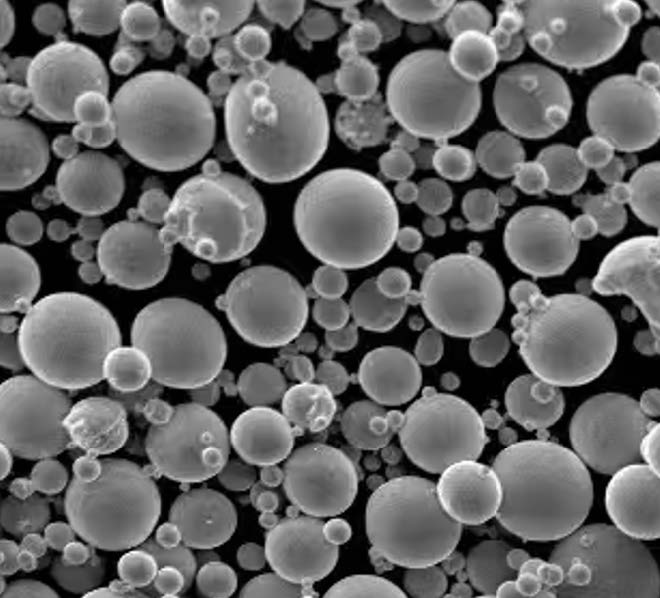
The defining performance traits of gas atomized pure iron powder are high sphericity, controlled particle size distribution, low satellite content, and relatively low interstitial contamination. Those traits support stable recoating, more repeatable apparent density, and improved feed consistency compared with angular iron particles.
Because iron has high thermal conductivity relative to many engineering alloys and a narrow composition window in the pure state, melt pool behavior can be more predictable than with complex alloys that segregate strongly. At the same time, pure iron oxidizes readily, so powder handling discipline is essential. Storage under dry inert conditions and oxygen control in the build chamber are not optional details; they are central process variables.
In iron AM powders, morphology is often the first gate and chemistry the second: a powder can be chemically clean but still print poorly if the particles do not spread uniformly.
Why the Material Exists
The market for gas atomized spherical pure iron powder exists because conventional iron powders were developed largely for press-and-sinter routes, where irregularity can actually help green strength. Additive manufacturing imposes different constraints. Powder bed systems require powders that flow through hoppers, form thin even layers, and avoid excessive fines-driven agglomeration. Gas atomization answers those needs better than traditional reduction or water atomization.
Chemische Zusammensetzung
Typical chemistry for gas atomized spherical pure iron powder is specified as iron balance with tightly controlled residuals. The exact limits vary by producer, atomization route, and target application, but the general objective is to minimize elements that degrade ductility, magnetic response, or melt cleanliness.
| Element | Typical Content (wt%) | Typical Limit/Range | Rolle in der Metallurgie |
|---|---|---|---|
| Fe | Bilanz | ≥ 99.5 | Base metal providing ferromagnetism, thermal conductivity, and the main structural matrix |
| C | 0.005–0.03 | Low residual | Raises strength and hardness if increased, but too much carbon reduces ductility and shifts magnetic behavior |
| O | 0.02–0.10 | Controlled residual | Influences oxide film thickness, laser absorptivity, inclusion content, and sintering or fusion cleanliness |
| N | 0.001–0.03 | Low residual | Can strengthen slightly in solution, but excessive nitrogen increases embrittlement risk and process variability |
| S | 0.002–0.01 | Very low residual | Generally undesirable; promotes hot shortness and inclusion-related defects if elevated |
| P | 0.002–0.02 | Very low residual | Increases strength somewhat but can reduce toughness and ductility when not tightly controlled |
Metallurgical Role of Residual Elements
In a nominally pure iron powder, the “minor” elements can be more important than they appear. Carbon is often the most influential because it changes phase transformation behavior and final mechanical properties with only small additions. For a customer printing pure iron test coupons for magnetic use, carbon is usually minimized. For a customer blending powders to create a tailored ferrous chemistry later, carbon may be managed as part of a broader alloy design.
Oxygen deserves special attention. Iron powder naturally forms oxide on the particle surface, and that oxide fraction rises when particles are finer because surface area increases. In laser-based additive manufacturing, some surface oxide is unavoidable, but too much oxygen can increase inclusions, reduce ductility, and complicate part density optimization. This is why fine-powder lots should be compared not only by PSD but also by oxygen content at the same size band.
Nitrogen, sulfur, and phosphorus are typically residual control elements rather than intentional alloying additions. When engineers say they want hohe Reinheit pure iron powder, they usually mean these interstitial and embrittling species are being held to a narrow band, not merely that the iron percentage is high on paper.
For terminology alignment, the broader AM powder vocabulary is consistent with the ISO/ASTM additive manufacturing terminology, which distinguishes feedstock form, process family, and related quality language used throughout powder specifications.
Physikalische und mechanische Eigenschaften
Properties must be separated into two categories: powder properties and consolidated material properties. Powder characteristics determine handling and printability; consolidated properties depend on machine type, energy density, atmosphere control, scan strategy, post-processing, and final porosity. For that reason, the values below should be read as typical industry ranges rather than guaranteed design minima.
| Eigentum | Typischer Wert | Einheit | Test Standard / Basis |
|---|---|---|---|
| True density of iron | 7.86–7.87 | g/cm³ | Material constant, reference value |
| Apparent density of spherical powder | 4.2–4.9 | g/cm³ | Typically measured per Hall/Carney-based powder methods |
| Dichte des Gewindebohrers | 4.8–5.5 | g/cm³ | Tap density method for metal powders |
| Schmelzpunkt | 1535–1538 | °C | Reference value for pure iron |
| Wärmeleitfähigkeit | 70–80 | W/m-K | Approximate room-temperature value, consolidated iron |
| Ultimate tensile strength | 250–380 | MPa | Typical for near-dense, low-carbon pure iron after stress relief/anneal |
| Streckgrenze | 170–260 | MPa | Typical for processed pure iron, condition dependent |
| Dehnung | 20–40 | % | Strongly dependent on porosity and heat treatment |
| Härte | 80–120 | HV | Typical range for low-carbon pure iron builds or annealed coupons |
How to Read These Values
Engineers sometimes underestimate how much build condition moves pure iron properties. In as-built material, dislocation density and residual stress can elevate strength modestly while reducing elongation. After annealing, strength often drops and ductility improves. If the part retains some oxide inclusions or incomplete fusion porosity, elongation can fall well below the ranges shown above even when chemistry looks clean.
The most stable values are the fundamental ones: density and melting point. Mechanical values are process outputs, not inherent constants. That makes process qualification especially important for soft magnetic applications, where density, microstructure, and impurity control matter as much as tensile data.
Relevance to Printability
Powder-bed systems benefit when apparent density and tap density are reasonably high because the bed packs more uniformly. Hall flow also matters, but it should not be judged in isolation. A powder can post an acceptable flow time yet still behave poorly in recoating if the fines fraction is excessive or if satellites create local drag.
For reference on metal powder characterization culture, engineers often work from powder measurement frameworks published by ASTM International materials standards, especially when aligning internal QC across suppliers and machine qualification teams.
Technische Daten und verfügbare Güteklassen
Commercial supply is normally segmented by particle size distribution and by target process rather than by radically different chemistries. In other words, many “grades” of gas atomized spherical pure iron powder are the same base chemistry presented in different PSD windows and cleanliness bands for different AM or PM routes.
| Typical Grade | PSD Range (µm) | Scheinbare Dichte (g/cm³) | Tap Density (g/cm³) | Hall Flow (s/50 g) | Oxygen Content (wt%) | Sphericity / Standard Cross-Reference |
|---|---|---|---|---|---|---|
| Fe-GA-15/53 | 15-53 | 4.2–4.6 | 4.9–5.3 | 15–22 | 0.04–0.10 | High; used for fine PBF lots; test cross-reference typically ASTM B212 / B527 / B214, ISO powder methods, GB and DIN equivalent routines |
| Fe-GA-20/63 | 20-63 | 4.3–4.7 | 5.0–5.4 | 14–21 | 0.03–0.08 | High; balanced spreadability for laser powder bed systems |
| Fe-GA-45/105 | 45-105 | 4.4–4.8 | 5.1–5.5 | 13–19 | 0.02–0.06 | Very good flow; common for DED, PM blending, and coarser feed systems |
| Fe-GA-53/150 | 53-150 | 4.5–4.9 | 5.2–5.6 | 12–18 | 0.02–0.05 | Coarser distribution for spraying, cladding, or specialized deposition routes |
Particle Size Distribution and Process Fit
The finest commercial cut, typically 15–53 µm, is the one most closely associated with laser powder bed fusion. It spreads well when the lot has limited agglomerates and controlled oxygen, but it is also the most sensitive to moisture uptake and handling damage. Mid-range cuts such as 20–63 µm can offer a practical balance between layer quality and powder robustness.
Coarser ranges, such as 45–105 µm or 53–150 µm, are often favored for directed energy deposition, thermal spray, HIP blends, and some experimental binder jetting or cladding routes. The larger particle size usually improves flow and reduces specific surface area, which can help lower oxygen exposure per unit mass.
Standards and Tolerance Language
There is no single universal “pure iron AM powder standard” equivalent to what some mature titanium and stainless grades have. Instead, users typically build a specification package by combining chemistry limits with powder test methods and AM vocabulary standards. That package may draw from ASTM, ISO, GB, and DIN powder standards for flow, apparent density, tap density, and particle sizing.
In technical purchasing, the most meaningful tolerance items are usually:
- chemistry range and residual limits
- PSD window with D10/D50/D90 targets
- oxygen and nitrogen maximums
- apparent density and flow benchmarks
- satellite fraction or morphology acceptance
- storage, packaging, and lot traceability rules
Readers comparing ferrous options with nonferrous AM feedstocks often use adjacent categories such as titanium powder grades for additive manufacturing oder copper alloy powder products to frame how density, conductivity, and oxidation sensitivity change across material families.
Verfügbare Versorgungsformulare
Beyond virgin powder, some suppliers also support blended feedstock development, custom PSD screening, and powder for non-AM routes such as MIM or spray deposition. Packaging may include vacuum-sealed cans, argon-filled bottles, or larger drums with moisture barriers. For high-purity iron, packaging quality matters because a good atomized lot can lose part of its value if it gains oxygen or moisture after production.
Herstellungsprozess
Gas atomization is the baseline process for most spherical pure iron AM powder, but it is not the only route relevant to iron or related metallic feedstocks. Different atomization methods change particle morphology, contamination risk, and cost structure, which is why buyers should think in terms of process capability rather than simply asking whether a powder is “spherical.”
| Prozess | Typical Sphericity | Oxygen Pickup Risk | PSD-Steuerung | Durchsatz | Relative Kosten | Best Fit |
|---|---|---|---|---|---|---|
| GA (Gas Atomization) | Hoch | Moderate to low with inert handling | Gut | Hoch | Mittel | General AM powder production, scalable and versatile |
| VIGA (Vacuum Induction Melting + Gas Atomization) | Hoch | Niedrig | Gut bis sehr gut | Mittel | Mittel-hoch | Cleaner melts and better chemistry control for high-purity lots |
| EIGA (Electrode Induction Melting + Gas Atomization) | Sehr hoch | Niedrig | Sehr gut | Mittel | Hoch | Reactive or high-cleanliness alloys requiring crucible contamination control |
| PREP (Plasma-Rotations-Elektroden-Verfahren) | Sehr hoch | Sehr niedrig | Narrow/coarser bias | Niedrig bis mittel | Hoch | Premium spherical powder, low satellites, highly demanding applications |
Gas Atomization for Pure Iron Powder
In GA, molten iron flows through a tundish or nozzle and is broken into droplets by high-velocity inert gas, usually argon or nitrogen depending on chemistry requirements. The droplets cool rapidly in flight, forming spherical particles whose size distribution depends on melt superheat, nozzle design, gas pressure, and chamber conditions. For pure iron, argon is commonly preferred when the objective is tighter nitrogen control.
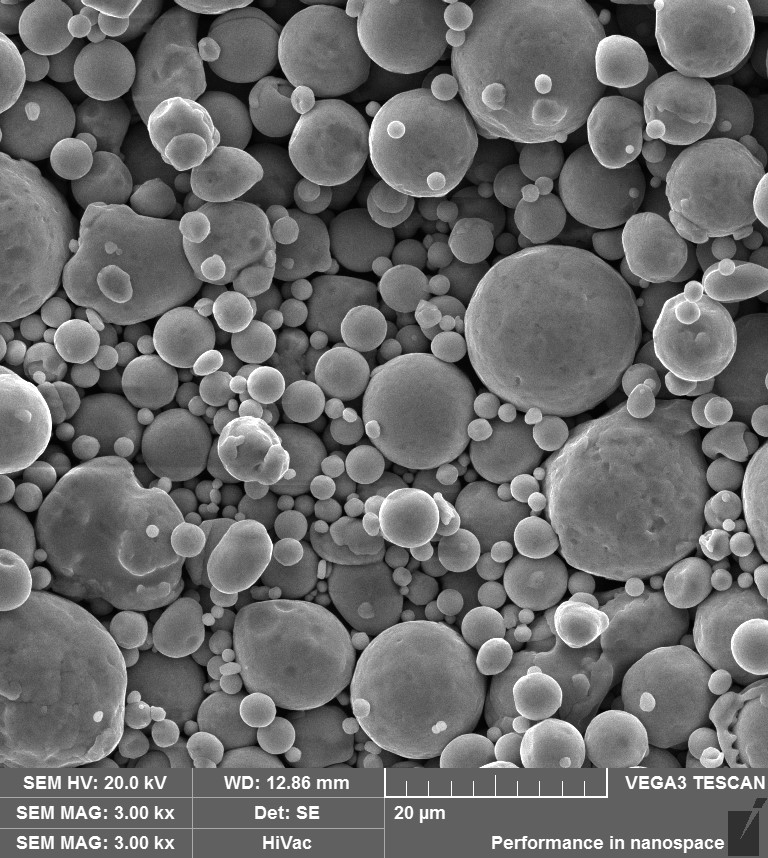
GA is widely used because it scales well and supports commercial volumes at reasonable cost. It also produces PSD bands suitable for both AM and PM screening. The trade-off is that GA powders can show more satellites and a broader distribution than premium routes like PREP, so post-atomization sieving and classification are critical.
VIGA and EIGA
VIGA combines vacuum induction melting with inert gas atomization. The vacuum melt stage improves chemistry cleanliness and reduces dissolved gases before atomization, which can be useful for low oxygen and low nitrogen targets. For pure iron grades intended for magnetic or research use, that cleaner upstream melt can be worth the extra cost.
EIGA is more often discussed for reactive alloys, but the principle is still relevant as a benchmark. Because the feedstock electrode is induction melted without a ceramic crucible in the conventional sense, contamination risk can be lower. In the pure iron market, EIGA is less common than GA or VIGA, mainly because the cost premium is harder to justify for a relatively simple base metal.
PREP and Why It Matters Even for Iron Discussions
PREP forms droplets from a spinning consumable electrode melted by plasma. The centrifugal breakup creates exceptionally spherical particles with very low satellite content. Although PREP is most strongly associated with premium titanium and superalloy powders, it matters in iron discussions because it defines the top end of morphology quality.
For iron specifically, PREP is usually selected when the application values particle perfection more than low cost or fine-cut yield. The process tends to produce coarser, narrower distributions than gas atomization, so it is less naturally aligned with ultra-fine laser PBF powders. Still, it is highly relevant for specialty deposition routes and for understanding morphology trade-offs across powder-making technologies.
Other Process Variables That Affect Final Powder Quality
Regardless of the route, three manufacturing stages often determine whether a powder becomes “AM-grade” in practice:
- melting and chemistry control
- atomization and solidification morphology
- classification, de-dusting, packaging, and traceability
A supplier with equipment knowledge across GA and PREP is better positioned to match process route to end use than one treating all spherical powders as interchangeable. That distinction is particularly visible when the same iron chemistry is offered for SLM, DED, MIM, and spray applications.
Anwendungen nach Branche
Gas atomized spherical pure iron powder is more specialized than stainless steel or Ti-6Al-4V, but it serves a broad set of technical roles when designers value purity, magnetism, or a simple iron base for later tailoring. The end-use case is often driven less by headline tensile strength and more by a combination of printability, sintering response, and functional metallurgy.
Additive Manufacturing R&D and Alloy Development
Research groups use pure iron powder as a clean baseline for alloy design, parameter screening, and comparative metallurgy. When alloying additions are introduced by blending or by subsequent processing, a pure iron starting point reduces uncertainty about inherited chemistry. That makes it useful in universities, national labs, and industrial R&D centers evaluating new ferrous systems.
Soft Magnetic and Electromagnetic Components
Pure iron remains attractive where high magnetic saturation and low alloy burden are important. AM-made magnetic parts are still a niche, but interest is growing in motor, actuator, sensor, and custom flux-guiding geometries that are difficult to machine conventionally. Compared with highly alloyed stainless powders, soft magnetic behavior is a key differentiator.
Binder Jetting and Powder Metallurgy Hybrids
Not every application involves full melting. In binder jetting, cold compaction development, and hybrid PM routes, spherical pure iron powder can be used where flow and packing uniformity are desired before sintering. It may also be blended with alloying or lubricant additions to tune final properties.
Thermal Spray, Cladding, and DED Feedstock
Coarser spherical pure iron grades are relevant in laser cladding, DED, and thermal spray systems where feeding stability is essential. In those routes, the goal may be repair layers, near-net-shape preforms, or experimental overlays rather than fully dense finished parts. The powder’s simple chemistry can be an advantage when the engineer wants controlled dilution with the substrate.
Automotive and Industrial Hardware
For automotive prototyping, fixtures, magnetic sensor housings, and specialized ferrous inserts, pure iron powder can provide a lower-alloy alternative to stainless or tool steels. It is not typically selected for corrosion-critical underbody service without protective treatment, but it can be effective in dry or controlled environments.
Energy, Tooling, and Specialized Equipment
Energy and tooling sectors sometimes use pure iron as a base material in developmental work, especially when joining, infiltration, or custom heat treatment are part of the manufacturing chain. Where more temperature resistance or corrosion resistance is required, engineers usually move toward nickel superalloy powders for high-temperature AM or cobalt systems rather than staying with unalloyed iron.
For sector-level process context, a broad metal AM applications overview is useful because pure iron often enters the workflow through adjacent processes such as cladding, PM, or experimental SEBM/SLM parameter development rather than through a single mainstream production route.
Vergleich mit alternativen Materialien
Material selection for iron powder should always be comparative. Pure iron performs well in a narrow but important envelope, yet it competes with stainless steels, low-alloy steels, and soft-magnetic specialty alloys depending on the application.
| Material | Dichte (g/cm³) | Typisches Leistungsniveau | Druckbarkeit | Korrosionsbeständigkeit | Relative Kosten | Bester Anwendungsfall |
|---|---|---|---|---|---|---|
| Gas atomized spherical pure iron powder | 7.86 | Low to moderate unless further processed | Good when oxygen and PSD are controlled | Niedrig | Niedrig bis mittel | Magnetic parts, research, PM/MIM feedstock, alloy development |
| 316L-Edelstahlpulver | 7.9–8.0 | Moderate with high ductility | Hervorragend, umfassend qualifiziert | Hoch | Mittel | General-purpose corrosion-resistant AM parts |
| Low-alloy steel powder (e.g., Fe-based prealloy) | 7.7–7.9 | Moderate to high after heat treatment | Gut bis sehr gut | Gering bis mäßig | Mittel | Structural ferrous components needing better strength than pure iron |
| Fe-Si soft magnetic powder | 7.3–7.6 | Gering bis mäßig | Moderate; cracking and brittleness can complicate builds | Niedrig | Mittel bis hoch | Electrical and magnetic efficiency-focused parts |
| FeCo or Co-Fe magnetic alloy powder | 8.1–8.3 | Mäßig | Moderate; demanding due to cost and process control | Gering bis mäßig | Hoch | High-saturation magnetic components where performance outweighs cost |
Where Pure Iron Wins
Pure iron wins when the application needs a simple ferrous matrix, magnetic response better aligned with unalloyed iron, or lower raw material cost than premium magnetic alloys. It also makes sense when the user intends to modify the chemistry downstream rather than buying a fully alloyed powder from the start.
Where Alternatives Win
If the component needs corrosion resistance, 316L is usually the easier answer. If it needs higher structural performance, low-alloy or stainless ferrous powders outperform pure iron after heat treatment. If magnetic saturation is the main metric and budget is secondary, FeCo-based systems can surpass pure iron at substantially higher powder cost and supply complexity.
This is why pure iron is best viewed as a technically purposeful powder rather than a universal one. Its value lies in low alloy burden and process flexibility, not in being the strongest or most corrosion-resistant ferrous AM feedstock.
Unser Unternehmen
Shanghai Truer Technology Co., Ltd., the company behind am-printing.com, was established in 2009 and launched its additive manufacturing business in 2019. Its metal AM scope includes powder-making equipment and powders, with core process coverage in Selective Electron Beam Melting equipment, Plasma Rotating Electrode Process equipment, and gas atomization-related capabilities. The portfolio includes TiNi, TiTa, TiAl, TiNbZr, CoCrMo, and broader ferrous, nickel, cobalt, copper, aluminum, and stainless spherical powders for SLM, SEBM, DED, laser cladding, PM, MIM, HIP, spraying, welding, and coating. Company background and operating profile are described on the Übersichtsseite des Herstellers.
FAQ
Q1. Is gas atomized spherical pure iron powder suitable for laser powder bed fusion?
Yes, it can be suitable for laser powder bed fusion when the PSD, oxygen level, and flow characteristics are matched to the machine and recoater setup. However, it is less commonly standardized than 316L or Ti-6Al-4V, so parameter development and atmosphere control usually require more attention. Fine spherical cuts in the 15–53 µm or 20–63 µm range are the usual starting point.
Q2. Why is spherical pure iron powder preferred over irregular iron powder for AM?
Spherical particles generally flow more consistently, spread into thinner and more uniform layers, and pack better in the powder bed than irregular particles. That improves recoating stability and reduces the likelihood of local density variation in the build. Irregular iron powder can still be useful in press-and-sinter applications, but not usually for high-quality powder-bed AM.
Q3. What oxygen level is acceptable in gas atomized spherical pure iron powder?
There is no single universal limit, because acceptable oxygen depends on particle size, application, and process route. Fine PBF grades often target lower oxygen than coarser DED or spray grades because higher surface area increases oxide content and process sensitivity. In purchasing practice, oxygen should be reviewed alongside PSD and morphology rather than as a standalone number.
Q4. Can pure iron powder be used for magnetic 3D printed components?
Yes, that is one of the most technically interesting use cases for this material. Pure iron can offer strong magnetic saturation potential and avoids the alloy dilution seen in stainless grades, but final magnetic performance still depends heavily on density, residual porosity, grain structure, and heat treatment. For demanding electromagnetic parts, printed coupons should be tested for both magnetic and mechanical properties before material release.
Q5. How does gas atomized spherical pure iron powder compare with stainless steel powder?
Pure iron is usually less corrosion resistant and often lower in as-built structural strength than common stainless AM grades, but it can be more attractive for magnetic or low-alloy applications. Stainless steels are easier choices for general-purpose engineering parts exposed to humidity or chemicals. Pure iron becomes more compelling when the design objective is functional metallurgy rather than broad environmental durability.
Q6. What should buyers ask for when sourcing gas atomized spherical pure iron powder?
Buyers should request a full data package covering chemistry, PSD, apparent density, tap density, flow behavior, oxygen and nitrogen content, morphology images, packaging method, and lot traceability. It is also wise to ask whether the powder is intended for PBF, DED, MIM, PM, or spray use, because the same chemistry can be screened into very different commercial grades. The most overlooked issue is often recycling discipline, since reused fine iron powder can change oxygen level and flow faster than teams expect.