Kurzantwort
Inconel 939 alloy powder is a nickel-based superalloy powder designed for additive manufacturing and other advanced powder-processing routes that demand strong oxidation resistance, high-temperature strength, and stable long-term service behavior. It is usually chosen for hot-end AM parts when operating temperatures and thermal loads exceed the comfortable range of more general-purpose nickel powders such as 625, and when designers need better hot-strength retention than 718 can always deliver in prolonged high-heat environments. Its value is highest in turbine, combustor, energy, and thermal-process components.
What Is Inconel 939 alloy powder
Inconel 939 alloy powder is the powdered form of Alloy 939, a precipitation-strengthened nickel-base superalloy developed for severe elevated-temperature environments. Within the superalloy family, it sits closer to turbine and combustion-duty materials than to general corrosion-focused grades. That distinction matters because the alloy was engineered to retain strength, resist oxidation, and maintain structural stability under sustained thermal exposure rather than simply perform well at room temperature.
In practical AM terms, the powder is typically supplied as spherical feedstock for laser powder bed fusion, electron beam processes, directed energy deposition, laser cladding, and related powder-metallurgy routes. The powder format allows engineers to build complex geometries, restore high-value components, and reduce material waste compared with conventional machining of forged or cast stock. Those benefits only matter, however, when the powder chemistry, morphology, and cleanliness are matched to the process.
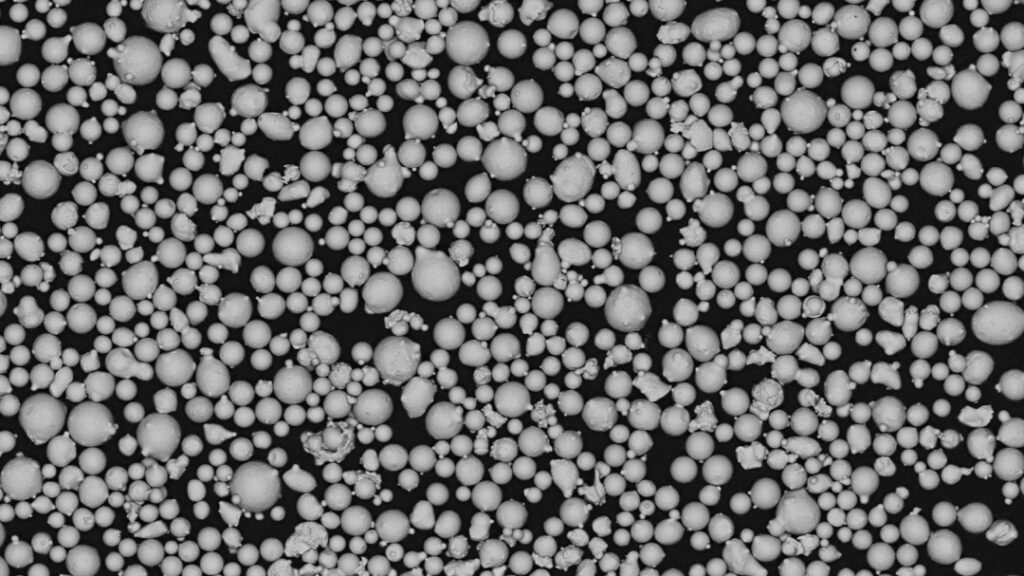
Inconel 939 Alloy Powder in the Nickel Superalloy Family
Alloy 939 belongs to the precipitation-hardened nickel superalloy class. Unlike solid-solution-strengthened nickel alloys that are easier to process but less heat-capable, 939 relies heavily on gamma-prime strengthening from aluminum and titanium additions. That gives it a more specialized role in applications where long exposure to hot gas, cyclic thermal loading, and oxidation can rapidly degrade less capable materials.
Why This AM Powder Exists
The reason Inconel 939 alloy powder exists is straightforward: many critical components operate in a temperature window that is too demanding for standard stainless steels and too harsh for lower-temperature nickel alloys. Combustor hardware, turbine shrouds, burner parts, and energy components need a feedstock that can handle both heat and atmosphere. Powder-based manufacturing makes the alloy available for near-net-shape production and repair, while the alloy chemistry provides the service performance.
Distinguishing Features of Inconel 939 Powder
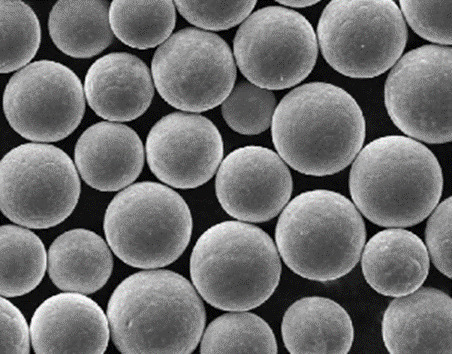
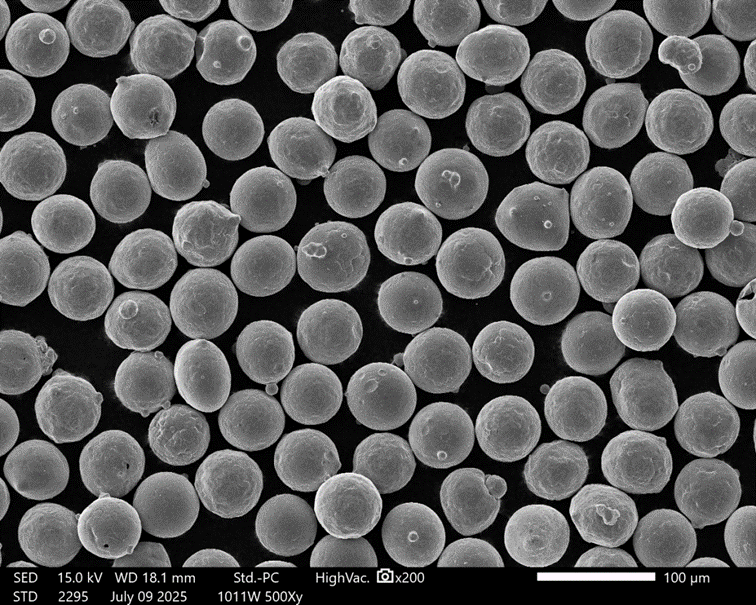
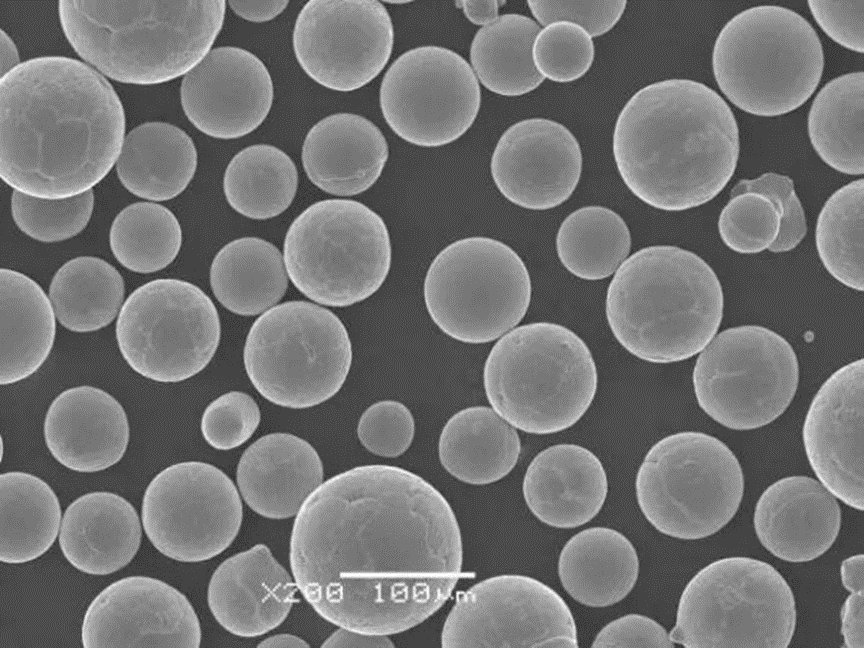
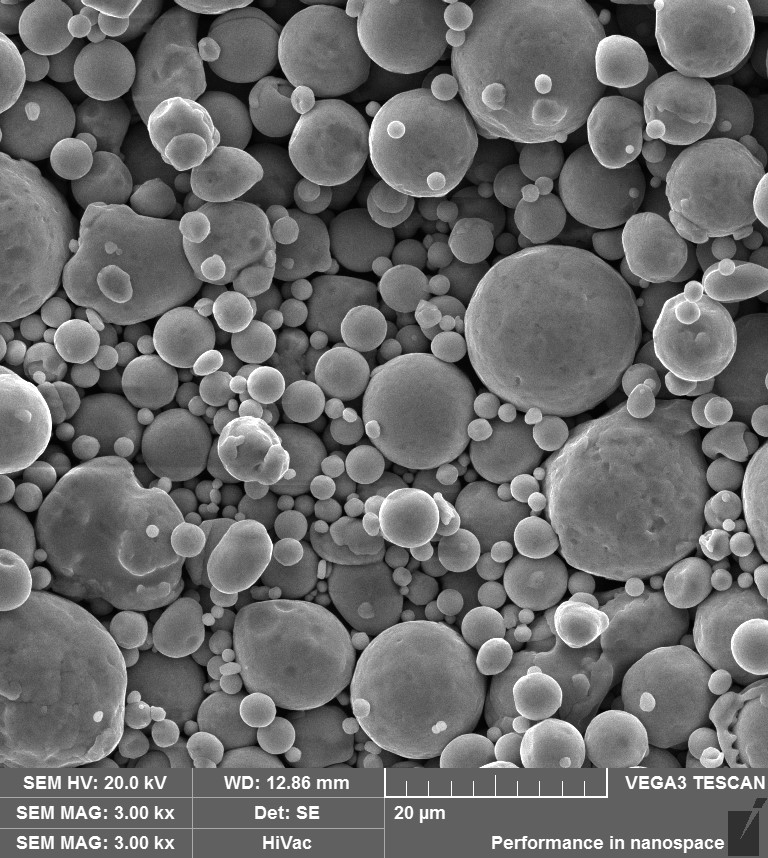
The most important differentiators are its gamma-prime response, strong oxidation resistance, and reliable hot-strength retention. In powder form, additional differentiators appear: spherical morphology, low oxygen pickup, controlled particle size distribution, and repeatable flowability. For engineers evaluating a broader Produktpalette an Nickel-Superlegierungs-Pulvern, these powder characteristics are often as important as the nominal chemistry printed on the certificate.
Why Engineers Use It Instead of More Familiar Grades
Inconel 625 is widely respected for corrosion resistance and process friendliness, while Inconel 718 is often favored for its balanced strength and relatively mature AM parameter windows. Inconel 939 enters the discussion when hotter service dominates the design case. It is less of a generalist and more of a purpose-built solution for thermally severe duty.
In high-temperature additive manufacturing, alloy chemistry decides the performance ceiling, but powder quality decides how consistently you can reach it.
Chemische Zusammensetzung
The chemistry of Inconel 939 is balanced to create a nickel-base matrix strengthened by precipitates, solid-solution additions, and carefully controlled grain-boundary modifiers. No single element defines the alloy by itself. Its performance comes from how chromium, cobalt, tungsten, aluminum, titanium, tantalum, niobium, carbon, boron, and zirconium work together under elevated-temperature exposure.
| Element | Typical wt.% | Rolle in der Metallurgie | Functional Effect in Service |
|---|---|---|---|
| Nickel (Ni) | Bilanz | Matrix phase | Provides the austenitic superalloy base and supports phase stability at high temperature |
| Chrom (Cr) | 22.0–23.0 | Oxidation and hot-corrosion resistance | Forms protective oxide scales in combustion and thermal-gas environments |
| Kobalt (Co) | 18.0–19.0 | Matrix strengthening | Improves hot hardness and supports elevated-temperature stability |
| Wolfram (W) | 1.8–2.3 | Solid-solution strengthening | Raises creep resistance and hot-strength retention |
| Aluminium (Al) | 1.8–2.2 | Gamma-prime former | Drives precipitation hardening and contributes to oxidation resistance |
| Titan (Ti) | 3.5–4.0 | Gamma-prime former | Increases strength through precipitate formation, especially at temperature |
| Tantal (Ta) | 1.2–1.8 | Precipitation support and carbide stability | Improves high-temperature strength and microstructural durability |
| Niobium (Nb) | 0.7–1.2 | Supplemental strengthening | Supports precipitation hardening and elevated-temperature performance |
| Kohlenstoff (C) | 0.10–0.18 | Hartmetall-Former | Strengthens grain boundaries when kept in controlled amounts |
| Bor (B) | 0.005–0.02 | Grain-boundary cohesion | Improves creep-related boundary stability |
| Zirkonium (Zr) | 0.03–0.08 | Boundary modifier | Enhances grain-boundary strength and ductility balance |
| Eisen (Fe) | Low residual | Residual control | Usually minimized to preserve intended superalloy behavior |
Gamma-Prime Strengthening in Inconel 939 Alloy Powder
The alloy’s signature property set is built around gamma-prime precipitation. Aluminum and titanium are the main drivers, with tantalum and niobium providing supporting effects. After suitable thermal processing, these precipitates obstruct dislocation motion and help the alloy retain strength where simpler nickel materials begin to soften.
Chromium, Cobalt, and Oxidation Performance
Chromium is central to oxidation and hot-corrosion behavior. In aggressive hot-gas environments, it helps form stable surface scales that slow further attack. Cobalt works differently: it strengthens the matrix and improves high-temperature phase stability, which is especially important when parts experience long thermal dwell times rather than short transient heating.
Minor Elements with Major Metallurgical Influence
Carbon, boron, and zirconium appear in small amounts but influence creep life, crack behavior, and grain-boundary integrity. In AM and repair applications, where thermal cycles can be complex, these minor additions help maintain structural coherence. Their control is therefore important not only in bulk alloy production but also in powder remelting and lot qualification.
Physikalische und mechanische Eigenschaften
Property data for Inconel 939 alloy powder should always be read as two related but different categories: powder characteristics and consolidated material behavior. Design engineers usually care about tensile strength, hardness, and oxidation capability, but manufacturing teams care just as much about density, flow, oxygen level, and morphology. The final part properties depend on both.
| Eigentum | Typischer Wert | Einheit | Test Standard / Basis |
|---|---|---|---|
| Dichte | 8.10–8.20 | g/cm³ | Typical consolidated alloy reference |
| Solidus temperature | 1190–1230 | °C | Typischer Legierungsbereich |
| Liquidus temperature | 1330–1360 | °C | Typischer Legierungsbereich |
| Ultimate tensile strength | 1050–1280 | MPa | Typical heat-treated AM or wrought-comparable range |
| 0.2% yield strength | 780–980 | MPa | Typical heat-treated AM or wrought-comparable range |
| Dehnung | 4–10 | % | Process and heat-treatment dependent |
| Härte | 34–42 | HRC | Typical aged condition |
| Elastizitätsmodul | 200–220 | GPa | Engineering reference at room temperature |
| Wärmeleitfähigkeit | 11–16 | W/m-K | Ungefährer Bereich der Raumtemperatur |
| Useful oxidation-focused service range | About 850–950 | °C | Application dependent, not a universal design allowable |
Elevated-Temperature Capability of Inconel 939 AM Powder Builds
The main reason this alloy is specified is high-temperature strength retention. At room temperature, several other superalloys can look similarly strong on a datasheet. The difference appears when service temperature rises and exposure time increases, because Inconel 939 better preserves its load-bearing capability and oxidation resistance in sustained hot environments.
Tensile Strength, Yield Strength, and Ductility
Tensile and yield values vary significantly with build strategy, density level, section thickness, and post-build heat treatment. Fully dense, well-processed, and correctly aged material can reach strong room-temperature values, but elongation often remains lower than that of easier-to-print nickel grades. That is a normal consequence of the alloy’s strengthening philosophy rather than a sign of poor quality by itself.
Hardness and Heat Treatment Response
Hardness in the aged condition usually reflects successful precipitation development. If hardness is unexpectedly low, the heat treatment may be suboptimal or the alloy may contain excessive retained segregation. If hardness is extremely high with poor ductility, residual stress or an incomplete thermal cycle may be part of the explanation.
Thermal Conductivity and AM Process Window
Thermal conductivity is modest, which means heat can accumulate in the build area more easily than in copper- or aluminum-based powders. That influences melt-pool behavior, residual stress, and crack tendency. When a design case is driven by thermal conductivity rather than hot strength, engineers often compare the alloy against copper alloy powder options instead of staying inside the nickel family.
Technische Daten und verfügbare Güteklassen
Buyers of Inconel 939 alloy powder usually qualify more than nominal chemistry. In real production, they want a specification package covering particle size distribution, apparent density, tap density, Hall flow, gas content, and morphological consistency. Those characteristics directly affect powder spreading, nozzle feeding, build density, and downstream reproducibility.
| Supply Grade / Standard Basis | Typisches PSD | Scheinbare Dichte | Zapfstellendichte | Hall-Strömung | Sauerstoffgehalt | Kugelförmigkeit / Morphologie | Cross-Reference Use |
|---|---|---|---|---|---|---|---|
| Fine LPBF grade | 15-45 µm | 4.3–4.8 g/cm³ | 4,9–5,5 g/cm³ | 14–20 s/50 g | ≤300 ppm typical | High sphericity, limited satellites | Fine-feature laser powder bed fusion |
| Standard LPBF grade | 15-53 µm | 4.4–4.9 g/cm³ | 5.0–5.6 g/cm³ | 13–19 s/50 g | ≤300 ppm typical | Spherical, narrow cut preferred | General AM production builds |
| DED / cladding grade | 45-105 µm | 4,5-5,0 g/cm³ | 5.1–5.7 g/cm³ | 13–18 s/50 g | ≤350 ppm typical | Flow-optimized spherical particles | Directed energy deposition and laser cladding |
| Coarse deposition grade | 53-150 µm | 4.6–5.1 g/cm³ | 5.2–5.8 g/cm³ | 12–18 s/50 g | ≤350 ppm typical | Stable feeder behavior | Higher-rate powder-fed systems |
| Test and documentation basis | By lot | By lot | By lot | By lot | By lot | By lot | ASTM / ISO / AMS / DIN / GB cross-reference practice |
Particle Size Distribution for Inconel 939 Alloy Powder
Particle size distribution controls layer thickness compatibility, recoating behavior, feeder stability, and overall build consistency. Fine powder cuts are often chosen for detailed laser powder bed fusion work, while coarser fractions suit powder-fed deposition systems. The ideal range depends on machine optics, energy density, atmosphere control, and productivity targets.
Flowability, Packing, and Oxygen Control
Apparent density and tap density indicate how efficiently the powder packs before melting. Hall flow offers a quick comparative indicator of handling behavior, especially between lots. Oxygen control is critical for powder cleanliness, because oxide films and inclusions can reduce ductility and complicate crack-sensitive processing in high-strength superalloys.
Standards and Cross-Reference Practices
There is no single universal purchasing template for this alloy across every AM route, so many users build their own acceptance matrices from recognized powder test methods and internal quality plans. Organizations interpreting additive manufacturing vocabulary often refer to ISO additive manufacturing terminology, while powder-lot evaluation frequently incorporates test practices published by ASTM-Prüfverfahren für Pulver. In aerospace and energy environments, customer-specific qualification requirements may be even tighter than baseline standards.
Grade Selection by Process Route
A machine running thin powder layers and fine laser spot sizes will not want the same feedstock as a laser cladding cell repairing turbine hardware. That is why serious powder suppliers classify Inconel 939 into process-specific cuts rather than offering one generic product. Users also compare it with cobalt, titanium, iron, and refractory systems depending on whether heat, mass, wear, or cost is the dominant requirement.
Herstellungsprozess
The production route of Inconel 939 alloy powder has a direct impact on printability and end-use performance. Powder manufacturing determines particle roundness, satellite content, oxygen pickup, contamination risk, and internal porosity tendency. For high-temperature superalloys, these attributes influence not only machine behavior but also the reliability of finished parts.
| Prozess | Typical Sphericity | Oxygen Pickup Risk | PSD-Steuerung | Durchsatz | Relative Kosten | Main Advantages | Main Trade-Offs |
|---|---|---|---|---|---|---|---|
| Gaszerstäubung (GA) | Gut bis sehr gut | Gering bis mäßig | Gut | Hoch | Mäßig | Scalable output, broad availability, versatile size classification | Satellite content can increase if atomization control is weak |
| Vakuum-Induktions-Gaszerstäubung (VIGA) | Sehr gut | Niedrig | Gut bis sehr gut | Mittel bis hoch | Mäßig bis hoch | Cleaner melt handling and improved atmosphere control | Higher processing cost than conventional GA |
| Elektrodeninduktions-Gaszerstäubung (EIGA) | Very good to excellent | Sehr niedrig | Gut | Mittel | Hoch | Low contamination potential and premium purity | More specialized supply base |
| Plasma-Rotations-Elektroden-Verfahren (PREP) | Ausgezeichnet | Sehr niedrig | Mäßig nach dem Screening | Medium to low | Hoch | Highly spherical, dense particles with low contamination | Lower throughput and higher price per kilogram |
| Plasma atomization / specialty routes | Ausgezeichnet | Sehr niedrig | Gut | Niedrig bis mittel | Hoch | Premium morphology for critical applications | Limited economics for broader industrial volume |
Gas Atomization for Inconel 939 Alloy Powder
Gas atomization is the most common industrial route for producing this material at useful commercial scale. Molten alloy is broken into droplets by high-velocity inert gas, and those droplets solidify into near-spherical particles during flight. When the melt chemistry, gas purity, nozzle design, and classification steps are well controlled, the result is a powder suited to a wide range of additive manufacturing and cladding operations.
VIGA and EIGA for Cleaner Superalloy Feedstock
VIGA combines controlled melting with gas atomization under more tightly managed atmospheric conditions. EIGA further reduces contamination pathways in certain equipment designs by limiting melt contact with conventional crucible surfaces. For crack-sensitive superalloys and high-specification aerospace work, these cleaner routes can justify their higher cost.
PREP and Premium Sphericity
PREP is especially valued for excellent particle roundness and low contamination. The process uses a rotating electrode melted by plasma, generating droplets that solidify into dense spherical powder. Although PREP is widely associated with reactive titanium systems, it can also be relevant when very high powder quality is required for demanding nickel-based applications.
Choosing the Right Powder-Making Route
The “best” method depends on whether the priority is throughput, purity, morphology, or price. For many industrial users, gas-atomized spherical morphology offers the most practical quality-to-cost balance. For aerospace-critical or research-grade work, VIGA, EIGA, or PREP may be preferred despite lower output and higher cost.
Anwendungen nach Branche
Inconel 939 alloy powder is not a commodity material. It is selected when thermal severity, oxidation exposure, and high component value justify the complexity of a premium superalloy. That focus gives the powder a clear, if specialized, industrial footprint.
Aerospace and Turbine Hot-Section Components
Aerospace is the most natural home for this alloy. Combustor structures, shrouds, seal segments, vanes, and other hot-section-adjacent parts benefit from the alloy’s ability to withstand sustained heat and oxidizing atmospheres. Additive manufacturing further supports lightweighting, internal cooling geometries, and repair strategies that would be difficult with conventional routes.
Power Generation and Industrial Gas Turbines
Industrial gas turbines place similar thermal demands on materials, often with long dwell times at elevated temperature. In this setting, Inconel 939 alloy powder is useful for both new-build parts and repair or restoration work. Directed energy deposition and laser cladding are especially relevant where expensive energy hardware can be refurbished rather than replaced.
Oil, Gas, and Thermal Process Equipment
The alloy is not the default choice for every oil and gas environment, because some applications are governed more by aqueous corrosion than by heat. However, in burner assemblies, hot-gas handling systems, and thermal processing equipment, its balance of oxidation resistance and hot strength becomes attractive. That makes it a targeted rather than universal material in the sector.
Automotive, Motorsport, and Advanced Testing Hardware
In mainstream automotive manufacturing, the alloy is too specialized and costly for broad use. In motorsport, turbo systems, exhaust-adjacent thermal components, and test-rig hardware, its performance can justify the expense. The same is true for R&D environments developing next-generation combustion or energy systems.
Tooling, Repair, and Multi-Process Manufacturing
Powder form broadens the alloy’s use beyond powder bed fusion. It can support DED, laser cladding, hot isostatic consolidation paths, and certain powder metallurgy workflows. A wide view of such end uses appears across the industrial AM application sectors that combine printing, cladding, spraying, and post-processing in one manufacturing ecosystem.
Vergleich mit alternativen Materialien
Material selection for hot-end additive manufacturing is rarely about identifying a universally superior alloy. It is about matching performance priorities to process realities. Inconel 939 alloy powder competes most directly with 718, 625, Hastelloy X, and selected cobalt-based powders depending on whether the key challenge is heat, corrosion, manufacturability, or wear.
| Material | Dichte (g/cm³) | Relative Strength Level | High-Temperature Capability | Relative AM Printability | Oxidation / Corrosion Behavior | Relative Kosten | Typical Best-Fit Use |
|---|---|---|---|---|---|---|---|
| Inconel 939 alloy powder | 8.1–8.2 | Hoch | Sehr hoch | Mäßig | Very good oxidation and hot-corrosion resistance | Hoch | Hot-section AM parts and thermal hardware |
| Inconel 718-Pulver | 8.19 | Sehr hoch | Hoch | Gut | Good overall resistance | Mäßig bis hoch | Structural AM components with broader process window |
| Inconel 625-Pulver | 8.44 | Mäßig bis hoch | Mäßig bis hoch | Sehr gut | Excellent general corrosion resistance | Mäßig | Corrosion-led AM and cladding work |
| Hastelloy X-Pulver | 8.2–8.3 | Mäßig | Hoch | Gut | Excellent oxidation and thermal-fatigue response | Hoch | Combustion hardware and furnace components |
| CoCrMo-Pulver | 8.3–8.5 | Hoch | Mäßig bis hoch | Gut | Very good wear and corrosion resistance | Hoch | Wear-critical parts, medical and industrial applications |
Inconel 939 Versus Inconel 718
Inconel 718 remains one of the most widely discussed AM superalloys because it is relatively mature, strong, and broadly documented. Inconel 939 becomes preferable when the service profile shifts upward in temperature and oxidation resistance becomes central to the design logic. The trade-off is that 939 can require tighter process control and more careful thermal management.
Inconel 939 Versus Inconel 625
Inconel 625 is easier to qualify in many AM environments and is excellent where general corrosion performance matters. Inconel 939 is the stronger candidate when prolonged elevated-temperature duty dominates the application. In simple terms, 625 is broader in versatility, while 939 is narrower but more thermally specialized.
Inconel 939 Versus Cobalt and Refractory Alternatives
Some cobalt alloys outperform nickel alloys in hot wear, galling, or surface-contact conditions. Refractory systems may exceed nickel in pure temperature capability but often bring severe oxidation sensitivity and greater processing difficulty. For that reason, Inconel 939 frequently occupies a middle ground: more heat-capable than standard nickel AM powders, but more practical than the most extreme high-temperature alternatives.
Selection Logic Across AM Powder Families
If the part is weight-sensitive, titanium may win. If it is conductivity-driven, copper is stronger. If it is cost-driven, iron-based powders may dominate. If it is a hot-section part where temperature, oxidation, and strength all matter at once, Inconel 939 powder often earns its place by balancing these competing requirements more effectively than general-purpose options.
For readers needing a broader primer on superalloy naming and history, the Wikipedia overview of Inconel alloys gives useful context, while process-oriented teams often track feedstock and repeatability work through NIST-Forschung im Bereich der additiven Fertigung.
Unser Unternehmen
Shanghai Truer Technology Co., Ltd., which operates am-printing.com, was established in 2009 and created its additive manufacturing business in 2019. Based on the company information published on its corporate profile page, its activities include integrating 3D printing powder-making equipment and services with metal powder supply, with core technologies that include Selective Electron Beam Melting equipment, Plasma Rotating Electrode Process powder-making equipment, and gas atomization-related capabilities. The stated powder portfolio includes TiNi, TiTa, TiAl, TiNbZr, CoCrMo, and spherical nickel-based, cobalt-based, titanium-based, copper-based, aluminum-based, and stainless steel powders for SLM, SEBM, DED, laser cladding, powder metallurgy, MIM, HIP, cold and hot spraying, welding, and coating in industries including medical, aerospace, nuclear power, 3C electronics, hand tools, and remote control cars.
FAQ
Q1. Is Inconel 939 alloy powder mainly used for powder bed fusion or directed energy deposition?
It is used in both, but the preferred particle-size cut changes with the process. Fine ranges such as 15–45 µm or 15–53 µm are commonly chosen for laser powder bed fusion, while coarser cuts such as 45–105 µm are more typical for directed energy deposition and laser cladding. The correct choice depends on machine configuration, layer thickness, and powder-feed behavior.
Q2. Why is Inconel 939 alloy powder preferred for hot-end components?
Its chemistry is optimized for oxidation resistance and strength retention at elevated temperature. That gives it an advantage in combustor, turbine, and thermal-process environments where simpler nickel alloys may soften or degrade more quickly over time. The alloy is selected less for general corrosion and more for sustained thermal duty.
Q3. How does Inconel 939 alloy powder compare with Inconel 718 powder?
Inconel 718 generally offers a broader and better-established processing window in additive manufacturing. Inconel 939 is more specialized and is often favored when service temperatures are higher and oxidation resistance becomes more critical to part life. The decision should be based on real operating temperature, thermal cycling, and required lifetime rather than on room-temperature strength alone.
Q4. Does Inconel 939 alloy powder require post-build heat treatment?
In most cases, yes. Stress relief and precipitation-aging steps are usually needed to develop the intended microstructure and mechanical response. Without suitable heat treatment, as-built parts may show residual stress, lower ductility, and less predictable high-temperature performance.
Q5. What quality metrics matter most when buying Inconel 939 alloy powder?
Buyers typically focus on chemistry, particle size distribution, oxygen content, apparent density, tap density, Hall flow, and morphology. Lot traceability and consistency between batches are also important, especially for aerospace, energy, and repair applications. For demanding programs, powder quality is inseparable from process qualification.
Q6. Which industries benefit most from Inconel 939 alloy powder?
Aerospace, industrial gas turbines, power generation, and thermal process equipment are the strongest fits because they routinely combine heat, oxidation, and long service intervals. Motorsport, advanced R&D, and selected oil-and-gas thermal hardware also benefit when the part sees sustained high-temperature exposure. The alloy is most valuable where the operating environment is too severe for more general-purpose AM powders.