Kurzantwort
PREP spherical Inconel 738LC powder is a plasma-rotating-electrode-produced nickel-based superalloy powder engineered for additive manufacturing in high-temperature service. It is chosen when the application needs a clean, highly spherical feedstock with strong creep resistance, oxidation resistance, and gamma-prime strengthening at elevated temperature. In practice, it is most relevant for demanding aerospace and energy components, especially where powder flow, low contamination, and stable high-heat mechanical performance matter more than low material cost or easy processing.
What Is PREP spherical Inconel 738LC powder
PREP spherical Inconel 738LC powder is the additive manufacturing feedstock form of Inconel 738LC, a cast nickel-base superalloy developed for hot-section service in gas turbines and related thermal environments. The “LC” designation refers to a low-carbon variant intended to improve castability and crack behavior relative to earlier formulations while preserving the high-temperature strength profile that made the alloy important in turbine hardware.
Inconel 738LC as a High-Temperature AM Powder
Inconel 738LC belongs to the precipitation-strengthened nickel superalloy family. Like other advanced superalloys, it derives much of its strength from a gamma matrix strengthened by a substantial gamma-prime fraction, supported by chromium, cobalt, tungsten, molybdenum, tantalum, aluminum, and titanium.
That chemistry places it in a more demanding category than general-purpose AM nickel alloys. It is not usually selected for routine corrosion-duty components or for projects where ease of printing is the main requirement. Instead, it is used where thermal exposure, creep, and oxidation resistance are the governing design constraints.
Why the PREP Route Matters
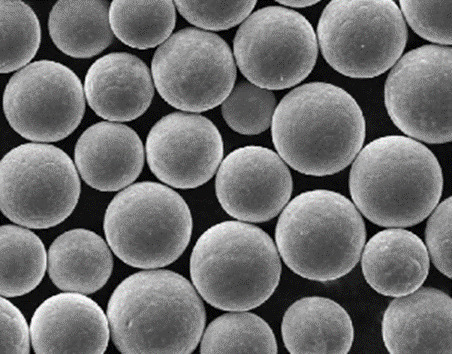
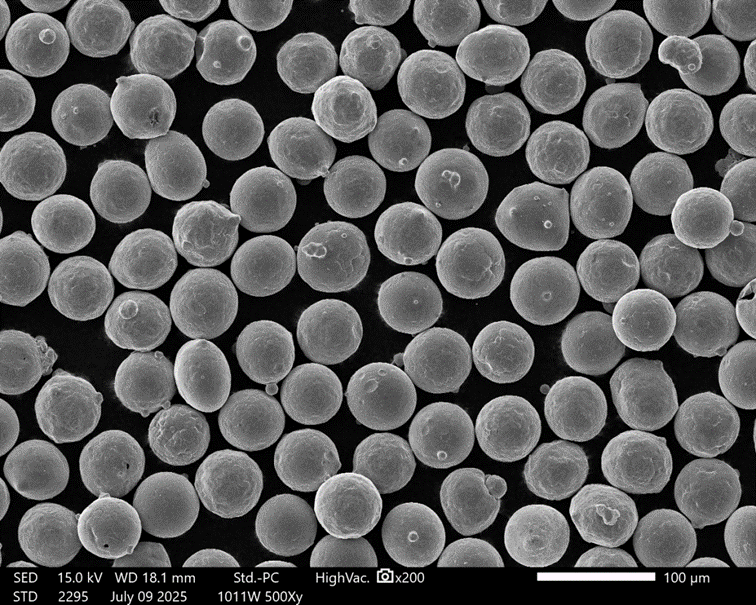
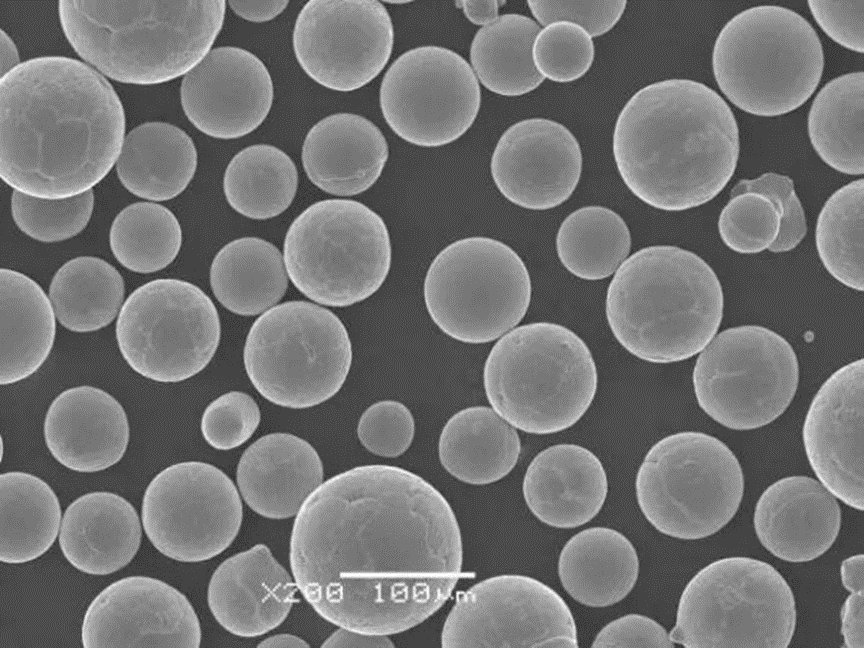
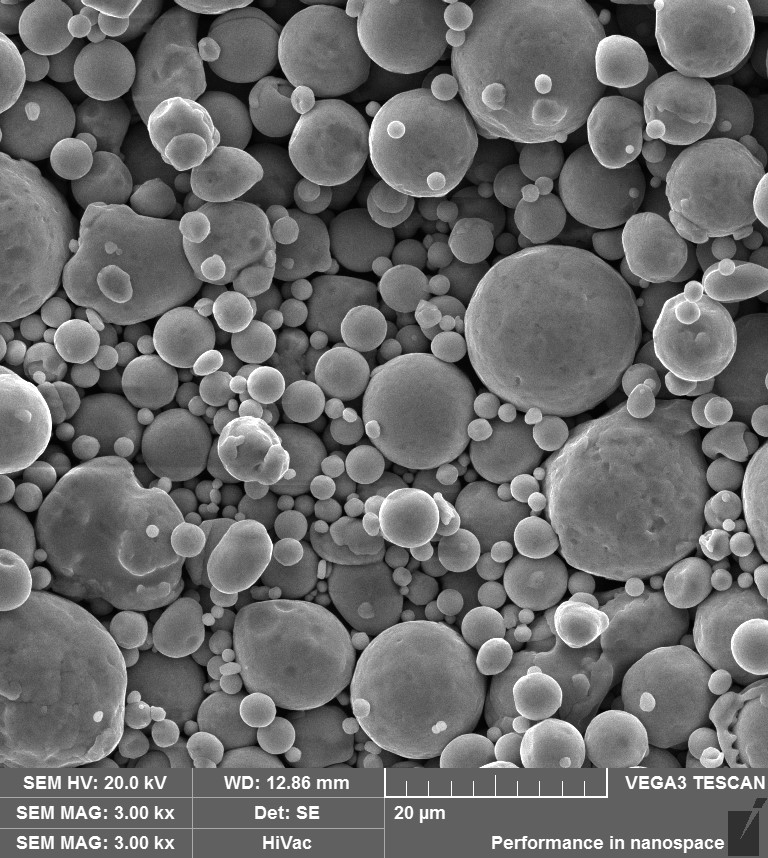
The PREP route changes the discussion from alloy chemistry alone to powder quality. In plasma rotating electrode processing, a rotating bar or rod is melted at the tip by plasma, and centrifugal force throws droplets outward, where they solidify into very round particles. This route is widely recognized for producing clean, spherical powder with low satellite content and reduced contamination risk compared with many alternative atomization routes.
For demanding additive manufacturing processes, especially powder bed fusion and high-end directed energy deposition, that spherical shape matters. It affects layer spreading, packing behavior, powder flow, and process repeatability, all of which are especially important for a crack-sensitive superalloy such as Inconel 738LC.
Distinguishing Features of PREP Spherical Inconel 738LC Powder
A few traits define this material in the AM market. First, it offers excellent high-temperature capability relative to easier-to-print nickel grades. Second, the PREP route tends to support cleaner morphology and lower inclusion risk. Third, the alloy remains process-sensitive, so its value is highest in applications where performance at temperature justifies careful parameter development and post-processing.
Readers comparing broader nickel superalloy powder families usually find that Inconel 738LC occupies the upper-performance, narrower-process-window end of the spectrum. That is exactly why it attracts interest in advanced turbine and energy hardware.
Where It Fits in Metal Additive Manufacturing
Within the framework described by Begriffe gemäß ISO/ASTM 52900, this powder is relevant to laser powder bed fusion, electron beam processes, and selected DED or cladding workflows, depending on the supplied particle size distribution. However, its strongest identity remains tied to high-temperature structural parts rather than general AM prototyping.
high-temperature nickel superalloy is therefore the most useful short description. It is a specialist feedstock for applications that need service performance first and manufacturing convenience second.
Chemische Zusammensetzung
Inconel 738LC chemistry is built to resist thermal degradation while maintaining strength deep into the temperature range where simpler alloys begin to lose structural margin. The alloy uses a complex balance of gamma-prime formers, solid-solution strengtheners, and grain-boundary elements to support creep life, oxidation resistance, and hot corrosion performance.
| Element | Typical Content (wt%) | Practical Range (wt%) | Rolle in der Metallurgie |
|---|---|---|---|
| Ni | Bilanz | Bilanz | Matrix phase with high-temperature phase stability |
| Cr | 15.7–16.3 | 15.0–16.5 | Oxidation and hot-corrosion resistance |
| Co | 8.0–8.7 | 8.0–9.0 | Matrix strengthening and gamma-prime stability |
| W | 2.4–2.8 | 2.0–3.0 | Strong solid-solution strengthening for creep resistance |
| Mo | 1.6–1.9 | 1.5–2.0 | Supplemental matrix strengthening |
| Ta | 1.5–2.0 | 1.2–2.0 | Gamma-prime strengthening and carbide support |
| Al | 3.2–3.7 | 3.2–3.7 | Primary gamma-prime former |
| Ti | 3.2–3.7 | 3.0–3.8 | Gamma-prime strengthening and elevated-temperature strength |
| Nb | 0.7–1.1 | 0.5–1.1 | Secondary precipitation support and matrix strengthening |
| C | 0.08–0.12 | 0.07–0.13 | Carbide formation and grain-boundary control |
| B | 0.005–0.015 | 0.003–0.02 | Grain-boundary cohesion |
| Zr | 0.03–0.08 | 0.02–0.10 | Grain-boundary strengthening and ductility support |
Why the Chemistry Is So Highly Alloyed
The chemistry of Inconel 738LC reflects a classic turbine-alloy design logic. Chromium supports oxidation resistance, cobalt modifies phase stability, and tungsten and molybdenum reinforce the matrix under long thermal dwell conditions. Aluminum and titanium drive a high gamma-prime fraction, which is central to the alloy’s high-temperature strength.
This is also why the alloy is not especially forgiving in additive manufacturing. A chemistry designed for elevated-temperature strength often narrows the processing window because shrinkage stress, solidification behavior, and residual stress sensitivity become harder to manage.
Grain-Boundary Control in 738LC
Low-percentage elements such as carbon, boron, and zirconium have a major influence on boundary behavior. They help determine carbide distribution, grain-boundary cohesion, and long-term structural integrity at temperature, all of which matter for turbine-class duty cycles.
That grain-boundary strategy is one of the reasons Inconel 738LC remains relevant even as newer superalloys emerge. For repaired or newly built components that must sustain thermal exposure for long periods, those boundary effects can outweigh small differences in room-temperature tensile data.
Composition and Powder Reuse Considerations
For additive manufacturing, chemistry control is not only a production issue but also a powder lifecycle issue. Reuse cycles can shift oxygen pickup, particle morphology, and fines content, and those changes interact with the alloy’s already narrow process tolerance.
With PREP-produced feedstock, buyers often expect tighter cleanliness and morphology consistency than with commodity powders. That does not eliminate the need for reuse control, but it makes incoming quality more predictable.
Physikalische und mechanische Eigenschaften
Because Inconel 738LC is sensitive to build strategy, heat treatment, and defect population, published properties should be treated as typical consolidated values rather than absolute guarantees for every AM route. Cast, hot isostatically pressed, and additively manufactured material can show materially different strength-ductility balances even when nominal chemistry is similar.
| Eigentum | Typischer Wert | Einheit | Test Standard / Basis |
|---|---|---|---|
| Dichte | 8.10–8.20 | g/cm³ | Nominal alloy value |
| Solidus | 1230–1260 | °C | Typical literature range |
| Liquidus | 1310–1340 | °C | Typical literature range |
| Endgültige Zugfestigkeit | 980–1280 | MPa | Typical heat-treated consolidated range |
| Streckgrenze | 760–1030 | MPa | Typischer Raumtemperaturbereich |
| Dehnung | 2–8 | % | Process- and heat-treatment-dependent |
| Härte | 350–430 | HV | Typical aged condition |
| Wärmeleitfähigkeit | 11–15 | W/m-K | Ungefährer Bereich der Raumtemperatur |
Interpreting Property Data for AM Parts
Property tables are useful, but they can create a false sense of certainty. Inconel 738LC is a superalloy whose real performance depends heavily on microstructure, porosity level, crack population, and heat-treatment response after printing.
For that reason, tensile strength values are not the whole story. A turbine designer may care far more about creep rupture behavior, oxidation scale stability, and resistance to microstructural degradation during long service exposure than about small differences in room-temperature yield strength.
PREP Spherical Inconel 738LC Powder and Density Response
The PREP route mainly influences the starting powder, not the final component by itself. Its advantage is that smooth, spherical particles generally support better flow, improved packing consistency, and fewer morphology-driven process instabilities during printing.
That matters in both powder bed and DED systems. Better feed consistency can help reduce local energy input variability, incomplete fusion risk, or erratic bead geometry, although parameter optimization still dominates the final density outcome.
Elevated-Temperature Relevance
Inconel 738LC was not designed to maximize ductility at room temperature. It was developed for strength retention, oxidation resistance, and creep capability under sustained heat. In many real applications, that makes it more attractive than easier nickel grades even when its printability is less convenient.
The value of turbine-class superalloys lies less in ease of manufacture than in how well they hold load at temperature.
Limits of a Single Property Sheet
One process sheet cannot represent all routes. Laser powder bed fusion, electron beam melting, hot isostatic pressing, and repair deposition each produce different thermal histories, grain structures, and residual-stress states.
process-dependent mechanical performance is therefore the correct way to read Inconel 738LC data. Buyers should match property expectations to the intended process route, qualification plan, and service temperature.
Technische Daten und verfügbare Güteklassen
PREP spherical powder is usually purchased against a combination of chemistry limits, morphology expectations, and particle size windows matched to the printing process. Unlike commodity metal powders, high-performance superalloy feedstock is often specified in a way that ties together powder characteristics and end-use qualification rather than treating them as separate topics.
| Grade / Reference Type | PSD Range (µm) | Scheinbare Dichte (g/cm³) | Tap Density (g/cm³) | Hall Flow (s/50 g) | Oxygen (wt%) | Sphericity / Cross-Reference Note |
|---|---|---|---|---|---|---|
| Fine PBF Grade | 15-45 | 4.5–5.0 | 5.0–5.6 | 14–22 | 0.01–0.06 | Very high sphericity; suited to thin-layer powder bed use |
| Standard PBF Grade | 15-53 | 4.6–5.1 | 5.1–5.7 | 13–20 | 0.01–0.06 | Common laser powder bed distribution |
| Coarse AM Grade | 45-105 | 4.8–5.3 | 5.4–5.9 | 11–18 | 0.01–0.07 | Suitable for selected DED or cladding workflows |
| Broad Custom Grade | 53-150 | 4.9–5.4 | 5.5–6.0 | 10–17 | 0.01–0.07 | Used where feeder stability is prioritized over thin-layer spreading |
| Standards Cross-Reference | By purchase spec | By lot | By lot | By lot | By lot | Typically reported with ASTM, ISO, AMS, GB, or DIN methods rather than one universal 738LC AM standard |
PSD Selection for PREP Spherical Inconel 738LC Powder
The most common AM decision starts with particle size distribution. Fine grades such as 15–45 µm or 15–53 µm are normally associated with powder bed systems where thin, uniform layer deposition is critical. Coarser ranges such as 45–105 µm or 53–150 µm are more relevant to DED or laser cladding, where powder feeding behavior and melt-pool capture efficiency matter more than ultrafine spreading.
This makes the grade specification process-dependent from the outset. A good powder supplied in the wrong size cut can underperform even when chemistry and morphology are excellent.
Quality Metrics Beyond PSD
Sphericity, satellite content, oxygen level, apparent density, tap density, and Hall flow are all important because they influence how powder behaves in real machines. In PREP material, users usually expect high roundness and a low level of irregular particles, which helps support smoother spreading and more predictable recoating.
For demanding additive manufacturing work, lot-to-lot consistency can be as important as a single impressive certificate. That is especially true for Inconel 738LC, where a narrow process window means even modest feedstock variation can show up in cracking or density outcomes.
Standards Context
There is no single globally universal AM purchase standard dedicated solely to PREP spherical Inconel 738LC powder. Instead, procurement often combines internal aerospace or energy specifications with general terminology and testing approaches developed by organizations such as ASTM additive manufacturing standards.
In practice, that means the powder certificate is only one part of the technical package. Qualification usually also includes printed coupon testing, metallography, density verification, and route-specific heat-treatment validation.
Available Supply Logic
Suppliers working across multiple alloy systems typically segment this material by process class rather than by chemistry alone. In that sense, PREP spherical Inconel 738LC powder sits alongside other specialty feedstocks used in advanced metal powder application sectors where thermal, structural, or corrosion requirements justify higher powder quality and tighter control.
Herstellungsprozess
For Inconel 738LC, manufacturing route is not a cosmetic detail. The difference between gas atomization, PREP, vacuum induction gas atomization, and electrode induction gas atomization can affect particle shape, cleanliness, oxygen pickup, internal porosity, and production economics, all of which influence how the powder behaves during additive manufacturing.
| Prozess | Typical Sphericity | Oxygen Pickup Risk | PSD-Steuerung | Durchsatz | Relative Kosten | Typischer Anwendungsfall |
|---|---|---|---|---|---|---|
| PREP | Sehr hoch | Sehr niedrig | Gut | Niedrig bis mittel | Hoch | Premium spherical AM powder with low contamination |
| Gaszerstäubung (GA) | Hoch | Gering bis mäßig | Gut | Hoch | Mittel | Mainstream AM and cladding powder production |
| VIGA | Hoch bis sehr hoch | Niedrig | Gut bis sehr gut | Mittel | Mittel-hoch | Controlled chemistry and cleaner atomized superalloy powder |
| EIGA | Sehr hoch | Sehr niedrig | Sehr gut | Mittel | Hoch | High-purity powder for critical applications |
| Plasma Atomization / Specialty Routes | Hoch bis sehr hoch | Niedrig | Gut | Niedrig | Hoch | Niche premium powders requiring exceptional cleanliness |
How PREP Produces Spherical Powder
In the PREP process, a rotating feed rod is melted at the end by plasma, and the molten metal is ejected outward by centrifugal force into droplets that solidify rapidly in flight. Because the starting feedstock is usually a dense electrode and the droplets form without contact with a crucible, contamination pathways can be reduced.
The resulting powder is known for high sphericity and comparatively low satellite content. For flow-critical AM processes, this is a meaningful advantage, not just a visual one.
PREP Versus Gas Atomization
Gas atomization remains the most scalable and broadly economical route for many nickel alloy powders. It supports high production volume and good PSD control, which is why it dominates large segments of the AM powder market.
PREP, however, is often selected when morphology and cleanliness are prioritized over throughput. For a superalloy as processing-sensitive as Inconel 738LC, that trade-off can be justified if the project values powder consistency more than unit cost.
VIGA and EIGA in the Same Decision Set
VIGA and EIGA occupy a middle-to-premium position. Both support clean, controlled production of spherical powder, and both are relevant when users need strong chemistry control in addition to good morphology. The choice among PREP, VIGA, and EIGA often depends on how the buyer weighs sphericity, contamination risk, yield, and economics.
For buyers comparing feedstock families beyond nickel, neighboring categories such as refractory metal powder grades face similar route-selection logic, although the processing challenges differ by alloy system.
Why PREP Is Attractive for Inconel 738LC
The case for PREP is strongest when the alloy itself is already challenging. If the metal has a narrow AM window, reducing powder-driven variability becomes more valuable. High sphericity helps layer uniformity, predictable flow helps energy absorption consistency, and lower contamination supports cleaner consolidation.
powder morphology control is therefore not a secondary purchasing preference. For Inconel 738LC, it is part of the broader risk-management strategy for additive manufacturing.
Anwendungen nach Branche
PREP spherical Inconel 738LC powder is relevant mainly where temperature capability dominates material selection. It is not a universal AM alloy for low-cost prototyping, general fixtures, or noncritical structural parts. Its strongest fit is in sectors that already understand the value of advanced superalloys and are willing to qualify a narrower process window to get the required service performance.
Aerospace Turbine Components
Aerospace is the clearest application segment. Inconel 738LC has long been associated with turbine blades, vanes, shrouds, and other hot-section hardware where oxidation resistance and creep strength under sustained heat are essential.
In additive manufacturing, this can translate into prototype hot-section geometries, development hardware, repair studies, or near-net-shape components that still require rigorous qualification. The powder’s PREP morphology is especially relevant where powder bed consistency and defect minimization are critical.
Power Generation and Industrial Gas Turbines
Land-based gas turbines use many of the same materials-selection principles as aerospace, even if certification pathways differ. Components in these systems face prolonged high-temperature service, and lifecycle economics often depend on maintaining dimensional integrity and oxidation resistance over long operating intervals.
In such environments, Inconel 738LC can be attractive for replacement parts, refurbishment programs, or design iteration work. The AM case becomes stronger when conventional casting lead times are long or geometry changes are frequent.
Repair, Feature Addition, and Hybrid Manufacturing
Although finer PREP grades are most closely associated with powder bed fusion, coarser cuts can support DED or cladding applications where local repair, feature addition, or near-net-shape buildup is required. This is particularly useful when only selected regions of a component need premium superalloy performance.
That hybrid logic can improve material utilization. Instead of manufacturing an entire assembly from a costly high-temperature alloy, engineers can localize the alloy where service exposure justifies it.
Oil and Gas, Tooling, and Specialized Industrial Use
Some oil and gas or process-industry components encounter high heat and corrosive exposure severe enough to justify a turbine-class superalloy, although this remains a more specialized use case. Certain hot tooling or burner-adjacent systems can also benefit where thermal fatigue resistance matters more than low production cost.
Still, these sectors often compare nickel superalloys against cobalt alloys, stainless grades, or more oxidation-resistant specialty materials before selecting 738LC. The alloy wins only when its high-temperature strength profile aligns with the actual failure mode.
Where It Is Usually Not the First Choice
Medical implants, lightweight transportation parts, and general-purpose corrosion-duty components usually point to different materials. Titanium dominates many biomedical or weight-sensitive applications, and easier nickel grades often cover corrosion or structural needs at lower processing risk.
That is why PREP spherical Inconel 738LC powder remains a specialist rather than a default. Its value emerges when service temperature and hot-strength retention are the real engineering problem.
Vergleich mit alternativen Materialien
Material selection for AM hot-section work is inherently comparative. Inconel 738LC competes with other nickel superalloys, and in some use cases with cobalt-based wear alloys or more printable nickel grades that trade away some high-temperature capability for easier manufacturing.
| Material | Dichte (g/cm³) | Strength Profile | AM-Druckbarkeit | High-Temperature Capability | Corrosion / Oxidation Behavior | Relative Kosten |
|---|---|---|---|---|---|---|
| PREP spherical Inconel 738LC powder | 8.1–8.2 | Very high at elevated temperature | Challenging to moderate | Ausgezeichnet | Strong oxidation and hot-corrosion resistance | Hoch |
| Inconel 718-Pulver | 8.1–8.2 | High overall structural strength | Gut bis sehr gut | Gut | Gute Oxidations- und Korrosionsbeständigkeit | Mittel-hoch |
| Inconel 625-Pulver | 8.4–8.5 | Mäßig bis hoch | Gut | Mäßig | Ausgezeichnete Korrosionsbeständigkeit | Mittel-hoch |
| CM247LC powder | 8.5–8.6 | Extremely strong at elevated temperature | Herausfordernd | Excellent to superior | Strong oxidation resistance | Hoch |
| CoCr-based AM powder | 8.3–8.8 | High hardness and wear strength | Gut | Mäßig bis gut | Very good wear and corrosion resistance | Hoch |
Against Inconel 718
Inconel 718 is the benchmark for AM-friendly nickel superalloys because it combines good strength with a relatively forgiving process window. It qualifies more easily in many projects and is often the practical choice for structural parts that do not require the highest turbine-class temperature capability.
Inconel 738LC becomes attractive when heat exposure rises enough that 718 begins to lose margin. The trade-off is more difficult processing and a stronger dependence on careful thermal management.
Against Inconel 625
Inconel 625 is widely used for corrosion-heavy environments and for applications where manufacturability matters. It is often easier to print than 738LC and offers excellent environmental resistance, but it does not occupy the same peak hot-strength niche.
That means 625 is not a direct substitute in many turbine environments. If oxidation resistance alone is not enough and creep matters more, 738LC usually remains the stronger candidate.
Against CM247LC
CM247LC is one of the closest high-temperature comparators because it also belongs to the advanced gamma-prime-strengthened superalloy class. Both alloys are difficult by AM standards and both are chosen for hot-section service rather than convenience.
The selection often comes down to existing qualification history, component heritage, and the exact temperature and stress profile. In some cases, the question is less about which alloy is “better” and more about which alloy already aligns with the application’s metallurgical and certification pathway.
Against Cobalt-Based Powders
Cobalt alloys can outperform nickel superalloys in some wear-dominant or galling-prone conditions. They are frequently considered for valve seats, hardfacing, and applications where wear or corrosion is more important than sustained creep strength at turbine temperatures.
That is why failure-mode analysis matters. If the part fails by hot wear, a cobalt alloy may be more rational; if it fails by load-bearing thermal exposure, Inconel 738LC is usually in a stronger position.
service temperature priority is the decisive filter. If the application does not truly need turbine-class thermal strength, a more printable and less expensive alloy often wins.
Unser Unternehmen
Shanghai Truer Technology Co., Ltd., the operator of am-printing.com, was established in 2009 and created its additive manufacturing business in 2019. Based on the company information provided, Truer integrates powder-making equipment and powder supply for additive manufacturing, with stated capabilities in SEBM equipment, PREP powder-making equipment, and gas atomization, and it supplies spherical metal powders including TiNi, TiTa, TiAl, TiNbZr, CoCrMo, as well as nickel-based, cobalt-based, titanium-based, copper-based, aluminum-based, and stainless steel powders for SLM, SEBM, DED, laser cladding, powder metallurgy, MIM, HIP, cold and hot spraying, welding, and coating across industries such as medical, aerospace, nuclear power, 3C electronics, hand tools, and remote-control vehicles. Additional factual company background is presented on the Unternehmensprofilseite.
FAQ
Q1. Is PREP spherical Inconel 738LC powder mainly for powder bed fusion or DED?
It is most commonly associated with powder bed fusion when supplied in finer PSD ranges such as 15–45 µm or 15–53 µm. Coarser grades can also support DED or laser cladding, but the material’s commercial identity is strongest in premium spherical feedstock for tightly controlled AM processes. The intended machine and nozzle or recoater setup should determine the final PSD choice.
Q2. Why does PREP matter for Inconel 738LC more than for easier alloys?
Because Inconel 738LC already has a relatively narrow additive manufacturing process window, reducing powder-driven variability becomes more valuable. PREP tends to produce highly spherical particles with low contamination risk, which helps flow and consistency. That does not remove cracking risk, but it can make the feedstock side of the process more stable.
Q3. What particle size distribution is typical for PREP spherical Inconel 738LC powder?
For powder bed fusion, 15–45 µm and 15–53 µm are common starting ranges because they support thin, even layer deposition. For DED or cladding, coarser cuts such as 45–105 µm or 53–150 µm may be more suitable. Final selection should match the machine architecture and target build strategy.
Q4. Is Inconel 738LC harder to print than Inconel 718?
Yes, in most practical AM contexts it is harder to process than Inconel 718. The stronger gamma-prime hardening that gives 738LC its superior high-temperature capability also increases sensitivity to thermal cracking and residual stress. As a result, process development and heat treatment usually require more attention.
Q5. What properties make PREP spherical Inconel 738LC powder attractive for turbine parts?
Its main strengths are elevated-temperature strength retention, creep resistance, and oxidation resistance. Those characteristics are central to turbine and hot-section service, where the alloy must hold load under prolonged heat exposure. PREP morphology helps by supporting more stable powder behavior during manufacturing, but the service performance comes from the alloy system itself.
Q6. What should buyers verify before qualifying PREP spherical Inconel 738LC powder?
They should verify chemistry, oxygen level, PSD, apparent density, tap density, Hall flow, sphericity, and lot traceability, then confirm the powder with printed coupons and metallographic evaluation. For this alloy, qualification should also address crack sensitivity, heat-treatment response, and any powder reuse limits. In other words, feedstock quality and process validation have to be treated as one technical package.