Kurzantwort
Pure iron powder for additive manufacturing is a high-purity ferrous feedstock, usually supplied as spherical powder for laser, electron beam, binder jetting, or directed energy processes. It is chosen when engineers need soft-magnetic behavior, simple base chemistry, good thermal conductivity, and easier alloy-development control than stainless or nickel systems usually provide. In metal 3D printing, its main advantages are predictable metallurgy, good powder spreading when atomized correctly, and suitability for research, magnetic components, cladding, and cost-sensitive industrial parts where corrosion resistance is not the first design priority.
What Is pure iron powder for additive manufacturing
Pure iron powder for additive manufacturing is an iron-dominant powder grade with very low residual alloying and impurity content, produced specifically for advanced powder-fed manufacturing routes. In practice, “pure” does not mean absolutely element-free; it means iron is the overwhelming balance and residual carbon, oxygen, sulfur, phosphorus, and nitrogen are tightly controlled to preserve the expected physical, magnetic, and processing behavior.
Within the ferrous powder family, this material sits apart from stainless steels, tool steels, and low-alloy steels because its value comes from compositional simplicity. That simplicity matters in additive manufacturing, where engineers often want a baseline material for process development, diffusion studies, soft-magnetic geometries, or tailored post-alloying strategies. Pure iron also differs from commodity press-and-sinter powders because AM-grade feedstock is commonly optimized for particle morphology, flowability, and powder-bed consistency rather than only compressibility.
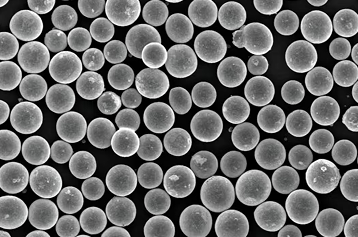
Pure Iron AM Powder as a Distinct Material Class
The reason pure iron powder for additive manufacturing exists is that conventional iron powders were developed largely for powder metallurgy compaction and sintering, not for thin-layer recoating or controlled powder feeding in digital manufacturing systems. AM places tighter demands on particle shape, fines control, oxygen level, moisture management, and lot repeatability. As a result, the same nominal chemistry can behave very differently depending on how the powder was made and classified.
For many users, pure iron is less a finished design alloy than a platform material. It can be used directly where magnetic or thermal characteristics are desirable, but it also serves as a reference feedstock for new alloy design, infiltration studies, and hybrid PM-AM process chains. That makes it especially relevant in laboratories, pilot production, and industrial component development.
Core Characteristics of Spherical Additive Manufacturing Powder
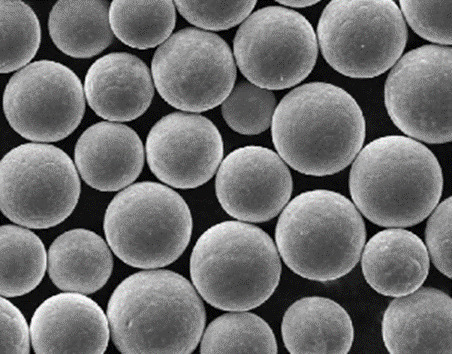
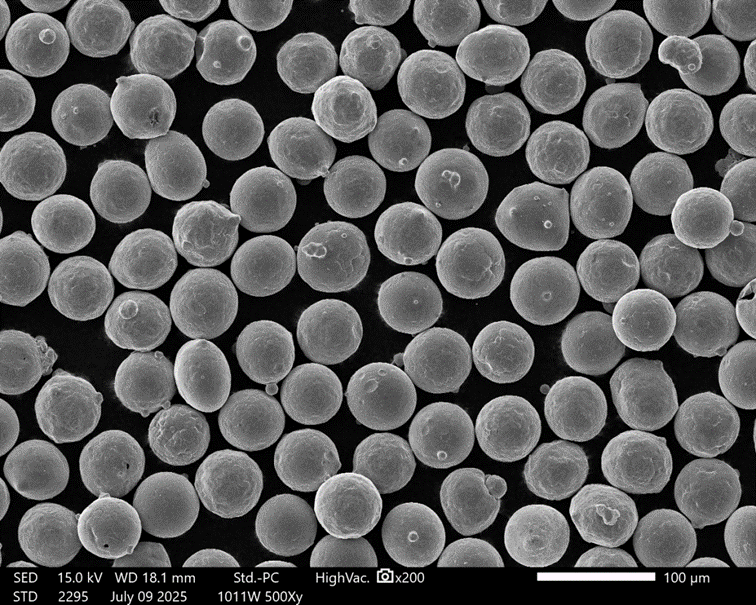
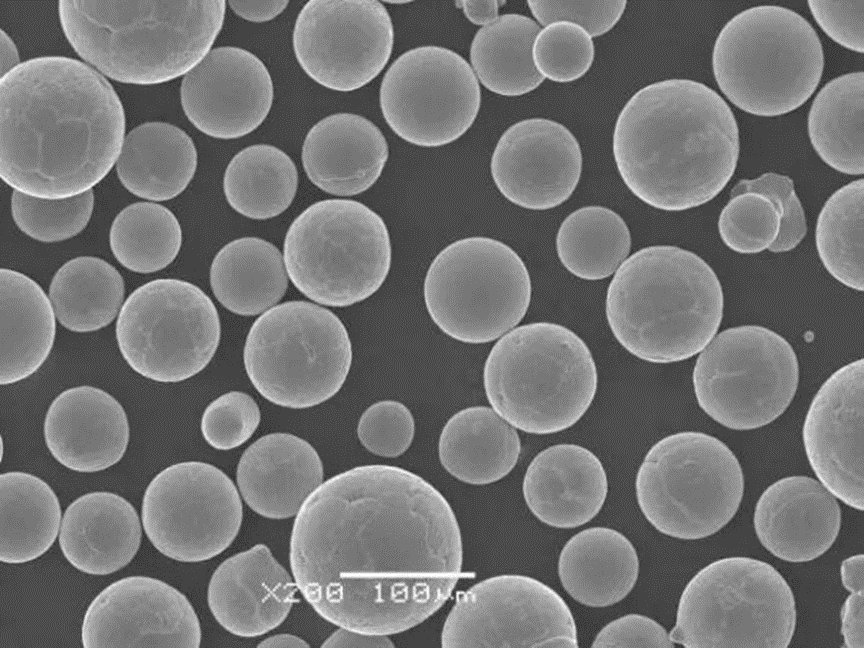
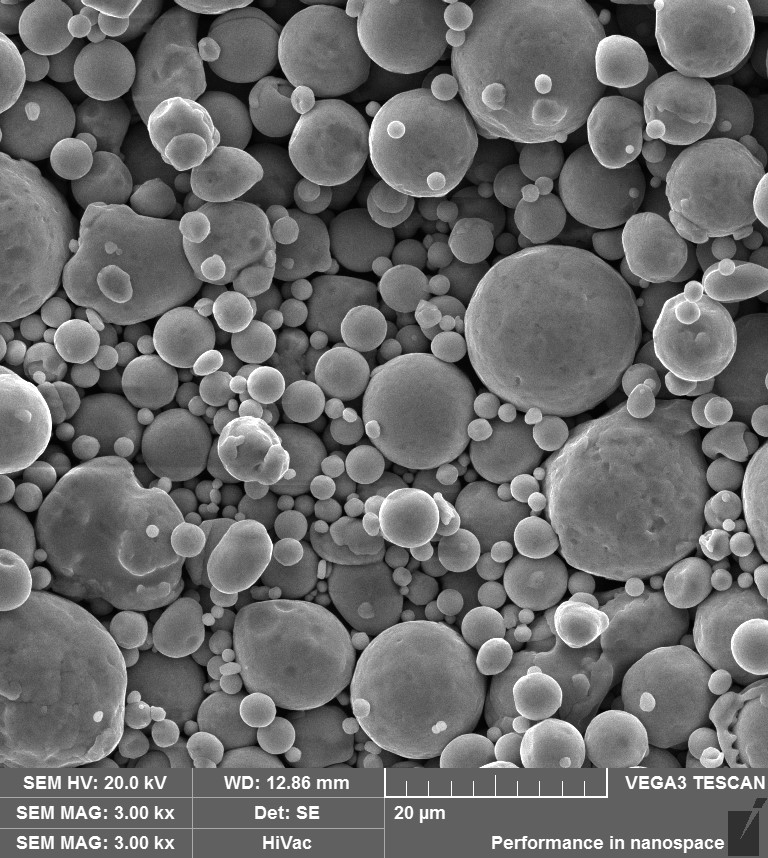
The most important characteristics are particle sphericity, narrow particle size distribution, low interstitial content, and stable flow. A well-made spherical powder spreads more evenly across the build plane, feeds more consistently through nozzles, and packs more efficiently than irregular powder. These handling advantages are often the difference between stable process windows and difficult parameter development.
Spherical particle morphology is therefore not a cosmetic feature; it directly influences recoating, apparent density, feed consistency, and local energy absorption. In pure iron systems, that matters because the material is often selected for controlled experimentation or functional components where uniformity is more important than decorative surface finish.
Why Engineers Still Use Pure Iron
Pure iron remains relevant because it offers a combination that many advanced alloys do not: low compositional complexity, ferromagnetic behavior, high theoretical density, and relatively accessible cost. It is not the best choice for every service environment, but it is a practical and technically meaningful choice for applications where the base behavior of iron is itself the target.
Teams comparing ferrous feedstocks often begin with a broader [iron alloy powder selection] before narrowing the specification to pure or near-pure grades for particular AM routes.
In powder-based manufacturing, simple chemistry often makes process effects easier to see.
Chemische Zusammensetzung
In additive manufacturing, the chemistry of pure iron powder is defined less by intentional alloying and more by impurity discipline. Most commercial specifications describe iron as the balance and place maximum limits on carbon, oxygen, nitrogen, sulfur, phosphorus, and sometimes trace metallic contaminants. The exact acceptance range depends on particle size, production route, and end application, but low residual levels are central to the definition of the material.
| Element | Typical Content (wt%) | Typical Limit/Range | Rolle in der Metallurgie |
|---|---|---|---|
| Fe | Bilanz | ≥ 99.5 to ≥ 99.9 | Base matrix providing ferromagnetism, thermal conduction, and the core mechanical structure |
| C | 0.003–0.030 | Very low residual | Increases strength and hardness as it rises, but can reduce ductility and alter soft-magnetic performance |
| O | 0.020–0.120 | Controlled residual | Indicates oxide condition; affects wetting, inclusion risk, and final ductility |
| N | 0.001–0.030 | Low residual | Minor solid-solution effect; excessive nitrogen can impair consistency and elongation |
| S | 0.001–0.015 | Very low residual | Generally undesirable; may contribute to inclusion formation and reduced hot workability |
| P | 0.002–0.025 | Very low residual | Slight strengthening possible, but too much phosphorus reduces toughness and formability |
The Role of Residual Elements in Pure Iron Powder for Additive Manufacturing
Because there are few intentional alloying additions, residual elements have an outsized influence on performance. Carbon is particularly important: even small increases can shift hardness, change thermal response during printing or sintering, and modify magnetic properties. For components requiring soft-magnetic behavior or ductility, buyers generally specify carbon at the low end of the practical range.
Oxygen is equally important because powder surfaces oxidize more readily as particle size becomes finer. A 15–45 µm powder normally carries more surface oxide per kilogram than a 45–105 µm powder, even when both are produced from the same melt. That makes oxygen control not only a chemistry issue, but also a function of PSD selection, atomization route, and storage practice.
Trace Chemistry and Qualification Strategy
Sulfur and phosphorus are watched mainly as harmful residuals. Sulfur can promote unfavorable inclusion behavior, while phosphorus tends to strengthen and embrittle when allowed to rise. Nitrogen is sometimes less visible in procurement documents, but it becomes important when a part’s ductility or magnetic response is tightly specified.
Many teams structure material documentation around terminology recognized by [ISO/ASTM 52900 additive manufacturing definitions], using the standard vocabulary to distinguish powder characteristics from process categories and finished-part requirements. That matters because “pure iron powder” can describe a chemically similar feedstock sold for very different manufacturing routes.
Powder Chemistry vs. Final Part Chemistry
The chemistry certificate supplied with the virgin powder is only the starting point. During reuse, exposure to atmosphere, or repeated thermal cycling, iron powder can gain oxygen and sometimes shift in fines content. In production, that means qualification should consider both incoming powder chemistry and chemistry drift after recycling, especially for fine fractions used in powder-bed systems.
Physikalische und mechanische Eigenschaften
The properties of pure iron powder for additive manufacturing must be interpreted in two different states: the loose powder state and the consolidated metallic state. Powder metrics such as apparent density, tap density, and flow rate describe handling and machine behavior. Mechanical properties such as yield strength, elongation, and hardness describe the printed or sintered part after densification and any heat treatment.
| Eigentum | Typischer Wert | Einheit | Test Standard / Basis |
|---|---|---|---|
| True density of iron | 7.86–7.87 | g/cm³ | Reference value for elemental iron |
| Scheinbare Dichte | 4.1–4.9 | g/cm³ | Typical powder characterization basis |
| Dichte des Gewindebohrers | 4.8–5.7 | g/cm³ | Typical tapped powder measurement |
| Schmelzpunkt | 1535–1538 | °C | Reference value for iron |
| Ultimate tensile strength | 240–420 | MPa | Typical consolidated pure iron, process dependent |
| Streckgrenze | 150–300 | MPa | Typical printed or sintered condition |
| Dehnung | 15–40 | % | Strongly dependent on density and heat treatment |
| Härte | 70–140 | HV | Typical low-carbon pure iron range |
| Wärmeleitfähigkeit | 65–80 | W/m-K | Approximate room-temperature value |
Powder-State Properties of Pure Iron AM Feedstock
Apparent density and tap density give an initial indication of how efficiently the powder will pack. In AM systems, these values matter because well-packed powder beds generally support more uniform layer thickness and more repeatable energy input. They are not direct measures of final part density, but they are strong indicators of whether the feedstock is suitable for stable processing.
Flow rate, commonly evaluated through Hall or related funnel methods, is also important. A powder that does not flow consistently may bridge in hoppers, discharge irregularly in feeders, or form streaks during recoating. For fine pure iron fractions, humidity control and oxide management are often just as important as the nominal flow number itself.
Mechanical Performance After Consolidation
Consolidated pure iron is usually softer and less strong than stainless or precipitation-hardenable alloys, but it can provide good ductility and a predictable response to thermal treatment. Mechanical performance depends heavily on porosity level, interstitial content, build orientation, and the process used to achieve final density. A high-density laser-built specimen can behave very differently from a binder-jetted and sintered counterpart made from similar powder.
Low residual chemistry is one reason engineers use pure iron as a reference material. With fewer alloying variables in play, it becomes easier to observe the effect of scan speed, layer thickness, atmosphere, or post-processing on tensile and magnetic behavior.
Thermal and Functional Considerations
Thermal conductivity is moderate to good for a ferrous material and generally higher than that of many highly alloyed steels. This can be useful in heat-flow modeling and in certain tooling or electromagnetic applications. For data organization and internal material benchmarking, many teams draw on resources such as the [NIST materials data program], especially when comparing theoretical density, thermal values, and reference properties across multiple metal systems.
Technische Daten und verfügbare Güteklassen
Specifications for pure iron powder for additive manufacturing are normally written around four variables: chemistry, particle size distribution, morphology, and powder handling metrics. Unlike standardized wrought grades, AM powders are often sold under supplier designations tied to process windows rather than only alloy names. As a result, the same pure iron chemistry may appear in multiple size classes aimed at powder-bed fusion, directed energy deposition, MIM, laser cladding, or binder jetting.
| Typical Grade | PSD Range (µm) | Scheinbare Dichte (g/cm³) | Tap Density (g/cm³) | Hall Flow (s/50 g) | Oxygen Content (wt%) | Sphericity / Cross-Reference |
|---|---|---|---|---|---|---|
| Fe-Pure-15/45 | 15-45 | 4.1–4.5 | 4.8–5.2 | 17–25 | 0.05–0.12 | High; fine laser PBF grade; cross-referenced by customer spec to ASTM/ISO/GB/DIN test methods |
| Fe-Pure-15/53 | 15-53 | 4.2–4.6 | 4.9–5.3 | 15-23 | 0.04–0.10 | High; balanced powder-bed and development grade |
| Fe-Pure-20/63 | 20-63 | 4.3–4.7 | 5.0–5.4 | 14–21 | 0.03–0.08 | High to very high; suitable for AM trials and binder-based routes |
| Fe-Pure-45/105 | 45-105 | 4.4–4.9 | 5.1–5.7 | 12–18 | 0.02–0.06 | Very good flow; used in DED, cladding, PM blending, and spray applications |
Particle Size Distribution and Process Fit
Fine grades such as 15–45 µm and 15–53 µm are commonly considered for laser powder bed fusion because they spread well in thin layers and can support dense part formation when the process window is tuned carefully. Their drawback is sensitivity: fines raise surface area, which increases oxygen pickup risk and makes the powder more vulnerable to aging during reuse.
Coarser grades such as 20–63 µm or 45–105 µm are typically better suited to directed energy deposition, laser cladding, thermal spraying, and some powder metallurgy blending operations. These cuts usually offer stronger flowability and lower oxide burden per kilogram, though they are less suitable for very thin-layer recoating.
Normen und Verweispraxis
Pure iron powder for additive manufacturing does not always have a single universally adopted product standard in the way some titanium or stainless AM grades do. Instead, buyers often build a procurement package by combining powder test methods, AM terminology, and internal quality requirements. This approach is common in R&D and industrial qualification because it allows a closer match between feedstock and machine architecture.
A typical specification will define:
- iron balance and maximum residual-element limits
- D10, D50, and D90 targets
- apparent density and tap density ranges
- Hall or equivalent flow requirements
- oxygen, nitrogen, and moisture maximums
- morphology acceptance criteria and satellite limits
- packaging atmosphere, labeling, and lot traceability
For the standards framework behind those test and terminology references, engineers often align documentation with [ASTM additive manufacturing standards] when drafting internal quality plans for powder handling and part qualification.
Grade Selection in a Broader Powder Portfolio
Pure iron rarely sits alone in qualification work. Engineers may compare it against stainless powders, low-alloy steels, copper alloys, or refractory systems depending on whether the project prioritizes corrosion, conductivity, or high-temperature behavior. In that context, a wider [refractory powder lineup] can be relevant for users moving from baseline iron studies into extreme-temperature material development.
Herstellungsprozess
The performance of pure iron powder for additive manufacturing is strongly shaped by how the powder is produced. Even when two lots have similar chemical analysis, differences in atomization route, melting atmosphere, classification, and post-processing can lead to substantial differences in sphericity, oxygen, flowability, and satellite content. For this reason, procurement teams usually treat production route as part of the grade definition.
| Prozess | Typical Sphericity | Oxygen Pickup Risk | PSD-Steuerung | Durchsatz | Relative Kosten | Best Fit |
|---|---|---|---|---|---|---|
| GA (Gas Atomization) | Hoch | Moderate to low with inert handling | Gut | Hoch | Mittel | Mainstream pure iron AM powder, PM, cladding, and spray feedstock |
| VIGA (Vacuum Induction Gas Atomization) | Hoch | Niedrig | Gut bis sehr gut | Mittel | Mittel-hoch | Cleaner chemistry and better interstitial control |
| EIGA (Electrode Induction Gas Atomization) | Sehr hoch | Niedrig | Sehr gut | Mittel | Hoch | High-cleanliness powder with reduced contamination pathways |
| PREP (Plasma-Rotations-Elektroden-Verfahren) | Sehr hoch | Sehr niedrig | Narrow, often coarser | Niedrig bis mittel | Hoch | Premium morphology and low satellite content for specialized uses |
Gas Atomization for Pure Iron Powder for Additive Manufacturing
Gas atomization is the most common route for spherical pure iron powder. Molten iron is poured through an atomization nozzle and broken into droplets by high-pressure gas, usually under controlled atmospheric conditions. The droplets solidify in flight, are collected in the chamber, and then sieved and classified into process-specific particle size fractions.
This route offers a useful balance among powder quality, throughput, and cost. When the melt is clean and downstream handling is disciplined, gas atomization can produce powder with high sphericity, acceptable oxygen levels, and consistent PSD. For most industrial users, it is the practical benchmark against which other premium routes are judged.
VIGA and EIGA Trade-Offs
Vacuum induction gas atomization adds vacuum melting before atomization, which helps reduce dissolved gases and improve cleanliness. That can be valuable for pure iron applications where interstitial control matters more than maximum tonnage, especially in magnetic or research-sensitive work.
Electrode induction gas atomization minimizes some contamination pathways associated with crucible contact. While more often discussed for reactive alloys, it remains relevant as a high-cleanliness reference route for iron as well. The main trade-off is cost: cleaner process architecture typically means more expensive powder.
PREP and Why It Is Not Always Necessary
PREP creates powder from a rotating consumable electrode under plasma heating. It is known for very high sphericity, low satellite content, and excellent morphology, but it often produces coarser fractions and comes with higher equipment and processing cost. For many pure iron applications, the extra expense is hard to justify unless the project is unusually sensitive to satellite content or feeder performance.
Process Selection and End-Use Reality
In practice, the “best” process depends on what the user values most: price, throughput, purity, or morphology. Oxygen control and PSD consistency often matter more to part quality than the prestige of the atomization route itself. A well-made gas-atomized pure iron powder can outperform a nominally higher-end powder if the latter is poorly classified or not handled under controlled conditions.
Anwendungen nach Branche
Pure iron powder for additive manufacturing has a narrower application envelope than stainless steel or nickel superalloys, but its role is technically important. It is selected where simple ferrous chemistry, magnetic behavior, and controlled experimentation are more useful than corrosion resistance or extreme-temperature strength. That makes it relevant in both production and pre-production settings.
Magnetic and Electromagnetic Components
One of the clearest use cases is soft-magnetic geometry. Pure iron can support flux-guiding parts, actuator elements, sensor structures, and custom electromagnetic components where designers want high iron content with minimal alloy dilution. Additive manufacturing becomes attractive when the magnetic path is geometrically complex or when conventional machining would waste material.
Research, Material Development, and Process Qualification
Pure iron is also widely useful as a baseline powder in AM research. With fewer alloy variables, it is easier to isolate the effects of scan strategy, thermal history, atmosphere, and post-processing. Universities, R&D groups, and industrial labs often begin with pure iron before moving toward more complex ferrous or multi-element systems such as [high-entropy alloy feedstocks].
Automotive, Tooling, and General Industrial Use
In automotive and industrial development, pure iron powder can be used for fixtures, inserts, thermal studies, and prototype parts where the key goal is shape, magnetic behavior, or process learning. It is less common for long-term outdoor structural use because corrosion protection is usually needed, but it can be entirely appropriate for enclosed assemblies or downstream-coated parts.
Energy, Cladding, and Hybrid Powder Routes
Coarser pure iron powders also fit directed energy deposition, laser cladding, thermal spray, and powder metallurgy hybrid routes. In these settings, the powder may act as a base material, a blending component, or a low-alloy starting point for custom overlays. The same sectors often evaluate copper, nickel, cobalt, and titanium powders as alternatives, depending on whether conductivity, wear resistance, or temperature capability is the primary requirement.
Limits by Industry
Pure iron is rarely the first choice for marine, chemical, or biomedical service because it lacks the built-in corrosion resistance of stainless, titanium, or cobalt-chromium materials. In aerospace, it can appear in development, tooling, magnetic hardware, or experimental feedstock work rather than as a default flight-structure material. Its industrial value is real, but it is highly application-specific.
Vergleich mit alternativen Materialien
Material selection in additive manufacturing is usually a trade-off among printability, service environment, cost, and post-processing burden. Pure iron powder for additive manufacturing is attractive when chemistry simplicity and magnetic behavior matter, but other materials can outperform it in corrosion, strength, or weight-sensitive applications. The most informative comparison is therefore functional rather than purely compositional.
| Material | Dichte (g/cm³) | Typisches Leistungsniveau | Druckbarkeit | Korrosionsbeständigkeit | Relative Kosten | Bester Anwendungsfall |
|---|---|---|---|---|---|---|
| Pure iron powder for additive manufacturing | 7.86 | Low to moderate unless further densified or alloyed | Good with spherical morphology and controlled oxygen | Niedrig | Niedrig bis mittel | Magnetic parts, research feedstock, cladding base, PM hybrids |
| 316L-Edelstahlpulver | 7.9–8.0 | Moderate with good ductility | Excellent and widely qualified | Hoch | Mittel | General-purpose AM parts in corrosive environments |
| Low-alloy steel powder | 7.7–7.9 | Moderate to high after heat treatment | Gut bis sehr gut | Gering bis mäßig | Mittel | Structural components needing higher strength than pure iron |
| Copper alloy powder | 8.3–8.9 | Gering bis mäßig | Moderate in laser AM due to reflectivity | Mäßig | Mittel bis hoch | High conductivity and thermal management parts |
| Titanium alloy powder | 4.4–4.5 | Hohe spezifische Festigkeit | Very good in mature AM workflows | Hoch | Hoch | Lightweight, corrosion-resistant, aerospace and medical parts |
Where Pure Iron Powder Performs Best
Pure iron is strongest where its base identity is the function: magnetic response, simple metallurgy, easy trace chemistry control, or use as a developmental platform. It can also make economic sense in cost-sensitive industrial programs where corrosion resistance is not mission-critical and a simple ferrous matrix is desired.
Where Alternative Materials Win
Stainless steel is usually the better choice for corrosive environments, while low-alloy steel is often preferred for higher structural strength. Copper wins on conductivity and heat transfer, and titanium wins where specific strength and low density dominate the design brief. Readers comparing broader material classes can place these trade-offs within a [titanium powder product range] when lightweight performance enters the discussion.
Unser Unternehmen
Shanghai Truer Technology Co., Ltd., which operates am-printing.com, was established in 2009 and launched its additive manufacturing business in 2019. According to the company’s published profile, it integrates 3D printing powder-making equipment and services with metal powder supply for engineering applications, with stated core technologies including Selective Electron Beam Melting equipment, Plasma Rotating Electrode Process powder-making equipment, and gas atomization-related capability. Its powder portfolio includes TiNi, TiTa, TiAl, TiNbZr, CoCrMo, and spherical nickel-based, cobalt-based, titanium-based, copper-based, aluminum-based, and stainless steel powders for SLM, SEBM, DED, laser cladding, powder metallurgy, MIM, HIP, spraying, welding, and coating across industries such as 3C electronics, hand tools, remote control cars, medical, aerospace, and nuclear power; additional company background appears on the [corporate overview page].
FAQ
Q1. Is pure iron powder for additive manufacturing the same as regular iron powder?
No. Pure iron powder for additive manufacturing is typically produced with tighter control over particle shape, size distribution, oxygen, and lot consistency than conventional irregular iron powder made for press-and-sinter applications. Those differences strongly affect powder-bed spreading, feeder behavior, and final part repeatability.
Q2. Which AM processes can use pure iron powder for additive manufacturing?
It can be used in laser powder bed fusion, electron beam-based systems where applicable, binder jetting, directed energy deposition, laser cladding, and some hybrid PM routes. The correct PSD and morphology depend on the process, so a fine powder for PBF is not automatically suitable for DED or spraying.
Q3. Why is spherical pure iron powder preferred for metal 3D printing?
Spherical powder usually flows better, spreads more evenly, and packs more consistently than irregular particles. That improves layer uniformity, helps stabilize the process window, and reduces the risk of local powder-bed defects that can translate into porosity or rough surfaces in the finished part.
Q4. Does pure iron powder for additive manufacturing rust easily?
Yes, compared with stainless steel, pure iron is much more susceptible to oxidation and corrosion if it is not protected. In powder form, this matters during storage and reuse; in part form, it often means coatings, controlled environments, or limited-exposure applications are necessary.
Q5. What should buyers check on a pure iron AM powder data sheet?
They should review iron content, residual carbon, oxygen, nitrogen, sulfur, phosphorus, PSD data, apparent density, tap density, flow rate, morphology, moisture condition, and packaging atmosphere. It is also important to verify whether the reported values refer to virgin powder only or include recycled-powder control limits.
Q6. Is pure iron powder for additive manufacturing a good choice for production parts?
It can be, but only when the application benefits from iron’s magnetic or baseline ferrous properties and does not require the corrosion resistance of stainless or the strength-to-weight ratio of titanium. In many programs it is used first for research, prototyping, cladding, or specialized industrial parts, then replaced by a more alloyed material if service conditions become more demanding.