Kurzantwort
Spherical IN939 powder is a nickel-based superalloy feedstock used in additive manufacturing when parts must retain strength, oxidation resistance, and structural stability at elevated temperature. It is typically selected for turbine-adjacent, combustion, and other hot-zone components where alloys such as 625 or 718 may not offer the same balance of thermal capability and long-term strength retention. The spherical particle shape improves powder flow, layer uniformity, and packing behavior, which is why this material is widely evaluated for demanding laser and electron-beam metal AM applications.
What Is spherical IN939 powder
Spherical IN939 powder is the powder-metallurgy and additive-manufacturing form of Inconel 939, often abbreviated as IN939. It is a cast-and-wrought-style nickel-base superalloy chemistry adapted into a spherical powder feedstock for modern production methods such as laser powder bed fusion, directed energy deposition, laser cladding, and related thermal spray or powder metallurgy routes. Within the broader family of nickel superalloys, IN939 is known for combining oxidation resistance with strong elevated-temperature mechanical performance.
IN939 belongs to the precipitation-hardened superalloy class. That matters because the alloy does not rely only on solid-solution strengthening; it derives much of its service performance from a controlled gamma-prime strengthening response built around aluminum and titanium additions. This places it in a different application space from more corrosion-led nickel alloys and explains why it is often discussed in relation to hot-section hardware rather than general industrial corrosion service.
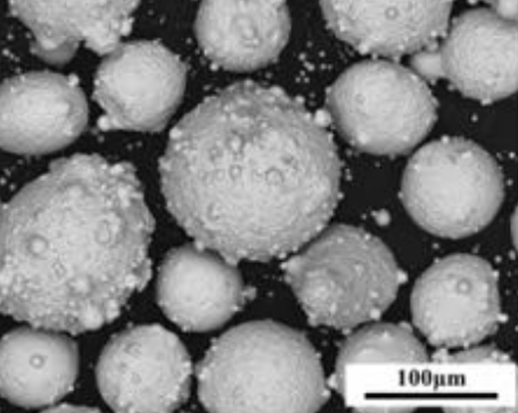
IN939 as a High-Temperature Additive Manufacturing Powder
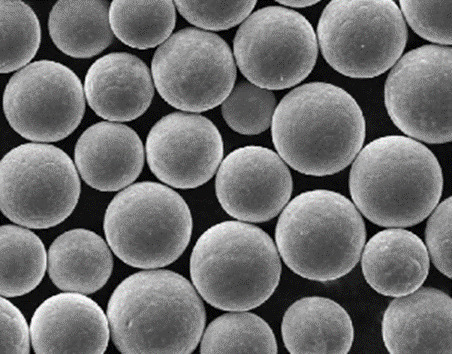
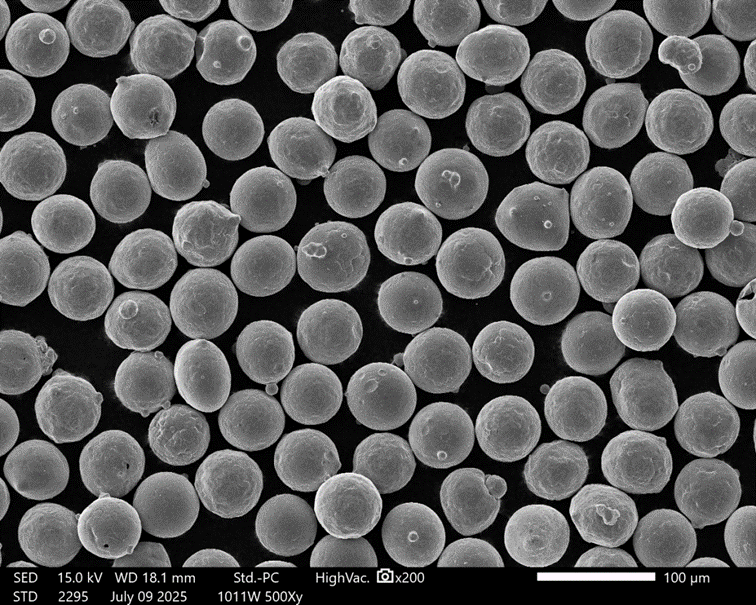
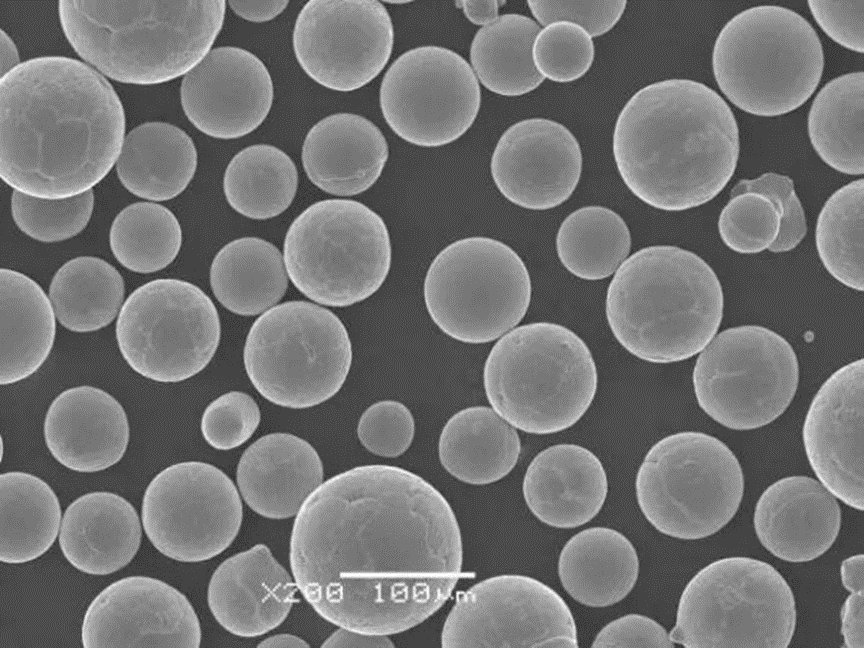
The term “spherical” describes the morphology expected from a high-quality AM feedstock. Near-spherical particles flow more predictably across recoaters, settle more uniformly into powder layers, and feed more consistently through nozzles in deposition systems. In additive manufacturing terminology formalized by Begriffe gemäß ISO/ASTM 52900, feedstock quality is inseparable from process repeatability, especially for high-performance metal components.
Why Engineers Use IN939 Instead of Simpler Nickel Alloys
IN939 exists because many thermal environments are too demanding for general-purpose nickel alloys. Designers of combustor parts, turbine structures, shrouds, vanes, burner assemblies, and high-heat industrial hardware need a material that can resist oxidation while also holding useful strength for long exposures. In that context, precipitation-strengthened IN939 fills a performance niche between easier-to-process nickel alloys and even more specialized hot-section materials.
Distinguishing Features of Spherical IN939 Powder
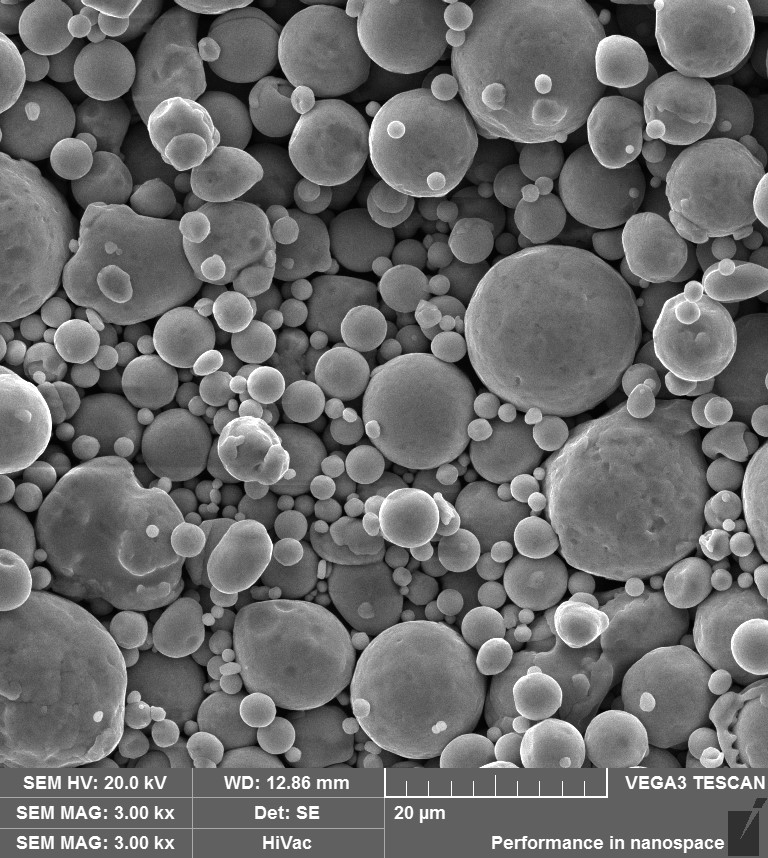
The alloy’s practical value comes from both chemistry and particle engineering. Chemically, it offers a chromium-cobalt-aluminum-titanium-rich balance for oxidation resistance and hot strength. In powder form, users also expect low oxygen pickup, narrow particle size distribution, controlled satellite content, and strong batch traceability, all of which influence consistency in AM builds.
IN939 Powder Versus Other Superalloy Feedstocks
Compared with Inconel 625, IN939 is more heat-strength driven and less centered on room-temperature corrosion resistance. Compared with Inconel 718, it is commonly considered for hotter service windows, though it can be less forgiving in processing because stronger precipitation-hardening chemistries tend to narrow the process window. Buyers reviewing a broader Portfolio von Nickellegierungspulver usually compare these trade-offs before committing to a qualification route.
In high-temperature additive manufacturing, powder quality determines how reliably alloy potential becomes part performance.
Chemische Zusammensetzung
The performance profile of IN939 depends on a carefully balanced alloy design. Nickel provides the matrix, chromium builds oxidation resistance, cobalt helps stabilize high-temperature strength, and aluminum plus titanium enable gamma-prime precipitation. Additional elements such as tungsten, tantalum, niobium, boron, zirconium, and carbon play smaller but still important roles in creep resistance, grain-boundary cohesion, and long-term structural stability.
| Element | Typical wt.% | Rolle in der Metallurgie | Functional Contribution |
|---|---|---|---|
| Nickel (Ni) | Bilanz | Matrix phase | Forms the austenitic superalloy base and supports high-temperature phase stability |
| Chrom (Cr) | 22.0–23.0 | Oxidationsbeständigkeit | Develops protective oxide scales in hot oxidizing environments |
| Kobalt (Co) | 18.0–19.0 | Matrix strengthening | Improves hot hardness and strengthens the nickel matrix at elevated temperature |
| Titan (Ti) | 3.4–3.9 | Gamma-prime former | Raises precipitation-hardening response and hot strength |
| Aluminium (Al) | 1.8–2.2 | Gamma-prime former | Supports precipitate formation and assists oxidation behavior |
| Wolfram (W) | 1.8–2.3 | Solid-solution strengthening | Increases creep resistance and strength retention under load |
| Tantal (Ta) | 1.2–1.8 | Precipitation support | Enhances high-temperature strength and structural stability |
| Niobium (Nb) | 0.7–1.2 | Secondary strengthening | Supports strengthening mechanisms and improves hot performance |
| Kohlenstoff (C) | 0.10–0.18 | Carbide formation | Helps grain-boundary strengthening in controlled quantities |
| Bor (B) | 0.005–0.02 | Grain-boundary cohesion | Improves grain-boundary integrity and creep-related behavior |
| Zirkonium (Zr) | 0.03–0.08 | Grain-boundary modifier | Supports ductility and boundary stability at elevated temperature |
Gamma-Prime Strengthening in Spherical IN939 Powder
The most important strengthening mechanism in IN939 is gamma-prime precipitation, driven mainly by titanium and aluminum. These precipitates obstruct dislocation movement, which allows the alloy to maintain strength where simpler nickel alloys begin to soften. For AM users, that also means build strategy and heat treatment strongly influence final properties because precipitate size, fraction, and distribution depend on thermal history.
Chromium, Cobalt, and Oxidation Resistance
Chromium enables the alloy to form a protective oxide scale under hot-gas exposure. Cobalt contributes to matrix stability and helps the alloy preserve useful strength at temperatures where many engineering materials degrade rapidly. This chromium-cobalt balance is one reason IN939 remains attractive for combustion and turbine environments where both heat and oxidation are persistent design constraints.
Minor Elements with Major Metallurgical Influence
Boron and zirconium appear in very small amounts, yet they are crucial in many superalloys because grain-boundary integrity can control creep life and crack behavior. Carbon also matters because carbide networks can help or hurt depending on their amount and distribution. In practice, sphärische Morphologie alone is not enough; the chemistry must be tightly controlled so that particle quality leads to reliable consolidated properties.
Physikalische und mechanische Eigenschaften
Property values for IN939 should be interpreted carefully because final performance depends on whether data come from cast, wrought, hot isostatically pressed, or additively manufactured material. For powder buyers, the relevant question is not only what the nominal alloy can achieve, but what the chosen process route can repeatedly deliver after appropriate post-processing. As a result, published values are best used as representative engineering ranges rather than fixed design guarantees.
| Eigentum | Typischer Wert | Einheit | Test Standard / Basis |
|---|---|---|---|
| Dichte | 8.10–8.20 | g/cm³ | Typical consolidated alloy value |
| Solidus temperature | 1190–1230 | °C | Typical alloy reference range |
| Liquidus temperature | 1330–1360 | °C | Typical alloy reference range |
| Ultimate tensile strength | 1050–1280 | MPa | Typical heat-treated AM or wrought-comparable material |
| 0.2% yield strength | 780–980 | MPa | Typical heat-treated AM or wrought-comparable material |
| Dehnung | 4–10 | % | Process and heat-treatment dependent |
| Härte | 34–42 | HRC | Typical aged condition |
| Elastizitätsmodul | 200–220 | GPa | Room-temperature engineering reference |
| Wärmeleitfähigkeit | 11–16 | W/m-K | Ungefährer Bereich der Raumtemperatur |
| Maximum practical service range | About 850–950 | °C | Application dependent, not a universal design limit |
Elevated-Temperature Strength of IN939
The defining advantage of IN939 is elevated-temperature strength. This alloy is chosen less for exceptional room-temperature ductility and more for its ability to maintain useful mechanical integrity after long exposures to heat. In service environments where creep, oxidation, and thermal softening dominate material selection, IN939 often outperforms more general-purpose AM nickel alloys.
Mechanical Properties After Printing and Heat Treatment
As-built parts can exhibit residual stress, anisotropy, and limited ductility compared with fully optimized material. For that reason, solution treatment, aging, or combined thermal cycles are commonly used to develop the intended precipitation-strengthened microstructure. The exact property outcome depends on machine platform, scan strategy, powder condition, support design, heat treatment, and sometimes hot isostatic pressing.
Thermal Conductivity and Process Implications
IN939 has modest thermal conductivity compared with copper or aluminum alloys. During additive manufacturing, that limited heat dissipation can intensify thermal gradients, increase local residual stresses, and narrow the processing window. When the design problem is primarily heat transfer rather than hot strength, engineers often compare nickel superalloys with copper-based alloy powders instead of assuming one material family solves every thermal challenge.
Why “Typical” Values Need Qualification
Even well-characterized superalloys can behave differently across AM platforms. Laser power, hatch spacing, shielding atmosphere, powder reuse history, and build geometry can all influence density, cracking tendency, and mechanical response. A serious IN939 program therefore qualifies powder, machine settings, and post-processing as an integrated system rather than as separate variables.
Technische Daten und verfügbare Güteklassen
Commercial specification of spherical IN939 powder extends beyond chemistry. Buyers usually review particle size distribution, apparent density, tap density, Hall flow, oxygen content, particle shape, lot traceability, and packaging condition. These inputs directly affect spreading behavior, deposition efficiency, and the stability of the thermal cycle during build.
| Supply Grade / Standard Basis | Typisches PSD | Scheinbare Dichte | Zapfstellendichte | Hall-Strömung | Sauerstoffgehalt | Kugelförmigkeit / Morphologie | Intended Use or Cross-Reference |
|---|---|---|---|---|---|---|---|
| Fine LPBF grade | 15-45 µm | 4.3–4.8 g/cm³ | 4,9–5,5 g/cm³ | 14–20 s/50 g | ≤300 ppm typical | High sphericity, low satellites | Laser powder bed fusion for fine features |
| Standard AM grade | 15-53 µm | 4.4–4.9 g/cm³ | 5.0–5.6 g/cm³ | 13–19 s/50 g | ≤300 ppm typical | Überwiegend kugelförmig | General powder bed additive manufacturing |
| Medium DED grade | 45-105 µm | 4,5-5,0 g/cm³ | 5.1–5.7 g/cm³ | 13–18 s/50 g | ≤350 ppm typical | Flow-optimized particle cut | Directed energy deposition and laser cladding |
| Coarse deposition grade | 53-150 µm | 4.6–5.1 g/cm³ | 5.2–5.8 g/cm³ | 12–18 s/50 g | ≤350 ppm typical | Stable nozzle-feed morphology | Higher-rate deposition systems |
| Test and documentation basis | By lot | By lot | By lot | By lot | By lot | By lot | ASTM / ISO / AMS / DIN / GB internal cross-reference practice |
Particle Size Distribution for Spherical IN939 Powder
Fine cuts such as 15–45 µm or 15–53 µm are common where recoating quality and thin layers are priorities. Coarser cuts such as 45–105 µm or 53–150 µm are more typical for powder-fed processes, where nozzle flow and catch efficiency matter more than ultra-smooth bed spreading. The correct choice depends on the machine, beam source, deposition rate target, and part geometry.
Powder Characterization and Test Methods
Apparent density, tap density, and flow data help engineers predict powder handling behavior and packing performance. Methods commonly used in the industry include the ASTM B212 – Verfahren zur Bestimmung der scheinbaren Dichte und die ASTM B213 Hall flow test, often supplemented by laser diffraction, sieve analysis, and microscopic morphology review. These tests do not guarantee print quality on their own, but they provide essential baseline control.
Standards, Cross-References, and Documentation Practice
Unlike commodity powders, superalloy AM feedstocks are often bought under project-specific quality plans rather than a single universal product standard. Purchase documents may combine chemistry windows, PSD requirements, gas limits, and morphology targets with internal aerospace or energy qualification rules. That is why lot-to-lot consistency is often more important in practice than a simple declaration of alloy name.
Available Grades in a Multi-Alloy Environment
Suppliers serving additive manufacturing typically offer IN939 alongside other nickel, cobalt, titanium, aluminum, stainless, and specialty powder families. That makes practical sense because users often benchmark a hot-zone nickel alloy against adjacent performance classes, including titanium alloy powder grades when mass reduction is under consideration or cobalt alloys when wear becomes a co-equal requirement.
Herstellungsprozess
Powder production route strongly influences whether IN939 behaves like a premium AM feedstock or merely a nominal alloy powder. High-temperature superalloys are especially sensitive to contamination, oxygen pickup, and nonuniform particle morphology, so the manufacturing process deserves as much scrutiny as the composition certificate. Gas atomization is the most widely used route, but VIGA, EIGA, and PREP each occupy an important place in the quality-versus-cost spectrum.
| Prozess | Typical Sphericity | Oxygen Pickup Risk | PSD-Steuerung | Durchsatz | Relative Kosten | Main Advantages | Main Trade-Offs |
|---|---|---|---|---|---|---|---|
| Gaszerstäubung (GA) | Gut bis sehr gut | Gering bis mäßig | Gut | Hoch | Mäßig | Scalable output, broad supply availability, versatile cut sizes | May show more satellites than premium routes if poorly tuned |
| Vakuum-Induktions-Gaszerstäubung (VIGA) | Sehr gut | Niedrig | Gut bis sehr gut | Mittel bis hoch | Mäßig bis hoch | Cleaner melting environment and better chemistry control | Higher operating cost than conventional GA |
| Elektrodeninduktions-Gaszerstäubung (EIGA) | Very good to excellent | Sehr niedrig | Gut | Mittel | Hoch | Reduced contamination potential and high-purity feedstock | Narrower supply base and higher price |
| Plasma-Rotations-Elektroden-Verfahren (PREP) | Ausgezeichnet | Sehr niedrig | Nach der Einstufung moderat | Medium to low | Hoch | Dense, highly spherical particles with premium morphology | Lower throughput and higher cost per kilogram |
| Plasma atomization / specialty routes | Ausgezeichnet | Sehr niedrig | Gut | Niedrig bis mittel | Hoch | Premium particle quality for niche applications | Less economical for broad industrial volume |
Gas Atomization for IN939 AM Powder
In gas atomization, molten alloy is disintegrated into droplets by high-pressure inert gas and then rapidly solidified into powder. When the melt chemistry, nozzle geometry, gas flow, and classification steps are optimized, the result is a feedstock with good flowability and strong suitability for additive manufacturing. For many users, gas atomization offers the best balance of quality, output volume, and cost.
VIGA and EIGA in High-Performance Superalloys
VIGA uses controlled vacuum melting before atomization, which helps reduce contamination and improve batch cleanliness. EIGA further reduces contact-related contamination risk by using an electrode feed approach rather than a conventional crucible-centered melt arrangement. These methods matter most in applications where inclusions, oxygen, or trace contamination can influence fatigue, ductility, or hot-cracking behavior.
PREP and Premium Spherical Powder Morphology
PREP is widely valued for producing highly spherical, dense particles with low contamination. It is especially respected where premium morphology is required or where reactive alloys benefit from exceptionally clean processing. In a superalloy context, PREP can be attractive, but many industrial buyers still choose gas-atomized IN939 because throughput, classification flexibility, and commercial economics are often better aligned with production needs.
Process Selection Trade-Offs
No powder-making route is universally superior. Prototype AM programs may prioritize availability and broad PSD options, while aerospace or power-generation users may place greater weight on particle cleanliness and morphology. The most robust procurement decisions recognize that process-property relationship begins at atomization, not at printing.
Anwendungen nach Branche
Spherical IN939 powder is used where heat exposure, oxidation, and long service duration drive material selection. It is a specialized engineering material rather than a general-purpose feedstock, and its value rises as operating conditions become harsher. Industries that can justify its cost are usually those where part failure is expensive, downtime is critical, or component geometry is difficult to manufacture conventionally.
Aerospace and Turbine Hardware
Aerospace is the most visible application sector for IN939. Combustor structures, nozzle-related hardware, shrouds, turbine support features, and hot-zone static components all benefit from the alloy’s combination of oxidation resistance and retained strength. Additive manufacturing is particularly useful where complex cooling, weight control, repairability, or consolidation of multiple components into one geometry delivers engineering benefit.
Industrial Gas Turbines and Energy Equipment
Stationary turbines and associated combustion systems present many of the same design challenges found in aerospace, but often with longer thermal dwell times and different economic constraints. IN939 is therefore relevant for burners, transition structures, hot-gas-path features, and repair builds on expensive energy equipment. The spherical powder form supports both new-part manufacture and material restoration strategies.
Oil, Gas, and Thermal Process Systems
IN939 is not a default material for every oil and gas application, especially those driven mainly by wet corrosion or sour-service chemistry. It becomes more relevant in thermal process equipment, burner assemblies, hot-gas ducting, and high-temperature tooling where oxidation and strength retention outweigh room-temperature corrosion concerns. In these cases, laser cladding and DED can be as important as full 3D printing.
Automotive, Motorsport, and Test Hardware
In mainstream automotive production, IN939 is too specialized for most volume parts. In motorsport, turbo-related systems, high-heat exhaust hardware, burner rigs, and engine test fixtures can justify the alloy when thermal duty is severe. It is also useful in prototype and validation environments where a part must survive extreme conditions long enough to generate meaningful test data.
Tooling, Research, and Advanced Materials Development
Universities, national labs, and industrial R&D groups use IN939 to study hot cracking, anisotropy, heat-treatment optimization, and creep behavior in additively manufactured superalloys. Because the alloy is demanding, it serves as a strong benchmark material in advanced AM development. A broader view of such end-use sectors appears across the industrial application categories represented in multiprocess powder and equipment ecosystems.
Vergleich mit alternativen Materialien
Material selection rarely happens in isolation. Engineers evaluating IN939 almost always compare it with 718, 625, Hastelloy X, or cobalt-based alloys, depending on whether the primary requirement is strength, oxidation resistance, crack tolerance, wear, or cost. The correct alternative depends less on brand familiarity and more on the failure mode of the real component.
| Material | Dichte (g/cm³) | Relative Strength Level | High-Temperature Capability | Relative AM Printability | Oxidation / Corrosion Behavior | Relative Kosten | Typical Best-Fit Use |
|---|---|---|---|---|---|---|---|
| Spherical IN939 powder | 8.1–8.2 | Hoch | Sehr hoch | Mäßig | Very good oxidation and hot-corrosion resistance | Hoch | Hot-section AM parts and thermal hardware |
| Inconel 718-Pulver | 8.19 | Sehr hoch | Hoch | Gut | Good overall environmental resistance | Mäßig bis hoch | Structural AM parts with broader process window |
| Inconel 625-Pulver | 8.44 | Mäßig bis hoch | Mäßig bis hoch | Sehr gut | Excellent general corrosion resistance | Mäßig | Versatile AM and corrosion-led cladding |
| Hastelloy X-Pulver | 8.2–8.3 | Mäßig | Hoch | Gut | Excellent oxidation and thermal fatigue behavior | Hoch | Combustion hardware and furnace components |
| CoCrMo-Pulver | 8.3–8.5 | Hoch | Mäßig bis hoch | Gut | Very good wear and corrosion resistance | Hoch | Wear-critical and hot-contact applications |
IN939 Versus Inconel 718
Inconel 718 is often easier to print and qualify because its processing window is relatively mature across many machine platforms. IN939 becomes more compelling when service conditions move deeper into oxidation-led and hot-strength-led territory. The trade-off is that users may need tighter control of parameters and post-processing to fully realize its potential.
IN939 Versus Inconel 625
Inconel 625 is widely appreciated for corrosion resistance, good weldability, and forgiving AM behavior. IN939 is less universal but more specialized, especially where prolonged high-temperature exposure is the dominant design challenge. If a component fails because it loses strength at heat rather than because it corrodes in chemical media, IN939 usually deserves serious consideration.
IN939 Versus Hastelloy X and Cobalt Alloys
Hastelloy X is a strong candidate in combustion environments, particularly where thermal fatigue and oxidation are central concerns. Cobalt alloys may be preferred where wear, galling, or hot-surface contact combine with elevated temperature. For perspective on the broader alloy family naming convention, many engineers use the Inconel alloy reference article as a quick orientation tool before moving into project-specific data packages.
Unser Unternehmen
Shanghai Truer Technology Co., Ltd., which operates am-printing.com, was established in 2009 and created its additive manufacturing business in 2019. Based on the information presented on its Unternehmensübersichtsseite, the company integrates 3D printing powder-making equipment and related services with spherical metal powder supply, including technologies associated with SEBM equipment, Plasma Rotating Electrode Process equipment, and gas atomization. Its stated powder portfolio includes TiNi, TiTa, TiAl, TiNbZr, CoCrMo, nickel-based, cobalt-based, titanium-based, copper-based, aluminum-based, and stainless steel spherical metal powders, while its supported downstream processes include SLM, SEBM, DED, laser cladding, powder metallurgy, MIM, HIP, cold and hot spraying, welding, and coating for sectors such as aerospace, medical, nuclear power, 3C electronics, hand tools, and remote control cars.
FAQ
Q1. Is spherical IN939 powder suitable for laser powder bed fusion?
Yes, spherical IN939 powder is commonly evaluated for laser powder bed fusion when a project requires high-temperature capability and oxidation resistance. Fine particle size cuts, good flowability, and low oxygen content are especially important because the alloy can be less forgiving than simpler nickel powders. Parameter optimization and post-build heat treatment are usually necessary.
Q2. What particle size is typically used for spherical IN939 powder in AM?
For powder bed systems, 15–45 µm and 15–53 µm are common commercial ranges. For directed energy deposition or laser cladding, coarser cuts such as 45–105 µm or 53–150 µm are more typical. The correct range depends on recoating strategy, layer thickness, nozzle design, and target deposition rate.
Q3. Why is IN939 preferred for hot-section components?
IN939 is designed to retain useful strength and oxidation resistance at temperatures where many engineering alloys soften or degrade too quickly. Its gamma-prime strengthening response gives it a strong advantage in combustion-adjacent and turbine-related hardware. That is why it appears more often in high-heat service than in general corrosion applications.
Q4. Does spherical IN939 powder crack easily during 3D printing?
Like many precipitation-strengthened nickel superalloys, IN939 can be more crack-sensitive than more forgiving materials such as Inconel 625. Thermal gradients, restraint, scan strategy, and composition control all influence cracking risk. Careful machine parameter development, powder quality control, and suitable heat treatment are important for successful builds.
Q5. What should buyers verify before qualifying spherical IN939 powder?
Buyers should confirm chemistry, particle size distribution, morphology, apparent density, tap density, flowability, oxygen level, and lot traceability. They should also check whether the powder is virgin, blended, or recycled and whether the documentation matches the target process route. For critical components, feedstock review should be tied directly to machine qualification and part testing.
Q6. Which industries benefit most from spherical IN939 powder?
Aerospace, industrial gas turbines, power generation, and thermal process equipment are the strongest fits because they routinely operate in elevated-temperature environments. Motorsport, advanced R&D, and selected oil-and-gas thermal applications can also benefit where oxidation resistance and hot strength are worth the higher material and qualification cost. The alloy is most valuable when service temperature, not just static strength, is the real design driver.