Kurzantwort
FeNi42-Weichmagnetpulver is an iron-nickel alloy powder containing about 42% nickel, used where designers need a combination of controlled thermal expansion, useful soft-magnetic behavior, and good dimensional stability in powder-based manufacturing. It is a strong choice for additive manufacturing components in electronics, sensor housings, magnetic assemblies, tooling, and sealing hardware when thermal expansion matching matters as much as magnetic response. Compared with highly optimized magnetic alloys such as high-nickel permalloys, FeNi42 usually offers a more balanced package of processability, strength, and cost.
Was ist weichmagnetisches FeNi42-Pulver?
FeNi42 soft magnetic powder is the powder form of a 42% nickel iron alloy commonly associated with the Fe-Ni controlled-expansion family. In many industrial contexts, the alloy is known less for extreme magnetic permeability and more for its relatively low and predictable coefficient of thermal expansion, especially in temperature ranges relevant to electronic packaging, glass-to-metal sealing, and dimensionally stable precision parts. In powder form, the material becomes suitable for additive manufacturing, metal injection molding, powder metallurgy, and laser-based deposition routes.
The alloy sits in an interesting position between pure soft-magnetic materials and controlled-expansion sealing alloys. It is not typically the first choice when the only goal is maximum permeability, because 50Ni and 80Ni Fe-Ni alloys often outperform it magnetically. However, when engineers need magnetic functionality together with thermal compatibility and structural integrity, FeNi42 becomes much more compelling.
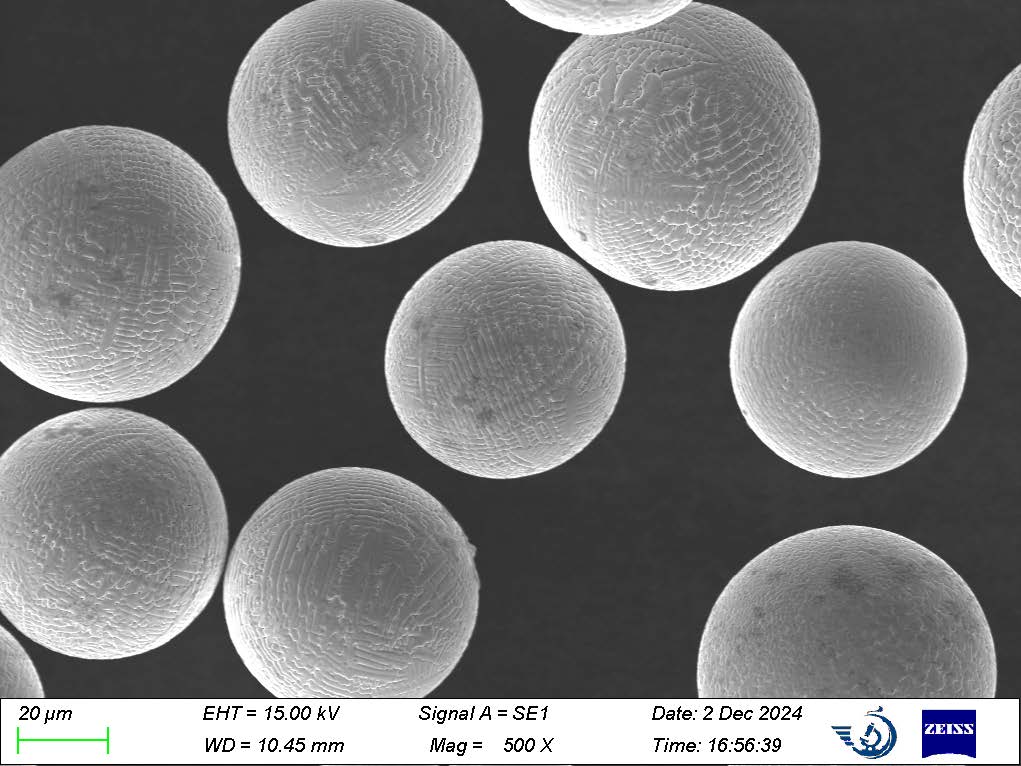
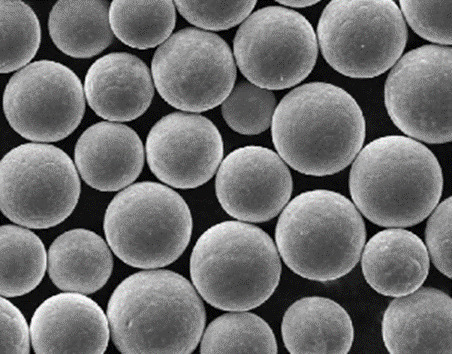
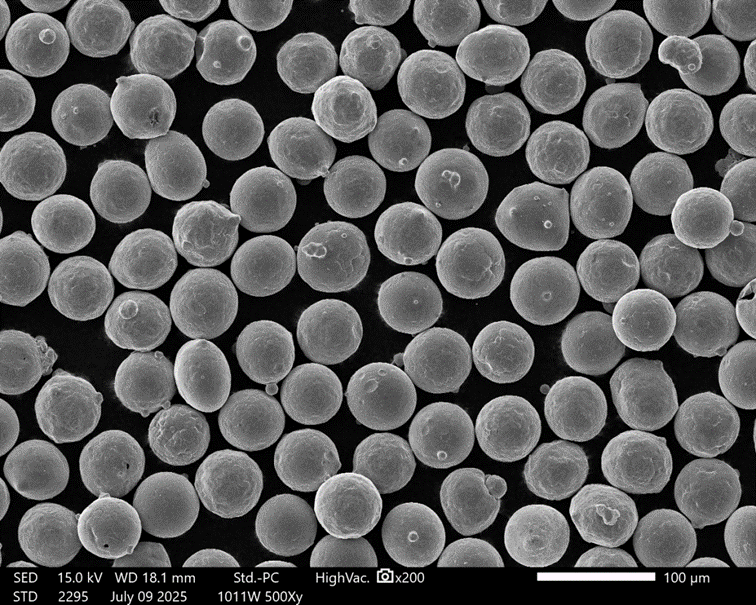
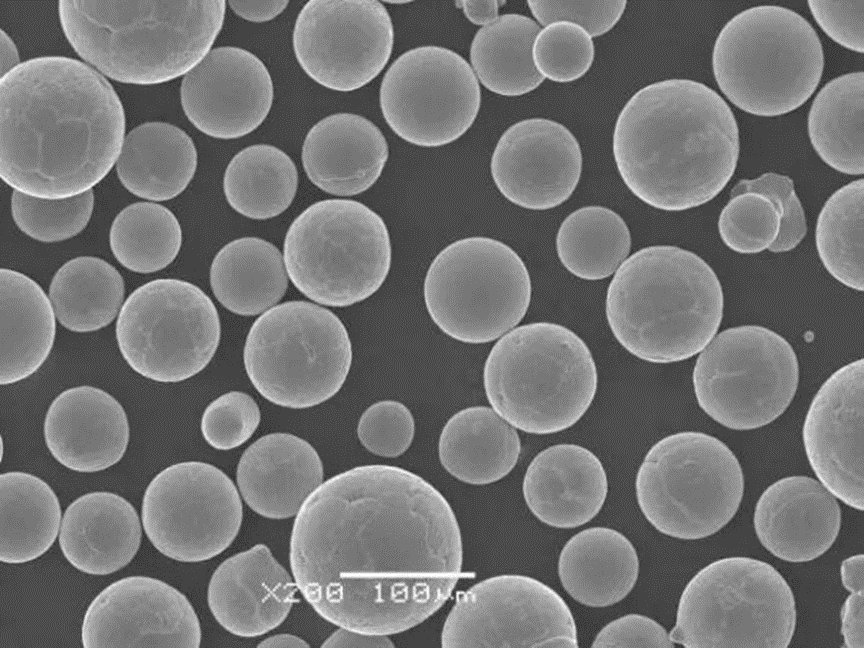
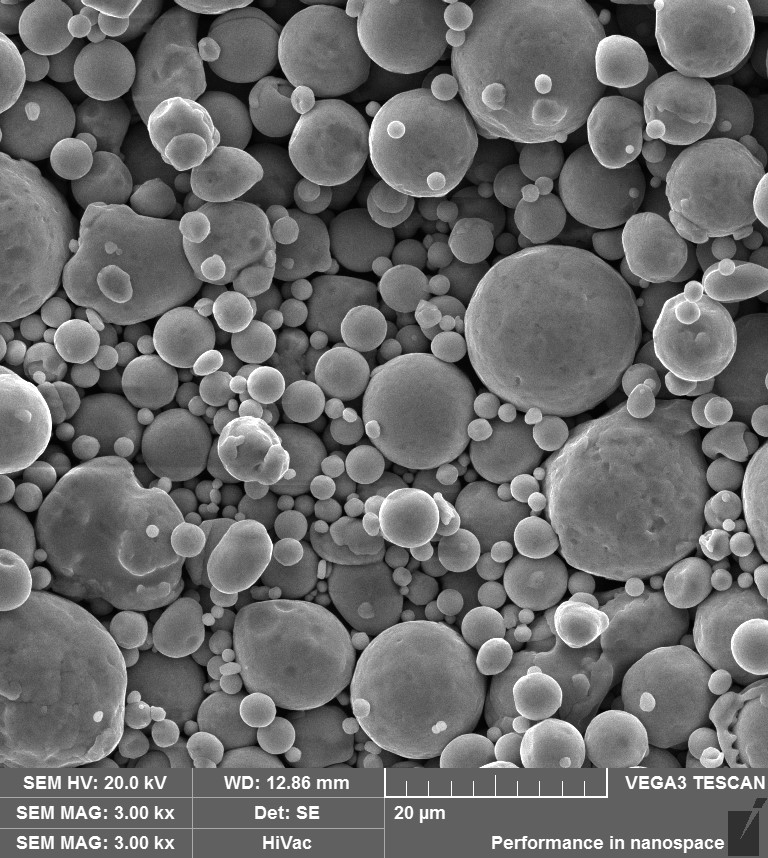
FeNi42 soft magnetic powder in the Fe-Ni alloy family
The Fe-Ni alloy family spans several distinct use cases. Low-nickel compositions tend to behave more like structural iron alloys, while higher-nickel compositions such as permalloy are designed around very high permeability and low coercivity. FeNi42 occupies a middle position: enough nickel to change thermal expansion behavior and magnetic response significantly, but not so much that the alloy becomes specialized only for ultra-sensitive magnetic applications.
That dual identity explains why FeNi42 is often screened for relay parts, electromagnetic housings, motor and actuator components, electronic packaging, and hermetic hardware. Engineers can exploit the alloy’s stable expansion behavior without giving up the possibility of powder processing into complex near-net-shape parts.
Why FeNi42 exists as an additive manufacturing powder
The move from wrought strip, bar, and sheet to spherical powder broadens the alloy’s manufacturing relevance. Complex shapes that would otherwise require multiple stamping, machining, brazing, or joining steps can be built or consolidated directly. Powder routes are especially useful for small magnetic components, geometrically intricate enclosures, and prototypes where dimensional stability after thermal cycling matters.
What distinguishes FeNi42 from other soft magnetic alloys
The most important distinction is balance. FeNi42 is not a pure structural steel powder, and it is not a maximum-permeability nickel-iron specialty grade either. Instead, it is a practical engineering alloy that combines moderate soft-magnetic behavior, controlled expansion, acceptable mechanical strength, and compatibility with several powder-processing routes.
In Fe-Ni powder selection, the best alloy is rarely the one with the highest permeability alone; it is the one whose magnetic, thermal, and dimensional behavior match the full application.
For buyers comparing adjacent material categories, the broader iron-based powder portfolio helps place FeNi42 alongside structural and stainless powder families that serve very different functions.
Chemische Zusammensetzung
FeNi42 is a relatively simple alloy in compositional terms, but small changes in residual elements can still influence magnetic losses, expansion stability, oxidation behavior, and processability. In soft-magnetic and controlled-expansion alloys, impurity control is often as important as the headline iron-to-nickel ratio.
Typical composition of FeNi42 soft magnetic powder
| Element | Typical wt% | Rolle in der Metallurgie | AM / PM Relevance |
|---|---|---|---|
| Fe | Bilanz | Base matrix, contributes magnetic response and structural backbone | Governs ferromagnetic behavior and sintering response |
| Ni | 41.0–42.5 | Controls thermal expansion, improves ductility and corrosion behavior, shapes magnetic properties | Critical for dimensional stability and consistent alloy identity |
| C | ≤0.05 | Residual impurity kept low to avoid embrittlement and magnetic degradation | Excess carbon can raise hardness and reduce soft-magnetic performance |
| Mn | ≤0.80 | Deoxidation aid and minor strength contributor | Supports melt cleanliness but must remain controlled |
| Si | ≤0,30 | Deoxidation and process aid in limited amounts | Too much silicon can alter magnetic softness and workability |
| P | ≤0.02 | Verbleibende Verunreinigung | Elevated phosphorus can embrittle powder-derived parts |
| S | ≤0.02 | Verbleibende Verunreinigung | High sulfur worsens hot workability and may affect corrosion behavior |
| Cr | ≤0.25 | Minor residual or controlled addition in some supply conditions | Excess chromium can shift magnetic response and oxidation characteristics |
| Co / Cu / Others | Trace, controlled | Residual elements kept low | Lot-to-lot consistency matters for precision applications |
The alloy is defined primarily by nickel content, not by a long list of secondary alloying additions. That simplicity is helpful in powder production because it reduces the number of variables that can complicate atomization, segregation, or sintering. It also means buyers should pay close attention to impurity ceilings rather than assuming all FeNi42 lots perform identically.
Role of nickel in FeNi42 soft magnetic powder
Nickel is the central design element in FeNi42. At around 42%, it substantially changes the thermal expansion behavior of iron while also influencing magnetic permeability, coercivity, and phase stability. In many electronic and sealing applications, that expansion control is more valuable than chasing the absolute highest magnetic permeability.
Residual elements and magnetic cleanliness
Low carbon, sulfur, and phosphorus help preserve ductility and reduce the risk of brittle grain-boundary effects. These residuals also matter magnetically because soft-magnetic performance depends on minimizing obstacles to domain-wall movement. Even if the alloy is not a premium permalloy, it still benefits from clean melting and tight chemistry control.
FeNi42 soft magnetic powder versus high-nickel magnetic alloys
Compared with alloys often discussed through the permalloy materials background, FeNi42 is less specialized for extreme permeability and more often selected for dimensional compatibility and general engineering robustness. That distinction matters when the final part must survive joining, sealing, thermal cycling, or moderate mechanical loading rather than serve only as a magnetic core.
Physikalische und mechanische Eigenschaften
FeNi42 is usually evaluated through a combination of physical, magnetic, and mechanical data. For many applications, the controlled expansion profile is the lead property, but it should not be separated from density, resistivity, hardness, or fabrication response. Powder users also need to remember that final values depend heavily on consolidation route, density, annealing state, and part geometry.
Typical properties of FeNi42 soft magnetic powder parts
| Eigentum | Typischer Wert | Einheit | Prüfnorm / Prüfbedingungen |
|---|---|---|---|
| Dichte | 8.05–8.15 | g/cm³ | Typical nominal alloy density |
| Schmelzbereich | 1420–1450 | °C | Typischer Legierungsbereich |
| Zugfestigkeit | 430–620 | MPa | Typical consolidated / annealed-to-worked range |
| Streckgrenze (0.2%) | 180–360 | MPa | Typical condition-dependent range |
| Dehnung | 20–35 | % | Typical wrought-like or well-sintered condition |
| Härte | 120–200 | HV | Typical after consolidation and heat treatment |
| Wärmeleitfähigkeit | 13–17 | W/m-K | Typischer Raumtemperaturbereich |
| Elektrischer spezifischer Widerstand | 0.45–0.55 | µΩ·m | Typischer Raumtemperaturbereich |
| Relative magnetische Permeabilität | 1,500–6,000 | - | Typical annealed condition, highly process-dependent |
| Wärmeausdehnungskoeffizient | 4.5–6.5 ×10⁻⁶ | /K | Typical low-expansion operating range |
These figures should be read as engineering ranges rather than fixed catalog guarantees. Additive manufacturing, press-and-sinter, and hot isostatic pressing can all generate different density levels, grain structures, and stress states. As a result, the same chemistry may show noticeably different permeability, hardness, and elongation after different post-processing schedules.
Magnetic and thermal behavior of FeNi42 AM powder
The alloy’s appeal comes from the interaction between magnetic softness and expansion control. Its coercivity is typically low enough for many relays, housings, and electromagnetic support parts, while its thermal expansion profile helps reduce mismatch stresses against ceramics, glasses, and certain semiconductor-adjacent materials. That is why FeNi42 is often discussed alongside sealing and packaging alloys rather than only with motor laminations.
The controlled expansion aspect is especially important in parts that cycle thermally. When a component is joined to dissimilar materials, expansion mismatch can create fatigue, seal leakage, or dimensional drift. FeNi42 helps mitigate that problem in a way ordinary low-carbon steels cannot.
Strength versus magnetic performance
There is always a trade-off between mechanical hardening and magnetic softness. Cold work, residual stress, and some surface modifications can raise strength or hardness, but they also tend to reduce permeability and increase coercivity. For that reason, a final stress-relief or magnetic anneal is often necessary when magnetic response matters.
This is where magnetic annealing discipline becomes crucial. A powder-produced FeNi42 part that looks dimensionally correct may still underperform magnetically if porosity, residual stress, or surface contamination are left untreated. That makes post-processing as important as powder chemistry.
Comparison with other precision alloys
FeNi42 is often compared with Kovar-type 29Ni-17Co-Fe alloys and with 50Ni soft magnetic alloys. Relative to those materials, FeNi42 typically gives a different balance of expansion curve, nickel cost, and magnetic behavior. Engineers should therefore define the primary design driver first: expansion matching, sealing behavior, magnetic efficiency, or fabrication economy.
A useful background reference for AM terminology is the ISO/ASTM 52900 framework, especially when writing part qualification documents that combine powder, process, and property requirements.
Technische Daten und verfügbare Güteklassen
Commercial FeNi42 powder is usually sold according to particle size distribution, chemistry conformance, morphology, apparent density, tap density, flowability, and oxygen level. Unlike flagship AM alloys such as Ti-6Al-4V or 316L, FeNi42 supply often remains more application-specific, with powder grades tailored to laser powder bed fusion, binder jetting, metal injection molding, DED, or conventional powder metallurgy.
Typical FeNi42 soft magnetic powder grades
| Supply Grade / Condition | PSD-Bereich | Scheinbare Dichte | Zapfstellendichte | Hall-Strömung | Oxygen / Sphericity / Cross-Reference |
|---|---|---|---|---|---|
| FeNi42-PBF15-45 | 15-45 µm | 4.1–4.8 g/cm³ | 4,8–5,5 g/cm³ | 15–24 s/50 g | O typically ≤0.10 wt%; high sphericity; fine LPBF grade |
| FeNi42-PBF15-53 | 15-53 µm | 4.2–4.9 g/cm³ | 4,9–5,6 g/cm³ | 15–23 s/50 g | O typically ≤0.10 wt%; broad PBF cut |
| FeNi42-DED45-105 | 45-105 µm | 4.3–5.0 g/cm³ | 5,0–5,8 g/cm³ | 13–21 s/50 g | O typically ≤0.08 wt%; suitable for DED and cladding |
| FeNi42-PM53-150 | 53-150 µm | 4.4–5.1 g/cm³ | 5,1–5,9 g/cm³ | 12–20 s/50 g | O typically ≤0.08 wt%; PM, spray, and coarse feed routes |
| Test / Standard Context | - | ASTM B212 typical | ASTM B527 typical | ASTM B213 typical | Chemistry aligned to Fe-42Ni family references; ISO/ASTM terminology for AM documentation |
Apparent and tap density values for FeNi42 are substantially higher than those of aluminium powders and lower than very dense tungsten-bearing materials. For recoating and hopper feeding, the key is not density alone but the combination of flowability, sphericity, and fines control. Stable particle morphology usually matters more than chasing the highest possible tap density.
Particle size selection for FeNi42 AM powder
Fine fractions are preferred for laser powder bed fusion because thin layer spreading and stable melt pools require narrow, well-controlled size cuts. Coarser cuts are more practical for DED, laser cladding, thermal spray, and some press-and-sinter operations. When magnetic properties are critical, powder reuse policy should also be specified because oxidation and fines accumulation can change both processing and final magnetic performance.
Standards and cross-reference considerations
FeNi42 is often procured through composition-based internal specifications rather than through a single universally cited AM powder standard. Buyers commonly combine generic powder test methods with company-specific magnetic acceptance criteria, dimensional requirements, and post-anneal property windows. Powder documentation also benefits from the vocabulary used in the Überblick über das Pulverbett-Fusionsverfahren when qualification spans multiple machines or manufacturing routes.
What buyers should request
For this alloy, purchasers should ask for chemistry certification, PSD distribution curve, oxygen level, morphology images, flow data, and recommended annealing guidance. If the powder is intended for a soft-magnetic component rather than a nonmagnetic sealing housing, they should also request indicative magnetic property data after the proposed consolidation route. That distinction prevents unrealistic expectations later in part validation.
Herstellungsprozess
FeNi42 powder can be produced by several spherical powder routes, with gas atomization being the most common for industrial-scale supply. The chosen route influences oxygen content, particle roundness, surface roughness, internal porosity, and ultimately how the powder behaves in AM or PM equipment. Because magnetic performance is sensitive to defects and contamination, powder-making discipline matters more than many buyers initially expect.
Process comparison for FeNi42 soft magnetic powder
| Prozess | Sphärizität | Sauerstoffaufnahme | PSD-Steuerung | Durchsatz | Relative Kosten |
|---|---|---|---|---|---|
| Gaszerstäubung (GA) | Hoch | Gering bis mäßig | Gut | Hoch | Mittel |
| Vakuum-Induktions-Gaszerstäubung (VIGA) | Hoch bis sehr hoch | Niedrig | Gut bis sehr gut | Mittel | Mittel-hoch |
| Elektrodeninduktions-Gaszerstäubung (EIGA) | Sehr hoch | Sehr niedrig | Sehr gut | Mittel | Hoch |
| Plasma-Rotations-Elektroden-Verfahren (PREP) | Ausgezeichnet | Sehr niedrig | Good, often coarser cut bias | Mittel | Hoch |
| Wasserzerstäubung | Moderate to low | Höher | Breite | Sehr hoch | Niedrig |
Gas atomization for FeNi42 soft magnetic powder
GA is usually the default route because it balances scalability, spherical morphology, and cost. Molten FeNi42 is broken into droplets by high-pressure inert gas, producing largely spherical particles with good flow behavior for AM and PM. Proper atmosphere control is important because oxide films and uncontrolled satellites can degrade both powder spreadability and the magnetic cleanliness of finished parts.
PREP, VIGA, and EIGA trade-offs
PREP generates very spherical particles with low contamination by melting the end of a rotating electrode and flinging off droplets through centrifugal force. VIGA and EIGA similarly improve cleanliness through controlled melting environments and can produce powders with low oxygen and stable chemistry. These routes are attractive when part performance justifies higher feedstock cost, especially for precision components with tight magnetic or sealing requirements.
Water atomization and when it still matters
Water-atomized FeNi42 is less spherical and usually less suitable for high-end powder bed applications, but it can still be relevant for conventional powder metallurgy or cost-sensitive routes where flowability demands are lower. The trade-off is higher oxidation, rougher particle shape, and less predictable recoating behavior. For sensitive soft-magnetic parts, those penalties can outweigh the lower powder cost.
Process route versus final magnetic properties
Powder route influences more than just printer convenience. Surface oxide, internal porosity, inclusions, and morphology affect densification, grain growth, and residual stress, all of which feed directly into magnetic performance after consolidation. For FeNi42, powder cleanliness and anneal response are often the real performance drivers, not just nominal nickel percentage.
Manufacturers evaluating neighboring material families sometimes compare FeNi42 with broader nickel alloy powder options when deciding whether magnetic response, thermal expansion, or corrosion resistance is the lead design requirement.
Anwendungen nach Branche
FeNi42 is a niche material compared with stainless steel or 316L, but its niche is technically important. The alloy becomes valuable wherever dimensional stability across thermal cycles intersects with magnetic functionality or sealing integrity. Powder processing makes it especially relevant for complex, miniaturized, or low-volume components.
Electronics and hermetic packaging
Electronic housings, lead frames, sensor carriers, and glass-to-metal seal components are among the most natural application areas. FeNi42 is favored where thermal expansion compatibility reduces stress between the metal part and adjoining glass, ceramic, or semiconductor-adjacent materials. In powder form, it enables more intricate geometries than are practical with conventional strip and stamping routes.
Automotive sensors and actuators
Automotive systems increasingly combine electromagnetic function with thermal cycling and miniaturized packaging. FeNi42 can be considered for sensor sleeves, magnetic housings, actuator parts, and precision insert geometries where expansion mismatch could otherwise damage seals or alter calibration. It is not the lowest-cost option, but it can simplify difficult assemblies.
Aerospace and instrumentation
In aerospace electronics, instrumentation, relay systems, and control hardware, stable dimensional behavior is often as important as raw strength. FeNi42 powder is relevant for low-volume precision parts where AM reduces tooling lead time or supports rapid redesign. It can also be useful in fixtures and test hardware that must remain dimensionally stable across temperature changes.
Energy, telecom, and industrial controls
Industrial connectors, vacuum devices, switching systems, and selected energy-control components also use Fe-Ni alloys in cases where ordinary steels expand too much or corrode too unpredictably in assembled systems. FeNi42 is not a high-temperature superalloy, but for moderate-temperature precision hardware it fills a useful engineering gap. Projects that need adjacent wear or heat-resistant materials often cross-shop cobalt alloy powder grades for entirely different performance reasons.
Medical and oil and gas relevance
Medical use is typically indirect rather than implant-facing. FeNi42 may appear in equipment, sensors, or housings rather than in permanent biocompatible implants, where titanium and cobalt-chromium remain more established. Oil and gas usage is similarly specialized, usually limited to instruments or electronics-adjacent hardware rather than bulk downhole structures.
Vergleich mit alternativen Materialien
FeNi42 should be evaluated against materials that solve adjacent problems, not just against nominally similar iron powders. The most common alternatives are 50Ni iron-nickel alloys, high-nickel permalloy-type materials, Kovar-type sealing alloys, and general-purpose soft magnetic iron powders. Each choice shifts the balance among expansion control, magnetic softness, cost, and manufacturability.
FeNi42 soft magnetic powder versus alternatives
| Material | Dichte (g/cm³) | Magnetisches Verhalten | Relative Kosten | Printability / PM Suitability | Best-Fit Use |
|---|---|---|---|---|---|
| FeNi42-Weichmagnetpulver | 8.05–8.15 | Moderate-to-good soft magnetic response; controlled expansion | Mittel-hoch | Good with quality spherical powder | Precision housings, sealing parts, thermal-match magnetic components |
| FeNi50 alloy powder | 8.1–8.2 | Better soft-magnetic response in many cases | Hoch | Gut | Magnetic components where expansion matching is less critical |
| Permalloy-type 80Ni powder | 8.6–8.8 | Sehr hohe Permeabilität, sehr geringe Koerzitivfeldstärke | Hoch bis sehr hoch | More specialized | Sensitive magnetic shields, heads, high-performance magnetic circuits |
| Kovar-type Fe-Ni-Co powder | 8.2–8.4 | Limited-to-moderate magnetic use; excellent sealing pedigree | Hoch | Mäßig bis gut | Glass-to-metal seals and electronic packaging |
| Pure iron soft magnetic powder | 7.8–7.9 | Good magnetic response, higher expansion than FeNi42 | Niedrig | Sehr gut | Cost-driven magnetic cores and structural magnetic parts |
Against pure iron powder, FeNi42 is more expensive but offers far better thermal expansion control. Against 80Ni permalloy, it generally gives up peak magnetic sensitivity while improving dimensional practicality and often lowering cost. Against Kovar-type alloys, FeNi42 removes cobalt from the equation and can be attractive when the expansion target and magnetic needs point to a 42Ni composition rather than a classic 29Ni-17Co system.
The practical selection rule is simple: if the application is dominated by magnetic efficiency alone, a higher-nickel soft magnetic alloy may be superior. If the application is dominated by thermal compatibility alone, a Kovar-type alloy may be better. FeNi42 is strongest when both requirements matter at the same time.
Unser Unternehmen
Shanghai Truer Technology Co., Ltd., the operator of am-printing.com, was established in 2009 and created its additive manufacturing business in 2019. According to the company’s published profile, it works across 3D printing powder-making equipment and powder supply, including Selective Electron Beam Melting equipment, Plasma Rotating Electrode Process powder-making equipment, and Gas Atomization, while offering spherical metal powders such as TiNi, TiTa, TiAl, TiNbZr, CoCrMo, and nickel-, cobalt-, titanium-, copper-, aluminium-, and stainless-steel-based materials. The company also states that it serves processes including SLM, SEBM, DED, laser cladding, powder metallurgy, MIM, HIP, cold and hot spraying, welding, and coating for sectors including 3C electronics, hand tools, remote control cars, medical, aerospace, and nuclear power; additional corporate background appears on the company information page.
FAQ
Q1. Is FeNi42 soft magnetic powder mainly a magnetic alloy or a controlled-expansion alloy?
It is best understood as a controlled-expansion Fe-Ni alloy with useful soft-magnetic behavior. In practice, many applications choose it because it balances thermal expansion matching and magnetic function rather than maximizing only one of those properties.
Q2. Can FeNi42 soft magnetic powder be used in metal 3D printing?
Yes, especially when supplied as spherical powder with a particle size range suitable for laser powder bed fusion or directed energy deposition. The final part usually needs careful post-processing, including stress relief or magnetic annealing, because residual stress can reduce soft-magnetic performance.
Q3. How does FeNi42 soft magnetic powder compare with permalloy powder?
Permalloy-type powders, especially high-nickel grades, are generally better when very high permeability and very low coercivity are the main goals. FeNi42 is usually chosen when lower thermal expansion and better dimensional compatibility with assemblies are more important than the last increment of magnetic sensitivity.
Q4. What industries use FeNi42 soft magnetic powder most often?
Electronics, hermetic packaging, automotive sensors, instrumentation, telecom hardware, and aerospace control systems are among the most relevant sectors. These industries often need precision parts that must remain stable during thermal cycling while still providing magnetic functionality.
Q5. What particle sizes are typical for FeNi42 soft magnetic powder?
Fine AM grades commonly fall in the 15–45 µm or 15–53 µm range for powder bed processes. Coarser cuts such as 45–105 µm and 53–150 µm are more suitable for DED, laser cladding, thermal spray, or conventional powder metallurgy.
Q6. What should buyers verify before ordering FeNi42 soft magnetic powder?
They should verify chemistry, PSD, apparent density, tap density, flowability, oxygen content, and particle morphology, along with the intended process route. If the final component has magnetic performance requirements, the buyer should also ask for recommended heat treatment and indicative post-anneal magnetic data rather than relying on chemistry alone.