Kurzantwort
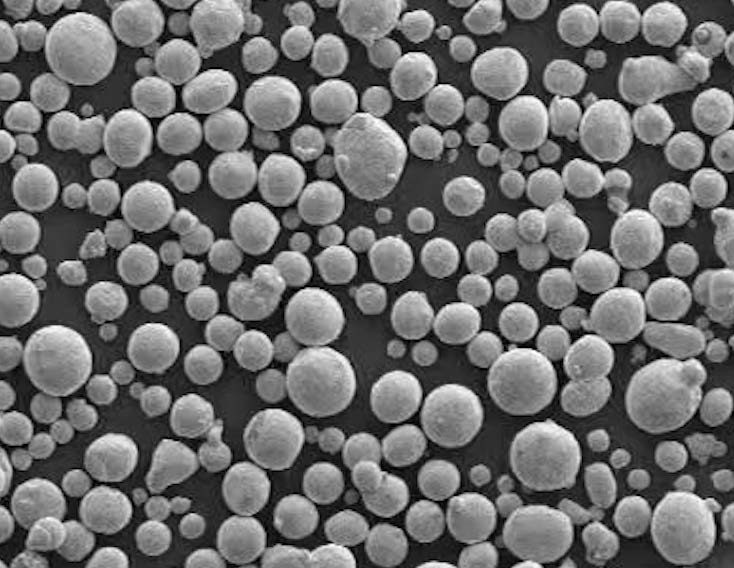
FeNiCrMn High Entropy Alloys are multi-principal-element metallic materials, usually engineered around a near-equiatomic Fe-Ni-Cr-Mn chemistry and supplied as spherical powder for metal additive manufacturing. They are chosen for AM parts because they combine stable microstructures, strong strain-hardening behavior, useful corrosion resistance, and comparatively forgiving printability versus many crack-sensitive advanced alloys. In powder-bed fusion and related processes, they are especially attractive where designers want a balance of strength, ductility, thermal stability, and compositional flexibility rather than chasing only the highest temperature capability.
What Is FeNiCrMn High Entropy Alloys
FeNiCrMn high entropy alloys belong to the wider high-entropy alloy family, where no single element overwhelmingly dominates the chemistry. Instead, several principal elements are combined in relatively similar proportions so that configurational entropy helps stabilize simple solid-solution phases rather than complex brittle intermetallic structures.
Within that family, Fe-Ni-Cr-Mn compositions are often discussed as Cantor-type or Cantor-derived systems because they descend from the well-known CoCrFeMnNi concept, but with cobalt reduced or removed to manage cost, density, supply risk, magnetic behavior, or property targets. As a result, FeNiCrMn alloys are not one single universal grade; they are a compositional class that can be tuned for additive manufacturing, powder metallurgy, or coating applications.
A key reason these alloys matter in metal AM is their single-phase FCC tendency over broad composition windows. That phase stability can translate into predictable solidification, substantial work hardening, and useful toughness across a range of service temperatures. In practical terms, engineers evaluating new powders often view FeNiCrMn systems as a bridge between conventional stainless or nickel alloys and more experimental multi-component materials.
Another distinction is how these alloys respond to microstructural refinement. Fine cellular structures formed during laser or electron-beam processing can enhance strength without fully sacrificing elongation, which is one reason researchers continue to test FeNiCrMn compositions in selective laser melting, electron-beam-based routes, and directed energy deposition. Compared with many high-strength intermetallic or refractory alloy systems, FeNiCrMn chemistries can offer good crack resistance and a wider processing window.
In additive manufacturing, the value of a high-entropy alloy is often not its novelty alone, but the way composition, powder quality, and process control combine to create a repeatable property envelope.
From a classification standpoint, FeNiCrMn materials sit at the intersection of iron-based, nickel-containing, and advanced HEA feedstocks. That makes them relevant not only to research programs but also to production teams comparing them with high-entropy alloy feedstocks and more established nickel-rich AM powder families for demanding builds.
Chemische Zusammensetzung
The chemistry of FeNiCrMn high entropy alloys is typically expressed as a target range rather than a single locked specification. Most AM-oriented variants stay near equiatomic proportions to preserve phase simplicity while allowing slight adjustments for oxidation control, stacking-fault energy, strength, or corrosion behavior.
Typical FeNiCrMn High Entropy Alloys Composition
| Element | Typical wt% Range | Rolle in der Metallurgie | Notes for AM Powder Use |
|---|---|---|---|
| Fe | 20-30 | Matrix former; contributes strength and cost efficiency | Supports FCC stability when balanced with Ni and Mn |
| Ni | 20-30 | Toughness, ductility, corrosion support, FCC stabilization | Helps reduce brittle transformation during rapid solidification |
| Cr | 20-30 | Oxidation and corrosion resistance; solid-solution strengthening | Excessive segregation must be avoided in poorly controlled melts |
| Mn | 15-30 | FCC stabilization, deoxidation support, work-hardening response | More volatile than Fe/Ni/Cr, so evaporation control matters |
| C | ≤0,10 | Impurity or deliberate minor addition | Too much carbon can promote carbide formation and reduce ductility |
| O | ≤0.08 | Residual impurity, not a designed alloying element | Lower oxygen generally improves fatigue and ductility |
| N | ≤0.05 | Residual impurity or controlled strengthening addition | Can strengthen but may complicate phase stability if uncontrolled |
In most supplier data sheets, the chemistry is reported as a balance of the four principal elements with upper limits on oxygen, nitrogen, sulfur, carbon, and sometimes phosphorus. For AM users, impurity control can be as important as the nominal Fe:Ni:Cr:Mn ratio because oxygen and nitrogen strongly influence flowability, inclusion content, and final part toughness.
Role of Iron in FeNiCrMn High Entropy Alloys
Iron acts as the economic backbone of the system. It helps keep raw material cost below that of cobalt-rich HEAs while preserving compatibility with many melting and atomization routes familiar to makers of stainless and low-cobalt superalloy powders.
Role of Nickel and Chromium
Nickel is the principal austenite stabilizer and is central to ductility, especially after rapid solidification in powder-bed fusion. Chromium adds passivation and oxidation resistance, making FeNiCrMn alloys more attractive than simple Fe-Ni-Mn chemistries for components exposed to humid, corrosive, or moderately hot environments.
Role of Manganese
Manganese is especially influential in high-entropy alloy design because it affects phase stability and deformation behavior. It also increases process sensitivity: high Mn activity means vacuum melting practice, superheat control, and atomization atmosphere quality matter more than they do in low-volatility alloys. This is one reason oxygen control and evaporation management are recurring topics in FeNiCrMn powder production.
For readers comparing this chemistry with more conventional steels, the broader iron-based powder category provides a useful benchmark: FeNiCrMn HEAs generally sit above standard Fe alloys in compositional complexity and tunability, even when they share some iron-centered metallurgy.
Physikalische und mechanische Eigenschaften
Because FeNiCrMn high entropy alloys cover a family of compositions and can be processed by different AM routes, published values vary with powder quality, heat treatment, build orientation, and post-processing. The ranges below are representative of near-equiatomic, FCC-dominant compositions reported for powder-based production and should be treated as typical rather than mandatory minimums.
Typical Property Profile of FeNiCrMn High Entropy Alloys
| Eigentum | Typischer Wert | Einheit | Prüfnorm / Prüfbedingungen |
|---|---|---|---|
| Dichte | 7.6-8.1 | g/cm³ | Typical composition-based value |
| Solidus-Liquidus / Effective Melting Range | 1280-1380 | °C | Typical DSC or thermodynamic estimate |
| Endgültige Zugfestigkeit | 650-950 | MPa | Typical room-temperature test on AM or HIPed specimens |
| Streckgrenze (0.2%) | 280-650 | MPa | Typical room-temperature tensile result |
| Dehnung beim Bruch | 20-45 | % | Depends strongly on porosity and heat treatment |
| Härte | 180-300 | HV | Typical Vickers range |
| Elastischer Modul | 170-210 | GPa | Approximate engineering value |
| Wärmeleitfähigkeit | 10-18 | W/m-K | Typischer Raumtemperaturbereich |
The most notable mechanical trait in this alloy class is often not peak strength, but the combination of moderate strength and high work hardening. During tensile deformation, FeNiCrMn systems can continue to strengthen significantly, which delays necking and supports elongation. That is valuable for AM parts expected to absorb impact, tolerate residual stress, or undergo secondary forming.
Another practical advantage is that FeNiCrMn alloys do not usually chase the extreme high-temperature strength of nickel superalloys. Instead, they occupy a performance window where strength, ductility, and corrosion resistance are better balanced. For machine builders and production engineers, that balance can simplify qualification for housings, test coupons, lattice structures, and functionally graded concepts.
How Processing Affects Properties
As-built laser powder bed fusion parts often show fine dendritic or cellular substructures and some anisotropy, particularly if scan strategy and layer thermal history are not optimized. Hot isostatic pressing can reduce residual porosity, while solution annealing may homogenize segregation and improve ductility. In some cases, AM builds show higher strength than cast material because rapid cooling refines microstructure.
Thermal conductivity is lower than that of copper alloys and typically below many aluminum alloys, so heat extraction during printing is slower. That characteristic can be beneficial for layer bonding but may also change melt pool behavior. Surface oxidation, powder reuse, and oxygen pickup therefore need to be monitored closely because they affect both absorption of laser energy and mechanical consistency.
Corrosion and Wear Considerations
FeNiCrMn high entropy alloys generally outperform unalloyed iron systems in corrosive media because chromium supports passive film formation. They are not a universal substitute for aggressive-environment nickel superalloys or highly alloyed corrosion-resistant grades, but they can be credible candidates where chloride exposure, humidity, or process fluids are present at moderate severity.
Wear behavior depends on counterface, hardness, and phase constitution. FCC-dominant variants tend to excel more in toughness and work hardening than in outright abrasion resistance, so service conditions should be matched to the alloy’s process-property balance rather than assumed from hardness alone.
Technische Daten und verfügbare Güteklassen
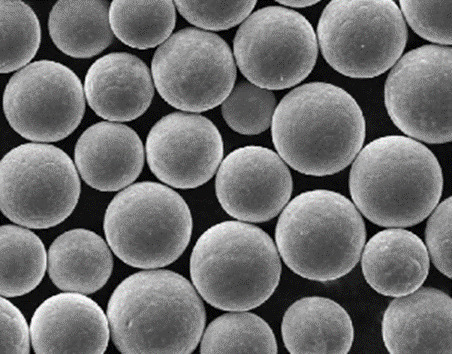
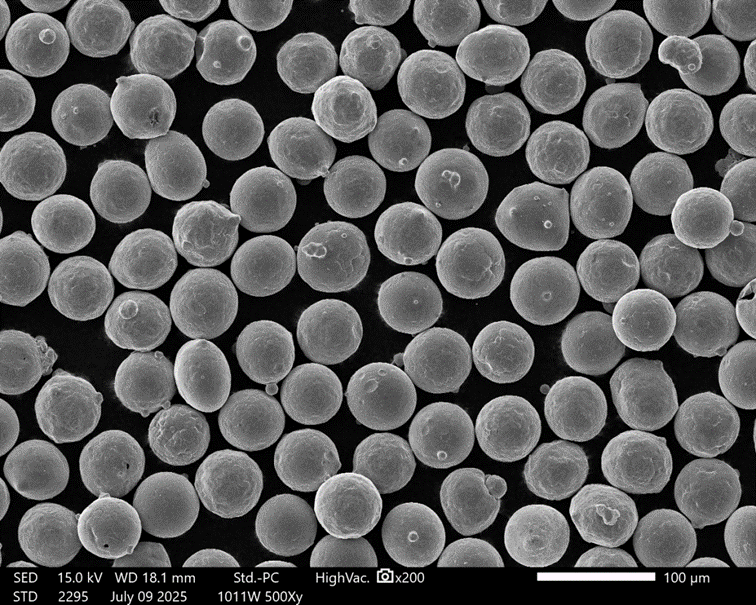
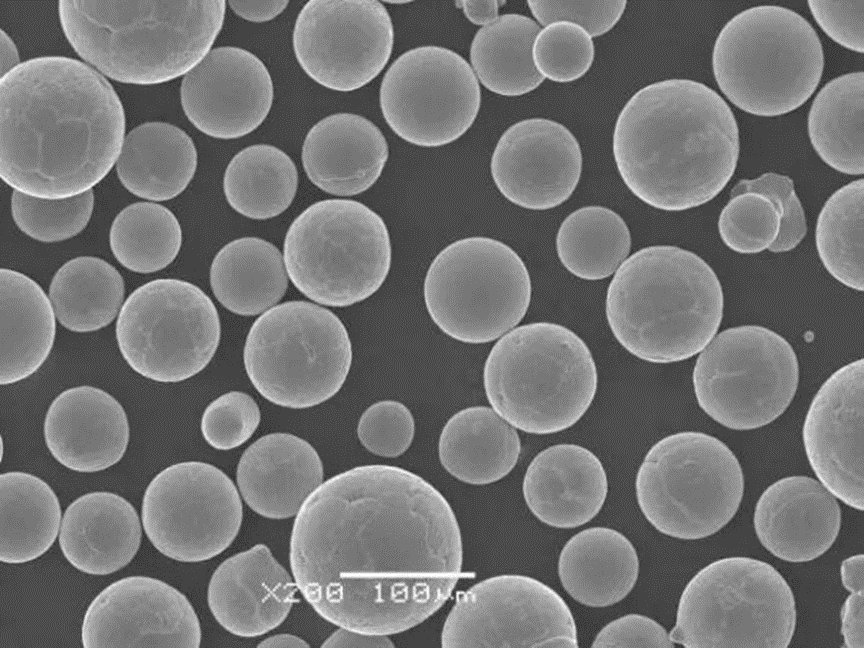
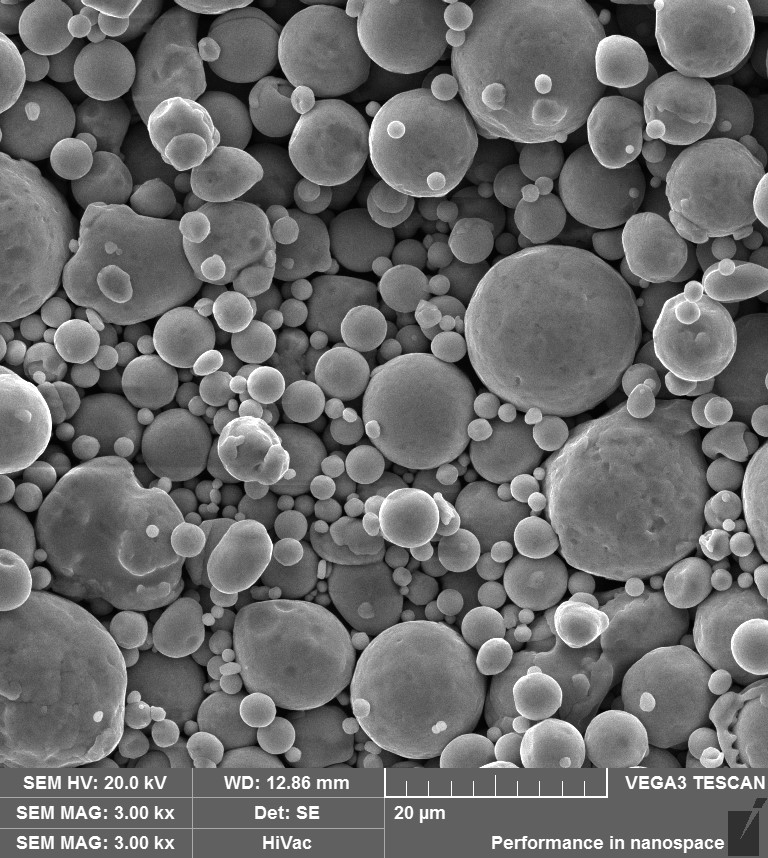
In commercial AM supply chains, FeNiCrMn high entropy alloys are usually specified first by chemistry, then by particle size distribution, and finally by powder cleanliness metrics such as oxygen content, satellite level, flow rate, and apparent density. Because no single globally dominant ASTM or AMS grade exists for every FeNiCrMn HEA variant, many suppliers use internal grade designations cross-referenced to broader powder test methods and additive manufacturing terminology.
Typical Powder Supply Conditions
| Supply Grade / Condition | PSD-Bereich | Scheinbare Dichte | Zapfstellendichte | Hall-Strömung | Oxygen / Sphericity / Cross-Reference |
|---|---|---|---|---|---|
| AM-F15-53 | 15-53 µm | 4,2–4,8 g/cm³ | 4,8–5,5 g/cm³ | 14–20 s/50 g | O ≤ 0.08 wt%; high sphericity; suited to LPBF/SLM |
| AM-F20-63 | 20-63 µm | 4.1-4.7 g/cm³ | 4.7-5.4 g/cm³ | 15-21 s/50 g | O ≤ 0.08 wt%; high sphericity; versatile for fine powder-bed use |
| AM-C45-105 | 45-105 µm | 4,3–4,9 g/cm³ | 4,9–5,6 g/cm³ | 13-18 s/50 g | O ≤ 0.06 wt%; high sphericity; suited to EBM and some DED |
| AM-C53-150 | 53–150 µm | 4.4-5.0 g/cm³ | 5.0-5.7 g/cm³ | 12–17 s/50 g | O ≤ 0.06 wt%; high sphericity; suited to DED, cladding, spraying |
| Test / Standards Reference | - | ASTM B212 typical | ASTM B527 typical | ASTM B213/B964 typical | Chemistry by supplier spec; terminology aligned with ISO additive manufacturing standards portal; powder test methods commonly referenced through ASTM powder testing standards catalog |
For laser powder bed fusion, 15-53 µm and 20-63 µm cuts are the most common because they offer a practical compromise between spreadability, packing behavior, and laser absorption. Electron beam and some directed energy deposition users often move to coarser fractions such as 45-105 µm to improve flow stability and reduce fines-related handling issues.
Standards and Qualification Context
Unlike Ti-6Al-4V or 316L, FeNiCrMn HEAs do not yet have a universally dominant aerospace or medical procurement specification used across all markets. Qualification is therefore usually built on a layered framework: internal chemistry limits, powder test methods, machine-specific process windows, coupon testing, and application-level acceptance criteria.
In documentation, suppliers may reference the terminology framework established by ISO/ASTM 52900 – Terminologie der additiven Fertigung alongside conventional powder characterization methods such as apparent density, tap density, and flow. This approach is normal for emerging alloys where the end user must validate both feedstock and part properties for the specific build platform.
Available Grades in Practice
Commercially, available grades tend to cluster into near-equiatomic baseline powders, Mn-lean variants for better compositional stability during melting, and customized blends adjusted for density, magnetic response, or corrosion targets. Users considering broader alloy screening may compare FeNiCrMn powders with titanium alloy powder options when weight saving dominates, or with conventional nickel systems when hot strength is more important than ductility.
Herstellungsprozess
The route used to make FeNiCrMn powder has a direct effect on composition retention, oxygen level, flowability, and printing consistency. Because manganese can be volatile, melt practice and atomization atmosphere matter even more than they do for lower-Mn alloy families.
Powder Production Routes for FeNiCrMn High Entropy Alloys
| Prozess | Sphärizität | Sauerstoffaufnahme | PSD-Steuerung | Durchsatz | Relative Kosten |
|---|---|---|---|---|---|
| Gaszerstäubung (GA) | Hoch | Moderate to low with inert gas control | Gut | Hoch | Mittel |
| Vakuum-Induktions-Gaszerstäubung (VIGA) | Hoch | Niedrig | Gut bis sehr gut | Mittel bis hoch | Mittel-hoch |
| Elektrodeninduktions-Gaszerstäubung (EIGA) | Sehr hoch | Sehr niedrig | Sehr gut | Mittel | Hoch |
| Plasma-Rotations-Elektroden-Verfahren (PREP) | Ausgezeichnet | Sehr niedrig | Narrower, cleaner coarse fractions | Mittel | Hoch |
| Plasma Atomization / Related Plasma Routes | Ausgezeichnet | Sehr niedrig | Very good for spherical powders | Lower to medium | Hoch |
Gas Atomization for FeNiCrMn AM Powder
Gas atomization remains the most scalable route for many commercial alloy powders. A molten FeNiCrMn stream is disintegrated by high-pressure inert gas, producing droplets that solidify into mostly spherical particles. GA offers attractive throughput and broad PSD flexibility, but alloy makers must carefully control melt temperature, nozzle behavior, and atmosphere purity to limit Mn loss and oxidation.
VIGA improves on standard GA by combining vacuum induction melting with inert-gas atomization. For FeNiCrMn systems, that vacuum stage can reduce dissolved gases and enhance chemistry control before atomization, which is particularly valuable for fine LPBF-grade powder.
PREP and EIGA Trade-Offs
PREP begins with a rotating alloy electrode that is melted at the tip, often by plasma or arc input, ejecting droplets centrifugally. The result is very clean, highly spherical powder with low satellite content and low contamination. PREP is especially attractive for premium powders where powder morphology and cleanliness outweigh the higher cost, although the process often yields coarser PSDs than fine GA cuts.
EIGA avoids contact with a ceramic crucible by melting an alloy bar or wire inductively and atomizing the resulting stream. That can help reduce contamination risk and support highly spherical powders with low oxygen pickup. For FeNiCrMn alloys, EIGA is a strong option when cleanliness requirements are strict and batch economics allow it.
Why Route Selection Matters in Additive Manufacturing
For LPBF, particle roundness, fine-tail control, and stable flow are essential. That usually favors VIGA or carefully optimized GA powders. For electron beam processing, DED, thermal spraying, and cladding, coarser PREP or EIGA fractions may offer operational benefits through superior flow and lower inclusion risk.
The best route therefore depends less on marketing language and more on the targeted use case: fine precision builds, larger structural parts, coating feedstock, or experimental alloy development. General definitions of AM process families can be cross-checked against high-entropy alloy background information and broader industry terminology, but real qualification still comes down to machine- and application-specific trials.
Anwendungen nach Branche
FeNiCrMn high entropy alloys are most compelling where a designer wants a non-brittle advanced alloy with tunable chemistry, decent corrosion resistance, and room for microstructural engineering. They are not yet as standardized as 316L or Inconel 718, but that does not prevent serious use in targeted industrial programs.
Aerospace and Space Hardware
In aerospace, FeNiCrMn powders are relevant for non-flight-critical prototypes, thermal-mechanical test articles, lattice structures, tooling inserts, and selected brackets or housings where designers are studying next-generation alloy behavior. Their strength-ductility combination is useful during development cycles that prioritize crack resistance and microstructural stability over minimum density.
For space and propulsion development, they may also appear in experimental hardware where compositionally complex alloys are screened for radiation tolerance, thermal fatigue behavior, or compatibility with graded structures. However, when service temperatures rise into the domain of established superalloys, traditional nickel systems still hold an advantage.
Medical and Biomedical Research
These alloys are less standardized for implant use than titanium or CoCrMo, but they are interesting for biomedical research because of their toughness, corrosion behavior, and the possibility of tailoring elemental content. Any medical application must evaluate nickel and manganese exposure carefully, so FeNiCrMn powders are more often considered for research substrates, instruments, or non-implant components than for mainstream permanent implants.
Oil, Gas, and Process Equipment
In oil and gas environments, FeNiCrMn alloys can be explored for pump components, wear sleeves, sensor housings, valve trim prototypes, and corrosion test coupons. Chromium contributes passivation, while the alloy’s deformation behavior can be valuable in parts exposed to vibration or complex loading.
Their limitation is that sour service, chloride concentration, and temperature can quickly push the material selection problem into a stricter corrosion engineering regime. Qualification must therefore be evidence-based rather than assumed from the word “high entropy.”
Automobilindustrie und Motorsport
Automotive developers often value materials that can survive iterative prototyping. FeNiCrMn AM powder can support test manifolds, structural mockups, jigs, thermal-mechanical demonstrators, and custom motorsports hardware where repeated loading matters. The alloy’s work-hardening response can also be useful for impact-prone or vibration-sensitive parts.
Energy, Tooling, and Functional Components
In energy and industrial machinery, FeNiCrMn materials can serve in fixtures, hot-zone support hardware at moderate temperatures, and corrosion-aware flow-path components. For tooling, their balance of toughness and printability may suit conformal-cooling inserts or experimental die features, though copper and maraging materials remain stronger incumbents in many tool designs.
Sectionally, these use cases overlap with the wider industries described on the supplier’s metal powder application sectors, especially where one feedstock must support printing, cladding, powder metallurgy, and surface engineering workflows.
Vergleich mit alternativen Materialien
FeNiCrMn high entropy alloys are rarely evaluated in isolation. Engineers typically compare them with austenitic stainless steels, nickel superalloys, cobalt-based systems, and sometimes lightweight titanium alloys to determine whether the AM value proposition comes from cost, strength, ductility, corrosion behavior, or processing stability.
FeNiCrMn High Entropy Alloys vs Alternative AM Powders
| Material | Dichte (g/cm³) | Typisches Leistungsniveau | Relative Powder Cost | Druckbarkeit | Corrosion Resistance / Best-Fit Use |
|---|---|---|---|---|---|
| FeNiCrMn High Entropy Alloys | 7.6-8.1 | Medium to high with strong work hardening | Mittel-hoch | Good when powder chemistry is controlled | Good all-round balance for advanced R&D and specialized industrial parts |
| 316L-Edelstahl | 7.9-8.0 | Mittel | Niedrig bis mittel | Ausgezeichnet | Very good corrosion resistance and broad qualification base |
| Inconel 718 / similar Ni alloys | 8.1-8.3 | High, especially at elevated temperature | Hoch | Good but parameter-sensitive | Better for high-temperature structural duty |
| CoCrMo | 8.3-8.6 | Hohe Härte und Verschleißfestigkeit | Hoch | Gut | Strong wear/corrosion profile; common in medical and tooling contexts |
| Ti-6Al-4V | 4.4-4.5 | Hohe spezifische Festigkeit | Hoch | Excellent in mature AM ecosystems | Best when low weight is critical |
Compared with 316L, FeNiCrMn powders usually cost more and are less standardized, but they can deliver a more advanced deformation profile and a richer design space for microstructural tuning. Compared with Inconel 718, they generally give up some high-temperature capability while offering a more ductile room-temperature response and potentially easier crack management.
Against CoCrMo, FeNiCrMn systems are often less wear-focused but can be more adaptable for general-purpose structural experimentation. Readers comparing these families side by side may also find context in the broader cobalt alloy powder range when wear resistance or biomedical familiarity is the main selection driver.
Unser Unternehmen
Shanghai Truer Technology Co., Ltd., the company operating am-printing.com, was established in 2009 and launched its additive manufacturing business in 2019. The company focuses on powder-making equipment and metal AM powder supply, with capabilities related to Selective Electron Beam Melting equipment, Plasma Rotating Electrode Process equipment, and gas atomization-based powder production. Its portfolio includes TiNi, TiTa, TiAl, TiNbZr, CoCrMo, and spherical nickel-, cobalt-, titanium-, copper-, aluminum-, and stainless-steel-based powders for processes such as SLM, SEBM, DED, laser cladding, powder metallurgy, MIM, HIP, cold or hot spraying, welding, and coating. Additional company background is available through the manufacturer profile page.
FAQ
Q1. Are FeNiCrMn High Entropy Alloys suitable for laser powder bed fusion?
Yes, many FeNiCrMn compositions are well suited to laser powder bed fusion when supplied as high-sphericity powder with controlled fines and low oxygen. Their FCC-dominant metallurgy often supports stable melting and comparatively good ductility, though parameter development is still required because manganese volatility and segregation behavior can shift with energy density.
Q2. Do FeNiCrMn High Entropy Alloys outperform stainless steel in AM parts?
Not automatically. FeNiCrMn alloys can exceed common stainless grades in strain hardening, microstructural tunability, and advanced materials research value, but 316L remains easier to source, qualify, and process at scale. The better choice depends on whether the design goal is standard production efficiency or exploration of higher-performance multi-principal-element behavior.
Q3. What particle size is best for FeNiCrMn High Entropy Alloys powder?
For LPBF, 15-53 µm and 20-63 µm are common because they spread well and support fine layer thicknesses. For EBM, DED, cladding, or spraying, coarser cuts such as 45-105 µm or 53-150 µm are often preferred for flow stability and reduced fines sensitivity.
Q4. Why is oxygen content so important in FeNiCrMn High Entropy Alloys powder?
Oxygen affects oxide inclusion content, surface chemistry, flowability, and the mechanical reliability of printed parts. In FeNiCrMn systems, high oxygen can reduce ductility and fatigue resistance, so powder users typically monitor virgin powder, recycled powder, and post-build chemistry together rather than treating oxygen as a powder-only metric.
Q5. Are FeNiCrMn High Entropy Alloys used in production or mainly in research?
Today they are used in both settings, but research and pre-production evaluation still dominate. They are especially valuable in programs exploring next-generation structural alloys, graded materials, and parts that need a tailored strength-ductility response without immediately moving to the cost or temperature envelope of nickel superalloys.
Q6. How should buyers evaluate a FeNiCrMn High Entropy Alloys supplier?
Buyers should look at chemistry control, atomization route, particle size consistency, flow and density data, oxygen and nitrogen limits, and evidence of repeatability between lots. It is also important to review whether the supplier supports the intended downstream route—such as LPBF, EBM, DED, or cladding—and can provide powder characterization aligned with the user’s qualification plan.