Kurzantwort
Inconel 718 nickel alloy powder is a precipitation-hardenable nickel-chromium superalloy powder used in additive manufacturing when parts must retain strength, corrosion resistance, and fatigue performance at elevated temperature. It is often the right choice for aerospace, energy, oil and gas, and high-performance industrial components because it combines good printability with post-heat-treatment strength, weldability, and broad standards acceptance. In practice, users choose it when service reliability under thermal and mechanical stress matters more than raw material cost or low part weight.
What Is Inconel 718 nickel alloy powder
Inconel 718 nickel alloy powder is the powder-feed form of alloy 718, a nickel-based superalloy originally developed for high-strength elevated-temperature service. In powder metallurgy and additive manufacturing, it is valued for its ability to be processed into dense parts by laser powder bed fusion, electron beam processes, directed energy deposition, and hot isostatic pressing routes. The material belongs to the Ni-Cr-Fe superalloy family and is strengthened mainly by precipitation of gamma double-prime and gamma-prime phases after solution and aging treatment.
The alloy occupies a distinctive position among nickel superalloys because it offers a rare balance of strength, manufacturability, weldability, and cost control relative to more highly alloyed turbine materials. Unlike some superalloys that are difficult to weld or highly crack-sensitive, 718 has long been favored for complex geometries, large forgings, castings, and now powder-based manufacturing. That same balance explains why it became one of the foundational metal powders for additive manufacturing qualification programs.
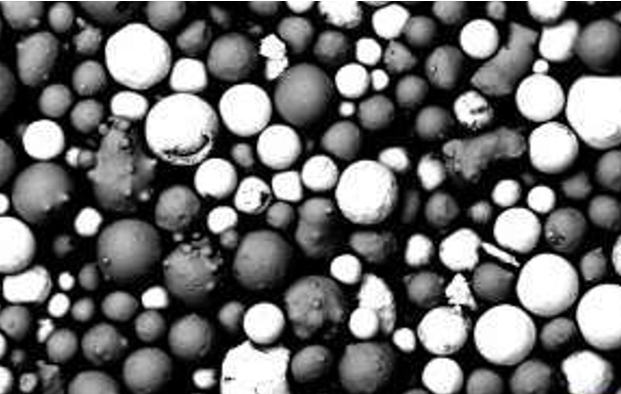
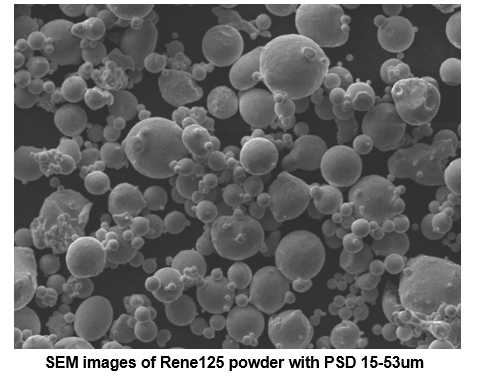
In powder form, the alloy is usually supplied as a spherical feedstock with controlled particle size distribution, oxygen level, and flowability. Those powder characteristics are essential because additive manufacturing performance depends not only on alloy chemistry, but also on layer deposition consistency, melt-pool behavior, and defect control. A high-quality 718 powder is therefore defined as much by morphology and cleanliness as by nominal composition.
Inconel 718 AM powder in the superalloy family
Within the superalloy category, 718 is often treated as the workhorse grade for demanding structural and thermal applications. It sits below certain single-crystal and extremely high-temperature superalloys in absolute hot-section capability, but it often outperforms them in manufacturability and cost efficiency. For many engineers, that makes 718 the first nickel superalloy considered before moving to more specialized chemistries.
Why spherical powder matters
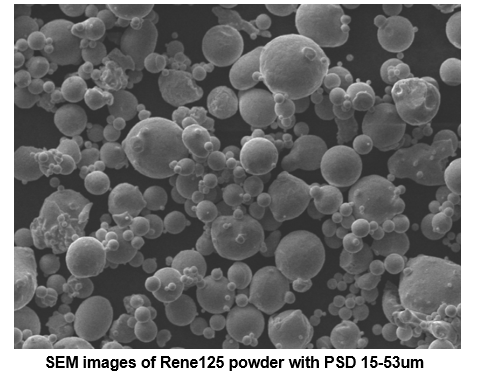
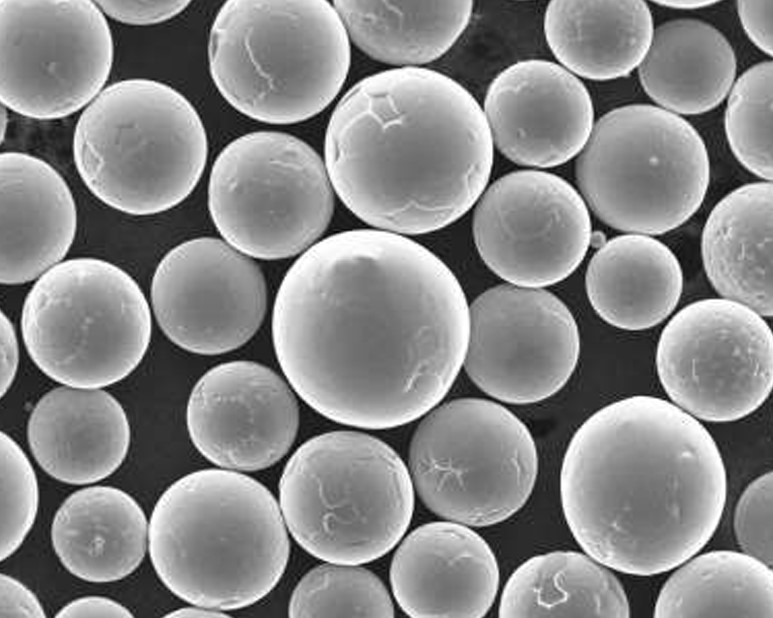
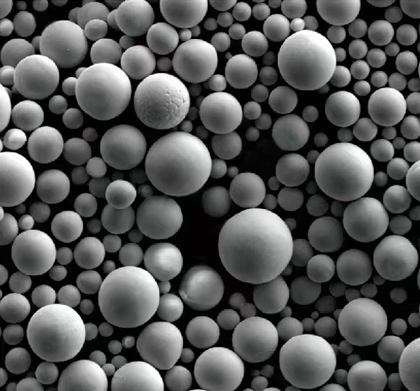
For additive manufacturing, spherical morphology supports flow through recoaters, hoppers, and nozzles while improving layer uniformity. Gas-atomized and plasma-derived spherical powders also reduce the risk of irregular packing density that can destabilize energy absorption and part density. That is why buyers evaluating 718 typically focus on powder shape, satellites, internal porosity, and oxygen pickup alongside chemistry.
Why the alloy remains strategically important
Inconel 718 continues to matter because many critical components still operate between room temperature and about 650 °C, where the alloy maintains an attractive combination of tensile strength, creep resistance, oxidation resistance, and corrosion resistance. Those conditions are common in engines, turbo machinery, oilfield tools, and energy hardware. Its long industrial history also means more data are available for design allowables, repair routes, and qualification than for many newer powders.
Alloy 718 remains one of the most widely used nickel-base superalloys for high-strength service.
Chemische Zusammensetzung
The chemistry of Inconel 718 is tightly controlled because its performance depends on a specific balance of matrix elements and precipitation-forming additions. Nickel provides the base austenitic matrix, chromium supports oxidation and corrosion resistance, iron moderates cost and phase balance, while niobium, titanium, and aluminum govern precipitation hardening. Molybdenum further improves solid-solution strength and creep resistance.
| Element | Typical Specification Range (wt%) | Typical Target (wt%) | Primary Metallurgical Role |
|---|---|---|---|
| Nickel (Ni) | 50.0–55.0 | 52.5 | Base matrix; high-temperature stability; corrosion resistance |
| Chrom (Cr) | 17.0–21.0 | 19.0 | Oxidation resistance; hot corrosion resistance; passive film support |
| Eisen (Fe) | balance | 18.0 | Cost moderation; matrix balance; processing stability |
| Niobium + Tantalum (Nb+Ta) | 4.75–5.50 | 5.1 | Main precipitation hardening contribution through gamma double-prime; strengthening |
| Molybdän (Mo) | 2.80–3.30 | 3.0 | Solid-solution strengthening; improved elevated-temperature performance |
| Titan (Ti) | 0.65–1.15 | 0.9 | Contributes to gamma-prime precipitation; strength and microstructural control |
| Aluminium (Al) | 0.20–0.80 | 0.5 | Supports gamma-prime precipitation; oxidation behavior |
| Kobalt (Co) | 1,0 max | 0.2 typical | Residual or minor addition; can influence phase stability |
| Kohlenstoff (C) | 0,08 max | 0.03 typical | Carbide formation; grain-boundary effects; excess can reduce ductility |
| Mangan (Mn) | 0,35 max | 0.1 typical | Residual deoxidation-related element; controlled low |
| Silizium (Si) | 0,35 max | 0.1 typical | Residual; process-related; controlled to avoid brittleness risks |
| Phosphorus (P) / Sulfur (S) | 0.015 max each | very low | Impurity control; weldability and ductility protection |
The most important strengthening element in 718 is niobium. It promotes formation of gamma double-prime, the metastable strengthening phase that gives the alloy much of its age-hardened strength. Titanium and aluminum also matter because they contribute to gamma-prime precipitation and interact with heat treatment response.
Chromium is the alloy’s main oxidation and corrosion defense. By promoting a stable chromium-rich oxide film, it improves service behavior in many oxidizing and moderately corrosive environments. That benefit is one reason 718 is used in both aerospace and oil-and-gas hardware rather than being confined to one sector.
Iron is often misunderstood as merely a cost reducer, but it also plays a role in maintaining the alloy’s overall matrix balance. In 718, the Fe content helps distinguish it from more expensive, more nickel-rich superalloys while preserving the processing advantages that made the grade commercially successful. This cost-performance balance is one reason it remains a benchmark powder inside the broader Produktpalette an Nickel-Superlegierungs-Pulvern.
Residual elements matter more in powder than many buyers first assume. Excess oxygen, sulfur, or contamination can affect ductility, inclusion cleanliness, and consistency after printing. For that reason, powder certificates usually pay particular attention to oxygen and nitrogen limits even when the base alloy chemistry meets nominal 718 composition.
Physikalische und mechanische Eigenschaften
The physical and mechanical properties of 718 depend strongly on condition. As-built additive parts, stress-relieved parts, solution-treated parts, and fully aged parts will not show the same tensile properties or hardness. For engineering comparison, the most useful values are the typical ranges for dense additively manufactured material after standard solution and age-hardening treatment, since that is how most critical parts are qualified.
| Eigentum | Typischer Wert | Einheit | Prüfnorm / Prüfbedingungen |
|---|---|---|---|
| Dichte | 8.19 | g/cm³ | Typical wrought and AM alloy value |
| Solidus temperature | 1260 | °C | Typical alloy range basis |
| Liquidus temperature | 1336 | °C | Typical alloy range basis |
| Zugfestigkeit | 1240–1450 | MPa | Typical after solution + age hardening |
| Yield strength (0.2%) | 1030–1240 | MPa | Typical after solution + age hardening |
| Dehnung | 12–25 | % | Typical, depends on build orientation and HIP/heat treatment |
| Härte | 35–45 | HRC | Typical aged condition |
| Elastizitätsmodul | 195–205 | GPa | Typischer Wert bei Raumtemperatur |
| Wärmeleitfähigkeit | 11–14 | W/m-K | Typischerweise nahe der Raumtemperatur |
| Koeffizient der thermischen Ausdehnung | 13.0–13.5 | µm/m·K | Typical over moderate temperature range |
For AM users, the defining property of 718 is not simply high strength, but heat-treatable high strength with useful ductility. That distinction matters because some materials print easily yet do not develop the same post-process structural capability. Inconel 718 remains attractive because printed parts can be stress relieved, hot isostatically pressed if needed, and then aged into a strong engineering condition without unusual process complexity.
Another practical advantage is fatigue capability after defect control. When porosity, lack-of-fusion defects, and surface roughness are managed, 718 can deliver strong low-cycle and high-cycle fatigue performance relative to many other printable superalloys. That is particularly relevant in rotating parts, pressure hardware, and aerospace structures where the as-built geometry may be complex but the design allowables still have to satisfy conservative certification pathways.
Elevated-temperature behavior of Inconel 718 powder parts
The alloy is commonly used for service up to around 650 °C because its precipitation-strengthened structure remains effective in that regime. Above that range, longer exposures can lead to overaging or phase changes that reduce strength relative to alloys designed for hotter service. This is why 718 is often selected for compressor-side, combustor-adjacent, and structural hot-zone parts, but not for the most extreme turbine blade environments.
Corrosion and oxidation performance
The chromium-rich matrix gives the alloy broad resistance to oxidation, many industrial atmospheres, and a range of aqueous environments. It is not immune to every aggressive medium, but it performs far better than carbon steels, low-alloy steels, and many precipitation-hardening stainless steels in combined heat and corrosion service. For users choosing between steel, cobalt, titanium, and nickel systems, this corrosion-stability margin often justifies the higher powder cost.
Hardness and heat treatment response
As-built 718 may not appear exceptionally hard compared with its final aged condition. The major increase in strength and hardness comes after solution treatment and two-step aging, which promote the precipitation of strengthening phases. That is why comparing raw as-built values across datasheets can be misleading unless the heat-treatment state is clearly stated.
Technische Daten und verfügbare Güteklassen
The specification landscape for 718 powder is more mature than for many newer AM alloys. Buyers typically work from powder standards, aerospace material specifications, and process qualification documents together rather than relying on one single universal powder standard. In practice, the purchase order usually defines chemistry, particle size distribution, morphology, flowability, cleanliness, and intended process route such as LPBF, EBM, DED, MIM, or thermal spray.
| Supply Grade / Process Cut | Typischer PSD-Bereich | Scheinbare Dichte | Zapfstellendichte | Hall-Strömung | Sauerstoffgehalt | Sphärizität | Cross-Reference / Notes |
|---|---|---|---|---|---|---|---|
| IN718-LPBF Fine | 15-45 µm | 4,2–4,8 g/cm³ | 4,8–5,4 g/cm³ | 14–20 s/50 g | ≤0.03 wt% typical | hoch | Common for laser powder bed fusion; aligned with aerospace AM qualification practice |
| IN718-LPBF Standard | 15-53 µm | 4,3–4,9 g/cm³ | 4,9–5,5 g/cm³ | 13–19 s/50 g | ≤0.03 wt% typical | hoch | Widely used general AM cut for stable spreading |
| IN718-EBM | 45-105 µm | 4,4–5,0 g/cm³ | 5,0–5,7 g/cm³ | 12–18 s/50 g | ≤0.035 wt% typical | hoch | Coarser fraction suited to electron beam processes |
| IN718-DED / Cladding | 53-150 µm | 4,5–5,1 g/cm³ | 5,1–5,8 g/cm³ | 12–18 s/50 g | ≤0.04 wt% typical | hoch | Used for blown-powder DED, repair, and near-net deposition |
| IN718-PM / HIP Feedstock | 20–63 µm or custom | 4.2–4.9 g/cm³ | 4,9–5,5 g/cm³ | 13–20 s/50 g | custom | hoch | Tailored for hot isostatic pressing or powder metallurgy consolidation |
For laser powder bed fusion, the most common cut is 15–45 µm or 15–53 µm because it balances recoating behavior, packing density, and laser absorption consistency. Electron beam systems often prefer a coarser distribution such as 45–105 µm, while directed energy deposition uses even larger fractions for powder-stream stability. That difference is why the same nominal alloy can behave very differently across platforms.
Powder acceptance also depends on standards context. Aerospace users frequently reference powder chemistry and process qualification under frameworks connected to ASTM additive manufacturing standards, internal OEM specifications, and established AMS material callouts for alloy 718 forms. AM terminology itself is commonly harmonized through Begriffe gemäß ISO/ASTM 52900, which helps define process language consistently across buyers and suppliers.
Inconel 718 spherical powder quality metrics
A strong 718 powder specification usually includes more than chemistry and PSD. It should address satellite content, circularity, internal gas porosity, apparent density, tap density, Hall flow, moisture control, and limits on oxygen and nitrogen. For qualification builds, many organizations also request micrographs or morphology images because visual evidence of sphericity and cleanliness supports process predictability.
Available grades and process-specific customization
Although 718 is standardized as an alloy, the powder is often customized to the manufacturing route. A fine LPBF grade may prioritize low d90 and tight flow consistency, while a DED grade may tolerate a broader distribution to improve stream catchment and deposition rate. Some suppliers also tune chemistry within the allowable 718 range to support target process windows, especially for electron beam or repair applications.
Standards cross-reference in practice
In daily procurement, engineers often speak in a mixed vocabulary that includes ASTM, ISO/ASTM, AMS, and internal quality plans rather than one code alone. That reflects reality: powder supply, machine qualification, post-processing, and final part acceptance are separate layers of control. The powder certificate gets the process started, but component qualification ultimately determines whether a given lot is fit for aerospace or energy use.
Herstellungsprozess
The manufacturing route for 718 powder shapes nearly every downstream result, from powder flow and oxygen content to part density and fatigue performance. Gas atomization remains the dominant industrial method because it provides a good combination of throughput, chemistry control, and spherical morphology. Higher-end routes such as vacuum induction gas atomization, electrode induction gas atomization, and plasma rotating electrode processing can further reduce contamination or improve morphology, but usually at higher cost.
| Prozess | Feedstock Form | Typical Sphericity | Oxygen Pickup Risk | PSD-Steuerung | Durchsatz | Relative Kosten | Typischer Anwendungsfall |
|---|---|---|---|---|---|---|---|
| GA | Melt stream atomized by inert gas | hoch | low to medium | very good | hoch | gemäßigt | Standard industrial choice for LPBF, DED, and general PM |
| VIGA | Vacuum induction melted, inert-gas atomized | sehr hoch | niedrig | very good | mittel bis hoch | mäßig bis hoch | Aerospace-grade powder with strong chemistry cleanliness |
| EIGA | Electrode induction gas atomized | sehr hoch | very low | excellent | mittel | hoch | Premium spherical powder with low contamination risk |
| PREP | Rotating electrode atomization | extremely high | very low | good | niedrig | sehr hoch | High-cleanliness specialty powder, often for demanding AM routes |
| Plasma-Zerstäubung | Wire or feedstock plasma processed | extremely high | niedrig | good to very good | low to medium | hoch | Specialty spherical powder with premium morphology |
Gas-atomized Inconel 718 nickel alloy powder
Gas atomization is the most common route for spherical Inconel 718 powder used in additive manufacturing. In this process, a molten stream of the alloy is broken into droplets by high-pressure inert gas, then rapidly solidified into powder. The resulting particles are typically round, free-flowing, and suitable for controlled PSD classification.
VIGA adds vacuum melting before atomization, which improves cleanliness and chemistry control. For critical aerospace or energy hardware, that extra control can help reduce contamination and improve lot-to-lot consistency. In many production environments, VIGA has become a preferred route because it balances quality with industrial output better than more expensive specialty methods.
PREP and EIGA trade-offs
PREP and EIGA are premium routes that can generate highly spherical powder with low contamination. PREP uses a rotating electrode melted at the tip, while EIGA melts a bar or electrode inductively without contact from a crucible in the atomization zone. These routes are valuable when users want exceptional cleanliness and morphology, but they are usually more expensive and offer lower throughput than mainstream gas atomization.
Why process route matters to additive manufacturing powder quality
Powder making does not just influence appearance; it influences how the material behaves in the machine. Particle roundness affects layer packing, oxide content affects melt quality, and a broad PSD can alter recoating behavior or powder-stream capture. NIST’s metal additive manufacturing research program emphasizes how process control and measurement underpin repeatable metal AM, and powder production is one of the first variables in that chain.
For suppliers operating across alloy families, the same atomization logic also applies to adjacent materials such as cobalt-based alloy powders and specialty nickel grades. The difference is that 718 typically demands a narrower balance between cleanliness, printability, and downstream aerospace qualification than many commodity thermal-spray powders.
Anwendungen nach Branche
Inconel 718 is used wherever a component must survive combined heat, mechanical loading, corrosion, and complex geometry. Additive manufacturing extends that value by enabling internal channels, lattice structures, weight-optimized brackets, low-volume spare parts, and near-net-shape preforms that would be expensive to machine from wrought stock. The material is therefore especially relevant in industries where part performance justifies higher powder and post-processing cost.
Luft- und Raumfahrt
Aerospace remains the best-known application area for 718 powder. Printed and HIP-processed or heat-treated components include brackets, housings, ducts, engine-adjacent hardware, tooling, and some rotating or pressure-bound geometries depending on qualification level. The alloy’s long service history gives designers confidence because it is already familiar in forged and cast forms, which helps bridge the transition into additively manufactured parts.
718 is particularly useful when geometry complexity exceeds what is practical in wrought machining. Internal passages, integrated flanges, weight-reduction features, and consolidation of multi-piece assemblies are all common selection drivers. In these cases, additive manufacturing is not chosen just to print the alloy, but to exploit design freedom while staying inside a known superalloy ecosystem.
Energy, nuclear, and power systems
In power generation, 718 is used for hardware exposed to elevated temperature, pressure, and corrosive media. AM applications include burner parts, seals, nozzles, manifolds, and repairable or replaceable custom components. The alloy’s resistance to stress, oxidation, and chemical attack makes it valuable for long-life equipment where downtime is expensive.
Nuclear-adjacent and specialty power uses also benefit from the alloy’s established data pedigree. Qualification is still rigorous, but designers often prefer to start from a superalloy with a known service record rather than an emerging material with limited historical evidence. That conservatism favors 718 in critical infrastructure projects.
Öl und Gas
In oil and gas, the alloy is used in downhole tools, valves, fasteners, completion hardware, and corrosion-resistant structural elements. Additive manufacturing is attractive for low-volume, high-value parts with complex fluid paths or customized geometry. Compared with lower alloy steels, 718 offers a clear durability advantage in sour, corrosive, or high-pressure environments where failure costs are high.
Automotive, motorsport, and turbo machinery
Although too expensive for most mass-market vehicle parts, 718 is relevant in turbocharger systems, motorsport exhaust hardware, test fixtures, and niche performance components. It is selected when temperature stability and fatigue resistance outweigh cost. In this segment, AM can shorten development cycles by making it easier to iterate complex designs and consolidate assemblies.
Tooling, repair, and hybrid manufacturing
718 powder is also used in directed energy deposition and repair. High-value components such as molds, dies, turbine features, or damaged superalloy parts can be rebuilt or modified rather than replaced outright. Where hybrid manufacturing combines subtractive machining with powder-fed deposition, 718 offers a route to restore material locally while preserving the base component.
For cross-material comparison, users often examine 718 alongside titanium powder grades when the design brief involves weight reduction as well as thermal performance. That comparison often ends with a simple conclusion: titanium wins on density, but 718 wins when heat and corrosion margins become more severe.
Vergleich mit alternativen Materialien
No alloy is optimal for every additive manufacturing problem, and 718 is no exception. The material is often compared with 625, Hastelloy X, Ti-6Al-4V, and CoCrMo because those grades occupy adjacent parts of the performance map. The correct choice depends on whether the design prioritizes temperature capability, corrosion resistance, density, fatigue performance, or economics.
| Material | Dichte (g/cm³) | Typisches Leistungsniveau | Relative Kosten | Druckbarkeit | Corrosion / Oxidation Resistance | Optimaler Anwendungsfall |
|---|---|---|---|---|---|---|
| Inconel 718 nickel alloy powder | 8.19 | very high after aging | hoch | very good | very good | Structural high-temperature AM parts needing strength and reliability |
| Inconel 625-Pulver | 8.44 | mittel bis hoch | hoch | excellent | excellent | Corrosion-heavy service where ultimate aged strength is less critical |
| Hastelloy X-Pulver | 8.22 | mittel bis hoch | hoch | good | very good at heat | Combustion and furnace parts with high oxidation exposure |
| Ti-6Al-4V-Pulver | 4.43 | hohe spezifische Festigkeit | hoch | excellent | good | Lightweight aerospace and medical parts |
| CoCrMo-Pulver | 8.3–8.9 | high wear strength | hoch | good | very good | Wear, medical, and hot corrosion applications |
Compared with Inconel 625, 718 usually offers higher age-hardened mechanical strength. However, 625 can be easier to process in some circumstances and may be chosen when corrosion resistance matters more than maximum tensile performance. The comparison is therefore less about which nickel alloy is “better” and more about whether precipitation hardening is required.
Against titanium alloys, 718 loses decisively on density but wins on high-temperature retention and many corrosive-service margins. That trade-off is central in aerospace design: if the part sees severe heat, titanium may no longer be the right answer even when weight matters. This is why engineers evaluating both thermal and structural constraints often review 718 beside titanium rather than in isolation.
CoCrMo competes in specific wear, hot corrosion, and biomedical environments, but it is not usually the default replacement for 718 in structural AM parts. Cobalt alloys are strong in their own niche, yet 718 more often becomes the choice when a designer needs a broadly accepted, precipitation-hardenable superalloy with deep aerospace heritage. In more extreme heat zones, some users then move beyond 718 into refractory systems or highly specialized superalloys, sometimes within a broader advanced refractory powder range.
Unser Unternehmen
Shanghai Truer Technology Co., Ltd., operating am-printing.com, was established in 2009 and created its additive manufacturing business in 2019. According to the company’s stated profile on its Unternehmensübersichtsseite, it integrates 3D printing powder-making equipment and services with high-quality spherical metal powders for engineering applications. The company’s published capabilities include SEBM equipment, PREP powder-making equipment, and gas atomization, while its powder portfolio covers TiNi, TiTa, TiAl, TiNbZr, CoCrMo, nickel-based, cobalt-based, titanium-based, copper-based, aluminum-based, and stainless steel powders for sectors including medical, aerospace, nuclear power, 3C electronics, hand tools, and remote-control vehicles.
FAQ
Q1. Is Inconel 718 nickel alloy powder good for laser powder bed fusion?
Yes. It is one of the most widely used nickel superalloy powders for laser powder bed fusion because it combines good powder flow, established parameter development, and strong post-heat-treatment properties. Its broad industrial history also helps with qualification compared with less familiar superalloys.
Q2. What particle size is typical for Inconel 718 nickel alloy powder?
For LPBF, 15–45 µm and 15–53 µm are common commercial cuts. Electron beam systems often use coarser fractions such as 45–105 µm, while DED commonly uses 53–150 µm or similar ranges for stable powder delivery.
Q3. Does Inconel 718 nickel alloy powder require heat treatment after printing?
In most critical applications, yes. Stress relief is usually followed by solution treatment and aging, and some parts also undergo HIP before final aging. Those post-processing steps are important because the alloy reaches its best combination of strength and ductility after precipitation hardening rather than in the raw as-built state.
Q4. How does Inconel 718 nickel alloy powder compare with Inconel 625 powder?
718 is generally chosen when higher mechanical strength is required after age hardening. 625 is often chosen when corrosion resistance and fabrication flexibility are prioritized over maximum precipitation-strengthened performance. The final choice depends on service temperature, loading, and qualification requirements.
Q5. Is Inconel 718 nickel alloy powder difficult to machine after AM processing?
Yes, relative to common steels and aluminum alloys, it is considered difficult to machine because of work hardening, strength retention, and heat generation at the cutting zone. That is one reason near-net-shape additive manufacturing is attractive: it reduces the amount of finish machining required on expensive superalloy stock.
Q6. Which industries rely most on Inconel 718 nickel alloy powder?
Aerospace, energy, oil and gas, and high-performance industrial manufacturing are the main sectors. These industries use the alloy when they need a printable material that can withstand elevated temperature, corrosion, pressure, and cyclic loading while still fitting into a mature engineering and qualification framework.