Quick Answer
Gas atomized copper powder is a spherical, high-conductivity metal powder engineered for powder-bed fusion, directed energy deposition, thermal spraying, and related manufacturing routes. It is chosen for additive manufacturing applications when designers need excellent thermal and electrical conductivity, stable powder flow, and relatively high packing density. In practice, it delivers the best value in heat exchangers, induction components, electrodes, RF hardware, and other parts where copper’s functional performance matters more than maximum strength or easiest printability.
What Is gas atomized copper powder
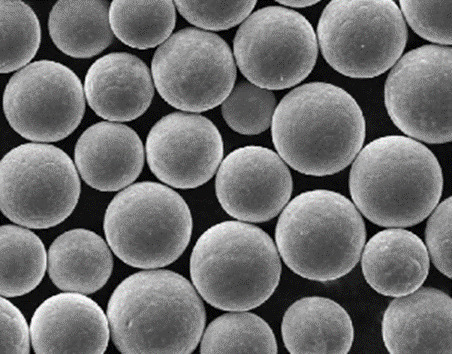
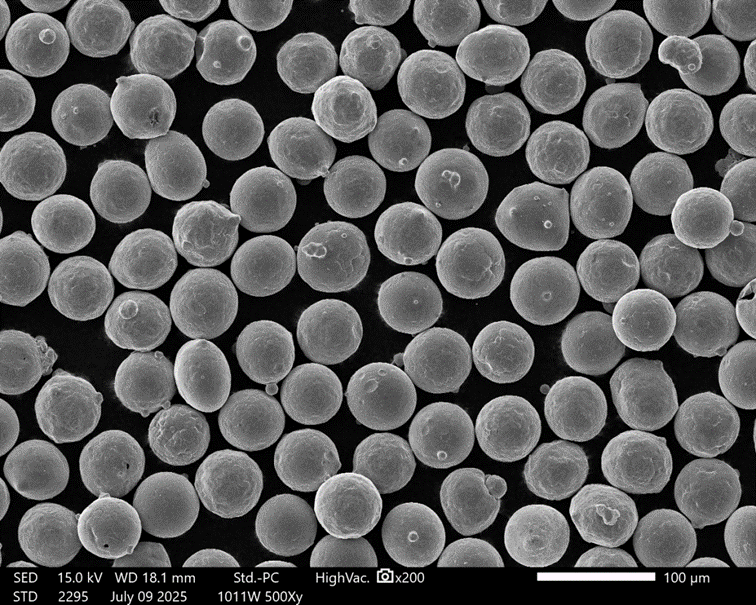
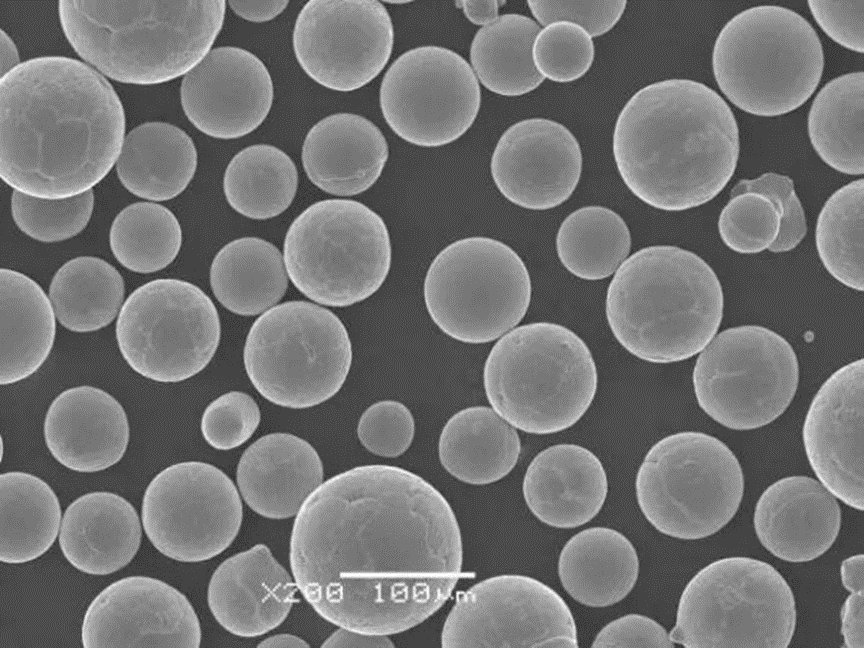
Gas atomized copper powder is a copper or copper-alloy feedstock produced by disintegrating a molten metal stream with high-pressure inert gas. The process creates mostly spherical particles with a particle size distribution tailored to specific manufacturing methods, especially laser powder bed fusion, electron beam processes, binder jetting, hot isostatic pressing, and metal injection molding.
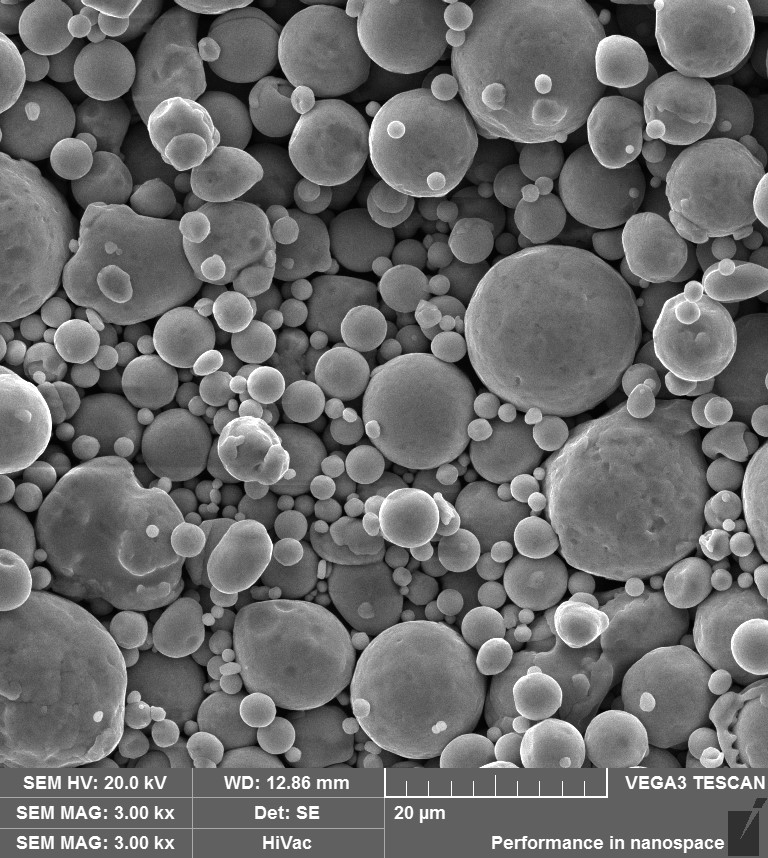
Within the broader family of additive manufacturing feedstocks, gas atomized copper powder sits in the conductive-material segment. That segment includes commercially pure copper, deoxidized copper variants, precipitation-strengthened copper alloys such as CuCrZr, and specialty copper-based compositions developed for wear resistance or electrical contact performance. Compared with irregular water-atomized powders, gas-atomized material is valued for spherical morphology, lower internal porosity, better flowability, and cleaner spreading behavior in recoating systems.
Historically, copper has been more difficult to print than stainless steel, nickel superalloys, or titanium alloys because of its high reflectivity in common infrared laser systems and its very high thermal conductivity. Those same characteristics, however, are precisely why copper is attractive for end-use parts. When the energy source, machine parameters, and powder specification are matched correctly, gas atomized copper powder enables geometries that conventional machining, brazing, or tube assembly cannot produce efficiently.
In practical terms, users select gas atomized copper powder for three reasons. First, it offers a repeatable feedstock geometry for stable layer deposition. Second, it preserves copper’s core functional advantage: high conductivity. Third, it supports a wide set of downstream processes, from AM and HIP to cladding and spraying, allowing the same alloy family to be used across prototyping and production.
A useful materials distinction is that not all copper AM powders are commercially pure copper. Some are alloyed to improve printability, hot-cracking resistance, hardness, or retention of mechanical properties at temperature. That is why buyers should assess copper powder not just as “Cu,” but as a controlled materials system defined by chemistry, oxygen level, particle size, and intended process window.
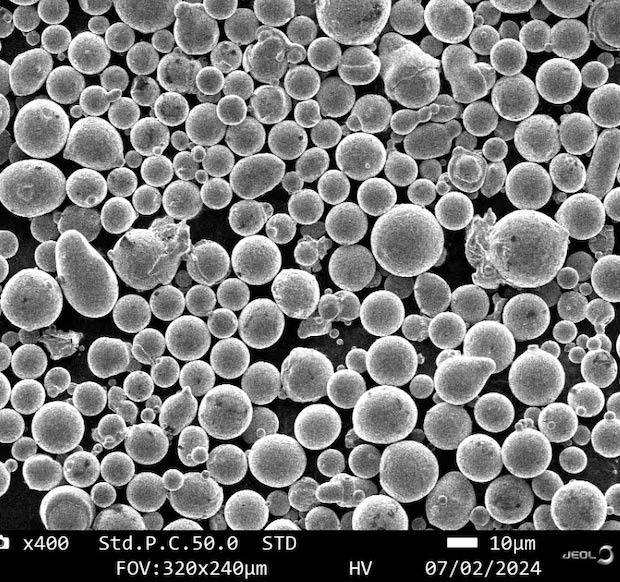
In metal AM, copper powder quality is judged as much by flow, oxygen, and PSD consistency as by nominal chemistry.
Chemical Composition
The chemistry of gas atomized copper powder depends on whether the grade is pure copper for maximum conductivity or alloyed copper for a more balanced property set. In most AM applications, users encounter oxygen-controlled pure Cu, deoxidized copper, and CuCrZr-type alloys for improved strength at elevated temperatures.
| Grade / Family | Cu (wt%) | Alloying Elements (wt%) | Typical Impurity Limits (wt%) | Metallurgical Role |
|---|---|---|---|---|
| Commercially pure Cu | 99.7–99.95 | — | O: 0.02–0.10, Fe/Ni/Pb each low | Maximizes electrical and thermal conductivity |
| Oxygen-controlled pure Cu for AM | 99.8–99.95 | — | O typically ≤0.05, low S/P | Improves conductivity while limiting oxide-related defects |
| Deoxidized Cu | balance | P typically 0.015–0.040 | O kept very low | Phosphorus reduces oxygen activity and improves weldability, but lowers conductivity somewhat |
| CuCrZr | balance | Cr: 0.5–1.2, Zr: 0.03–0.30 | O/Fe/Si controlled low | Chromium and zirconium enable precipitation strengthening and better softening resistance |
| CuNiSi-type alloy | balance | Ni: 1.0–4.0, Si: 0.2–1.0 | Fe low, O controlled | Raises strength and wear resistance with moderate conductivity |
| CuSn bronze powder | balance | Sn: 3–12 | Pb/S low | Improves wear behavior, hardness, and bearing performance |
Role of Key Elements in gas atomized copper powder
Copper is the matrix and the functional driver. Its face-centered cubic crystal structure provides good ductility, and its electron transport characteristics make it the reference material for electrical and thermal conduction in AM applications.
Chromium is added primarily for age hardening in CuCrZr systems. After printing and heat treatment, chromium-rich precipitates increase strength without driving conductivity down as severely as many other alloying strategies.
Zirconium works with chromium to refine microstructure and improve resistance to grain growth at elevated temperature. In copper alloys used for rocket hardware, tooling inserts, and resistance welding parts, zirconium often contributes to a better balance of strength and conductivity.
Nickel and silicon are used where the user needs higher mechanical performance than pure copper can provide. These additions can improve hardness and spring properties, though they move the alloy away from the maximum-conductivity end of the spectrum.
Tin creates bronze-type copper powders. These are less common for high-conductivity AM components but useful in wear, sliding, and infiltrated structures.
Oxygen deserves special attention. Too much oxygen increases oxide formation on particle surfaces, which can impair laser absorption consistency, reduce electrical conductivity, and promote lack-of-fusion or inclusion-related defects. For that reason, oxygen control is a major purchasing criterion for gas atomized copper powder, especially for powder-bed fusion.
Physical and Mechanical Properties
Property values vary widely with alloy grade, printing route, build orientation, energy source, and post-processing. The table below therefore shows typical ranges for copper AM powders and representative printed or consolidated material rather than a single absolute number.
| Property | Typical Value | Unit | Test Standard / Reference |
|---|---|---|---|
| Theoretical density (pure Cu) | 8.93–8.96 | g/cm³ | Reference density data |
| Solidus / melting range (pure Cu) | 1083–1085 | °C | Standard materials reference |
| Thermal conductivity (pure Cu, dense state) | 320–390 | W/m·K | Typical room-temperature range |
| Electrical conductivity (pure Cu, dense state) | 85–100 | % IACS | Typical for high-purity processed copper |
| Ultimate tensile strength, printed pure Cu | 180–280 | MPa | Typical as-built to stress-relieved |
| Yield strength, printed pure Cu | 70–180 | MPa | Typical, process dependent |
| Elongation at break, printed pure Cu | 20–45 | % | Typical dense builds |
| Hardness, pure Cu | 45–80 | HB / HV equivalent range | Typical annealed to worked condition |
| Ultimate tensile strength, CuCrZr | 300–500 | MPa | Typical printed and aged condition |
| Thermal conductivity, CuCrZr | 280–340 | W/m·K | Typical after suitable heat treatment |
Reading the property data correctly
The most common mistake in copper AM sourcing is comparing powder properties directly with fully dense wrought bar values. Powder data tell you how the feedstock behaves in storage, handling, recoating, and melting. Mechanical and conductive performance depend heavily on how completely the process eliminates porosity and how effectively post-build heat treatment develops the target microstructure.
Pure copper generally offers the best conductivity but the lowest strength among the common copper AM options. CuCrZr sacrifices some conductivity in exchange for much stronger room-temperature and elevated-temperature mechanical behavior. That trade-off is often acceptable in rocket injectors, resistance welding tools, and conformal-cooled molds where geometry and heat transfer matter simultaneously.
The part designer should also recognize that density is a performance lever. A component printed to 99.5% relative density can behave very differently from one printed to 99.95%, especially in electrical resistance, leak tightness, and fatigue. That is why powder morphology, surface oxides, and size distribution have a direct influence on the end-use performance of gas atomized copper powder parts.
For terminology consistency in AM process documentation, manufacturers often align descriptions with ISO/ASTM 52900 additive manufacturing terminology, while copper reference property baselines are commonly cross-checked against the NIST copper materials data resources.
Specifications and Available Grades
Powder specification is where purchasing decisions become operational rather than theoretical. Two copper powders with the same nominal chemistry can perform very differently if their particle size cut, apparent density, tap density, or oxygen level differ significantly.
Common gas atomized copper powder size cuts
For laser powder bed fusion, the industry often uses fine spherical cuts such as 15–45 µm or 15–53 µm. Electron-beam and larger-format systems may favor somewhat coarser distributions, while DED and thermal spraying generally use wider or larger cuts.
| Grade / Screen Cut | Typical PSD (µm) | Apparent Density (g/cm³) | Tap Density (g/cm³) | Hall Flow (s/50 g) | Oxygen (wt%) | Sphericity / Notes |
|---|---|---|---|---|---|---|
| Pure Cu fine AM grade | 15–45 | 4.6–5.2 | 5.2–5.8 | 14–20 | 0.02–0.06 | High sphericity for LPBF |
| Pure Cu standard AM grade | 15–53 | 4.5–5.1 | 5.1–5.7 | 15–21 | 0.02–0.08 | General-purpose spherical powder |
| CuCrZr fine grade | 15–45 | 4.4–5.0 | 5.0–5.6 | 15–22 | 0.02–0.07 | Strength-focused conductive alloy |
| Cu coarse grade | 45–105 | 4.8–5.5 | 5.5–6.2 | 12–18 | 0.02–0.08 | Suitable for DED and spraying |
| Cu extra-coarse grade | 53–150 | 4.9–5.6 | 5.6–6.3 | 11–17 | 0.02–0.10 | Used in cladding and PM routes |
| Standards cross-reference | Per product drawing | Method-dependent | Method-dependent | Tested by standard method | Product-specific | Common references include ASTM B212 apparent density, ASTM B213 flow rate, ISO/ASTM AM terminology, and internal PSD control by laser diffraction |
Standards and tolerances
Copper powder procurement usually references a mix of AM terminology, powder test methods, and alloy standards rather than one single universal copper-AM standard. Buyers frequently specify particle size by laser diffraction plus sieve verification, apparent density by recognized powder methods, flow rate using Hall or Carney funnels, and oxygen content by inert gas fusion.
For powder characterization, many labs still rely on the ASTM B212 apparent density method for metal powders and related powder test standards for flow and sieve analysis. Where a copper alloy is intended for aerospace-grade quality systems or critical components, buyers may also map internal specifications to ISO, ASTM, AMS, GB, or DIN language so procurement, testing, and qualification teams use a common framework.
Grade selection by process
Fine cuts are normally used in laser powder bed fusion because they spread smoothly and support thin layer thicknesses. Coarser fractions may flow even better, but if they are too coarse for the machine’s layer strategy they reduce packing uniformity and surface finish.
CuCrZr is often preferred over pure Cu when the application requires more mechanical margin after heat cycling. Pure copper is typically selected when conductivity is the overriding requirement, such as induction coils, busbar prototypes, RF components, and thermal management hardware.
In a portfolio context, users comparing conductive and non-conductive metals often evaluate copper powders alongside an aluminum alloy powder range for lightweight heat exchangers or a nickel superalloy powder selection for high-temperature oxidation resistance.
Manufacturing Process
Gas atomization is the dominant industrial route for spherical copper powder used in AM, but it is not the only route. Process choice affects oxygen pickup, sphericity, satellite formation, yield in the target size band, and ultimately cost per qualified kilogram.
How GA produces gas atomized copper powder
In gas atomization, molten copper or copper alloy exits a tundish or nozzle and is broken into droplets by high-velocity inert gas, typically nitrogen or argon depending on the alloy sensitivity and target oxygen level. The droplets cool rapidly in flight and solidify into near-spherical particles before being collected, sieved, classified, and packaged under controlled conditions.
The attraction of GA is its combination of industrial scale and flexible PSD control. It supports pure Cu as well as many copper alloys, and it can be integrated with vacuum melting or inert-melt handling to reduce contamination.
PREP, VIGA, and EIGA in context
Plasma Rotating Electrode Process, or PREP, produces powder by melting the end of a rotating bar or electrode with plasma. Centrifugal force throws off droplets that solidify into very spherical particles, often with low contamination and a narrow defect profile. PREP is highly regarded for premium reactive-alloy powders, although it is less common for bulk copper tonnage because electrode feedstock and throughput economics are different from GA.
Vacuum Induction Melting Inert Gas Atomization, or VIGA, combines vacuum melting with inert gas atomization. For copper alloys requiring tighter chemistry and lower contamination, VIGA provides better melt cleanliness and process control than simpler open systems.
Electrode Induction Melting Gas Atomization, or EIGA, avoids refractory crucible contact by melting a bar or rod feedstock inductively before atomization. It is especially useful where contamination control is critical, though it is more often discussed for titanium and specialty alloys than for mainstream copper grades.
| Process | Sphericity | Oxygen Pickup Risk | PSD Control | Throughput | Relative Cost | Typical Fit for Copper AM |
|---|---|---|---|---|---|---|
| GA | High | Low to moderate, system dependent | Good to very good | High | Moderate | Best general-purpose route for spherical copper powders |
| PREP | Very high | Low | Moderate | Low to moderate | High | Premium spherical powder, niche for specialized requirements |
| VIGA | High | Low | Good to very good | Moderate to high | Moderate to high | Clean melt route for tighter alloy control |
| EIGA | High to very high | Very low | Good | Moderate | High | Useful where contamination avoidance is critical |
| Water atomization | Low to moderate | Higher oxidation risk | Moderate | High | Low | Usually not preferred for high-end AM recoating behavior |
Trade-offs buyers should weigh
For most copper AM programs, GA offers the best balance of price, availability, and performance. PREP may produce exceptional particle roundness, but the cost structure can be hard to justify unless the application is very demanding or the alloy family benefits strongly from the route.
VIGA becomes attractive when melt cleanliness and trace-element control matter. EIGA is more specialized, but it illustrates an important point: the powder-making route can be as important as the nominal alloy name when part qualification requires consistency across many production lots.
A process-integrated supplier with both powder and equipment knowledge can often diagnose issues faster because print defects may originate upstream in atomization, classification, or packaging rather than in the machine parameter set alone.
Applications by Industry
Copper’s AM value proposition is strongest in industries where heat flux, current carrying capacity, or electromagnetic performance justify a more demanding print process. It is not the default structural metal for every part, but in the right use case it can outperform simpler materials by enabling geometry-led performance gains.
Aerospace and space propulsion
Aerospace programs use copper and CuCrZr powders for combustion chambers, injectors, liners, heat sinks, and thermal control components. Internal channels that are difficult to braze or machine become practical with AM, especially when a conductive copper core must be combined with controlled wall thickness and compact packaging.
Electronics and electrical systems
Pure copper powder is relevant for busbars, inductors, RF hardware, heat spreaders, cooling blocks, and specialized connector geometries. In this area, gas atomized copper powder competes not only with machined copper but also with assembled multi-part thermal management systems.
Tooling and moldmaking
Conformal-cooled mold inserts are one of the clearest industrial use cases. A conductive insert printed in copper alloy can extract heat faster than steel in selected regions, improving cycle time and reducing hot spots. In practice, users often compare copper inserts with a broader tooling and industrial applications portfolio to decide whether thermal performance outweighs wear or stiffness requirements.
Automotive and e-mobility
Electric drivetrains, battery systems, and power electronics create demand for compact thermal and electrical components. Copper AM can support prototype and low-volume production of cooling plates, stator-adjacent parts, and current-transfer hardware where geometry complexity is high.
Energy, oil and gas, and industrial process equipment
Heat exchangers, burner parts, induction systems, and sensor housings can benefit from copper’s conductivity. In oil and gas or energy systems, alloy choice becomes more nuanced because corrosion, erosion, and temperature cycling may point users toward copper alloys, nickel alloys, or stainless steels depending on the service environment.
Medical and research equipment
Copper is not a mainstream implant material, but it does appear in laboratory devices, cooling hardware, and specialized electromagnetic components used around medical and analytical systems. Where biocompatible load-bearing applications are required, engineers are far more likely to select a titanium alloy powder portfolio instead.
Comparison with Alternative Materials
Material selection in AM is always an exercise in trade-offs. Gas atomized copper powder is rarely the strongest or easiest powder to print, but it can be the most functional choice when conductivity dominates the design brief.
| Material | Density (g/cm³) | Thermal Conductivity (W/m·K) | Relative Strength | Printability in PBF | Corrosion Resistance | Relative Material Cost | Best Use Case |
|---|---|---|---|---|---|---|---|
| gas atomized copper powder (pure Cu) | 8.9 | 320–390 | Moderate to low | Moderate; energy input sensitive | Good in many environments | Moderate to high | Maximum heat and electrical transfer |
| CuCrZr powder | 8.8–8.9 | 280–340 | Moderate to high | Moderate | Good | High | Conductive parts needing more strength |
| AlSi10Mg powder | 2.6–2.7 | 120–170 | Moderate | Good to very good | Good | Moderate | Lightweight thermal structures |
| 316L stainless steel powder | 7.9–8.0 | 14–20 | Moderate | Excellent | Very good | Moderate | General corrosion-resistant parts |
| Inconel 718 powder | 8.1–8.2 | 10–15 | High | Good | Excellent at high temperature | High | Hot-section and severe-service parts |
Where copper wins
Copper wins when heat must move quickly, current must pass efficiently, or electromagnetic behavior matters. A designer choosing between pure copper and AlSi10Mg is usually balancing conductivity against weight, while a designer choosing between copper and 316L is deciding whether functional conductivity is more important than corrosion resistance and printing simplicity.
Where alternatives win
Aluminum powders are often easier to justify when low mass is critical and moderate conductivity is sufficient. Stainless steel dominates when corrosion resistance, cost control, and process maturity outweigh thermal performance. Nickel superalloys become the logical choice once operating temperature rises beyond copper’s comfort zone.
For buyers evaluating conductive, wear-resistant, and high-temperature options together, copper powders are frequently reviewed alongside a copper alloy powder catalog, a cobalt alloy powder family, and refractory-metal systems for more extreme thermal environments.
Our Company
Shanghai Truer Technology Co., Ltd was established in 2009 and launched its additive manufacturing business in 2019. Operating am-printing.com, the company works across powder-making equipment and powder supply, with capabilities associated with Selective Electron Beam Melting equipment, Plasma Rotating Electrode Process equipment, and gas atomization routes. Its powder portfolio includes TiNi, TiTa, TiAl, TiNbZr, CoCrMo, and broader nickel-based, cobalt-based, titanium-based, copper-based, aluminum-based, and stainless steel spherical metal powders for processes such as SLM, SEBM, DED, laser cladding, powder metallurgy, MIM, HIP, spraying, welding, and coating. The company also reports a joint innovation center focused on metal 3D printing and serves sectors including 3C electronics, hand tools, remote control cars, medical, aerospace, and nuclear power, with additional background available on the company profile page.
FAQ
Q1. Is gas atomized copper powder better than water-atomized copper powder for 3D printing?
Yes, for most additive manufacturing routes it is. Gas atomized copper powder is typically more spherical, flows more consistently, and produces more stable powder-bed spreading than water-atomized material. Water-atomized copper can still be useful in conventional powder metallurgy, but it is usually less suitable for high-quality powder-bed fusion.
Q2. Which copper alloy is most common for metal AM: pure Cu or CuCrZr?
Both are common, but they solve different problems. Pure copper is selected when conductivity is the main requirement, while CuCrZr is chosen when engineers need a stronger copper alloy that still retains high thermal performance. The right choice depends on whether the part is function-limited by heat transfer or by mechanical load.
Q3. What particle size is typical for gas atomized copper powder in LPBF?
A typical laser powder bed fusion range is 15–45 µm or 15–53 µm. These cuts usually balance spreading behavior, layer thickness, and melting efficiency. Some machines and process strategies use slightly different windows, but fine spherical fractions remain the norm.
Q4. Why is copper harder to print than stainless steel?
Copper reflects a large portion of the infrared laser energy used in many powder-bed systems and rapidly conducts heat away from the melt pool. That combination narrows the process window and can make dense builds harder to achieve. Green-laser systems, optimized scan strategies, and tightly controlled powder quality have improved results significantly.
Q5. What should buyers check on a gas atomized copper powder datasheet?
The most important items are nominal chemistry, oxygen level, particle size distribution, apparent density, tap density, flow rate, and morphology. Buyers should also verify packaging condition, moisture control, and whether the supplier states the intended process route such as LPBF, DED, spraying, or PM. Reusability guidance and lot-to-lot consistency data are also valuable for production programs.
Q6. Can gas atomized copper powder be reused after printing?
Often yes, but only under a controlled powder-management procedure. Reuse depends on the machine environment, sieving practice, oxygen pickup during exposure, and whether the recycled fraction still meets PSD and chemistry limits. For copper in particular, monitoring oxide growth and flow behavior is essential before returning powder to a critical build.