Quick Answer
Gas atomized spherical dental CoCrMo powder is a cobalt-chromium-molybdenum alloy powder engineered for metal additive manufacturing, especially dental laser powder bed fusion workflows. It is widely chosen because it combines strong corrosion resistance, high hardness, good wear performance, stable powder flow, and biocompatibility-compatible alloy chemistry used for dental frameworks. For crowns, bridges, removable partial denture structures, and customized prosthetic components, it offers a practical balance of printability, mechanical reliability, and post-processing efficiency.
What Is gas atomized spherical dental CoCrMo powder
Gas atomized spherical dental CoCrMo powder is a pre-alloyed cobalt-based metal powder produced for additive manufacturing and dental laboratory production. The alloy belongs to the cobalt-chromium-molybdenum family, a materials class long used in medical and dental applications because of its corrosion resistance, strength, and favorable wear behavior. In powder form, it is tailored to spread uniformly in thin layers and fuse predictably under laser energy.
Dental CoCrMo occupies a different design space from general industrial cobalt alloys. It is expected to support highly customized, small-format, precision components with strict fit requirements, thin-wall sections, and polished intraoral surfaces. That makes powder quality especially important, because dimensional accuracy in dental parts is closely linked to particle morphology, particle size distribution, and consistency from lot to lot.
Why dental CoCrMo became important in metal AM
Before metal AM became widespread in dental labs, cobalt-chromium dental alloys were commonly processed by casting or subtractive machining. Those methods remain relevant, but they can be less efficient for highly individualized geometries or large batches of one-off restorations. Additive manufacturing changed the workflow by allowing digital design files to be turned into near-net-shape frameworks with minimal tooling and a relatively repeatable build sequence.
The shift is not only about speed. Digital dental manufacturing also reduces dependence on traditional wax patterns and investment casting variables. As a result, dental CoCrMo powder became central to the move from analog production toward scanner-to-print prosthetic fabrication.
What the phrase “gas atomized spherical” actually means
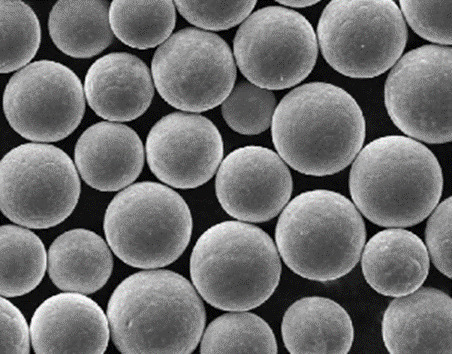
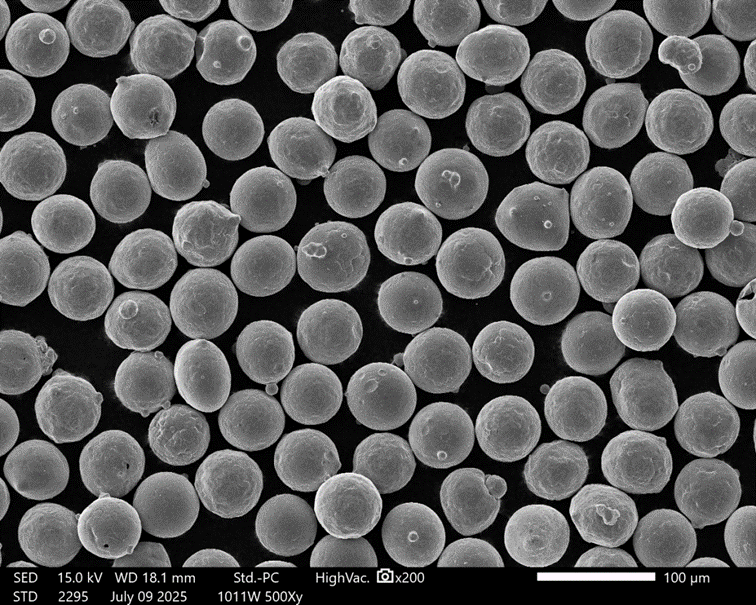
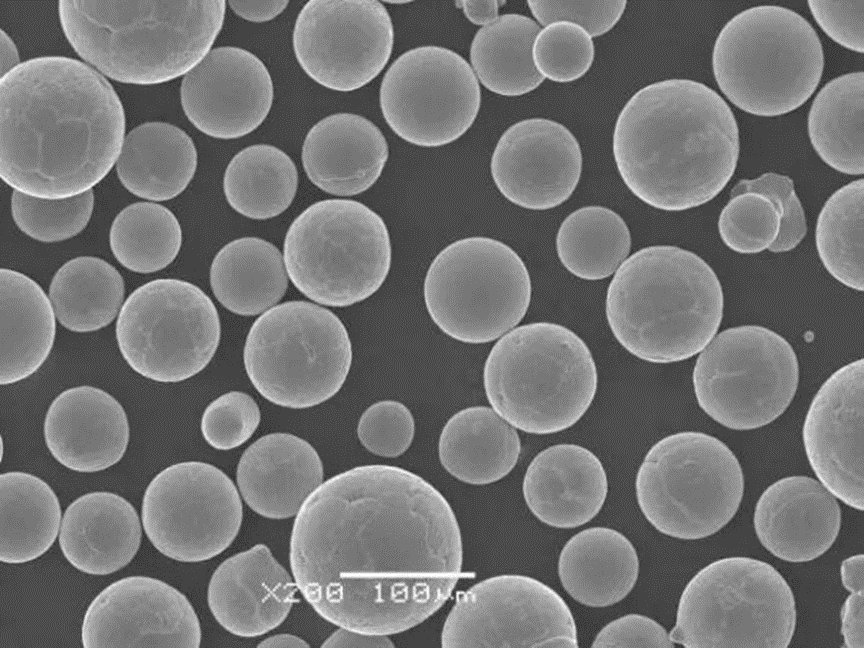
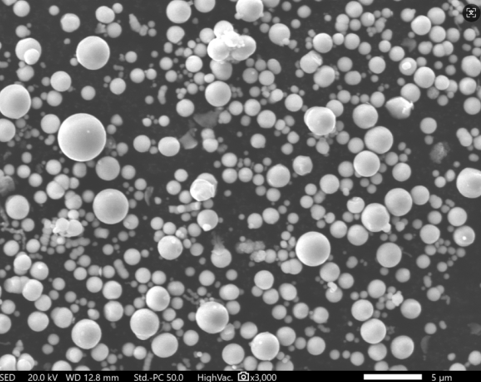
“Gas atomized” refers to the powder-making method in which molten alloy is broken into droplets by high-velocity inert gas and then rapidly solidified. “Spherical” describes the morphology of the particles, which is essential for good flow and packing in powder bed systems. In dental AM, spherical morphology matters because small build areas and fine feature details demand smooth recoating and stable layer formation.
This is why the material name contains more than just the alloy chemistry. The performance of dental CoCrMo in additive manufacturing depends on both the metallurgy of cobalt-chromium-molybdenum and the engineered characteristics of the powder itself.
How dental CoCrMo differs from other AM metals
Compared with stainless steels, dental CoCrMo generally offers higher hardness and stronger wear resistance. Compared with titanium alloys, it is denser and less forgiving to machine after printing, but it is often selected for rigid dental frameworks that need durability and edge retention. Compared with noble-metal dental systems, it is typically more economical while still offering high functional performance.
For that reason, the alloy is used where long-term structural integrity and precision fit matter more than low density. It is not a lightweighting material; it is a performance and reliability material for small, high-value components.
In dental additive manufacturing, powder consistency is often as important as nominal alloy chemistry because fit, finish, and repeatability all begin with the powder bed.
Chemical Composition
Dental CoCrMo powders vary slightly by producer and regulatory market, but their chemistry is centered on cobalt, chromium, and molybdenum. The alloy design aims to balance corrosion resistance, strength, castability heritage, and suitability for post-build finishing in dental service.
| Element | Typical Content (wt%) | Common Range / Limit (wt%) | Metallurgical Role | Effect in Dental AM Parts |
|---|---|---|---|---|
| Cobalt (Co) | Balance | Remainder | Base matrix, strength at service temperature, wear support | Provides structural backbone and rigidity |
| Chromium (Cr) | 27.0–30.0 | 26.0–30.0 | Passivation and oxidation resistance | Improves corrosion resistance in oral environments |
| Molybdenum (Mo) | 5.0–7.0 | 5.0–7.0 | Strengthening and pitting resistance | Supports hardness and localized corrosion resistance |
| Tungsten (W) | 0–5.0 | Product specific | Solid-solution strengthening in some grades | Can improve rigidity and wear behavior |
| Silicon (Si) | 0.5–1.5 | Usually limited | Deoxidation and melt behavior control | Influences processability and oxide management |
| Manganese (Mn) | 0.1–1.0 | Usually limited | Deoxidation and residual control | Secondary effect on cleanliness and microstructure |
| Carbon (C) | 0.02–0.35 | Grade dependent | Carbide formation and hardness contribution | Higher levels increase hardness but may reduce ductility |
| Iron (Fe) | <1.0 | Controlled low | Residual impurity | Excess can affect corrosion performance and consistency |
| Nickel (Ni) | Often very low or restricted | Grade dependent or restricted | Residual or intentionally minimized element | Lower levels are preferred in many dental specifications |
Chromium and molybdenum as the corrosion-resistance core
Chromium is the principal element responsible for passive-film formation in CoCrMo dental alloys. In the oral environment, this passive behavior is central to corrosion performance, especially where saliva, changing pH, and contact with other restorative materials are involved. Molybdenum reinforces this protection, particularly against localized attack.
This corrosion system is one reason cobalt-chromium remains so established in dentistry. The alloy is not chosen only for strength; it is also chosen because it holds up well in a chemically complex service environment.
Carbon control in dental cobalt alloys
Carbon deserves special attention because small changes can alter carbide content and therefore influence hardness, wear, and brittleness. In dental powders, carbon is usually controlled carefully rather than maximized. Excess carbide formation can make the alloy less forgiving in finishing or increase the risk of reduced ductility in thin sections.
That balance is especially relevant in laser powder bed fusion, where rapid solidification already creates fine microstructures. Powder suppliers and users therefore monitor carbon with the same seriousness as major alloying elements.
Residual element management
Dental alloys often carry stricter expectations around biocompatibility-adjacent chemistry than purely industrial wear alloys. Nickel is frequently minimized, and residual elements are kept under close control to support consistency across lots. For this reason, buyers of high-quality spherical powder normally evaluate full chemistry, not just cobalt, chromium, and molybdenum totals.
Physical and Mechanical Properties
Dental CoCrMo is valued for rigidity, hardness, corrosion resistance, and wear performance rather than light weight. In practical terms, it is used where thin sections must remain stiff and durable during long-term service.
| Property | Typical Value | Unit | Test Standard / Reference Basis |
|---|---|---|---|
| Density | 8.2–8.5 | g/cm³ | Typical dense alloy value |
| Solidus Temperature | 1,280–1,350 | °C | Typical alloy reference range |
| Liquidus Temperature | 1,350–1,450 | °C | Typical alloy reference range |
| Ultimate Tensile Strength | 900–1,350 | MPa | Typical AM or dental alloy range |
| Yield Strength | 600–1,000 | MPa | Process and heat treatment dependent |
| Elongation at Break | 4–15 | % | Build orientation and condition dependent |
| Hardness | 300–450 | HV | Typical printed and post-processed range |
| Elastic Modulus | 200–230 | GPa | Typical cobalt-chromium alloy range |
| Thermal Conductivity | 12–18 | W/m·K | Typical room-temperature range |
| Corrosion Behavior | Strong passive performance | Qualitative | Chromium-rich passive layer response |
Strength and rigidity in dental frameworks
One reason dental labs use CoCrMo is its high modulus compared with titanium alloys and many stainless steels. A rigid framework can help maintain geometry in bridges, partial denture structures, and thin connectors. That mechanical stability is especially useful where deflection must be minimized under repeated chewing loads.
Tensile and yield properties vary with machine parameters, stress relief, hot isostatic pressing, and finishing route. Even so, dental CoCrMo generally remains a high-strength material suited to long-life prosthetic substructures.
Hardness, wear, and finishing behavior
Hardness is a defining property of this alloy family. The same feature that makes it attractive in service also makes post-build finishing more demanding than softer dental metals. Grinding, support removal, polishing, and fit adjustment therefore require carefully selected tools and process controls.
For dental users, mechanical reliability is not simply a datasheet issue. It affects how easily a printed framework can be finished without distorting marginal geometry or removing too much material at critical contact points.
Corrosion and oral-environment stability
Cobalt-chromium-molybdenum alloys are well known for passive corrosion behavior in biomedical and dental contexts. In additive manufacturing documentation, broader process terminology is often aligned with [ISO/ASTM 52900 additive manufacturing terminology], while general materials measurement and metrology practices are often informed by [NIST engineering measurement resources].
The oral environment is demanding because of moisture, temperature fluctuation, food chemistry, and long-term exposure. CoCrMo’s passive surface chemistry is therefore a functional requirement, not a secondary benefit.
Specifications and Available Grades
Powder specifications for dental AM are usually tighter than general industrial purchasing language suggests. Dental parts are small, geometry-sensitive, and often made in large arrays on a single build plate, so consistency in powder behavior directly affects fit and remake rate.
Typical gas atomized spherical dental CoCrMo powder size ranges
For dental laser powder bed fusion, fine and narrow particle cuts are common, especially 10–30 µm, 15–45 µm, and 15–53 µm. These distributions support thin layers, fine detail, and relatively smooth surfaces before post-processing. Coarser cuts may still be useful for DED or other processes, but they are less typical in mainstream dental lab production.
| Grade / Reference | Typical PSD (µm) | Apparent Density (g/cm³) | Tap Density (g/cm³) | Hall Flow (s/50 g) | Oxygen Content | Sphericity / Standards Note |
|---|---|---|---|---|---|---|
| Ultra-Fine Dental Grade | 10–30 | 4.3–4.8 | 4.9–5.5 | 12–18 | Low, tightly controlled | High sphericity for thin layers |
| Fine LPBF Dental Grade | 15–45 | 4.2–4.7 | 4.8–5.4 | 11–17 | Low, tightly controlled | Common dental AM grade |
| Standard Dental AM Grade | 15–53 | 4.1–4.6 | 4.7–5.3 | 11–18 | Low, controlled | General-purpose powder bed use |
| Broad AM Grade | 20–63 | 4.2–4.8 | 4.8–5.5 | 10–17 | Low to moderate by spec | More tolerant for broader process windows |
| Coarse Powder-Fed Grade | 45–105 | 4.4–5.0 | 5.0–5.7 | 9–15 | Route dependent | Less common for dental LPBF |
| Cross-Reference Grade Set | Product specific | Measured per method | Measured per method | Measured per method | Product specific | Often linked to ASTM, ISO, AMS, GB, and DIN purchasing language |
Standards language and cross-reference practice
Dental CoCrMo purchasing typically combines an internal powder specification with external alloy or dentistry standards. A buyer may reference dental alloy requirements through the [ISO dentistry metallic materials catalog] while also using a broader [ASTM standards database] for test and reporting frameworks. In practice, powder qualification often becomes a hybrid of alloy chemistry limits, particle requirements, machine validation, and part-level verification.
This is important because no single standard captures every build-specific variable relevant to a dental laboratory. Flowability, oxygen level, and particle morphology can matter as much as bulk composition when fit accuracy is the commercial priority.
Available grade logic by process
A supplier may offer multiple particle-size grades of the same dental CoCrMo chemistry. Fine grades serve laser powder bed fusion best, especially where thin walls and dense nesting strategies are used. Broader or coarser cuts may be reserved for non-dental additive routes, thermal spraying, or development work outside standard prosthetic manufacturing.
Users comparing cobalt powders with other materials on a broader [cobalt alloy powder page] usually focus first on application fit and processing route, then on chemistry nuances. That is sensible because a dental machine optimized for fine LPBF powder does not benefit from an otherwise excellent grade that is simply too coarse.
Reuse and contamination control
Dental labs often reuse powder, but reuse must be disciplined. Sieving, virgin-to-recycled blending, controlled atmosphere handling, and contamination prevention are all essential, especially because cross-contamination in a small dental part can affect appearance, fit, or long-term performance. A qualified workflow therefore treats powder management as part of the device manufacturing process, not as a routine housekeeping task.
Manufacturing Process
Gas atomization is the dominant production route for dental CoCrMo powder because it produces the spherical morphology needed for reliable layer spreading and predictable fusion. Still, comparing it with other powder-making routes helps explain why certain powders cost more or behave differently in AM systems.
Why gas atomization is the mainstream route
In gas atomization, a melted CoCrMo alloy stream is disintegrated by high-pressure inert gas into droplets that cool and solidify into mostly spherical particles. The process supports commercial-scale throughput, relatively good particle size control, and low contamination when operated correctly. For dental AM, it is the best compromise between morphology, cleanliness, and cost.
The resulting powder is then sieved or classified into narrow fractions suitable for dental layer thicknesses. Because cobalt alloys are dense and expensive relative to aluminum powders, classification efficiency and yield also matter economically.
PREP, VIGA, and EIGA in context
Plasma Rotating Electrode Process can produce extremely spherical particles with low satellite content, but it is generally less common for mainstream dental CoCrMo supply because throughput and cost are less favorable for this market. VIGA introduces tighter melt handling before inert gas atomization and can be useful where cleanliness is emphasized. EIGA reduces contact with refractory materials and is often discussed for highly reactive or specialty alloys.
For dental cobalt-chromium, the real-world question is not which route sounds most advanced. It is which route reliably produces the particle morphology, oxygen control, and lot consistency that the dental build process requires.
| Process | Sphericity | Oxygen Pickup Risk | PSD Control | Throughput | Relative Cost | Typical Relevance to Dental CoCrMo |
|---|---|---|---|---|---|---|
| Gas Atomization (GA) | High | Low with inert control | Good to very good | High | Moderate | Primary commercial route |
| Plasma Rotating Electrode Process (PREP) | Very high | Very low | Moderate | Low to moderate | High | Premium morphology, less common in dental supply |
| VIGA | High | Very low to low | Good to very good | Moderate to high | Moderate to high | Cleaner-melt gas atomization option |
| EIGA | High to very high | Very low | Good | Moderate | High | Specialty route with limited mainstream dental use |
| Water Atomization | Low to moderate | Higher | Moderate | High | Low | Generally unsuitable for fine dental LPBF powder |
What buyers should infer from the route
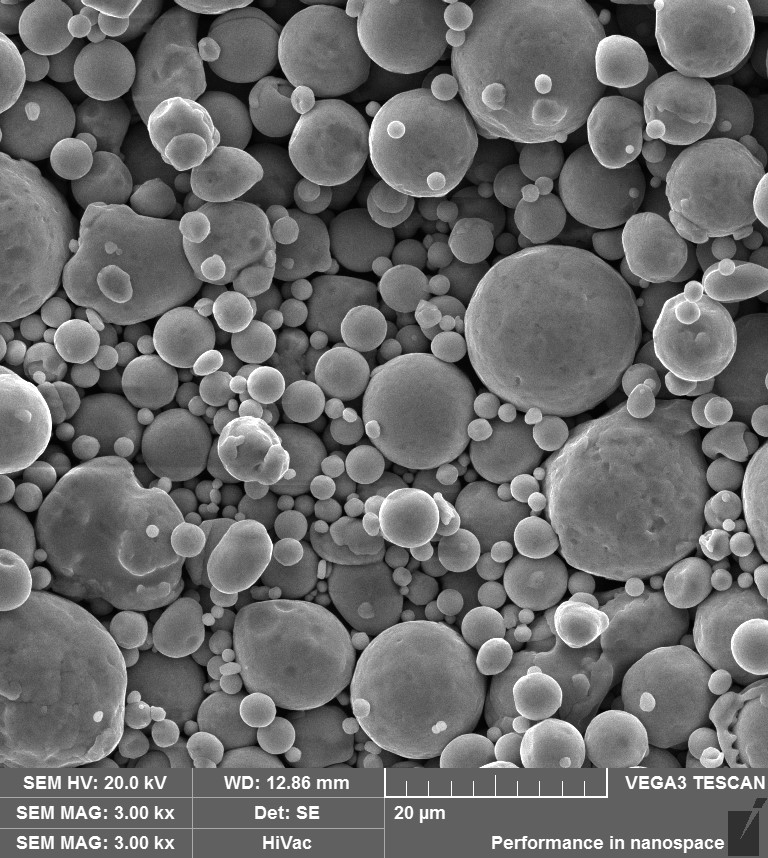
A powder made by gas atomization is not automatically good, and a powder made by a premium route is not automatically necessary. Buyers should focus on measurable results: sphericity, satellite level, oxygen content, flow, particle size stability, and part performance. For dental CoCrMo, gas atomization usually provides the most commercially relevant route because it aligns well with the economics and precision demands of dental additive manufacturing.
This also explains why suppliers with wider portfolios may manufacture or compare CoCrMo alongside [titanium alloy powder grades] or even more specialized [refractory metal powder options] depending on end-use temperature, stiffness, and corrosion requirements.
Applications by Industry
Although the word “dental” narrows the main use case, the alloy family serves multiple adjacent sectors where strength, wear resistance, and corrosion behavior are important. In dentistry, however, the geometry precision and surface-finish requirements are especially demanding.
Dental restorations and prosthetic frameworks
The core market is dental. Gas atomized spherical dental CoCrMo powder is widely used for crown and bridge substructures, removable partial denture frameworks, implant superstructures in appropriate workflows, and custom support components used in digital prosthetics. The material works well where rigid thin sections, stable margins, and polishable surfaces are needed.
Additive manufacturing is particularly effective for batch production of individualized dental parts. A build can contain many unique geometries while still benefiting from a consistent production cycle.
Medical and biomedical-adjacent applications
Outside dentistry, CoCrMo alloys are also used in orthopedic and biomedical contexts because of their wear resistance and corrosion performance. Not every dental powder grade should be assumed interchangeable with implant-grade powders, but the overlap in alloy family explains why medical users remain interested in cobalt-chromium systems produced as spherical AM feedstock.
Tooling, wear parts, and precision industrial components
The same cobalt alloy family also appears in non-dental applications such as wear-resistant inserts, fine precision hardware, and compact corrosion-resistant parts. These markets often value hardness and edge retention more than the fine dental build resolution. As a result, particle-size and certification expectations can differ even when the core chemistry looks similar.
Why dental AM remains the best fit
Among all application areas, dental manufacturing remains especially well matched to this material because part values are high, geometries are customized, and digital workflows are mature. A broader [industrial application summary] shows how powders can serve very different markets, but dental CoCrMo stands out because it sits at the intersection of biocompatibility-aware materials practice, small-part precision, and high-throughput customization.
Comparison with Alternative Materials
Material selection for dental metal AM is a balancing act between rigidity, weight, biocompatibility considerations, corrosion behavior, finishing effort, and total manufacturing cost. CoCrMo often wins when stiffness and wear resistance matter more than low density or easy machining.
| Material | Density (g/cm³) | Typical Strength Level | Printability | Corrosion Resistance | Relative Cost | Typical Best Fit |
|---|---|---|---|---|---|---|
| Gas atomized spherical dental CoCrMo powder | 8.2–8.5 | High | Very good in dental LPBF | Excellent | Moderate to high | Crowns, bridges, denture frameworks, rigid dental structures |
| Ti-6Al-4V powder | 4.4–4.5 | High | Good | Excellent | High | Lightweight medical and dental components needing lower density |
| 316L stainless steel powder | 7.9–8.0 | Moderate | Excellent | Very good | Moderate | General corrosion-resistant AM parts, less common for premium dental frameworks |
| Ni-based dental or high-temperature alloy powder | 8.1–8.6 | Moderate to high | Good | Good to very good | Moderate | Specialized industrial or legacy alloy applications |
| PMMA / resin dental materials | 1.1–1.3 | Low | Not metal AM equivalent | Limited vs. metal | Low | Temporary models, patterns, and non-load-bearing dental uses |
Where CoCrMo has the clearest advantage
CoCrMo is strongest when a dental part must remain stiff, wear resistant, and dimensionally reliable after finishing. It is especially attractive for removable partial denture frameworks and long-span substructures where rigidity matters. Compared with polymers or resin systems, it is a true structural metal rather than a model or temporary solution.
Where titanium or stainless steel may be preferred
Titanium may be preferred when lower density is important or where the application benefits from a different biomechanical profile. Stainless steel is usually easier to process and less costly in general industrial AM, but it is not typically the first choice for high-performance dental frameworks requiring the established cobalt-chromium property set. Nickel-containing systems may also face material-selection constraints depending on the intended dental use and local regulatory expectations.
Reading the comparison correctly
The comparison should not be reduced to one property such as tensile strength. The right material depends on intended indication, powder-bed parameters, laboratory finishing capability, and the level of traceability required by the customer or regulator. For many digital dental workflows, CoCrMo remains the most practical all-round metal powder.
Our Company
Shanghai Truer Technology Co., Ltd was established in 2009 and created its additive manufacturing business in 2019. Operating am-printing.com, the company works across metal powder production and additive manufacturing equipment, including Selective Electron Beam Melting equipment, Plasma Rotating Electrode Process powder-making equipment, and gas atomization-related capabilities. Its published powder portfolio includes TiNi, TiTa, TiAl, TiNbZr, CoCrMo, and broader nickel-based, cobalt-based, titanium-based, copper-based, aluminum-based, and stainless steel spherical metal powders for SLM, SEBM, DED, laser cladding, powder metallurgy, MIM, HIP, cold and hot spraying, welding, and coating. The company also states that it has a joint innovation center for metal 3D printing with laboratories and experts and serves industries including 3C electronics, hand tools, remote control cars, medical, aerospace, and nuclear power; additional background appears on the [company background page] and powder or process discussions can be directed through the [technical contact page].
FAQ
Q1. Is gas atomized spherical dental CoCrMo powder mainly used for laser powder bed fusion?
Yes, that is its most common additive manufacturing use. The fine particle size, high sphericity, and stable flow behavior are well suited to thin-layer dental LPBF systems that produce crowns, bridges, and denture frameworks. Some related CoCrMo powders can also be used in other powder-fed processes, but dental demand is centered on LPBF.
Q2. Why is spherical morphology important in dental CoCrMo powder?
Spherical particles spread more evenly and generally pack more consistently than irregular particles. In dental builds, that helps reduce recoating defects and supports repeatable layer thickness across densely nested small parts. Better powder-bed uniformity often translates into more reliable dimensional accuracy and density.
Q3. What particle size range is typical for gas atomized spherical dental CoCrMo powder?
Common dental AM grades include 10–30 µm, 15–45 µm, and 15–53 µm fractions. These ranges are selected to support fine layer deposition and detailed geometry. The optimal cut depends on the machine, recoater behavior, layer thickness, and the laboratory’s validated parameter set.
Q4. Is gas atomized spherical dental CoCrMo powder biocompatible?
The alloy family is widely used in dental and medical applications because cobalt-chromium-molybdenum systems have established corrosion-resistant and wear-resistant performance. However, biocompatibility is not determined by alloy name alone; it also depends on the exact composition, processing route, cleanliness, finishing condition, and the regulatory framework for the final device. Buyers should therefore review both powder data and finished-part validation requirements.
Q5. How does dental CoCrMo compare with titanium for printed dental parts?
CoCrMo is denser and typically stiffer, which makes it attractive for rigid frameworks and long-span structures. Titanium is lighter and may be preferred in applications where lower density or a different biomechanical profile is important. The better choice depends on indication, design, and the lab’s validated post-processing route.
Q6. What should buyers verify before ordering gas atomized spherical dental CoCrMo powder?
They should review chemistry, particle size distribution, oxygen level, flowability, apparent and tap density, morphology, packaging condition, and reuse guidance rather than relying only on the alloy label. It is also important to confirm that the powder is intended for dental LPBF rather than a broader industrial cobalt application and that traceability documents fit the laboratory’s quality system. In practice, lot-to-lot consistency is often the deciding factor for dependable dental production.