Quick Answer
high-sphericity IN738LC powder is a nickel-based superalloy feedstock designed for additive manufacturing of parts that must keep strength, oxidation resistance, and creep performance at elevated temperature. It is typically chosen when engineers need smoother powder spreading, more stable flow, better packing density, and lower defect risk than irregular or satellite-heavy powder can provide. In practice, it is most relevant for hot-section prototypes, turbine-adjacent hardware, and complex industrial components where print consistency and high-temperature capability matter more than easy processability. (vdm-metals.com)
What Is high-sphericity IN738LC powder
High-sphericity IN738LC powder is the additive-manufacturing form of IN738LC, a precipitation-strengthened nickel-base superalloy from the broader family of cast turbine alloys. The grade is known for high gamma-prime content, which gives it strong hot-strength retention but also makes it more demanding to process than widely used AM alloys such as Inconel 625 or 718. In many programs, the “high-sphericity” qualifier signals that particle shape quality is being treated as a functional requirement, not just a cosmetic powder characteristic. (vdm-metals.com)
The “LC” in IN738LC denotes low carbon compared with earlier IN738 variants. That chemistry adjustment was developed to balance castability, grain-boundary behavior, and environmental resistance while preserving the elevated-temperature strength expected from the alloy family. In the AM context, the grade is attractive because it can bring turbine-class thermal performance into geometries that would be costly or slow to realize by casting alone. (nickelinstitute.org)
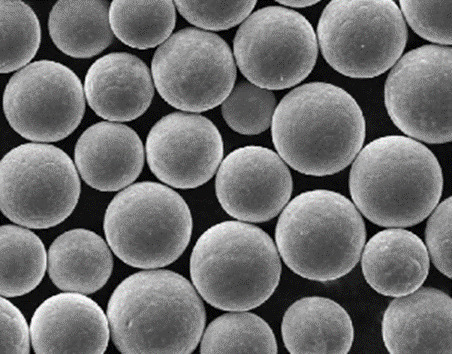
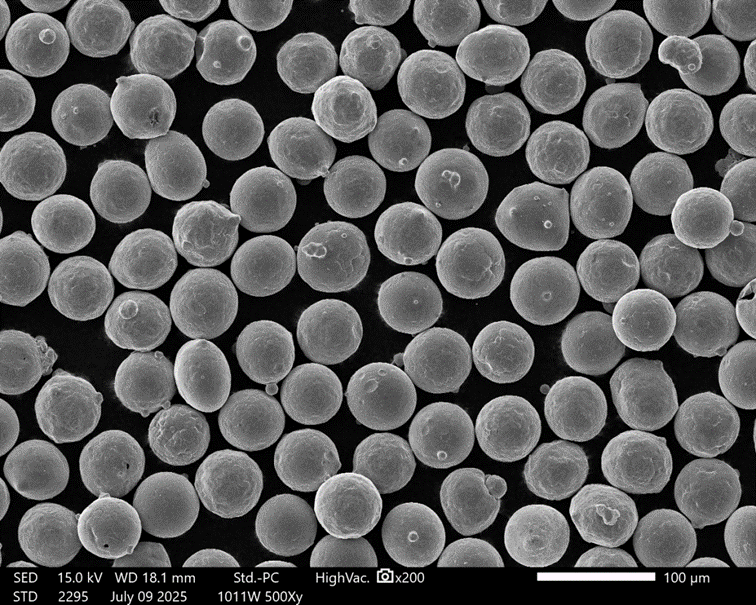
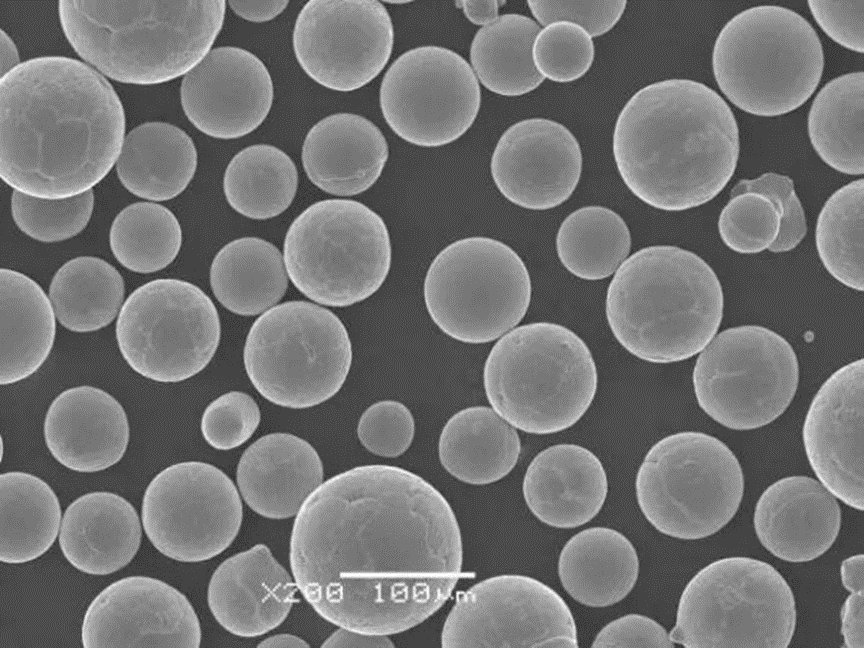
High sphericity matters because powder bed and blown-powder processes depend on predictable particle motion. Spherical particles generally flow more consistently through recoaters, hoppers, and nozzles, pack more efficiently into layers, and reduce the chance that powder-bed variation translates into porosity or local lack-of-fusion defects. That does not eliminate the need for tuned scan strategies, preheat management, HIP, or heat treatment, but it improves the starting condition of the feedstock. (iso.org)
For readers comparing alloy classes rather than one single grade, the broader nickel superalloy powder portfolio helps position IN738LC against more common Ni-based AM feedstocks such as 625 and 718.
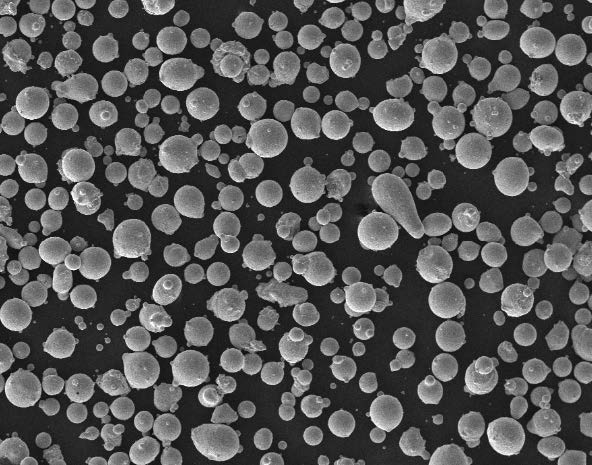
Why Spherical IN738LC Powder Matters in AM
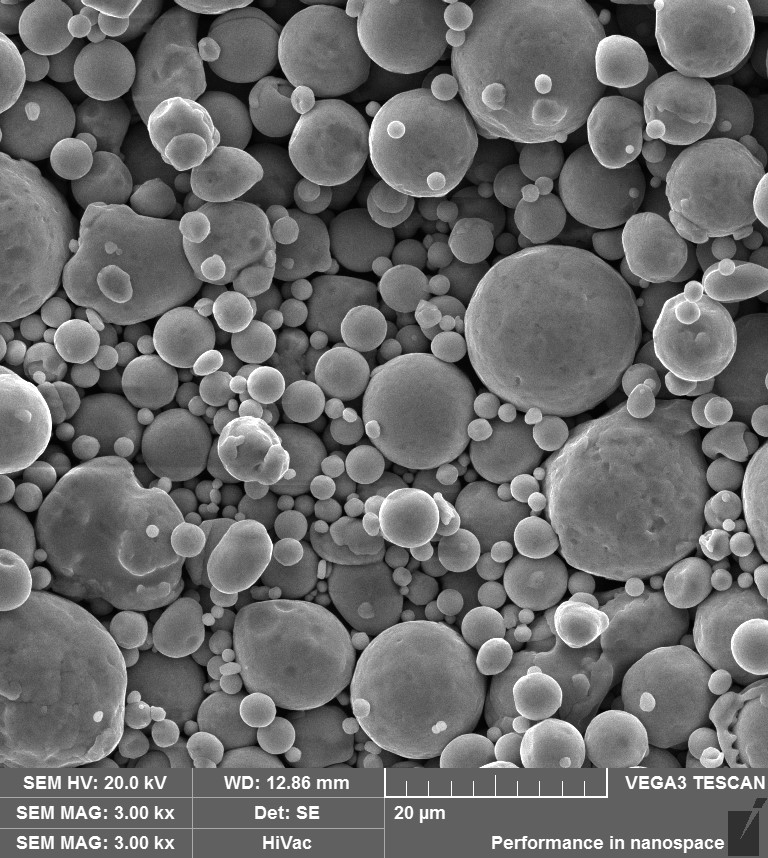
A highly spherical powder fraction usually shows lower interparticle friction and more repeatable spreading than irregular powder with many satellites. That improves layer uniformity, which is especially important for crack-sensitive nickel superalloys where small local thermal differences can affect defect formation.
IN738LC in the Nickel Superalloy Family
IN738LC sits closer to high-temperature turbine alloys than to general-purpose corrosion grades. Its relatively high aluminum and titanium support gamma-prime precipitation, while chromium, cobalt, tungsten, molybdenum, tantalum, niobium, boron, and zirconium contribute to oxidation resistance, hot strength, and grain-boundary stability. (vdm-metals.com)
In powder-bed fusion, particle shape is not just a powder metric; it is a process-stability variable. (nist.gov)
Chemical Composition
IN738LC chemistry is more complex than that of lower-alloy nickel AM powders because its performance depends on balancing matrix strength, gamma-prime precipitation, and grain-boundary behavior. The table below summarizes representative composition ranges widely associated with the grade; actual purchase specifications can vary slightly by producer and qualification route, so chemistry should always be read together with oxygen, nitrogen, sulfur, and residual limits. (vdm-metals.com)
| Element | Typical wt.% Range | Role / Function | AM Relevance |
|---|---|---|---|
| Ni | Balance | Matrix phase for corrosion resistance and high-temperature stability | Base metal for gamma matrix |
| Cr | 15.7–16.3 | Improves oxidation and hot-corrosion resistance | Supports protective oxide formation |
| Co | 8.0–9.0 | Strength retention and phase stability at high temperature | Helps maintain hot hardness |
| W | 2.4–2.8 | Solid-solution strengthening | Raises density and creep resistance |
| Mo | 1.5–2.0 | Additional solid-solution strengthening | Influences hot strength and cracking sensitivity |
| Al | 3.2–3.7 | Main gamma-prime former | Critical to temperature capability |
| Ti | 3.2–3.7 | Gamma-prime strengthening | Increases strength but narrows process window |
| Ta | 1.5–2.0 | Strengthening and carbide-related effects | Valuable in hot-section microstructures |
| Nb | 0.6–1.1 | Supplemental strengthening | Lower than in 718, but still significant |
| C | 0.08–0.13 | Carbide formation and grain-boundary effects | Controlled to manage boundary behavior |
| Zr | 0.03–0.08 | Grain-boundary strengthening | Small addition with large metallurgical effect |
| B | 0.005–0.015 | Grain-boundary cohesion | Tight control is essential in superalloys |
How the Alloying System Works
Nickel provides the continuous matrix that carries the alloy at both room and elevated temperature. Chromium gives the grade its basic oxidation resistance, which is why IN738LC remains relevant for combustor-adjacent and turbine-related duty rather than only general corrosion service. (vdm-metals.com)
Aluminum and titanium are the most important precipitation-strengthening additions because they form the gamma-prime phase, commonly described as Ni(_3)(Al,Ti). A high gamma-prime fraction is the reason IN738LC can outperform easier-to-print nickel grades at higher temperature, but it is also the reason the alloy is more crack-sensitive during laser-based AM. (sciencedirect.com)
Cobalt, tungsten, molybdenum, tantalum, and niobium strengthen the matrix and help retain load-bearing capability under thermal exposure. Boron and zirconium work at very low levels but are still critical, since grain-boundary cohesion can strongly influence creep and cracking response in a superalloy. (nickelinstitute.org)
When teams need a shared vocabulary for alloy-feedstock, powder-bed, and directed-energy workflows, the ISO/ASTM additive manufacturing terminology standard is the reference framework most commonly used across AM documentation. (iso.org)
Physical and Mechanical Properties
A key distinction in this grade is the difference between powder behavior and part behavior. Powder properties determine recoating, feeding, and packing performance, while mechanical properties describe a printed and post-processed component. For IN738LC, published values are usually best treated as typical ranges for well-built, high-density material rather than universal guarantees across every machine, orientation, or heat-treatment route. (pmc.ncbi.nlm.nih.gov)
| Property | Typical Value | Unit | Test Standard / Basis |
|---|---|---|---|
| Density | 8.11 | g/cm³ | Alloy datasheet value at 20 °C |
| Melting range | 1230–1315 | °C | Alloy datasheet value |
| Ultimate tensile strength | 1100–1250 | MPa | Typical AM + HIP/heat-treated range |
| 0.2% yield strength | 850–980 | MPa | Typical AM + HIP/heat-treated range |
| Elongation | 3–8 | % | Typical room-temperature range, process dependent |
| Hardness | 34–42 | HRC | Typical aged / strengthened condition |
| Elastic modulus | 200–220 | GPa | Typical room-temperature engineering value |
| Thermal conductivity | 11–15 | W/m·K | Approximate room-temperature range |
| Oxidation-focused service window | up to about 900 | °C | Application dependent, not a design allowables limit |
Reading IN738LC Property Data Correctly
The most important engineering point is that IN738LC AM powder is selected for retained performance at heat, not for exceptional room-temperature ductility. In room-temperature tensile terms, the alloy can look less forgiving than easier nickel powders, but that comparison misses why the material exists. It is intended for applications where hot strength, creep resistance, and oxidation behavior carry more weight than easy fabrication. (vdm-metals.com)
Mechanical performance in AM depends heavily on crack control and post-processing. Published studies on LPBF and related routes show that IN738LC properties vary with orientation, preheat, scan strategy, recrystallization behavior, and HIP or heat treatment, so the same chemistry can produce meaningfully different results if thermal history changes. (pmc.ncbi.nlm.nih.gov)
Temperature Capability Versus Easier AM Alloys
Compared with 316L stainless steel, IN738LC is clearly a high-temperature specialty alloy rather than a general engineering metal. Compared with Inconel 625, it gives up some process forgiveness in exchange for stronger high-temperature capability. Compared with 718, it typically becomes attractive when the service environment pushes deeper into hot-section territory and the application can tolerate a narrower AM process window. (vdm-metals.com)
Specifications and Available Grades
Powder qualification for this alloy cannot stop at chemistry. Users normally care about particle size distribution, apparent density, tap density, Hall flow, oxygen content, and sphericity because these parameters directly affect layer deposition and, ultimately, finished-part consistency. The most common test methods for free-flowing metal powders are organized around established ASTM powder standards, including the ASTM B212 test method for apparent density. (store.astm.org)
| Supply Form / Grade | Typical PSD | Apparent Density | Tap Density | Hall Flow | Oxygen Content | Sphericity | Typical Cross-Reference |
|---|---|---|---|---|---|---|---|
| Fine LPBF grade | 15–45 µm | 4.4–4.9 g/cm³ | 4.9–5.4 g/cm³ | 15–22 s/50 g | ≤300 ppm typical | Very high, low satellites | ASTM B212 / B213 / B527 / E1019 |
| Standard LPBF grade | 15–53 µm | 4.5–5.0 g/cm³ | 5.0–5.5 g/cm³ | 14–21 s/50 g | ≤300 ppm typical | High sphericity | ASTM powder methods + ISO/ASTM terminology |
| SEBM / EBM grade | 45–105 µm | 4.6–5.1 g/cm³ | 5.1–5.6 g/cm³ | 13–19 s/50 g | ≤350 ppm typical | Coarser spherical cut | ISO/ASTM 52900-aligned AM usage language |
| DED / Cladding grade | 53–150 µm | 4.7–5.2 g/cm³ | 5.2–5.7 g/cm³ | 12–18 s/50 g | ≤400 ppm typical | High flow-oriented morphology | Application-specific powder acceptance plans |
| Chemistry compliance row | Alloy-specific | By lot | By lot | By lot | By lot | By lot | Internal IN738LC spec cross-referenced to common ASTM / ISO / DIN / GB reporting formats |
Particle Size Ranges for High-Sphericity IN738LC Powder
For laser powder bed fusion, 15–45 µm and 15–53 µm are the most familiar commercial cuts because they support thin layers and good packing behavior. Coarser fractions such as 45–105 µm are more typical for electron beam systems, while 53–150 µm is a common range for directed energy deposition and laser cladding, where nozzle feeding matters more than ultra-thin layer formation.
Standards, Tolerances, and Powder Metrics
ASTM B212 is widely used for apparent density, ASTM B527 for tap density, and ASTM B213 for Hall flow, while oxygen and nitrogen are often measured with inert gas fusion methods such as ASTM E1019. In AM purchasing practice, these standards do not create a unique IN738LC part qualification by themselves; instead, they provide a shared measurement system so powder lots can be compared consistently. (store.astm.org)
What Buyers Usually Ask for Beyond Chemistry
A serious incoming-inspection package for high-sphericity IN738LC powder usually includes PSD data, morphology images, flow data, apparent and tap density, oxygen content, and lot traceability. For premium lots, buyers may also ask how sphericity is verified, whether satellite levels are monitored, and how reuse behavior is managed over multiple powder cycles. Studies on reused IN738LC powder show why that matters: even when chemistry is stable, surface condition and defect population can shift with repeated exposure. (pmc.ncbi.nlm.nih.gov)
Where a program spans multiple alloy families, related materials such as titanium alloy powder grades or cobalt-based spherical powders are often screened in parallel because the dominant failure mode may turn out to be wear, weight, or biocompatibility rather than sustained heat.
Manufacturing Process
The route used to make IN738LC powder has a direct effect on particle morphology, gas entrapment, satellite population, and cleanliness. Because the target keyword emphasizes sphericity, the manufacturing method is central to the commercial meaning of the material. A powder can have correct chemistry yet still underperform in AM if its particle shape and internal integrity are inconsistent. (nist.gov)
| Process | Typical Sphericity | Oxygen Pickup Risk | PSD Control | Throughput | Relative Cost | Main Advantages | Main Trade-Offs |
|---|---|---|---|---|---|---|---|
| GA | Good to very good | Low to moderate | Good | High | Moderate | Scalable, broad commercial availability | More satellites and internal defects if poorly controlled |
| VIGA | Very good | Low | Good to very good | Medium to high | Moderate to high | Cleaner melt history, strong consistency | Higher capital and operating complexity |
| EIGA | Very good to excellent | Very low | Good | Medium | High | High purity and strong spherical morphology | Higher cost, lower supply breadth |
| PREP | Excellent | Very low | Moderate after classification | Medium to low | High | Dense particles, minimal contamination, premium shape | Lower throughput, often higher price |
Gas Atomization for IN738LC Powder
Gas atomization breaks a molten stream into droplets using high-velocity inert gas, then rapidly solidifies those droplets into powder. NIST has described gas atomization as the primary source of material for many advanced powder-metallurgy routes, and in AM it remains the most scalable path to commercial spherical metal powder production. When nozzle design, atmosphere control, and melt cleanliness are optimized, GA can produce strong PSD control and good particle roundness for high-temperature superalloys. (nvlpubs.nist.gov)
VIGA and EIGA for Cleaner Superalloy Feedstock
Vacuum induction gas atomization improves atmosphere control and melt cleanliness relative to more basic gas atomization setups. EIGA pushes cleanliness further by avoiding some contamination pathways associated with crucible-based melting routes. For crack-sensitive superalloys such as IN738LC, those advantages can translate into better lot consistency and lower risk of contamination-driven defects. (jme.biam.ac.cn)
PREP and the Pursuit of Very High Sphericity
Plasma Rotating Electrode Process is often associated with dense, smooth, highly spherical particles because droplets are flung from a rotating electrode and solidify rapidly under controlled conditions. That route is attractive when internal soundness and powder morphology justify a higher feedstock cost, especially in premium aerospace or R&D programs where qualification failure is far more expensive than powder itself. (sciencedirect.com)
Process Trade-Offs in Real AM Production
The practical decision is rarely “best process in theory” but “best process for the defect budget, volume, and machine platform.” A high-value prototype program may justify PREP or a premium VIGA/EIGA route, while an industrial production environment may prefer well-controlled gas atomization if it can meet morphology, cleanliness, and consistency targets at larger scale.
Applications by Industry
IN738LC is not a universal AM alloy. It earns attention when elevated-temperature mechanical performance is the first requirement and the geometry also benefits from additive manufacturing. That application logic narrows the field, but it also makes the powder highly relevant in sectors where conventional machining or casting imposes long lead times or strong design limits. (vdm-metals.com)
Aerospace and Turbine Hardware
Aerospace is the clearest home for high-sphericity IN738LC powder. Turbine-adjacent brackets, shrouds, combustor-side hardware, repair geometries, development parts, and low-volume hot-zone components all benefit from a material that can retain strength and oxidation resistance under severe thermal loading. High sphericity is particularly helpful here because it supports more stable powder spreading and lowers one important source of variability during qualification-sensitive builds. (vdm-metals.com)
Energy and Industrial Gas Turbines
Stationary gas turbines and thermal power equipment share many of the same material drivers as aerospace, even if certification pathways differ. Spare parts, geometry revisions, and repair-oriented builds can be good matches for AM when the design must handle hot gas flow, thermal cycling, and long lead-time constraints. (vdm-metals.com)
Oil, Gas, and Thermal Process Equipment
The alloy is less of a general corrosion solution than Inconel 625, but it becomes relevant where high temperature and oxidizing or combustion-derived environments dominate the service profile. In those cases, IN738LC is selected for hot strength and creep resistance rather than for broad wet-corrosion versatility alone. (vdm-metals.com)
Automotive, Motorsport, and Specialized Tooling
Mainstream automotive rarely needs this level of superalloy performance, but motorsport and high-end powertrain development sometimes do. Turbocharger-adjacent fixtures, heat-resistant test hardware, and experimental components are reasonable use cases when thermal exposure is too aggressive for stainless or low-alloy nickel powders. The same logic applies to specialized tooling inserts and thermal test coupons.
Research, Repair, and Process Development
IN738LC is also important in development work because it represents a demanding benchmark alloy for hot-cracking studies, powder reuse analysis, HIP response, and heat-treatment optimization. At the program level, many teams compare it against the industrial AM application sectors served by other powder families before deciding whether the extra process complexity is justified.
Comparison with Alternative Materials
Material selection in metal AM is always a balance among service temperature, corrosion mode, printability, defect tolerance, and cost. IN738LC is compelling when high-temperature strength is the dominant issue, but several alternative powders may be better choices if the design objective changes. (vdm-metals.com)
| Material | Density (g/cm³) | Typical Strength Level | High-Temperature Capability | Relative Printability | Corrosion / Oxidation Resistance | Relative Powder Cost | Typical Reason to Choose |
|---|---|---|---|---|---|---|---|
| high-sphericity IN738LC powder | 8.11 | High | Very high within Ni AM class | Moderate to difficult | Very good oxidation, good hot corrosion | High | Hot-section AM parts and thermal-load retention |
| Inconel 718 powder | 8.19 | Very high | High | Good | Good | Moderate to high | Balanced strength, availability, and easier qualification |
| Inconel 625 powder | 8.44 | Moderate to high | Moderate to high | Very good | Excellent general corrosion resistance | Moderate | Corrosion-led parts with easier AM processing |
| CoCrMo powder | 8.3–8.5 | High | High in wear-oriented service | Good | Very good wear/corrosion behavior | High | Wear, biomedical, and some hot-wear applications |
| 316L stainless steel powder | 7.9–8.0 | Moderate | Limited for true hot-section use | Excellent | Good general corrosion | Low | Cost-sensitive prototyping and non-extreme service |
When IN738LC Beats 718 or 625
If the design problem is sustained heat exposure, creep resistance, or oxidation performance in a turbine-style environment, IN738LC often becomes more attractive than 625 and can justify itself over 718. The reason is straightforward: it was built around a stronger high-temperature precipitation system, even though that same system makes AM processing harder. (vdm-metals.com)
When Another AM Powder Is the Better Fit
If fast qualification, lower cracking risk, and broad machine compatibility are the top priorities, 718 usually starts from a friendlier position. If chemical corrosion is more important than hot strength, 625 often wins. If weight reduction, wear resistance, or heat-transfer performance are dominant instead, titanium, cobalt, or copper alloy powders may be the more rational first screen.
For readers who want a general alloy-family definition rather than a process-focused one, the Wikipedia entry on Inconel alloys offers broad context on how nickel-chromium superalloys are commonly categorized. (en.wikipedia.org)
Our Company
Shanghai Truer Technology Co., Ltd., the company operating am-printing.com, was established in 2009 and created its additive manufacturing business in 2019. Based on the company profile presented on the manufacturer overview page, its activities combine metal AM powder-making equipment and powder supply, with core technologies that include Selective Electron Beam Melting equipment, Plasma Rotating Electrode Process powder-making equipment, and gas atomization-related capabilities. Its stated powder portfolio includes TiNi, TiTa, TiAl, TiNbZr, CoCrMo, and broader nickel-based, cobalt-based, titanium-based, copper-based, aluminum-based, and stainless-steel spherical powders, while the downstream processes and industries served include SLM, SEBM, DED, laser cladding, powder metallurgy, MIM, HIP, spraying, welding, coating, medical, aerospace, nuclear power, 3C electronics, and tooling-related sectors.
FAQ
Q1. Is high-sphericity IN738LC powder better than standard spherical nickel alloy powder for LPBF?
It can be better when the application is limited by heat resistance rather than by ease of printing. Higher sphericity generally improves flow and spreading, but IN738LC still remains more crack-sensitive than easier nickel grades such as 625 or 718. The benefit is most visible when the part must survive sustained elevated-temperature exposure.
Q2. What particle size is typical for high-sphericity IN738LC powder?
For laser powder bed fusion, 15–45 µm and 15–53 µm are common supply ranges. Electron beam and SEBM workflows typically use coarser powder such as 45–105 µm, while DED and cladding applications often shift to 53–150 µm. The optimal cut depends on layer thickness, recoater behavior, and powder-feeding method.
Q3. Why is IN738LC harder to print than Inconel 718?
IN738LC contains a stronger gamma-prime-forming chemistry, especially through aluminum and titanium, which improves high-temperature performance but narrows the processing window. That chemistry increases the alloy’s sensitivity to thermal stress and hot cracking during laser-based AM. As a result, machine parameters, preheat strategy, and post-processing become more critical.
Q4. Does high-sphericity IN738LC powder reduce porosity in finished AM parts?
It can help reduce one important source of porosity by improving packing consistency and powder-bed uniformity. However, final part density still depends on energy input, hatch spacing, scan strategy, atmosphere control, and post-processing such as HIP. Powder quality helps, but it does not replace process development.
Q5. Which industries use high-sphericity IN738LC powder most often?
Aerospace and industrial gas turbine sectors are the most natural users because they prioritize hot strength, oxidation resistance, and creep performance. Secondary use cases appear in motorsport, thermal tooling, repair builds, and development programs where extreme heat makes lower-performance powders unsuitable. It is generally a specialist alloy rather than a broad commodity AM material.
Q6. Should buyers qualify powder morphology separately from chemistry for IN738LC?
Yes. For this alloy, chemistry alone does not capture whether the powder will spread consistently, feed predictably, or maintain low defect risk across multiple builds. Buyers usually review morphology images, PSD, Hall flow, apparent density, tap density, oxygen content, and reuse behavior alongside the chemistry certificate.
Learn more: