Quick Answer
high-sphericity Inconel 718 powder is a nickel-based superalloy feedstock engineered for metal additive manufacturing processes that need stable powder flow, dense packing, and repeatable mechanical performance after heat treatment. It is usually chosen because higher sphericity improves recoating consistency, feeder behavior, and layer uniformity, while Inconel 718 itself delivers a strong balance of strength, corrosion resistance, fatigue performance, and elevated-temperature capability. For aerospace, energy, and industrial AM parts, that combination makes it one of the most practical premium nickel powders in current use.
What Is high-sphericity Inconel 718 powder
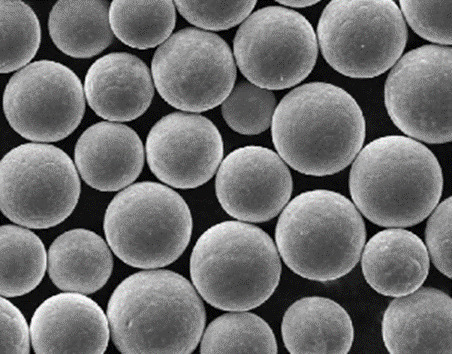
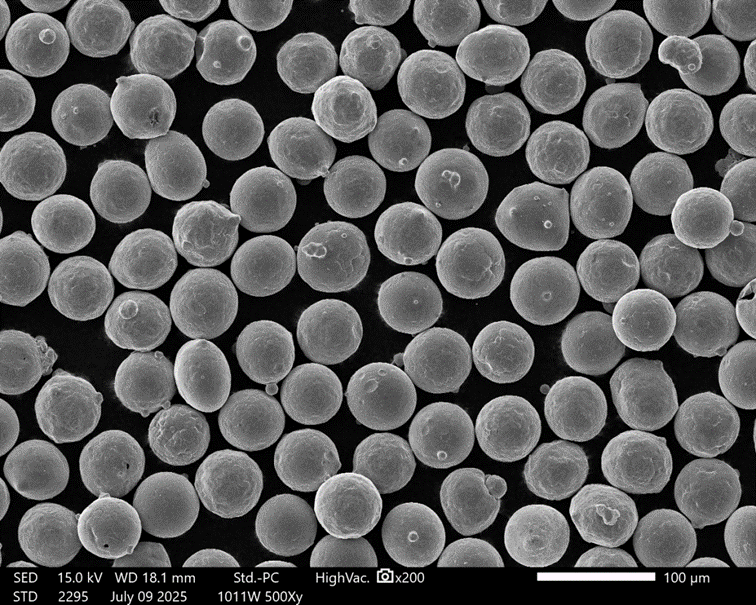
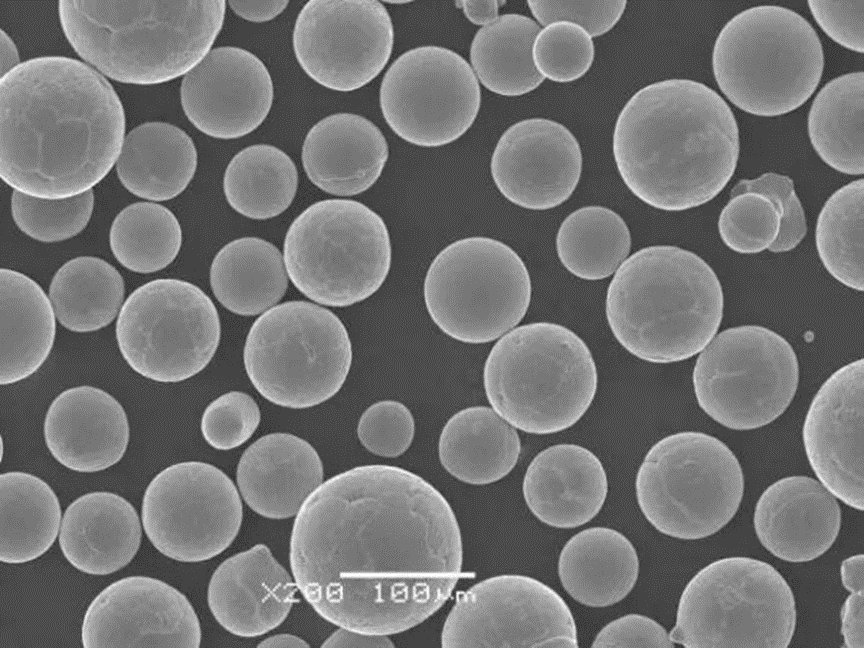
high-sphericity Inconel 718 powder is the spherical powder form of Inconel 718, an age-hardenable nickel-chromium superalloy widely used for structural parts exposed to heat, stress, and corrosive service environments. In additive manufacturing, the term “high-sphericity” does not change the alloy chemistry; instead, it describes powder morphology. That morphology matters because particle roundness strongly influences flowability, apparent density, spread quality, and feeding stability.
Inconel 718 is one of the most established superalloys in metal 3D printing because it balances processability with end-use performance better than many hotter but more crack-sensitive alloys. It is not the highest-temperature nickel superalloy available, but it is among the most manufacturable for powder bed fusion and deposition routes. That balance has made it a reference material across aerospace, energy, and advanced industrial AM programs.
High-Sphericity Inconel 718 Powder in the AM Powder Landscape
Within the wider superalloy family, Inconel 718 sits between general corrosion-led alloys and more specialized turbine-grade materials. It is stronger and more structurally oriented than alloys chosen mainly for chemical resistance, yet it is easier to qualify than several precipitation-hardened alternatives with narrower process windows. That is why engineers often begin with 718 when a nickel superalloy is needed for additive manufacturing.
Why Sphericity Matters in Additive Manufacturing Powder
A powder particle that is closer to a true sphere flows more easily and packs more efficiently than an irregular particle. In powder bed systems, this helps create uniform layers and reduces the chance of recoating disturbance. In directed energy deposition, the same feature supports steadier powder feeding and more predictable catch efficiency.
Distinguishing Features of High-Sphericity Inconel 718 Powder
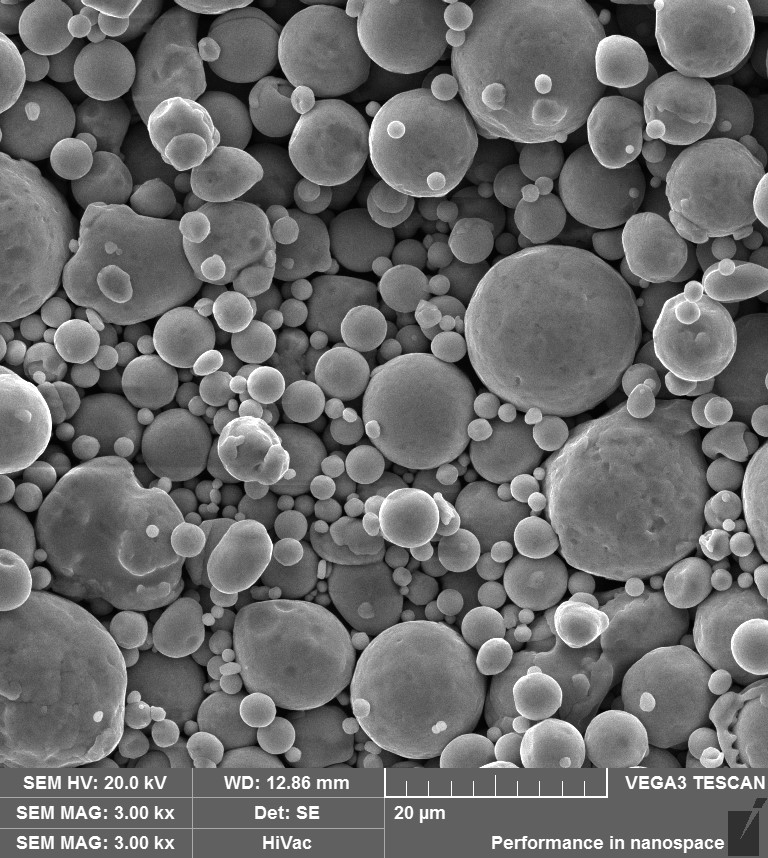
The material is typically associated with low satellite content, smooth particle surfaces, controlled particle size distribution, and low contamination. These features do not replace chemistry control, but they amplify the value of that chemistry by making the feedstock more stable in production. Buyers comparing broader nickel alloy powder options often treat high-sphericity 718 as a preferred grade for repeatable AM qualification.
Why Inconel 718 Became a Benchmark Material
Few metal powders combine strong post-heat-treatment strength, good corrosion resistance, fatigue relevance, weldability, and a large installed knowledge base. Inconel 718 does. That long industrial history matters because AM adoption is not driven by material properties alone; it also depends on how readily a powder can move through printing, heat treatment, machining, inspection, and certification.
In powder-based metal AM, the alloy determines service potential, but the particle shape often determines process consistency.
Chemical Composition
The performance of high-sphericity Inconel 718 powder begins with the alloy chemistry. Nickel forms the base matrix, chromium contributes oxidation and corrosion resistance, and niobium is the most important strengthening addition. Molybdenum, titanium, and aluminum refine the precipitation-hardening response that makes 718 one of the most structurally capable AM nickel alloys.
| Element | Typical wt.% | Metallurgical Role | Functional Effect in Service |
|---|---|---|---|
| Nickel (Ni) | 50.0–55.0 | Matrix phase | Provides the nickel-base structure and supports strength at elevated temperature |
| Chromium (Cr) | 17.0–21.0 | Oxidation and corrosion resistance | Promotes protective oxide formation and general environmental durability |
| Iron (Fe) | Balance | Matrix balance | Maintains alloy framework and contributes to established 718 chemistry |
| Niobium + Tantalum (Nb+Ta) | 4.75–5.50 | Precipitation strengthening | Drives the hardening response central to Inconel 718 performance |
| Molybdenum (Mo) | 2.80–3.30 | Solid-solution strengthening | Improves strength and supports creep-related performance |
| Titanium (Ti) | 0.65–1.15 | Precipitation support | Contributes to age-hardening behavior and mechanical strength |
| Aluminum (Al) | 0.20–0.80 | Precipitation support | Assists strengthening and supports oxidation behavior |
| Cobalt (Co) | ≤1.0 | Minor/residual element | Generally limited and not a primary strengthening mechanism |
| Carbon (C) | ≤0.08 | Carbide control | Influences grain-boundary behavior when kept in the proper range |
| Manganese (Mn) | ≤0.35 | Residual control | Controlled to preserve cleanliness and property consistency |
| Silicon (Si) | ≤0.35 | Residual control | Limited to avoid adverse effects on toughness and ductility |
| Phosphorus / Sulfur (P/S) | Very low | Impurity control | Kept minimal to protect hot workability and structural integrity |
The Hardening Mechanism of Inconel 718 Powder
The most important metallurgical feature is precipitation hardening. After printing, appropriate solution and aging treatments produce strengthening phases within the nickel matrix that sharply improve yield strength and tensile strength. This is why purchasing decisions should consider the full process route rather than only as-built behavior.
Niobium as the Signature Alloying Element
Niobium is the defining addition in Inconel 718. It strongly influences the precipitation sequence and therefore the final mechanical response after heat treatment. Because of that, batch-to-batch chemistry consistency is especially important for buyers who need predictable qualification outcomes.
Chromium and Molybdenum in Harsh Service
Chromium helps the alloy resist oxidation and general corrosion, while molybdenum adds solid-solution strengthening and supports performance under load. Together, these elements explain why 718 is widely used in both elevated-temperature structural service and chemically aggressive industrial environments. It is a practical alloy for applications that need more than simple room-temperature strength.
Why Minor Elements Still Matter
Small amounts of carbon, silicon, manganese, phosphorus, and sulfur can still influence part quality. In high-performance AM, impurity control is not a paperwork detail; it affects ductility, cracking tendency, and consistency. High-quality powder qualification therefore combines chemistry data with morphology, oxygen content, and particle size results instead of evaluating each item in isolation.
Physical and Mechanical Properties
When engineers discuss high-sphericity Inconel 718 powder, they are usually interested in two linked property sets. The first set concerns powder handling, including flow and packing behavior. The second concerns the final printed component, especially density, strength, elongation, hardness, fatigue relevance, and temperature capability after suitable post-processing.
| Property | Typical Value | Unit | Test Standard / Basis |
|---|---|---|---|
| Density | 8.19 | g/cm³ | Typical consolidated alloy reference |
| Solidus temperature | 1260–1336 | °C | Typical alloy reference range |
| Liquidus temperature | 1336–1370 | °C | Typical alloy reference range |
| Ultimate tensile strength | 1240–1510 | MPa | Typical heat-treated AM or wrought-comparable condition |
| 0.2% yield strength | 1030–1280 | MPa | Typical heat-treated AM or wrought-comparable condition |
| Elongation | 10–22 | % | Process and heat-treatment dependent |
| Hardness | 36–45 | HRC | Typical aged condition |
| Elastic modulus | 200–205 | GPa | Room-temperature engineering reference |
| Thermal conductivity | 9.5–11.5 | W/m·K | Approximate room-temperature range |
| Fatigue sensitivity | High relevance | Qualitative | Strongly influenced by porosity and post-processing |
Mechanical Performance of High-Sphericity Inconel 718 Powder Parts
Printed and properly aged Inconel 718 offers high strength with useful ductility, which is a major reason it remains central to aerospace-grade additive manufacturing. Many materials can print dense coupons, but fewer can translate that into robust production properties and workable downstream machining. Inconel 718 continues to stand out because the relationship between process, heat treatment, and final performance is comparatively well understood.
Elevated-Temperature Use and Realistic Limits
The alloy performs well at elevated temperature, but its best-fit range should be described carefully. It is widely used in high-heat structural applications, yet it is not the first choice for the most extreme turbine hot sections, where more specialized superalloys may be selected. Its true advantage is that it provides strong high-temperature capability without becoming excessively difficult to print and qualify.
Hardness, Ductility, and Post-Build Processing
Hardness and tensile strength rise significantly after the proper aging cycle develops the precipitation-hardened microstructure. Ductility, however, remains sensitive to porosity, residual stress, oxygen pickup, and thermal history. That means excellent powder morphology is valuable, but it still must be paired with a validated build strategy and heat-treatment schedule.
Thermal Conductivity and Process Stability
Like other nickel superalloys, Inconel 718 has modest thermal conductivity compared with aluminum and copper materials. Heat remains relatively localized during laser or electron beam melting, which can increase thermal gradients and internal stress. For that reason, scan strategy, support design, baseplate condition, and machine atmosphere remain critical variables even when using premium spherical feedstock.
Why “Typical” Data Needs Process Context
Published data for 718 should always be treated as representative rather than universal. The exact property profile depends on PSD, machine type, build orientation, energy density, stress relief, hot isostatic pressing, and final aging. A premium powder improves consistency, but qualification still belongs to the full manufacturing chain.
Specifications and Available Grades
Specifications for high-sphericity Inconel 718 powder usually combine chemical compliance with powder-behavior metrics. Buyers typically assess particle size distribution, apparent density, tap density, Hall flow, oxygen content, and morphology. Those values determine whether the powder is suitable for laser powder bed fusion, selective electron beam melting, directed energy deposition, or repair-oriented cladding workflows.
| Supply Grade / Standard Basis | Typical PSD | Apparent Density | Tap Density | Hall Flow | Oxygen Content | Sphericity / Morphology | Cross-Reference Use |
|---|---|---|---|---|---|---|---|
| Fine LPBF grade | 15–45 µm | 4.5–4.9 g/cm³ | 5.0–5.6 g/cm³ | 13–18 s/50 g | ≤200 ppm typical | High sphericity, low satellites | Fine-feature laser powder bed fusion |
| Standard LPBF grade | 15–53 µm | 4.6–5.0 g/cm³ | 5.1–5.7 g/cm³ | 13–18 s/50 g | ≤200 ppm typical | Spherical, narrow morphology spread | General powder bed production |
| SEBM grade | 45–105 µm | 4.7–5.1 g/cm³ | 5.2–5.8 g/cm³ | 12–17 s/50 g | ≤250 ppm typical | Stable flow and packing | Selective electron beam melting |
| DED / cladding grade | 53–150 µm | 4.8–5.2 g/cm³ | 5.3–5.9 g/cm³ | 12–17 s/50 g | ≤250 ppm typical | Coarser spherical powder | Directed energy deposition and laser cladding |
| Qualification basis | By lot | By lot | By lot | By lot | By lot | By lot | ASTM / AMS / ISO / DIN / GB cross-reference practice |
Particle Size Distribution for High-Sphericity Inconel 718 Powder
Fine distributions such as 15–45 µm and 15–53 µm are commonly chosen for laser powder bed fusion because they support thinner layers and higher geometric resolution. Coarser ranges such as 45–105 µm or 53–150 µm fit electron beam and deposition routes better because they match thicker layers or powder-fed nozzles. PSD is therefore a process-fit decision, not merely a catalog description.
Why Sphericity and Flow Metrics Matter
The point of using high-sphericity spherical powder is not branding; it is process control. Better particle shape usually improves powder spreading, reduces local bed disturbance, and supports more uniform bulk density. Hall flow, apparent density, and tap density are indirect but useful indicators of how well the powder will behave in real production.
Standards, Terminology, and Cross-References
AM procurement commonly combines internal quality criteria with recognized international terminology and testing concepts. Industry definitions are aligned with ISO/ASTM 52900 terminology, while broader powder testing language is often interpreted through ASTM powder characterization guidance. Aerospace and energy users frequently add their own internal acceptance criteria beyond those general references.
Documentation Expectations
Higher-value AM programs often require more than a chemistry certificate. Typical documentation can include PSD histograms, SEM morphology images, oxygen and nitrogen values, flow test results, and lot traceability. For critical parts, these documents help show whether the powder can support a stable qualification pathway rather than only meeting a nominal alloy name.
Manufacturing Process
The term high-sphericity refers mainly to how the powder is made and classified. Powder production route affects particle roundness, internal porosity risk, satellite content, oxygen pickup, and contamination potential. For Inconel 718, the most common routes discussed are gas atomization, vacuum induction gas atomization, electrode induction gas atomization, and the Plasma Rotating Electrode Process.
| Process | Typical Sphericity | Oxygen Pickup Risk | PSD Control | Throughput | Relative Cost | Main Advantages | Main Trade-Offs |
|---|---|---|---|---|---|---|---|
| Gas Atomization (GA) | Good to very good | Low to moderate | Good | High | Moderate | Scalable supply, wide industrial availability | May show more satellites and broader morphology spread |
| Vacuum Induction Gas Atomization (VIGA) | Very good | Low | Good to very good | Medium to high | Moderate to high | Better atmosphere control and cleaner melting | Higher cost than standard GA |
| Electrode Induction Gas Atomization (EIGA) | Very good to excellent | Very low | Good | Medium | High | Reduced contamination pathways and premium cleanliness | More specialized equipment and capacity |
| Plasma Rotating Electrode Process (PREP) | Excellent | Very low | Moderate to good after classification | Medium to low | High | Very round particles, dense morphology, low satellites | Lower throughput and higher powder cost |
| Specialty plasma routes | Excellent | Very low | Good | Low to medium | High | Premium morphology for demanding programs | Less economical for broad industrial volume |
Gas Atomization for Inconel 718 AM Powder
Gas atomization is the most common commercial route because it balances quality, volume, and cost. Molten alloy is broken into droplets by inert gas jets, then solidified into near-spherical particles. Good gas-atomized 718 powder can perform very well, especially when classification and process control are strong.
PREP and Premium Spherical Powder Morphology
PREP is often selected when users want very high sphericity and low satellite content. In this process, a rotating electrode is melted at its tip by plasma, and centrifugal force throws off droplets that solidify into highly round particles. The resulting powder can offer excellent morphology, though usually at a higher cost and lower throughput than atomized production.
VIGA and EIGA as Cleanliness-Focused Routes
VIGA improves melt-atmosphere control and can reduce contamination risk compared with simpler atomization setups. EIGA goes further by minimizing certain contact pathways before droplet formation. These routes are often favored when users want premium powder cleanliness but still need atomization-style production efficiency.
Choosing a Powder-Making Route
No single route is automatically best for every part family. If the main driver is large-volume availability and cost efficiency, gas atomization is usually preferred. If the main driver is morphology perfection, lower satellite population, and stringent quality control, PREP or premium induction-assisted routes may be more attractive.
Manufacturing Route and End-Use Alignment
Powder-bed fusion, DED, laser cladding, and SEBM do not need exactly the same powder attributes. A route that is ideal for thin-layer production may be excessive for a coarse repair application, and vice versa. When designers move beyond nickel superalloys into other high-performance classes, they often compare with refractory metal powder grades or similarly advanced feedstocks that trade easier printability for more extreme service capability.
Applications by Industry
high-sphericity Inconel 718 powder is used where a combination of structural strength, process repeatability, and environmental resistance matters more than low raw material cost. It is especially relevant for parts that are difficult to machine conventionally or that benefit from topology optimization, internal channels, or repair-oriented AM workflows. In those cases, powder quality becomes part of the risk-management strategy.
Aerospace and Aero-Engine Components
Aerospace is the clearest use case. Inconel 718 is routinely considered for brackets, ducts, manifolds, housings, engine-adjacent hardware, and structural components exposed to elevated temperature and vibration. The alloy’s qualification history makes it a practical choice for serialized AM development where documentation and repeatability are essential.
Energy, Turbomachinery, and Power Systems
In energy applications, the alloy serves turbine-related parts, power hardware, thermal fixtures, and repair scenarios where strength and corrosion resistance must coexist. Additive manufacturing is especially useful for spare parts, geometry recovery, and low-volume complex components. Here, stable powder flow and low contamination can support better deposition consistency and reduced rework.
Oil and Gas Equipment
Oil and gas applications often combine high pressure with corrosive service media and complex geometry. Inconel 718 is useful for tools, valves, housings, and downhole components that must maintain mechanical reliability in aggressive conditions. When the part has a high consequence of failure, more tightly controlled powder morphology becomes easier to justify.
Automotive, Motorsport, and Experimental Hardware
The alloy is rarely used for mass-market automotive production because it is expensive and comparatively dense. However, it is well suited to motorsport turbo hardware, thermal test fixtures, exhaust-adjacent structures, and prototype engine components. In such projects, rapid iteration and reliable heat performance are usually more important than raw material price.
Medical, Tooling, and Adjacent Industrial Uses
Inconel 718 is not a standard implant alloy, but it can appear in specialized industrial tools, instrumentation, and equipment used around regulated sectors. For applications where low density or biocompatibility matters more, engineers often shift toward titanium alloy powder portfolios. For 718, the stronger fit remains high-strength industrial hardware rather than mainstream implant production.
Cross-Process Manufacturing Ecosystems
The same alloy can serve SLM, SEBM, DED, laser cladding, powder metallurgy, and related routes when the PSD is adapted correctly. That versatility matters in organizations that want one alloy family across both new-build and repair workflows. It also aligns with broader industrial AM application sectors where powder selection is tied to several downstream manufacturing processes rather than to a single machine.
Comparison with Alternative Materials
Selecting high-sphericity Inconel 718 powder is rarely about chasing the highest number on a datasheet. The real question is whether it offers the best balance of printability, strength, corrosion resistance, and temperature capability for the intended part. The most relevant alternatives usually include Inconel 625, Hastelloy X, IN939, and CoCrMo.
| Material | Density (g/cm³) | Relative Strength Level | High-Temperature Capability | Relative AM Printability | Corrosion / Oxidation Behavior | Relative Cost | Typical Best-Fit Use |
|---|---|---|---|---|---|---|---|
| high-sphericity Inconel 718 powder | 8.19 | Very high | High | Very good | Very good | High | Structural AM parts needing strength and qualification maturity |
| Inconel 625 powder | 8.44 | Moderate to high | Moderate | Excellent | Excellent general corrosion resistance | Moderate | Corrosion-led AM and cladding applications |
| Hastelloy X powder | 8.2–8.3 | Moderate | High | Good | Excellent oxidation resistance | High | Combustion hardware and furnace components |
| IN939 powder | 8.1–8.2 | High | Very high | Moderate | Very good at elevated temperature | High | Hotter turbine-adjacent components |
| CoCrMo powder | 8.3–8.5 | High | Moderate to high | Good | Very good wear and corrosion resistance | High | Wear-critical industrial and medical-adjacent parts |
High-Sphericity Inconel 718 Powder Versus Inconel 625
Inconel 625 is often the easier choice when general corrosion resistance is the main priority and extremely high strength is unnecessary. It is highly regarded for process tolerance and broad usability. Inconel 718 becomes the stronger option when the design case is structurally demanding and heat-treatment response is central.
Compared with Hastelloy X and IN939
Hastelloy X is strong in oxidation-heavy combustion environments, while IN939 is more specialized for hotter service. Both can outperform 718 in narrower thermal scenarios, but they also tend to be more application-specific. Inconel 718 remains attractive because it avoids becoming overly specialized while still offering excellent mechanical capability.
Compared with Cobalt-Based Powders
Cobalt-based alloys can be superior in wear, hot corrosion, and tribological contact conditions. However, they are not always the first choice for highly loaded structural AM parts where the supply chain already has broad experience with 718. Readers weighing that trade-off often review cobalt-based powder families alongside nickel superalloys to separate structural needs from wear-led requirements.
Material Selection Should Include Process Economics
The best alloy is not always the strongest or hottest one. Qualification effort, support removal, heat treatment, inspection burden, powder reuse behavior, and machining cost can all change the real economics. For terminology and general material background, the Inconel 718 reference overview and NIST additive manufacturing materials research help frame the relationship between alloy choice and process capability.
Our Company
Shanghai Truer Technology Co., Ltd., which operates am-printing.com, was established in 2009 and created its additive manufacturing business in 2019. Based on the information presented on its company information page, the company integrates 3D printing powder-making equipment and services with metal powder supply, including Selective Electron Beam Melting equipment, Plasma Rotating Electrode Process powder-making equipment, and gas atomization-related capabilities. Its stated portfolio includes TiNi, TiTa, TiAl, TiNbZr, CoCrMo, and spherical nickel-based, cobalt-based, titanium-based, copper-based, aluminum-based, and stainless steel powders for SLM, SEBM, DED, laser cladding, powder metallurgy, MIM, HIP, cold and hot spraying, welding, and coating in industries such as aerospace, medical, nuclear power, 3C electronics, hand tools, and remote control cars.
FAQ
Q1. What does “high-sphericity” mean for Inconel 718 powder?
It refers to how round and regular the individual powder particles are. Higher sphericity usually improves flowability, packing behavior, and layer uniformity during additive manufacturing. It is mainly a powder morphology term rather than a change in alloy chemistry.
Q2. Is high-sphericity Inconel 718 powder better than standard gas-atomized powder?
Not always, but it can be better for applications that are highly sensitive to flow stability, low satellite content, and consistency between lots. Standard gas-atomized powder can still perform very well when produced under strong process control. The right choice depends on qualification level, part criticality, and budget.
Q3. Which particle sizes are commonly used for high-sphericity Inconel 718 powder?
For laser powder bed fusion, common ranges are 15–45 µm and 15–53 µm. For SEBM, DED, or laser cladding, coarser cuts such as 45–105 µm or 53–150 µm are more typical. The correct PSD depends on the machine, layer thickness, and powder delivery method.
Q4. Does high-sphericity Inconel 718 powder require heat treatment after printing?
Yes, in most industrial workflows it does. Stress relief, solution treatment, and aging are typically required to develop the precipitation-hardened microstructure that gives Inconel 718 its full engineering value. As-built properties alone are usually not enough for final qualification.
Q5. Which industries benefit most from high-sphericity Inconel 718 powder?
Aerospace, energy, oil and gas, motorsport, and advanced industrial manufacturing are the strongest fits. These sectors value the alloy’s balance of strength, corrosion resistance, and established AM experience. High-sphericity powder is especially relevant where consistency and repeatability are critical.
Q6. What should buyers verify first when sourcing high-sphericity Inconel 718 powder?
The first checks should be chemistry, particle size distribution, oxygen content, Hall flow, apparent density, tap density, and morphology. Buyers should then confirm lot traceability and process fit for the specific AM route being used. For critical parts, powder documentation should be reviewed together with downstream build and heat-treatment qualification.