Quick Answer
hollow-free Inconel 738LC powder is a nickel-based superalloy feedstock engineered for additive manufacturing of parts that must retain strength, oxidation resistance, and creep performance at elevated temperature. It is chosen for AM parts when designers need dense, spherical powder with low internal porosity, stable flow, and high-temperature capability beyond many stainless steels or lower-alloy nickel powders. In practice, it is most relevant for turbine-adjacent hardware, hot-section prototypes, repair builds, and other geometrically complex components where thermal exposure is severe.
What Is hollow-free Inconel 738LC powder
hollow-free Inconel 738LC powder is a spherical metal powder version of Inconel 738LC, a precipitation-strengthened nickel-base superalloy derived from the broader cast superalloy family used in high-temperature service. The “LC” designation means low carbon relative to earlier 738 variants, which helps balance castability, microstructural stability, and hot-corrosion resistance while reducing sensitivity to certain carbide-related issues.
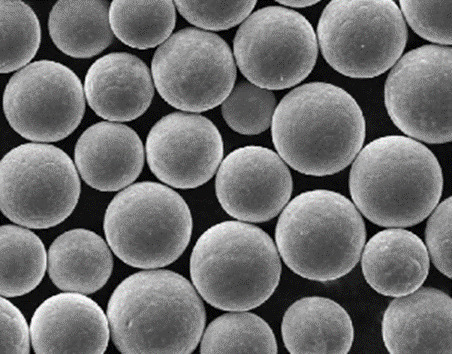
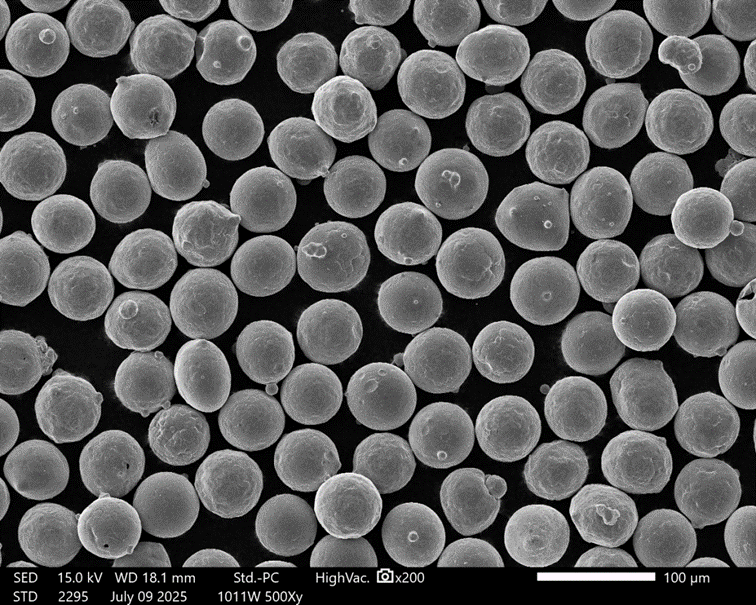
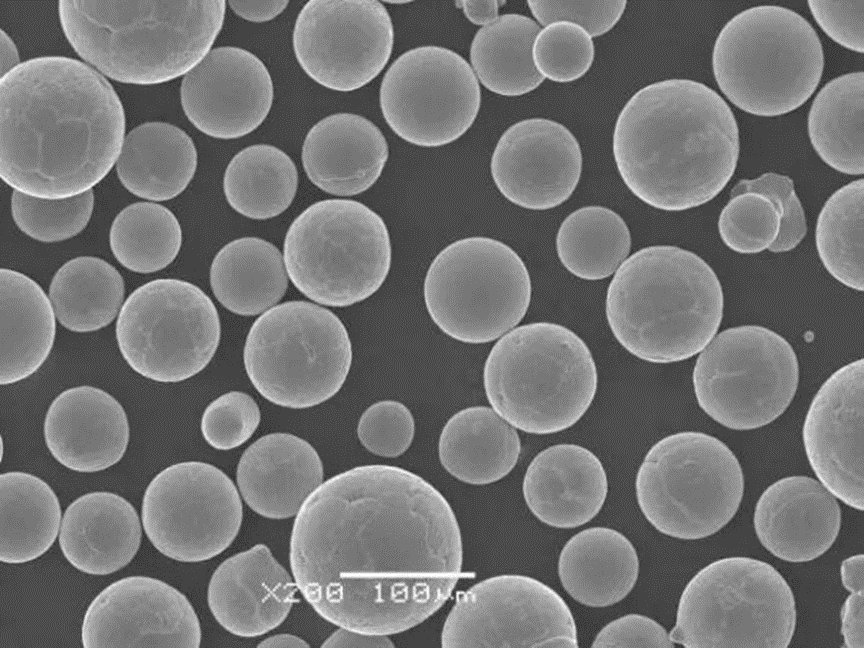
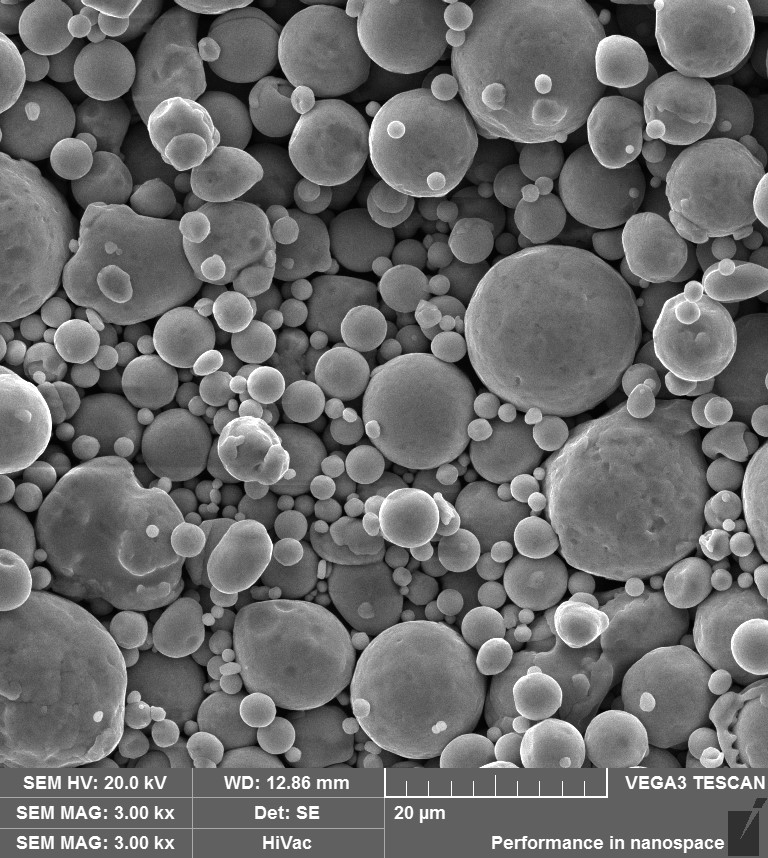
In powder form, the phrase hollow-free Inconel 738LC powder refers to particles intentionally produced with minimal internal voids, satellites, or gas-filled shells. That matters in metal AM because hollow particles can reduce apparent density, destabilize powder spreading, change laser absorption behavior, and raise the risk of pores remaining in the finished part. For laser powder bed fusion, electron beam processes, and some directed energy deposition workflows, particle integrity is not just a powder-quality detail; it directly affects build consistency.
Within the nickel-superalloy landscape, Inconel 738LC sits closer to high-gamma-prime turbine materials than to more broadly printable grades such as Inconel 625 or 718. It contains relatively high aluminum and titanium for precipitation strengthening, plus chromium for oxidation resistance and cobalt, tungsten, tantalum, and molybdenum for hot-strength support. Those same alloying choices make it attractive for demanding thermal environments and more challenging to process than general-purpose AM nickel powders.
A useful way to think about the grade is this: 718 is often the default for balanced printability and strength, while 738LC is considered when service temperature and creep resistance move higher and the application justifies tighter process control. In that sense, hollow-free powder quality becomes part of the alloy-selection logic, not merely a purchasing specification.
In high-temperature AM, powder integrity is one of the first controls on final-part integrity.
For readers comparing alloy families, the broader nickel alloy powder range provides context on where Inconel 738LC fits relative to more common Ni-based AM feedstocks.
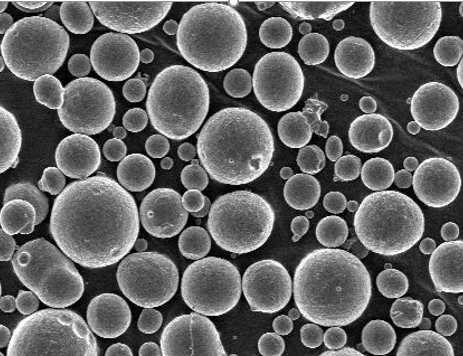
Why the Hollow-Free Requirement Matters
A hollow particle can collapse during recoating, melt unpredictably under the beam, or contribute trapped gas to the melt pool. By contrast, dense, near-solid particles generally support better packing, more predictable flow, and lower variability between powder lots.
For a superalloy as crack-sensitive as 738LC, every variable that reduces thermal inconsistency helps. Hollow-free morphology does not eliminate the need for optimized scan strategy, preheat, HIP, or heat treatment, but it improves the starting condition of the feedstock and reduces one avoidable source of porosity.
Distinguishing Features Versus Other Nickel AM Powders
Compared with Inconel 625, 738LC trades some printability and ductility for stronger elevated-temperature performance. Compared with Inconel 718, it typically offers better hot-section potential but less forgiving processing. Compared with cobalt-base alternatives, it remains attractive where nickel-superalloy oxidation behavior, turbine familiarity, and gamma-prime strengthening are decisive.
Chemical Composition
The exact chemistry of Inconel 738LC may vary slightly by specification or producer, but the composition window below reflects a representative AM powder target aligned with commonly cited wrought/cast grade chemistry. Powder suppliers normally control not only major alloying elements, but also oxygen, nitrogen, sulfur, and residuals because those trace values influence cracking tendency, cleanliness, and post-build ductility.
| Element | Typical wt.% Range | Metallurgical Role | Notes for AM Powder |
|---|---|---|---|
| Ni | Balance | Matrix phase; supports high-temperature strength and corrosion resistance | Base element for gamma matrix |
| Cr | 15.5–16.5 | Oxidation and hot-corrosion resistance | Helps protective oxide formation |
| Co | 8.0–9.0 | Strength retention and phase stability at elevated temperature | Supports hot hardness |
| W | 2.4–2.8 | Solid-solution strengthening | Raises density and high-temp strength |
| Mo | 1.5–2.0 | Solid-solution strengthening and creep support | Excess can reduce weldability |
| Al | 3.2–3.7 | Gamma-prime precipitation former | Critical to high-temperature capability |
| Ti | 3.2–3.7 | Gamma-prime precipitation former | Boosts strength, but can raise crack sensitivity |
| Ta | 1.5–2.0 | Strengthening and carbide stabilization | Valuable in hot-section alloys |
| Nb | 0.6–1.1 | Supplemental strengthening | Typically lower than in 718 |
| C | 0.08–0.13 | Carbide formation and grain-boundary effects | “LC” means controlled low-carbon chemistry |
| Zr | 0.03–0.08 | Grain-boundary strengthening | Small additions have outsized effects |
| B | 0.005–0.015 | Grain-boundary cohesion | Tight control is essential |
Role of the Key Alloying Elements
Nickel forms the continuous matrix and allows the alloy to retain useful strength after long exposure to heat. Chromium gives the grade its basic oxidation and corrosion resistance, which is why 738LC remains relevant in combustor-adjacent and turbine-related service.
Aluminum and titanium are the central precipitation-strengthening elements. They promote a high volume fraction of gamma-prime, the ordered intermetallic phase that gives this alloy family its temperature capability. That same strengthening mechanism also narrows the processing window, so powder chemistry control is especially important.
Cobalt, tungsten, molybdenum, and tantalum enhance hot strength through a combination of solid-solution and microstructural effects. The trade-off is higher alloy complexity, higher raw-material cost, and greater sensitivity to thermal history during printing and post-processing.
Controlled carbon, zirconium, and boron affect carbides and grain boundaries. In AM, these small additions matter because residual stress, rapid solidification, and reheating cycles can amplify grain-boundary weakness if chemistry drifts outside target.
For readers who need formal AM vocabulary, the ISO/ASTM 52900 terminology page is useful when aligning powder and process language across suppliers and end users.
Physical and Mechanical Properties
Powder data and part data should not be mixed without explanation. Powder properties describe handling and build behavior, while mechanical properties describe a printed, densified, and usually heat-treated component. For Inconel 738LC, the part-property values below are best treated as typical ranges for near-fully-dense material after optimized AM processing plus appropriate post-treatment, not as guaranteed minimums for every build orientation.
| Property | Typical Value | Unit | Test Standard / Basis |
|---|---|---|---|
| Theoretical density | 8.10–8.15 | g/cm³ | Calculated from alloy chemistry |
| Solidus temperature | 1230–1240 | °C | Typical alloy data |
| Liquidus temperature | 1310–1330 | °C | Typical alloy data |
| Ultimate tensile strength | 1100–1250 | MPa | Typical RT, post-HIP/heat treatment |
| 0.2% yield strength | 850–980 | MPa | Typical RT, post-HIP/heat treatment |
| Elongation | 3–8 | % | Typical RT, process dependent |
| Hardness | 35–42 | HRC | Typical aged condition |
| Thermal conductivity | 11–15 | W/m·K | Approx. room-temperature range |
| Elastic modulus | 200–220 | GPa | Typical room-temperature value |
| Oxidation service capability | Up to about 850–980 | °C | Application dependent, not a design limit |
Interpreting Mechanical Performance in AM
The chief value of high-temperature nickel superalloy powder is not room-temperature ductility; it is retained strength under thermal load. Inconel 738LC performs best when the application prioritizes creep resistance, oxidation behavior, and hot hardness over ease of fabrication.
That said, as-built tensile properties can be inconsistent if process parameters are not tightly tuned. Like many gamma-prime-rich alloys, 738LC is more crack-sensitive than 625 or 718, especially in laser systems with insufficient preheat or suboptimal energy density. The result is that post-build HIP and heat treatment are commonly used to close residual porosity, stabilize the microstructure, and bring properties into a more reliable range.
Thermal Stability and Service Logic
The alloy was originally valued for gas-turbine service because it resists softening and oxidation at temperatures where many precipitation-hardened steels are no longer competitive. In powder-based AM, that same service logic still applies, but successful deployment depends on linking powder quality to scan strategy, support design, stress management, and heat treatment.
For engineers screening materials at the concept stage, the ASM overview of nickel superalloys is a useful starting point for how precipitation-strengthened Ni alloys are typically positioned against steels and cobalt systems.
Specifications and Available Grades
Particle size distribution, morphology, cleanliness, and flow performance matter as much as nominal chemistry. A powder can be chemically correct and still perform poorly if it contains excessive satellites, wide PSD tails, irregular shapes, or internal hollows. That is why powder specifications for AM normally combine chemistry limits with morphology and processability metrics.
| Supply Form / Grade | Typical PSD | Apparent Density | Tap Density | Hall Flow | Oxygen Content | Sphericity / Morphology | Standards Commonly Referenced |
|---|---|---|---|---|---|---|---|
| Fine LPBF grade | 15–45 µm | 4.4–4.9 g/cm³ | 4.9–5.4 g/cm³ | 15–22 s/50 g | ≤ 300 ppm typical | High sphericity, low satellites, hollow-minimized | ASTM B212, ASTM B527, ASTM B213, ASTM E1019 |
| Standard LPBF / SLM grade | 15–53 µm | 4.5–5.0 g/cm³ | 5.0–5.5 g/cm³ | 14–21 s/50 g | ≤ 300 ppm typical | Dense spherical powder | ASTM/ISO powder characterization suite |
| EBM / SEBM grade | 45–105 µm | 4.6–5.1 g/cm³ | 5.1–5.6 g/cm³ | 13–19 s/50 g | ≤ 350 ppm typical | Coarser spherical cut for stable layer spreading | ISO/ASTM 52900, internal PSD control plans |
| DED / Laser Cladding grade | 53–150 µm | 4.7–5.2 g/cm³ | 5.2–5.7 g/cm³ | 12–18 s/50 g | ≤ 400 ppm typical | Robust flow, lower fines fraction | Application-specific acceptance criteria |
PSD Ranges for Different AM Platforms
The fine and standard cuts are most relevant to laser powder bed fusion, where layer thickness and recoater dynamics require tight control over fines and coarse tails. A 15–45 µm or 15–53 µm cut is common when high packing consistency and thin layers are needed.
For electron beam systems, a coarser 45–105 µm cut is often preferable because powder spreading and elevated build temperatures differ from laser-bed conditions. Directed energy deposition and laser cladding usually shift further coarser to improve powder feeding behavior.
Standards and Cross-Reference Practice
There is no single globally dominant AM alloy specification dedicated solely to Inconel 738LC powder in the way some titanium implant grades have highly specific designations. In practice, suppliers cross-reference general AM terminology, powder test methods, and chemistry acceptance plans using the ASTM materials standards catalog together with internal alloy control specifications.
Users should ask not only for chemistry certificates, but also for PSD method, oxygen test method, Hall flow repeatability, apparent and tap density, and microscope images showing satellite level and internal soundness. When the powder is described as hollow-free, clarification should include whether the claim is based on metallography, CT sampling, or process capability history.
Typical Supply Expectations
A high-quality batch of hollow-free Inconel 738LC powder should show narrow PSD control, strong lot-to-lot consistency, minimal oversized particles, and low entrapped-gas defects. For reuse in closed-loop powder management, resistance to oxygen pickup and fines generation during cycling is also relevant.
Where a project spans multiple alloy families, related feedstocks such as titanium alloy powder options or cobalt alloy powder selections are often evaluated in parallel because application temperature, wear mode, and corrosion mechanism can change the optimal material choice.
Manufacturing Process
The way 738LC powder is made strongly influences its morphology, cleanliness, and internal integrity. A hollow-free particle population is easier to achieve when melt quality, gas control, atomization energy, and downstream sieving are all optimized. Among the main routes, gas atomization is the most common high-throughput method, while PREP is often associated with exceptionally spherical, clean powder.
| Process | Typical Particle Shape | Hollow / Gas Entrapment Risk | Oxygen Pickup Risk | PSD Control | Throughput | Relative Cost | Best-Fit Use Case |
|---|---|---|---|---|---|---|---|
| GA (Gas Atomization) | Spherical to near-spherical | Moderate; depends on melt and atomization control | Low to moderate | Good | High | Moderate | Broad industrial AM powder production |
| VIGA (Vacuum Induction Gas Atomization) | Spherical, cleaner melt history | Lower than open-melt GA | Low | Good to very good | Medium to high | Moderate to high | Reactive or premium superalloy powder |
| EIGA (Electrode Induction Melting Gas Atomization) | Very spherical, high purity | Low | Very low | Good | Medium | High | Clean powder for demanding AM applications |
| PREP (Plasma Rotating Electrode Process) | Highly spherical, dense particles | Very low | Very low | Moderate; narrower around selected cuts after classification | Medium to low | High | Premium powder where morphology and cleanliness matter most |
Gas Atomization for Inconel 738LC AM Powder
Conventional gas atomization melts the alloy and breaks the stream into droplets using high-velocity inert gas. When well controlled, it produces spherical powder at commercially useful scale with acceptable chemistry retention and good flow behavior. However, poor process control can increase satellites, irregular particles, and internal porosity.
Vacuum-assisted variants such as VIGA reduce contamination and improve melt cleanliness. That can be valuable for 738LC because gamma-prime-rich alloys are less tolerant of defects than more forgiving nickel grades.
PREP for Dense Spherical Powder
PREP uses a rotating electrode melted by plasma, throwing off droplets by centrifugal force. The process is known for producing highly spherical, dense particles with low contamination and low hollow-particle incidence. The trade-off is higher cost and, in many cases, lower throughput than gas atomization.
For users prioritizing powder integrity over tonnage economics, PREP can be an attractive route. It is especially relevant in programs where defect sensitivity is high and qualification costs outweigh raw powder price.
VIGA and EIGA Trade-Offs
VIGA and EIGA occupy the middle ground between standard gas atomization and PREP. They can improve cleanliness and consistency, especially for reactive or premium alloys, while retaining better productivity than some ultra-premium routes.
For a 738LC program, process selection often comes down to three questions: how crack-sensitive is the build geometry, how strict is the defect budget, and how expensive is qualification failure. If the answer to all three is “very,” premium powder routes are easier to justify.
Applications by Industry
Because Inconel 738LC is a hot-section superalloy, its AM relevance is concentrated in applications where temperature exposure, oxidation, and creep risk dominate the material decision. It is rarely the cheapest powder in the room, but cost is not the first filter in these sectors.
Aerospace
Aerospace is the clearest use case for hollow-free Inconel 738LC powder. Turbine-adjacent brackets, combustor-side hardware, shrouds, guide features, repair forms, and development prototypes all benefit from a material that retains strength at elevated temperature. AM is especially attractive for parts with internal channels, low-volume production, or geometry updates that would be expensive in investment casting tooling.
For fully qualified production, designers still need to prove defect tolerance, crack control, and post-processing response. Yet in prototype and low-volume aerospace work, the alloy fills an important space between easy-to-print nickel grades and conventionally cast hot-section alloys.
Energy and Industrial Turbomachinery
Stationary gas turbines and thermal power equipment share many of the same material drivers. Components exposed to hot gases, cyclic temperature changes, and oxidative environments often need more than general stainless performance. In these cases, 738LC can be evaluated for small complex components, repair builds, or spare-part strategies where lead time matters.
Oil and Gas
The alloy is not a universal oil-and-gas answer, but it can be relevant where elevated temperature combines with corrosive combustion or process gases. Compared with some corrosion-focused nickel grades, its selling point is hot strength rather than broad wet-corrosion versatility. That distinction matters when selecting between 625, 718, and 738LC.
Automotive and Motorsport
Mainstream automotive rarely needs this level of superalloy performance, but turbocharger-adjacent motorsport hardware, high-temperature test fixtures, and experimental powertrain components may justify it. AM also helps when a racing or development program wants multiple geometry iterations without hard tooling.
Tooling, Repair, and Development Programs
Beyond end-use parts, 738LC powder can support specialized tooling inserts, thermal test coupons, repair preforms, and research specimens. These uses are important because they let engineers evaluate hot-cracking behavior, heat-treatment response, and oxidation performance before committing to a larger qualification path.
Across sectors, application choice should follow service temperature and failure mode first. If the dominant concern is heat transfer rather than hot strength, copper alloy powder materials may be more relevant; if the concern is ultrahigh-temperature refractory exposure, designers may instead compare against refractory metal powder solutions.
Comparison with Alternative Materials
Material selection in AM is always a trade-off among printability, service temperature, defect tolerance, and cost. Inconel 738LC performs strongly at elevated temperature, but engineers should compare it with more conventional AM alloys before locking the specification.
| Material | Density (g/cm³) | Typical RT Strength Level | High-Temperature Capability | Relative Printability | Corrosion / Oxidation Resistance | Relative Powder Cost | Typical Reason to Choose |
|---|---|---|---|---|---|---|---|
| hollow-free Inconel 738LC powder | 8.1 | High | Very high for Ni AM alloy class | Moderate to difficult | Very good oxidation, good hot corrosion | High | Hot-section strength and creep-focused AM parts |
| Inconel 718 powder | 8.19 | Very high | High, but generally below 738LC at hottest service | Good | Good | Moderate to high | Balanced strength, availability, and printability |
| Inconel 625 powder | 8.44 | Moderate to high | Moderate to high | Very good | Excellent general corrosion and oxidation | Moderate | Easier printing and corrosion-led applications |
| CoCrMo powder | 8.3–8.5 | High | High, especially wear-focused | Good | Very good wear/corrosion behavior | High | Wear, biomedical, and some hot/wear environments |
| 316L stainless powder | 7.9–8.0 | Moderate | Limited for true hot-section use | Excellent | Good general corrosion | Low | Cost-sensitive prototyping and non-extreme service |
When 738LC Outperforms 718 or 625
If the design envelope is dominated by sustained high temperature, 738LC usually becomes more attractive than 625 and can outperform 718 in the hottest service bands. The price paid is a tighter processing window and greater cracking sensitivity during AM.
In other words, engineers do not usually adopt hollow-free Inconel 738LC powder because it is easy; they adopt it because lower-alloyed powders may not survive the intended thermal environment long enough. That is a very different selection logic from general corrosion service.
When a Different Powder Is the Better Choice
If the build must be printed quickly with low risk and wide machine compatibility, 718 is often the more practical choice. If chloride or general chemical corrosion matters more than hot strength, 625 may be better aligned. If the operating requirement is biocompatibility or wear rather than turbine heat, CoCrMo or titanium powders may be more rational starting points.
A simple rule helps: choose 738LC when temperature capability is the main problem to solve, not when ease of printing is the main procurement goal. For background on the alloy family itself, the Wikipedia overview of Inconel alloys is a useful high-level reference.
Our Company
Shanghai Truer Technology Co., Ltd., the company operating am-printing.com, was established in 2009 and created its additive manufacturing business in 2019. The company works across metal AM powder-making equipment and powder supply, with core technologies that include Selective Electron Beam Melting equipment, Plasma Rotating Electrode Process powder-making equipment, and gas atomization-related capabilities. Its powder portfolio includes nickel-based, cobalt-based, titanium-based, copper-based, aluminum-based, stainless steel, and specialty alloy powders such as TiNi, TiTa, TiAl, TiNbZr, and CoCrMo. According to the company profile on the corporate background page, its operating scope also covers testing, customization, scale manufacturing support, and end uses spanning SLM, SEBM, DED, laser cladding, powder metallurgy, MIM, HIP, spraying, welding, and coating for sectors including medical, aerospace, nuclear power, consumer electronics, and tools.
FAQ
Q1. Is hollow-free Inconel 738LC powder better than standard Inconel 718 powder for 3D printing?
Not universally. It is usually better only when the part must maintain strength and oxidation resistance at higher sustained temperatures than 718 can comfortably handle. For routine AM production, 718 is often easier to print and qualify.
Q2. Why does hollow-free particle morphology matter in Inconel 738LC powder?
Dense particles generally pack more consistently, flow more predictably, and reduce the chance that trapped gas contributes to porosity in the finished build. In a crack-sensitive superalloy such as 738LC, lowering one source of process variability can make qualification easier.
Q3. Which AM processes can use hollow-free Inconel 738LC powder?
It can be used in laser powder bed fusion, electron beam powder bed processes, and some directed energy deposition workflows when the PSD is matched to the equipment. Process development is usually more demanding than for 625 or 718 because preheat, scan strategy, and post-processing have a larger influence on crack control.
Q4. What particle size is typical for hollow-free Inconel 738LC powder?
For LPBF systems, 15–45 µm and 15–53 µm are common commercial cuts. EBM-grade material is often coarser, such as 45–105 µm, while DED and cladding grades may run 53–150 µm for improved feeding behavior.
Q5. Does Inconel 738LC powder always require HIP and heat treatment after printing?
Not always, but it commonly does when the application is structural or high temperature. HIP helps close residual internal porosity, and subsequent heat treatment is used to develop the intended gamma-prime-strengthened microstructure and improve property consistency.
Q6. Which industries most often use hollow-free Inconel 738LC powder?
Aerospace and industrial gas turbine programs are the most natural fits because they value high-temperature mechanical performance above easy printability. Secondary use cases appear in energy, motorsport, repair, and development work where extreme heat, oxidation, or creep exposure makes lower-performance AM alloys less suitable.