Quick Answer
Inconel 718 powder for 3D printing is a nickel-based superalloy powder engineered for metal additive manufacturing processes such as laser powder bed fusion, electron beam melting, and directed energy deposition. It is widely chosen because it combines strong printability with high tensile strength, corrosion resistance, and reliable performance at elevated temperatures after heat treatment. For aerospace, energy, oil and gas, and demanding industrial components, it offers one of the most practical balances of manufacturability, post-processing response, and in-service durability.
What Is Inconel 718 powder for 3D printing
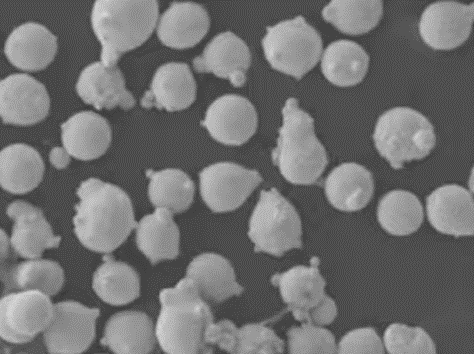
Inconel 718 powder for 3D printing is the powder-metallurgy form of Alloy 718, a nickel-chromium-iron superalloy originally developed for high-stress, high-temperature service. In additive manufacturing, it is supplied as a spherical metal powder with tightly controlled chemistry and particle size distribution so that it can spread evenly, melt predictably, and consolidate into dense parts.
The alloy belongs to the family of precipitation-hardenable nickel-based superalloys. That classification matters because its final strength does not come only from the base chemistry; it also depends on carefully controlled precipitation reactions during post-build thermal treatment. In industrial practice, this gives designers access to a material that is printable in the as-powder state and highly performant after solution and aging cycles.
Why Alloy 718 became a reference AM powder
Many superalloys deliver excellent high-temperature strength but are difficult to process because of hot cracking sensitivity, segregation, or limited weldability. Alloy 718 occupies a more forgiving position in the nickel superalloy family. It does not offer the absolute top-end temperature capability of every advanced turbine alloy, but it is notably more practical for recurring additive production.
That trade-off explains why Inconel 718 powder for 3D printing is so common in qualification programs and production cells. Engineers can use it for complex geometries, internal channels, lattice-supported walls, and consolidated assemblies without moving to a more difficult alloy unless the service temperature absolutely requires it.
Core characteristics of Inconel 718 3D printing powder
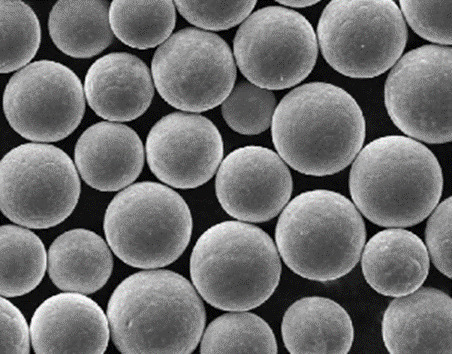
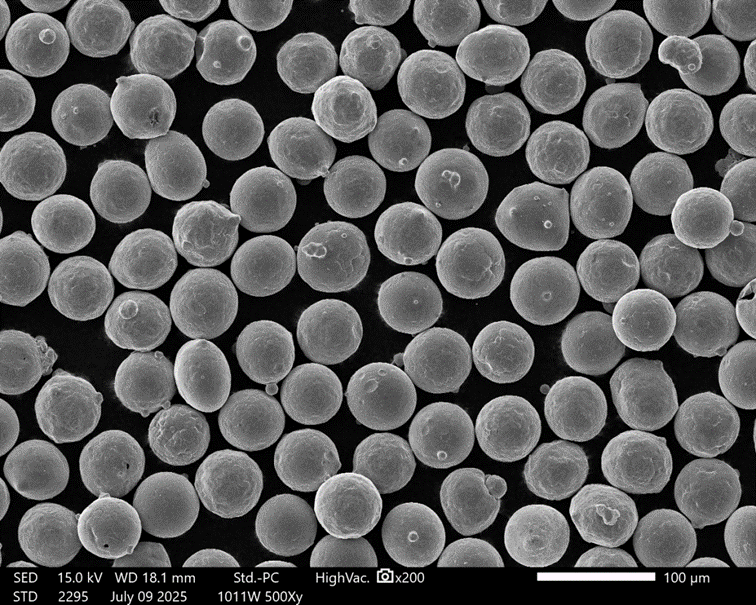
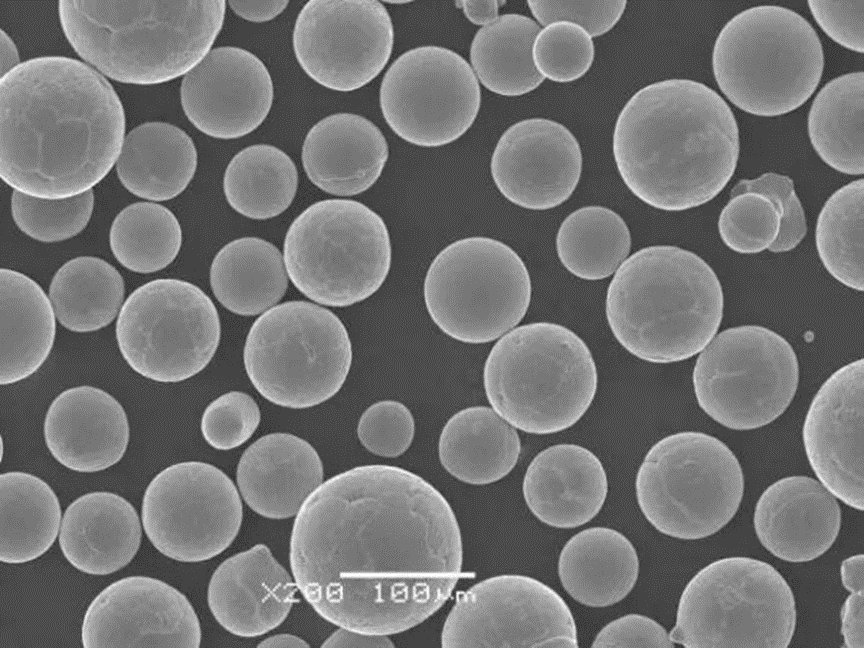
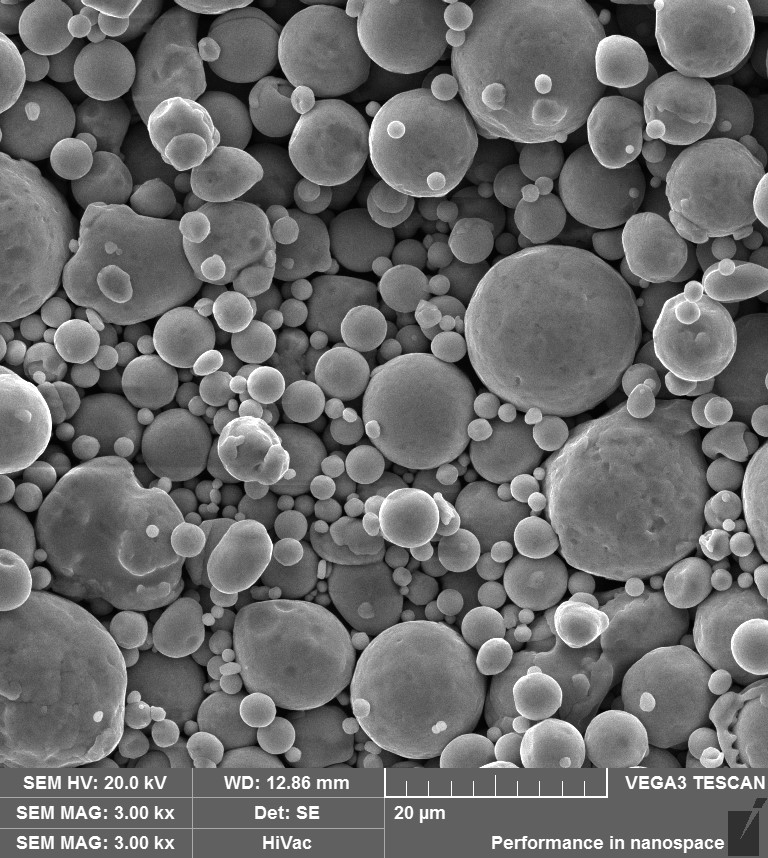
For AM users, powder quality is inseparable from alloy choice. A high-quality 718 feedstock typically features controlled particle size distribution, low oxygen pickup, good apparent density, stable Hall flow, and limited satellite formation. These characteristics affect recoating behavior, powder bed packing, energy absorption, and defect risk during the build.
Among nickel alloys, 718 is also well known for its combination of strength, weldability, fatigue potential, and corrosion resistance. That is why it often appears in the same engineering conversation as nickel superalloy powder grades used for heat-resistant and structural AM applications.
How it differs from related alloys
Compared with Inconel 625, Alloy 718 generally provides higher age-hardened mechanical strength. Compared with stainless steels, it performs much better in elevated-temperature and aggressive-environment conditions. Compared with titanium alloys, however, it is much denser, so it is usually selected for thermal and mechanical robustness rather than for lightweighting.
In metal additive manufacturing, feedstock quality is not just an input variable; it is part of the process capability.
Chemical Composition
The chemistry of Inconel 718 powder for 3D printing is tightly specified because microstructure, precipitation behavior, oxidation resistance, and crack sensitivity all depend on composition staying inside a relatively narrow window. Most qualified powders follow Alloy 718 chemistry used throughout aerospace and industrial nickel-superalloy supply chains, with additional controls for interstitial content and powder cleanliness.
| Element | Typical Range (wt%) | Metallurgical Role | Importance in 3D Printing |
|---|---|---|---|
| Nickel (Ni) | 50.0–55.0 | Base matrix element; stabilizes austenitic structure | Supports hot strength, corrosion resistance, and overall alloy stability |
| Chromium (Cr) | 17.0–21.0 | Improves oxidation and corrosion resistance | Helps printed parts resist scaling and corrosive media |
| Iron (Fe) | Balance | Major matrix constituent | Contributes to alloy balance and broad industrial processability |
| Niobium + Tantalum (Nb+Ta) | 4.75–5.50 | Primary age-hardening contributor through gamma double-prime formation | Critical to final strength after heat treatment |
| Molybdenum (Mo) | 2.80–3.30 | Solid-solution strengthening | Improves high-temperature strength and creep resistance |
| Titanium (Ti) | 0.65–1.15 | Supports precipitation strengthening | Assists gamma-prime formation and hardening response |
| Aluminum (Al) | 0.20–0.80 | Supports strengthening precipitates | Helps optimize aged strength and microstructural stability |
| Cobalt (Co) | ≤1.00 | Residual alloying influence | Usually controlled as a minor constituent |
| Carbon (C) | ≤0.08 | Carbide former | Excess can reduce ductility and process robustness |
| Manganese (Mn) | ≤0.35 | Residual element control | Kept low for cleanliness and consistency |
| Silicon (Si) | ≤0.35 | Residual element control | Excess may affect toughness and melt behavior |
| Phosphorus (P) | ≤0.015 | Impurity limit | Restricted to reduce embrittlement risk |
| Sulfur (S) | ≤0.015 | Impurity limit | Restricted to preserve hot workability and ductility |
The role of niobium in Inconel 718 powder for 3D printing
Niobium is the key strength-bearing element in Alloy 718. During aging treatment, it drives formation of gamma double-prime, the precipitate phase most responsible for the alloy’s characteristic high yield and tensile strength. In AM production, even small chemistry deviations can affect post-build hardening response, so niobium control is especially important.
Chromium, nickel, and molybdenum as the performance backbone
Nickel provides the corrosion-resistant, heat-resistant matrix that allows 718 to function as a superalloy rather than a conventional steel. Chromium gives oxidation protection and resistance to many corrosive environments, while molybdenum adds solid-solution strengthening and improves elevated-temperature performance. Together, these elements explain why 718 remains viable in hot sections, pressure systems, and chemically aggressive industrial service.
Why cleanliness matters in AM powder chemistry
In powder-based manufacturing, nominal chemistry is only part of the story. Interstitial contamination and unwanted residuals can affect ductility, fatigue, porosity sensitivity, and reuse stability. That is why serious AM specifications often pair alloy chemistry limits with powder characterization and terminology consistent with ISO/ASTM 52900 terminology for additive manufacturing processes and feedstocks.
Physical and Mechanical Properties
Engineers usually specify Inconel 718 by finished-part performance, but successful use in additive manufacturing requires thinking in two stages: powder behavior during the build and metal behavior after densification and heat treatment. The alloy’s reputation comes largely from the second stage, yet the first stage determines whether that potential can be reached consistently.
| Property | Typical Value | Unit | Test Standard / Condition |
|---|---|---|---|
| Solid density | 8.19 | g/cm³ | Typical room-temperature alloy value |
| Melting range | 1260–1336 | °C | Typical alloy reference range |
| Ultimate tensile strength | 1240–1500 | MPa | Typical AM material after solution and aging |
| Yield strength (0.2% offset) | 1030–1280 | MPa | Typical heat-treated AM condition |
| Elongation | 12–25 | % | Build- and post-process-dependent |
| Hardness | 35–45 | HRC | Typical aged condition |
| Elastic modulus | 200–205 | GPa | Approximate room-temperature value |
| Thermal conductivity | 11–16 | W/m·K | Approximate, condition-dependent |
| Coefficient of thermal expansion | 13.0–13.5 | µm/m·K | Approximate 20–100 °C range |
Mechanical performance after heat treatment
Most printed 718 parts are not used exactly as built. They are commonly stress relieved, then solution treated and aged to develop the strengthening precipitates associated with the alloy. This sequence is what turns a successfully printed geometry into a high-performance structural material.
In well-controlled AM routes, tensile properties can match or exceed many wrought minimum expectations, especially when density is high and thermal processing is optimized. Fatigue, however, remains more sensitive to pore population, surface finish, build orientation, and any lack-of-fusion defects than simple tensile testing would suggest.
Thermal behavior and service envelope
The appeal of 718 is not low density or high thermal conductivity. Its value lies in retaining high-temperature strength while resisting oxidation and corrosion better than general engineering steels. That combination supports components operating under cyclic heat, pressure, and mechanical load.
For this reason, designers often accept the alloy’s mass penalty in exchange for service reliability. Where lightweighting dominates the design brief, titanium alloy powder solutions are often evaluated instead.
Powder-bed performance and print stability
A powder can meet chemistry targets yet still perform poorly if the particles spread inconsistently. Good LPBF and EBM performance depends on spherical morphology, narrow enough size control, and flow behavior that supports stable layering over hundreds or thousands of recoating cycles.
The material is also attractive because its process behavior is relatively mature. Machine parameter sets, heat-treatment routes, and defect-mitigation strategies for 718 are better understood than for many newer AM alloys, which lowers development risk for first-time production programs.
Specifications and Available Grades
The term “Inconel 718 powder for 3D printing” covers several commercial supply conditions rather than one single universal powder. In practice, users choose a grade according to machine type, layer thickness, desired resolution, deposition mode, and qualification requirements. The most important variables are particle size distribution, morphology, oxygen content, density metrics, and documentation package.
| Grade / Supply Condition | Typical PSD Range | Apparent Density | Tap Density | Hall Flow | Oxygen Content | Sphericity / Morphology | Standards / Cross-Reference |
|---|---|---|---|---|---|---|---|
| Fine LPBF grade | 15–45 µm | 4.4–4.9 g/cm³ | 5.0–5.6 g/cm³ | 14–18 s/50 g | ≤0.03 wt% typical | Highly spherical, low satellites | Suitable for fine-layer laser powder bed fusion |
| Standard LPBF grade | 15–53 µm | 4.5–5.0 g/cm³ | 5.1–5.7 g/cm³ | 13–17 s/50 g | ≤0.03 wt% typical | Spherical AM powder | Common general-purpose laser range |
| EBM grade | 45–105 µm | 4.6–5.1 g/cm³ | 5.2–5.8 g/cm³ | 12–16 s/50 g | ≤0.03 wt% typical | Coarser free-flowing spherical powder | Used for thicker layers and electron beam processes |
| DED / cladding grade | 53–150 µm | 4.7–5.2 g/cm³ | 5.3–5.9 g/cm³ | 12–15 s/50 g | ≤0.04 wt% typical | Coarser spherical powder with controlled fines | Used in blown-powder deposition and laser cladding |
| Chemistry reference grade | — | — | — | — | Powder-spec controlled | Alloy 718 nominal chemistry | Typically aligned with AMS 5662 / AMS 5663 chemistry basis |
| Standardization reference | — | — | — | — | QA-plan dependent | Feedstock verification by application | Often mapped to the ASTM F3055 AM nickel alloy specification and internal OEM requirements |
Typical particle size distribution for Inconel 718 powder for 3D printing
Laser powder bed fusion usually favors 15–45 µm or 15–53 µm cuts because they provide a practical balance between layer packing and feature resolution. Electron beam systems often use coarser cuts such as 45–105 µm because the process can tolerate thicker layers and benefits from robust flowability in vacuum operation.
Directed energy deposition and laser cladding use much coarser material, often 53–150 µm or similar, since the powder is injected into the melt zone rather than spread as a thin bed. That difference is why “718 powder” should never be purchased on alloy name alone without a process-specific size range.
Flowability, oxygen, and density metrics
Apparent density and tap density indicate how efficiently powder packs, while Hall flow gives a practical indication of flow behavior under standardized conditions. Oxygen content, though sometimes overlooked outside aerospace, is a critical quality variable because it can influence ductility, reuse life, and surface oxide behavior during melting.
The best buyers treat these values as part of a complete lot qualification package rather than as marketing bullet points. Repeatability from lot to lot matters as much as a single attractive certificate.
Standards and cross-reference logic
There is no single global AM powder standard that answers every purchasing need, so most users combine multiple frameworks. They may reference legacy AMS chemistry expectations, apply internal powder acceptance windows, and align terminology or test conventions with broader additive manufacturing standards. That cross-reference approach is especially common in regulated and flight-related industries.
Manufacturing Process
How Inconel 718 powder is made strongly affects how it performs in 3D printing. Two powders with the same nominal chemistry can behave differently during spreading, melting, and reuse because the atomization route changes sphericity, satellite content, internal porosity, and contamination risk.
Gas atomization for mainstream 3D printing powder
Gas atomization is the most common production route for 718 powder. Molten alloy is disintegrated by high-velocity inert gas into droplets, which rapidly solidify into mostly spherical particles. The process can deliver high throughput and a strong balance between quality and cost, making it the mainstream choice for industrial AM supply.
Vacuum induction gas atomization, often called VIGA, adds tighter control by melting under vacuum or controlled atmosphere before atomization. That can reduce contamination and improve lot consistency, which is valuable for demanding production environments.
PREP and EIGA for higher-cleanliness Inconel 718 AM powder
Plasma Rotating Electrode Process forms droplets from a rapidly rotating electrode melted by plasma. Electrode Induction Gas Atomization uses contact-minimized melting of bar or electrode feedstock before atomization. Both routes are known for high cleanliness and excellent particle shape, though usually at lower throughput and higher cost than mainstream gas atomization.
These processes are often selected for programs that place a premium on powder consistency and low contamination. In practice, the route choice is not simply about “better” or “worse”; it is about whether the application justifies the additional cost and supply complexity.
| Process | Principle | Sphericity | Oxygen Pickup Risk | PSD Control | Throughput | Relative Cost | Typical 718 Use Case |
|---|---|---|---|---|---|---|---|
| GA | Inert gas disintegrates molten alloy stream | Good to very good | Low to moderate | Very good | High | Moderate | Standard industrial LPBF and DED powder |
| VIGA | Vacuum induction melting followed by gas atomization | Very good | Low | Very good | Medium to high | Moderate to high | Higher-spec AM lots with tighter cleanliness needs |
| PREP | Plasma-melted rotating electrode creates droplets centrifugally | Excellent | Very low | Good | Medium | High | Premium spherical powder for critical builds |
| EIGA | Electrode induction melting with gas atomization | Very good to excellent | Very low | Good to very good | Medium | High | Clean specialty powder for demanding applications |
| Plasma atomization variant | Plasma-based feed melting and particle formation | Excellent | Low | Good | Medium | High | Premium feedstock where morphology is prioritized |
Secondary processing after atomization
Powder production does not end when the particles solidify. Screening, classification, deagglomeration, drying, packaging, and storage all affect the final supply condition. A well-made powder can lose value if fines are not controlled, if moisture is introduced, or if cross-contamination occurs during packaging and reuse.
That is why experienced AM operators ask not only how the powder was atomized, but also how it was sieved, packed, labeled, and traced. For critical parts, the logistics chain becomes part of the technical specification.
Why process route changes print outcomes
The manufacturing route does not directly decide the final tensile result, but it shapes the reliability of the build process that creates the part. Better particle morphology and lower contamination usually widen the process window, reduce recoating irregularities, and improve confidence in density and repeatability across multiple builds.
For high-value programs, that can matter more than small differences in powder price. A slightly more expensive feedstock may reduce scrap, stabilize qualification, and shorten machine parameter tuning.
Applications by Industry
Inconel 718 powder for 3D printing is most valuable where geometry complexity, mechanical loading, and elevated-temperature service overlap. It is not the default material for every metal AM part, but it becomes highly relevant when a design must survive aggressive operating conditions while benefiting from additive freedom.
Aerospace and aero-engine hardware
Aerospace is one of the strongest application sectors for 718 powder. Components include brackets, ducts, housings, manifolds, seals, structural supports, and engine-adjacent hardware exposed to thermal cycling and vibration. Additive manufacturing is particularly useful when internal passages, mass reduction through topology optimization, or assembly consolidation can improve performance.
The alloy’s mature qualification history also helps. Compared with more exotic superalloys, 718 gives aerospace teams a better-understood path from powder to certified part.
Oil and gas, power, and energy systems
Valve parts, pressure-retaining hardware, turbine-support components, downhole tools, and corrosion-exposed industrial hardware are common use cases. In these sectors, 718 is selected because it tolerates combined heat, pressure, and corrosive environments more effectively than standard stainless steels.
AM also enables shorter supply chains for spare parts and repair-adjacent components. This is especially valuable when legacy geometries are difficult to machine or cast, or when design changes must be implemented quickly in field-critical systems.
Automotive, motorsport, and thermal tooling
The alloy is too dense and costly for most high-volume vehicle structures, but it fits high-performance automotive and motorsport applications well. Exhaust-side parts, turbo-related features, thermal-mechanical inserts, and low-volume hot-section hardware are typical examples. The ability to print complex shapes without dedicated tooling is especially attractive in short production runs.
Medical tooling, advanced industry, and nuclear-adjacent use
Although 718 is not a mainstream implant alloy, it is relevant in medical-device tooling, fixtures, and selected non-implant components where high strength and corrosion resistance are useful. It also appears in advanced engineering environments, including nuclear-adjacent manufacturing, where reliability and traceability matter as much as basic material properties.
Organizations that serve multiple sectors often compare 718 with other alloy families depending on wear, heat transfer, or density targets. For example, cobalt alloy powder options may be preferred in some wear-driven environments, while lighter alloys may be chosen where thermal load is lower and mass reduction is critical. Broader industrial examples of end-use deployment appear across the AM process application sectors relevant to metal powder manufacturing.
Comparison with Alternative Materials
Choosing Inconel 718 powder for 3D printing is rarely a yes-or-no decision in isolation. The practical question is how it compares with nearby materials on the specific metrics that matter to the part: density, strength, hot performance, corrosion resistance, printability, and total manufacturing cost.
| Material | Density (g/cm³) | Strength Level | High-Temperature Capability | Corrosion Resistance | Relative Cost | Printability | Best-Fit Use Case |
|---|---|---|---|---|---|---|---|
| Inconel 718 powder for 3D printing | 8.19 | High after aging | High | High | High | Very good | Complex parts needing balanced strength, heat resistance, and AM maturity |
| Inconel 625 powder | 8.44 | Moderate to high | Moderate to high | Excellent | High | Very good | Corrosion-focused components with less emphasis on age hardening |
| Ti-6Al-4V powder | 4.43 | High specific strength | Moderate | Good to very good | High | Excellent | Lightweight aerospace and medical structures |
| CoCrMo powder | 8.3–8.5 | High | Moderate to high | Excellent | High | Good to very good | Wear-resistant and selected medical or valve components |
| 316L stainless steel powder | 7.9–8.0 | Moderate | Moderate | Good | Lower | Excellent | General industrial components and cost-sensitive prototyping |
Inconel 718 versus Inconel 625
This comparison is common because both are nickel alloys with strong corrosion performance and good AM processability. The difference is that 718 is strengthened by precipitation heat treatment, so it usually offers higher structural strength after post-processing. By contrast, 625 is often favored when corrosion resistance and fabrication simplicity outrank the need for maximum age-hardened performance.
Inconel 718 versus titanium alloys
Titanium alloys deliver major weight savings and excellent specific strength. That makes them highly attractive in airframes, medical implants, and other mass-sensitive designs. Inconel 718 is chosen instead when the operating environment is hotter, more corrosive, or more mechanically punishing than titanium can comfortably support over long service intervals.
Inconel 718 versus stainless steels and cobalt alloys
Stainless steels, especially 316L, are easier to justify for fixtures, low-cost prototypes, and moderate environments. They usually print very well, but they cannot match 718 when elevated-temperature strength and superalloy-level durability are required. Cobalt alloys can be stronger in wear-focused or specific high-hardness applications, but they are selected for a different balance of properties than 718.
For early-stage material down-selection, the basic Alloy 718 background on the Wikipedia entry for Inconel is often useful as a starting point, though production decisions should always rely on supplier data, qualification results, and application-specific testing.
Our Company
Shanghai Truer Technology Co., Ltd., the company behind am-printing.com, was established in 2009 and created its additive manufacturing business in 2019. Its stated focus is the integration of 3D printing powder-making equipment and services with metal powders for engineering applications of additive manufacturing. The company’s technical scope includes Selective Electron Beam Melting equipment, Plasma Rotating Electrode Process powder-making equipment, and gas atomization-related capabilities, alongside a powder portfolio that includes TiNi, TiTa, TiAl, TiNbZr, CoCrMo, and spherical nickel-, cobalt-, titanium-, copper-, aluminum-, and stainless-steel powders. Its operating profile, industries served, and development background are outlined on the corporate information page.
FAQ
Q1. Is Inconel 718 powder for 3D printing better for SLM or EBM?
It is suitable for both, but the preferred powder cut differs by process. Fine distributions such as 15–45 µm or 15–53 µm are common for laser powder bed fusion, while coarser distributions such as 45–105 µm are often selected for electron beam systems. The final choice depends on layer thickness, machine architecture, and required feature detail.
Q2. Does Inconel 718 powder for 3D printing always need heat treatment after printing?
In most industrial applications, yes. Stress relief, solution treatment, and aging are commonly used to develop the precipitation-hardened microstructure that gives Alloy 718 its well-known strength. Without appropriate post-processing, the printed part may not reach its intended mechanical performance.
Q3. What particle size is best for Inconel 718 powder for 3D printing?
There is no single universal size range. Laser powder bed fusion usually favors 15–45 µm or 15–53 µm, while EBM often uses coarser powders and DED uses still larger cuts. The “best” size is the one matched to the deposition method, recoating strategy, and feature resolution target.
Q4. Why is spherical powder morphology so important for Alloy 718 AM builds?
Spherical particles flow more consistently, spread more evenly, and generally pack better in the powder bed. That supports stable layer formation and reduces the chance of irregular melting caused by poor powder distribution. In long production builds, those advantages can have a direct effect on yield and repeatability.
Q5. How does Inconel 718 compare with stainless steel for metal 3D printing?
Inconel 718 is more expensive and denser, but it performs much better when parts face high temperatures, severe mechanical loads, and corrosive environments. Stainless steels are often a better fit for lower-cost, moderate-duty components. The correct choice depends on service conditions, not on printability alone.
Q6. What should buyers check before qualifying a batch of Inconel 718 powder for 3D printing?
They should verify chemistry, particle size distribution, apparent density, tap density, Hall flow, oxygen level, morphology, and traceability at the lot level. Reuse behavior and consistency between batches are also important, especially in aerospace and other tightly controlled industries. A supplier that can provide process-specific powder data is usually more useful than one that offers only a nominal alloy certificate.