Ti-6Al-4V 3Dプリント部品の機械的特性

Ti-6Al-4V (also known as Grade 5) is a common titanium alloy containing 6% aluminum and 4% vanadium, valued for its high strength-to-weight ratio, good corrosion resistance, and biocompatibility. It is widely used in aerospace, medical, and marine industries for applications like aircraft components, engine parts, and surgical implants. This alloy is known as the “workhorse” of titanium alloys because of its versatility, including its ability to be heat-treated to further increase its strength. 

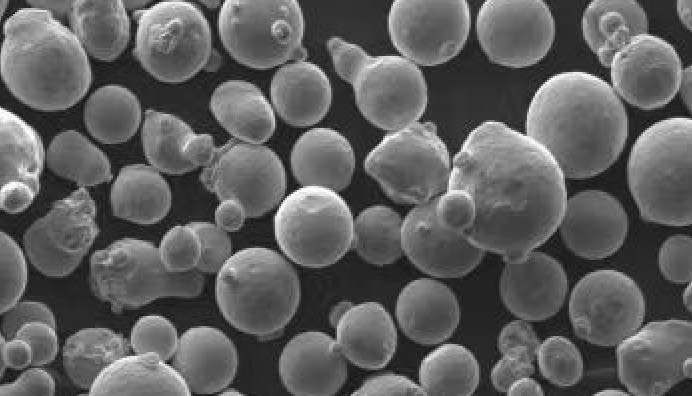
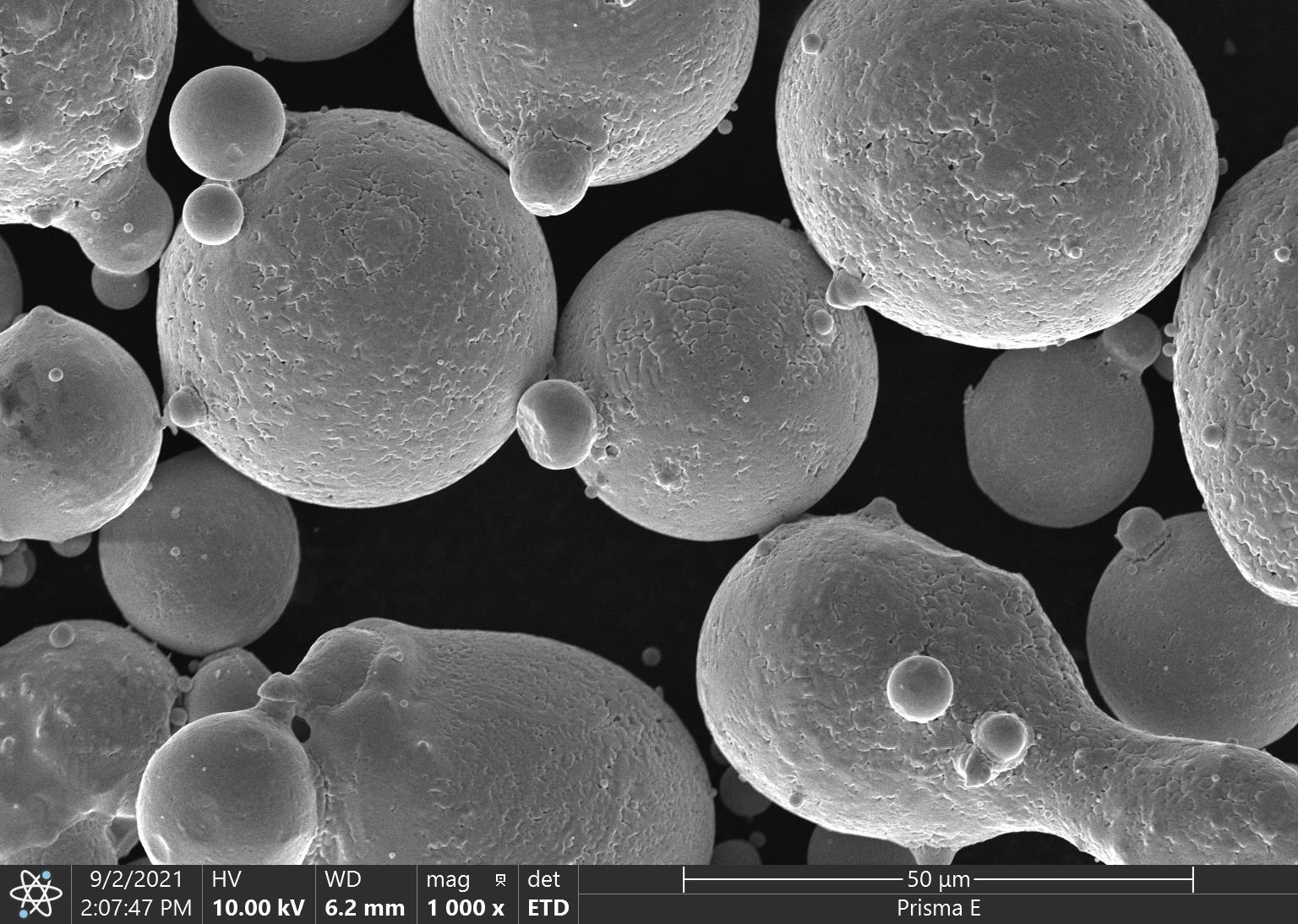
TRUER Ti-6Al-4V powder was produced by EIGA or PREP process and provided a high strength-to-weight ratio and corrosion resistance, commonly used in 3D printing, thermal spray coatings for biomedical implants and other applications requiring lightweight, durable, and biologically compatible materials.

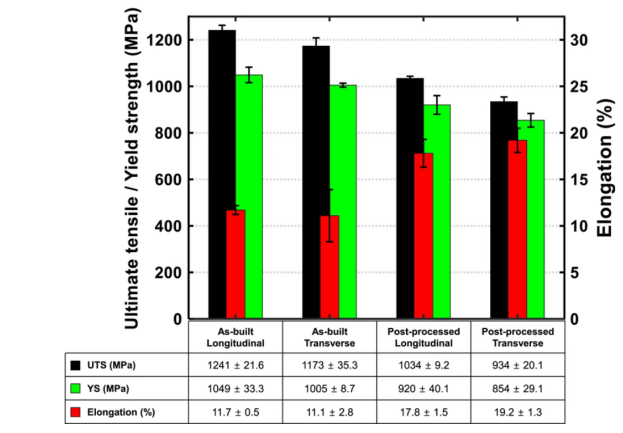
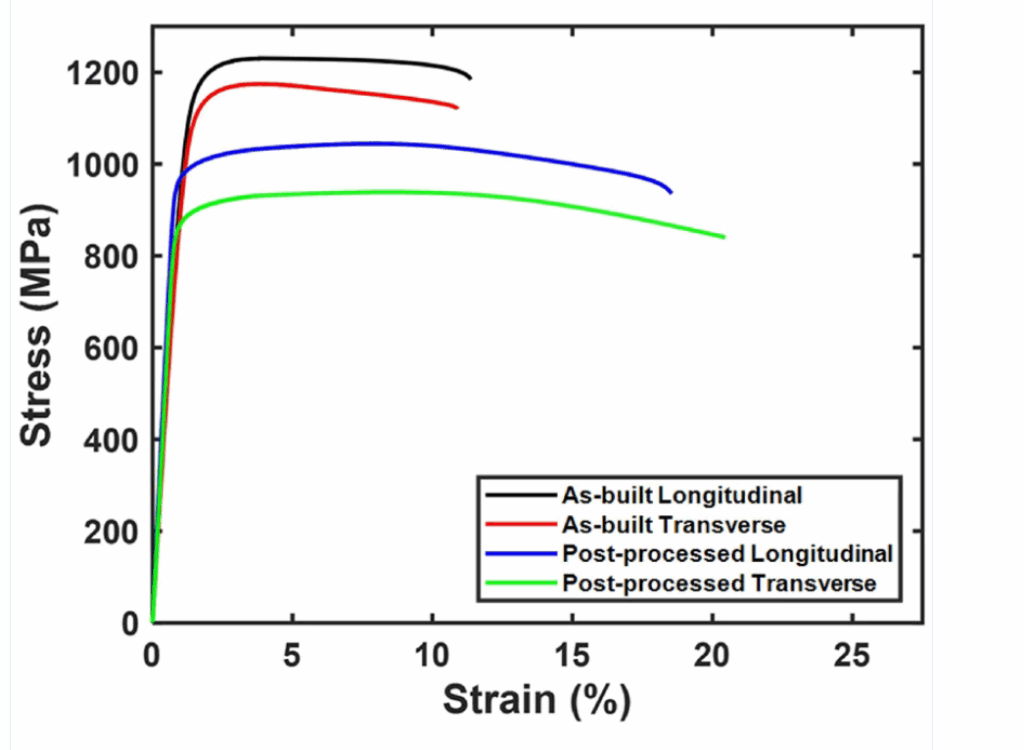
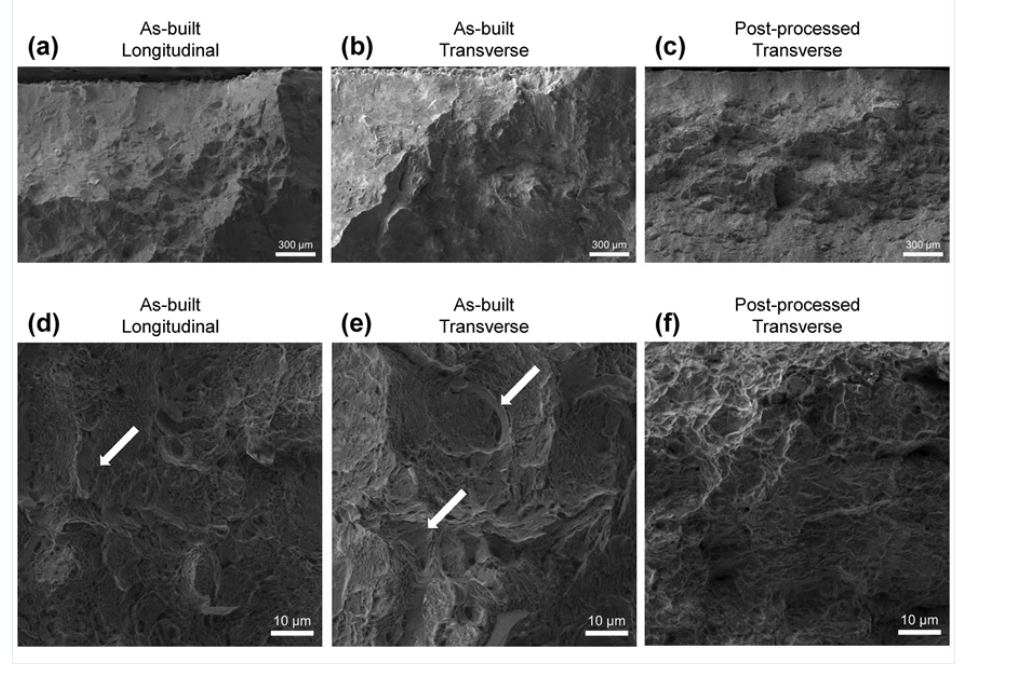
Ti-6Al-4V As-printed parts by TRUER powder exhibit an excellent strength and elongation rate in its printed state (Fig. 1 & Fig. 2) and almost no lack of fusion defects from the Morphology of the fracture. And the SEM fracture showed some dimples and tongue pattern from shear toughness.

Fig. 1 Mechanical Property of Ti6Al4V printed parts in the state of As-built and Post-processed

Fig. 2 Stress-Strain graph & fracture feature of Ti6Al4V printed parts in the state of As-built and Post-processed

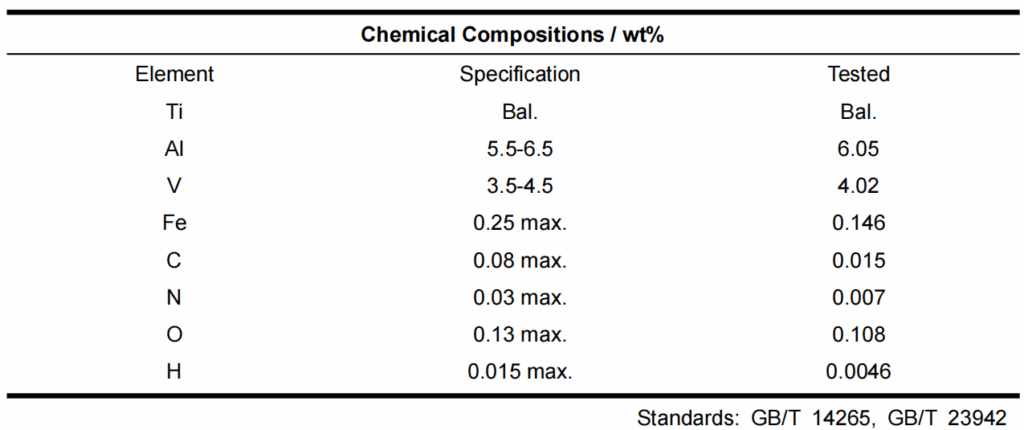
Chemical Composition of TRUER Ti-6Al-4V powder:

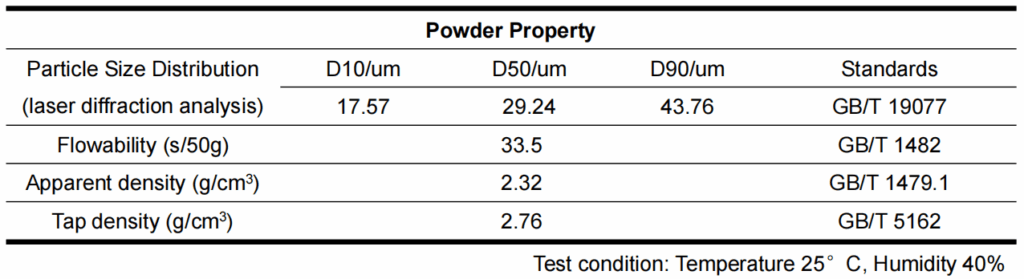
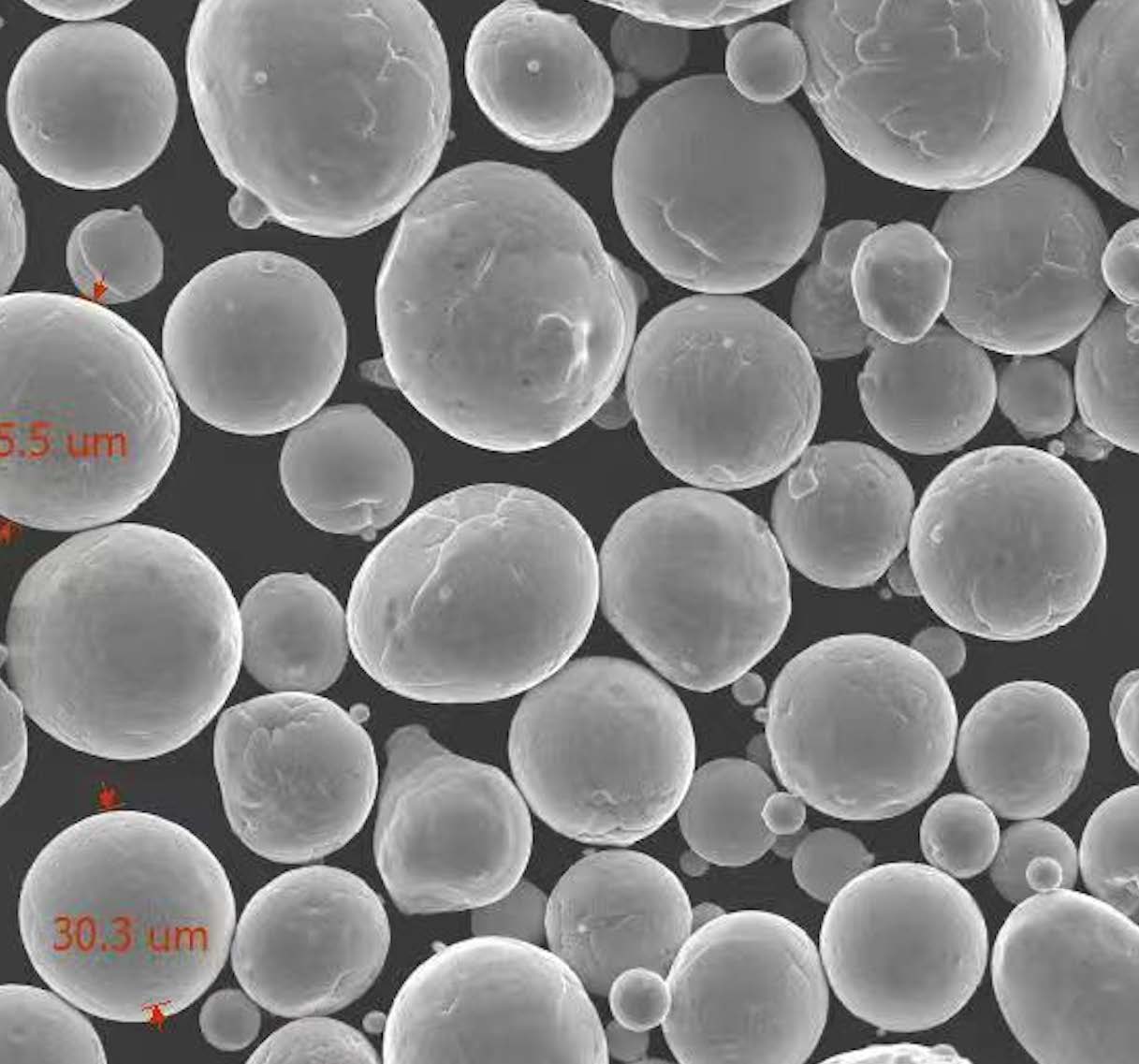
Powder Property of TRUER Ti-6Al-4V powder:

Analysis:

In previous Ti-6Al-4V printed parts, it cannot achieve UTS and ε values exceeding the ASTM B348 standard. This is primarily because previous research has focused predominantly on maximizing relative density while paying relatively less attention to minimizing surface defects, including coarse surface topography and subsurface defects such as shallow pits and notches.

After this experiment, it was concluded: only by high-quality Ti-6Al-4V powder, the printed parts can be manufactured with full density and minimal surface defects to get satisfactory mechanical properties. This is because residual internal porosity and rough surface topography significantly impact mechanical properties even after post-processing.

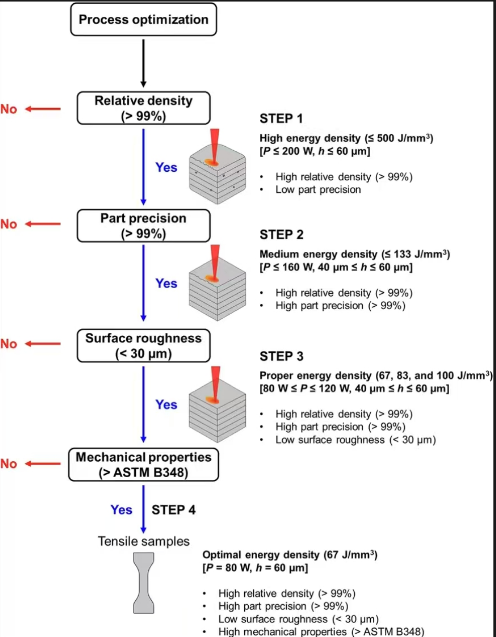
Besides powder properties, scan pitch also is a critical parameter related to defect generation. A reasonable scan pitch that ensures sufficient overlap between scan tracks and layers can minimize surface defects such as high roughness, large voids, and sharp notches. 

Recommended Process Optimization:

結論

In summary, both of powder properties and scan pitch have a significant impact of on surface defects of printed parts.

この記事をシェアする

目次

一番人気

連絡先

お問い合わせ

オン・キー

関連記事

工業用炭化クロム粉末

はじめに炭化クロムパウダーがB2B市場で重要な理由 炭化クロムパウダー(Cr₃C₂)は、非常に高い耐摩耗性、高い耐摩耗性、高い耐摩耗性を必要とする産業で最も広く使用されているセラミック金属(サーメット)材料の1つです。

続きを読む "
SCM 415 低合金鋼粉

積層造形・冶金用FeCu粉末

はじめにFeCuパウダーが現代産業で重要な理由 鉄(Fe)と銅(Cu)の混合物であるFeCuパウダーは、現代の製造および添加プロセスにおいて重要な役割を果たしている。この金属

続きを読む "
small_c_popup.png

話をしよう

お問い合わせ