간단한 답변
CoCrW dental & implant powder is a cobalt-chromium-tungsten alloy powder engineered for metal additive manufacturing of dental frameworks, implant-supported restorations, and selected medical components that need high strength, corrosion resistance, and biocompatibility. It is usually the right choice when a part must combine rigid support, good wear performance, porcelain-bonding compatibility, and reliable printability in laser powder bed fusion. In practice, it is favored for crowns, bridges, partial denture frameworks, bars, and customized prosthetic hardware where stainless steels are too soft and titanium is less suitable for thin, highly rigid structures.
What Is CoCrW dental & implant powder
CoCrW dental & implant powder is the spherical powder-feed form of a cobalt-based alloy family centered on cobalt, chromium, and tungsten, sometimes with a controlled molybdenum addition depending on the exact dental grade. In the dental market, these alloys are widely used for fixed and removable restorations, especially when laboratories need a nickel-free material with high stiffness, good castability or printability, and compatibility with ceramic veneering systems governed by the ISO 22674 dental alloy standard.
Historically, cobalt-base alloys entered dentistry long before metal additive manufacturing became mainstream. ASM notes that tungsten-bearing cobalt-chromium alloys were among the earliest cobalt-base biomaterials and that their corrosion resistance in dental service helped establish the broader family’s medical relevance. That background matters because modern AM powders are not a new alloy concept so much as a new processing route for a clinically familiar class of materials.
In current additive manufacturing practice, the label “CoCrW” often refers to dental powder compositions close to Co-Cr-W or Co-Cr-Mo-W chemistry rather than to one single global specification. A commonly cited commercial dental powder example contains roughly 63.8 wt% Co, 24.7 wt% Cr, 5.1 wt% Mo, 5.4 wt% W, and about 1 wt% Si, which shows how tungsten is used in combination with chromium to support strength, wear behavior, and porcelain-fused-to-metal applications.

CoCrW dental AM powder versus orthopedic implant alloys
A key distinction is that dental CoCrW powder and orthopedic implant cobalt alloys are related but not identical categories. Mainstream load-bearing implant standards more commonly reference CoCrMo or CoNiCrWMo chemistries such as ASTM F75 or related ISO implant materials, whereas dental AM powders are more often aligned with dental restoration requirements under ISO 22674. For that reason, buyers should treat “implant” in this context carefully and confirm whether the intended use is a dental implant superstructure, abutment, bar, or a separately regulated surgical implant component.
Why CoCrW powder remains important in digital dentistry
The alloy remains important because it solves a specific design problem: thin sections must stay stiff under mastication and repeated use, while also resisting saliva, food acids, cleaning agents, and thermal cycling from ceramic firing. Titanium can be lighter, and noble alloys can be easier to polish, but cobalt-chromium-tungsten alloys often deliver a stronger stiffness-to-section advantage for frameworks and bars. In digital workflows, that advantage combines well with layer-based production as defined in ISO/ASTM 52900 용어.
Why spherical powder matters in CoCrW dental & implant powder
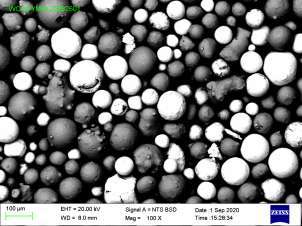
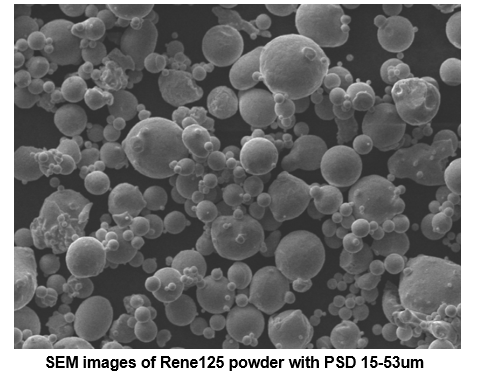
For additive manufacturing, 구형 분말의 형태 is not a cosmetic feature; it directly affects recoating, layer packing, and part consistency. NIST states that AM powder qualification depends on properties such as flowability, spreadability, particle size distribution, and powder layer density, which is why dental laboratories and contract manufacturers specify not only alloy chemistry but also morphology, oxygen level, apparent density, and Hall flow.
Additive manufacturing builds 3D geometries by successive addition of material.
화학 성분
Commercial CoCrW dental powders vary by supplier, but most cluster around a cobalt-rich matrix with chromium as the main corrosion-resistant element and tungsten as a hardening and strengthening addition. Some grades also include molybdenum to refine corrosion and mechanical performance, which is why product literature may describe them as CoCrW or CoCrMoW depending on the market convention. A representative dental-AM composition widely reported in the literature is summarized below.
| 요소 | Typical Range (wt%) | Representative Value (wt%) | 야금학적 역할 |
|---|---|---|---|
| 코발트 (Co) | balance, typically 58–66 | 63.8 | Matrix element; provides strength, high modulus, and thermal stability |
| 크롬(Cr) | 23–30 | 24.7 | Forms protective passive film; key contributor to corrosion resistance |
| 텅스텐(W) | 4–10 | 5.4 | Solid-solution strengthening; improves hardness, wear resistance, and hot rigidity |
| 몰리브덴(Mo) | 0–7 | 5.1 | Improves corrosion resistance and contributes to strength in some grades |
| 실리콘(Si) | 0.5–1.5 | 1.0 | Helps deoxidation during melting; can influence fluidity and processing |
| 철(Fe) | 0–1.0 | ≤0.5 | Residual impurity control; excessive content is usually restricted |
| 망간(Mn) | 0–1.0 | ≤0.1 | Minor deoxidation/process-control element |
| 탄소(C) | very low to controlled | 낮음 | Influences carbide formation, hardness, and wear behavior |
| 니켈(Ni) | usually trace or restricted | low/none intentional | Limited because many dental grades are marketed as nickel-reduced or nickel-free |
The composition explains why the alloy performs differently from titanium and stainless steel. Chromium supplies the passive corrosion-resistant surface film that makes cobalt alloys stable in oral environments, while tungsten stiffens and strengthens the matrix without sacrificing the alloy’s ability to hold fine edges and thin cross-sections. When molybdenum is present, it usually improves the overall balance of corrosion resistance and mechanical robustness.
The chemistry also explains the naming ambiguity seen in catalogues. Some manufacturers emphasize the tungsten-bearing nature of the dental alloy and market it as CoCrW, while others use CoCrMo or CoCrMoW because molybdenum is also part of the final specification. For procurement, the certificate of analysis matters more than the shorthand product name.
Alloying strategy in CoCrW dental & implant powder
The alloy is best described as a high-modulus cobalt alloy rather than a precipitation-hardened superalloy. Its properties derive mainly from solid-solution strengthening, carbide effects, and the cobalt-chromium matrix rather than from the age-hardening mechanisms familiar in nickel aerospace alloys. That difference is one reason the alloy is valued for prosthetic rigidity and wear performance more than for extreme-temperature engine service.
물리적 및 기계적 특성
In dental AM, the most useful properties are density, melting range, elastic modulus, tensile behavior, hardness, and thermal expansion. Published values differ by build orientation, heat treatment, powder source, and whether the part is as-built, stress-relieved, or post-fired for porcelain application. The table below combines representative values reported for laser-processed dental CoCrW or closely equivalent cobalt-chromium dental powders.
| 속성 | 일반 값 | 단위 | 시험 기준 / 조건 |
|---|---|---|---|
| 밀도 | 8.3–8.7 | g/cm³ | 실온에서의 일반적인 합금 값 |
| 용융 범위 | 1,300–1,450 | °C | Typical supplier / alloy range |
| Ultimate tensile strength | 1,050–1,440 | MPa | Typical as-built or stress-relieved dental AM data |
| Yield strength (0.2%) | 700–1,030 | MPa | Typical LPBF dental CoCr values |
| 휴식 시 신장 | 3–16 | % | Process- and orientation-dependent |
| Young’s modulus | 180–210 | GPa | 일반적인 실온 값 |
| 경도 | 320–540 | HV10 | As-built or post-heat-treated ranges |
| 열 전도성 | about 13 | W/m-K | 일반적인 실온 값 |
| 열팽창 계수 | about 14.1 | ×10⁻⁶/K | Common dental-ceramic compatibility value |
These numbers show the material’s central design advantage: it combines high strength with very high stiffness. In dentistry, stiffness is often as important as tensile strength because long-span bridges, clasp structures, and implant bars must resist flexing under repeated load. That is why CoCrW frequently outperforms titanium in thin framework sections even though titanium is lighter.
Mechanical profile of printed CoCrW dental & implant powder parts
Laser-processed CoCrW parts are typically dense and strong, but anisotropy still matters. EOS data for a comparable dental cobalt-chrome AM material show orientation-dependent yield and elongation values, and research on dental CoCrW has reported relative densities above 99% when process parameters are optimized. That means machine settings, scan strategy, support design, and post-treatment remain part of the material system rather than separate variables.
Hardness, wear, and ceramic compatibility
The alloy’s hardness supports abrasion resistance and long-term framework integrity, while its thermal expansion is important for porcelain-fused-to-metal systems. If the coefficient of thermal expansion is poorly matched to veneering ceramic, residual stress can increase the risk of chipping or delamination. That is one reason dental CoCrW powder grades are usually specified not only by strength but also by ceramic compatibility under ISO dental restoration practice.
Corrosion and biocompatibility perspective
Chromium-rich cobalt alloys owe much of their corrosion behavior to passive-film formation. In oral service, corrosion resistance is not merely a laboratory metric; it affects ion release, surface stability, and long-term clinical reliability. Published dental studies on selectively laser-melted cobalt-chromium alloys consistently treat corrosion performance as a core qualification parameter alongside tensile strength and density.
사양 및 제공 등급
There is no single universal AM specification that covers every CoCrW dental powder sold for every printer and every dental indication. Instead, purchasing documents normally combine alloy identity, particle size distribution, powder morphology, and end-use classification, especially when a powder may serve crowns, bridges, removable partial denture frameworks, implant bars, or other prosthetic geometries. The process vocabulary usually follows additive-manufacturing standards, while the dental material classification follows restoration-oriented standards and internal validation rules.
| Supply Grade / Reference | 일반적인 PSD 범위 | 겉보기 밀도 | 탭 밀도 | 홀 흐름 | 산소 함량 | 구형성 | Cross-Reference / Notes |
|---|---|---|---|---|---|---|---|
| CoCrW-LPBF Fine | 10–30 µm | 4.3–4.9 g/cm³ | 5.0–5.7 g/cm³ | 14–22초/50g | ≤0.10 wt% typical | 높은 | Fine cut for thin-feature dental parts |
| CoCrW-LPBF Standard | 15-45 µm | 4.4–5.0 g/cm³ | 5.1–5.8 g/cm³ | 13–20초/50g | ≤0.10 wt% typical | 높은 | Common laser powder bed fusion grade |
| CoCrW-LPBF Broad | 15-53 µm | 4.5–5.1 g/cm³ | 5.2–5.9 g/cm³ | 50g당 13–19초 | ≤0.10 wt% typical | 높은 | Broader PSD for productivity balance |
| CoCrW-EBM / SEBM | 45-105 µm | 4.6–5.3 g/cm³ | 5.3–6.0 g/cm³ | 12–18 s/50 g | ≤0.12 wt% typical | 높은 | Coarser cut for electron-beam routes |
| Dental material reference | chemistry / use class | n/a | n/a | n/a | per PO | n/a | ISO 22674 fixed and removable restorations |
| Implant-related reference | chemistry / implant class | n/a | n/a | n/a | per PO | n/a | ASTM F75 or equivalent only when chemistry and use truly align |
The PSD windows above are typical industrial supply cuts rather than mandatory universal limits. Machine OEMs, recoater design, layer thickness, and surface-finish requirements all influence the best size distribution. In dental work, finer cuts often help resolve occlusal detail and thin frameworks, but they can also raise cost and sensitivity to powder handling.
CoCrW dental & implant powder standards in practice
The most relevant external references are the ASTM F75 implant alloy specification for cobalt-28Cr-6Mo implant cast alloy, the NIST 분말 계측 프로그램 for AM powder characterization principles, and ISO 22674 for dental metallic materials. Even when a dental powder is not literally an ASTM F75 composition, F75 remains a familiar benchmark because it defines what many engineers expect from medical cobalt-chromium materials in terms of strength, chemistry control, and biocompatibility culture.
Grade naming and regulatory caution
A practical point for buyers is that “dental,” “implant,” “medical,” and “biocompatible” are not interchangeable labels. A powder can be highly suitable for implant-supported dental bars or prosthetic superstructures without automatically being the correct feedstock for a load-bearing orthopedic implant. Matching the certificate, intended use, and applicable standard is therefore more important than relying on marketing shorthand.
제조 프로세스
The manufacturing route has a direct effect on powder flow, oxygen pickup, chemistry stability, and print consistency. For CoCrW dental & implant powder, gas atomization is the standard industrial route because it balances productivity and powder quality, but higher-end routes such as VIGA, EIGA, and PREP are also relevant when cleanliness and particle uniformity are prioritized. NIST’s powder characterization framework is especially useful here because it emphasizes that powder performance is measurable, not assumed.
| 프로세스 | Feedstock Form | Typical Sphericity | 산소 픽업 | PSD 제어 | 처리량 | 상대적 비용 | Practical Trade-Off |
|---|---|---|---|---|---|---|---|
| GA | Melt stream + inert gas | 높은 | low to medium | very good | 높은 | 중간 | Best balance of cost, yield, and dental AM volume |
| VIGA | Vacuum induction melt + gas atomization | 매우 높음 | 낮음 | very good | 중간에서 높음 | 중간에서 높음 | Cleaner melt environment and better chemistry control |
| EIGA | Electrode/bar + induction melting + gas atomization | 매우 높음 | very low | excellent | 중간 | 높은 | Reduced contamination, premium AM powder route |
| 준비 | Rotating electrode | extremely high | very low | good | 낮음 | 매우 높음 | Excellent roundness, lower throughput, expensive |
| 플라즈마 분무 | Wire or feed in plasma | extremely high | 낮음 | good to very good | low to medium | 높은 | Premium morphology for demanding powder applications |
Gas-atomized CoCrW dental & implant powder
Gas atomization is the most common route for dental cobalt alloy powders because it can produce spherical particles with good flow and industrial-scale output. Under inert gas, the molten alloy disintegrates into droplets that rapidly solidify into near-spherical particles, after which sieving creates the PSD needed for LPBF or related processes. This route is especially attractive for dental laboratories and service bureaus that need repeatable powder lots at manageable cost.
PREP, VIGA, and EIGA in cobalt alloy powder production
PREP, VIGA, and EIGA become more attractive when trace contamination, satellite content, and surface cleanliness are critical. Shanghai Truer’s published company profile states that its additive manufacturing activities include PREP powder-making equipment, gas atomization, and SEBM-related capabilities, which is relevant because those process families are directly associated with premium spherical metal powder production. For cobalt alloys, the cleaner the powder surface and the tighter the PSD, the easier it is to maintain stable layer spreading and consistent melt behavior.
Why powder route changes dental print outcomes
Powder route affects more than powder appearance. Apparent density influences powder-bed packing, Hall flow affects recoating behavior, and surface oxides can alter laser absorption and melt-pool stability. In a dental production setting where parts are small, numerous, and geometry-rich, even minor powder inconsistency can translate into fit variation, porosity shifts, or rougher support-contact surfaces.
AM process fit across metal powder families
Although CoCrW is a specialized dental and medical alloy, buyers often compare it with adjacent material classes before qualification. That is why cobalt alloys are frequently reviewed alongside cobalt-based powder options, titanium grades for lightweight prosthetics, and selected nickel or stainless systems for general industrial work. The correct choice depends less on printer brand than on stiffness, biocompatibility, veneering strategy, and the service environment of the final part.
산업별 적용 사례
CoCrW dental & implant powder is primarily a medical-dental material, but its property set also gives it relevance in selected industrial sectors. The strongest use case remains customized small-format components that need strength, wear resistance, corrosion resistance, and fine-feature manufacturability. Additive manufacturing expands that use case by making individualized shapes economical at low batch size.
Dental restorations and prosthetic frameworks
This is the core market for CoCrW powder. Dental laboratories use it for crowns, bridges, removable partial denture frameworks, implant-supported bars, coping structures, and porcelain-fused-to-metal substructures. The combination of high modulus, good corrosion resistance, and compatibility with ceramic veneering makes it especially useful where thin structures must remain dimensionally stable.
Implant-supported suprastructures and abutment-related parts
In implant dentistry, the alloy is commonly discussed for superstructures rather than for every implant component indiscriminately. Printed bars, customized interfaces, and framework elements benefit from the alloy’s rigidity and wear resistance, particularly where screw-retained assemblies must maintain fit. Users should still map each indication against regulatory and material-standard requirements before classifying a part as an implant-grade medical device.
Medical tools and selected surgical hardware
Outside prosthodontics, cobalt-chromium alloys have long been relevant to surgical and implant-adjacent hardware because of their strength and corrosion resistance. For AM, the most realistic opportunities are patient-specific instruments, compact wear-resistant components, and selected medical device parts rather than a blanket substitution for all orthopedic alloys. This is where comparison against titanium and conventional CoCrMo standards becomes essential.
Industrial wear and high-stiffness parts
Although the “dental” designation is primary, tungsten-bearing cobalt alloys also appeal to selected industrial users who need wear resistance in small geometrically complex parts. Tooling inserts, compact sliding components, and specialty fixtures can benefit from the alloy when the economics of AM outweigh the higher raw-material cost. Such projects usually sit outside formal dental standards but still depend on the same powder-quality fundamentals.
Where CoCrW powder is not usually the first choice
CoCrW is not the default answer for lightweight aerospace brackets, very high thermal conductivity parts, or bulk orthopedic applications where another cobalt or titanium standard is already entrenched. In those cases, engineers often compare it with a 티타늄 합금 분말 제품군 for lower density or with other medical cobalt chemistries for standard alignment. Material selection should therefore start with indication and compliance, not with the assumption that one medical alloy fits every medical part.
대체 소재와의 비교
Material selection becomes clearer when CoCrW dental & implant powder is compared with nearby AM alloys that solve different design problems. The most common alternatives are CoCrMo for implant-standard familiarity, Ti-6Al-4V for low weight, and 316L for cost-sensitive corrosion-resistant parts. Each alternative changes the balance between stiffness, density, biocompatibility history, wear behavior, and print cost.
| 재질 | 밀도(g/cm³) | Strength Level | 상대적 비용 | 인쇄 가능성 | Corrosion / Wear Profile | 가장 적합한 사용 사례 |
|---|---|---|---|---|---|---|
| CoCrW dental & implant powder | 8.3–8.7 | 높은 | 높은 | very good in LPBF | strong corrosion resistance, high wear, high stiffness | Dental frameworks, bars, PFM substructures |
| CoCrMo 파우더 | 8.3–8.5 | 높은 | 높은 | very good | strong corrosion resistance, established implant familiarity | Orthopedic and medical cobalt alloy applications |
| Ti-6Al-4V 분말 | 4.4–4.5 | 높은 비강도 | 높은 | excellent | good corrosion resistance, lower modulus, lighter weight | Lightweight implants and aerospace-medical crossover |
| 316L 스테인리스 스틸 파우더 | about 8.0 | 중간 | moderate to low | excellent | good corrosion resistance, lower wear and stiffness | Cost-sensitive medical tools and general AM parts |
| Ni-based superalloy powder | 8.2–8.5 | 높은 | 높은 | very good | oxidation/high-temperature focus rather than oral wear | Hot-section or chemical-service hardware, not dental frameworks |
Against CoCrMo, CoCrW usually offers a more dental-centric value proposition, especially where veneering compatibility and rigid thin sections are central. Against Ti-6Al-4V, the cobalt alloy is much heavier but significantly stiffer, which can be decisive for long-span dental frameworks. Against 316L, it is more expensive but typically superior in hardness, modulus, and wear-critical clinical applications.
For manufacturers building broader powder qualification strategies, the comparison often extends beyond cobalt alloys into industrial application sectors where different AM metals are chosen for heat transfer, lightweighting, or extreme corrosion. That wider view helps explain why CoCrW remains a specialist material rather than a universal one.
당사
Shanghai Truer Technology Co., Ltd., operating am-printing.com, was established in 2009 and created its additive manufacturing business in 2019. According to the company’s published profile, it integrates 3D printing powder-making equipment and services with spherical metal powders, supports SEBM equipment, PREP powder-making equipment, and gas atomization, and supplies alloy families including TiNi, TiTa, TiAl, TiNbZr, CoCrMo, nickel-based, cobalt-based, titanium-based, copper-based, aluminum-based, and stainless-steel powders for SLM, SEBM, DED, laser cladding, PM, MIM, HIP, spraying, welding, and coating. Its company background page also describes a joint innovation center for metal 3D printing and end-use coverage across 3C electronics, hand tools, remote-control cars, medical, aerospace, and nuclear power.
자주 묻는 질문
Q1. Is CoCrW dental & implant powder the same as CoCrMo medical powder?
No. They are related cobalt alloy families, but they are not automatically interchangeable. Many dental powders are cobalt-chromium-tungsten or cobalt-chromium-molybdenum-tungsten formulations aligned with ISO 22674 dental use, while mainstream surgical implant references often point to CoCrMo compositions such as ASTM F75.
Q2. Why is CoCrW powder widely used for dental frameworks instead of titanium?
The main reason is stiffness. CoCrW alloys usually provide a much higher elastic modulus than titanium, which helps thin dental frameworks, clasps, and bars resist flexing under load while maintaining dimensional stability during service and porcelain firing.
Q3. Which particle size range is common for CoCrW dental AM powder?
For laser powder bed fusion, common commercial cuts are about 10–30 µm, 15–45 µm, and 15–53 µm. Finer cuts are often selected for detailed dental geometries, while broader distributions can improve throughput and powder-bed packing depending on the machine and build strategy.
Q4. Can CoCrW dental & implant powder be used for porcelain-fused-to-metal restorations?
Yes, many dental CoCrW grades are specifically used for metal-ceramic restorations. In that application, thermal expansion compatibility, oxidation behavior during firing, and final surface preparation are just as important as tensile strength.
Q5. Does CoCrW powder require premium atomization routes such as PREP or EIGA?
Not always. Gas atomization is the most common and usually the most economical route for production-scale dental powder, but PREP, VIGA, or EIGA may be preferred when a manufacturer wants tighter control of sphericity, contamination, or premium AM consistency.
Q6. What should buyers verify before qualifying CoCrW dental & implant powder?
They should verify the exact chemistry, intended-use classification, PSD, morphology, oxygen content, flow data, density data, and the standard framework that applies to the final part. The most common mistake is assuming that a powder sold as dental, implant, or medical automatically satisfies every regulatory or performance requirement across all cobalt-alloy applications.