Quick Answer
PREP IN718 powder is a nickel-based superalloy feedstock produced with the Plasma Rotating Electrode Process, and it is chosen for additive manufacturing when part quality depends on excellent powder roundness, low contamination, and consistent layer spreading. For critical AM parts, especially in aerospace, energy, and high-temperature tooling, PREP-made IN718 typically offers better flowability and cleaner particle morphology than less controlled routes. That combination supports stable printing, lower defect risk, and reliable post-build mechanical performance in laser and electron beam systems.
What Is PREP IN718 powder
PREP IN718 powder is a spherical additive manufacturing powder made from Alloy 718, the precipitation-hardenable nickel-chromium superalloy widely known for its combination of strength, oxidation resistance, weldability, and service performance at elevated temperature. In AM supply chains, the term refers not only to the alloy chemistry but also to the powder production route: Plasma Rotating Electrode Process, or PREP.
Alloy 718 belongs to the broader family of nickel-based superalloys used where stainless steels begin to lose strength and where titanium alloys may lack hot-strength or oxidation resistance. Its strengthening response comes mainly from gamma-double-prime and gamma-prime precipitation during heat treatment, while niobium and molybdenum help build high-temperature strength and creep resistance.
Why PREP IN718 powder differs from standard IN718 feedstock
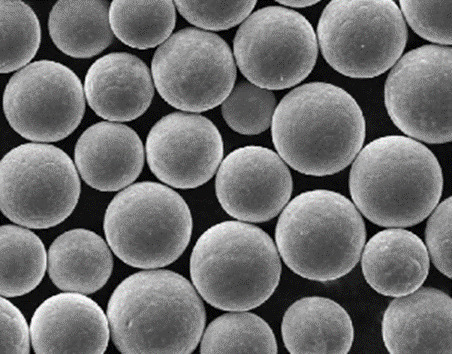
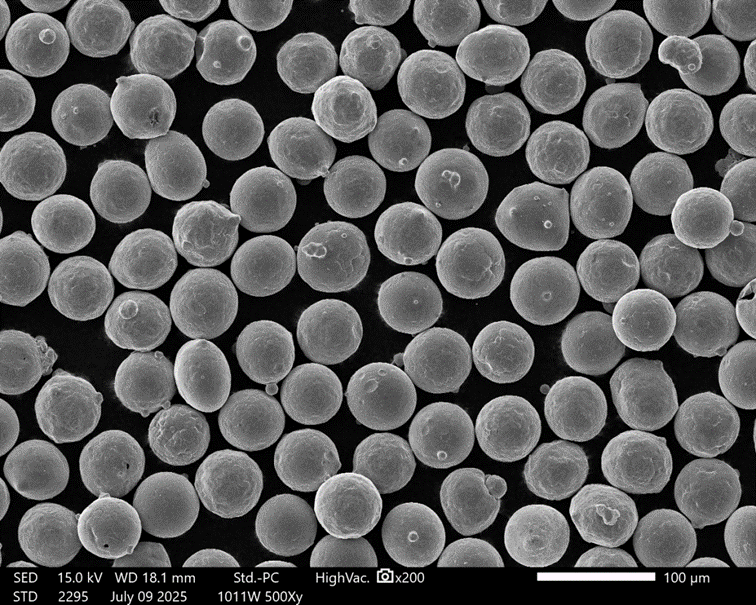
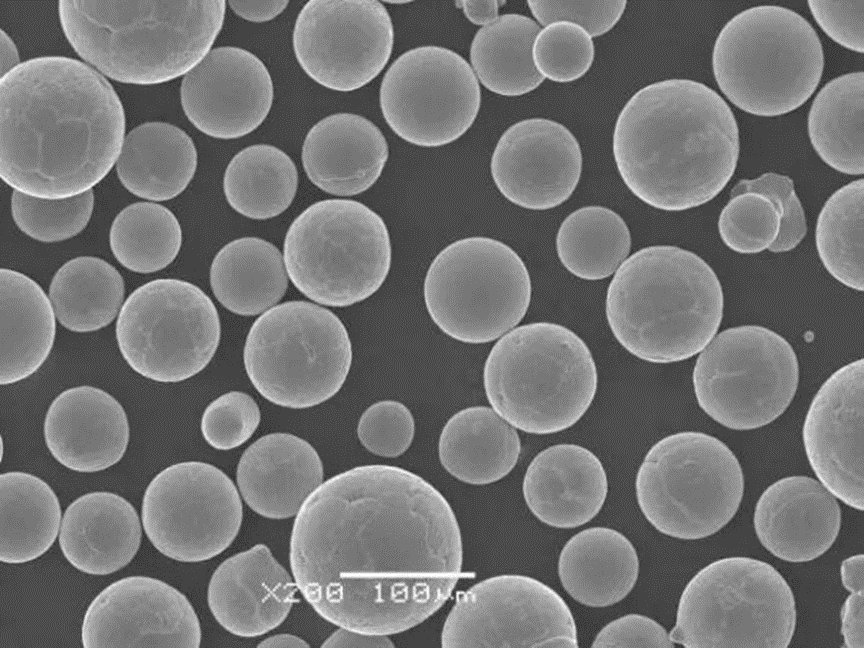
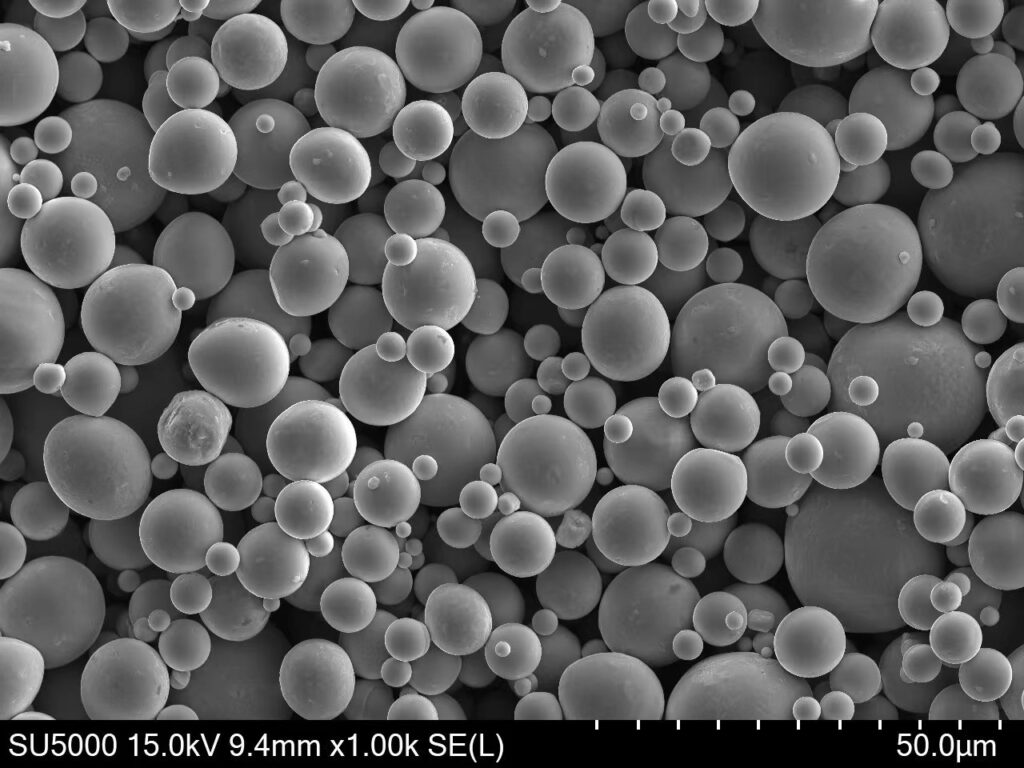
The powder-making route matters because AM performance starts with particle morphology. PREP creates droplets from a rotating bar or electrode melted by plasma, producing highly spherical particles with very low satellite content and limited contact with crucibles or refractory vessels. In practice, this often means sphericity and cleanliness that are especially valuable for powder bed fusion.
By contrast, users discussing “IN718 powder” in general may be referring to gas-atomized material, vacuum induction gas atomized powder, or other variants. Those powders can still perform very well, but PREP feedstock is typically selected when end users prioritize stricter control over contamination, highly uniform flow behavior, and repeatability across production lots.
Core characteristics of this nickel superalloy powder
PREP-made IN718 is valued because it balances printability with engineering performance. The alloy can be printed into dense parts, heat treated into high-strength condition, and machined or finished for demanding service environments. Its corrosion resistance also makes it useful beyond hot-section aerospace, extending into oil and gas, energy, and chemically aggressive industrial hardware.
The powder is most often used in laser powder bed fusion, electron beam powder bed fusion, directed energy deposition blends, hot isostatic pressing feedstock, and selected thermal processing routes. In broader powder portfolios, it sits beside nickel alloy powder grades for additive manufacturing, but it occupies a more specialized position because the PREP route is usually chosen for high-end quality control rather than commodity volume.
In metal AM, the difference between an acceptable part and a repeatable production part often starts with the powder, not the printer.
Chemical Composition
The nominal chemistry of Alloy 718 is tightly controlled because even modest shifts in niobium, titanium, aluminum, carbon, oxygen, and trace residuals can affect cracking tendency, precipitate formation, and final heat-treated strength. For PREP IN718 powder, chemistry targets generally follow well-established Alloy 718 composition windows while placing extra emphasis on cleanliness and low interstitial pickup.
| Element | Typical Range (wt%) | Function in Alloy | Relevance to AM Powder |
|---|---|---|---|
| Nickel (Ni) | 50.0–55.0 | Matrix element; stabilizes austenitic structure | Supports toughness, corrosion resistance, and hot strength |
| Chromium (Cr) | 17.0–21.0 | Oxidation and corrosion resistance | Improves scale resistance during thermal exposure |
| Iron (Fe) | Balance | Cost-effective matrix constituent | Helps maintain alloy identity and processability |
| Niobium + Tantalum (Nb+Ta) | 4.75–5.50 | Main gamma-double-prime strengthening contribution | Critical for age-hardening response after printing |
| Molybdenum (Mo) | 2.80–3.30 | Solid-solution strengthening; creep resistance | Supports elevated-temperature strength |
| Titanium (Ti) | 0.65–1.15 | Contributes to precipitate formation | Affects age-hardening and microstructural stability |
| Aluminum (Al) | 0.20–0.80 | Gamma-prime precipitation support | Helps strengthen after solution and aging treatment |
| Cobalt (Co) | ≤1.00 typical | Minor influence on hot properties | Usually controlled as a residual or optional addition |
| Carbon (C) | ≤0.08 | Carbide formation at boundaries | Too much can reduce ductility and weldability |
| Manganese (Mn) | ≤0.35 | Residual/deoxidation-related control | Kept low for cleanliness and consistency |
| Silicon (Si) | ≤0.35 | Residual control | Excess can impair toughness and hot workability |
| Phosphorus (P) | ≤0.015 | Residual impurity | Held very low to avoid embrittlement |
| Sulfur (S) | ≤0.015 | Residual impurity | Minimized for hot-workability and ductility |
| Oxygen (O) | Often controlled by powder spec | Interstitial contaminant rather than alloying element | Strongly influences powder cleanliness and fatigue performance |
Metallurgical role of the key elements
Nickel provides the corrosion-resistant, heat-resistant matrix that makes Alloy 718 a superalloy rather than a high-alloy stainless steel. Chromium adds oxidation resistance and helps the alloy survive harsh atmospheric and combustion-adjacent conditions. Together, they form the base that enables service at temperatures far above the practical range of many structural steels.
Niobium is the most influential strengthening element in IN718 because it drives formation of the gamma-double-prime phase during aging. That is a major reason the alloy can be printed, stress relieved, solution treated, and aged into a property profile attractive for structural AM parts.
Molybdenum contributes solid-solution strengthening and helps sustain high-temperature strength. Titanium and aluminum play supporting but important roles in precipitation behavior, especially when heat treatment targets a specific strength-ductility balance.
Carbon, sulfur, phosphorus, and oxygen are not “performance features” in powder supply; they are risk variables. In PREP IN718 powder, low impurity control is one of the reasons the route is favored for fatigue-sensitive or fracture-critical uses.
Composition control and batch consistency
For AM, chemistry consistency matters at three levels: printed density, cracking behavior, and final heat treatment response. A powder lot at the top end of one alloying element and the low end of another can still be nominally compliant while behaving differently in melt pool dynamics or aging response.
This is why high-specification users frequently review not only alloy certificates but also oxygen, nitrogen, and particle chemistry after reuse. Where process validation is strict, feedstock traceability is treated almost as seriously as machine parameter traceability.
Physical and Mechanical Properties
The physical properties of PREP IN718 powder matter in two different states: as loose powder and as consolidated material after printing and heat treatment. End users often focus on tensile strength, hardness, and corrosion resistance, but print stability also depends on flow and packing behavior before the laser or electron beam ever reaches the powder bed.
| Property | Typical Value | Unit | Test Standard / Condition |
|---|---|---|---|
| Density of solid alloy | 8.19 | g/cm³ | Typical wrought/alloy reference |
| Melting range | 1260–1336 | °C | Typical alloy range |
| Ultimate tensile strength | 1240–1500 | MPa | Typical after solution + aging |
| Yield strength (0.2%) | 1030–1280 | MPa | Typical after heat treatment |
| Elongation | 12–25 | % | Condition-dependent |
| Hardness | 35–45 | HRC | Typical aged condition |
| Elastic modulus | 200–205 | GPa | Room temperature, typical |
| Thermal conductivity | 11–16 | W/m·K | Temperature and condition dependent |
| Coefficient of thermal expansion | 13.0–13.5 | µm/m·K | Approx. 20–100 °C range |
| Fatigue performance | Highly process dependent | — | Strongly linked to density, surface, HIP, and finish |
Typical powder-related properties
For powder users, apparent density, tap density, Hall flow, particle sphericity, and oxygen level can matter as much as bulk alloy strength. PREP feedstock is often chosen because the morphology supports smooth recoating, uniform powder layers, and fewer interruptions in automated builds.
The resulting benefit is not that PREP automatically creates stronger parts; rather, it can improve the statistical consistency of the process window. That contributes to process stability, especially when thin layers, long recoater travel, or serial production are involved.
Mechanical properties after AM and heat treatment
Printed IN718 usually undergoes stress relief and then a solution-and-aging cycle to develop full precipitation strengthening. Mechanical values can vary with machine platform, scan strategy, build orientation, heat treatment route, and whether hot isostatic pressing is used.
In many validated workflows, tensile properties of AM IN718 are comparable to or higher than conventional wrought minimums, though ductility and fatigue depend strongly on porosity, lack-of-fusion control, and surface condition. PREP powder helps at the front end by reducing feedstock-related variability, but the full property outcome remains a system result.
Thermal behavior in service
IN718 is not the hottest-running nickel superalloy, yet it offers an unusually useful balance of strength, oxidation resistance, weldability, and manufacturability. That balance explains its long-standing use in engines, turbines, and pressure-exposed hardware.
For metal AM, the alloy is attractive because it tolerates complex geometry and post-processing well. Users who need even better heat transfer may look at copper alloy powders for thermal AM applications, while users chasing lightweight high-strength structures may compare against titanium powder grades for aerospace and medical builds.
Specifications and Available Grades
Specifications for PREP IN718 powder usually combine alloy chemistry limits with powder morphology and cleanliness limits. End users seldom buy by chemistry alone; they buy a specification package that covers particle size distribution, flow characteristics, density metrics, interstitial limits, and intended AM process route.
| Supply Form / Grade | Typical PSD Range | Apparent Density | Tap Density | Hall Flow | Oxygen Content | Sphericity / Morphology | Common Standards / Cross-Reference |
|---|---|---|---|---|---|---|---|
| Fine PBF grade | 15–45 µm | Typical 4.4–4.9 g/cm³ | Typical 5.0–5.6 g/cm³ | Typical 14–18 s/50 g | Often ≤0.03 wt% | Highly spherical, low satellites | Used for LPBF/SLM-style processing |
| Standard PBF grade | 15–53 µm | Typical 4.5–5.0 g/cm³ | Typical 5.1–5.7 g/cm³ | Typical 13–17 s/50 g | Often ≤0.03 wt% | High roundness, narrow fines control | Common general AM powder range |
| Coarser EBM grade | 45–105 µm | Typical 4.6–5.1 g/cm³ | Typical 5.2–5.8 g/cm³ | Typical 12–16 s/50 g | Often ≤0.03 wt% | Free-flowing, robust spreadability | Suited to thicker powder layers |
| DED / cladding grade | 53–150 µm | Typical 4.7–5.2 g/cm³ | Typical 5.3–5.9 g/cm³ | Typical 12–15 s/50 g | Often ≤0.04 wt% | Spherical with controlled coarse fraction | Used in blown-powder systems |
| Alloy chemistry reference | — | — | — | — | Controlled by powder spec | Chemistry aligned to Alloy 718 | Comparable to AMS 5662/5663 chemistry basis |
| AM standards reference | — | — | — | — | Verified per QA plan | Morphology defined by powder route | Often aligned with ASTM additive manufacturing standards program |
| Terminology reference | — | — | — | — | — | Powder definitions and AM vocabulary | Consistent with ISO/ASTM 52900 additive manufacturing terminology |
PREP IN718 powder PSD options
Powder size is selected according to layer thickness, beam type, and recoating behavior. Fine distributions support thinner layers and potentially higher feature resolution, but they may increase oxygen sensitivity and reduce flow if fines become excessive. Coarser distributions often improve flow and throughput but can limit fine-detail resolution.
For electron beam systems, users frequently prefer coarser, free-flowing fractions such as 45–105 µm. For laser powder bed fusion, 15–45 µm or 15–53 µm is common, depending on machine settings and desired productivity.
Typical specification checkpoints
A practical purchase specification for PREP IN718 powder usually includes chemistry certificate, PSD by laser diffraction or sieve method, apparent density, tap density, Hall flow, oxygen and nitrogen results, and morphology review by microscopy. Aerospace-grade qualification may also ask for lot-to-lot consistency data, reuse guidance, and contamination thresholds after screening cycles.
When a powder is intended for repeated recycling, users often request narrower fines control to reduce drift in reused blends. That is especially important for high-value serial builds, where powder aging can affect melt behavior before chemistry appears obviously out of range.
Available grades in supplier portfolios
Suppliers may stock PREP IN718 powder as standard AM grades for LPBF, EBM, DED, and repair/cladding routes. Some also provide project-specific screening windows, tighter oxygen limits, or customized PSD blends to match proprietary machine recipes.
On broader industrial platforms, PREP IN718 powder is often grouped with other metal powder application categories across AM sectors because the same feedstock may be qualified for powder bed fusion, HIP capsules, and surface engineering workflows. The exact grade name varies by supplier, but the critical distinction is process route plus PSD class rather than a new alloy family.
Manufacturing Process
The manufacturing route is the defining feature of PREP IN718 powder. While the alloy chemistry remains Alloy 718, the route determines morphology, cleanliness, and the degree to which the powder is optimized for demanding AM conditions.
How the PREP route works
In Plasma Rotating Electrode Process, a consumable electrode made from the desired alloy rotates at high speed while a plasma source melts its tip. Centrifugal force ejects molten droplets, which solidify into nearly spherical particles during flight. Because the molten metal is not poured through a tundish and usually has limited contact with ceramic or refractory surfaces, the process is known for low oxygen pickup and clean powder production.
This route is particularly attractive for reactive or premium alloys where contamination control is critical. The same logic explains its use in titanium, nickel, and specialty biomedical materials as well as some powders produced for SEBM workflows.
How GA, VIGA, and EIGA compare
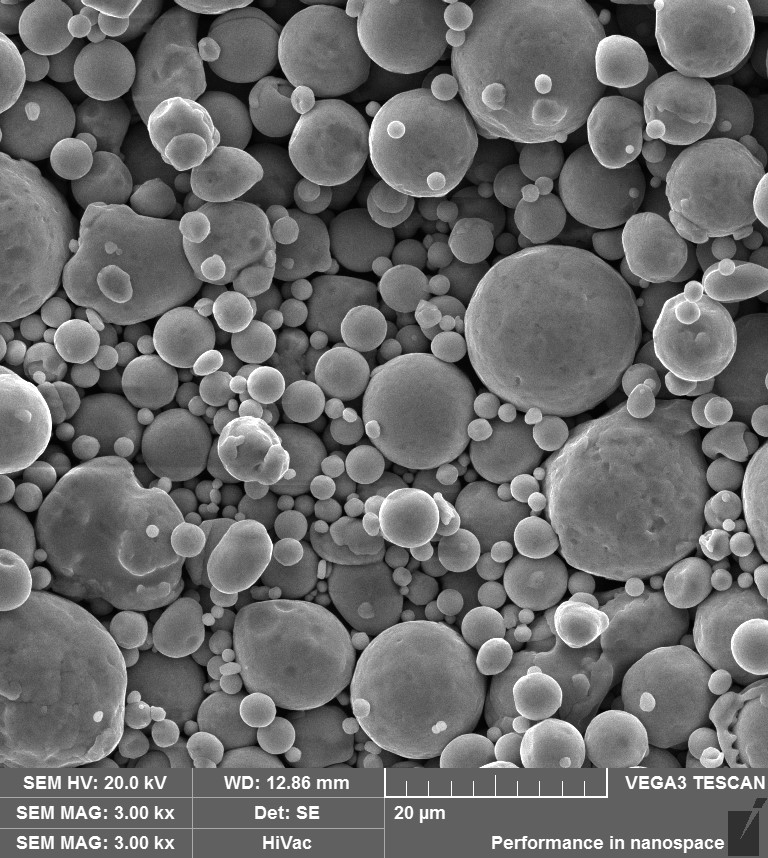
Gas atomization, including vacuum induction gas atomization, is more widely used at industrial scale because it supports higher throughput and lower cost per kilogram. However, atomized powders can show more satellites or broader PSD depending on nozzle design and gas conditions.
Electrode induction gas atomization also reduces contamination by melting feedstock without crucible contact, making it a strong competitor for high-cleanliness applications. The best route depends on whether the user prioritizes cost, throughput, morphology, or ultra-clean feedstock.
| Process | Principle | Sphericity | Oxygen / Contamination Risk | PSD Control | Throughput | Relative Cost | Typical Fit for IN718 AM Powder |
|---|---|---|---|---|---|---|---|
| PREP | Plasma melts rotating electrode; droplets formed by centrifugal force | Excellent | Very low | Good, often narrower usable fraction after screening | Medium | High | Premium powder for critical PBF and SEBM/EBM use |
| GA | Molten metal atomized by inert gas jets | Good to very good | Low to moderate depending on melt handling | Very good, highly tunable | High | Moderate | Widely used mainstream LPBF and DED feedstock |
| VIGA | Vacuum induction melt followed by gas atomization | Very good | Low with strong vacuum control | Very good | Medium to high | Moderate to high | High-quality industrial AM production |
| EIGA | Induction melting of bar/electrode with gas atomization | Very good to excellent | Very low | Good to very good | Medium | High | Clean specialty powders and reactive alloys |
| PA / plasma atomization variants | Plasma-based droplet formation from wire/feed | Excellent | Low | Good | Medium | High | Premium spherical powders, often specialty-focused |
Trade-offs in real purchasing decisions
PREP is not automatically the best choice for every IN718 job. If the part is relatively forgiving and cost matters more than the last increment of powder quality, VIGA or high-quality GA powder may be the economically rational option.
PREP becomes more compelling when the application is defect-sensitive, when the machine benefits from smooth flow and narrow morphology variation, or when contamination tolerance is unusually strict. That is why buyers often specify PREP for fatigue-critical or certification-oriented programs rather than for purely experimental builds.
Powder processing after production
After powder formation, the work is not finished. Screening, classification, blending, drying, packaging under controlled atmosphere, and certificate generation all affect final usability. Even highly spherical feedstock can become less reliable if packaging, storage, or handling allows moisture uptake or mechanical degradation.
For this reason, powder production equipment and powder QA are linked disciplines. Technical suppliers active in both equipment and powders often understand this relationship more directly than firms focused only on powder resale.
Applications by Industry
PREP IN718 powder is used where a printed part must withstand heat, pressure, oxidation, or cyclic mechanical loading while still benefiting from AM-enabled geometry. The material is especially relevant when shape complexity and property consistency must coexist.
Aerospace and space propulsion
Aerospace remains the most natural home for IN718. Brackets, ducts, manifolds, combustor-adjacent components, tooling inserts, and non-rotating engine hardware all benefit from the alloy’s strength and heat resistance. PREP powder is attractive in these programs because satellite-free morphology can reduce powder-bed irregularities in qualification builds.
Space and propulsion hardware also use IN718 for pressure-containing parts, injector-related hardware, and thermal-mechanical structures that see demanding duty cycles. Compared with lighter alloys, IN718 adds mass, but it compensates with stronger hot performance and robust corrosion resistance.
Energy, oil and gas, and industrial process equipment
Downhole tools, valve components, sealing hardware, turbine-adjacent fixtures, and corrosion-exposed parts are common use cases. In these environments, designers value IN718 because it combines strength with useful resistance to sour, saline, or oxidizing service conditions.
AM becomes especially attractive when spare part lead times are long or when internal channels improve cooling or fluid management. In such applications, PREP feedstock can support repeatable print runs where batch consistency is critical.
Medical and advanced engineering use
IN718 is not a standard implant alloy in the way Ti-6Al-4V or CoCrMo are, but it appears in specialized medical devices, tooling, and fixtures where sterilization resistance and mechanical reliability matter. For implant-centered materials, engineers more commonly review cobalt-based alloy powder options for biocompatible wear systems or titanium grades. Still, IN718 remains useful in non-implant medical manufacturing infrastructure.
Automotive, motorsport, and high-performance tooling
Turbocharger-adjacent hardware, exhaust-side components, motorsport fixtures, and hot-form tooling can benefit from IN718 where stainless steels soften too quickly. Additive manufacturing allows rapid iteration of lightweight but strong designs, especially for short-run high-value production.
In performance tooling, the alloy is selected less for ultimate hardness than for thermal robustness and dimensional stability under cyclic heating. That makes it relevant for dies, inserts, and test hardware exposed to repeated thermal loading.
Research, prototyping, and process development
PREP IN718 powder is also used in universities, labs, and industrial R&D centers to establish benchmark process windows. Because Alloy 718 is one of the best-studied superalloys in additive manufacturing, it provides a practical platform for comparing scan strategy, heat treatment, HIP, and powder reuse effects.
For powder characterization methods and broader materials metrology context, many labs align internal practice with resources from NIST materials science and engineering programs. That makes IN718 a useful bridge between research-grade testing and production-scale AM qualification.
Comparison with Alternative Materials
PREP IN718 powder occupies a middle ground between lightweight alloys, highly corrosion-resistant cobalt systems, and more extreme-temperature nickel superalloys. It is rarely the cheapest option and never the lightest, but it offers one of the most balanced combinations of printability, heat resistance, and post-process mechanical strength.
| Material | Density (g/cm³) | Typical Strength Level | High-Temperature Capability | Corrosion Resistance | Relative Cost | Printability | Best-Fit Use Case |
|---|---|---|---|---|---|---|---|
| PREP IN718 powder | 8.19 | High | High | High | High | Very good with premium powder quality | Critical AM parts needing balanced hot strength and manufacturability |
| GA IN718 powder | 8.19 | High | High | High | Moderate to high | Very good | General industrial AM where cost-quality balance matters |
| Ti-6Al-4V powder | 4.43 | High specific strength | Moderate | Good to very good | High | Excellent | Lightweight aerospace and medical structures |
| CoCrMo powder | 8.3–8.5 | High | Moderate to high | Excellent | High | Good to very good | Wear, corrosion, and selected medical or valve applications |
| 316L stainless steel powder | 7.9–8.0 | Moderate | Moderate | Good | Lower | Excellent | General corrosion-resistant AM parts and prototyping |
| Hastelloy X / similar Ni alloy powder | ~8.2 | Moderate to high | Very high oxidation resistance | Very good | High | Good | Furnace, combustor, and very high-temperature environments |
PREP IN718 powder versus gas-atomized IN718
This is the most practical comparison because the alloy is the same but the powder route differs. PREP material often gives better morphology and cleaner surfaces, while premium GA can provide lower cost and greater market availability. The decision usually comes down to required quality margin rather than nominal chemistry.
PREP IN718 powder versus titanium alloys
Titanium wins where mass reduction matters most. IN718 wins where temperature capability, stiffness, or corrosion resistance under hot service outweigh the penalty of higher density.
PREP IN718 powder versus stainless steels
Compared with 316L, IN718 is substantially stronger at elevated temperature and more suitable for harsh thermal-duty components. Stainless steel remains easier to justify for low-cost prototyping, chemical equipment at moderate temperature, and less demanding structural parts.
PREP IN718 powder versus cobalt and specialty superalloys
Cobalt systems may outperform IN718 in wear or specific corrosion environments, while specialty nickel alloys may exceed its oxidation resistance at extreme temperature. Yet IN718 often remains the default engineering choice because it combines a mature data set, broad processing experience, and comparatively forgiving AM behavior.
For readers needing a simple family context, the Wikipedia overview of superalloys is useful because it shows why Alloy 718 sits at the intersection of strength, oxidation resistance, and manufacturability rather than at only one performance extreme.
Our Company
Shanghai Truer Technology Co., Ltd., operating am-printing.com, was established in 2009 and launched its additive manufacturing business in 2019. The company works in both metal powder equipment and powder supply, with relevant technologies including Selective Electron Beam Melting equipment, Plasma Rotating Electrode Process powder-making equipment, and gas atomization systems. Its powder portfolio includes TiNi, TiTa, TiAl, TiNbZr, CoCrMo, and broader nickel-, cobalt-, titanium-, copper-, aluminum-, and stainless-steel spherical metal powders, serving processes such as SLM, SEBM, DED, laser cladding, powder metallurgy, MIM, HIP, spraying, welding, and coating. A neutral company profile and organizational background are outlined on the manufacturer overview page.
FAQ
Q1. Is PREP IN718 powder better than gas-atomized IN718 powder?
Not universally, but it is often preferred for critical builds where powder roundness, low satellite content, and contamination control are top priorities. High-quality gas-atomized IN718 can still perform very well, especially when cost and throughput matter more than the last increment of powder cleanliness.
Q2. What particle size is typical for PREP IN718 powder in laser powder bed fusion?
Common LPBF ranges are 15–45 µm and 15–53 µm. The ideal cut depends on layer thickness, recoating behavior, laser parameters, and whether the user prioritizes surface finish, fine features, or build rate.
Q3. Can PREP IN718 powder be used for electron beam melting?
Yes. Coarser fractions such as 45–105 µm are commonly suitable for electron beam powder bed fusion because they flow well and match thicker layer strategies. PREP feedstock is particularly compatible with this route because of its high sphericity and low contamination profile.
Q4. Why is oxygen content important in PREP IN718 powder?
Oxygen is a sensitive indicator of powder cleanliness and can affect ductility, fatigue response, and the stability of reused powder blends. Lower oxygen levels are generally preferred, especially for aerospace and other defect-sensitive applications.
Q5. Does PREP IN718 powder require heat treatment after printing?
In most cases, yes. Stress relief is commonly followed by solution treatment and aging so the alloy can develop the precipitation-hardened structure that gives IN718 its well-known strength. Some workflows also add hot isostatic pressing to improve density and fatigue performance.
Q6. Which industries benefit most from PREP IN718 powder?
Aerospace, energy, oil and gas, motorsport, and advanced industrial tooling are the leading users because they need strong parts that retain performance under heat and corrosive exposure. The powder route is most valuable when consistent print quality, low contamination, and repeatable lot behavior are part of the engineering requirement.