Quick Answer
PREP spherical CM247LC powder is a powder-metallurgy form of the CM247LC nickel-based superalloy made with the Plasma Rotating Electrode Process for highly spherical, low-contamination particles. It is chosen for turbine-class additive manufacturing parts when engineers need very high temperature capability, strong creep and oxidation resistance, and cleaner powder morphology than standard atomized feedstock can always provide. The trade-off is that CM247LC remains a high-γ′ alloy with limited process tolerance in laser-based AM, so powder quality alone does not eliminate cracking risk. (pmc.ncbi.nlm.nih.gov)
What Is PREP spherical CM247LC powder
PREP spherical CM247LC powder is the spherical powder form of CM247LC, a cast nickel-based superalloy originally developed as a derivative of MAR-M247 with lower carbon and strong high-temperature capability for turbine service. In alloy-family terms, CM247LC sits in the class of precipitation-strengthened nickel superalloys, where the matrix is nickel-rich and strength is largely derived from a high volume fraction of gamma-prime (\gamma’) precipitates based on (Ni_3(Al,Ti,Ta)). (pdfs.semanticscholar.org)
Why CM247LC Matters in Additive Manufacturing
CM247LC is important because it represents the upper-performance end of nickel alloys considered for advanced hot-section components. Compared with easier-to-print grades such as Inconel 718 or 625, it offers much stronger creep resistance and better retention of mechanical strength at elevated temperature, which is why it remains relevant to turbine blades, vanes, shrouds, and other heat-loaded hardware. The challenge is that this same high (\gamma’) content also makes the alloy far more crack-sensitive during rapid solidification in powder bed fusion. (pmc.ncbi.nlm.nih.gov)
What PREP Adds to the Powder, Not the Alloy
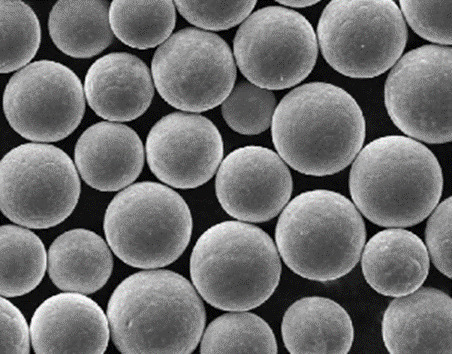
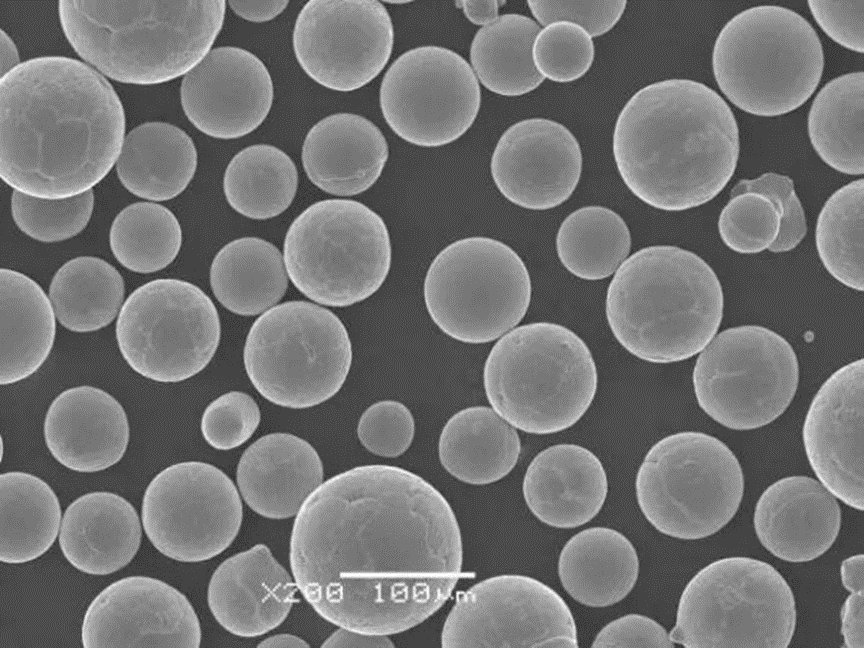
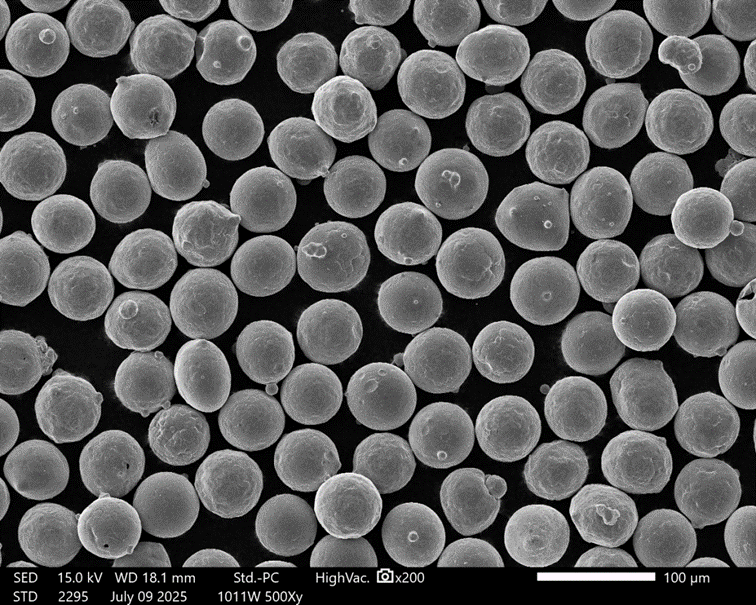
The PREP route does not change CM247LC’s nominal alloy family, but it changes the physical character of the powder feedstock. Plasma Rotating Electrode Process powder is known for high roundness, low satellite content, good flow, and low oxygen pickup because particles are generated from a rotating electrode rather than broken directly from a bulk melt stream. Those traits are useful in processes that depend on stable powder delivery and high packing consistency. (catalogimages.wiley.com)
Core Characteristics of PREP Spherical CM247LC Powder
The defining traits are very high sphericity, high temperature strength potential, strong oxidation and hot-corrosion resistance for a nickel superalloy, and suitability for demanding powder-based routes such as laser powder bed fusion research, electron-beam-related development work, hot isostatic pressing feedstock, and repair or hybrid manufacturing programs. At the same time, users must remember that CM247LC is not a forgiving alloy system; even excellent powder can still require tailored scanning strategy, preheat practice, and post-processing to manage cracking and residual stress. (pmc.ncbi.nlm.nih.gov)
CM247LC in a Broader Nickel Superalloy Landscape
In most AM development programs, CM247LC is evaluated only after a lower-risk nickel alloy has already been screened. Teams comparing hotter-running superalloys often begin with broader high-temperature nickel alloy powders and then decide whether the extra creep capability of CM247LC justifies its narrower processing window. The terminology used to classify these feedstocks and AM routes is aligned with ISO/ASTM 52900 terminology. (cdn.standards.iteh.ai)
Chemical Composition
CM247LC is a complex superalloy rather than a simple corrosion-resistant nickel grade. Its chemistry is engineered to create a nickel matrix reinforced by a high fraction of (\gamma’) precipitates while also supporting carbide stability, grain-boundary strength, and environmental resistance under prolonged thermal loading. Published nominal compositions across technical literature are closely clustered even when small lot-to-lot variations exist. (pdfs.semanticscholar.org)
| Element | Typical Content (wt%) | Common Nominal Range (wt%) | Metallurgical Role |
|---|---|---|---|
| Ni | Balance | Balance | Matrix phase; supports high-temperature strength and phase stability |
| Cr | 8.0 | 8.0–8.5 | Oxidation and hot-corrosion resistance |
| Co | 9.0–9.5 | 9.0–9.5 | Strengthens matrix and affects (\gamma’) solvus behavior |
| W | 9.5–10.0 | 9.5–10.0 | Strong solid-solution strengthening and creep resistance |
| Al | 5.5–5.6 | 5.5–5.7 | Primary (\gamma’) former for precipitation strengthening |
| Ta | 3.0–3.2 | 2.9–3.2 | Strengthens (\gamma’); contributes to carbide formation |
| Hf | 1.3–1.4 | 1.3–1.5 | Grain-boundary strengthening and carbide stability |
| Ti | 0.7 | 0.7–1.0 | (\gamma’) strengthening contributor |
| Mo | 0.5 | 0.5–0.7 | Solid-solution strengthening |
| C | 0.07–0.10 | 0.07–0.10 | Carbide formation and grain-boundary control |
| B | 0.015 | 0.01–0.02 | Grain-boundary cohesion at low addition levels |
| Zr | 0.005–0.01 | 0.005–0.015 | Grain-boundary strengthening and castability support |
The Role of Aluminum, Titanium, and Tantalum in CM247LC
Aluminum, titanium, and tantalum are central to the alloy’s strength because they promote (\gamma’) precipitation. In CM247LC, the total content of these strengthening elements is high enough to deliver excellent elevated-temperature properties, but that also increases solidification stress and cracking susceptibility during rapid AM thermal cycles. This is why the alloy is prized for turbine conditions yet difficult to print by conventional laser parameters. (pdfs.semanticscholar.org)
Why Tungsten, Cobalt, and Hafnium Matter in PREP Spherical CM247LC Powder
Tungsten and cobalt contribute heavily to matrix strengthening and high-temperature capability, while hafnium improves grain-boundary behavior and carbide stability. These elements are useful in service above the temperature range where lower-alloy nickel powders remain comfortable, but they also raise density and cost and can complicate process optimization. PREP is attractive partly because it helps preserve a clean, spherical feedstock for such a compositionally demanding alloy. (rolexalloys.com)
Low Carbon Means “Lower,” Not “Low-Strength”
The “LC” in CM247LC refers to lower carbon relative to its parent alloy family, not to a low-alloy or low-performance formulation. Reducing carbon was intended to mitigate grain-boundary cracking tendencies compared with earlier variants while preserving high-temperature capability. Even so, the alloy remains a premium turbine-grade superalloy, not a general-purpose AM nickel grade. (repository.gatech.edu)
Physical and Mechanical Properties
For CM247LC, property values must always be read with processing route in mind. Cast, directionally solidified, HIP-consolidated, and additively manufactured material can all carry the same alloy name while showing different room-temperature tensile behavior, ductility, porosity sensitivity, and creep performance. That matters more here than in easier AM alloys because CM247LC’s microstructure responds strongly to thermal history. (journals.sagepub.com)
| Property | Typical Value | Unit | Test Standard / Basis |
|---|---|---|---|
| Density | 8.54 | g/cm³ | Nominal alloy value from published datasheets |
| Melting range | 1310–1375 | °C | Approximate alloy melting interval |
| Ultimate tensile strength | 890–1240 | MPa | Typical consolidated condition; process dependent |
| Yield strength | 660–1010 | MPa | Typical room-temperature range; process dependent |
| Elongation at break | 4–8 | % | Typical room-temperature consolidated range |
| Hardness | 380–450 | HV | Typical aged or consolidated superalloy range |
| Thermal conductivity | 10–14 | W/m·K | Approximate room-temperature range for Ni superalloys |
| Oxidation service capability | High | Qualitative | Relative to general-purpose Ni alloys at elevated temperature |
Interpreting Strength Data for CM247LC AM Powder
CM247LC can exhibit room-temperature tensile strengths well above many stainless or precipitation-hardening steel powders, but its ductility is usually lower and more defect-sensitive. Published work on defect-free metal-material-extrusion CM247LC reported a yield strength of 660.4 MPa, ultimate tensile strength of 891 MPa, and elongation of 7.56%, while cast fine-grain CM247LC has been reported at significantly higher room-temperature strength levels. The gap illustrates how route, porosity, cracking, and heat treatment reshape the final property envelope. (journals.sagepub.com)
High-Temperature Behavior Is the Main Reason to Choose This Alloy
The real case for CM247LC is not room-temperature yield strength alone. It is selected because it retains useful strength, creep resistance, and oxidation behavior under turbine-like thermal loading where lower-performance nickel grades begin to lose margin. In other words, room-temperature data tells only part of the story; service-temperature performance is the alloy’s real reason for existing. (en.wikipedia.org)
CM247LC is typically selected for the temperature regime, not because it is the easiest nickel alloy to print.
Powder-State Properties Still Matter
For PREP spherical CM247LC powder, the particle-level metrics that matter most are flowability, apparent density, tap density, oxygen content, and morphology consistency. Even when nominal chemistry is correct, poor flow or irregular packing can intensify lack-of-fusion or local overheating in powder-bed routes. That is why a premium powder process is often discussed alongside this alloy more than with routine stainless or tool steel feedstocks. (catalogimages.wiley.com)
Why Mechanical Data Should Be Treated as Typical, Not Universal
There is no single tensile value that defines CM247LC in additive manufacturing. Properties depend on whether the part was fully dense, whether cracks were suppressed, whether HIP was used, what aging cycle followed, and whether the final microstructure remained columnar, equiaxed, or defect-interrupted. Engineers should therefore use property tables only as screening tools until part-specific qualification data is generated. (doi.org)
Specifications and Available Grades
Commercial buyers usually specify PREP spherical CM247LC powder by chemistry conformance, particle size distribution, oxygen ceiling, morphology, apparent density, flow behavior, and package atmosphere. Unlike commodity AM alloys, this grade is often purchased against a customer drawing or project specification rather than against a universal off-the-shelf powder standard. That is common in aerospace-adjacent and hot-section development work. (store.astm.org)
| Typical Grade | PSD Range (µm) | Apparent Density (g/cm³) | Tap Density (g/cm³) | Hall Flow (s/50 g) | Oxygen Content (wt%) | Sphericity / Cross-Reference Note |
|---|---|---|---|---|---|---|
| PREP Fine PBF Grade | 15–45 | 4.8–5.2 | 5.2–5.8 | 13–20 | 0.02–0.08 | Very high; suited to fine-layer AM research and premium PBF feedstock |
| PREP Standard PBF Grade | 15–53 | 4.9–5.3 | 5.4–5.9 | 12–18 | 0.02–0.07 | Very high; common screening range for laser powder bed trials |
| PREP Medium-Cut Grade | 20–63 | 5.0–5.4 | 5.5–6.0 | 11–17 | 0.02–0.06 | Very high; used in broader powder-bed and HIP programs |
| PREP Coarse Feed Grade | 45–105 | 5.1–5.5 | 5.7–6.2 | 10–16 | 0.01–0.05 | Very high; more suitable for DED, cladding, or specialized feed systems |
| Standards Practice Row | By project spec | By lot | By lot | By lot | By lot | Typically cross-checked to customer aerospace specs, ISO/ASTM terminology, and internal powder QA practice |
Particle Size Distribution for PREP Spherical CM247LC Powder
Fine cuts such as 15–45 µm or 15–53 µm are most relevant where high layer uniformity and detailed geometry are required. These cuts improve resolution but increase surface area, which can make oxygen control and reuse discipline more important. Coarser cuts are easier to feed in nozzle-based processes but are generally less suitable for high-resolution powder beds. (catalogimages.wiley.com)
Standards and Tolerance Expectations
There is no widely used one-line ASTM or AMS material designation that fully captures CM247LC PREP powder in additive manufacturing the way a purchaser might hope. Instead, procurement often combines the nominal alloy chemistry with powder inspection limits and general AM framework documents, including the ASTM additive manufacturing standards catalog. This is especially common when a project includes proprietary scan strategies or part-specific acceptance windows. (store.astm.org)
Available Grades in Practice
A supplier may stock or produce CM247LC in several sieve cuts even though all are based on the same nominal chemistry. The real distinction is the intended route: fine PREP powder for premium powder-bed work, medium cuts for HIP feedstock or broader development, and coarser fractions for DED or repair applications. Engineers comparing high-temperature alloys sometimes also benchmark against a [refractory metal powder range] when service temperature is extreme enough to move beyond conventional nickel superalloys. (en.wikipedia.org)
Manufacturing Process
The manufacturing route is unusually important for CM247LC because the alloy’s complexity amplifies the consequences of poor powder morphology or contamination. PREP, gas atomization, vacuum induction gas atomization, and electrode induction gas atomization can all produce spherical nickel-alloy powder, but they do not deliver the same balance of cleanliness, satellite content, size control, and cost. (catalogimages.wiley.com)
| Process | Typical Sphericity | Oxygen Pickup Risk | PSD Control | Throughput | Relative Cost | Typical Fit |
|---|---|---|---|---|---|---|
| PREP | Very high | Very low | Good, often narrow and clean | Low to medium | High | Premium spherical powder for demanding alloys and sensitive AM routes |
| GA | High | Low to moderate | Good | High | Medium | Mainstream AM powder production with strong economics |
| VIGA | High | Low | Good to very good | Medium | Medium-high | Cleaner melt handling for advanced alloy powders |
| EIGA | Very high | Low | Very good | Medium | High | High-purity spherical powder with limited melt contamination |
| Water Atomization | Low to medium | Higher | Good for bulk PM | High | Lower | Not typical for premium turbine-grade AM feedstock |
Why PREP Is Often Discussed with CM247LC
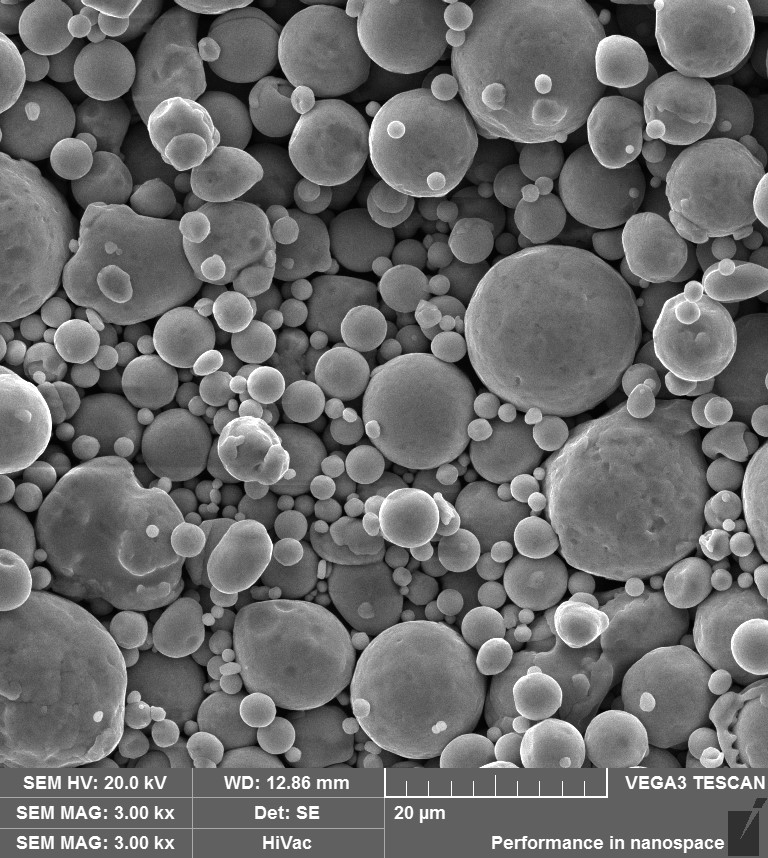
PREP is attractive for CM247LC because this alloy is already demanding before it ever reaches the machine. If the feedstock begins with irregular shape, excessive satellites, or elevated contamination, the process window narrows even further. A cleaner and more spherical powder cannot change the alloy’s crack sensitivity, but it can reduce one source of variability in spreading and melting behavior. (catalogimages.wiley.com)
Gas Atomization Versus PREP for Spherical CM247LC Powder
Gas atomization remains the mainstream industrial method for AM powders because it offers strong throughput and reasonable cost. It can absolutely produce good CM247LC powder, and much of the published laser work has used gas-atomized feedstock. PREP, however, is often favored when morphology quality is prioritized over production economy, especially for research or critical applications where powder consistency is scrutinized closely. (sciencedirect.com)
VIGA and EIGA as Intermediate or Premium Routes
VIGA improves cleanliness by melting under vacuum before atomization, while EIGA avoids some crucible-related contamination pathways by atomizing from an electrode feed. For high-value superalloys, these routes can be attractive where the user wants near-premium cleanliness but different size economics than PREP provides. The right choice depends on whether the dominant constraint is chemistry cleanliness, morphology, throughput, or budget. (iapt.fraunhofer.de)
Powder Quality Does Not Remove the Alloy’s Process Difficulty
This is the most important manufacturing caveat: crack-sensitive in laser AM still applies even when the powder is excellent. Published work has shown that CM247LC may crack under standard selective laser melting conditions, and some groups have turned to hybrid routes, hot isostatic pressing, or modified processing pathways because direct AM remains challenging. Powder quality helps, but process development remains decisive. (pmc.ncbi.nlm.nih.gov)
Applications by Industry
CM247LC is not a broad industrial default like 316L or Inconel 625. It is a specialist hot-section alloy whose strongest case appears when the part must hold mechanical integrity at temperatures and stress states that would overmatch more forgiving AM metals. That makes its application profile narrower but much more technically demanding. (en.wikipedia.org)
Aerospace and Gas Turbine Hardware
The clearest fit is aerospace and land-based gas turbine hardware, especially components exposed to sustained heat, oxidation, and creep loading. Examples include turbine blades, vanes, shrouds, combustor-adjacent details, hot-section repair builds, and development coupons used to screen manufacturing routes for next-generation engine architectures. Because direct laser printing is difficult, CM247LC is also relevant in hybrid manufacturing workflows rather than only in full net-shape builds. (pmc.ncbi.nlm.nih.gov)
Energy and Industrial Power Generation
Industrial gas turbines used in power generation operate in a service environment where creep strength and oxidation resistance matter continuously, not just intermittently. In that setting, CM247LC remains a relevant reference alloy for hot-end hardware, prototype upgrades, and repair studies. PREP feedstock may be attractive when powder quality consistency is part of the risk-control strategy. (mdpi.com)
Repair, HIP, and Hybrid Manufacturing Programs
One of CM247LC’s practical AM roles is not always direct final-part printing. Because the alloy is difficult to process in conventional laser powder bed fusion, it is frequently discussed in repair, canning, powder HIP, and hybrid manufacturing contexts where AM contributes tooling or geometry while a separate densification route delivers the final microstructure. This is a major reason CM247LC still appears in advanced manufacturing literature despite its narrow print window. (pmc.ncbi.nlm.nih.gov)
Where It Is Less Likely to Be Used
CM247LC is rarely the best choice for medical devices, general automotive hardware, or routine corrosion-resistant industrial parts. Its density, cost, processing difficulty, and turbine-oriented property profile mean that many lower-risk alloys will be better options in those sectors. Where weight reduction matters more than extreme heat tolerance, a titanium alloy powder portfolio may be the more logical comparison set. (en.wikipedia.org)
Matching the Powder to the End Process
Supplier selection is especially important for CM247LC because the end process may be SLM, SEBM-related development, DED, laser cladding, or HIP-based manufacturing rather than a single standard route. In multi-industry casework, powder users often compare sectors and process families through a broader application sectors overview before narrowing the specification to a turbine-focused nickel alloy. (cdn.standards.iteh.ai)
Comparison with Alternative Materials
Material selection for hot-section additive work is always comparative. Engineers choosing CM247LC are usually weighing it against easier-printing superalloys, oxidation-resistant cobalt alloys, or lighter titanium grades, not against generic stainless steels. The central question is whether the service-temperature benefit outweighs the manufacturing penalty. (en.wikipedia.org)
| Material | Density (g/cm³) | Typical Strength Level | Printability | High-Temperature Capability | Relative Cost | Best-Fit Application |
|---|---|---|---|---|---|---|
| PREP spherical CM247LC powder | 8.54 | Very high, especially at temperature | Challenging | Excellent | High | Turbine-class hot-section parts and advanced repair routes |
| Inconel 718 powder | 8.19 | High | Very good | Good to very good | Medium-high | Structural aerospace parts with easier AM processing |
| Inconel 625 powder | 8.44 | Moderate to high | Good | Good | Medium-high | Corrosion and moderate heat service with easier weldability |
| CoCrMo powder | 8.3–8.5 | High hardness and wear resistance | Good | Moderate to good | High | Wear, medical, and heat-resistant cobalt-alloy components |
| Ti-6Al-4V powder | 4.43 | High specific strength | Very good | Moderate | High | Lightweight aerospace structures, not extreme turbine hot sections |
CM247LC Versus Inconel 718
Inconel 718 is far easier to process additively and is therefore the industrial default for many nickel-alloy AM programs. However, when the service case shifts toward higher thermal exposure and stronger creep requirements, CM247LC becomes attractive despite its tougher process window. In simple terms, 718 is often the manufacturing choice, while CM247LC is the temperature-driven choice. (pmc.ncbi.nlm.nih.gov)
CM247LC Versus Inconel 625
Inconel 625 has excellent corrosion resistance and useful high-temperature strength, but it is not a direct substitute for a high-(\gamma’) turbine alloy. CM247LC is designed for far more demanding thermal-mechanical duty, whereas 625 is selected more often for corrosion, fabricability, and general high-temperature service. That distinction matters when engineers move from process plant hardware into turbine hot sections. (en.wikipedia.org)
CM247LC Versus Cobalt and Titanium Systems
Cobalt alloys can offer outstanding wear and hot-corrosion behavior, while titanium alloys deliver unmatched density savings, but neither replaces CM247LC in classic nickel-superalloy turbine service. The right comparison depends on the design driver: wear, weight, oxidation, creep, or repair compatibility. For some ultra-hot applications, engineers may even evaluate a refractory metal powder range after determining that nickel superalloys have reached their practical ceiling. (en.wikipedia.org)
Our Company
Shanghai Truer Technology Co., Ltd., operator of am-printing.com, was established in 2009 and created its additive manufacturing business in 2019. Based on the company profile, its activities include integrating 3D printing powder-making equipment and services with spherical metal powder supply, with stated core technologies in Selective Electron Beam Melting equipment, Plasma Rotating Electrode Process powder-making equipment, and gas atomization; its published powder portfolio includes TiNi, TiTa, TiAl, TiNbZr, CoCrMo, plus nickel-based, cobalt-based, titanium-based, copper-based, aluminum-based, and stainless steel powders for SLM, SEBM, DED, laser cladding, PM, MIM, HIP, spraying, welding, and coating in sectors including 3C electronics, hand tools, remote control cars, medical, aerospace, and nuclear power. Additional company details are summarized on the company background page.
FAQ
Q1. Is PREP spherical CM247LC powder better than gas-atomized CM247LC powder?
Not in every case, but it is often cleaner and more spherical. PREP generally offers lower satellite content and better particle roundness, which can help flow and powder-bed consistency. The trade-off is higher cost and usually lower throughput than mainstream gas atomization. (catalogimages.wiley.com)
Q2. Can PREP spherical CM247LC powder be used for SLM or LPBF?
It can be used for laser powder bed fusion development, but CM247LC is known to be crack-sensitive under rapid solidification. That means successful use typically depends on optimized parameters, thermal management, and post-processing rather than powder quality alone. Many programs treat it as an advanced development alloy rather than a routine production feedstock. (pmc.ncbi.nlm.nih.gov)
Q3. What particle size is typical for PREP spherical CM247LC powder?
Common AM-oriented size cuts include 15–45 µm, 15–53 µm, 20–63 µm, and 45–105 µm depending on the process. Fine cuts are used more often in powder-bed systems, while coarser fractions fit DED, cladding, or specialized feed applications. The best range depends on layer thickness, beam type, and powder handling method. (catalogimages.wiley.com)
Q4. Why is CM247LC considered difficult to print compared with Inconel 718?
The main reason is its high (\gamma’) strengthening content, which supports excellent hot-section performance but narrows the additive process window. During rapid heating and cooling, the alloy is more prone to cracking and residual-stress problems than lower-(\gamma’) nickel grades. Inconel 718 gives up some extreme-temperature capability but is much easier to qualify in laser AM. (pmc.ncbi.nlm.nih.gov)
Q5. What industries use PREP spherical CM247LC powder most often?
The most relevant users are aerospace propulsion, industrial gas turbines, hot-section repair programs, and advanced energy hardware teams. These sectors value the alloy for creep resistance, oxidation behavior, and high-temperature strength rather than for general corrosion performance or low cost. Outside those environments, easier and cheaper AM alloys usually make more sense. (mdpi.com)
Q6. Is PREP spherical CM247LC powder suitable for medical or general industrial parts?
Usually no, unless the part has an unusually demanding high-temperature duty cycle that truly requires a turbine-class nickel superalloy. For medical, consumer, or general industrial use, CM247LC is often unnecessarily dense, expensive, and process-sensitive. It is best understood as a premium turbine-class powder rather than a universal metal AM feedstock. (en.wikipedia.org)
Learn more: