Quick Answer
Pure copper powder for 3D printing is a high-purity metal powder engineered for additive processes such as laser powder bed fusion, electron beam systems, and directed energy deposition. It is chosen when thermal conductivity and electrical conductivity matter more than peak structural strength. In practical terms, it is the right material for heat exchangers, cooling inserts, induction parts, busbars, RF components, and high-performance thermal hardware where copper’s ability to move heat and current outweighs its narrower print window compared with steel or aluminum alloys.
What Is pure copper powder for 3D printing
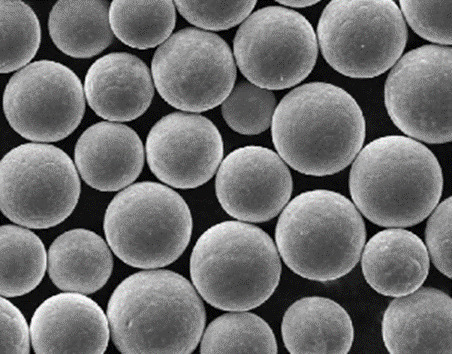
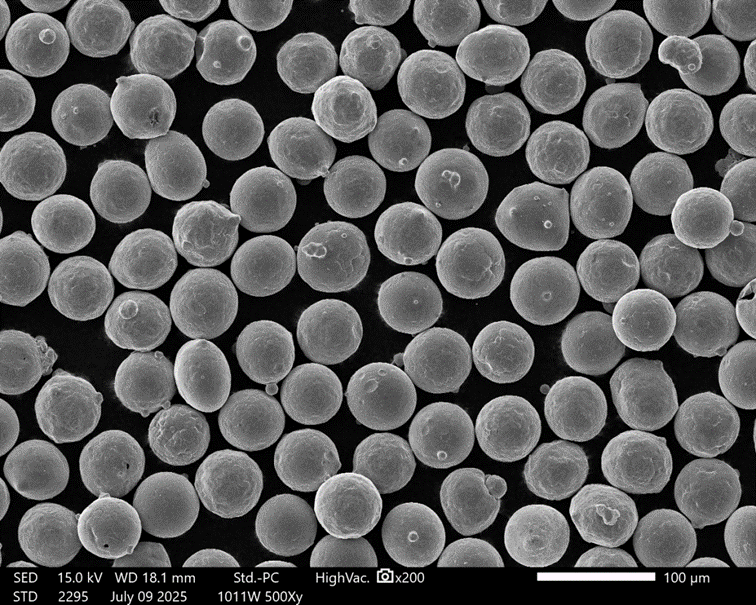
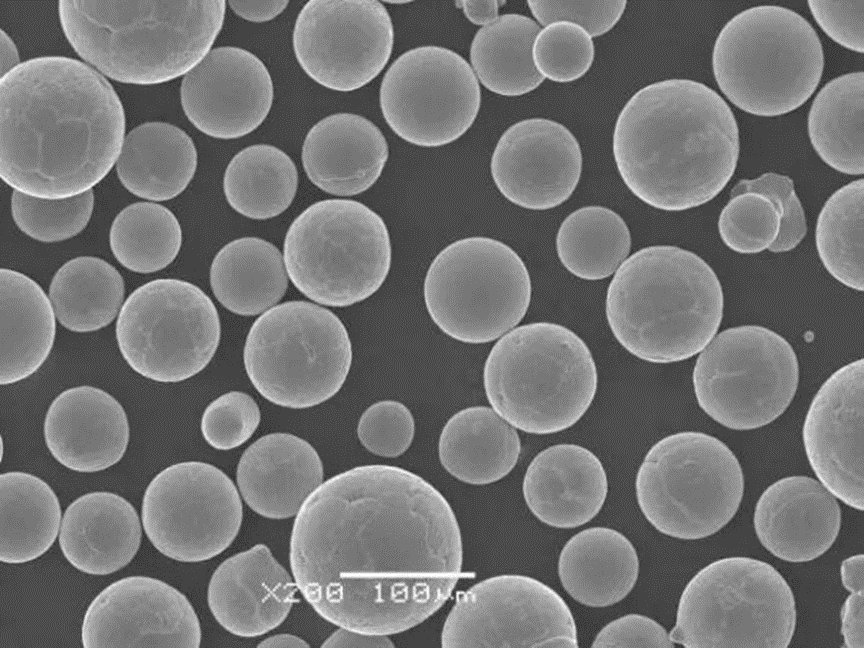
Pure copper powder for 3D printing is a controlled metal feedstock made primarily of elemental copper and tailored for additive manufacturing processes that build parts layer by layer. Unlike conventional copper powders used in sintering, friction materials, or brazing, 3D printing powder is typically spherical, tightly screened for particle size, and supplied with stricter limits on oxygen, moisture exposure, and foreign contamination.
Within the broader family of copper AM materials, pure copper sits at the highest-conductivity end of the product spectrum. Alloyed copper grades such as CuCrZr or CuNiSi are often easier to design around when higher strength is required, but they trade away some of the conductivity that makes copper attractive in the first place. Pure copper exists in AM because many advanced components are performance-limited by heat flow or current flow rather than by tensile strength.
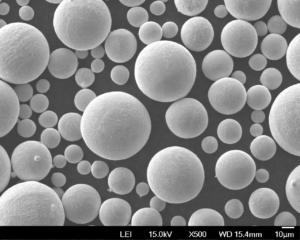
Why pure copper 3D printing powder is technically distinct
The central challenge with pure copper is that it reflects a large portion of the energy used by standard infrared laser systems and rapidly conducts heat away from the melt zone. That makes melting less forgiving than with stainless steels, nickel alloys, or aluminum-silicon casting alloys. Even so, the material remains important because no common AM metal combines copper’s conductivity with the same geometric freedom.
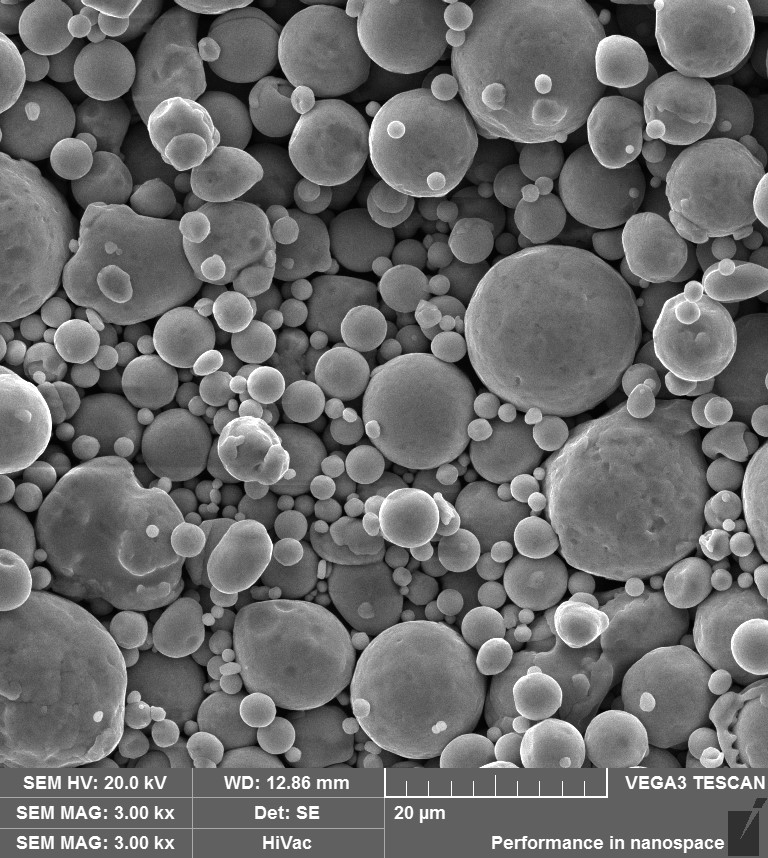
The powder itself must therefore do more than meet a chemistry target. It must spread evenly, pack consistently, resist oxidation during handling, and support dense fusion over repeated build cycles. For this reason, buyers evaluate morphology, particle satellites, oxide film condition, and flowability as seriously as they evaluate nominal copper purity.
Family classification of pure copper AM powder
Most commercial products fall into the category of high-purity spherical copper powder for metal additive manufacturing. They may be designated by internal supplier grade names, by particle size cut, or by application route such as LPBF, DED, or thermal spray. The terminology for these process families aligns with ISO/ASTM 52900 additive manufacturing terminology, which helps separate the material grade from the machine platform and build method.
Core characteristics that define the material
From an engineering standpoint, pure copper powder for 3D printing is defined by three traits. First, it offers very high thermal and electrical conductivity after dense consolidation. Second, it requires stricter process control than many common AM alloys. Third, it unlocks compact internal geometries that conventional machining, drilling, brazing, or casting cannot easily achieve.
In copper AM, conductivity is the reward, but powder quality and process discipline are the price of entry.
These characteristics explain why pure copper is rarely selected as a general-purpose structural powder. It is a functional material designed for heat management, power transfer, electromagnetic performance, and compact integrated hardware where geometry matters as much as metallurgy.
Chemical Composition
Pure copper powder for 3D printing is marketed as a simple material, but its performance depends heavily on impurity control. In conductive AM applications, the copper base must stay as clean as possible while residual oxygen and trace elements remain low enough to avoid degrading part density, conductivity, or melt stability.
| Element | Typical Content (wt%) | Typical Limit Strategy | Metallurgical Role | Effect on 3D Printing Performance |
|---|---|---|---|---|
| Cu | 99.70–99.95 | Balance | Base matrix providing conductivity, ductility, and corrosion behavior | Governs the core thermal and electrical properties of the final part |
| O | 0.005–0.050 | Kept as low as practical | Forms oxides that influence conductivity and surface condition | Excess oxygen can reduce conductivity and worsen fusion consistency |
| P | ≤0.010 | Strict residual control | May appear from deoxidation practice or raw material history | Too much phosphorus lowers electrical conductivity |
| Fe | ≤0.030 | Trace impurity control | Residual metallic impurity from feedstock or melt handling | Can reduce chemistry cleanliness and conductive efficiency |
| Pb + Bi | each typically ≤0.005 | Very tightly limited | Undesired low-melting residuals | May impair ductility, reliability, and microstructural cleanliness |
| S + C | each typically ≤0.010 | Controlled low | Indicators of contamination or processing exposure | Can contribute to inclusion risk, outgassing, or unstable melt behavior |
The metallurgical role of copper itself
Copper is not merely the majority element; it is the reason the powder exists as an AM feedstock. High copper content is directly tied to current-carrying performance, thermal diffusion, and the ability of printed components to function as heat spreaders, coils, conductors, and cooling inserts.
When engineers specify this material, they are usually trying to retain as much of copper’s intrinsic performance as possible after atomization, printing, and post-processing. That is why even small changes in impurity content can have outsized effects compared with more alloy-tolerant materials.
Why oxygen control is so important in pure copper powder for 3D printing
Low oxygen content is one of the most important quality indicators for pure copper AM powder. Oxide films on particle surfaces can influence laser absorption, remelting behavior, pore formation, and the conductivity of the consolidated part. The problem is not only the oxygen dissolved in the metal, but also the surface condition created during melting, atomization, sieving, storage, and reuse.
This is especially relevant in powder reuse programs. Even when the virgin powder starts within specification, repeated exposure to a build environment can gradually change the powder surface and shift performance over time. That makes oxygen monitoring a process variable as well as a procurement variable.
Residual elements and their trade-offs
Phosphorus can be beneficial in some conventional copper processing routes because it helps deoxidation, but it is usually not welcome in high-conductivity AM grades. Iron, sulfur, carbon, lead, and bismuth are likewise not functional additions in this context. They are treated as residuals that should be constrained to protect electrical and thermal performance.
In short, chemistry for pure copper AM feedstock is less about alloy design and more about purity preservation. The ideal powder is chemically clean, morphologically uniform, and stable from lot to lot.
Physical and Mechanical Properties
Pure copper should be evaluated primarily as a functional material rather than a maximum-strength material. Its property profile is dominated by conductivity and heat transfer capability, while mechanical values remain moderate compared with high-strength precipitation-hardened copper alloys, stainless steels, or nickel superalloys.
| Property | Typical Value | Unit | Test Standard / Reference |
|---|---|---|---|
| Theoretical density | 8.93–8.96 | g/cm³ | Reference density data for pure copper |
| Melting point | 1083–1085 | °C | Standard materials reference |
| Thermal conductivity, dense part | 320–390 | W/m·K | Typical room-temperature range |
| Electrical conductivity, dense part | 85–100 | % IACS | Typical for high-purity processed copper |
| Ultimate tensile strength, printed condition | 180–280 | MPa | Typical as-built to stress-relieved condition |
| Yield strength, printed condition | 70–180 | MPa | Process- and orientation-dependent typical range |
| Elongation at break | 20–45 | % | Typical for dense printed material |
| Hardness | 45–85 | HB or equivalent HV range | Typical annealed to lightly strengthened state |
Conductivity defines the value proposition
Pure copper’s most important property is not hardness or tensile strength; it is its ability to move heat and current efficiently through a compact geometry. A printed copper component can replace a more complex assembly of drilled passages, brazed plates, or joined conductive parts while improving local thermal management.
For that reason, property qualification often focuses on density, conductivity retention, and the relationship between porosity and service performance. Reference data for copper are commonly checked against NIST materials data resources, especially when validating thermal or electrical assumptions during design and test planning.
Mechanical properties are process sensitive
Mechanical values for copper AM parts vary with machine platform, laser wavelength, energy density, build orientation, scan strategy, and post-processing state. Stress relieving may improve dimensional stability and ductility, while hot isostatic pressing can reduce residual porosity in some workflows. However, even well-processed pure copper remains a moderate-strength material rather than a high-strength one.
This does not make the powder unsuitable. It simply means that the design should exploit conductivity-rich geometry rather than expect copper to behave like a precipitation-hardened aerospace alloy. If the application is dominated by structural load, a different material family may be a better choice.
Thermal behavior in service
Thermal conductivity is the reason pure copper is used for conformal cooling, high-flux heat extraction, induction features, and power electronics hardware. Dense printed copper parts can deliver meaningful thermal advantages over stainless steel and nickel alloys, and they can also outperform aluminum in applications where compactness, stiffness, or current-carrying capacity are priorities.
The trade-off is mass. Copper is substantially denser than aluminum, so it is favored when the design goal is thermal intensity rather than lightweighting. In many industrial assemblies, that is an acceptable compromise.
Specifications and Available Grades
A sound purchasing specification for pure copper powder for 3D printing goes beyond chemistry and includes powder metrics that influence spreading, feeding, and melt stability. These include particle size distribution, apparent density, tap density, Hall flow, oxygen level, and particle shape consistency.
Particle size distribution for copper AM powder
Laser powder bed fusion commonly uses fine spherical grades such as 15–45 µm or 15–53 µm. These support thin layers, good powder bed uniformity, and adequate resolution for complex channels and thin walls. Directed energy deposition and cladding systems more often use coarser cuts, including 45–105 µm or 53–150 µm, because feed behavior and deposition rate are more important than ultra-fine layer control.
| Grade / Supply Reference | Typical PSD (µm) | Apparent Density (g/cm³) | Tap Density (g/cm³) | Hall Flow (s/50 g) | Oxygen (wt%) | Sphericity / Standards Cross-Reference |
|---|---|---|---|---|---|---|
| Fine LPBF copper grade | 15–45 | 4.5–5.2 | 5.1–5.8 | 14–21 | 0.005–0.040 | High sphericity; typical for fine powder bed systems |
| Standard LPBF copper grade | 15–53 | 4.4–5.1 | 5.0–5.7 | 15–22 | 0.005–0.050 | General-purpose spherical 3D printing powder |
| DED copper grade | 45–105 | 4.8–5.5 | 5.5–6.2 | 12–19 | 0.010–0.060 | Coarser distribution for nozzle-fed deposition |
| Cladding / spray copper grade | 53–150 | 4.9–5.6 | 5.6–6.3 | 11–18 | 0.010–0.080 | Larger cut for high-throughput feed applications |
| Cross-reference row | Product specific | By test method | By test method | By test method | By product | Commonly mapped to ASTM powder tests, ISO terminology, DIN or GB customer drawings |
Standards and qualification logic
There is no single universal material specification that captures every copper powder configuration for every AM process. Instead, industrial purchase documents normally combine chemistry limits with powder test methods, process-route designation, and internal acceptance criteria. Powder characterization can be framed through the ASTM metal powder standards catalog when defining flow, density, and sieve-related methods.
In addition, many technical teams use ASM International materials resources as a reference point when comparing copper metallurgy, powder behavior, and application-specific property expectations. In practice, the key is not citing a standard name alone, but linking each requirement to an actual machine and part qualification plan.
Available grades and supply logic
Suppliers typically stock several copper grades differentiated by particle size range and intended process route rather than by large chemistry shifts. A fine LPBF grade supports complex heat exchangers and small conductive features. A coarser DED grade is better for deposition rate, cladding repair, or near-net thermal features on larger substrates.
Because part requirements vary widely, users often assess pure copper beside a broader copper alloy powder lineup when higher strength is needed, or beside an aluminum alloy powder range when lightweight thermal management is also under consideration.
Manufacturing Process
The way pure copper powder is made has a direct effect on how it prints. Powder-making route influences particle roundness, internal porosity, satellite level, oxygen exposure, and the consistency of the size distribution, all of which affect layer quality and final-part density.
Gas atomization for spherical copper powder
Gas Atomization, or GA, is the most common industrial route for producing copper powder for 3D printing. In this process, molten copper is disintegrated by high-velocity inert gas into droplets that solidify into near-spherical particles. Proper atmosphere control is important because copper can pick up oxygen if melting and atomization conditions are not well managed.
GA is widely used because it provides a good balance of scale, morphology, and cost. It also supports multiple downstream size cuts, allowing one production route to supply LPBF, DED, cladding, and spray grades.
PREP for premium morphology and cleanliness
Plasma Rotating Electrode Process, or PREP, starts with a rotating feed rod that is locally melted by plasma. Centrifugal force ejects droplets from the rod, and those droplets solidify into highly spherical particles with low satellite content.
PREP is attractive when exceptionally smooth morphology and controlled cleanliness are required. However, it is generally more expensive and lower in throughput than mainstream gas atomization for high-volume powder production.
VIGA and EIGA in copper powder manufacturing
Vacuum Induction Melting Inert Gas Atomization, or VIGA, adds tighter melt-atmosphere control before atomization. This can improve chemistry cleanliness and reduce contamination pathways, which is especially useful for conductive copper grades where oxygen and residual control matter.
Electrode Induction Melting Gas Atomization, or EIGA, minimizes contact with crucible materials by inductively melting the electrode feedstock. Although more commonly discussed for reactive or specialty alloys, the process logic is relevant to copper when contamination avoidance is part of the specification.
| Process | Sphericity | Oxygen Pickup Risk | PSD Control | Throughput | Relative Cost | Typical Role in Copper Powder Supply |
|---|---|---|---|---|---|---|
| GA | High | Low to moderate, equipment dependent | Good to very good | High | Moderate | Standard route for most commercial AM copper powder |
| PREP | Very high | Low | Moderate | Low to moderate | High | Premium morphology for specialized applications |
| VIGA | High | Low | Good to very good | Moderate to high | Moderate to high | Cleaner melt control for tighter chemistry targets |
| EIGA | High to very high | Very low | Good | Moderate | High | Specialty route where contamination control is critical |
| Water atomization | Low to moderate | Higher | Moderate | High | Low | Generally unsuitable for demanding powder bed copper AM |
Trade-offs that matter to engineers
For most buyers, GA is the practical starting point because it combines availability, scalability, and acceptable powder quality. PREP may offer morphology advantages, but those benefits must be weighed against cost and volume. VIGA and EIGA occupy a useful middle or premium position when chemistry control becomes a critical performance variable.
This is also where supplier capability matters. Shanghai Truer’s process-related background includes GA and PREP equipment as part of its broader metal powder ecosystem, and its industrial application sectors show that conductive and structural powder solutions are evaluated across multiple end-use fields rather than as isolated lab materials.
Applications by Industry
Pure copper powder for 3D printing is used where geometry and conductivity must work together. The best applications are usually not generic metal parts, but components whose value comes from moving heat, carrying current, or controlling electromagnetic behavior in spaces that traditional manufacturing struggles to reach.
Aerospace and space thermal management
Aerospace programs use copper for combustion-related liners, injector subcomponents, thermal interfaces, and high-flux cooling structures. Additive manufacturing enables complex internal channels, variable wall thicknesses, and integrated thermal paths that are difficult to achieve by drilling, brazing, or multi-piece assembly.
In these programs, pure copper is often compared with stronger copper alloys, nickel superalloys, and high-temperature refractory systems. The design question is usually not whether copper is printable, but whether conductivity gains justify the lower structural margin.
Electronics, power, and RF hardware
This is one of the clearest homes for pure copper AM. Busbars, heat spreaders, inductors, waveguide components, antenna-related parts, and current-carrying structures all benefit from copper’s transport properties. Additive manufacturing becomes especially valuable when the part combines electrical and thermal functions in one compact geometry.
Because performance depends on dense, consistent material, these applications often impose tight powder and process qualification rules. Printed copper may then be machined, plated, joined, or surface-finished after the build to meet final interface requirements.
Tooling and mold inserts
Copper does not replace hardened tool steels in wear-critical areas, but it can transform cooling performance. Conformal-cooled inserts made from pure copper or conductive copper zones can reduce cycle time, improve temperature uniformity, and help manage hot spots in molds and dies.
This is one of the more practical industrial uses because the business case is measurable. If faster heat extraction shortens each molding cycle, the material can pay for itself through productivity rather than through exotic performance claims.
Automotive and energy systems
Battery thermal plates, inverter cooling hardware, e-mobility power components, and high-current conductive structures are natural candidates. As electrified systems demand tighter temperature control and more compact packaging, copper AM becomes more attractive, especially for prototypes and low-to-medium volume specialized parts.
Medical and industrial equipment
Pure copper is not a standard implant alloy, but it is relevant in analytical equipment, cooling systems, electromagnetic devices, and scientific hardware used in medical or laboratory settings. Where a project instead requires biocompatible structural performance, engineers typically move toward a titanium alloy powder portfolio rather than pure copper.
Comparison with Alternative Materials
Pure copper should always be selected against a defined technical objective. In additive manufacturing, that objective is usually superior conductivity in a shape that cannot be manufactured economically by conventional methods.
| Material | Density (g/cm³) | Thermal Conductivity (W/m·K) | Relative Strength | Printability in PBF | Corrosion Resistance | Relative Cost | Best-Fit Use Case |
|---|---|---|---|---|---|---|---|
| pure copper powder for 3D printing | 8.93–8.96 | 320–390 | Moderate to low | Moderate; narrow process window | Good in many environments | Moderate to high | Heat transfer and electrical current applications |
| CuCrZr powder | 8.8–8.9 | 280–340 | Moderate to high | Moderate | Good | High | Conductive parts needing better strength retention |
| AlSi10Mg powder | 2.6–2.7 | 120–170 | Moderate | Good to very good | Good | Moderate | Lightweight thermal components and housings |
| 316L stainless steel powder | 7.9–8.0 | 14–20 | Moderate | Excellent | Very good | Moderate | General-purpose corrosion-resistant parts |
| Inconel 718 powder | 8.1–8.2 | 10–15 | High | Good | Excellent at elevated temperature | High | Severe-service and hot-section structural parts |
Where pure copper clearly leads
When part performance depends on fast heat extraction or efficient current flow, thermal conductivity and electrical conductivity make pure copper difficult to replace. A more printable alloy may simplify manufacturing, but it often forces a penalty in heat flux, energy efficiency, or electrical resistance.
Where other materials outperform it
Copper is not the best answer when low weight, high hardness, or high-temperature structural capability is the main design goal. Aluminum alloys win on density. Stainless steels win on ease of printing and corrosion-focused general-purpose design. Nickel superalloys win when the part must remain strong in severe thermal service.
Practical material selection logic
The best material decision often comes from ranking requirements rather than comparing datasheets in isolation. If conductivity is first and structural load is second, pure copper is a strong candidate. If structure, wear, or temperature capability rank higher, the comparison can quickly shift toward alloyed copper, steel, or nickel-based systems.
Our Company
Shanghai Truer Technology Co., Ltd was established in 2009 and created its additive manufacturing business in 2019. Operating am-printing.com, the company works on integrating 3D printing powder-making equipment and services with metal powder supply, including technologies related to Selective Electron Beam Melting equipment, Plasma Rotating Electrode Process powder-making equipment, and gas atomization. Its published powder portfolio includes TiNi, TiTa, TiAl, TiNbZr, CoCrMo, and broader nickel-based, cobalt-based, titanium-based, copper-based, aluminum-based, and stainless steel spherical metal powders for SLM, SEBM, DED, laser cladding, powder metallurgy, MIM, HIP, cold or hot spraying, welding, and coating. The company also states that it operates a joint innovation center for metal 3D printing with laboratories and industry experts and serves sectors including 3C electronics, hand tools, remote control cars, medical, aerospace, and nuclear power; company background and manufacturing context are outlined on its supplier profile page.
FAQ
Q1. Is pure copper powder for 3D printing difficult to process in laser powder bed fusion?
Yes, it is generally more difficult than stainless steel, tool steel, or many nickel alloys. Copper reflects more laser energy and rapidly dissipates heat from the melt pool, which narrows the stable processing window. Successful production depends on powder quality, atmosphere control, and machine parameter optimization.
Q2. What purity level is typical for pure copper powder for 3D printing?
Commercial grades are often supplied in the range of roughly 99.7% to 99.95% Cu, depending on the target process and supplier specification. The headline purity number matters, but oxygen level and residual impurity control are equally important. A high nominal copper content does not guarantee high conductivity if the powder surface condition is poor.
Q3. Which particle size distribution is most common for pure copper 3D printing powder?
For laser powder bed fusion, 15–45 µm and 15–53 µm are among the most common size cuts. These ranges support stable recoating, suitable layer thickness, and reasonable surface quality for many complex parts. Coarser distributions such as 45–105 µm are more often used in directed energy deposition and cladding.
Q4. Why would an engineer choose pure copper instead of CuCrZr powder?
The main reason is conductivity. Pure copper usually offers better thermal and electrical performance, while CuCrZr provides a more balanced combination of conductivity and strength. If the part is limited by heat transfer or current carrying rather than mechanical load, pure copper is often the better fit.
Q5. Can pure copper powder for 3D printing be recycled and reused?
Yes, but only within a controlled powder management procedure. Reuse should include sieving, monitoring of oxygen pickup, verification of particle size stability, and limits on contamination exposure during handling. Because copper is sensitive to oxide formation, reuse rules should be validated before serial production begins.
Q6. What should buyers include in a purchase specification for pure copper powder for 3D printing?
A robust specification should cover chemistry, oxygen limit, particle size distribution, apparent density, tap density, Hall flow, morphology expectations, packaging condition, and the intended process route such as LPBF or DED. It should also define lot-to-lot consistency requirements and, where relevant, powder reuse acceptance criteria. For production parts, the powder specification should be linked directly to machine qualification and final-part performance targets.