Quick Answer
Spherical pure iron powder is a high-purity ferrous feedstock made with near-spherical particles for additive manufacturing, powder metallurgy, and related advanced forming routes. It is chosen for 3D printing when users need strong flowability, good powder-bed packing, soft-magnetic potential, and a clean iron matrix that can be processed without the extra alloy complexity of stainless or nickel systems. In practical terms, it is most useful for research alloys, magnetic components, binder jetting, laser-based prototyping, and specialty industrial parts where controlled chemistry and morphology matter more than corrosion resistance.
What Is spherical pure iron powder
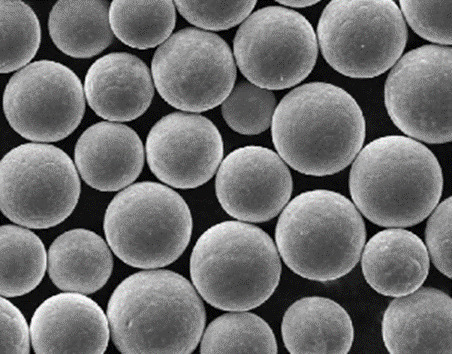
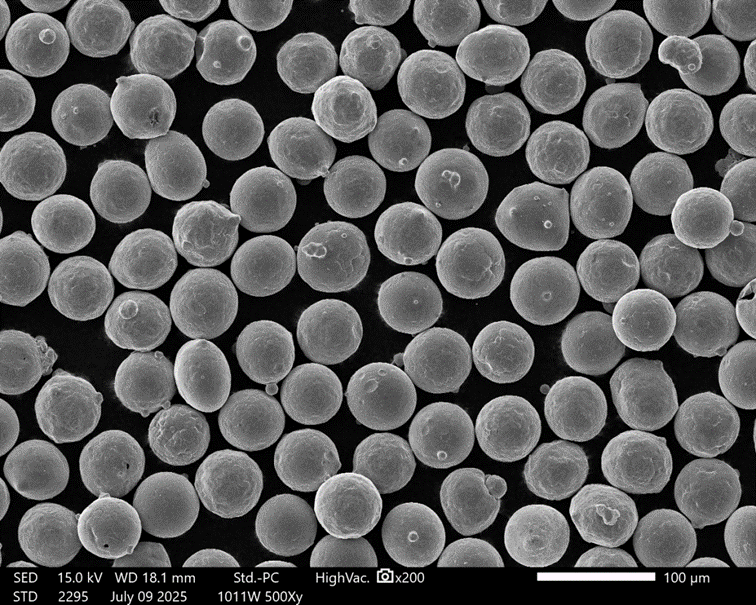
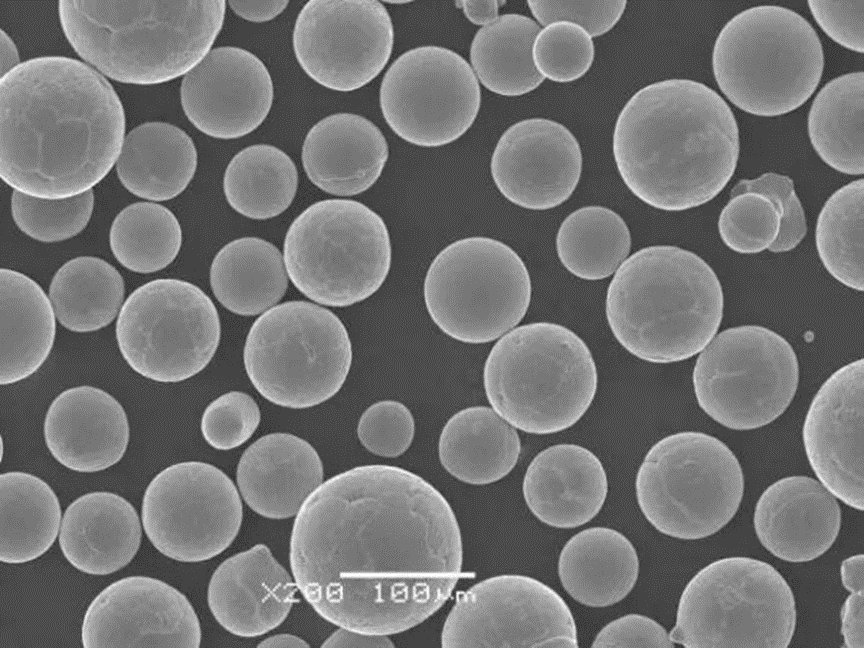
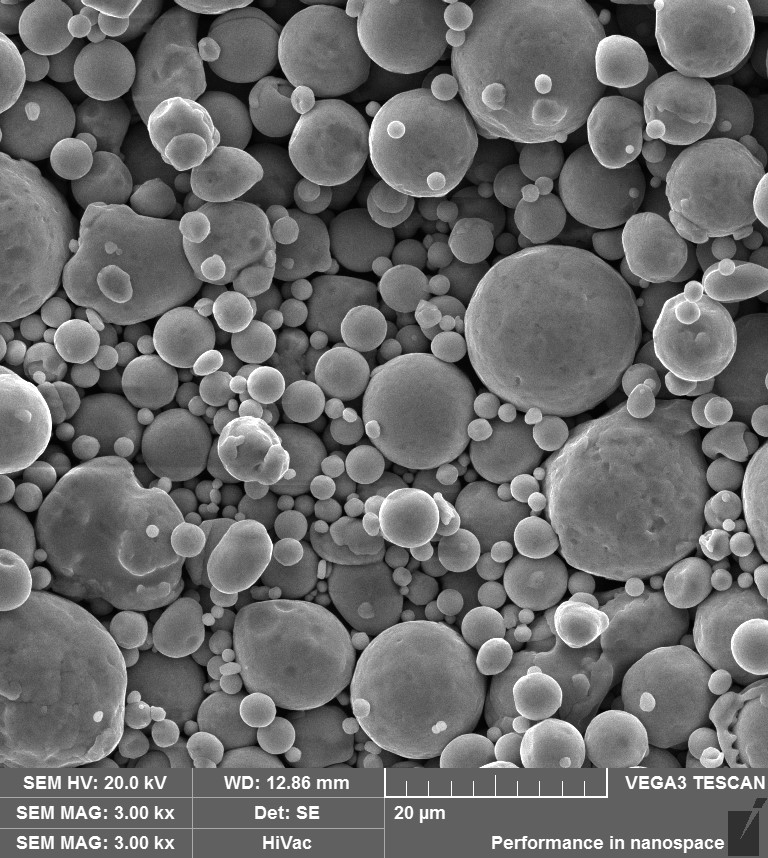
Spherical pure iron powder is an iron-dominant metal powder produced so that the particles are round, smooth, and tightly controlled in size. In the additive manufacturing supply chain, it belongs to the broader family of spherical ferrous powders used in powder bed fusion, directed energy deposition, binder jetting, thermal spray, and high-end powder metallurgy. The defining difference from irregular reduced iron or water-atomized iron powder is that the spherical form is engineered first for flow, packing efficiency, and repeatable spreading behavior.
In industrial usage, “pure iron” does not imply chemically absolute iron. It normally means iron as the balance with very low residual carbon, oxygen, nitrogen, sulfur, phosphorus, and trace metallic impurities. Those residuals are important because they influence not just the chemistry certificate, but also ductility, magnetic response, sintering behavior, and the stability of the melt pool during additive processing.
Within the ferrous AM landscape, pure iron occupies a narrower but technically important niche than stainless steel or tool steel powders. It is not typically the first choice for parts that must resist corrosion or achieve very high structural strength right out of the machine. Instead, it is selected when designers want an uncomplicated iron matrix, a functional magnetic material, or a starting chemistry that can later be alloyed, infiltrated, diffusion-treated, or blended for tailored downstream properties.
Spherical Powder Morphology and Why It Matters
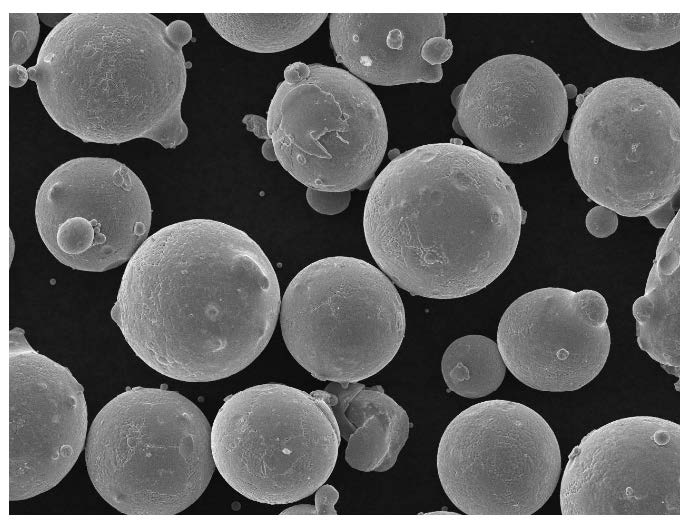
Particle morphology is the main reason this material exists as a premium category rather than a commodity iron powder. High sphericity reduces interparticle friction, improves hopper discharge, and helps each recoated layer spread more evenly. That matters in metal AM because poor spreading can create local porosity, uneven energy absorption, and inconsistent part density.
Spherical particles also raise apparent density and support more uniform bed packing. In powder bed fusion, that translates into more predictable layer thickness and fewer defects linked to powder segregation. In binder jetting or MIM feedstock development, it helps with filling efficiency and powder handling repeatability.
In metal powder qualification, chemistry tells you what the material is, but morphology often determines whether it will process well.
How Spherical Pure Iron Powder Differs from Related Ferrous Powders
Pure iron powder should not be confused with low-alloy steel powders, stainless steel powders, or soft-magnetic iron-silicon grades. Compared with alloyed ferrous materials, pure iron offers fewer intentional alloying additions and therefore less intrinsic strengthening or corrosion protection. The trade-off is a more straightforward metallurgy profile and potentially better magnetic saturation than stainless steel families.
Compared with conventional press-and-sinter iron powders, spherical pure iron powder is more specialized and generally more expensive to make. That premium pays for the morphology control, lower contamination risk, and PSD management required by AM and advanced powder processes. Readers comparing the ferrous category as a whole often start with a broader iron-based powder portfolio before narrowing into pure iron grades.
Why the Market Uses This Material
The growth of metal AM created demand for powders that could do more than simply compact in a die. Recoaters, powder hoppers, narrow layer thicknesses, and repeated thermal cycling all favor powders with low friction and consistent particle behavior. Spherical pure iron powder exists because traditional irregular iron powders were not designed around those constraints.
Chemical Composition
Commercial spherical pure iron powder is typically specified as iron balance with tightly controlled residuals. The exact limits vary by supplier, particle size range, and end use, but the technical goal remains the same: keep impurities low enough to preserve process stability and functional properties without turning the material into a broader low-alloy steel category.
| Element | Typical Content (wt%) | Typical Limit/Range | Metallurgical Role |
|---|---|---|---|
| Fe | Balance | ≥ 99.5 | Base metal providing ferromagnetism, thermal conductivity, and the principal structural matrix |
| C | 0.005–0.030 | Low residual | Increases strength and hardness if elevated, but reduces ductility and can alter magnetic performance |
| O | 0.020–0.100 | Controlled residual | Governs surface oxide level, affects laser interaction, inclusion risk, and overall processing cleanliness |
| N | 0.001–0.030 | Low residual | Can slightly strengthen in solution, but higher levels may reduce ductility and increase variability |
| S | 0.002–0.010 | Very low residual | Generally undesirable; can contribute to hot shortness and inclusion formation |
| P | 0.002–0.020 | Very low residual | May raise strength modestly, but excessive phosphorus lowers toughness and formability |
The Metallurgical Role of Residual Elements
For a material marketed as pure iron, the residual elements do most of the hidden work. Carbon is often the first impurity engineers look at because small increases can shift hardness, strength, and phase behavior. If the part is intended for magnetic use, carbon is usually minimized; if it is intended as a base for later alloy development, carbon may instead be managed within a narrower design window.
Oxygen is the residual that most directly connects chemistry with powder behavior. Fine particles carry more surface area, which means more oxide per unit mass and higher sensitivity to atmospheric exposure. In AM qualification, a powder with acceptable flow but excessive oxygen can still create problems through inclusions, reduced ductility, or lower final density. This is why buyers rarely assess fine spherical powder by PSD alone.
Nitrogen, sulfur, and phosphorus are usually treated as control variables rather than intentional additions. Nitrogen can enter through melting atmosphere choices, sulfur generally degrades hot workability, and phosphorus can embrittle the material if allowed to rise. In practice, when a user asks for high purity spherical pure iron powder, they are asking for tight control of these minor elements just as much as a high iron percentage.
The terminology used in this segment aligns with the broader ISO/ASTM 52900 terminology, which helps procurement teams, powder producers, and AM engineers use the same language when defining feedstock, process categories, and quality expectations.
Physical and Mechanical Properties
Spherical pure iron powder must be described in two different states: as powder and as consolidated metal. Powder properties determine how it behaves in storage, feeding, recoating, and spreading. Consolidated properties are affected by machine architecture, layer thickness, energy density, atmosphere control, post-processing, and final porosity. That distinction is essential because the material certificate alone does not predict final part performance.
| Property | Typical Value | Unit | Test Standard / Basis |
|---|---|---|---|
| True density of iron | 7.86–7.87 | g/cm³ | Material constant, reference value |
| Apparent density of spherical powder | 4.2–4.9 | g/cm³ | Typically measured with Hall-type methods |
| Tap density | 4.8–5.5 | g/cm³ | Typical powder tap-density method |
| Melting point | 1535–1538 | °C | Reference value for pure iron |
| Thermal conductivity | 70–80 | W/m·K | Approximate room-temperature value for consolidated iron |
| Ultimate tensile strength | 250–380 | MPa | Typical for near-dense processed pure iron, condition dependent |
| Yield strength | 170–260 | MPa | Typical for stress-relieved or annealed builds |
| Elongation | 20–40 | % | Strongly dependent on density and heat treatment |
| Hardness | 80–120 | HV | Typical range for low-carbon pure iron products |
Powder Properties vs. Part Properties
Powder users sometimes assume that spherical morphology automatically guarantees good part properties. That is not the case. Sphericity helps printability, but part performance also depends on oxide condition, packing uniformity, scan strategy, and post-build treatment. A well-formed powder can still produce poor coupons if the atmosphere control or parameter set is weak.
Conversely, modest differences in apparent density or flow time do not always translate directly into part failure. AM engineers usually examine the entire relationship among powder spreadability, laser absorption, porosity formation, and mechanical output. That is why qualification of soft magnetic performance or tensile behavior should be done with printed specimens, not inferred from certificate chemistry alone.
Density, Hardness, and Thermal Behavior
The material constant of iron density is stable, but the effective density of a printed or sintered part depends on residual porosity. Hardness is similarly condition-sensitive. As-built parts may show slightly elevated hardness from thermal history and dislocation density, while annealed parts typically move toward lower hardness and higher ductility.
Thermal conductivity is one of the reasons pure iron remains interesting in certain AM research and industrial contexts. Compared with more heavily alloyed ferrous powders, it can offer simpler heat-transfer behavior during melting and solidification. Still, oxidation sensitivity means the build environment has to be carefully controlled if that advantage is to translate into sound parts.
Property Testing and Interpretation
Internal quality systems often use recognized powder test frameworks when screening lots. Methods collected within ASTM metal powder standards are commonly referenced for apparent density, tap density, and flow characterization, even when the final application specification is customer-defined rather than governed by a single AM powder standard.
Specifications and Available Grades
Commercial supply is usually organized by particle size distribution, not by radically different pure iron chemistries. In most cases, the same core chemistry is sieved or classified into different PSD windows for powder bed fusion, directed energy deposition, binder jetting, thermal spray, MIM development, or conventional powder metallurgy. That makes grade selection a matter of process fit more than alloy family selection.
| Typical Grade | PSD Range (µm) | Apparent Density (g/cm³) | Tap Density (g/cm³) | Hall Flow (s/50 g) | Oxygen Content (wt%) | Sphericity / Cross-Reference |
|---|---|---|---|---|---|---|
| Fe-SP-15/53 | 15–53 | 4.2–4.6 | 4.9–5.3 | 15–22 | 0.04–0.10 | High; fine PBF lot; commonly aligned with ASTM/ISO/GB/DIN powder test methods |
| Fe-SP-20/63 | 20–63 | 4.3–4.7 | 5.0–5.4 | 14–21 | 0.03–0.08 | High; balanced spreadability for laser-based AM |
| Fe-SP-45/105 | 45–105 | 4.4–4.8 | 5.1–5.5 | 13–19 | 0.02–0.06 | Very good flow; suitable for DED, PM blending, and some cladding routes |
| Fe-SP-53/150 | 53–150 | 4.5–4.9 | 5.2–5.6 | 12–18 | 0.02–0.05 | High to very high; coarser feedstock for spray and specialized deposition |
Particle Size Distribution and AM Fit
The finest cuts, especially 15–53 µm and 20–63 µm, are most often associated with laser powder bed systems. These grades support thin layer deposition and good powder-bed uniformity, but they also carry more surface area and therefore more sensitivity to oxidation and moisture pickup.
Coarser cuts, such as 45–105 µm and 53–150 µm, generally flow more easily and are more robust in handling. Those grades are common in directed energy deposition, laser cladding, thermal spray, and PM blending. They are also less vulnerable to the oxygen increase that can accumulate quickly in fine recycled powder.
Standards and Cross-Reference Practice
There is no single global grade designation for spherical pure iron powder in AM equivalent to the mature standards used for some titanium or stainless products. Instead, technical buyers usually assemble a specification by combining chemistry limits, PSD targets, oxygen and nitrogen maximums, flow and density methods, and traceability requirements.
A rigorous purchase specification typically defines:
- chemistry with iron balance and residual limits
- PSD window with D10, D50, and D90 targets
- apparent density and tap density ranges
- Hall or Carney flow expectations where applicable
- oxygen and nitrogen maximum values
- morphology acceptance criteria, packaging, and lot traceability
Supply Grades and Adjacent Material Families
Spherical pure iron powder is often purchased alongside other ferrous and nonferrous AM powders because qualification teams compare processing windows across material classes. For example, users working on multi-material programs may review titanium alloy powder grades for lightweighting or copper alloy powder options for conductivity-focused applications while keeping pure iron for magnetic or experimental routes.
Manufacturing Process
The term “spherical” points directly to how the powder is made. Most commercial pure iron AM powder is produced by gas atomization, but other advanced routes such as vacuum induction gas atomization, electrode induction gas atomization, and plasma rotating electrode processing are relevant when cleanliness or morphology requirements become more demanding.
| Process | Typical Sphericity | Oxygen Pickup Risk | PSD Control | Throughput | Relative Cost | Best Fit |
|---|---|---|---|---|---|---|
| GA (Gas Atomization) | High | Moderate to low with inert handling | Good | High | Medium | General AM and PM powder production with scalable output |
| VIGA (Vacuum Induction Melting + Gas Atomization) | High | Low | Good to very good | Medium | Medium-high | Cleaner melt chemistry and tighter gas control |
| EIGA (Electrode Induction Melting + Gas Atomization) | Very high | Low | Very good | Medium | High | High-cleanliness powders with reduced contamination risk |
| PREP (Plasma Rotating Electrode Process) | Very high | Very low | Narrow, often coarser | Low to medium | High | Premium morphology, low satellites, demanding specialty uses |
Gas Atomization for Spherical Pure Iron Powder
Gas atomization is the mainstream route because it offers a workable balance among quality, productivity, and cost. A molten stream of iron is disintegrated by high-pressure inert gas into droplets that solidify in flight. When the melt superheat, gas pressure, nozzle geometry, and chamber atmosphere are well controlled, the process produces smooth, near-spherical particles with a commercially useful PSD.
For pure iron, gas selection matters. Argon is typically preferred when nitrogen pickup must be minimized, while process economics and system design can influence the final choice. Post-atomization sieving, de-dusting, and classification are crucial because even a good melt can produce a powder that needs tight fraction control before it becomes suitable as an AM feedstock.
VIGA and EIGA Trade-Offs
VIGA introduces vacuum induction melting ahead of gas atomization. That extra melting control can lower dissolved gases and improve chemistry cleanliness, which is valuable for pure iron grades intended for magnetic applications or research work. It also helps when low interstitial content is more important than the lowest possible cost.
EIGA is more often discussed for reactive alloys, but it remains a useful comparison point. By melting an electrode feedstock with less contact from conventional crucible materials, it can reduce contamination pathways. In pure iron, the performance benefits are real, but they must be weighed against a larger cost premium than many industrial users are prepared to accept.
PREP and Morphology Quality
PREP creates powder by melting the end of a spinning consumable electrode with plasma, throwing droplets outward by centrifugal force. The result is often exceptionally spherical powder with very low satellite content. That morphology is excellent, but the method usually yields coarser distributions and lower throughput than gas atomization.
For pure iron, PREP is less common than GA because the base material does not always justify the extra cost. Even so, the process remains important because it establishes the upper benchmark for low satellite content and particle perfection in specialty metal powder production.
From Melt to Packaged Lot
Regardless of route, three stages determine whether the powder is truly AM-grade: chemistry control during melting, morphology and PSD formation during atomization, and handling discipline after classification. Fine iron powder can gain oxygen or moisture after production, so packaging and storage are part of process quality, not just logistics.
Applications by Industry
Spherical pure iron powder is not the broadest material category in metal AM, but it serves a wide range of technical roles where functional metallurgy outweighs maximum strength or corrosion resistance. The application case is usually defined by magnetic performance, alloy-development flexibility, sintering behavior, or feedstock handling requirements.
Additive Manufacturing Research and Development
Research institutions and industrial laboratories use pure iron as a baseline material because it removes some of the compositional complexity found in alloyed steels. That makes it useful for parameter studies, alloy addition trials, and comparison work across laser, electron beam, and binder-based processes. The simplicity of the chemistry can shorten the path from hypothesis to useful metallurgical data.
Magnetic and Electromagnetic Components
Pure iron remains relevant for magnetic circuits, actuators, flux-guiding structures, and specialty motor or sensor geometries. Additive manufacturing expands design freedom in these parts by enabling internal channels, topology-optimized shapes, and complex magnetic paths that are difficult to machine. Compared with stainless steels, soft magnetic behavior is one of the main reasons to choose pure iron in the first place.
Binder Jetting and Powder Metallurgy Hybrids
Not all use cases require full melting. In binder jetting, sinter-based routes, and mixed-powder PM systems, spherical pure iron powder offers good filling behavior and more consistent particle packing than irregular iron powders. It also works well as a platform feedstock for alloy modification, lubricant addition, or infiltration studies.
Directed Energy Deposition, Cladding, and Spray Processes
Coarser grades are useful in directed energy deposition, laser cladding, and certain thermal spray systems where stable feeding is essential. These routes often value consistent mass flow and predictable melting more than ultra-fine powder packing. Pure iron can also serve as a controlled chemistry base for repair layers or development coatings in industrial equipment.
Automotive, Tooling, and Energy Uses
In automotive and general industrial work, pure iron powder is more likely to appear in prototyping, magnetic fixtures, experimental inserts, and process-development parts than in mainstream corrosion-exposed components. In energy, tooling, and nuclear-adjacent development work, it can be used where a simple iron chemistry is preferred for joining, HIP blending, or post-build modification. Broader downstream use cases for metal powder systems are visible across the industrial application sectors served by additive and powder-based manufacturing.
When Another Material Is Usually Better
If a component must survive aggressive environments, stainless or nickel-based powders are generally better choices. If high-temperature oxidation resistance is critical, a nickel superalloy powder range will usually outperform pure iron by a wide margin. Pure iron is chosen not because it excels everywhere, but because it solves specific problems efficiently.
Comparison with Alternative Materials
Material selection should be comparative, not isolated. Spherical pure iron powder competes with stainless steels, low-alloy steels, iron-silicon magnetic materials, and cobalt-iron magnetic alloys depending on the design target. Its value is strongest where users want a clean iron matrix and functional flexibility rather than broad all-around performance.
| Material | Density (g/cm³) | Typical Strength Level | Printability | Corrosion Resistance | Relative Cost | Best Use Case |
|---|---|---|---|---|---|---|
| Spherical pure iron powder | 7.86 | Low to moderate unless further processed | Good with controlled PSD and oxygen | Low | Low to medium | Magnetic parts, alloy development, PM/MIM feedstock, research builds |
| 316L stainless steel powder | 7.9–8.0 | Moderate with high ductility | Excellent and widely qualified | High | Medium | General-purpose AM parts needing corrosion resistance |
| Low-alloy steel powder | 7.7–7.9 | Moderate to high after heat treatment | Good to very good | Low to moderate | Medium | Structural parts needing better strength than pure iron |
| Fe-Si soft magnetic powder | 7.3–7.6 | Low to moderate | Moderate; can be brittle in AM | Low | Medium to high | Electrical and magnetic efficiency-focused geometries |
| FeCo or Co-Fe magnetic alloy powder | 8.1–8.3 | Moderate | Moderate; costly and tightly controlled | Low to moderate | High | High-saturation magnetic components where performance dominates cost |
Where Spherical Pure Iron Powder Has the Advantage
Pure iron is attractive when the buyer wants simplicity, lower raw material cost than premium magnetic alloys, and freedom to tune chemistry later. It is also useful when the main performance target is magnetic response rather than corrosion resistance or peak tensile strength.
Where Alternatives Usually Win
If the part must survive humid or chemically aggressive environments, 316L is generally easier to qualify. If the design requires structural strength, low-alloy steel powders usually offer a better balance after heat treatment. If magnetic saturation is the overriding metric and budget is secondary, cobalt-iron systems can outperform pure iron, although at much higher material cost and supply complexity.
For data-oriented material selection, many teams also compare values against publicly available engineering references such as the NIST materials measurement resources, especially when building internal qualification matrices across multiple metal powder families.
Our Company
Shanghai Truer Technology Co., Ltd., the operator of am-printing.com, was established in 2009 and created its additive manufacturing business in 2019. The company’s AM scope includes powder-making equipment and metal powder supply, with core technologies spanning Selective Electron Beam Melting equipment, Plasma Rotating Electrode Process powder-making equipment, and gas atomization-related capability. Its powder portfolio includes TiNi, TiTa, TiAl, TiNbZr, CoCrMo, as well as nickel-based, cobalt-based, titanium-based, copper-based, aluminum-based, stainless steel, and other spherical metal powders for SLM, SEBM, DED, laser cladding, powder metallurgy, MIM, HIP, spraying, welding, and coating. Additional company background appears on the corporate profile page.
FAQ
Q1. Is spherical pure iron powder suitable for laser powder bed fusion?
Yes, it can be suitable when the PSD is fine enough for the recoating system and the oxygen level is kept under control. It is less universally standardized than 316L, so process development usually requires more parameter tuning and stricter atmosphere management. Fine cuts such as 15–53 µm or 20–63 µm are the most typical starting points.
Q2. Why is spherical pure iron powder preferred over irregular iron powder in AM?
Spherical particles flow more consistently, spread into more uniform layers, and generally pack better in the powder bed. Those traits reduce the risk of recoating defects and local density variation. Irregular powders still make sense in conventional press-and-sinter routes, but they are usually less suitable for high-quality powder-bed processing.
Q3. What particle size is best for spherical pure iron powder in 3D printing?
The best particle size depends on the process. Laser powder bed fusion often favors fine to medium-fine fractions such as 15–53 µm or 20–63 µm, while directed energy deposition and cladding use coarser ranges. Selection should be based on layer thickness, feeding system design, and the oxygen sensitivity of the intended process.
Q4. Can spherical pure iron powder be used for magnetic components?
Yes, magnetic applications are one of its most technically relevant use cases. Pure iron can provide strong magnetic saturation potential, but final performance depends heavily on density, porosity, grain structure, and post-processing heat treatment. Printed magnetic coupons should always be validated with both magnetic and mechanical testing before production release.
Q5. How does spherical pure iron powder compare with stainless steel powder?
Pure iron is usually less corrosion resistant and often lower in structural strength than common stainless AM grades. However, it can be preferable for magnetic parts, alloy-development work, or applications that benefit from a simpler iron chemistry. Stainless steel remains the easier choice for general-purpose components exposed to moisture or chemicals.
Q6. What should buyers request when sourcing spherical pure iron powder?
Buyers should ask for chemistry limits, PSD data, apparent density, tap density, flow results, oxygen and nitrogen values, morphology images, packaging details, and lot traceability. They should also confirm whether the powder is intended for PBF, DED, binder jetting, PM, MIM, or spray use, since similar chemistries may be screened into very different commercial grades. One of the most overlooked issues is powder recycling control, because reused fine iron powder can gain oxygen and lose consistency faster than many users expect.