Quick Answer
AIZn10 cladding powder is an aluminum-zinc alloy powder, commonly aligned with AlZn10-grade chemistry, used where low density, corrosion resistance, and moderate-to-high strength are needed in a deposited surface or near-net-shape feature. It is usually chosen for laser cladding and related additive processes when engineers want lighter overlays than steel- or nickel-based deposits, better strength than commercially pure aluminum, and good processability in spherical powder form. It is most relevant for lightweight repair, dimensional restoration, and functional surface build-up on compatible aluminum substrates.
What Is AIZn10 cladding powder
AIZn10 cladding powder belongs to the aluminum-zinc alloy family and is best understood as a zinc-bearing aluminum feedstock formulated for thermal or laser-based deposition. In most industrial usage, the designation corresponds to an Al-Zn alloy with about 10 wt.% zinc, placing it near the broader 7000-series aluminum concept of Zn-strengthened alloys rather than in the pure-aluminum or Al-Si casting-powder category. The am-printing.com product description for AlZn10 identifies it as a 7000-series alloy with high strength-to-weight ratio, corrosion resistance, and precipitation-hardening potential.
Unlike aluminum powders selected primarily for powder bed fusion, cladding-grade AIZn10 is evaluated first by deposition behavior, crack sensitivity, dilution response, and surface performance after solidification. In other words, the key question is not only whether the powder melts cleanly, but whether the deposit bonds metallurgically, keeps zinc losses manageable, and delivers the required hardness or repair function after cooling and any follow-on heat treatment. That process-centered view is consistent with additive manufacturing terminology defined in the ISO/ASTM 52900 vocabulary.
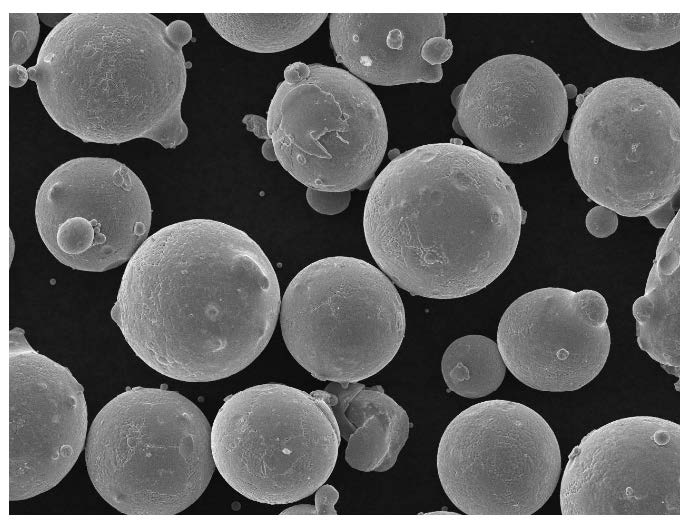
AIZn10 Cladding Powder in the Aluminum-Zinc Alloy Family
The aluminum-zinc system is attractive because zinc can strengthen aluminum more effectively than many simpler alloying additions while preserving low density. Compared with Al-Si powders, AIZn10 generally targets higher strength and better age-hardening potential, though it may demand tighter control over heat input and solidification. Compared with copper-rich aluminum powders, it often offers a more favorable corrosion-to-weight balance for transport and outdoor service.
Why AIZn10 Exists as a Cladding Material
Cladding-grade AIZn10 exists because a full component replacement is often unnecessary when only the surface or edge geometry has degraded. Engineers may need to rebuild worn aluminum housings, restore sealing lands, add sacrificial material for finish machining, or create a localized wear-resistant layer without converting the whole part into a heavy alloy. Lightweight deposition is the main reason this powder occupies a distinct niche in repair and hybrid manufacturing workflows.
Distinguishing Features of AIZn10 Additive Manufacturing Powder
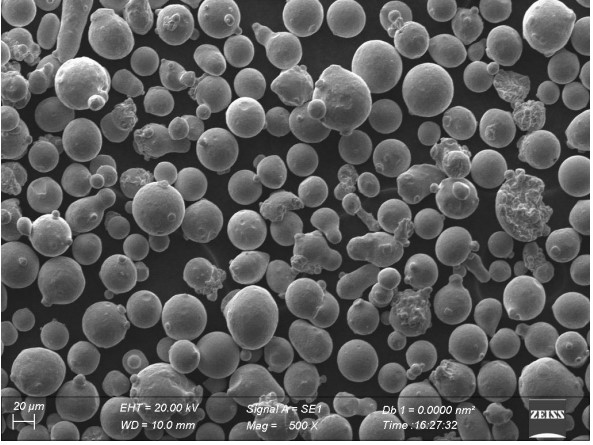
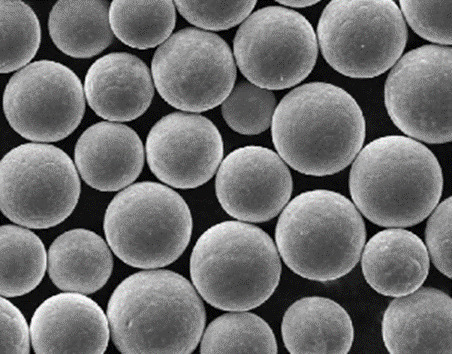
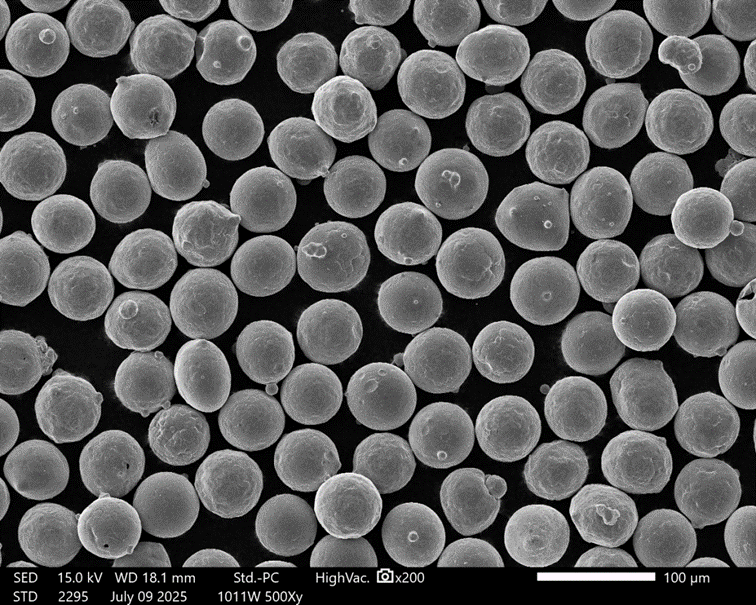
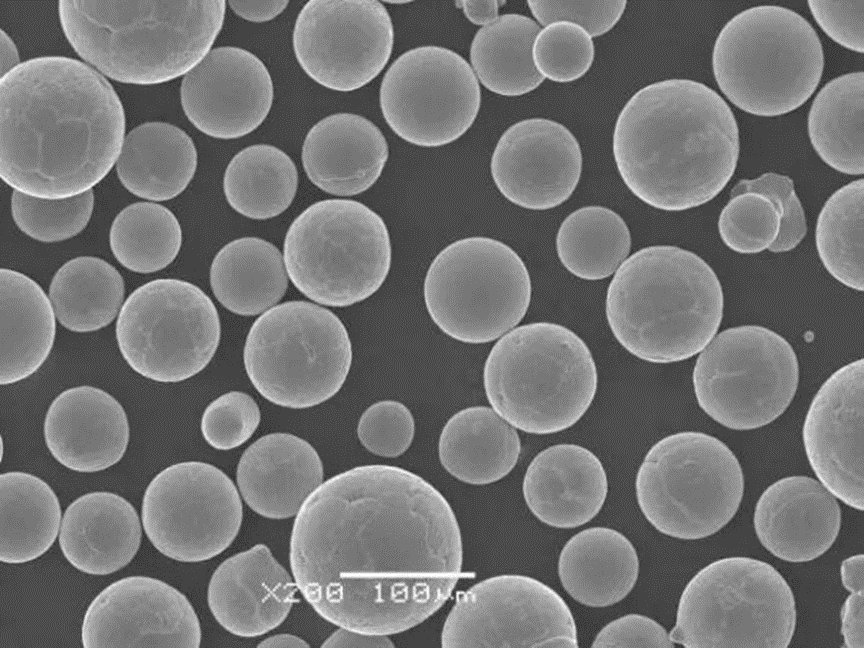
Well-made AIZn10 cladding powder is typically spherical, free-flowing, and produced by inert-gas atomization to limit oxide pickup. The Truer AlZn10 page states that vacuum gas atomization is used to achieve good sphericity, flowability, and low oxygen content, and also notes that zinc evaporation must be considered during LPBF processing; the same metallurgical caution is relevant in laser cladding because zinc has higher vapor pressure than aluminum and can shift local chemistry if the process window is too hot.
In zinc-bearing aluminum powders, composition control during melting is part of process control, not a separate issue.
Chemical Composition
AIZn10 cladding powder is usually supplied as a composition-controlled aluminum-zinc alloy rather than as a highly complex multi-element grade. The nominal chemistry centers on roughly 10 wt.% zinc, with aluminum as the balance and residual elements held to low levels so that flowability, weldability, and deposit consistency remain manageable. Because product sheets do not always disclose every impurity limit publicly, many commercial specifications present the chemistry as a supplier range rather than as a universal international standard.
| Element | Typical Content (wt.%) | Typical Control Range | Metallurgical Role |
|---|---|---|---|
| Aluminum (Al) | Balance | about 88.0–91.0 | Base matrix; provides low density, corrosion resistance, and thermal conductivity |
| Zinc (Zn) | 9.0–11.0 | about 8.5–11.5 | Primary strengthening addition; supports age-hardening response and raises strength |
| Silicon (Si) | ≤0.30 | typically 0.05–0.30 | Residual deoxidation/casting-related element; excess may change fluidity and brittle phase content |
| Iron (Fe) | ≤0.30 | typically 0.05–0.30 | Residual impurity; excessive Fe can form hard intermetallics and reduce ductility |
| Copper (Cu) | ≤0.20 | typically ≤0.20 | May increase strength but can reduce corrosion resistance if uncontrolled |
| Magnesium (Mg) | ≤0.10 | typically trace to 0.10 | Minor strengthening support; excessive levels alter precipitation behavior |
| Manganese (Mn) | ≤0.10 | typically ≤0.10 | Grain-control and impurity-management role in small amounts |
| Titanium / Others | trace | supplier controlled | Grain refinement or residual control depending on melt practice |
Zinc as the Defining Alloying Addition
In AIZn10 cladding powder, zinc is the main strengthening element and the reason the alloy sits apart from simpler aluminum grades. It promotes higher achievable strength than many low-alloy aluminum powders, especially when post-deposition aging or natural aging contributes to precipitation effects. The trade-off is that zinc-bearing aluminum alloys require careful thermal control because over-heating can increase vaporization and porosity risk.
Residual Elements and Deposit Integrity
Residual iron and silicon are not harmless background values in aluminum cladding. If their levels drift upward, intermetallic phases can become more prominent and local brittleness may increase, especially in rapidly solidified deposits. For that reason, users typically treat impurity control as part of functional qualification, not just as incoming inspection paperwork.
Chemistry Drift During Cladding
A practical issue with AIZn10 is chemistry drift under a high-energy beam. The Truer material page explicitly notes the need for composition compensation in laser powder bed fusion because of Zn evaporation, and the same physical principle applies in cladding: a process window with too much energy density can lower deposited zinc content and move the microstructure away from the target chemistry. Zn retention is therefore one of the most important process-development checkpoints for this alloy.
Physical and Mechanical Properties
The properties of AIZn10 cladding powder have to be interpreted in two stages: powder-state behavior and deposited-material behavior. Powder buyers care about flow, packing, and oxidation resistance; end users care about the strength, hardness, machinability, and corrosion performance of the clad layer after dilution with the substrate. Since build parameters and thermal history strongly affect 7000-series-like aluminum deposits, the values below should be read as typical engineering ranges rather than guaranteed minimums for every machine and every wall thickness.
| Property | Typical Value | Unit | Test Standard / Condition |
|---|---|---|---|
| Density | 2.9–3.1 | g/cm³ | Typical alloy value at room temperature |
| Solidus Range | 475–520 | °C | Composition-dependent typical onset |
| Liquidus Range | 600–640 | °C | Typical melting completion range |
| Ultimate Tensile Strength | 320–520 | MPa | Typical deposited and aged condition |
| Yield Strength (0.2%) | 180–420 | MPa | Typical deposited condition, heat-treatment dependent |
| Elongation | 3–10 | % | Depends on porosity, dilution, and post-heat treatment |
| Hardness | 95–150 | HV | Typical as-clad to aged condition |
| Thermal Conductivity | 110–150 | W/m·K | Typical room-temperature range |
| Electrical Conductivity | 20–30 | % IACS | Typical Zn-bearing aluminum alloy range |
Strength-to-Weight Behavior of AIZn10 Cladding Powder
AIZn10 is attractive because its density remains close to that of aluminum while its strength can move significantly above pure aluminum deposits. This creates a useful combination for housings, covers, brackets, lightweight fixturing, and restore-and-machine repairs where the customer wants more than cosmetic fill but does not want to introduce a heavy nickel or cobalt overlay.
Heat Treatment Sensitivity
The most meaningful property variable is not a single tensile number but the alloy’s response to thermal history. Zn-bearing aluminum deposits can change noticeably after natural aging, artificial aging, or stress-relief cycles, so qualification should be performed on parts or coupons that mirror the real deposition sequence. That is why many engineers specify target hardness and microstructure windows rather than only an as-clad tensile value.
Corrosion and Service Environment
AIZn10 can offer useful corrosion performance in many atmospheric and general industrial conditions, but it is not a universal answer for aggressive chloride exposure or galvanically mixed assemblies. Substrate compatibility, sealing, and post-machining surface finish all influence durability. For that reason, corrosion behavior should be validated at the assembly level when the deposit will contact dissimilar metals or marine environments.
Specifications and Available Grades
Commercial AIZn10 cladding powder is generally purchased by particle size distribution, morphology, oxygen content, and intended process route rather than by a single universal mill specification. Fine cuts can be used for powder bed work or very small-bead laser applications, while coarser cuts are more common in laser cladding, DED, or thermal spray operations that need stable feeding. Common powder test references in industry include the ASTM B213 Hall flow method and the ASTM B212 apparent density method, even when the final acceptance limits remain supplier-specific.
| Grade / PSD Class | Typical Particle Size Distribution | Apparent Density | Tap Density | Hall Flow | Oxygen Content | Sphericity / Morphology | Typical Standards Cross-Reference |
|---|---|---|---|---|---|---|---|
| Fine AM Grade | 15–53 µm | 1.4–1.8 g/cm³ | 1.7–2.1 g/cm³ | 18–30 s/50 g | typically ≤0.15 wt.% | Highly spherical, low satellites preferred | Supplier chemistry spec; ASTM/ISO powder tests as applicable |
| Laser Cladding Grade | 45–105 µm | 1.5–1.9 g/cm³ | 1.8–2.2 g/cm³ | 16–26 s/50 g | typically ≤0.12 wt.% | Spherical GA powder | Suitable for coaxial or lateral powder feeding |
| Coarse Deposition Grade | 45–150 µm | 1.5–2.0 g/cm³ | 1.8–2.3 g/cm³ | 15–25 s/50 g | typically ≤0.12 wt.% | Spherical to near-spherical | Common for laser build-up and restoration work |
| Customized Cut | 0–25 µm, 25–75 µm, or on demand | by agreement | by agreement | by agreement | by agreement | Classification matched to equipment | Customer-specific process qualification |
| Standards Row | application specific | ASTM B212 method | tap-density method by agreement | ASTM B213 if flowable | contract specific | morphology by image analysis | Cross-reference may include ASTM, ISO, GB/T, and DIN testing frameworks |
AIZn10 Cladding Powder PSD Selection
The Truer AlZn10 product page lists size offerings including 0–25 µm, 15–53 µm, 25–75 µm, 45–105 µm, and 45–150 µm, which maps well onto both additive and cladding use cases. In practice, laser cladding users often prefer the 45–105 µm or 45–150 µm window because it feeds consistently, resists airborne fines loss, and supports stable melt-pool interaction at industrial deposition rates.
Flowability and Apparent Density
Flowability is not a cosmetic metric. ASTM states that Hall flow is a preferred method for determining metal-powder flowability when the powder will flow unaided, while apparent density helps predict filling behavior and powder handling consistency. For cladding users, those values matter because unstable feeding quickly becomes unstable bead geometry.
Related Powder Families for Material Screening
When engineers are comparing options for lightweight surface engineering, they often review a broader [aluminum alloy powder catalog] alongside alternatives such as [copper alloy powder grades] for thermal conductivity or wear-facing materials. This is especially common in hybrid repair programs where one zone needs a low-density aluminum build-up and another requires a more conductive or harder deposit.
Manufacturing Process
AIZn10 cladding powder is most often produced by gas atomization because aluminum alloy powders require good sphericity, reasonable throughput, and controlled oxidation to perform well in feeder-based processes. PREP, VIGA, and EIGA are technically relevant because they illustrate the trade-off between cost, cleanliness, and powder morphology, but they are less commonly the first choice for mainstream aluminum-zinc cladding powder than inert-gas atomization. General powder-metallurgy literature recognizes atomization as one of the principal powder-production routes, and the Truer AlZn10 page specifically identifies vacuum gas atomization for this product.
| Process | Powder Shape / Sphericity | Oxygen Pickup | PSD Control | Throughput | Relative Cost | Typical AIZn10 Use Case |
|---|---|---|---|---|---|---|
| Gas Atomization (GA) | High, some satellites possible | Low to moderate | Good | High | Moderate | Standard cladding and AM feedstock |
| Vacuum Induction Gas Atomization (VIGA) | Very high | Low | Very good | Medium to high | Moderate to high | Cleaner premium powder with tighter chemistry control |
| Plasma Rotating Electrode Process (PREP) | Excellent smooth spheres | Very low | Moderate after classification | Medium | High | Specialty spherical powder where morphology is critical |
| Electrode Induction Gas Atomization (EIGA) | Very high | Very low | Good to very good | Medium | High | Low-contamination powder for critical deposition work |
| Water Atomization | Irregular to semi-irregular | Higher oxide risk | Broad | High | Low | Usually unsuitable for premium laser cladding applications |
Gas Atomization for AIZn10 Cladding Powder
Gas atomization breaks a molten alloy stream into droplets with inert gas, then rapidly solidifies them into mostly spherical particles. For AIZn10, that route offers the best industrial balance between powder yield, flowability, and manageable oxygen content. It is also scalable enough to support both development batches and larger recurring orders.
PREP, VIGA, and EIGA Trade-Offs
PREP is known for producing highly spherical particles with smooth surfaces, but it is generally associated with higher cost and is more common in premium reactive-alloy or specialty powder programs. VIGA and EIGA improve cleanliness and composition control, which can be valuable for zinc-bearing aluminum where oxidation and chemistry drift matter, though many users still select GA on cost-performance grounds. The right route depends on whether the project prioritizes deposition economy or a narrower process window.
Powder Production Versus Deposition Performance
AIZn10 cladding powder performance is shaped not only by how the powder is made, but by classification, storage, transport, and handling before it reaches the feeder. Fine oxide films on aluminum powders can affect wetting and fusion, so inert packaging and disciplined reuse rules are important. Powder handling discipline is therefore part of manufacturing quality, not a downstream housekeeping issue.
Applications by Industry
AIZn10 cladding powder is most useful where designers or maintenance teams need to preserve aluminum’s weight advantage while improving local strength or restoring lost geometry. It is not the dominant choice for ultra-hard wear overlays on steel, but it becomes highly relevant when the base material is aluminum or when weight gain from a nickel- or cobalt-based deposit would be unacceptable. That makes it a practical engineering material rather than a universal surfacing alloy.
Aerospace and Lightweight Transport
In aerospace and adjacent transport sectors, aluminum housings, covers, and brackets often need dimensional restoration after machining errors, erosion, or localized wear. AIZn10 can be used to rebuild edges, sealing surfaces, or sacrificial machining stock while keeping the repaired zone compositionally closer to high-strength aluminum than a dissimilar heavy alloy would. Its value is highest on low-to-medium volume parts where replacement cost exceeds repair complexity.
Automotive and E-Mobility
Automotive producers increasingly use aluminum castings and hybrid structures to cut mass. In that context, AIZn10 cladding powder can support mold repair, localized surface reinforcement, feature addition, and prototyping of lightweight functional details. It is particularly relevant when designers need a stronger aluminum deposit than pure-Al filler but still want machinable behavior after cladding.
Tooling, Fixtures, and Industrial Equipment
Laser cladding with AIZn10 is also useful in jigs, fixtures, robotic end-effectors, and general industrial equipment where low inertia matters. Restoring an aluminum seating face or building up a machined tolerance zone can be more economical than replacing the whole component, provided the substrate is metallurgically compatible. Many end-use pathways overlap with the broader [additive manufacturing applications overview] used across repair, prototyping, and functional surface engineering.
Electronics, Thermal Hardware, and Hybrid Assemblies
Because aluminum retains relatively good thermal conductivity compared with heavier engineering alloys, AIZn10 may be considered for enclosures, carrier structures, and support features that still need heat dissipation. It will not match pure copper in conductivity, but it offers a more favorable mass profile. In mixed-property assemblies, that trade-off can be more important than absolute conductivity.
Comparison with Alternative Materials
Material selection for cladding is always comparative. Engineers rarely ask whether AIZn10 is good in the abstract; they ask whether it is better than AlSi10Mg, Al 7075-type powder, pure aluminum, or a copper-based alternative for a specific substrate and failure mode. The answer depends on density targets, strength, crack sensitivity, corrosion environment, and the extent to which dissimilar-metal deposition is acceptable.
| Material | Density (g/cm³) | Relative Strength Potential | Corrosion Resistance | Relative Cost | Cladding / Printability | Typical Best-Fit Use Case |
|---|---|---|---|---|---|---|
| AIZn10 cladding powder | 2.9–3.1 | Medium to high | Good in many general environments | Medium | Good with controlled Zn-loss management | Lightweight repair and build-up on aluminum parts |
| AlSi10Mg powder | 2.65–2.70 | Medium | Good | Low to medium | Very good and widely used | General aluminum AM and crack-tolerant builds |
| 7075-type aluminum powder | 2.8–2.9 | High | Moderate | Medium to high | More process-sensitive | High-strength lightweight structural features |
| Commercially pure Al powder | 2.70 | Low | Very good | Low | Good | Conductive or corrosion-focused build-up with low strength demand |
| Cu-based cladding powder | 8.3–8.9 | Medium | Variable | Medium to high | Good on compatible systems | Thermal conductivity or anti-galling overlays where weight is secondary |
AIZn10 Versus AlSi10Mg
AlSi10Mg is often easier to process and is more forgiving in many additive routes, which explains its widespread use. AIZn10, however, can offer a higher-strength direction when the design needs more mechanical capability than a silicon-rich aluminum deposit typically provides. The cost of that upside is tighter control over chemistry and heat input.
AIZn10 Versus 7075-Type Powders
AIZn10 and 7075-type powders both occupy the high-strength aluminum space, but AIZn10 is a simpler Zn-bearing chemistry. That can be beneficial when the goal is cladding rather than full structural qualification, because a simpler alloy may be easier to interpret during dilution and repair trials. On the other hand, 7075-type materials can reach higher strength in optimized conditions.
AIZn10 Versus Copper-Based Powders
Copper-based cladding alloys bring excellent thermal conductivity and are valuable for heat-transfer tooling, but they add substantial weight and differ sharply from aluminum substrates. AIZn10 is usually the better fit when substrate compatibility and mass are the primary concerns, while copper alloys win when thermal performance dominates the design brief.
Our Company
Shanghai Truer Technology Co., Ltd., the company operating am-printing.com, was established in 2009 and created its additive manufacturing business in 2019. According to the provided company context, its activities include integrating metal powder-making equipment and powder supply, with core technologies spanning SEBM equipment, PREP powder-making equipment, and gas atomization-related capability; its published powder portfolio includes TiNi, TiTa, TiAl, TiNbZr, CoCrMo, and spherical nickel-based, cobalt-based, titanium-based, copper-based, aluminum-based, and stainless steel powders for SLM, SEBM, DED, laser cladding, PM, MIM, HIP, spraying, welding, and coating applications across industries such as medical, aerospace, nuclear power, 3C electronics, hand tools, and remote control cars, with company background summarized on the [company information page] and technical requests directed through the [powder inquiry channel].
FAQ
Q1. Is AIZn10 cladding powder the same as AlZn10 powder?
In most engineering contexts, AIZn10 is used to refer to the same aluminum-zinc grade commonly written as AlZn10. The difference is often typographic, especially where uppercase “I” and lowercase “l” are visually similar, so buyers should confirm the actual chemistry rather than rely only on the label.
Q2. What substrate works best with AIZn10 cladding powder?
AIZn10 generally makes the most sense on compatible aluminum substrates where low weight and metallurgical similarity matter. It is less suitable as a universal repair material for steels because the thermal expansion mismatch and compositional difference are much larger than in aluminum-on-aluminum repairs.
Q3. Is AIZn10 cladding powder good for laser cladding instead of LPBF?
Yes, many users will find it more naturally aligned with laser cladding or DED-style deposition than with LPBF. The larger particle sizes commonly offered for AlZn10, such as 45–105 µm and 45–150 µm, are especially consistent with feeder-based cladding workflows.
Q4. What is the biggest processing risk with AIZn10 cladding powder?
The main risk is zinc loss from excessive heat input, which can shift deposit chemistry and affect mechanical properties. Oxidation and porosity control are also important because aluminum powders form stable oxide films that can interfere with wetting and fusion if the process window is poorly tuned.
Q5. How does AIZn10 compare with AlSi10Mg for repair work?
AIZn10 is generally selected when higher strength or a Zn-strengthened aluminum deposit is preferred, while AlSi10Mg is often chosen for easier processing and broader AM familiarity. The better option depends on whether the repair program values strength potential more than process tolerance.
Q6. What powder size is typical for AIZn10 cladding powder?
For cladding and DED-style work, 45–105 µm and 45–150 µm are common practical ranges because they feed reliably and support stable bead formation. Finer cuts such as 15–53 µm are more relevant when the same alloy family is being evaluated for other additive routes or for very small deposition features.