Quick Answer
CoCrMoW dental & implant powder is a cobalt-chromium-molybdenum-tungsten alloy powder engineered for additive manufacturing of medical and dental parts that need high strength, corrosion resistance, wear resistance, and reliable polishability. It is usually chosen over softer or lower-strength alloys when the application involves removable partial denture frameworks, crowns and bridges, surgical tools, or implant-related components that benefit from a rigid, biostable cobalt alloy. In metal 3D printing, it performs especially well where thin sections, precise fit, and durable surface finishing are critical.
What Is CoCrMoW dental & implant powder
CoCrMoW dental & implant powder is a spherical metal powder based on the cobalt-chromium alloy family, modified with molybdenum and tungsten to improve strength, hardness, wear behavior, and high-temperature stability during processing. In practice, the designation is used most often for dental additive manufacturing powders intended for laser powder bed fusion, although the chemistry family overlaps with medical cobalt alloys used in implant and surgical applications.
CoCrMoW Dental & Implant Powder Within the Cobalt Alloy Family
The alloy belongs to the broader class of cobalt-based biomedical and dental materials that derive their performance from a cobalt matrix strengthened by chromium-rich carbides and solid-solution alloying. Chromium is the key passivating element, while molybdenum and tungsten help tune strength and wear resistance. Compared with conventional cast dental alloys, the powder route enables tighter control over particle morphology, oxygen level, and print consistency, which are important for repeatable prosthetic fit.
Manufacturers and labs often compare this material with the broader cobalt alloy powder range because CoCr dental grades occupy a specific niche inside the cobalt powder market. They are not general-purpose superalloys and they are not intended to replace every orthopedic or aerospace cobalt alloy. Their design logic is narrower: combine biostability, rigidity, and fine-feature printability in parts that must survive long clinical use or repeated sterilization.

Why CoCrMoW Exists as an AM Powder Grade
Dental and implant-related applications place unusual demands on a metal powder. The finished part must be dimensionally accurate, strong at low section thickness, resistant to saliva and body-fluid corrosion, and compatible with post-processing steps such as heat treatment, blasting, machining, and mirror polishing. Traditional casting can meet some of those requirements, but additive manufacturing improves freedom of geometry and often reduces remakes for highly customized restorations.
That is why CoCrMoW powder emerged as a specialist feedstock rather than just a powdered version of a cast alloy. The powder is optimized for layerwise melting, stable spreading, and dense fusion under laser exposure. Those powder-level characteristics matter as much as the nominal chemistry when the final product is a precision dental framework or a patient-specific medical device.
How CoCrMoW Differs from Standard CoCrMo
Not every CoCrMo alloy contains tungsten, and not every tungsten-bearing grade is intended for implants. The addition of tungsten is typically used to strengthen the matrix, improve hot hardness, and support wear resistance without giving up the corrosion performance expected from chromium-rich cobalt alloys. In dental practice, that can translate into good edge retention in thin connector areas and dependable shape stability during function.
The phrase “dental & implant” should therefore be understood as an application-oriented description rather than a single universal standard name. Some compositions align more closely with dental metallic material specifications, while others are produced to support biomedical manufacturing routes and internal quality protocols. Buyers should always check whether the powder chemistry and test data are matched to dental prosthetics, implantable components, or both.
What Makes CoCrMoW AM Powder Technically Valuable
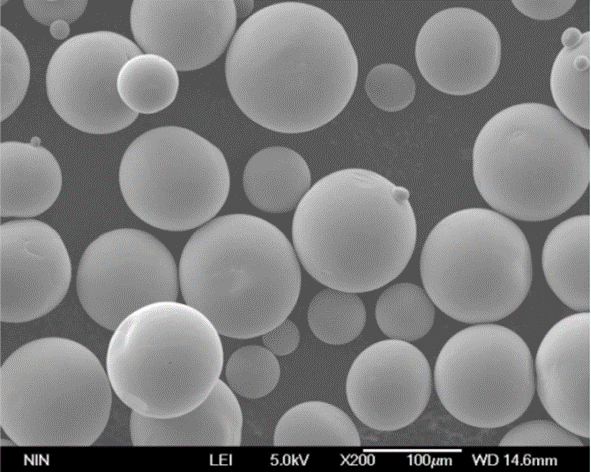
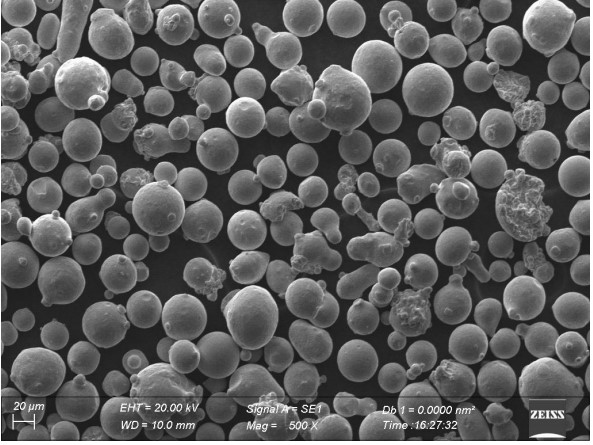
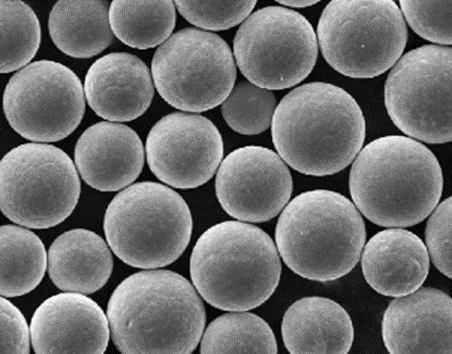
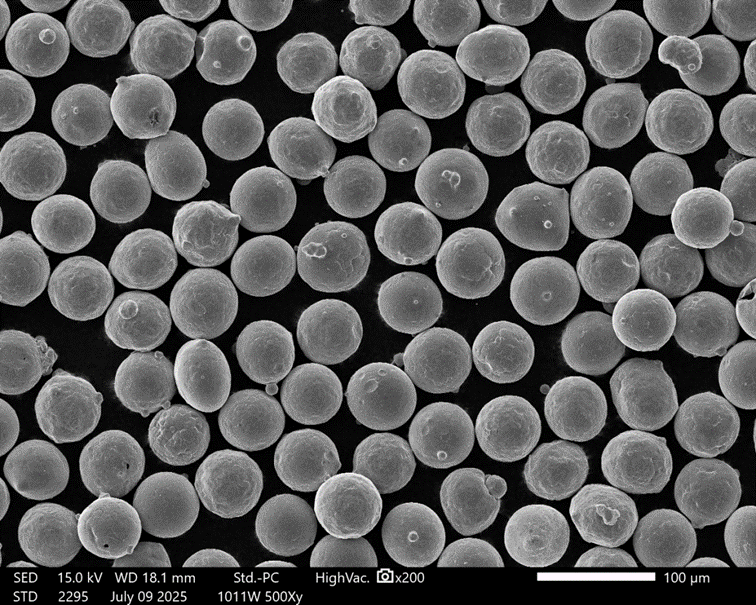
The value of CoCrMoW in additive manufacturing comes from the interaction of chemistry, powder shape, and process response. A high-quality batch should exhibit spherical morphology, controlled particle size distribution, low oxygen, and low satellite content so that the recoating behavior stays stable throughout a production run. Once printed and post-processed, the alloy is expected to deliver dense parts with high stiffness, good fatigue potential, and a surface that can be brought to a clinically acceptable finish.
As defined in ISO/ASTM 52900 additive manufacturing terminology, additive manufacturing is a layerwise process rather than a subtractive one, which is especially relevant for customized medical geometries. CoCrMoW benefits from that design freedom because frameworks, lattice regions, and complex undercuts can be built directly from digital patient data.
In dental AM, repeatable fit and surface finish are often just as important as bulk strength.
Chemical Composition
CoCrMoW dental powders are usually supplied as proprietary or semi-standardized compositions within the cobalt-chromium-molybdenum family. Exact ranges vary by supplier and intended end use, but the chemistry typically centers on cobalt as the balance, chromium around the upper twenties, molybdenum in the mid single digits, and tungsten as a strengthening addition. Small amounts of silicon, manganese, iron, carbon, and nitrogen may be controlled as process or impurity elements.
Typical Composition of CoCrMoW Dental & Implant Powder
| Element | Typical wt.% Range | Metallurgical Role | Functional Effect |
|---|---|---|---|
| Co | Balance | Matrix element | Provides the base strength, toughness, and high modulus associated with cobalt alloys |
| Cr | 26.0–30.0 | Passivating and carbide-forming element | Builds corrosion resistance through a stable oxide film and supports hardness |
| Mo | 4.0–7.0 | Solid-solution and carbide-strengthening element | Improves pitting resistance, strength, and wear behavior |
| W | 2.0–6.0 | Solid-solution strengthening element | Raises hardness, high-temperature stability, and rigidity in thin sections |
| Si | 0.5–1.5 | Deoxidation and fluidity-related element | Helps melting behavior but must be controlled to avoid brittleness |
| Mn | 0.1–1.0 | Deoxidation and process-control element | Assists melt cleanliness and chemistry balance |
| Fe | ≤1.0 | Residual impurity control | Kept low to maintain alloy stability and biomedical corrosion behavior |
| C | 0.02–0.25 | Carbide-forming interstitial | Strongly influences hardness and strength; excessive carbon can reduce ductility |
| N | ≤0.25 | Interstitial strengthening | Can increase strength, but requires control for consistency |
The most consequential elements are chromium, molybdenum, and tungsten. Chromium creates the passive oxide layer that gives cobalt dental alloys their long-standing reputation for oral corrosion resistance. Molybdenum improves resistance to localized corrosion and helps maintain strength, while tungsten raises rigidity and contributes to wear resistance in frameworks and occlusal surfaces.
Role of Carbon and Interstitial Control
Carbon deserves special attention because even small changes can shift the balance between ductility and hardness. Many powder buyers focus on chromium and molybdenum first, but carbon is often the quiet variable that determines whether a printed part machines and polishes cleanly after heat treatment. For medical and dental use, a low-carbon powder specification is frequently preferred when the application needs toughness and crack resistance more than maximum hardness.
Interstitial control also matters for additive manufacturing. Oxygen and nitrogen influence melt behavior, oxide formation, and the final microstructure after rapid solidification. Because dental parts are small and tolerance-sensitive, chemistry drift that might be tolerated in a bulk industrial part can become unacceptable in a delicate clasp arm or thin bridge connector.
Chemistry Variation Across Dental and Implant Uses
A common source of confusion is that the “right” composition depends on the final regulatory and performance target. Dental laboratory powders may prioritize castability-equivalent behavior, polishability, and framework stiffness, while implant-oriented cobalt alloys may be benchmarked against surgical standards such as the ASTM F75 cobalt alloy specification for chemistry family reference. That does not mean every CoCrMoW powder is identical to F75; it means buyers should evaluate the chemistry in relation to the intended device pathway.
Some suppliers also map their products against dental material classes defined in the ISO 22674 standard for metallic materials in fixed and removable restorations. In that context, the powder’s chemistry is only one part of the selection decision, because manufacturing route, heat treatment, and finished mechanical properties also determine whether the alloy is appropriate for a given prosthetic indication.
Physical and Mechanical Properties
The physical and mechanical profile of CoCrMoW is what makes it useful for small medical and dental parts. It combines high density and modulus with strong corrosion resistance and hardness that remains useful after printing, stress relief, and surface finishing. The result is a material that can support thin but rigid geometries better than titanium in some dental indications, although at the cost of higher stiffness and density.
Typical Properties of CoCrMoW Dental & Implant Powder and Dense AM Parts
| Property | Typical Value | Unit | Test Standard |
|---|---|---|---|
| Density | 8.3–8.8 typical | g/cm³ | Archimedes / pycnometry |
| Solidus range | 1,300–1,380 typical | °C | Thermal analysis |
| Ultimate tensile strength | 900–1,300 typical | MPa | ASTM E8 / ISO 6892 |
| Yield strength, 0.2% offset | 600–950 typical | MPa | ASTM E8 / ISO 6892 |
| Elongation | 6–20 typical | % | ASTM E8 / ISO 6892 |
| Hardness | 320–450 typical | HV | ASTM E384 |
| Young’s modulus | 190–230 typical | GPa | Tensile / ultrasonic evaluation |
| Thermal conductivity | 12–18 typical | W/m·K | Comparative thermophysical test |
| Corrosion behavior | Passive in oral/physiological conditions, typical | — | Electrochemical evaluation |
| Fatigue performance | Process-dependent, generally good after HIP/heat treatment | — | Rotating-bend or axial fatigue methods |
These values should be read as practical industry ranges rather than as universal guaranteed numbers. Additive manufacturing parameters, heat treatment, HIP, support strategy, build orientation, and surface condition all have a major influence on tensile and fatigue outcomes. In dental production, the useful question is not whether one batch reaches the highest ultimate tensile value, but whether the full workflow can deliver dense parts with repeatable fit and stable post-processing.
Why Strength Is Only Part of the Story
High tensile strength is important, but it is not the only reason technicians choose CoCrMoW. Dental frameworks need enough spring and rigidity to function without distortion, yet they also need surface integrity after polishing and cleaning. A powder that prints dense but leaves unstable surface defects can create more laboratory work even if the bulk mechanical properties look impressive on paper.
The alloy’s modulus is another practical advantage. CoCrMoW is much stiffer than titanium, which is helpful where connector sections or clasps must remain dimensionally stable under repeated load. That same stiffness, however, means part design and fit need careful control because the alloy is less forgiving of forced adjustment than softer materials.
Corrosion and Wear in Clinical Environments
Chromium is the foundation of the alloy’s passive behavior in saliva and body-fluid environments. Molybdenum improves resistance to localized attack, and tungsten supports the hard, wear-resistant surface character that is valuable for dental prosthetics. Together, these elements make wear resistance one of the key reasons CoCrMoW remains relevant despite competition from titanium and zirconia-based systems.
For implant-related uses, corrosion resistance must be considered alongside biocompatibility, surface finishing, and any downstream coating or passivation steps. The base alloy can be highly stable, but the final device performance still depends on porosity control, residual stress management, and surface preparation after printing.
Thermal and Processing Implications
CoCrMoW does not conduct heat as efficiently as copper alloys, but that is rarely a disadvantage in dental AM. What matters more is the alloy’s stable melting response, strong layer bonding, and ability to retain geometry during fine-feature printing. Its relatively high melting range and hot strength help preserve detail in crowns, bridges, and partial denture frameworks when the process window is tuned correctly.
Specifications and Available Grades
Powder specification is the bridge between nominal chemistry and usable production performance. In the dental and implant field, the most important variables are particle size distribution, flowability, oxygen level, morphology, and documented compatibility with laser powder bed fusion. A powder can have the correct alloy name and still fail in production if the spreadability or melt stability is inconsistent.
Typical Supply Grades for CoCrMoW Dental & Implant Powder
| Grade / Supply Condition | Typical PSD Range | Apparent Density | Tap Density | Hall Flow | Oxygen Content | Sphericity / Morphology | Cross-Reference / Typical Use |
|---|---|---|---|---|---|---|---|
| Extra-fine dental SLM grade | 10–30 µm | 4.2–4.8 g/cm³ | 5.0–5.7 g/cm³ | 18–28 s/50 g | ≤0.10 wt.% typical | Highly spherical, very low satellites | Fine crowns, copings, detailed lattice features |
| Standard dental LPBF grade | 15–45 µm | 4.4–5.0 g/cm³ | 5.2–5.9 g/cm³ | 15–24 s/50 g | ≤0.10 wt.% typical | Spherical AM powder | Bridges, frameworks, implant bars |
| Broad-cut medical AM grade | 15–53 µm | 4.5–5.1 g/cm³ | 5.3–6.0 g/cm³ | 14–22 s/50 g | ≤0.08 wt.% typical | Spherical, controlled fines | General medical and dental additive manufacturing |
| DED / cladding grade | 45–105 µm | 4.8–5.4 g/cm³ | 5.6–6.3 g/cm³ | 12–18 s/50 g | ≤0.08 wt.% typical | Near-spherical to spherical | Repair, larger builds, directed energy deposition |
| Standards alignment row | Supplier-specific | — | — | Often measured by ASTM B213 Hall flow testing | Supplier-specific | Verified by SEM / image analysis | Commonly compared with ISO 22674 classes, ASTM F75 family, ISO/ASTM 52900 terminology, and internal lab validation |
The most common choice for dental laser powder bed fusion is the 15–45 µm or 15–53 µm range. That window usually balances smooth recoating, sufficient packing density, and stable melting without introducing too many fines. For very small restorations, some labs prefer narrower cuts, but broader medical AM grades may be more robust across multiple machine platforms.
Standards, Cross-References, and Why They Are Not Always One-to-One
Dental and implant powders often live in a mixed standards environment. One datasheet may reference dental alloy categories, another may benchmark against a surgical cobalt-chromium alloy family, and a third may focus mainly on powder test methods. That is why engineers should treat standards mapping as guidance rather than as proof that every CoCrMoW powder is interchangeable.
A good specification packet should distinguish between powder standards, chemistry-family standards, and final part standards. Powder flow, apparent density, and PSD methods say something about processability. By contrast, biomedical and dental material standards speak to composition classes and mechanical expectations after manufacturing, not to the powder’s behavior in a recoater.
What Buyers Should Request
Serious buyers typically request chemistry with min-max ranges, PSD data by laser diffraction, flowability, apparent density, tap density, oxygen and nitrogen, morphology images, and lot traceability. For regulated manufacturing, they also want tensile data from representative printed coupons and a statement of whether the results apply to as-built, heat-treated, or HIPed parts. Those details matter far more than a generic claim that the powder is “for dental use.”
The comparison is often easiest when viewed against a broader titanium powder portfolio for medical AM, because titanium buyers are already accustomed to scrutinizing oxygen, PSD, and post-process condition. CoCrMoW deserves the same level of technical review.
Powder Reuse and Lot Stability
Because dental parts are small and high value, powder reuse strategy can affect economics more than raw powder price. Recycled powder may remain usable, but oxygen pickup, fines accumulation, and chemistry drift must be monitored closely. A conservative refresh protocol is often justified when fit accuracy and surface finish are more important than maximum powder yield.
Manufacturing Process
Most CoCrMoW dental & implant powder used in additive manufacturing is produced by inert gas atomization or a vacuum-assisted variant of that process. The goal is to obtain round particles, low oxygen pickup, narrow PSD control, and good flowability. For medical and dental alloys, the powder-making route also influences cleanliness, traceability, and the reproducibility of post-print mechanical properties.
Powder Production Routes for CoCrMoW Additive Manufacturing Powder
| Process | Sphericity | Oxygen Pickup | PSD Control | Throughput | Relative Cost |
|---|---|---|---|---|---|
| Gas Atomization (GA) | High | Low to moderate | Good | High | Moderate |
| Vacuum Induction Gas Atomization (VIGA) | Very high | Low | Very good | Medium to high | Moderate to high |
| Electrode Induction Gas Atomization (EIGA) | Very high | Very low | Very good | Medium | High |
| Plasma Rotating Electrode Process (PREP) | Extremely high | Very low | Good, often with coarser yield | Medium to low | High |
| Water Atomization | Low to medium | Higher | Moderate | High | Low |
Gas Atomization for CoCrMoW Dental & Implant Powder
GA remains the dominant industrial route because it combines good powder quality with scalable output. Molten alloy is broken into droplets by high-pressure inert gas, and those droplets solidify into largely spherical particles. For dental AM, the benefit is a powder that spreads predictably and packs well enough to support thin, accurate builds.
VIGA goes a step further by melting under vacuum before gas atomization, which helps reduce contamination and improve chemistry control. That extra cleanliness can matter when the end use is patient-specific and the process window is narrow. In many cases, VIGA-grade powder is selected when repeatability and lot-to-lot consistency outweigh the pressure to minimize feedstock cost.
PREP and EIGA in Medical Powder Context
PREP and EIGA are more often associated with premium reactive alloys, but they remain relevant comparison points for cobalt powders. PREP can deliver exceptionally round particles with low contamination, though it often produces a size distribution less optimized for fine dental LPBF without substantial classification. EIGA also offers very clean spherical powder, but the cost structure is typically higher than mainstream gas atomization.
For dental labs and most implant-related AM programs, these premium routes are valuable mainly as benchmarks. They show what is possible in terms of morphology and oxygen control, even if GA or VIGA remains the practical production choice. The finished part requirements, not the prestige of the powder-making route, should determine the selection.
Process Trade-Offs That Matter in Practice
In dental manufacturing, throughput alone is rarely the decisive factor. A lower-cost powder that introduces recoating defects, spatter-related inclusions, or frequent rebuilds can be more expensive in the final cost per acceptable part. The preferred route is usually the one that creates dense, polishable parts with minimal batch variation.
Post-atomization classification is equally important. Sieving and blending determine whether the final cut has the right balance of fines and coarser particles for stable layer formation. Even a well-atomized cobalt alloy can underperform if the classified distribution is too broad or if storage conditions allow moisture contamination.
Powder Route and Final Clinical Quality
The manufacturing route affects more than machine uptime. It influences porosity, contour sharpness, surface roughness before finishing, and the consistency of support removal. In a dental lab environment, those seemingly small differences affect seating accuracy, clasp performance, and polishing time, which is why powder provenance deserves close scrutiny.
Applications by Industry
Although the keyword emphasizes dental and implant use, CoCrMoW powder has relevance across several technical sectors. Its strongest role is in medical and dental manufacturing, but the same combination of corrosion resistance, hardness, and hot strength can be useful in tooling, energy, and wear-exposed industrial components. The alloy should be viewed as application-specific rather than single-industry.
Medical and Dental Applications for CoCrMoW Powder
The primary market is fixed and removable dental prosthetics. Common printed components include crowns, copings, bridges, removable partial denture frameworks, implant bars, abutment-related structures, and laboratory prosthetic frameworks. These parts benefit from high rigidity, good polishability, and resistance to saliva-induced corrosion.
Implant-related manufacturing is more selective. CoCrMoW may be used for device components, surgical planning hardware, instruments, or specialized biomedical parts where cobalt alloy performance is desired, but the exact regulatory suitability depends on chemistry, manufacturing validation, and final device requirements. Engineers should distinguish clearly between “implant-related” and “implantable without further qualification.”
Surgical Tools and Medical Equipment
Beyond restorative dentistry, cobalt-chromium powders can support surgical tools, guides, and wear-resistant medical hardware that must survive repeated sterilization. The alloy’s hardness and corrosion resistance make it useful for components that see abrasion or repeated contact. In these uses, biostability and cleanable surfaces are often just as important as peak tensile values.
These applications sit naturally within the broader metal AM application sectors because they combine customization, low-to-medium batch volumes, and the need for durable finished parts. Additive manufacturing is especially attractive where instruments or fixtures must be tailored to a procedure or a patient anatomy.
Tooling, Wear Parts, and Precision Hardware
CoCrMoW is not limited to healthcare. Its hardness and corrosion behavior also make it relevant for wear-prone industrial parts, valve seats, small nozzles, and precision fixtures that operate in chemically mild but abrasive environments. In such cases, the reason to choose it is not biocompatibility but the alloy’s resistance to deformation and surface damage.
Compared with iron-based materials, it is denser and more expensive, but it usually offers better corrosion and wear performance. Compared with nickel alloys, it often brings higher hardness and a more favorable polishable surface for specific small-part applications.
Where It Competes Poorly
The alloy is generally a poor choice for lightweight structures, highly deformable components, or applications where low elastic modulus is important. Titanium remains superior for weight-sensitive implants and many osseointegration-driven designs, while stainless steels can be more economical for non-wear-critical tools. CoCrMoW should be chosen when biocompatibility and stiffness matter more than low density or ease of machining.
Additive Manufacturing Fit
CoCrMoW is most compelling when the part geometry is customized or difficult to cast consistently. Dental frameworks with complex undercuts, fine retentive features, or digital workflow requirements are ideal examples. In those settings, powder-based AM shortens the path from scan data to metal part while preserving the alloy benefits that dental technicians expect from cobalt-chromium systems.
Comparison with Alternative Materials
Material selection for dental and implant manufacturing is rarely about absolute performance in one category. Instead, it is about the best balance of stiffness, corrosion resistance, strength, weight, polishability, and manufacturing cost for a specific indication. CoCrMoW is strongest when the application values rigidity and surface durability over low weight.
CoCrMoW Dental & Implant Powder vs Alternative AM Materials
| Material | Density (g/cm³) | Strength Level | Printability | Corrosion Resistance | Relative Cost | Best-Fit Use Case |
|---|---|---|---|---|---|---|
| CoCrMoW dental & implant powder | 8.3–8.8 | High | Good to very good in LPBF | Excellent | Medium to high | Dental frameworks, implant bars, surgical wear parts |
| Ti-6Al-4V powder | 4.4–4.5 | High | Excellent | Excellent | High | Lightweight implants, orthopedic and medical parts |
| 316L stainless steel powder | 7.9–8.0 | Moderate | Excellent | Good to very good | Lower | Economical medical tools, fixtures, non-wear-critical parts |
| Ni-based alloy powder | 8.1–8.4 | High | Excellent | Good | High | High-temperature industrial parts rather than intraoral restorations |
| Zirconia ceramic feedstock | 5.8–6.1 | High hardness, brittle | Different process route | Excellent | Medium to high | Esthetic crowns and ceramic restorations |
Against titanium, CoCrMoW offers higher stiffness, better wear resistance, and a long-established dental framework pedigree, but it is much heavier and less favorable where a low modulus or lightweight implant is important. Against 316L, it usually wins on hardness and corrosion durability, though stainless steel remains easier to process economically for noncritical instruments. Against nickel alloys, CoCrMoW is more naturally aligned with medical and dental environments rather than high-temperature industrial service.
How Dentists, Labs, and Engineers Typically Decide
If the part is a removable partial denture framework or an implant bar needing rigidity and polishability, CoCrMoW is often the logical first choice. If low weight, osseointegration strategy, or orthopedic precedent dominates the decision, titanium may be preferable. If budget and easy processing matter more than wear resistance, stainless steel can still be appropriate for certain tools and fixtures.
This is why cross-family comparison matters. A buyer evaluating cobalt dental powder may also review nickel alloy powder options for heat-resistant industrial work or compare them with titanium grades for medical parts. The correct answer depends on the service environment and the regulatory path, not just on nominal strength.
Our Company
Shanghai Truer Technology Co., Ltd, the company behind am-printing.com, states that it was established in 2009 and launched its additive manufacturing business in 2019. According to the company’s published profile, its activities include integrating 3D-printing powder-making equipment and services with metal powder supply; its core technologies include Selective Electron Beam Melting equipment, Plasma Rotating Electrode Process powder-making equipment, and Gas Atomization; and its powder portfolio includes TiNi, TiTa, TiAl, TiNbZr, CoCrMo, plus nickel-based, cobalt-based, titanium-based, copper-based, aluminum-based, and stainless steel spherical powders. The company also describes a joint innovation center for metal 3D printing and support for end uses including SLM, SEBM, DED, laser cladding, PM, MIM, HIP, cold and hot spraying, welding, and coating across medical, aerospace, nuclear power, 3C electronics, hand tools, and related sectors, as outlined in its company background.
FAQ
Q1. Is CoCrMoW dental & implant powder safe for intraoral dental restorations?
It is commonly selected for dental restorations because cobalt-chromium alloys have a long clinical history of corrosion resistance and structural reliability. However, suitability depends on the exact chemistry, manufacturing controls, and the final device standard the producer is working to. Powder name alone is not enough to establish clinical appropriateness.
Q2. What is the typical particle size for CoCrMoW dental powder in SLM?
A common range is 15–45 µm or 15–53 µm for laser powder bed fusion. That size window usually provides a good balance between layer smoothness, powder flow, and stable melting of fine dental geometries. Some labs use finer cuts for very detailed work, but narrower cuts can also make reuse control more demanding.
Q3. Is CoCrMoW better than titanium for dental 3D printing?
It is better for some indications and worse for others. CoCrMoW is usually favored when high stiffness, wear resistance, and thin rigid frameworks are required, while titanium is favored when lower density and broader implant precedent are more important. The right choice depends on the clinical function of the part, not just on price or strength.
Q4. Can CoCrMoW dental & implant powder be mirror polished after printing?
Yes, provided the printed part is dense, properly heat treated, and finished through the correct grinding and polishing sequence. One reason cobalt-chromium dental alloys remain popular is that they can achieve a clinically acceptable polished surface with good long-term surface durability. Surface defects from poor powder quality or unstable print parameters, however, will still show up during finishing.
Q5. What standards should buyers check when sourcing CoCrMoW powder?
Buyers should review powder test methods, chemistry-family references, and end-use dental or medical material standards separately. ISO 22674 is important for dental metallic materials, while ASTM F75 is a useful chemistry-family reference for surgical cobalt-chromium alloys. They should also ask whether the supplier’s mechanical property data comes from as-built, heat-treated, or HIPed coupons.
Q6. What documents should come with CoCrMoW dental & implant powder?
A serious supply package should include a certificate of analysis, chemistry ranges, PSD data, apparent density, tap density, Hall flow, oxygen and nitrogen levels, and morphology information. For regulated or validation-heavy production, buyers should also request lot traceability, representative build-property data, and process-condition notes for the intended AM route.