Quick Answer
FeCoNiCrMnAl High Entropy Alloys are multi-principal-element alloys developed for advanced powder metallurgy and metal additive manufacturing. They are chosen for AM parts when engineers need a tunable balance of strength, thermal stability, wear resistance, and microstructural flexibility that conventional stainless steels or nickel alloys do not always provide. In practice, they are especially relevant for research-led aerospace, energy, tooling, and high-performance industrial components where composition design and post-processing can be used to tailor the final property set.
What Is FeCoNiCrMnAl High Entropy Alloys
FeCoNiCrMnAl High Entropy Alloys belong to the broader high-entropy alloy, or HEA, family, in which no single base element dominates the composition in the traditional sense. Instead of building an alloy around iron, nickel, or cobalt alone, HEAs combine several principal elements in substantial proportions to create unusual phase stability and property combinations. The Fe-Co-Ni-Cr-Mn-Al system is one of the most studied because it bridges the classic Cantor-style FCC alloy concept with aluminum-modified strengthening strategies.
FeCoNiCrMnAl High Entropy Alloy Powder in Context
The base FeCoNiCrMn composition is closely associated with ductile, face-centered-cubic high-entropy alloys known for damage tolerance and low-temperature toughness. Adding aluminum changes that behavior significantly. Depending on how much Al is introduced, the alloy can shift from an FCC-dominant structure toward mixed FCC+BCC or B2-strengthened microstructures, which raises hardness and strength while often reducing ductility.
That tunability is the core reason this alloy family attracts additive manufacturing interest. In powder form, FeCoNiCrMnAl can be tailored for laser powder bed fusion, electron beam processes, directed energy deposition, HIP-based consolidation, and experimental powder metallurgy routes. Compared with single-family alloys, its design space is much broader, which is why it appears frequently in advanced materials screening programs.

Why This Alloy Family Matters in Additive Manufacturing
Additive manufacturing is not only a shaping technology; it is also a rapid-alloy-development platform. Because powder-based routes can consolidate small test geometries quickly, HEAs have become natural candidates for AM process development. FeCoNiCrMnAl, in particular, gives researchers and industrial users a way to study how composition, cooling rate, and heat treatment interact.
The system also aligns well with the wider HEA discussion summarized in the high-entropy alloy overview, where the focus is less on a single fixed grade and more on a compositional design philosophy. In AM, that philosophy is valuable because rapid solidification can stabilize metastable phases, refine microstructure, and reveal processing windows that may not appear in slower conventional casting routes.
Core Characteristics of FeCoNiCrMnAl Alloys
The most important features of this alloy family are FCC-to-BCC tunability, a strong response to composition changes, and the ability to combine high strength with useful thermal stability. Chromium supports oxidation and corrosion behavior. Cobalt and nickel contribute to phase stability and solid-solution effects. Manganese influences phase balance and ductility. Aluminum can sharply change both density and strengthening response.
This means FeCoNiCrMnAl is not a single-property alloy. It is better understood as a family of designable compositions that can be optimized for different priorities such as hardness, elevated-temperature retention, or structural stiffness. That makes it attractive for engineers who need more than a generic stainless or superalloy solution.
Distinguishing Features Versus Conventional Alloy Systems
Compared with common iron-based AM materials, FeCoNiCrMnAl is more compositionally complex and often more expensive to produce. Compared with nickel superalloys, it may offer a different balance of density, phase evolution, and solid-solution-driven strengthening rather than relying primarily on conventional precipitation systems. Compared with cobalt alloys, it can provide broader composition-driven phase control.
For sourcing and development teams working across experimental powder platforms, this positions FeCoNiCrMnAl near other advanced materials such as the high-entropy powder portfolio, where the emphasis is on alloy-system flexibility rather than only mature commodity grades.
In high-entropy alloys, composition is not just a chemistry target; it is the main lever for phase engineering.
Chemical Composition
FeCoNiCrMnAl compositions are usually discussed as a family rather than one rigid standard. The most common approach starts from a near-equiatomic Fe-Co-Ni-Cr-Mn base and then introduces aluminum at a controlled level to alter phase constitution, density, and strength. As Al increases, the structure often evolves from ductile FCC-rich states toward mixed or BCC/B2-strengthened conditions.
Typical Composition of FeCoNiCrMnAl High Entropy Alloys
| Element | Typical wt.% Range | Metallurgical Role | Functional Effect |
|---|---|---|---|
| Fe | 15–24 | Matrix former | Contributes structural continuity, cost balance, and compatibility with ferrous processing logic |
| Co | 15–24 | Phase stabilizer and strength contributor | Supports high-temperature strength, phase stability, and magnetic response in some variants |
| Ni | 15–24 | FCC stabilizer | Helps retain ductile FCC character and supports toughness in Al-lean variants |
| Cr | 15–24 | Oxidation and corrosion contributor | Improves environmental resistance and affects phase balance |
| Mn | 10–22 | FCC stabilizer and ductility aid | Supports solid solution behavior and can improve low-temperature toughness in suitable compositions |
| Al | 3–12 | Density reducer and BCC/B2 promoter | Increases strength and hardness, lowers density, and can improve oxidation resistance |
| C, O, N | Kept low, typically residual | Interstitial control | Excess interstitials can raise strength but hurt ductility and process consistency |
| S, P | Trace / controlled | Impurity control | Must remain low to avoid embrittlement and poor powder cleanliness |
Because this is an alloy family, the actual weight percentages depend on whether the material is Al-lean, near-equiatomic, or intentionally Al-enriched. Some developers describe composition in atomic percent rather than weight percent, especially in research papers, because atomic ratios reflect the high-entropy design logic more directly. Commercial powder buyers, however, still expect certificates in weight percent.
Metallurgical Function of Aluminum in FeCoNiCrMnAl
Aluminum is the element that most visibly changes this system. In modest additions, it can strengthen the matrix and reduce density. At higher levels, it may promote BCC or ordered B2 phases, shifting the material away from the very ductile Cantor-alloy style response and toward a stronger, harder condition.
That makes Al both useful and risky. More Al can improve oxidation behavior and strength, but too much may reduce room-temperature ductility or raise crack sensitivity during rapid solidification. For AM users, aluminum is therefore a design knob rather than a simple alloying footnote.
Role of the Transition Metals
Iron and nickel provide the baseline framework for a stable metallic matrix and good process familiarity. Cobalt adds thermal stability and contributes to strength, though it also increases raw-material cost. Chromium helps environmental resistance and influences how the alloy behaves during high-temperature exposure and post-build heat treatment.
Manganese plays a subtle but important role. It supports FCC stability in many variants and is associated with ductility in the classic FeCoNiCrMn system. Once aluminum is added, the Mn contribution has to be reconsidered because the phase balance is no longer governed by the original five-element system alone.
Composition Control in AM Powder
For gas-atomized feedstock, compositional precision matters more than a nominal label. A small chemistry drift in aluminum or manganese can alter evaporation behavior, oxide formation, and phase constitution after printing. The same is true for oxygen and nitrogen pickup, which can influence flowability, melting behavior, and elongation.
In other words, solid-solution strengthening in this alloy family only translates into reliable part performance when the powder chemistry is tightly controlled from melt to sealed container. That is one reason HEA powders are usually specified with more attention to lot chemistry than standard commodity steels.
Physical and Mechanical Properties
Physical and mechanical properties of FeCoNiCrMnAl High Entropy Alloys vary widely with composition, density, and post-processing. A laser powder bed fusion coupon with low aluminum and full HIP may behave very differently from an as-built specimen with a higher Al fraction and mixed FCC/BCC structure. For that reason, property values are best presented as typical ranges for dense or near-dense AM material rather than as one universal datasheet.
Typical Properties of FeCoNiCrMnAl High Entropy Alloy Material
| Property | Typical Value | Unit | Test Standard |
|---|---|---|---|
| Density | 7.0–7.8 typical | g/cm³ | Archimedes / helium pycnometry |
| Solidus–liquidus range | 1,250–1,420 typical | °C | Thermal analysis / DSC |
| Ultimate tensile strength | 800–1,400 typical | MPa | ASTM E8 / ISO 6892 |
| Yield strength, 0.2% offset | 450–1,100 typical | MPa | ASTM E8 / ISO 6892 |
| Elongation | 5–35 typical | % | ASTM E8 / ISO 6892 |
| Hardness | 220–480 typical | HV | ASTM E92 / ISO 6507 |
| Elastic modulus | 160–210 typical | GPa | Tensile / resonance methods |
| Thermal conductivity | 10–18 typical | W/m·K | Comparative thermophysical methods |
| Oxidation behavior | Better with higher Al and Cr | — | Exposure testing / mass-gain methods |
The density range is one of the first clues that composition matters. Al-lean variants remain relatively dense, closer to stainless or cobalt alloy territory, while higher-Al variants become lighter. This does not make them lightweight in the titanium sense, but it can improve specific strength in selected designs.
Strength and Ductility Balance
In the FeCoNiCrMn base system, good ductility is one of the defining attractions. Aluminum shifts that balance. At low to moderate additions, the alloy can still maintain useful elongation while gaining strength; at higher Al contents, hardness and yield strength rise further, but tensile ductility often narrows.
This trade-off is not a flaw. It is exactly why the alloy family is interesting. Engineers can move along the strength-ductility curve by adjusting Al content, thermal history, and density level instead of changing to a completely different alloy system.
Temperature Capability and Thermal Stability
FeCoNiCrMnAl is often evaluated for intermediate and elevated temperatures where diffusion resistance and sluggish phase evolution may offer benefits. The alloy family does not automatically outperform established nickel superalloys in high-temperature service, but it can deliver stable hardness and useful oxidation behavior when aluminum and chromium are balanced well.
Rapid AM solidification may refine the microstructure further, which can increase strength in the as-built state. Subsequent heat treatment can then be used to relieve stress, tune phase fractions, or coarsen ordered features deliberately. This makes thermal stability a function of both chemistry and process route.
Corrosion, Oxidation, and Environmental Response
Chromium and aluminum are the main environmental-resistance contributors. Chromium supports passivation, while aluminum can improve high-temperature oxidation through protective oxide formation. The exact corrosion performance depends heavily on phase constitution and segregation control, so it should not be assumed to match a mature stainless grade automatically.
For high-temperature applications, the oxidation-resistant aluminum effect is often more relevant than room-temperature aqueous corrosion. That distinction matters when evaluating whether the alloy belongs in energy hardware, hot tooling, or aerospace subcomponents rather than wet-process equipment.
Cryogenic and Dynamic Performance
Some compositions related to the FeCoNiCrMn base are known for excellent low-temperature toughness, and that legacy influences interest in Al-modified variants. Once aluminum is added, however, low-temperature behavior becomes more composition-sensitive. Retaining cryogenic toughness depends on preventing the alloy from shifting too far into brittle phase regimes.
That is why dynamic and low-temperature qualification should always be composition-specific. An Al-lean FCC-rich HEA may perform very differently from a stronger BCC/B2-containing version, even if both fall under the FeCoNiCrMnAl name.
Specifications and Available Grades
For powder buyers, specification work is less about a single global standard number and more about defining the combination of chemistry, powder morphology, contamination limits, and PSD appropriate for the target AM process. FeCoNiCrMnAl feedstock may be supplied for laser powder bed fusion, electron beam melting, DED, HIP, or experimental powder metallurgy routes, and each route prefers a different size window.
Typical Powder Grades for FeCoNiCrMnAl High Entropy Alloys
| Supply Grade | Typical PSD Range | Apparent Density | Tap Density | Hall Flow | Oxygen Content | Sphericity / Morphology | Cross-Reference / Typical Use |
|---|---|---|---|---|---|---|---|
| Fine LPBF grade | 15–53 µm | 4.0–4.8 g/cm³ | 4.8–5.6 g/cm³ | 13–18 s/50 g typical | ≤0.12 wt.% typical | High spherical, low satellites | Laser powder bed fusion coupons and small parts |
| Standard LPBF / EBM crossover grade | 20–63 µm | 4.1–4.9 g/cm³ | 4.9–5.7 g/cm³ | 14–19 s/50 g typical | ≤0.12 wt.% typical | Spherical | Broader AM development work |
| Coarse DED grade | 45–105 µm | 4.2–5.0 g/cm³ | 5.0–5.8 g/cm³ | 15–21 s/50 g typical | ≤0.10 wt.% typical | Spherical, flow-priority | Directed energy deposition and laser cladding |
| EBM / large-build grade | 53–150 µm | 4.3–5.1 g/cm³ | 5.1–5.9 g/cm³ | 16–22 s/50 g typical | ≤0.10 wt.% typical | Spherical | Electron beam and higher-layer-thickness builds |
| Standards alignment row | Supplier-specific | — | — | Often referenced to ASTM materials standards catalog and internal powder QA | Supplier-specific | Verified by SEM / image analysis | Compared with ISO standards database, ASTM test methods, GB, and DIN practice where relevant |
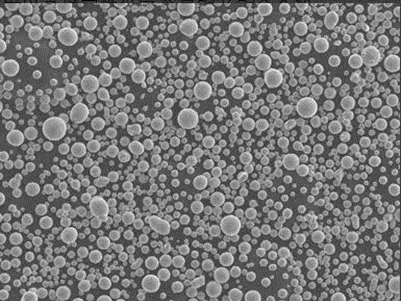
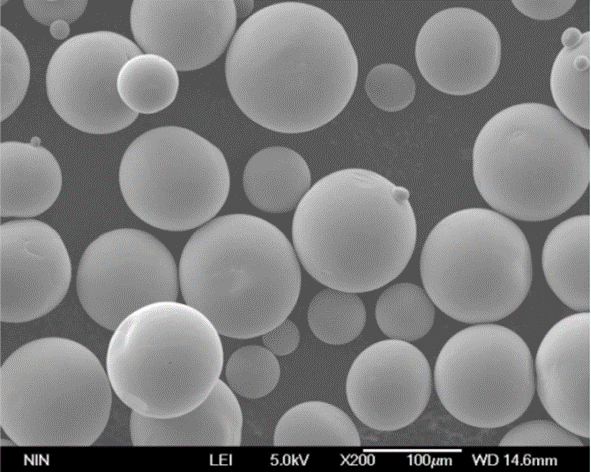
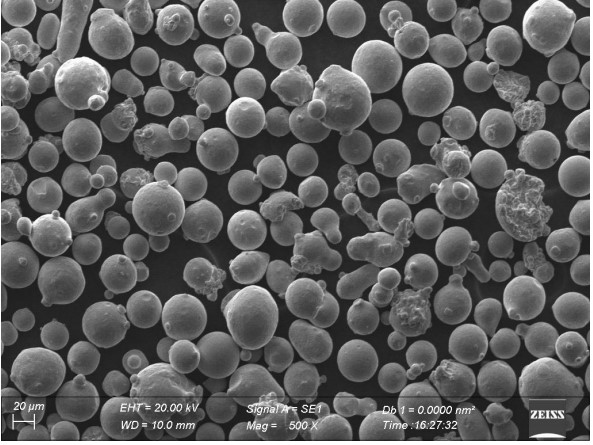
The most common request for laser systems is a spherical, low-oxygen powder with tight size control and limited satellites. In research environments, users may order multiple PSD cuts of the same composition to study how recoating, absorptivity, and build density respond. That is common with HEAs because process-property maps are still developing.
FeCoNiCrMnAl High Entropy Alloy Powder Quality Metrics
Particle size is only one part of the purchasing specification. Oxygen and nitrogen often matter just as much because they affect ductility and repeatability. Morphology images, Hall flow, apparent density, tap density, and powder reuse behavior are also relevant, especially for alloys that may oxidize selectively or experience element loss during repeated thermal cycling.
A useful framing is provided by ISO/ASTM 52900 terminology, which treats powder feedstock quality as part of the overall additive manufacturing process chain rather than a standalone material issue. For HEAs, that chain logic is essential because chemistry and process interact so strongly.
Standards, Tolerances, and Qualification Practice
There is no single, widely adopted ASTM or AMS specification dedicated only to FeCoNiCrMnAl High Entropy Alloys across all AM routes. As a result, most industrial users rely on a project-specific materials specification supported by chemical limits, powder characterization, build trials, and coupon testing. This is typical for emerging AM alloys that have not yet reached the documentation maturity of Ti-6Al-4V or 316L.
Tolerance expectations therefore move from powder-level control to build-level verification. The practical standard becomes whatever combination of chemistry, PSD, and machine parameters repeatedly produces density, microstructure, and mechanical properties within the part qualification window.
Available Grade Strategy
Suppliers often organize HEA feedstock by process class rather than by one fixed nominal composition. That means an LPBF grade, an EBM grade, and a DED grade may share the same nominal alloy chemistry but differ in particle size distribution and morphology refinement. For customers comparing advanced compositions with nickel-based powder grades or more established process materials, that grade-by-process structure is often easier to work with than a single one-size-fits-all powder.
Manufacturing Process
The manufacturing route for FeCoNiCrMnAl powder directly affects homogeneity, oxygen pickup, evaporation losses, and printability. Because the alloy contains multiple principal elements with different vapor pressures and oxidation tendencies, powder making is more demanding than for simpler steels. The goal is not only spherical powder, but also tight compositional retention across the whole size distribution.
Powder-Making Routes for FeCoNiCrMnAl High Entropy Alloys
| Process | Sphericity | Oxygen Pickup | PSD Control | Throughput | Relative Cost |
|---|---|---|---|---|---|
| Gas Atomization (GA) | High | Low to moderate | Good | High | Moderate |
| Vacuum Induction Gas Atomization (VIGA) | Very high | Low | Very good | Medium to high | Moderate to high |
| Electrode Induction Gas Atomization (EIGA) | Very high | Very low | Very good | Medium | High |
| Plasma Rotating Electrode Process (PREP) | Extremely high | Very low | Good | Low to medium | Very high |
| Plasma / specialty lab atomization | High | Low to moderate | Good in small lots | Low | High |
Gas Atomization for HEA Powder
Gas atomization is often the most practical route for FeCoNiCrMnAl because it balances scalability, chemistry control, and powder sphericity. Inert gas atomization can produce the particle morphology required for stable powder spreading while keeping oxygen at acceptable levels. For many AM users, GA is the baseline commercial route for HEA development.
The challenge is melt control. Multi-element alloys require careful homogenization before atomization, and volatile-element management matters if the chemistry includes higher Mn levels. Even with good atomization, each lot should be checked for composition drift across the fine and coarse fractions.
PREP, VIGA, and EIGA Trade-Offs
VIGA improves cleanliness by melting under vacuum before atomization, which helps when low oxygen and consistent chemistry are priorities. EIGA avoids ceramic contamination risks associated with some crucible systems and is useful for high-purity spherical powder, though cost rises. PREP generates highly spherical, low-contamination powder and is especially respected for premium metallurgical quality.
For FeCoNiCrMnAl, PREP is technically attractive but not always the most economical choice, especially when fine LPBF cuts are required in meaningful volumes. PREP excels in cleanliness and morphology, but yield in very fine size fractions can be less favorable than gas atomization. Process selection therefore depends on whether purity, throughput, or powder-size efficiency is the main priority.
Sintering, Melting, and Post-Build Heat Treatment
Once the powder is made, the AM route determines the next set of controls. LPBF emphasizes powder flow, laser absorptivity, and crack resistance during rapid melting. EBM uses coarser fractions and higher build temperatures, which may reduce residual stress but change phase evolution. DED places greater emphasis on flow consistency and melt-pool stability.
After building, heat treatment is usually necessary to relieve stress and tailor the phase balance. In FeCoNiCrMnAl, the effect can be substantial because ordered or secondary phases may form, dissolve, or coarsen depending on temperature and time. The final performance therefore comes from the combined system of powder, process parameters, and thermal treatment rather than from powder chemistry alone.
Why Spherical Powder Matters
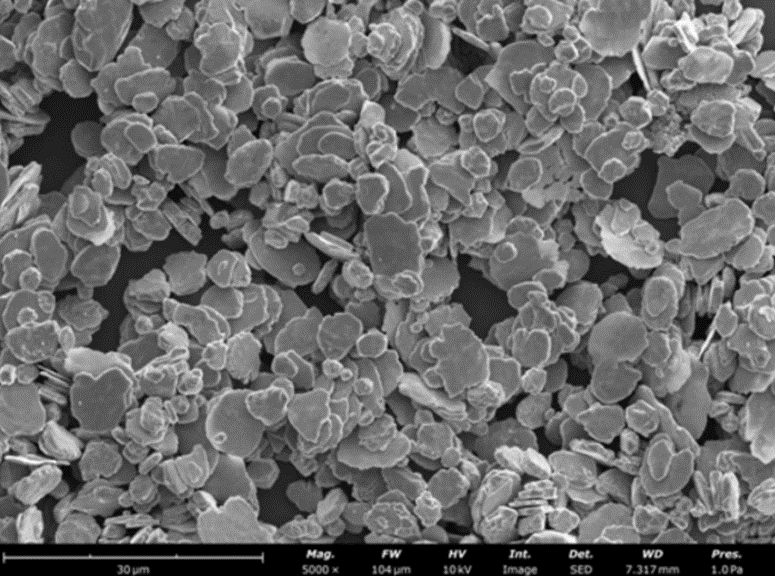
For emerging HEAs, spherical powder quality is especially important because process windows are less forgiving than for mature alloys. Irregular particles can disrupt recoating, alter local packing density, and increase oxidation exposure. In multi-element alloys, those disturbances can amplify segregation and porosity risks.
That is one reason HEA developers often benchmark morphology against advanced cobalt alloy powder options, where sphericity, cleanliness, and consistent melting are already well understood in demanding applications.
Applications by Industry
FeCoNiCrMnAl is not yet a mainstream production alloy across all sectors, but it has clear relevance in industries that value materials discovery, performance tailoring, and harsh-environment capability. Its adoption today is strongest in advanced R&D, prototyping, and specialized performance parts rather than in price-sensitive mass production.
Aerospace and Defense Use Cases
Aerospace interest centers on high-specific-strength concepts, oxidation-aware subcomponents, and materials screening for structures exposed to thermal cycling or mechanical shock. FeCoNiCrMnAl is particularly attractive where designers want to explore alternatives to traditional stainless or cobalt alloys without committing immediately to full superalloy cost. AM helps because small qualification lots can be built and tested quickly.
Defense laboratories also study these alloys for dynamic loading, wear, and nontraditional thermal environments. The alloy family’s phase tunability makes it useful in comparative research where the goal is to map performance rather than simply replace an established grade one-for-one.
Energy, Oil and Gas, and High-Temperature Hardware
Energy-sector interest comes from elevated-temperature oxidation, wear, and microstructural stability questions. In oil and gas, the alloy is more likely to appear in specialized tooling, sensing hardware, or harsh-service prototypes than in generic corrosion-duty hardware. The reason is straightforward: FeCoNiCrMnAl may offer promising thermal or wear behavior, but its qualification database is still narrower than that of mature nickel alloys or duplex stainless steels.
In advanced energy systems, however, that narrower database is not necessarily a barrier. Research reactors, thermal systems, and experimental hardware often value material tunability enough to justify the additional qualification effort.
Tooling, Wear Parts, and Industrial Engineering
Tooling is one of the most practical near-term areas for this alloy family. Aluminum-modified HEAs can deliver high hardness and good thermal stability, which is useful in dies, wear inserts, guide elements, and custom manufacturing hardware. AM adds value by enabling internal cooling paths or geometries that are difficult to machine.
Industrial engineering teams also use FeCoNiCrMnAl as a design-of-experiments alloy. By changing Al content or build parameters, they can generate performance maps for future production candidates, even if the first use is only in pilot-scale components.
Medical and Automotive Considerations
Medical use is more limited. Although cobalt-, nickel-, and chromium-containing systems can be relevant in medical metallurgy, this particular HEA family is not a default implant material and would require careful biocompatibility and corrosion evaluation for patient-contact use. It is more realistic for tooling, fixtures, or equipment parts than for regulated implant applications.
Automotive use today is mostly developmental rather than high-volume. The alloy’s cost and qualification burden are still higher than for standard steels, aluminums, or stainless grades. Still, motorsport, prototype powertrain parts, and advanced thermal-mechanical test hardware are credible use cases where performance exploration matters more than commodity pricing.
Where FeCoNiCrMnAl Fits Best
The best fit is where material design freedom is worth the extra development effort: research-driven aerospace, energy hardware, hot tooling, wear-intensive industrial parts, and specialized AM demonstrators. In those categories, FeCoNiCrMnAl can serve as a bridge between academic alloy design and production-minded powder engineering, similar to how advanced sectors are represented across broader application sectors for AM materials.
Comparison with Alternative Materials
Material selection becomes clearer when FeCoNiCrMnAl is compared with nearby options rather than judged in isolation. The closest alternatives are not always direct composition neighbors; they are the alloys that compete for the same engineering role in AM, such as 316L, Inconel 718, CoCrMo, and AlCoCrFeNi-type HEAs.
FeCoNiCrMnAl High Entropy Alloys vs Alternative AM Powders
| Material | Density | Strength Potential | Corrosion / Oxidation Profile | Relative Cost | Printability | Typical Best Fit |
|---|---|---|---|---|---|---|
| FeCoNiCrMnAl High Entropy Alloys | Medium-high, composition dependent | High and highly tunable | Good oxidation with Al/Cr; corrosion varies | High | Moderate to good after parameter development | Advanced structural, thermal, or wear-focused AM parts |
| 316L Stainless Steel | High | Moderate | Excellent general corrosion | Low to medium | Excellent | General-purpose corrosion-resistant AM parts |
| Inconel 718 | High | Very high after heat treatment | Excellent high-temperature resistance | High | Good but mature | Aerospace and energy parts at elevated temperature |
| CoCrMo | High | High hardness and wear resistance | Good corrosion and wear | High | Good | Medical tools, wear parts, hot hardware |
| AlCoCrFeNi-type HEA | Medium | High | Good oxidation; composition dependent | High | Moderate | HEA research and harder BCC-oriented designs |
Against 316L, FeCoNiCrMnAl usually wins on tunable strength and advanced phase engineering but loses on cost simplicity and universal process maturity. Against Inconel 718, it offers broader compositional flexibility but not the same established high-temperature qualification base. Against CoCrMo, it may provide a different balance of density, oxidation behavior, and phase tunability rather than a direct superiority.
Why Engineers Select It Anyway
The reason engineers still choose FeCoNiCrMnAl is not that it is universally better. It is that the alloy opens design territory not easily covered by mature conventional grades. When the development objective is to tailor density, hardness, oxidation resistance, and phase constitution together, this HEA family gives more variables to work with than standard catalog alloys.
That advantage is most meaningful in programs where powder design and process tuning are part of the engineering plan from the beginning, not an afterthought.
Our Company
Shanghai Truer Technology Co., Ltd, the company operating am-printing.com, states that it was established in 2009 and launched its additive manufacturing business in 2019. Based on the company information presented on its company profile page, its activities include integrating powder-making equipment and services with metal powder supply; its core technologies include Selective Electron Beam Melting equipment, Plasma Rotating Electrode Process powder-making equipment, and Gas Atomization; and its powder portfolio includes TiNi, TiTa, TiAl, TiNbZr, CoCrMo, plus nickel-based, cobalt-based, titanium-based, copper-based, aluminum-based, and stainless steel spherical powders. The same profile indicates support for end processes including SLM, SEBM, DED, laser cladding, PM, MIM, HIP, cold and hot spraying, welding, and coating, serving sectors such as 3C electronics, hand tools, remote-control cars, medical, aerospace, and nuclear power.
FAQ
Q1. Are FeCoNiCrMnAl High Entropy Alloys a single fixed grade?
No. They are better understood as a composition family built around Fe, Co, Ni, Cr, Mn, and Al with different aluminum levels and processing routes. Small chemistry changes can produce very different phase structures and mechanical responses.
Q2. Why is aluminum added to FeCoNiCrMn HEAs?
Aluminum is added mainly to reduce density, increase strength, and promote phase changes that can improve hardness and thermal stability. It also contributes to oxidation resistance in many high-temperature conditions. The trade-off is that excessive Al can reduce ductility or complicate printability.
Q3. Are FeCoNiCrMnAl High Entropy Alloys good for laser powder bed fusion?
Yes, they can be, provided the powder is spherical, low in oxygen, and tightly controlled in chemistry. LPBF is especially useful for these alloys because rapid solidification can refine microstructure and accelerate alloy development. However, parameter optimization is usually more involved than for mature stainless or titanium grades.
Q4. How do FeCoNiCrMnAl High Entropy Alloys compare with Inconel 718?
They usually offer more composition-driven tunability but less industrial standardization. Inconel 718 remains stronger in terms of qualification history and established high-temperature use, especially in aerospace and energy. FeCoNiCrMnAl is more attractive when experimental phase engineering is part of the design strategy.
Q5. What powder size is typical for FeCoNiCrMnAl AM feedstock?
For LPBF, typical cuts are often in the 15–53 µm or 20–63 µm range, while DED and EBM generally use coarser fractions. The preferred PSD depends on layer thickness, melt strategy, and required flowability. As with other HEAs, chemistry consistency across the full size range is just as important as the nominal cut.
Q6. Which industries are most likely to adopt FeCoNiCrMnAl High Entropy Alloys first?
Aerospace R&D, energy hardware, advanced tooling, defense materials programs, and specialized industrial wear applications are the strongest early candidates. These sectors are more willing to qualify emerging materials when they offer unique combinations of strength, oxidation behavior, and phase tunability. Broader mass-market adoption will depend on powder cost, standards development, and long-term application data.