Quick Answer
FeNi50 soft magnetic powder is an iron-nickel alloy powder with roughly equal Fe and Ni content, developed for magnetic components that need high permeability, low coercivity, and stable electromagnetic response. It is usually chosen for additive manufacturing when designers need near-net-shape magnetic parts with better soft-magnetic behavior than common steels, while still retaining practical processability. In metal AM, FeNi50 is especially relevant for inductors, sensors, motor components, magnetic shielding parts, and custom electromagnetic hardware where geometry and magnetic efficiency matter together.
What Is FeNi50 soft magnetic powder
FeNi50 soft magnetic powder is a spherical or near-spherical iron-nickel alloy powder engineered for powder-based manufacturing routes such as laser powder bed fusion, directed energy deposition, metal injection molding, and selected powder metallurgy processes. In metallurgical terms, it belongs to the soft magnetic alloy family, a group of materials designed to magnetize and demagnetize easily under an applied field rather than to retain strong permanent magnetism. That makes it fundamentally different from hard magnetic materials such as NdFeB or ferrite magnets, which are selected for remanence and coercive force rather than for magnetic reversibility.
The FeNi50 composition sits in the broader Fe-Ni system that has long been used in electrical engineering and precision magnetics. Compared with plain iron powders, the addition of nickel improves permeability, reduces coercivity under the right processing conditions, and can support more stable magnetic behavior across operating cycles. Compared with high-nickel grades such as permalloy-type alloys, FeNi50 usually offers a more balanced position between magnetic performance, mechanical robustness, and raw-material cost.
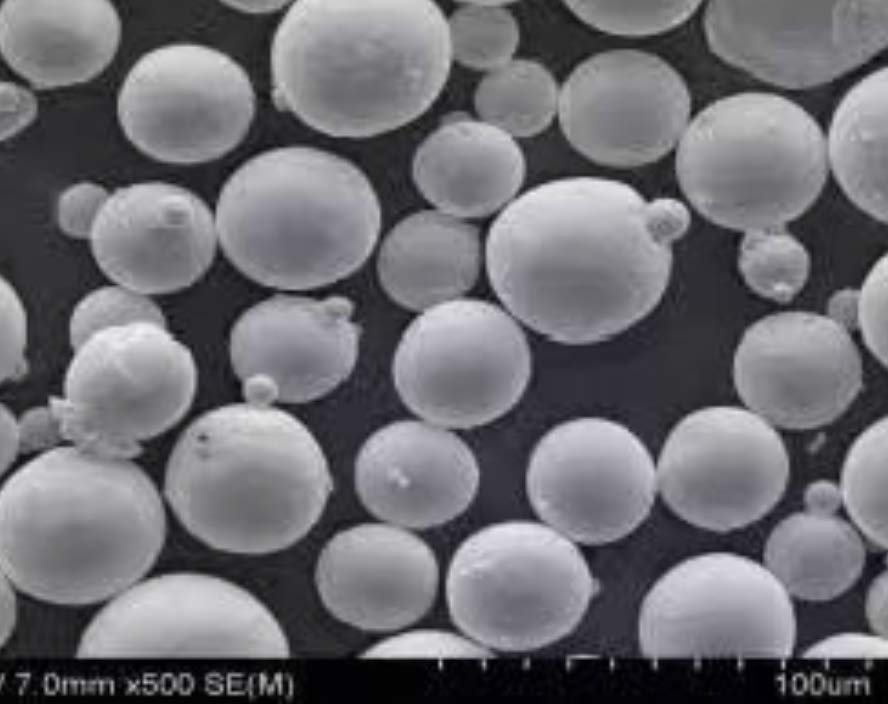
FeNi50 Soft Magnetic Powder in the Soft-Magnet Alloy Family
Within soft magnetic materials, FeNi50 is often viewed as a mid-nickel solution. It does not chase the maximum permeability levels associated with very high Ni alloys, but it can provide a useful combination of magnetic softness, manufacturability, and dimensional adaptability for parts that cannot easily be stamped or laminated. This is one reason the alloy attracts attention in additive manufacturing, where component shape can be as important as intrinsic magnetic properties.
Why FeNi50 Exists as an AM Powder
Traditional magnetic components are often made by rolling, stamping, machining, and heat treating wrought feedstock. Those routes are highly efficient for standard geometries, but they become restrictive when designers need internal channels, weight reduction, integrated features, or low-volume custom parts. FeNi50 powder exists to bridge that gap: it enables the magnetic alloy to be processed into shapes that would be difficult or uneconomical by conventional manufacturing.
Distinguishing Features of FeNi50 Additive Manufacturing Powder
The defining traits of FeNi50 in powder form are its soft-magnetic response, moderate saturation behavior, and compatibility with controlled-atmosphere powder processing. Its performance depends heavily on chemistry control, particle sphericity, oxygen level, and post-build heat treatment. According to the [ISO/ASTM 52900 additive manufacturing terminology], feedstock quality is central to repeatable AM results, and that principle is especially important for magnetic alloys because small defects can change both density and magnetic losses.
For soft magnetic alloys, processing history often matters almost as much as nominal composition.
Chemical Composition
FeNi50 soft magnetic powder is usually specified as a binary iron-nickel alloy with controlled residual elements rather than as a heavily alloyed multi-element system. The target chemistry is centered on approximately 50 wt.% iron and 50 wt.% nickel, while carbon, silicon, manganese, sulfur, phosphorus, oxygen, and other residuals are kept low because they can increase coercivity, reduce permeability, or impair powder flow and fusion behavior. In practice, the exact balance may vary slightly by process route and product specification, but tight chemistry control is one of the most important quality factors for magnetic powders.
| Element | Typical Content (wt.%) | Typical Control Range | Metallurgical Role |
|---|---|---|---|
| Iron (Fe) | Balance | about 48.0–52.0 | Base ferromagnetic constituent; contributes saturation magnetization and structural matrix |
| Nickel (Ni) | Balance | about 48.0–52.0 | Improves permeability, reduces coercivity, and supports soft-magnetic response |
| Carbon (C) | 0.02 max | typically ≤0.03 | Kept low to reduce carbide formation and magnetic degradation |
| Silicon (Si) | 0.20 max | typically ≤0.30 | Residual deoxidation-related element; excess can affect ductility and magnetics |
| Manganese (Mn) | 0.20 max | typically ≤0.30 | Minor residual or deoxidation support; excessive levels can alter magnetic behavior |
| Phosphorus (P) | 0.02 max | typically ≤0.03 | Kept low because embrittlement and magnetic deterioration are undesirable |
| Sulfur (S) | 0.01 max | typically ≤0.02 | Very low to limit inclusions and maintain powder cleanliness |
| Oxygen (O) | process dependent | often ≤0.10 in spherical powder | Oxide control is critical for flow, density, and magnetic loss behavior |
Iron and Nickel Balance in FeNi50 Soft Magnetic Powder
The Fe-Ni ratio is the heart of the alloy. Iron contributes much of the magnetic saturation capability, while nickel helps tune the alloy toward easier magnetization reversal and lower coercive force after appropriate heat treatment. A near-equal balance is often preferred when designers want a compromise between pure-iron-like induction and higher-nickel alloy softness.
Why Residual Elements Matter So Much
Soft magnetic materials are unusually sensitive to impurities because inclusions, carbides, and oxides can pin domain walls and raise magnetic losses. That means even seemingly minor increases in carbon, sulfur, or oxygen can have an outsized effect on final magnetic performance. For AM powder users, chemistry control is therefore not just a metallurgical requirement but an electromagnetic one.
Powder Cleanliness and Magnetic Performance
Clean powder does more than improve spreadability and build consistency. Low oxide and low contamination levels can help parts reach better density, and higher density usually supports more stable magnetic flux paths with fewer defect-driven discontinuities. This is why powder cleanliness is a meaningful selection criterion for FeNi50, not just an inspection checkbox.
Physical and Mechanical Properties
The useful properties of FeNi50 soft magnetic powder extend beyond magnetics alone. Designers still need to know density, melting range, hardness, and basic mechanical behavior because AM parts must survive handling, machining, joining, and in-service loading. As with other magnetic alloys, the final balance of properties depends strongly on process parameters, part density, and especially on stress-relief or annealing cycles that reduce internal strain and improve domain-wall mobility.
| Property | Typical Value | Unit | Test Standard / Condition |
|---|---|---|---|
| Density | 8.1–8.3 | g/cm³ | Typical alloy value at room temperature |
| Melting Range | 1430–1470 | °C | Typical composition-dependent range |
| Ultimate Tensile Strength | 420–620 | MPa | Typical processed condition, route dependent |
| Yield Strength (0.2%) | 220–380 | MPa | Typical processed condition |
| Elongation | 10–25 | % | Strongly dependent on density and anneal state |
| Hardness | 120–190 | HV | Typical as-built or lightly heat-treated condition |
| Thermal Conductivity | 18–24 | W/m·K | Typical room-temperature value |
| Electrical Resistivity | 0.40–0.55 | µΩ·m | Typical room-temperature value |
| Relative Permeability | process dependent | — | Strongly affected by heat treatment and density |
| Coercivity | process dependent | A/m | Lower values generally require optimized annealing |
Magnetic Versus Mechanical Priorities
In FeNi50 components, magnetic performance is normally the main design driver, but mechanical integrity cannot be ignored. A part with excellent permeability is still unusable if porosity, cracking, or low green handling strength creates assembly risk. In AM design practice, the best outcome often comes from balancing acceptable magnetic properties with process-stable manufacturability rather than pushing a single metric to the limit.
The Role of Annealing in FeNi50 Magnetic Parts
Post-process annealing can be decisive for soft magnetic behavior. Residual stress, rapid solidification, and non-equilibrium microstructures tend to increase coercivity and reduce permeability, especially in laser-built parts. Controlled heat treatment relaxes the structure, reduces stress concentrations, and allows the alloy to behave more like the soft magnet it was intended to be.
FeNi50 Soft Magnetic Powder and Electrical Efficiency
A soft magnetic part is not judged only by peak induction. Core loss, hysteresis behavior, and repeatability over cycling matter just as much in motors, sensors, and actuators. For this reason, magnetic softness should be considered a system property shaped by chemistry, density, microstructure, geometry, and thermal history.
Specifications and Available Grades
In the powder market, FeNi50 is commonly supplied according to particle size distribution, morphology, chemistry tolerance, and intended process route. A laser powder bed fusion user may prioritize fine PSD and narrow oxygen limits, while a DED or thermal spray user may accept broader distributions in exchange for feed reliability and higher deposition rates. Quality documents may reference powder testing practices from [ASTM powder characterization resources], along with internal acceptance criteria for apparent density, tap density, Hall flow, and particle morphology.
| Grade / PSD Class | Typical Particle Size Distribution | Apparent Density | Tap Density | Hall Flow | Oxygen Content | Sphericity / Morphology | Typical Standards Cross-Reference |
|---|---|---|---|---|---|---|---|
| Fine LPBF Grade | 15–45 µm | 4.4–5.0 g/cm³ | 5.0–5.8 g/cm³ | 15–24 s/50 g | typically ≤0.08 wt.% | Highly spherical, low satellites preferred | Chemistry to supplier FeNi50 spec; powder testing aligned to ASTM/ISO methods |
| Standard AM Grade | 15–53 µm | 4.5–5.1 g/cm³ | 5.1–5.9 g/cm³ | 15–23 s/50 g | typically ≤0.08 wt.% | Spherical gas-atomized powder | Suitable for laser-based AM and magnetic prototype builds |
| DED Feed Grade | 45–105 µm | 4.6–5.2 g/cm³ | 5.2–6.0 g/cm³ | 14–22 s/50 g | typically ≤0.10 wt.% | Spherical to near-spherical | Used for directed deposition and feature build-up |
| PM / MIM Grade | 20–63 µm or customized | method dependent | method dependent | process dependent | purchase-spec based | Spherical or tailored morphology | Used in molding or compacting routes with customer-specific controls |
| Standards Row | application specific | method specific | method specific | method specific | contract specific | route specific | Cross-referencing may include ASTM, ISO, GB/T, and DIN material and powder test frameworks |
FeNi50 Soft Magnetic Powder PSD Selection
Particle size affects more than just printability. Fine powder improves layer quality and resolution, but it can also increase oxygen sensitivity and powder-handling complexity. Coarser cuts are generally easier to feed in nozzle-based systems and may offer better powder utilization, though they sacrifice fine-detail capability.
Flowability, Packing, and Magnetic Density
High apparent density and consistent tap density matter because they help predict how well the powder will pack and melt. For magnetic parts, improved final density often translates into better flux continuity and lower variability in electromagnetic performance. In other words, packing behavior is indirectly linked to functional output.
Available Grades Across Related Powder Families
Users developing electromechanical components may compare FeNi50 with other ferrous or nickel-rich powders depending on whether the application prioritizes magnetic response, wear resistance, or thermal management. In broader sourcing programs, it is common to review both an [iron-based powder selection] and a [nickel alloy powder range] when screening adjacent material options.
Manufacturing Process
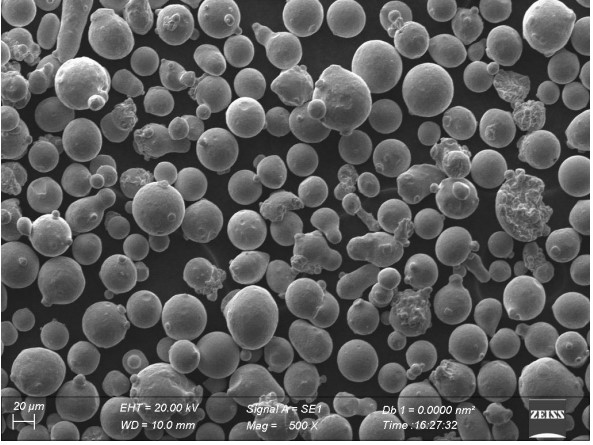
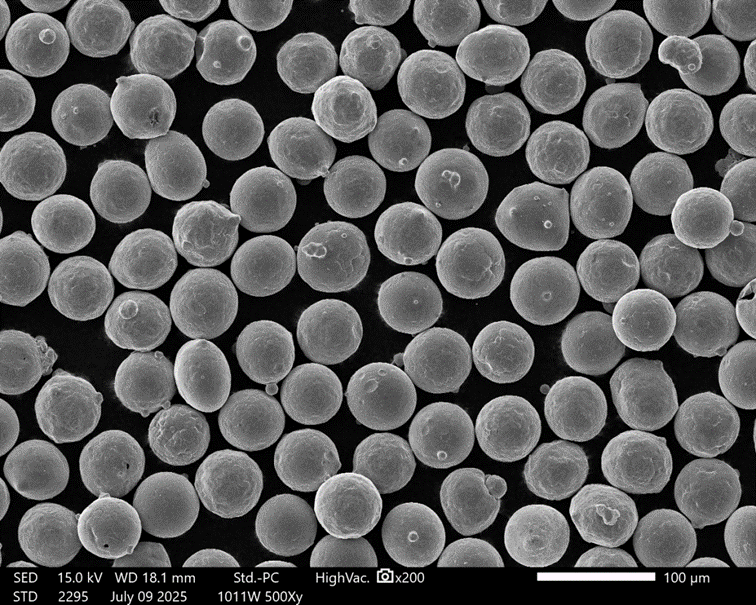
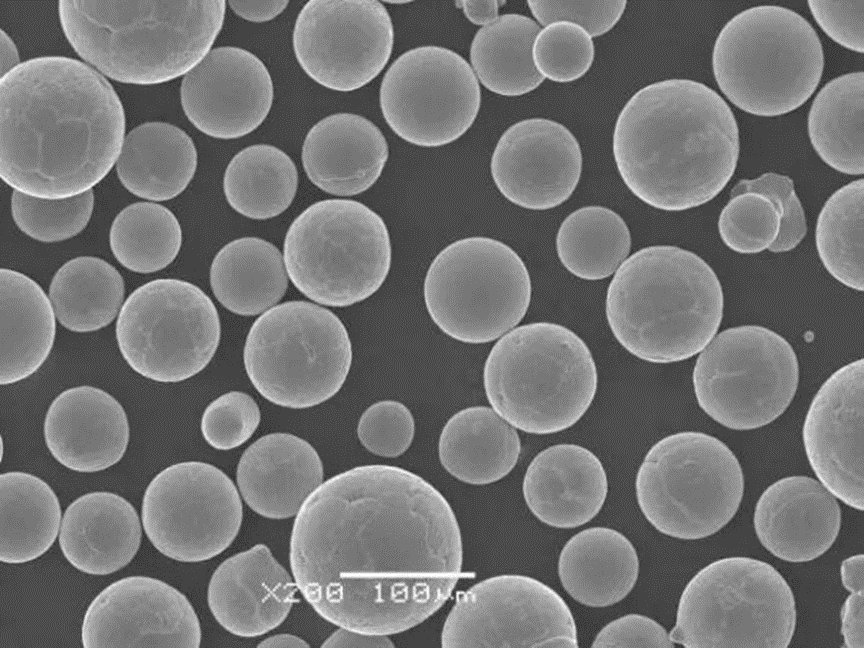
FeNi50 soft magnetic powder can be manufactured by several routes, but gas atomization is usually the most practical for high-quality spherical AM feedstock. PREP, VIGA, and EIGA are also relevant in advanced powder production, especially when users need tighter control of morphology, lower contamination, or premium consistency. The manufacturing route influences not only powder shape and flow but also oxygen content, internal porosity, and ultimately the magnetic behavior of the finished part.
| Process | Powder Shape / Sphericity | Oxygen Pickup | PSD Control | Throughput | Relative Cost | Typical FeNi50 Use Case |
|---|---|---|---|---|---|---|
| Gas Atomization (GA) | High, with some satellites possible | Low to moderate | Good | High | Moderate | Mainstream spherical AM powder for LPBF and DED |
| Vacuum Induction Gas Atomization (VIGA) | Very high and cleaner | Low | Very good | Medium to high | Moderate to high | Premium FeNi50 powder where cleanliness matters |
| Plasma Rotating Electrode Process (PREP) | Excellent smooth spheres | Very low | Moderate after classification | Medium | High | Specialty feedstock with strong flow behavior |
| Electrode Induction Gas Atomization (EIGA) | Very high | Very low | Good to very good | Medium | High | Low-contamination powder for critical magnetic parts |
| Water Atomization | Irregular to semi-irregular | Higher oxide risk | Broad | High | Low | Usually better for conventional PM than premium AM parts |
Gas Atomization for FeNi50 Soft Magnetic Powder
Gas atomization produces spherical particles by disintegrating a molten alloy stream with high-pressure inert gas. For FeNi50, this route provides a practical balance of cost, throughput, and morphology, which is why it is often preferred for serial powder production. After atomization, the powder is sieved and blended into process-specific size cuts suitable for LPBF, DED, or molding.
PREP and High-Cleanliness Powder Routes
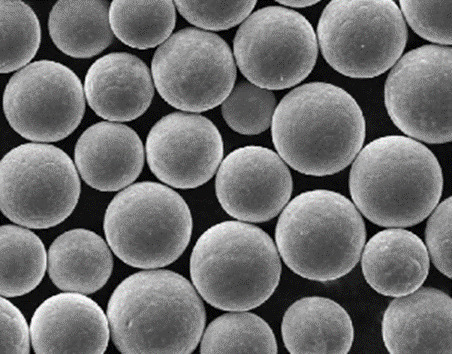
PREP is well known for generating highly spherical particles with smooth surfaces and low contamination, although at higher cost and often lower usable yield for certain size fractions. VIGA and EIGA can also reduce contamination and improve chemistry control, which can be valuable for electromagnetic applications where inclusion content and oxide levels affect final response. The choice among these routes depends on the balance between premium magnetic performance and industrial cost targets.
From Powder Making to Functional Magnetic Parts
Making a good FeNi50 powder is only the first step. Sieving, deagglomeration, batch blending, inert packaging, and storage discipline all influence how consistently the powder behaves in the machine. Suppliers that support both feedstock and process development, including broader [industrial application sectors], are often better positioned to connect powder parameters with the end-use performance of the part.
Why Process Route Changes Magnetic Outcomes
Soft magnetic alloys are especially sensitive to nonmetallic inclusions, porosity, and residual stress. A powder route that increases oxidation or creates irregular particles may still produce printable powder, but the final magnetic losses can rise and permeability can suffer. That is why process-to-property linkage is unusually important for FeNi50 compared with purely structural AM materials.
Applications by Industry
FeNi50 soft magnetic powder is most relevant in applications where part geometry, electromagnetic function, and production flexibility intersect. It is not a universal replacement for laminated electrical steel, nor is it the best solution for every motor or transformer component. Its real advantage appears when the component is three-dimensional, customized, space-constrained, or functionally integrated in ways that conventional sheet-based manufacturing cannot easily achieve.
Aerospace and Defense Electromagnetic Hardware
In aerospace systems, weight, packaging density, and multifunctional integration often push engineers toward unconventional geometries. FeNi50 can be used in sensor housings, compact magnetic circuits, electromagnetic actuators, and shielded components where shape freedom matters. For these parts, additive manufacturing allows designers to consolidate features and reduce assembly complexity without abandoning soft-magnetic performance entirely.
Medical and Precision Instrumentation
Medical and analytical devices sometimes require compact magnetic circuits, shielding features, or actuation components with tightly controlled geometry. FeNi50 is not the default implant alloy, but it can be relevant in non-implant assemblies, laboratory hardware, and precision mechanisms that depend on reliable field response. Process control is particularly important here because repeatability matters as much as nominal alloy composition.
Automotive and E-Mobility Systems
As electrification expands, interest in custom soft magnetic materials has grown. FeNi50 powder can support prototypes and specialized production of rotor-adjacent parts, solenoid components, inductive devices, sensor parts, and electromagnetic housings. It is especially useful where three-dimensional flux paths or integrated cooling features make lamination-based solutions awkward.
Energy, Electronics, and Industrial Automation
Power electronics, relay systems, electromagnetic valves, inductors, and test equipment all create opportunities for soft magnetic AM materials. FeNi50 can be attractive when engineers need low-volume precision parts with magnetic functionality and geometric complexity. In industrial automation, it may also be selected for rapid redesign cycles where the ability to modify geometry quickly outweighs the higher cost of premium powder.
Tooling, R&D, and Hybrid Functional Components
Research institutions and advanced manufacturers frequently use FeNi50 to explore the relationship between architecture and magnetic behavior. Lattice-supported magnetic circuits, integrated sensors, and hybrid thermal-magnetic parts are all active development areas. In some programs, engineers compare FeNi50 with adjacent materials from [copper alloy powder systems] when thermal conductivity is important, or with [titanium alloy powder grades] when lightweight structural integration is a stronger priority than magnetic response.
Comparison with Alternative Materials
No magnetic alloy exists in isolation. Engineers evaluating FeNi50 soft magnetic powder typically compare it with pure iron, FeSi electrical alloys, high-nickel permalloy-type grades, and cobalt-iron materials. The right choice depends on whether the design emphasizes saturation, permeability, frequency response, thermal stability, manufacturability, or raw-material cost.
| Material | Density (g/cm³) | Soft-Magnetic Performance | Mechanical Robustness | Relative Cost | Printability / Processability | Typical Best-Fit Use Case |
|---|---|---|---|---|---|---|
| FeNi50 soft magnetic powder | 8.1–8.3 | High permeability with balanced properties | Moderate | Medium to high | Good with controlled processing | Custom magnetic circuits, sensors, actuator parts |
| Pure Iron powder | around 7.8 | High saturation, lower alloy cost | Moderate | Low | Good, but oxidation-sensitive | Simple magnetic parts prioritizing induction |
| FeSi electrical alloy powder | 7.3–7.6 | Good resistivity and lower eddy-current losses | Moderate | Low to medium | Moderate; crack sensitivity can increase with Si | Higher-frequency electromagnetic components |
| Ni80Fe20 permalloy-type powder | 8.6–8.8 | Very high permeability, very low coercivity | Moderate to lower strength | High | More demanding and costly | Precision shielding, very low-field components |
| CoFe alloy powder | 8.1–8.3 | Very high saturation and strong magnetic response | Good | Very high | Challenging but valuable in premium systems | Aerospace motors, high-flux electromagnetic devices |
FeNi50 Versus Pure Iron
Pure iron offers strong saturation and lower material cost, making it attractive for straightforward magnetic parts. However, FeNi50 typically provides softer magnetic behavior and can be easier to tune for low coercivity after heat treatment. For components where switching efficiency and field responsiveness matter more than maximum induction alone, FeNi50 often holds the advantage.
FeNi50 Versus FeSi Alloys
FeSi materials are familiar in electrical applications because silicon improves electrical resistivity and helps reduce eddy-current losses. But higher silicon contents can reduce ductility and complicate additive processing. FeNi50 becomes attractive when designers need a more balanced combination of formability, softness, and three-dimensional part design.
FeNi50 Versus High-Nickel Soft Magnetic Grades
Permalloy-type materials with very high nickel content can surpass FeNi50 in permeability and low-field magnetic sensitivity. The trade-off is generally higher cost, greater sensitivity to composition and heat treatment, and sometimes lower practicality for broader industrial use. That makes FeNi50 a sensible middle-ground alloy for many engineered AM parts.
Our Company
Shanghai Truer Technology Co., Ltd., which operates am-printing.com, was established in 2009 and created its additive manufacturing business in 2019. Based on the provided company context, its activities include integrating 3D printing powder-making equipment and services with metal powder supply, including SEBM equipment, PREP powder-making equipment, and GA-related capabilities. The stated powder portfolio covers TiNi, TiTa, TiAl, TiNbZr, CoCrMo, and spherical nickel-based, cobalt-based, titanium-based, copper-based, aluminum-based, and stainless steel powders, serving processes such as SLM, SEBM, DED, laser cladding, PM, MIM, HIP, cold and hot spraying, welding, and coating across medical, aerospace, nuclear power, 3C electronics, hand tools, and remote control cars; company background details are presented on the [corporate profile page], and technical inquiries are handled through the [engineering contact page].
FAQ
Q1. Is FeNi50 soft magnetic powder suitable for laser powder bed fusion?
Yes, FeNi50 soft magnetic powder can be used in laser powder bed fusion when the PSD, oxygen level, and flow characteristics are controlled appropriately. The final magnetic properties usually depend heavily on density and post-build annealing, so machine parameters alone do not determine success.
Q2. How does FeNi50 soft magnetic powder compare with pure iron powder?
FeNi50 usually offers softer magnetic behavior and more favorable permeability-coercivity balance than pure iron, especially after stress-relief or annealing. Pure iron may still be preferred when maximum saturation and lower cost are the main priorities.
Q3. What particle size is common for FeNi50 soft magnetic powder in AM?
For laser-based additive manufacturing, 15–45 µm and 15–53 µm are common commercial ranges. For directed energy deposition and related nozzle-fed processes, coarser cuts such as 45–105 µm are often more practical.
Q4. Why is heat treatment important after printing FeNi50 parts?
Additive manufacturing introduces rapid solidification and residual stress, both of which can degrade soft-magnetic performance. Annealing helps restore domain-wall mobility, reduce coercivity, and improve permeability, making the printed part behave more like a true soft magnet.
Q5. Is FeNi50 soft magnetic powder used for permanent magnets?
No, FeNi50 is a soft magnetic alloy, so it is intended to magnetize and demagnetize easily rather than to retain strong permanent magnetization. It is therefore better suited to electromagnetic circuits, shielding, and actuated components than to permanent magnet applications.
Q6. Which industries benefit most from FeNi50 soft magnetic powder?
The strongest use cases are in aerospace, automotive electrification, medical instruments, electronics, and industrial automation where compact custom magnetic geometries are needed. It is most valuable when conventional sheet, stamping, or machining routes cannot deliver the required three-dimensional electromagnetic design efficiently.