Quick Answer
Grade 5 titanium powder is the powder form of Ti-6Al-4V, the most widely specified alpha-beta titanium alloy in metal additive manufacturing. It is chosen for AM parts because it combines high specific strength, low density, corrosion resistance, and reliable printability across laser and electron beam processes. For aerospace, medical, energy, and high-performance industrial components, Grade 5 often delivers the best balance of mechanical performance, weight reduction, and post-processing flexibility among commercial titanium powders.
What Is Grade 5 titanium powder
Grade 5 titanium powder is the spherical metal powder version of Ti-6Al-4V, an alpha-beta titanium alloy containing nominally 6% aluminum and 4% vanadium with titanium as the balance. In conventional metallurgy, Grade 5 is the best-known general engineering titanium alloy. In additive manufacturing, it has become the benchmark titanium feedstock for powder bed fusion, directed energy deposition, hot isostatic pressing, and other advanced powder-based processes.
Grade 5 Titanium Powder Within the Titanium Alloy Family
Commercially pure titanium grades are valued for corrosion resistance and biocompatibility, but they do not offer the same strength level as alloyed titanium systems. Grade 5 occupies the next tier: it is stronger than commercially pure titanium, more structurally capable than Grade 2 in demanding load-bearing parts, and far more established than many niche titanium intermetallics or beta alloys.
The alloy’s alpha-beta classification matters. Aluminum stabilizes the alpha phase, while vanadium stabilizes the beta phase. That dual-phase metallurgy gives Grade 5 its characteristic mix of strength, heat-treat response, and workable ductility, especially after optimized AM process control and post-build thermal treatment.
Why Grade 5 Became the Default Titanium AM Powder
There are several reasons Grade 5 became the default titanium alloy in additive manufacturing. First, its underlying wrought metallurgy is already well understood in aerospace, medical, and industrial manufacturing. Second, the alloy responds well to rapid solidification, allowing dense parts to be built with fine microstructures in laser and electron beam systems. Third, the powder can be produced with high sphericity and low oxygen levels using advanced atomization routes.
Because it is so widely qualified, Grade 5 often functions as the reference point for comparing other titanium powders. When engineers consider a newer titanium alloy, the first question is usually whether it outperforms Grade 5 strongly enough to justify the change in cost, supply risk, or certification effort.
Grade 5 Titanium Powder for 3D Printing and Powder Metallurgy
Although the term is most often associated with 3D printing, Grade 5 titanium powder is also relevant to HIP, thermal spraying, laser cladding, and specialty powder metallurgy. Particle size distribution, oxygen control, and morphology vary by intended process, so the same chemistry may be supplied in multiple cuts. A laser powder bed fusion grade is usually finer than an electron beam or directed energy deposition grade.
This process-specific supply logic explains why the alloy appears across broader [titanium alloy powder offerings] rather than as a one-size-fits-all product. The core chemistry remains Ti-6Al-4V, but the powder engineering changes according to application and equipment.
Distinguishing Features Versus Other Titanium Grades
Compared with commercially pure titanium, Grade 5 offers much higher tensile and yield strength. Compared with Ti-6Al-4V ELI, it usually allows slightly higher interstitial content and is therefore less specialized for critical implant applications, though both belong to the same broader alloy family. Compared with beta titanium alloys, it is more mature, easier to source, and better documented in standards and processing literature.
The alloy is also attractive because it sits at a productive intersection of properties. It is not the lightest structural metal, not the strongest alloy at every temperature, and not the cheapest titanium option. Yet it remains the most common choice because its full property package is unusually balanced.
In metal additive manufacturing, Ti-6Al-4V is often the alloy that defines the practical standard for titanium powder quality.

Why Powder Form Changes the Engineering Conversation
A forged Ti-6Al-4V billet and a gas-atomized Grade 5 titanium powder share chemistry, but not the same production pathway. Powder quality introduces variables such as particle size distribution, satellite content, flowability, apparent density, and oxygen pickup during reuse. In AM, these powder-level variables affect recoating behavior, melting stability, porosity, and ultimately part-level performance.
That is why material selection cannot stop at the alloy name alone. The engineering discussion for Grade 5 titanium powder always includes chemistry, morphology, process compatibility, and post-processing condition together.
Chemical Composition
Grade 5 titanium powder follows the standard chemistry framework of Ti-6Al-4V. The alloy uses aluminum as the primary alpha stabilizer and vanadium as the principal beta stabilizer, while oxygen, iron, carbon, nitrogen, and hydrogen are controlled as interstitial or residual elements. In powder form, the control of oxygen and other interstitials is especially important because they affect ductility, toughness, and consistency across build cycles.
Typical Chemical Composition of Grade 5 titanium powder
| Element | Typical wt.% Range | Metallurgical Role | Functional Effect |
|---|---|---|---|
| Ti | Balance | Base matrix | Provides low density, corrosion resistance, and the primary structural framework |
| Al | 5.5–6.75 | Alpha stabilizer | Raises strength, improves elevated-temperature capability, and supports alpha-beta phase balance |
| V | 3.5–4.5 | Beta stabilizer | Increases hardenability, helps retain beta phase, and improves heat-treat flexibility |
| Fe | ≤0.30 | Residual element control | Small amounts are tolerated, but excess iron can reduce ductility and microstructural uniformity |
| O | ≤0.20 | Interstitial strengthener | Raises strength and hardness, but excessive oxygen lowers ductility |
| C | ≤0.08 | Residual interstitial control | Excess carbon can embrittle the alloy and degrade fatigue response |
| N | ≤0.05 | Interstitial control | Increases strength but can sharply reduce ductility when too high |
| H | ≤0.015 | Hydrogen control | Must be limited to reduce embrittlement risk and maintain quality in powder and parts |
The aluminum and vanadium contents are what define the alloy, but the interstitial limits are what often define the quality tier. A small difference in oxygen or hydrogen may not change the product name, yet it can change the resulting elongation, fracture behavior, and qualification pathway.
Metallurgical Role of Aluminum and Vanadium
Aluminum stabilizes the hexagonal close-packed alpha phase and provides much of the alloy’s basic strength. It also helps maintain useful mechanical properties at moderately elevated temperatures. Without aluminum, the alloy would lose much of the high specific strength that makes it so attractive in aerospace and performance engineering.
Vanadium does something different. It stabilizes the beta phase and allows the alloy to maintain a more workable two-phase microstructure. That beta contribution is important in heat treatment, microstructural tailoring, and crack management during complex thermal cycles.
Interstitial Control in Grade 5 Titanium Powder
In titanium powder, oxygen is not just a trace number on a certificate; it is one of the most consequential variables in the whole feedstock. Higher oxygen generally increases strength and hardness, but it also reduces elongation and fracture toughness. That trade-off is critical in AM because powder may experience handling, storage, and reuse conditions that gradually shift interstitial levels.
Nitrogen and hydrogen are equally sensitive even when their absolute limits are lower. Poor powder handling can compromise a premium lot faster than many buyers expect. For critical parts, interstitial control is often reviewed with the same seriousness as the main alloying elements themselves.
Why Chemistry Certification Matters for AM
AM parts are built layer by layer, and each layer inherits the chemistry and cleanliness of the powder that formed it. If a batch drifts outside target chemistry or accumulates oxygen during reuse, the build may still appear dense but fail mechanical or fatigue requirements later. That is why chemistry certificates, lot traceability, and powder reuse policies are inseparable from Grade 5 qualification.
For medical applications, chemistry control is often tied directly to the [ASTM F3001 specification for additively manufactured Ti-6Al-4V], which distinguishes chemistry and condition expectations for titanium parts intended for surgical implant applications.
Physical and Mechanical Properties
Grade 5 titanium is prized because it achieves a rare combination of low density and high mechanical strength. In AM, final properties depend on powder quality, machine parameters, build orientation, stress relief, HIP, and heat treatment, so published figures should be treated as representative ranges rather than a single universal datasheet. Even so, the alloy consistently offers stronger structural performance than commercially pure titanium while remaining significantly lighter than steels and nickel alloys.
Typical Properties of Grade 5 Titanium Powder Parts
| Property | Typical Value | Unit | Test Standard |
|---|---|---|---|
| Density | 4.41–4.43 typical | g/cm³ | Archimedes / ASTM B311 style methods |
| Melting range | 1,600–1,660 typical | °C | Thermal analysis |
| Ultimate tensile strength | 895–1,150 typical | MPa | ASTM E8 / ISO 6892 |
| Yield strength, 0.2% offset | 825–1,050 typical | MPa | ASTM E8 / ISO 6892 |
| Elongation | 8–16 typical | % | ASTM E8 / ISO 6892 |
| Hardness | 32–38 typical | HRC | ASTM E18 |
| Elastic modulus | 110–120 typical | GPa | Tensile / resonance methods |
| Thermal conductivity | 6.5–7.5 typical | W/m·K | Comparative thermophysical methods |
| Fatigue strength | Strongly surface- and density-dependent | — | Axial or rotating-bend fatigue methods |
These values span as-built, stress-relieved, and post-HIP conditions seen in industrial practice. A well-built and properly post-processed part can achieve very high strength, but mechanical performance is still sensitive to porosity, surface finish, and anisotropy.
Strength-to-Weight Advantage of Grade 5 Titanium Powder
The headline advantage of Grade 5 is high specific strength. At roughly 4.43 g/cm³, it is far lighter than steel- and nickel-based AM powders, yet its tensile strength can exceed many ferrous engineering alloys. This combination allows designers to remove mass without surrendering structural performance.
That is why the alloy dominates load-bearing lightweight applications. In aircraft interiors, brackets, lattice structures, orthopedic devices, and motorsport components, reducing weight often delivers system-level benefits beyond the part itself.
Ductility, Fatigue, and Build Orientation
Grade 5 is strong, but it is not infinitely forgiving. Ductility can be reduced by high oxygen content, lack-of-fusion defects, or excessive alpha-prime martensite in as-built microstructures. AM process optimization therefore focuses on achieving full density, controlled thermal history, and suitable post-build treatment.
Fatigue is even more sensitive than tensile behavior. Surface roughness, residual porosity, and subsurface defects can reduce endurance dramatically. For critical applications, machining, blasting, polishing, HIP, or other finishing steps are usually necessary before the alloy reaches its full potential.
Thermal and Corrosion Performance
Titanium’s oxide film gives Grade 5 excellent corrosion resistance in many chloride-bearing, marine, and biomedical environments. It is not immune to every chemical exposure, but it performs far better than most structural steels in aggressive wet service. At moderately elevated temperatures, it also retains useful strength, though it is not a substitute for high-temperature nickel superalloys when extreme heat is continuous.
Its thermal conductivity is relatively low compared with aluminum and copper alloys. That can be an advantage or a limitation depending on the design. In heat exchangers or high-flux thermal hardware, other metals may perform better, but in lightweight structural applications, low conductivity is rarely a deciding drawback.
Microstructure After Additive Manufacturing
AM Grade 5 often forms a fine acicular alpha-prime or transformed alpha-beta microstructure depending on process and cooling rate. Stress relief and HIP can reduce residual stress and modify that microstructure toward more stable condition-property combinations. This is one reason AM titanium is often discussed in terms of build condition rather than nominal alloy alone.
The resulting material can be extremely capable, but only when powder quality, process parameters, and thermal treatment are considered together. That systems view is standard in the [ISO/ASTM 52900 additive manufacturing terminology] framework used across the AM industry.
Specifications and Available Grades
Powder specifications for Grade 5 titanium depend strongly on process route. Laser powder bed fusion typically requires a finer and tighter particle distribution than electron beam melting or directed energy deposition. Across all routes, buyers usually ask for chemistry, PSD, apparent density, tap density, Hall flow, oxygen content, and morphology data before qualifying a lot.
Typical Supply Grades for Grade 5 titanium powder
| Supply Grade | Typical PSD Range | Apparent Density | Tap Density | Hall Flow | Oxygen Content | Sphericity / Morphology | Cross-Reference / Typical Use |
|---|---|---|---|---|---|---|---|
| Fine LPBF grade | 15–45 µm | 2.4–2.7 g/cm³ | 2.8–3.2 g/cm³ | 25–35 s/50 g typical | ≤0.15 wt.% typical | High spherical, low satellites | Fine-detail laser powder bed fusion |
| Standard LPBF grade | 15–53 µm | 2.5–2.8 g/cm³ | 2.9–3.3 g/cm³ | 23–33 s/50 g typical | ≤0.15 wt.% typical | Spherical | General SLM / LPBF production |
| EBM crossover grade | 45–106 µm | 2.6–2.9 g/cm³ | 3.0–3.4 g/cm³ | 20–30 s/50 g typical | ≤0.15 wt.% typical | Spherical, coarser cut | Electron beam melting and thicker layers |
| DED / cladding grade | 53–150 µm | 2.7–3.0 g/cm³ | 3.1–3.5 g/cm³ | 18–28 s/50 g typical | ≤0.15 wt.% typical | Spherical, flow-priority | Directed energy deposition and laser cladding |
| Standards alignment row | Supplier-specific | — | — | Often measured by [ASTM B213 flow testing methods] where applicable | Supplier-specific | Verified by SEM / image analysis | Typically cross-referenced to ASTM F2924, ASTM F3001, AMS, ISO, GB, and DIN purchasing logic |
The most common industrial powder cut for laser systems is 15–53 µm, but that is not universal. Machine architecture, recoater type, layer thickness, and target surface finish all affect the preferred PSD.
Grade 5 Titanium Powder Standards and Cross-Reference Logic
Grade 5 titanium powder is closely associated with Ti-6Al-4V standards used across powder, wrought, and additive manufacturing markets. In AM, buyers often reference ASTM F2924 for Ti-6Al-4V produced by powder bed fusion and ASTM F3001 when implant-related additively manufactured titanium is involved. Aerospace users may also map requirements to AMS documents or internal material specifications.
The important point is that the final qualification chain usually involves more than one document. Powder certificates, process validation plans, machine parameters, and finished-part test results all contribute to acceptance. Grade name alone is not enough.
Powder Quality Metrics That Matter Most
Chemistry and oxygen content are obvious priorities, but flowability and morphology also matter because they affect layer consistency. Satellite-rich powder can reduce spread uniformity, while an overly broad PSD may create inconsistent packing density. Apparent density and tap density help indicate how the powder is likely to behave during handling and feeding.
For reused powder, the same metrics should be monitored repeatedly. A good reuse policy is not simply about economic efficiency; it is about protecting the mechanical reliability of the final part.
Available Grades by Process and End Use
Many suppliers separate Grade 5 titanium into process-specific categories instead of marketing one universal product. A fine LPBF cut may be used for precision aerospace brackets or orthopedic prototypes, while a coarser EBM grade may suit thicker sections or higher build temperatures. DED grades emphasize feed consistency and deposition behavior rather than only recoating performance.
For customers comparing titanium to other lightweight alloys, a broader [aluminum powder selection] can help clarify where titanium’s higher cost is justified by better strength or corrosion performance, and where aluminum remains the more efficient option.
Manufacturing Process
Powder-making route is one of the biggest determinants of titanium powder quality. Because titanium is reactive at high temperature, inert or vacuum-controlled production is essential. Grade 5 titanium powder is commonly produced by gas atomization, vacuum induction gas atomization, electrode induction gas atomization, or plasma rotating electrode process, with each route offering different trade-offs in contamination control, yield, sphericity, and cost.
Process Comparison for Grade 5 Titanium Powder
| Process | Sphericity | Oxygen Pickup | PSD Control | Throughput | Relative Cost |
|---|---|---|---|---|---|
| Gas Atomization (GA) | High | Low to moderate | Good | High | Moderate |
| Vacuum Induction Gas Atomization (VIGA) | Very high | Low | Very good | Medium to high | Moderate to high |
| Electrode Induction Gas Atomization (EIGA) | Very high | Very low | Very good | Medium | High |
| Plasma Rotating Electrode Process (PREP) | Extremely high | Very low | Good | Low to medium | Very high |
| Plasma atomization / specialty route | Extremely high | Very low | Very good | Medium | High to very high |
Gas Atomization for Grade 5 Titanium Powder
Gas atomization is widely used because it offers a good compromise between output, particle morphology, and cost. Molten alloy is disintegrated by high-pressure inert gas, forming mostly spherical droplets that solidify into powder. When well controlled, GA produces excellent flowability and high usable yield for common AM size fractions.
However, titanium is reactive, so process discipline matters. Melt handling, crucible interaction, oxygen exposure, and inert atmosphere quality all influence the final powder. GA powder can be excellent, but it demands rigorous upstream control.
PREP and EIGA for Premium Spherical Powder
PREP uses a rotating alloy electrode melted by plasma or other energy source to throw off highly spherical droplets. The resulting powder is exceptionally clean and often has very low satellite content, making it attractive for critical AM applications. EIGA offers similarly strong contamination control by avoiding certain melt-contact issues and supporting high-purity spherical feedstock.
These routes are technically impressive, but they are more expensive than standard GA. Their advantage is most visible when purity, consistency, and premium morphology matter more than maximum tonnage output.
Why Powder Morphology Influences Printability
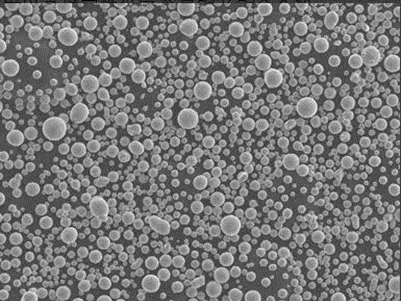
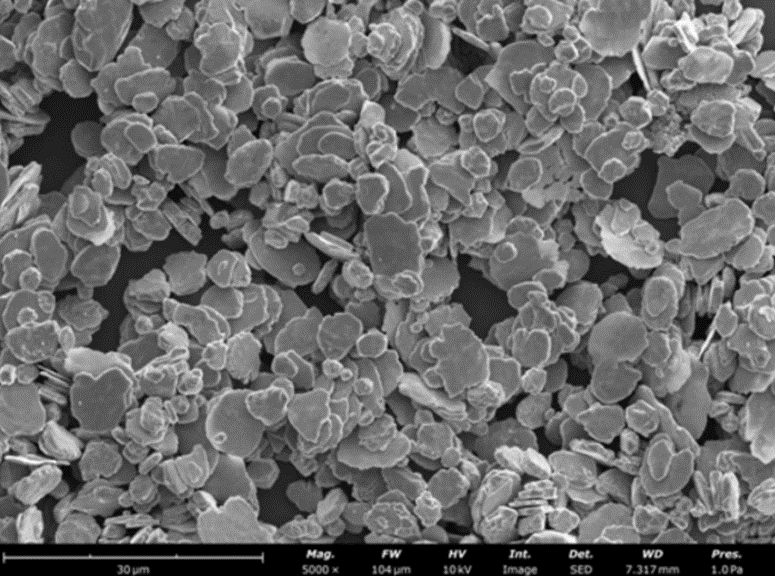
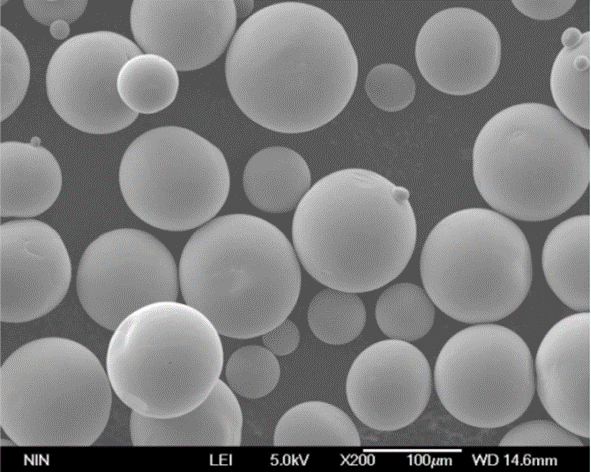
For laser powder bed fusion, spherical titanium powder supports uniform recoating, consistent packing, and stable melt-pool formation. Irregular particles can disturb layer thickness, trap voids, or promote inconsistent energy absorption. That does not mean every perfectly spherical powder will print perfectly, but it substantially improves the starting point.
Morphology also interacts with reuse. Powders with low satellite content and stable chemistry generally retain handling performance better over multiple cycles, provided the reuse protocol is tightly controlled.
Downstream Thermal Processing
After the powder is made and the part is built, heat treatment becomes the next major process lever. Stress relief is common after LPBF to reduce residual stress. HIP may be used to close internal pores and improve fatigue performance. Solution treatment and aging or tailored annealing schedules can adjust the alpha-beta microstructure for specific design targets.
This is why Grade 5 is often described as a process-compatible alloy rather than simply a strong alloy. It responds well to the full chain of powder production, AM consolidation, and post-build treatment.
Manufacturing Ecosystem Beyond Powder Bed Fusion
Grade 5 titanium powder is not limited to one AM route. EBM uses coarser powder and higher build temperatures, often reducing residual stress compared with laser systems. DED relies on different feed characteristics and is suited to repair, near-net-shape preforms, and larger structures. Powder can also move into spray, cladding, HIP, or other powder-based manufacturing paths depending on required geometry and performance.
That flexibility is one reason the alloy remains the workhorse titanium material across multiple advanced manufacturing platforms.
Applications by Industry
Grade 5 titanium powder is used where low mass, high strength, corrosion resistance, and geometric complexity justify the cost of titanium and the process controls of AM. It is not a universal solution for every part, but for high-value applications it has become one of the most important structural metal powders in the industry.
Aerospace and Space Components Using Grade 5 Titanium Powder
Aerospace is the clearest application domain. Grade 5 is used for brackets, housings, structural fittings, ducting supports, seat or cabin hardware, UAV components, and topology-optimized load-bearing parts. In space applications, the alloy is attractive because every gram saved can matter, and titanium’s corrosion resistance and mechanical stability support long service life.
The alloy’s maturity in aerospace metallurgy also reduces adoption risk. Designers are rarely starting from zero when they choose Grade 5; they are building on decades of Ti-6Al-4V experience and adapting it to additive design freedom.
Medical and Dental Titanium AM Powder Applications
Ti-6Al-4V is widely known in orthopedics, surgical tools, and dental manufacturing. In powder form, it enables porous implant structures, lattice-backed components, patient-specific geometries, and low-volume customization that conventional machining cannot produce efficiently. The distinction between Grade 5 and ELI grades remains important, especially in regulated implant scenarios.
Even when implant-grade chemistry is required, the same powder engineering principles still apply: spherical morphology, low interstitial pickup, and lot traceability. For medical manufacturing, process validation can be as important as material selection itself.
Energy, Marine, and Chemical Service
Grade 5 performs well in corrosive environments and is therefore relevant to marine components, offshore hardware, chemical processing equipment, and selected energy-system parts. It is especially valuable where chloride exposure would rapidly degrade many steels. In such environments, the alloy’s initial material cost may be offset by longer service life and lower maintenance.
It is less suitable for the hottest sections of turbines or combustion hardware where nickel superalloys still dominate. But in moderate-temperature corrosive service, titanium often remains a strong engineering choice.
Automotive, Motorsport, and Performance Engineering
High-volume automotive production still tends to favor lower-cost steels and aluminum alloys, but motorsport and premium mobility sectors use Grade 5 for suspension pieces, brackets, exhaust-adjacent hardware, and high-performance structural details. AM adds value when the geometry is optimized for weight reduction or packaging efficiency rather than simply copied from a machined design.
The same logic applies to robotics, drones, and advanced industrial equipment. If weight affects dynamic response, Grade 5 can justify itself quickly.
Tooling and Industrial Applications
Grade 5 titanium is not the first-choice wear alloy for every tooling application, yet it appears in jigs, fixtures, robotic end effectors, vacuum tooling, and thermally selective hardware where light weight is more important than extreme surface hardness. AM makes these uses practical because complex channels and lattice reinforcements can be built directly into the part.
Across wider [AM application sectors], this pattern is common: titanium is chosen not only for what it is made of, but for what its powder form allows engineers to design.
Comparison with Alternative Materials
Grade 5 titanium powder is most useful when compared with realistic alternatives. The usual competitors are commercially pure titanium, Ti-6Al-4V ELI, 17-4 PH stainless steel, and Inconel 718 depending on the application. Each option solves a different engineering problem, and Grade 5 sits at the intersection of structural performance and lightweighting.
Grade 5 titanium powder vs alternative AM materials
| Material | Density | Strength Level | Corrosion Resistance | Relative Cost | Printability | Best-Fit Use Case |
|---|---|---|---|---|---|---|
| Grade 5 titanium powder | Low | High | Excellent in many environments | High | Very good | Lightweight structural AM parts for aerospace, medical, and industrial use |
| CP Titanium Grade 2 powder | Low | Moderate | Excellent | High | Good | Corrosion-driven parts needing lower strength and higher formability |
| Ti-6Al-4V ELI powder | Low | High | Excellent | High to very high | Very good | Medical and critical applications requiring lower interstitial limits |
| 17-4 PH stainless powder | High | High | Good | Medium | Excellent | Structural parts where weight is less critical and lower cost is preferred |
| Inconel 718 powder | High | Very high at elevated temperature | Excellent high-temperature performance | Very high | Good | Turbine, energy, and hot-section parts |
Against CP titanium, Grade 5 clearly wins on strength and structural capability. Against ELI, the comparison is closer: both are similar in base alloy design, but ELI is preferred when tighter interstitial control and high-toughness medical performance are required. Against 17-4 PH, Grade 5 is much lighter and more corrosion-resistant in many environments, though typically more expensive. Against Inconel 718, Grade 5 loses at extreme temperature but often wins where lightweight strength matters more than hot-section capability.
Why Engineers Still Default to Grade 5
The reason is simple: best all-around titanium alloy is not just a slogan, but a practical selection outcome in many programs. Grade 5 is strong enough for real structural work, light enough to change system design, corrosion-resistant enough for harsh environments, and mature enough to qualify without reinventing the material basis from scratch.
That combination is difficult for alternative AM metals to match all at once. Most competitors beat it in one category and lose in two others.
Our Company
Shanghai Truer Technology Co., Ltd, which operates am-printing.com, states that it was established in 2009 and created its additive manufacturing business in 2019. According to the company information provided on its [about the company page], its work includes integrating 3D-printing powder-making equipment and services with metal powder supply; its core technologies include Selective Electron Beam Melting equipment, Plasma Rotating Electrode Process powder-making equipment, and Gas Atomization; and its powder portfolio includes TiNi, TiTa, TiAl, TiNbZr, CoCrMo, plus nickel-based, cobalt-based, titanium-based, copper-based, aluminum-based, and stainless steel spherical powders. The same company context indicates support for SLM, SEBM, DED, laser cladding, PM, MIM, HIP, cold and hot spraying, welding, and coating for industries including medical, aerospace, nuclear power, 3C electronics, hand tools, and remote-control vehicle components.
FAQ
Q1. Is Grade 5 titanium powder the same as Ti-6Al-4V powder?
Yes. In industrial practice, Grade 5 titanium powder is the powder form of Ti-6Al-4V, with titanium as the balance and nominal 6% aluminum plus 4% vanadium. The exact purchasing specification may still differ by process route, interstitial limits, and certification requirements.
Q2. What particle size is typical for Grade 5 titanium powder in 3D printing?
For laser powder bed fusion, 15–45 µm and 15–53 µm are common size cuts. Electron beam and DED processes often use coarser ranges such as 45–106 µm or 53–150 µm. The correct PSD depends on machine type, layer thickness, and the required balance between flowability and feature resolution.
Q3. Why is oxygen control so important in Grade 5 titanium powder?
Oxygen strengthens titanium, but too much reduces ductility and toughness. In AM, powder handling and reuse can gradually increase oxygen content, so interstitial control directly affects whether a part still meets specification after multiple build cycles. For critical components, oxygen is one of the most closely watched certificate values.
Q4. Is Grade 5 titanium powder suitable for medical implants?
It can be, but implant applications often specify Ti-6Al-4V ELI or standards with tighter interstitial limits rather than general Grade 5. The distinction depends on regulatory pathway, toughness requirements, and the exact implant type. For surgical tools, instruments, and many non-implant components, standard Grade 5 may still be relevant.
Q5. How does Grade 5 titanium powder compare with stainless steel powder?
Grade 5 is much lighter and usually offers a stronger strength-to-weight ratio than common stainless AM powders. Stainless steel is generally cheaper, easier to process in some systems, and often better for cost-sensitive high-volume parts. The decision usually comes down to whether lightweighting and titanium corrosion performance justify the higher powder and processing cost.
Q6. Which industries rely most on Grade 5 titanium powder?
Aerospace, medical, dental, energy, marine, motorsport, and advanced industrial manufacturing are the leading sectors. These industries value the alloy because it supports complex, high-performance geometries while maintaining low mass and strong corrosion resistance. Where weight reduction changes the economics or performance of the wider system, Grade 5 titanium powder is often the preferred AM material.