Quick Answer
Spherical pure Sn powder is a high-purity tin metal powder with rounded particle morphology designed for processes that benefit from smooth flow, controlled melting, and low-temperature consolidation. It is the right choice when an application needs excellent wettability, electrical conductivity, low melting behavior, and uniform powder spreading rather than high structural strength. In practice, it is most relevant for electronics-related manufacturing, low-temperature joining, functional coatings, and selected additive or near-additive processes where copper, steel, or titanium powders would require far higher energy input and deliver unnecessary stiffness within the framework of ISO additive manufacturing terminology.
What Is Spherical pure Sn powder
Spherical pure Sn powder is a near-pure tin feedstock produced in particulate form with a deliberately rounded or near-spherical particle shape. The “Sn” designation refers to elemental tin, while “spherical” indicates morphology optimized for consistent flow, packing, and powder delivery in automated manufacturing systems. Unlike alloyed solder powders, which may contain silver, copper, bismuth, or lead-free eutectic formulations, this material is centered on metallic tin itself.
From a materials-family standpoint, it belongs to the nonferrous soft-metal powder category rather than to the high-strength alloy systems used in aerospace or heavy-load medical implants. That classification matters because the value proposition of tin powder is not strength-to-weight ratio or hot-section performance. Instead, its appeal comes from a distinct combination of low melting temperature, strong affinity for many substrates in joining applications, useful electrical performance, and relatively easy processability.
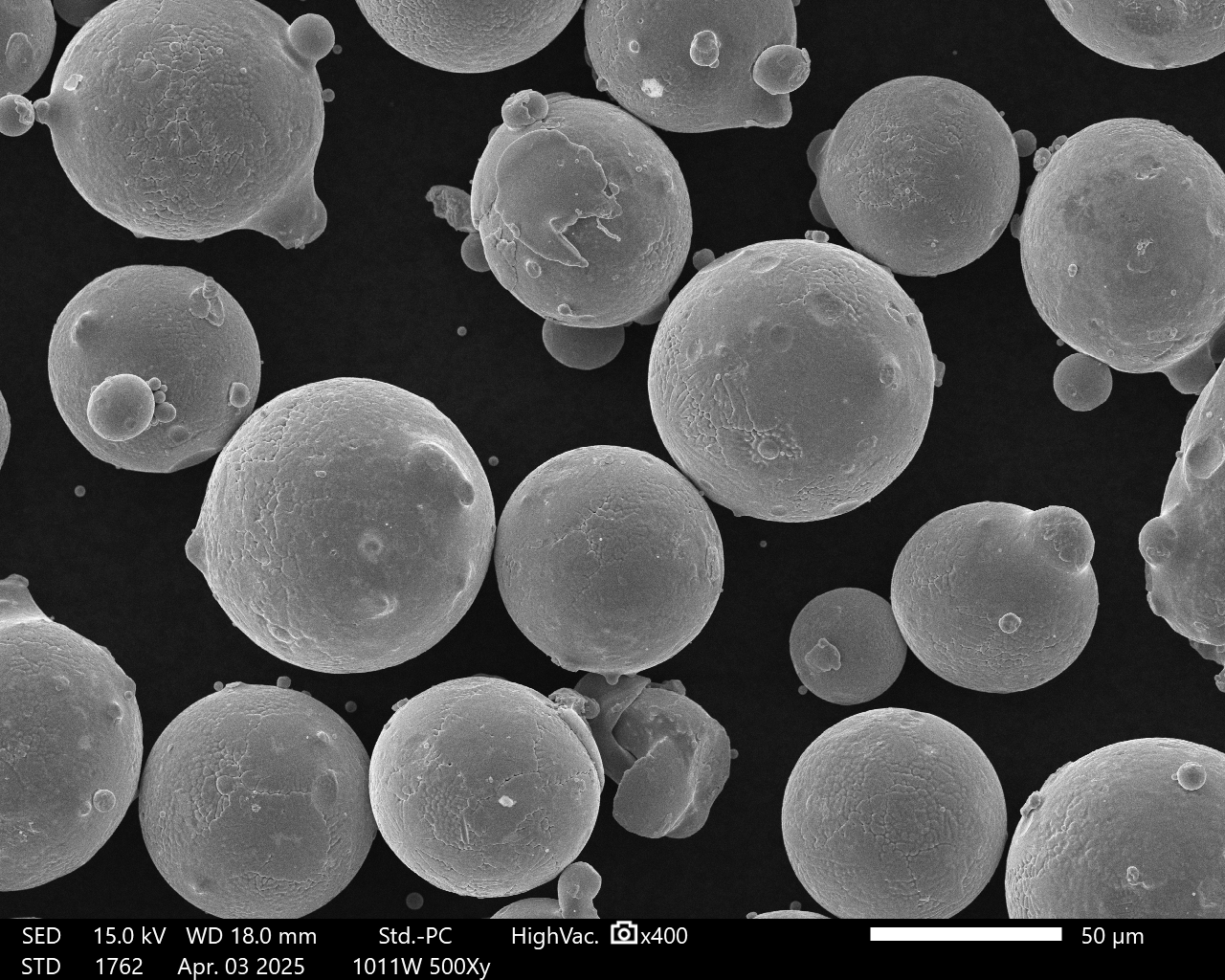
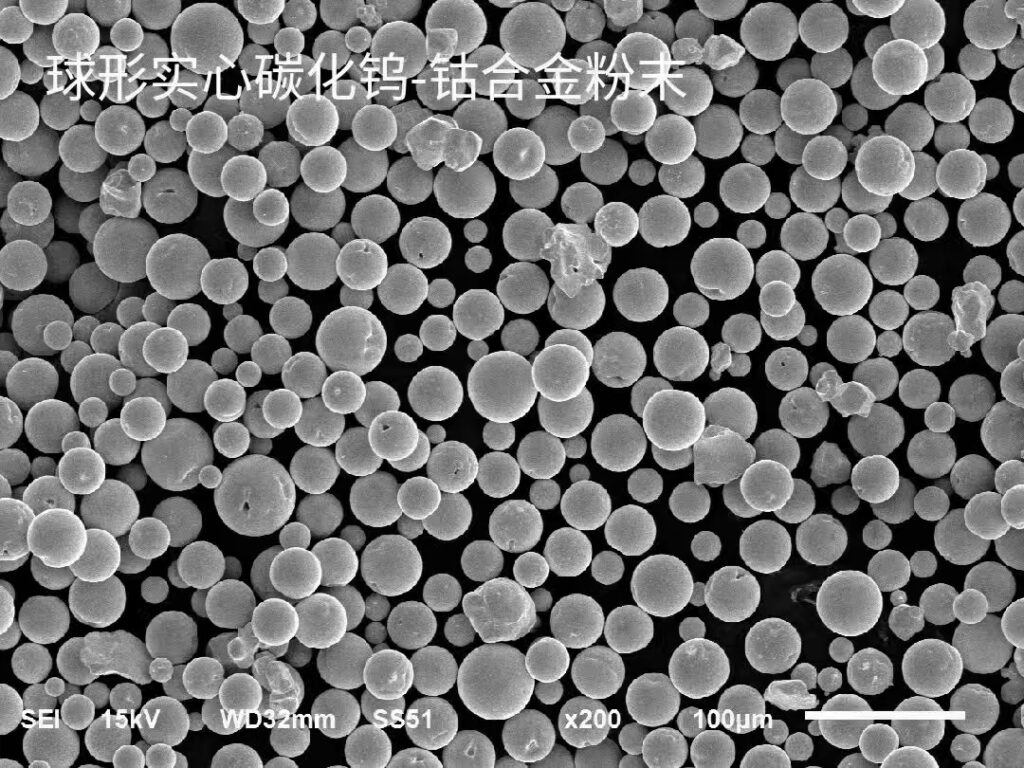
Tin has a long industrial history in plating, soldering, coatings, bearing materials, and powder metallurgy. In particulate form, its behavior changes in ways that are especially important for additive and powder-based manufacturing. Uniform particles improve dosing accuracy, reduce bridging in hoppers, and help create repeatable powder layers or deposits, which is why spherical grades are preferred over irregular crushed powder in precision production lines.
How Spherical pure Sn powder differs from tin alloy powder
The most important distinction is purity and compositional simplicity. Pure tin powder is not the same thing as SAC solder powder, bronze powder, or tin-bismuth blends used in low-temperature joining. Those alloys are designed around a targeted melting profile or mechanical response, whereas pure tin is chosen when the process needs elemental tin behavior, tighter control over downstream alloying, or compliance with an internal formulation where alloying happens later.
Core characteristics of spherical tin AM powder
Spherical tin powder is best described as a low-melting-point metal powder with high wettability and good flow behavior when correctly produced and sieved. Its low melting point opens processing windows unavailable to most engineering alloys, especially where substrates are temperature-sensitive or where energy efficiency matters more than structural load-bearing. At the same time, its softness means it is rarely the first choice for components that must withstand high abrasion, high service temperature, or heavy mechanical load.
Why particle shape matters
For tin powder, morphology is more than a handling detail. Powder morphology affects apparent density, tap density, feed stability, and the uniformity of deposited layers in powder-bed, dispensing, or coating processes. Spherical particles also tend to reduce interparticle friction compared with irregular particles, which can improve flow through sieves, feeders, and recoaters.
In metal powder processing, particle shape often influences manufacturability as strongly as nominal chemistry.
Where pure tin powder fits in additive manufacturing
Pure tin powder is not a universal substitute for mainstream structural AM feedstocks. It is better suited to low-temperature deposition, functional electronics, joining-related builds, and specialty powder processing than to high-strength laser-built load-bearing structures. That is why buyers often evaluate it alongside copper-based metal powder options and other conductive nonferrous systems rather than alongside only titanium or nickel superalloys.
Chemical Composition
Because the product is “pure Sn” rather than a multicomponent alloy, the chemistry discussion focuses on the tin content itself and the controlled impurity ceiling for residual elements. In industrial procurement, purity is usually stated as 99.5%, 99.8%, 99.9%, 99.95%, or higher depending on the intended use. For electronics, coating, and precision powder applications, impurity management can be as important as base-metal purity because trace lead, bismuth, iron, copper, or antimony may affect wetting behavior, oxide formation, storage stability, and downstream joining performance.
The table below shows a realistic composition framework for high-purity spherical tin powder. Values vary by supplier and grade, but the ranges reflect typical commercial quality language used for elemental metal powders.
| Element | Typical Content (wt%) | Representative Limit or Value | Metallurgical / Process Role |
|---|---|---|---|
| Tin (Sn) | balance | 99.9 min | Base metal; provides low melting point, conductivity, wettability, and corrosion behavior |
| Lead (Pb) | trace | ≤0.05 or lower | Controlled impurity; restricted in many electronics and environmental frameworks |
| Bismuth (Bi) | trace | ≤0.03 | Can alter embrittlement tendency and melting behavior if present above control limits |
| Copper (Cu) | trace | ≤0.03 | Influences downstream alloying and joining response; excessive levels can change solder behavior |
| Iron (Fe) | trace | ≤0.01 | Controlled because it can affect contamination, oxidation response, and magnetic contamination concerns |
| Antimony (Sb) | trace | ≤0.02 | May increase hardness in alloyed systems, but is normally limited in pure Sn grades |
| Arsenic (As) | trace | ≤0.01 | Kept low for purity, health, and process-control reasons |
| Cadmium (Cd) | trace | ≤0.002 | Tightly restricted due to toxicity and regulatory concerns |
In pure tin powder, the dominant “alloy design” question is really impurity discipline. Lead and cadmium are especially sensitive because many modern electronics and industrial supply chains are structured around lead-free expectations. Bismuth, antimony, and copper can be useful in alloy design, but in a pure tin product they are usually treated as residuals to be minimized unless the buyer explicitly requests a modified chemistry.
Why chemistry control matters in Spherical pure Sn powder
The main reason is repeatability. A tin powder used for low-temperature additive deposition, paste formulation, thermal spraying, or powder metallurgy behaves differently when trace impurities shift oxide formation, wetting angle, or melting response. That is why material certificates for high-grade tin powders often receive the same scrutiny as flow and particle-size reports.
Purity classes and end-use selection
Not every application needs ultra-high purity. General industrial coatings or bulk powder metallurgy may perform well with standard commercial purity, while electronics-oriented uses often prefer tighter impurity ceilings. Buyers should therefore specify the actual use condition—joining, coating, conductive filling, or near-net-shape processing—before locking in a purity target.
Physical and Mechanical Properties
Pure tin is unusual in the AM powder landscape because its most important attributes are thermal and processing related rather than structural. It melts at a temperature that is dramatically lower than aluminum, copper, titanium, cobalt, or nickel alloys, and it remains comparatively soft after consolidation. That combination can be advantageous for low-energy manufacturing routes, but it also limits the metal’s role in heavily loaded end-use parts.
The values below describe typical room-temperature properties of pure tin or consolidated high-purity tin. As with all powder-derived materials, actual values will depend on density, porosity, build route, and post-processing.
| Property | Typical Value | Unit | Test Standard / Condition |
|---|---|---|---|
| Density | 7.28–7.31 | g/cm³ | Typical bulk value at room temperature |
| Melting point | 231.9 | °C | Pure metal equilibrium value |
| Ultimate tensile strength | 12–20 | MPa | Typical annealed or cast pure tin |
| Yield strength (0.2%) | 5–12 | MPa | Typical room-temperature range |
| Elongation at break | 30–70 | % | Highly condition-dependent for pure tin |
| Hardness | 5–12 | HB | Soft-metal typical range |
| Thermal conductivity | 64–67 | W/m·K | Typical room-temperature value |
| Electrical conductivity | about 8–9 | MS/m | Typical room-temperature value |
| Coefficient of thermal expansion | about 22 | ×10⁻⁶/K | Typical room-temperature value |
These numbers make the selection logic straightforward. Tin is relatively dense for a nonferrous soft metal, but it is far weaker than structural AM alloys. That means it should be chosen for conductivity, wetting, fusibility, and process temperature advantages rather than for stiffness or high load-bearing capability.
Mechanical behavior of Spherical pure Sn powder after consolidation
Once consolidated, pure tin remains soft and ductile. It can deform readily, accommodate certain mismatch stresses, and work well in applications where compliance is useful, but it is not intended for wear-intensive structural duty. Designers who need shape fidelity under significant load often move instead to bronzes, stainless steels, or aluminum alloys.
Thermal and electrical performance
Tin’s thermal conductivity is materially useful, though below copper’s level. Its electrical conductivity is also adequate for many connection and coating applications, especially where the part functions as a joining medium, conductive layer, or low-current pathway rather than as a maximum-conductivity busbar. Those traits explain why tin powder appears more often in electronics-linked manufacturing than in aerospace structural AM.
Oxidation and storage considerations
Pure tin is more forgiving than reactive powders such as titanium, but it still requires controlled storage. Fine particles present higher specific surface area, which means surface oxide growth can affect wetting, sintering, and flow if packaging, humidity control, or powder turnover are poor. For that reason, powder qualification commonly includes oxygen and moisture-related handling discipline in addition to nominal chemistry.
Specifications and Available Grades
Commercial tin powders are usually sold by purity, particle-size distribution, and intended process route rather than by a single universal AM alloy designation. Unlike Ti-6Al-4V or Inconel families, pure tin has fewer globally harmonized additive-manufacturing grade names. As a result, procurement documents typically combine purity minimums, PSD range, morphology targets, and powder-test methods for flow, density, and contamination.
| Supply Grade / Reference | Typical PSD Range | Apparent Density | Tap Density | Hall Flow | Oxygen Content | Sphericity | Cross-Reference / Notes |
|---|---|---|---|---|---|---|---|
| Sn-Fine | 5–25 µm | 3.8–4.6 g/cm³ | 4.5–5.5 g/cm³ | may not flow freely | low, by agreement | high | Used in fine dispensing, paste, or thin-layer applications |
| Sn-Standard AM | 15–45 µm | 4.0–4.9 g/cm³ | 4.8–5.7 g/cm³ | 18–32 s/50 g typical | low, by agreement | high | General spherical powder grade for controlled feeding |
| Sn-Coarse | 45–105 µm | 4.2–5.1 g/cm³ | 5.0–5.9 g/cm³ | 16–28 s/50 g typical | low, by agreement | high | Used for thermal spray, coarser deposition, or blending |
| Sn-Custom Broad Cut | 15–75 µm | 4.0–5.0 g/cm³ | 4.8–5.8 g/cm³ | process dependent | low, by agreement | high | Balances spreadability and packing for custom systems |
| Powder testing framework | n/a | per ASTM B212 | per ASTM B527 | per ASTM B213 | supplier method | image analysis | Commonly paired with metallic powder test standards |
| Sizing framework | n/a | n/a | n/a | n/a | n/a | n/a | ASTM E11 / ISO sieve practice and customer PSD tolerance |
| Purity framework | 99.5–99.99 | n/a | n/a | n/a | n/a | n/a | Internal chemical specification or elemental metal grade |
| AM terminology framework | n/a | n/a | n/a | n/a | n/a | n/a | Process naming often follows NIST additive manufacturing powder research conventions and ISO usage |
The absence of a single universally recognized “Sn AM grade” does not mean the market is unstructured. It means the buyer must specify the powder in a modular way: chemistry, PSD, morphology, test methods, and intended process. For many projects, that specification style is more practical than relying on a grade name alone.
Spherical pure Sn powder particle size options
Fine cuts are useful when deposition layers must be thin or when small nozzles and precise dosage systems are involved. Coarser cuts tend to flow more readily and can be advantageous in certain thermal spray, blending, or higher-throughput feeding systems. The best PSD depends on the machine architecture and the balance between resolution, throughput, and oxidation risk.
Testing standards and acceptance criteria
For metallic powders, buyers frequently reference density, flow, and sieve standards rather than alloy-only standards. Hall flow, apparent density, tap density, and PSD acceptance windows are often more decisive for process success than whether the product is described as “extra fine” or “ultra pure.” That is especially true for tin because low melting behavior magnifies the effect of powder packing and dosing consistency.
Selecting high-purity Sn grades
In practice, high-purity Sn grades are selected when contamination control or electronic functionality matters more than commodity cost. Standard industrial grades may be suitable for bulk applications, but advanced powder users usually request tighter impurity reporting, narrower PSD windows, and better morphology documentation before qualification.
Manufacturing Process
Spherical tin powder can be produced by several routes, but not all routes are equally practical for a low-melting elemental metal. Gas atomization is the most relevant industrial method because tin melts easily and can be atomized into rounded droplets with comparatively modest thermal input. More specialized routes such as VIGA or EIGA can improve atmosphere control, while PREP is generally less common for pure tin due to feedstock economics and the fact that PREP is usually favored for higher-melting reactive or premium alloys.
| Process | Feedstock Form | Typical Sphericity | Oxygen Pickup | PSD Control | Throughput | Relative Cost | Practical Trade-Off |
|---|---|---|---|---|---|---|---|
| Gas Atomization (GA) | molten tin stream | high | low to medium | good to very good | high | moderate | Most practical route for commercial spherical Sn production |
| Vacuum Induction Gas Atomization (VIGA) | vacuum-melted tin + gas atomization | very high | low | very good | medium | moderate to high | Better atmosphere control and chemistry cleanliness |
| Electrode Induction Gas Atomization (EIGA) | electrode/bar melted without crucible contact | very high | very low | very good | medium | high | Reduced contamination risk, higher production cost |
| Plasma Rotating Electrode Process (PREP) | rotating electrode | very high | very low | good | low | very high | Premium sphericality but rarely the economic first choice for pure Sn |
| Water Atomization | molten stream + water jets | low to medium | higher | moderate | high | low | Lower cost, but irregular particles and oxidation are disadvantages |
Gas-atomized spherical tin powder
For pure tin, GA offers a good combination of throughput, cost control, and acceptable morphology. Droplets form and solidify quickly, producing rounded particles that can then be sieved into application-specific PSD bands. When the atmosphere and melt handling are well controlled, GA powder can meet the flow and cleanliness needs of many electronics, coating, and additive-related processes.
VIGA and EIGA for cleaner Sn powder production
VIGA and EIGA are more relevant when contamination sensitivity is high or when the buyer wants tighter process cleanliness than standard atomization can provide. These routes help reduce oxygen pickup and uncontrolled contact with refractory materials, which can matter in fine-powder and high-purity supply chains. Their higher cost, however, means they are usually reserved for more demanding applications rather than for commodity tin powder demand.
Is PREP suitable for Spherical pure Sn powder?
PREP is technically possible in principle, but it is not usually the default route for elemental tin. The process excels where premium sphericality and low contamination justify a high-cost route, typically in titanium, superalloy, or specialty medical powders. For a low-melting metal such as tin, the economic and technical case for PREP is usually weaker than for inert-gas atomization.
Process route and end-use performance
The process route directly shapes flow, tap density, and surface condition. Those factors then influence spreading, nozzle feeding, binder interaction, thermal spray behavior, and melting uniformity. Buyers comparing tin with aluminum powder products for AM or other nonferrous feedstocks should keep in mind that the “best” process is not universal; it depends on melting point, oxide sensitivity, and the intended manufacturing pathway.
Applications by Industry
Spherical pure tin powder is a specialty material whose industrial relevance comes from function rather than structure. It is most valuable in applications that exploit its low fusion temperature, good wetting, ductility, and conductive behavior. Compared with large structural AM markets, its opportunities are narrower but technically distinct.
Electronics and electrical interconnection
This is one of the most natural application spaces for spherical tin powder. It can serve in conductive formulations, low-temperature joining systems, specialized paste development, and functional metal deposition where controlled melting and good substrate wetting are critical. In these environments, powder shape strongly affects paste rheology, powder loading, and deposition uniformity.
Thermal spray, coatings, and surface engineering
Tin powder can be used in selected coating and spray applications where a soft, corrosion-tolerant, low-melting metallic layer is desirable. Because the metal deforms and fuses readily, it can help produce protective or functional coatings on parts that do not justify a harder engineering alloy. The limitations are equally important: such coatings are not intended for high-temperature erosive service.
Powder metallurgy, blends, and alloy master formulations
Pure tin powder is often useful as a constituent in powder blends or as a low-melting additive that assists densification and bonding in mixed-metal systems. In some formulations, tin improves green compact behavior or supports liquid-phase sintering. This role makes it relevant even outside “3D printing” in the narrow sense.
Low-temperature additive and near-additive processes
Tin is attractive in manufacturing routes that seek low thermal burden. That includes certain binder-based, extrusion-based, dispensing, or hybrid deposition systems where full laser-melting of a high-temperature alloy would be unnecessary or counterproductive. In such cases, the powder functions less like a conventional structural AM feedstock and more like a process-enabling material.
Energy, shielding, and specialty industrial parts
Tin powder also appears in niche energy and industrial applications where chemical compatibility, conductivity, or low-temperature processability is important. Small specialty components, fusible elements, and functional fills may all benefit from tin’s unusual balance of softness and easy melting. These are not high-volume structural markets, but they are technically credible use cases.
Where Spherical pure Sn powder is usually not the first choice
Pure tin is rarely chosen for turbine hardware, tooling inserts, high-strength automotive brackets, or wear-loaded mechanisms. For those duties, engineers move toward stronger material systems such as iron-based alloy powders for structural service, bronzes, or refractory metals. The selection boundary is simple: if the part’s primary requirement is strength at load, pure tin is probably the wrong starting point.
Comparison with Alternative Materials
Pure tin powder must be judged against functional alternatives rather than only against mainstream AM alloys. In many buying decisions, the relevant comparison set includes tin-bismuth, SAC solder powders, copper powders, and sometimes pure aluminum, depending on whether the goal is conductivity, low-temperature joining, cost control, or lightweighting. That broader comparison is more useful than asking whether tin can replace titanium or nickel superalloys.
| Material | Density (g/cm³) | Strength Level | Relative Cost | Printability / Processability | Corrosion / Wetting Profile | Best-Fit Use Case |
|---|---|---|---|---|---|---|
| Spherical pure Sn powder | 7.28–7.31 | low | moderate | very good in low-temp and dispensing processes | good wettability, useful corrosion behavior, soft surface | Pure tin deposition, conductive filling, low-temp joining |
| Sn-Bi alloy powder | about 7.5–8.5 | low to medium | moderate | excellent for low-temp joining formulations | very good low-temp fusibility, more brittle than pure Sn | Low-temperature solder and thermal-sensitive assemblies |
| SAC305 powder | about 7.3–7.5 | medium for solder class | moderate to high | excellent in electronics joining | strong soldering profile, lead-free mainstream option | Surface-mount and lead-free solder applications |
| Pure Cu powder | 8.9 | medium | moderate to high | challenging in some AM routes, excellent conductivity | high conductivity, higher melting point, harder processing | Busbars, heat-transfer parts, electrical hardware |
| Pure Al powder | 2.7 | low to medium | moderate | good in selected AM routes but oxide-sensitive | lightweight, moderate conductivity, tenacious oxide film | Lightweight conductive or thermal parts |
The biggest advantage of pure tin is that it is soft, conductive, and highly wettable while remaining easy to melt. Sn-Bi lowers processing temperature further but tends to sacrifice ductility. SAC powders dominate electronics solder markets because they offer a better balance of joint performance and process familiarity, while copper is the preferred option when conductivity matters more than melting ease.
From an additive-manufacturing perspective, pure tin occupies a niche that is functional rather than structural. It competes by lowering process temperature, simplifying joining, and enabling powder-based deposition on sensitive substrates. Buyers reviewing a broader metal portfolio often compare these trade-offs against advanced powder application sectors to decide whether tin belongs in an electronics-oriented or general industrial qualification path.
Our Company
Shanghai Truer Technology Co., Ltd., operating am-printing.com, was established in 2009 and created its additive manufacturing business in 2019. According to its published company information, Truer integrates 3D printing powder-making equipment and services with spherical metal powders, supports SEBM equipment, PREP powder-making equipment, and gas atomization, and supplies material systems that include TiNi, TiTa, TiAl, TiNbZr, CoCrMo, as well as nickel-based, cobalt-based, titanium-based, copper-based, aluminum-based, and stainless steel powders for SLM, SEBM, DED, laser cladding, PM, MIM, HIP, spraying, welding, and coating. Its corporate profile and history also notes a joint innovation center for metal 3D printing and industry coverage spanning 3C electronics, hand tools, remote-control cars, medical, aerospace, and nuclear power.
FAQ
Q1. Is Spherical pure Sn powder the same as solder powder?
No. Pure tin powder is elemental Sn, while solder powders are usually alloyed systems such as Sn-Ag-Cu or Sn-Bi designed around a specific melting profile and joint performance. Pure tin may be used as a base material in joining-related applications, but it should not be assumed to behave identically to a formulated solder powder.
Q2. Can Spherical pure Sn powder be used in laser powder bed fusion?
It can be processed in powder-based thermal systems, but it is not a mainstream structural LPBF material in the same way as titanium, stainless steel, or cobalt alloys. Its low melting point and softness make it more relevant to low-temperature or function-driven processes than to high-strength end-use structural AM.
Q3. What particle size is common for Spherical pure Sn powder?
Common commercial ranges include about 5–25 µm, 15–45 µm, and 45–105 µm, depending on the process. Finer powders are often chosen for precise deposition and paste-like systems, while coarser cuts are typically easier to feed and handle in bulk equipment.
Q4. Why is spherical morphology preferred over irregular tin powder?
Spherical particles usually flow better, pack more predictably, and create more consistent feed behavior. That improves dosing, spreading, and deposition uniformity, especially in automated systems where hopper flow and powder-bed quality directly affect output consistency.
Q5. What are the main quality checks for pure Sn powder?
Key checks usually include purity, impurity limits, PSD, apparent density, tap density, flow behavior, and oxygen-related surface condition. For electronics-linked uses, buyers often add stricter controls for lead, cadmium, bismuth, and copper because those elements can influence process performance and compliance.
Q6. When should buyers choose pure tin powder instead of copper or aluminum powder?
Pure tin is the better choice when low processing temperature, strong wettability, and functional joining behavior matter more than maximum conductivity or lightweighting. Copper is stronger in electrical and thermal conductivity, and aluminum is far lighter, but neither offers the same low-melting process window as elemental tin.