Quick Answer
FeCoMnNiCu High Entropy Alloys are multi-principal metallic systems, usually designed around near-equiatomic iron, cobalt, manganese, nickel, and copper, and supplied as spherical powder for additive manufacturing and advanced coating routes. They are chosen for 3D printing when engineers need a combination of corrosion resistance, solid-solution strengthening, tunable phase behavior, and broader alloy-design flexibility than conventional single-base alloys can offer. In practice, they are most compelling for research-led industrial parts, corrosion-critical components, and applications where tailored microstructure matters as much as absolute strength.
What Is FeCoMnNiCu High Entropy Alloys
FeCoMnNiCu High Entropy Alloys belong to the high-entropy alloy, or HEA, family: materials built from several principal elements rather than one dominant base metal. The general HEA concept is usually defined around alloys containing multiple major elements in significant proportions, often in equiatomic or near-equiatomic ratios, which can stabilize simple solid-solution phases and create unusual combinations of strength, ductility, corrosion resistance, and thermal stability. That materials-design approach differs fundamentally from traditional nickel, cobalt, steel, or titanium alloy design.
In the specific FeCoMnNiCu system, copper is the most distinctive addition because it changes phase stability, segregation behavior, and corrosion response compared with the better-known FeCoMnNi or CrMnFeCoNi alloy families. Recent published work on equiatomic FeCoMnNiCu has highlighted unusually strong resistance to biogenic sulfuric acid corrosion and hydrogen embrittlement, which is one reason the alloy system is drawing attention beyond academic novelty.
FeCoMnNiCu High Entropy Alloys as a Multi-Principal System
The defining idea is multi-principal design. Instead of treating Fe, Co, Mn, Ni, and Cu as minor additions to one host matrix, the alloy treats each as a major compositional participant, allowing configurational entropy, local lattice distortion, and sluggish diffusion effects to influence processing and service behavior. While not every claimed “core effect” is equally strong in every HEA, the design framework remains useful for AM because it opens a wider compositional window than conventional alloy families typically allow.
How FeCoMnNiCu Differs from Conventional AM Powders
Traditional AM powders are usually purchased within established alloy families such as Inconel, CoCrMo, Ti-6Al-4V, 316L, or AlSi10Mg. FeCoMnNiCu High Entropy Alloys differ because the alloy is not optimized around a single legacy standard; instead, it is often selected to explore combined corrosion resistance, work-hardening response, magnetic or catalytic functionality, or nontraditional phase control. That is why the material appears more often in advanced development programs than in commodity series production.
Why the Alloy Matters in Additive Manufacturing Powder Form
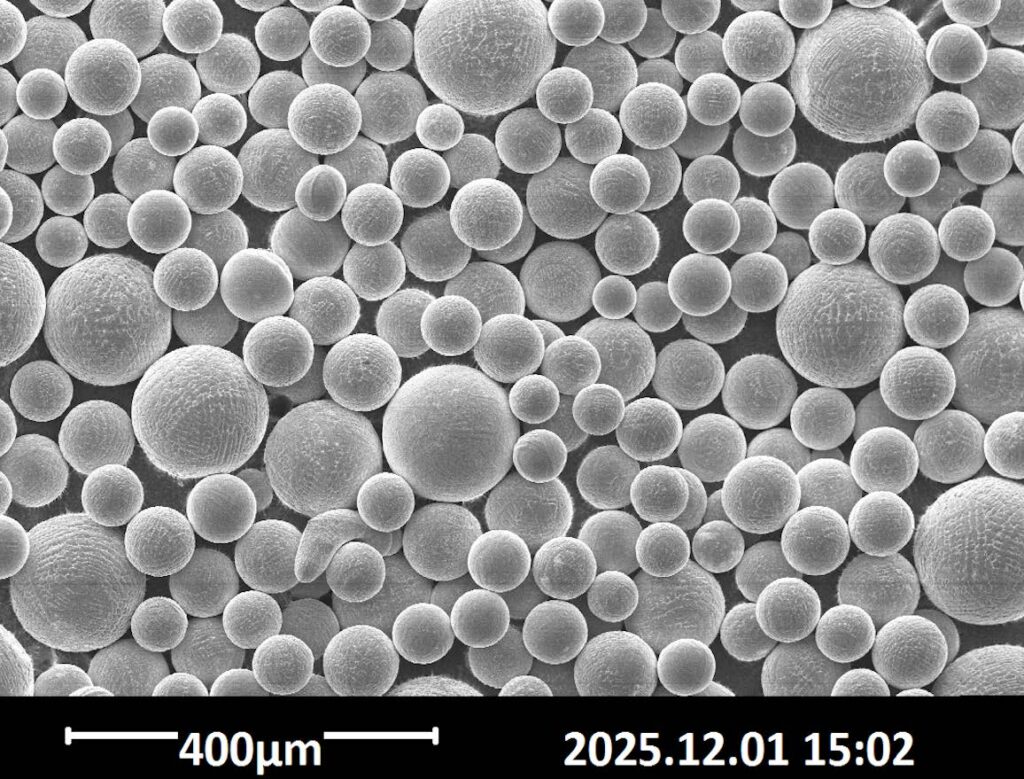
Powder form is important because HEAs can benefit from rapid solidification, compositional flexibility, and near-net-shape production. The terminology framework in ISO/ASTM 52900 additive manufacturing vocabulary defines the broader AM process landscape in which such powders are used, while supplier-side HEA powder guidance shows that gas-atomized spherical feedstocks are preferred when flowability, layering, and consistent melting matter. In practical terms, FeCoMnNiCu becomes relevant when researchers or advanced manufacturers want to move from ingot experiments to printable feedstock with repeatable morphology.
High-entropy alloys are valuable not because they replace every conventional alloy, but because they expand the design space for process-structure-property engineering.
Chemical Composition
FeCoMnNiCu High Entropy Alloys are most often described on an atomic-percent basis, especially in research, but suppliers and powder buyers frequently need approximate weight-percent guidance for batching, testing, and certificate review. An equiatomic FeCoMnNiCu composition contains 20 at.% of each principal element, yet the corresponding weight percentages differ because the atomic masses of Mn, Fe, Co, Ni, and Cu are not the same. As a result, a “balanced” HEA on an atomic basis does not appear balanced on a wt.% basis.
| Element | Typical Content (wt.%) in Equiatomic Basis | Approx. Atomic Fraction | Metallurgical Role |
|---|---|---|---|
| Fe | 17.5–18.5 | ~20 at.% | Structural backbone, contributes strength, toughness, and cost balance |
| Co | 18.5–19.5 | ~20 at.% | Raises solid-solution strength, thermal stability, and can influence magnetic behavior |
| Mn | 16.5–17.5 | ~20 at.% | Lowers stacking fault energy, supports deformation twinning and ductility tuning |
| Ni | 18.5–19.5 | ~20 at.% | Stabilizes FCC phases, improves toughness, and supports corrosion resistance |
| Cu | 25.5–27.5 | ~20 at.% | Alters phase separation tendency, corrosion behavior, conductivity, and microsegregation response |
| Residual O, N, C | typically low, supplier-controlled | trace | Impurity control affecting ductility, oxide content, and powder-process stability |
Element-by-Element Function in FeCoMnNiCu High Entropy Alloys
Iron provides an economic and metallurgical anchor. It helps keep density and cost below some cobalt- and nickel-richer systems while maintaining good compatibility with FCC-leaning multi-element matrices. In many HEA designs, Fe also supports a workable balance between strength and ductility rather than pushing the alloy toward extreme hardness.
Cobalt and nickel act together to stabilize solid-solution behavior and support mechanical integrity. In powder-based processing, they also help the alloy tolerate a broad thermal window relative to lower-melting systems, although final phase constitution still depends on cooling rate and local segregation during printing or cladding.
Manganese is especially important because it can reduce stacking fault energy and influence twinning or planar-slip behavior. In many HEA families, that can improve strain hardening and postpone localized deformation, though the exact response depends heavily on grain structure, residual porosity, and heat treatment after AM.
Copper is the most debated element in this alloy family. It can enhance corrosion behavior in the right environment and contributes to the distinctive identity of FeCoMnNiCu, but it also has a strong tendency toward segregation in some high-entropy systems, which means composition control and thermal history matter more here than in simpler single-phase alloys.
Atomic Percent vs. Weight Percent in HEA Powder Purchasing
For procurement, it is useful to distinguish design chemistry from delivery chemistry. Researchers usually specify FeCoMnNiCu on an equiatomic basis, but powder certificates are often reviewed in weight percent, oxygen ppm, and PSD class. That means buyers should confirm whether the supplier’s target is atomic-ratio fidelity, a printable near-equiatomic derivative, or a customer-modified composition optimized for AM yield and phase stability.
Chemistry Variability in Additive Manufacturing Powder
Unlike mature aerospace alloys with tightly standardized nominal bands, FeCoMnNiCu High Entropy Alloys are still comparatively flexible as a commercial material family. This is an advantage for R&D and functional tuning, but it also means incoming inspection should cover chemistry, particle morphology, oxygen, and trace contamination rather than assuming that any “FeCoMnNiCu” label represents an identical material state.
Physical and Mechanical Properties
The physical and mechanical properties of FeCoMnNiCu High Entropy Alloys vary more than those of commodity alloys because microstructure is strongly affected by solidification rate, segregation, post-build heat treatment, and whether the deposit is nearly single-phase or compositionally partitioned. For that reason, most engineering values should be treated as typical ranges for wrought, cast, or AM-processed material rather than as universal design allowables. The table below is a realistic AM-oriented reference frame, not a certification sheet.
| Property | Typical Value | Unit | Test Standard / Condition |
|---|---|---|---|
| Density | 8.0–8.4 | g/cm³ | Typical room-temperature alloy density |
| Solidus / Melting Onset | 1180–1260 | °C | Composition- and segregation-dependent typical range |
| Ultimate Tensile Strength | 600–900 | MPa | Typical consolidated or AM-processed range |
| Yield Strength (0.2%) | 250–550 | MPa | Strongly process- and microstructure-dependent |
| Elongation | 10–35 | % | Typical when porosity is controlled |
| Hardness | 180–320 | HV | Typical annealed to strengthened condition |
| Elastic Modulus | 150–185 | GPa | Typical room-temperature value |
| Thermal Conductivity | 10–18 | W/m·K | Typical range for multi-element FCC HEA systems |
Mechanical Profile of FeCoMnNiCu High Entropy Alloys
In broad terms, FeCoMnNiCu sits in the range of medium-to-high strength engineering alloys rather than ultra-light or ultra-refractory systems. It is usually attractive because it can retain useful ductility while still offering substantial hardness and corrosion resistance, especially when compared with simpler stainless or copper-rich materials used in severe environments. Recent published work on equiatomic FeCoMnNiCu also emphasizes corrosion and hydrogen-embrittlement resistance as major differentiators, not just room-temperature strength.
FCC-Dominant Microstructure and Property Balance
Many designers approach the alloy as an FCC-leaning high-entropy system, though phase partitioning can occur. An FCC-dominant matrix usually supports better ductility and work hardening than a strongly BCC- or intermetallic-dominated microstructure, which is one reason process tuning matters in additive manufacturing. If segregation becomes excessive, however, local compositional variations can produce less predictable mechanical response across the build.
Corrosion, Hydrogen, and Environmental Performance
One of the most interesting recent developments is the reporting of strong resistance to microbial corrosion, oxidative acid attack, and hydrogen embrittlement in equiatomic FeCoMnNiCu. The Matter paper summarizes that behavior in terms of passive-film stability, low hydrogen diffusivity, and hydrogen-induced twinning effects that mitigate embrittlement. For engineers in wastewater, hydrogen energy, or chemical service, that makes the alloy notable even if it is not yet a mainstream catalog standard.
Why Published Numbers Vary So Much
Property scatter is normal in this alloy family because powder route, build orientation, energy density, remelting behavior, and post-processing all matter. A dense LPBF coupon, a DED wall, and a cast ingot of the same nominal chemistry may not behave alike. That is why serious programs qualify FeCoMnNiCu through coupon sets that mirror the actual production route rather than relying on literature averages alone.
Specifications and Available Grades
Commercial specifications for FeCoMnNiCu High Entropy Alloys are typically based on feedstock characteristics rather than on one universal alloy standard. Particle size distribution, apparent density, tap density, flow rate, oxygen content, and sphericity are often more decisive for print success than nominal chemistry alone, especially when the material will be used in LPBF, DED, thermal spray, or HIP-backed workflows. ISO and ASTM powder-characterization frameworks are widely used for this purpose, including ISO/ASTM 52907 metal powder characterization guidance, ASTM B212 apparent density method, and the broader ASTM additive manufacturing standards catalog.
| Grade / Supply Form | Typical PSD | Apparent Density | Tap Density | Hall Flow | Oxygen Content | Sphericity / Morphology | Typical Standards Cross-Reference |
|---|---|---|---|---|---|---|---|
| LPBF Fine Grade | 15–53 µm | 3.8–4.8 g/cm³ | 4.8–5.8 g/cm³ | 18–32 s/50 g | typically 300–1000 ppm | Highly spherical, low satellites preferred | ISO/ASTM 52907 + supplier chemistry spec |
| DED / Cladding Grade | 45–105 µm | 4.0–5.0 g/cm³ | 5.0–6.0 g/cm³ | 16–28 s/50 g | typically 300–1200 ppm | Spherical gas-atomized powder | ASTM-style powder tests + customer acceptance |
| Coarse Build-Up Grade | 53–150 µm | 4.0–5.2 g/cm³ | 5.1–6.2 g/cm³ | 15–27 s/50 g | typically 300–1200 ppm | Spherical to near-spherical | DED / spray-focused internal specs |
| HIP / PM Grade | 10–45 µm or custom blend | 3.7–4.7 g/cm³ | 4.7–5.7 g/cm³ | by agreement | typically low oxygen, customer-specific | Spherical or blended morphology | PM and AM qualification protocols |
| Cross-Reference Row | customer-defined | measured by recognized method | measured by recognized method | if free-flowing | contract-specific | image analysis / SEM review | ASTM / ISO / GB / DIN frameworks used for testing, not fixed alloy identity |
FeCoMnNiCu High Entropy Alloys PSD Selection
For LPBF, the 15–53 µm range is commonly preferred because it balances spreadability, packing, and laser absorptivity. For DED or laser cladding, 45–105 µm or 53–150 µm is often more practical because the powder must feed steadily through nozzles and remain stable in a carrier-gas stream. Supplier-side HEA references at am-printing.com likewise describe AM-oriented high-entropy powders as being supplied across fine and coarse PSD classes depending on process route.
Powder Metrics That Matter Most
Apparent density and Hall flow are not trivial procurement details. ASTM notes that B212 is the preferred method for determining apparent density of free-flowing metal powders using the Hall funnel, and HEA supplier guidance consistently treats flowability, density, and low oxygen as core quality indicators. For a material as composition-sensitive as FeCoMnNiCu, powder consistency directly affects layer uniformity, melt behavior, and final defect population.
Grade Families Available from High-Entropy Alloy Portfolios
Because FeCoMnNiCu is part of a broader HEA class rather than a single legacy grade series, buyers often compare it against neighboring systems in a wider high-entropy alloy powder portfolio. In development programs, it is also common to benchmark against more established nickel-based alloy powders when oxidation resistance or high-temperature continuity is more important than HEA-specific corrosion behavior. Those comparisons help determine whether the project needs a novel multi-principal alloy or a standard superalloy with a deeper qualification history.
Manufacturing Process
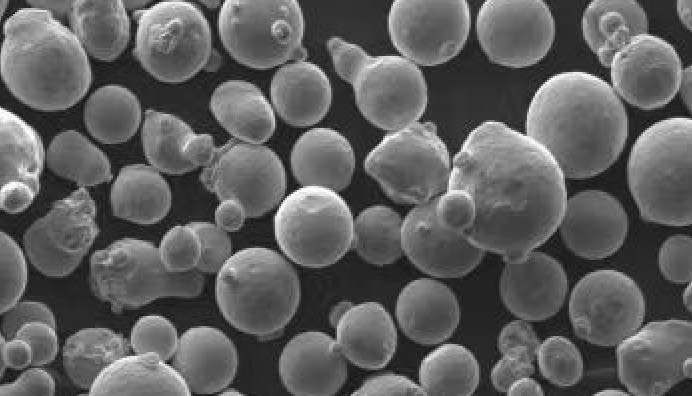
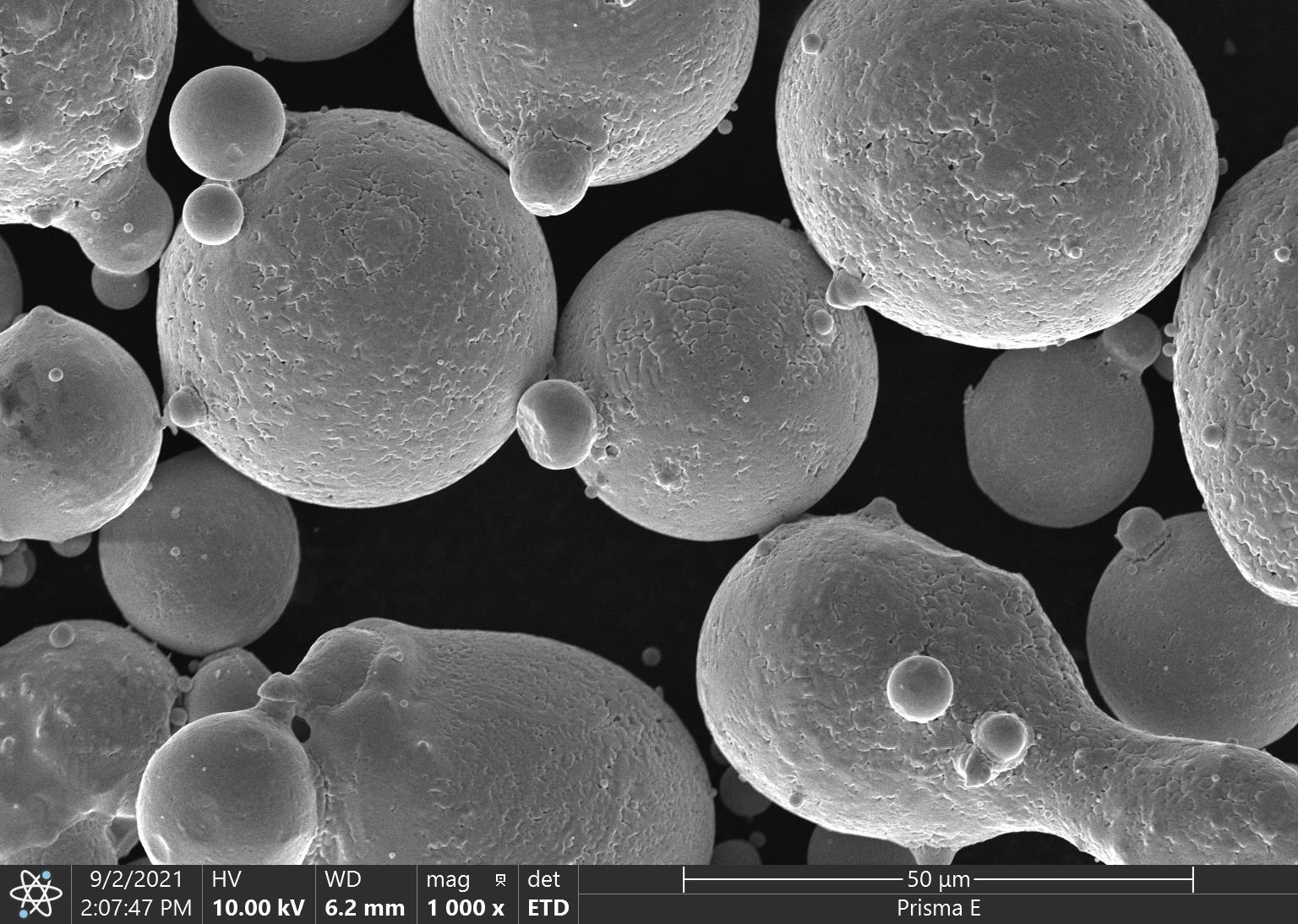
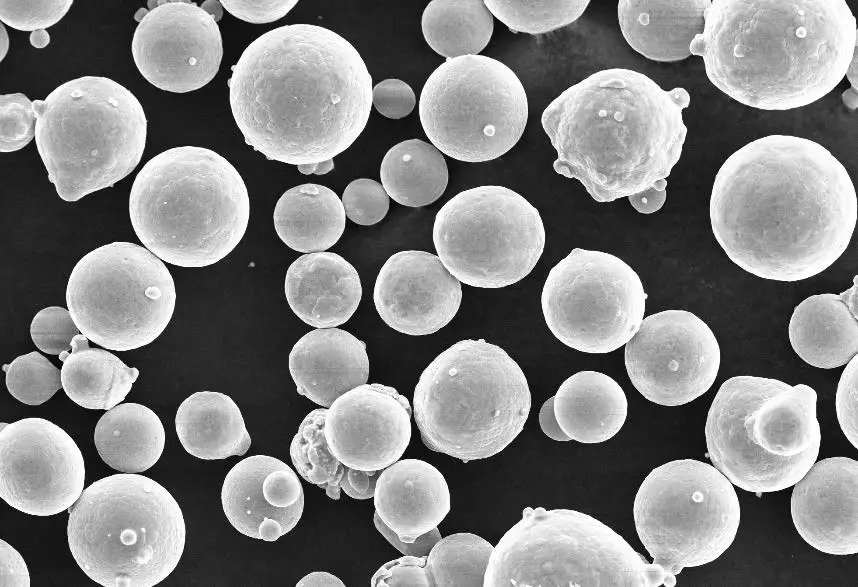
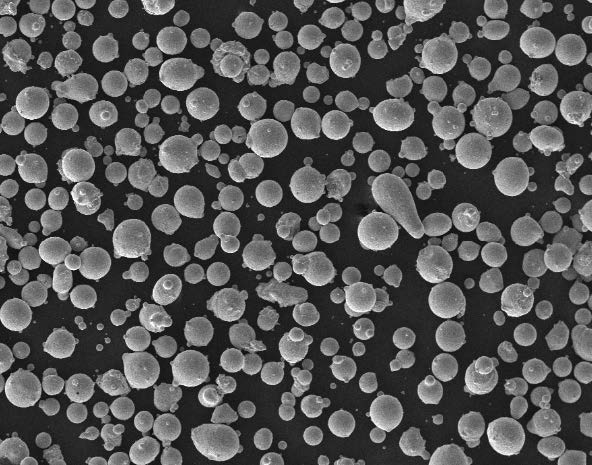
FeCoMnNiCu High Entropy Alloys can be produced by gas atomization, VIGA, EIGA, PREP, mechanical alloying, and other methods, but not all routes generate equally suitable powder for additive manufacturing. For spherical, low-oxide AM feedstock, gas atomization and related inertized atomization routes are usually the industrial baseline, while PREP is used where very high sphericity and cleanliness justify higher cost. Supplier guidance for HEA powders from am-printing.com likewise identifies gas atomization as the preferred route for clean, spherical powder in AM applications.
| Process | Sphericity | Oxygen Pickup | PSD Control | Throughput | Relative Cost | Typical FeCoMnNiCu Use Case |
|---|---|---|---|---|---|---|
| Gas Atomization (GA) | High | Low to moderate | Good | High | Moderate | Mainstream spherical AM powder for LPBF and DED |
| Vacuum Induction Gas Atomization (VIGA) | Very high | Low | Very good | Medium to high | Moderate to high | Premium chemistry control and cleaner HEA feedstock |
| Electrode Induction Gas Atomization (EIGA) | Very high | Very low | Good to very good | Medium | High | High-cleanliness powder for critical AM trials |
| Plasma Rotating Electrode Process (PREP) | Excellent | Very low | Moderate after classification | Medium | High | Specialty ultra-spherical powder where morphology is decisive |
| Mechanical Alloying | Poor to irregular morphology | contamination risk varies | Broad unless post-classified | Medium | Low to moderate | Research feedstock, PM routes, or precursor blending rather than premium LPBF powder |
Gas Atomization for FeCoMnNiCu High Entropy Alloys
Gas atomization remains the most practical production route because it combines usable throughput with high sphericity and acceptable purity. Molten alloy is disintegrated into droplets, rapidly solidified, and then classified into target PSD fractions. For FeCoMnNiCu, this matters because spherical particles improve recoating, reduce feeder instability, and help maintain a predictable melt pool in both powder bed and blown-powder systems.
PREP, VIGA, and EIGA Trade-Offs
PREP can generate exceptionally round particles with smooth surfaces and low satellite content, but it is usually more expensive and less productive for mainstream commercial volumes. VIGA and EIGA offer tighter atmosphere control and lower contamination risk, which can be beneficial when powder chemistry, oxygen limits, or repeatability are prioritized over absolute cost. In a research-heavy alloy family such as FeCoMnNiCu, those premium routes may be justified when the project is trying to isolate material behavior from powder-quality noise.
Process Control Beyond Powder Making
Powder manufacturing is only one part of the route. Sieving, blending, sampling, reuse policy, moisture control, and inert packaging also shape performance, especially because HEA powders can respond sensitively to contamination and morphology drift. In many AM labs, the biggest difference between a publishable result and an inconsistent build is not chemistry alone but the discipline of powder handling across the full loop from atomization to recycling.
HEA Powder Routes Compared with Conventional AM Feedstocks
The same logic used for titanium or cobalt powders still applies: the cleaner and more spherical the powder, the easier it is to isolate the alloy’s true processability. That is one reason engineers screening FeCoMnNiCu sometimes compare it against neighboring cobalt alloy powder options or more established ferrous alternatives in an iron-based powder range. The comparison helps determine whether any build issue is inherent to the HEA design or simply a powder-quality problem.
Applications by Industry
FeCoMnNiCu High Entropy Alloys are not yet mass-market AM materials, but they are increasingly relevant in sectors where corrosion, hydrogen, wear, or functional property tuning drive material selection. Their strongest near-term value is in high-consequence environments where conventional alloys force a compromise between mechanical integrity and environmental durability. Recent corrosion-focused literature has reinforced that positioning.
Energy, Wastewater, and Chemical Processing
This is arguably the most natural application space today. The 2025 Matter paper on equiatomic FeCoMnNiCu specifically frames the alloy as a candidate for municipal wastewater, hydrogen-related exposure, and other corrosive service environments because of its passive-film stability and low hydrogen-diffusion behavior. That makes it especially interesting for pumps, inserts, valve internals, reaction hardware, and corrosion test coupons produced by AM for rapid qualification cycles.
Aerospace and Advanced Industrial Components
In aerospace, the alloy is less likely to replace mature titanium or nickel platforms outright, but it can be relevant for nonflight-critical development parts, environment-resistant hardware, and material-screening programs. HEAs are often attractive in aerospace R&D because additive manufacturing enables rapid iteration of geometrically complex coupons and function-driven components without full wrought-route qualification at the first stage. A broader industrial applications overview helps place such use cases within the wider AM ecosystem served by metal powders.
Tooling, Surface Engineering, and Repair
FeCoMnNiCu can also be considered for DED, laser cladding, or thermal-spray-derived experimental coatings where a combination of wear, corrosion, and moderate structural performance is required. In those contexts, the alloy’s value is often less about bulk replacement of a component and more about creating a functional surface or repair zone with tailored chemistry. That use pattern aligns with the broader trend of HEA powders serving not only 3D printing but also coatings, PM, and HIP-based pathways.
Catalysis, Functional Materials, and Emerging Uses
Beyond structural engineering, FeCoMnNiCu has appeared in catalytic and functional-material research, including advanced Fenton-like catalysis and other electrochemical or surface-active uses. Those applications do not always use AM-grade spherical powder, but they reinforce an important point: the alloy family is interesting because it combines structural and functional design possibilities. For engineers building multifunctional components, that wider property envelope can justify the added complexity.
Where FeCoMnNiCu Delivers the Best Fit
The most credible near-term use cases are corrosion-driven applications rather than commodity structural parts. If an application only needs low cost and well-known strength, stainless steel or nickel superalloys may be easier to qualify. FeCoMnNiCu becomes more compelling when hydrogen embrittlement, acid exposure, or multi-property optimization shifts the calculation away from standard alloys.
Comparison with Alternative Materials
FeCoMnNiCu High Entropy Alloys should be selected comparatively, not ideologically. Engineers usually benchmark them against Cantor-type HEAs, nickel superalloys, CoCr systems, and stainless steels to see whether the extra compositional complexity produces a measurable advantage in the intended environment. In many cases, the answer depends more on corrosion mode and design objective than on simple tensile strength ranking.
| Material | Density (g/cm³) | Strength Potential | Printability | Corrosion Resistance | Relative Cost | Best-Fit Use Case |
|---|---|---|---|---|---|---|
| FeCoMnNiCu High Entropy Alloys | 8.0–8.4 | Medium to high | Good with qualified spherical powder | High, especially in targeted corrosive environments | High | Corrosion-critical AM parts and advanced coatings |
| CrMnFeCoNi (Cantor-type) HEA | 7.8–8.1 | Medium to high with excellent ductility | Good in research AM settings | Good general resistance | High | Toughness-driven HEA research and cryogenic studies |
| Inconel 625 / Ni-based AM alloy | 8.4–8.6 | Medium to high | Very well established | Very high in many aggressive media | Medium to high | Mature high-corrosion and high-temperature service |
| CoCrMo / Co-based AM alloy | 8.3–8.9 | High hardness and wear resistance | Established | Good to very good | High | Wear, medical, and hot-corrosion hardware |
| 316L stainless steel powder | 7.9–8.0 | Moderate | Excellent, widely available | Good but not exceptional in all harsh media | Low to medium | Cost-sensitive corrosion-resistant AM parts |
FeCoMnNiCu vs. Cantor-Type HEAs
Compared with CrMnFeCoNi-style alloys, FeCoMnNiCu generally shifts emphasis away from the classic toughness-centered narrative and toward corrosion behavior, phase tuning, and copper-related functionality. That does not make it universally better, but it does make it more application-specific. If cryogenic toughness is the central requirement, Cantor-derived systems may remain more familiar; if environmental degradation dominates, FeCoMnNiCu deserves closer attention.
FeCoMnNiCu vs. Nickel Superalloys
Nickel alloys remain much more mature for qualified aerospace and chemical processing hardware. They offer richer standards coverage, broader industrial databases, and easier procurement. FeCoMnNiCu becomes interesting only when its specific corrosion-hydrogen profile or experimental property mix offers something conventional nickel alloys do not.
FeCoMnNiCu vs. Stainless and Co-Based Materials
Against 316L, FeCoMnNiCu may offer a more advanced functional property set, but at much higher material complexity and cost. Against cobalt-based alloys, it typically trades some wear-centric identity for a more balanced combination of ductility, corrosion response, and high-entropy design flexibility. The correct choice depends on whether the project prioritizes established process windows or new property space.
Our Company
Shanghai Truer Technology Co., Ltd., which operates am-printing.com, was established in 2009 and created its additive manufacturing business in 2019. Based on the company context provided here, Truer integrates powder-making equipment and metal powder supply, with core technologies that include SEBM equipment, PREP powder-making equipment, and gas atomization-related capability; its published portfolio covers TiNi, TiTa, TiAl, TiNbZr, CoCrMo, and spherical nickel-based, cobalt-based, titanium-based, copper-based, aluminum-based, and stainless steel powders used across SLM, SEBM, DED, laser cladding, PM, MIM, HIP, spraying, welding, and coating, with company background reflected on the supplier background page and technical inquiries handled through the engineering contact channel.
FAQ
Q1. Are FeCoMnNiCu High Entropy Alloys suitable for laser powder bed fusion?
Yes, provided the powder is sufficiently spherical, low in oxygen, and distributed in a PSD appropriate for LPBF, typically in a fine cut such as 15–53 µm. The larger issue is not basic printability but process qualification, because segregation and microstructure can shift with energy density and cooling rate.
Q2. Do FeCoMnNiCu High Entropy Alloys have better corrosion resistance than stainless steel?
In some severe environments, they can, especially where passive-film stability and hydrogen-related degradation are critical. However, that does not mean they outperform every stainless steel in every medium, so application-specific corrosion testing remains essential.
Q3. Are FeCoMnNiCu High Entropy Alloys standardized like Inconel or Ti-6Al-4V powders?
Not to the same extent. Powder characterization can follow recognized ASTM and ISO methods, but the alloy family itself is still much less standardized than legacy AM grades, so supplier qualification and incoming inspection are especially important.
Q4. What particle size is typical for FeCoMnNiCu High Entropy Alloys powder?
For LPBF, fine powder in the 15–53 µm class is common, while DED and cladding more often use 45–105 µm or 53–150 µm cuts. The right range depends on whether the machine spreads powder into layers or feeds it through a nozzle.
Q5. Why is copper included in FeCoMnNiCu High Entropy Alloys?
Copper helps define the alloy’s phase behavior and can contribute to corrosion-related performance and functional tuning. At the same time, it can promote segregation in some HEA systems, which is why process control and thermal history matter more than the nominal formula alone might suggest.
Q6. Where do FeCoMnNiCu High Entropy Alloys offer the highest practical value today?
Their strongest case today is in advanced, corrosive, hydrogen-exposed, or research-intensive environments where conventional alloys impose a difficult trade-off between environmental durability and mechanical performance. For routine low-cost production parts, established stainless, nickel, or cobalt AM powders are still usually easier to qualify.