Quick Answer
Aluminium 2024 powder is a heat-treatable Al-Cu-Mg alloy powder derived from the well-known 2xxx wrought alloy family. It is attractive for aerospace 3D printing when the design brief prioritizes high specific strength and fatigue-oriented lightweight structures, but it is not the easiest aluminum alloy to process in laser powder bed fusion because 2024 is more crack-sensitive than mainstream AM grades such as AlSi10Mg. In practice, it fits R&D, parameter development, and selected high-performance applications better than broad, commodity-volume printing.
What Is Aluminium 2024 powder
Aluminium 2024 powder is the powder-feed form of AA2024, a copper-bearing aluminum alloy originally developed for high-strength wrought products such as plate, sheet, and extrusions. In conventional metallurgy, 2024 is associated with aircraft structures because it offers an established balance of strength, machinability, and damage tolerance at a relatively low mass. Its base alloy system is defined by aluminum as the matrix, copper as the principal alloying element, and magnesium plus manganese as important supporting additions.
In additive manufacturing, the powder version of 2024 is used where engineers want to translate those legacy alloy advantages into complex, near-net-shape parts. That does not automatically make it a drop-in AM material. Compared with silicon-rich aluminum AM powders, 2024 has a wider solidification sensitivity window and typically demands tighter control of process parameters, powder quality, thermal history, and post-build heat treatment. Recent LPBF studies on AA2024 specifically focus on crack development, porosity, and the relationship between process conditions and printed microstructure, which reflects the alloy’s more demanding print behavior.

Aluminium 2024 Powder Within the 2xxx Alloy Family
The 2xxx aluminum series is built around Al-Cu chemistry, usually with magnesium and manganese additions. These alloys are classically valued for strength after solution treatment and aging, which is why 2024 has remained a reference material in airframe engineering for decades. The powder version preserves the same alloy identity, but AM processing changes how the microstructure forms, how solute segregation appears, and how defects such as hot tears or microcracks must be managed.
Why Engineers Still Study 2024 as an AM Powder
The interest in 2024 powder is easy to understand. Designers want lighter structural parts without giving up the mechanical performance associated with aerospace aluminum. That creates a strong incentive to adapt older high-strength wrought grades to additive manufacturing rather than limiting the material set to the easiest-to-print alloys.
High-strength aluminum powders are appealing in AM because they promise aircraft-grade strength at aluminum weight, but printability remains the core engineering constraint.
Aluminium 2024 Powder vs Mainstream Aluminum AM Grades
What separates 2024 from AM workhorse grades is its property ambition. AlSi10Mg is popular because it prints reliably; 2024 draws attention because it can potentially deliver a more traditional aerospace-type strength profile after suitable heat treatment. The trade-off is age-hardenable performance versus more difficult processability, especially where thermal cracking and porosity control are critical. Research on AA2024 LPBF repeatedly treats crack suppression as a central issue rather than a minor tuning variable.
For readers comparing 2024 with a wider aluminum alloy powder portfolio, that distinction matters: 2024 is usually selected for targeted strength-led development, not because it is the most forgiving aluminum feedstock on the machine.
Chemical Composition
The chemistry of Aluminium 2024 powder follows the established 2024 alloy envelope, with copper as the main strengthening addition and magnesium plus manganese supporting precipitation behavior and microstructural stability. Because additive manufacturing is sensitive to evaporation, oxidation, and segregation, chemistry control in powder form is not just about staying inside nominal limits; it is also about maintaining lot-to-lot reproducibility and acceptable interstitial content. The standard AA2024 composition range is widely published in technical references, including the 2024 aluminium alloy overview.
Typical Composition of Aluminium 2024 Powder
| Element | Typical wt.% Range | Metallurgical Role | Functional Effect in AM Parts |
|---|---|---|---|
| Al | Balance, typically 90.7-94.7 | Matrix metal | Keeps density low and provides the base for precipitation hardening |
| Cu | 3.8-4.9 | Primary strengthening element | Drives age-hardening response and high strength after heat treatment |
| Mg | 1.2-1.8 | Co-strengthening addition | Supports formation of strengthening precipitates with copper |
| Mn | 0.3-0.9 | Grain-structure control | Helps microstructural stability and supports workability in the base alloy family |
| Si | 0.5 max | Residual / impurity control | Excess can alter solidification behavior and reduce alloy consistency |
| Fe | 0.5 max | Residual / impurity control | Usually minimized because iron-rich phases can reduce ductility |
| Zn | 0.25 max | Incidental minor element | Controlled to avoid unwanted shifts in response and corrosion behavior |
| Ti | 0.15 max | Grain-refining support in small amounts | Can assist melt behavior, but is tightly limited in standard chemistry |
| Cr | 0.10 max | Trace control | Kept low because 2024 is not designed as a chromium-bearing alloy |
| Other elements | 0.05 each, 0.15 total | Cleanliness control | Prevents unpredictable phase formation and property scatter |
Copper is the defining feature. It is the reason 2024 can achieve much higher strength than many non-heat-treatable aluminum alloys, but it also contributes to reduced corrosion resistance relative to some other aluminum families. In aerospace practice, that trade-off has long been accepted because the alloy’s strength-to-weight ratio is so valuable.
Role of Copper, Magnesium, and Manganese
Copper and magnesium work together to create the precipitation-hardening response that gives 2024 its structural reputation. In powder-bed AM, that same chemistry means the alloy can respond well to post-build thermal treatment, but only if the printed microstructure is dense enough and crack-free enough to benefit from it.
Manganese plays a quieter role, yet it remains important. It contributes to microstructural control and helps distinguish 2024 from simpler Al-Cu alloys that do not combine strength and processing balance in the same way.
Chemistry Control in Aluminium 2024 Powder Supply
In powder purchasing, the practical concerns go beyond nominal weight percent. Fine fractions can oxidize more readily, copper-rich segregation can affect local melting behavior, and recycled powder can drift in particle-size distribution or surface condition even when bulk chemistry looks acceptable. That is why advanced users typically couple chemistry certification with flow, morphology, oxygen, and sieve data rather than treating composition as the only release criterion. NIST’s powder metrology work for additive manufacturing emphasizes that powder size, distribution, flowability, and powder-layer behavior all influence repeatability and part quality.
Physical and Mechanical Properties
The property profile of Aluminium 2024 powder is best understood in two layers: intrinsic alloy properties and printed-part properties. Intrinsically, AA2024 is a low-density structural aluminum alloy with a density around 2.78 g/cm³, a Young’s modulus around 73 GPa, and a melting onset around 500 °C. Mechanically, however, printed values vary widely with build strategy, defect content, heat treatment, and orientation.
Typical Physical and Mechanical Properties
| Property | Typical Value | Unit | Test Standard |
|---|---|---|---|
| Density | 2.78 | g/cm³ | Reference alloy data |
| Solidus onset | ~500 | °C | Reference alloy data |
| Liquidus range upper region | ~635-650 typical | °C | Reference alloy data |
| Young’s modulus | 73 | GPa | ASTM E111 |
| Ultimate tensile strength | 380-490 typical, heat-treated AM condition dependent | MPa | ASTM E8/E8M |
| Yield strength (0.2%) | 240-360 typical, condition dependent | MPa | ASTM E8/E8M |
| Elongation | 3-12 typical, process dependent | % | ASTM E8/E8M |
| Hardness | 100-145 typical | HV | ASTM E384 |
| Thermal conductivity | 120-160 typical, condition dependent | W/m·K | Reference alloy data |
| Electrical conductivity | ~30 | % IACS | Reference alloy data |
The most important point is variability. A well-printed and properly heat-treated 2024 part can show an attractive strength profile, but porosity or microcracking can erase much of that advantage. That is why published AM studies on AA2024 often discuss defects and thermal cracking alongside mechanical properties rather than presenting strength data in isolation.
Strength, Weight, and Stiffness Balance
From a design perspective, 2024 remains appealing because of its low density and structural efficiency. At roughly one-third the density of steel and significantly below cobalt or nickel alloys, it allows meaningful mass savings in brackets, housings, stiffeners, and secondary flight hardware. Even when absolute tensile strength is lower than high-end titanium, the weight efficiency can still be compelling in aerospace subsystems.
Why AM Properties Are More Process-Dependent
Unlike wrought plate, additively manufactured 2024 forms under rapid solidification and localized thermal cycling. That changes grain structure, residual stress state, and precipitation behavior. The consequence is that property windows are inseparable from process qualification: powder quality, scan strategy, platform temperature, support design, and post-build aging all matter.
This is also where 2024 differs from easier aluminum AM grades. Engineers may accept a narrower processing window because the eventual heat-treat response can justify the extra development effort in performance-led programs. Still, that decision only makes sense when the application truly needs the higher-strength 2xxx profile.
Specifications and Available Grades
Powder specifications for Aluminium 2024 usually focus on three things: chemistry conformance, morphology suited to the AM process, and measurable flow/packing behavior. In commercial practice, the same alloy can be supplied in multiple particle-size cuts depending on whether the target route is LPBF, SEBM, DED, thermal spray, or conventional powder metallurgy.
Typical Aluminium 2024 Powder Specifications and Grades
| Grade / Supply Condition | Typical PSD Range | Apparent Density | Tap Density | Hall Flow | Oxygen Content | Sphericity / Morphology | Cross-Reference / Typical Use |
|---|---|---|---|---|---|---|---|
| Fine LPBF grade | 15-45 µm | 1.35-1.60 g/cm³ | 1.55-1.85 g/cm³ | 18-30 s/50 g, if free-flowing | 0.10-0.20 wt.% typical | High spherical, limited satellites | High-resolution laser powder bed fusion |
| Standard LPBF grade | 20-63 µm | 1.40-1.65 g/cm³ | 1.60-1.90 g/cm³ | 16-26 s/50 g | 0.08-0.18 wt.% typical | Spherical gas-atomized | General structural AM development |
| DED / cladding grade | 45-105 µm | 1.45-1.70 g/cm³ | 1.70-2.00 g/cm³ | 14-22 s/50 g | 0.08-0.16 wt.% typical | Coarser spherical cut | Directed energy deposition and repair |
| Spray / PM grade | 53-150 µm | 1.50-1.75 g/cm³ | 1.75-2.10 g/cm³ | 13-20 s/50 g | 0.08-0.18 wt.% typical | Broad spherical distribution | Powder metallurgy and specialty deposition |
| Standards alignment row | Supplier-specific | — | — | — | — | — | Chemistry referenced to AA2024 alloy limits; powder tests commonly aligned with ASTM B213, ASTM B214, ASTM B212, ASTM B527, and ISO/ASTM 52900 terminology |
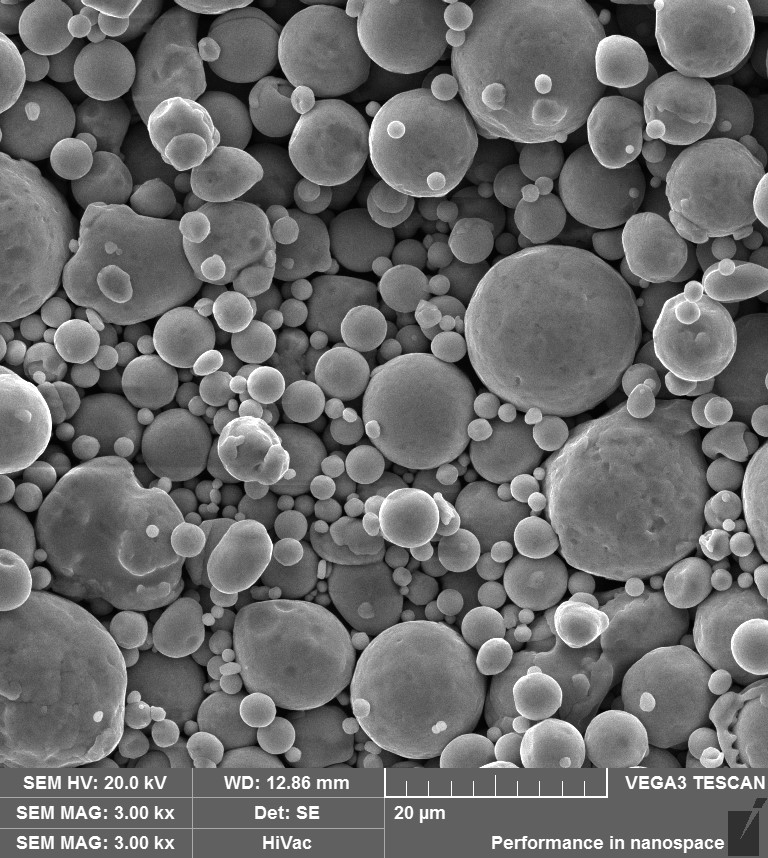
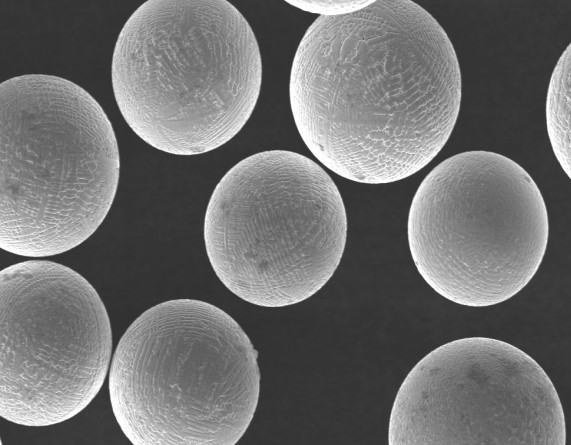
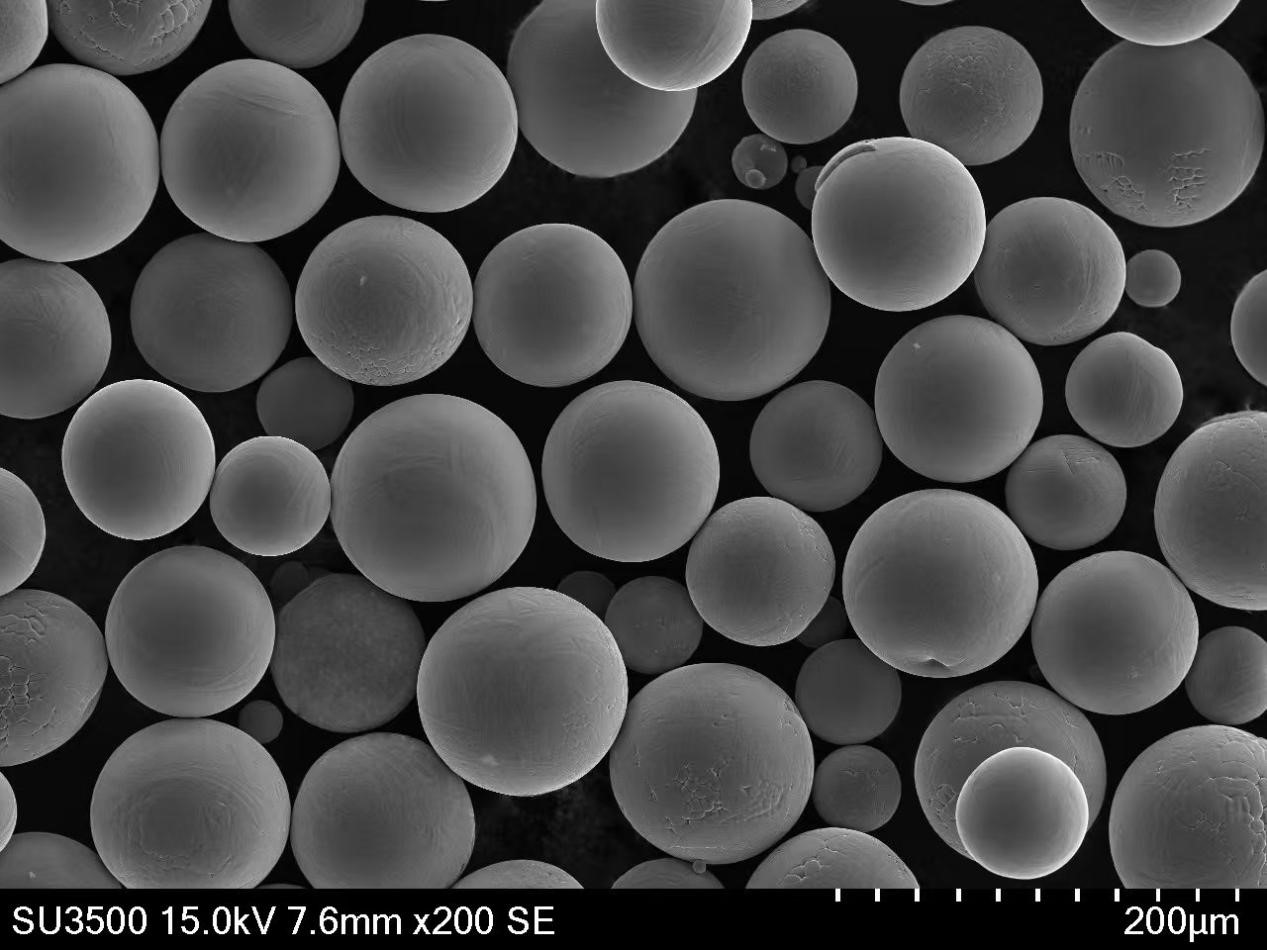
These numbers are typical, not universal. Aluminum powders are more sensitive than heavier alloys to oxide films, fine-powder cohesion, and handling history, so the same nominal PSD can behave differently from supplier to supplier. For that reason, serious qualification work generally asks not only for D10, D50, and D90 values, but also for SEM images, flow-test method disclosure, and powder-reuse limits.
Relevant Test and Terminology Standards
When a data sheet cites Hall flow, apparent density, tap density, or sieve distribution, it usually references recognized powder test methods rather than proprietary definitions. The ASTM B213 Hall flow standard covers flow rate using the Hall Flowmeter funnel, while the ASTM B214 sieve analysis standard covers dry sieve analysis for metal powders and the ASTM B527 tap density method covers packed density after tapping. Additive manufacturing vocabulary itself is standardized under the ISO/ASTM 52900 terminology document.
What Buyers Should Check Beyond the PSD Window
A narrow PSD is useful, but not sufficient. Buyers of Aluminium 2024 powder should also examine oxygen level, moisture control, satellite content, packing consistency, and whether the powder has been optimized for inert-gas LPBF or another route. Because 2024 is already less forgiving thermally than Al-Si AM grades, any drift in powder behavior can amplify defects during production.
Manufacturing Process
Most Aluminium 2024 powder for additive manufacturing is produced by inert-gas atomization or vacuum-assisted variants of atomization. The goal is to create spherical particles with stable chemistry, acceptable oxygen levels, and a particle-size distribution that spreads consistently into thin powder layers. General AM powder guidance from NIST and the broader powder-metallurgy standards landscape treats particle size, flowability, and spreadability as directly relevant to final part quality.
Aluminium 2024 Powder Production Route Comparison
| Process | Sphericity | Oxygen Pickup | PSD Control | Throughput | Relative Cost |
|---|---|---|---|---|---|
| Gas Atomization (GA) | High | Low to moderate, atmosphere dependent | Good | High | Moderate |
| Vacuum Induction Gas Atomization (VIGA) | Very high | Lower than open GA | Very good | Medium to high | Moderate to high |
| Electrode Induction Gas Atomization (EIGA) | Very high | Very low | Very good | Medium | High |
| Plasma Rotating Electrode Process (PREP) | Extremely high, very clean | Very low | Good, often coarser fractions | Medium to low | High |
| Secondary classification / reconditioning routes | Process dependent | Controlled if handled well | Excellent after sieving | Added step only | Added cost |
Gas Atomization for Spherical 2024 AM Powder
Gas atomization is the dominant industrial route because it balances cost, throughput, and particle shape. Molten alloy is disintegrated by a high-velocity inert gas stream into droplets that solidify into mostly spherical particles. After atomization, the bulk powder is sieved into specific fractions such as 15-45 µm or 45-105 µm, depending on the downstream process.
For aluminum alloys, this route must be tightly controlled because oxide formation can happen quickly if the melt or powder is poorly protected. Fine fractions are especially vulnerable to surface oxidation and cohesion, which can hurt spreadability.
VIGA, EIGA, and PREP Trade-Offs
VIGA adds vacuum induction melting before gas atomization, which improves cleanliness and helps reduce contamination risk. EIGA further minimizes melt-contact issues by relying on electrode feedstock rather than a standard crucible-based route. PREP, meanwhile, can produce highly spherical, clean powder, but it is generally more expensive and often used where premium morphology justifies the cost.
For Aluminium 2024 powder, the route choice is not only about shape. It is also about how much oxygen pickup, segregation risk, and lot variability the user can tolerate before printability starts to suffer. Because 2024 already has hot-cracking sensitivity, premium powder production can have a larger practical payoff than it does for easier aluminum alloys.
Post-Atomization Handling and Qualification
After atomization, powders are dried, sieved, sampled, analyzed, and packaged under controlled conditions. Representative powder sampling is itself standardized in the metal-powder field, and sieve, flow, apparent-density, and tap-density tests remain basic parts of release practice. NIST also notes that powder-layer density and spreadability are central to achieving predictive, repeatable part production, which is particularly relevant for lightweight aluminum systems that are sensitive to poor powder bed quality.
Applications by Industry
Aluminium 2024 powder is not a universal AM alloy, but it has a credible place in sectors that value low mass and higher structural strength more than maximum print ease. The likely users are engineering teams that understand both aerospace aluminum metallurgy and the qualification burden of difficult-to-print alloys.
Aerospace Structures and Flight Hardware
Aerospace is the most natural fit. Traditional 2024 has long been associated with aircraft skins, frames, and structural members, so powder-based 2024 interests designers who want to combine familiar alloy lineage with topology-optimized geometry. Potential AM uses include brackets, avionics supports, UAV substructures, housings, duct supports, and secondary structural components where low weight and good strength matter.
That said, not every aerospace part is a candidate. If the design can tolerate a silicon-rich alloy, many producers will still choose AlSi10Mg because qualification is faster and build reliability is better. Aluminium 2024 powder makes the most sense when the strength target pushes the project beyond standard cast-like AM aluminum grades.
Automotive, Motorsport, and Mobility Systems
High-performance automotive and motorsport programs can also benefit. Lightweight suspension-adjacent hardware, test fixtures, housings, and air-management components are natural candidates where design freedom and mass reduction matter. The alloy’s traditional reputation for fatigue-oriented structural service is attractive, even if the AM route requires more development discipline than more forgiving materials.
Defense, Space, and Research Hardware
In defense and space R&D, engineers often accept narrower processing windows in exchange for higher performance. That is why 2024 powder appears frequently in research rather than only in volume catalogs. It serves well in process-development campaigns, coupon studies, and prototype structural parts where material learning is itself part of the project.
Cross-Process Uses Beyond LPBF
Although LPBF gets most of the attention, coarser 2024 powder fractions can also support DED, laser cladding, and some non-AM powder routes. For organizations comparing use cases across multiple sectors, the broader industrial application coverage helps frame where aluminum, titanium, cobalt, or steel powders fit by process and end market. In adjacent lightweight programs, designers often evaluate 2024 alongside titanium alloy powder grades when the decision is really about stiffness, corrosion, temperature envelope, and weight.
Comparison with Alternative Materials
Material selection for additive manufacturing is rarely about one property. The real decision matrix includes printability, cost, corrosion resistance, post-processing burden, surface finish, density, and the maturity of the machine parameter set. In that context, Aluminium 2024 powder is a specialist option rather than a universal default.
Aluminium 2024 Powder vs Alternative AM Materials
| Material | Density (g/cm³) | Typical Strength Level | Printability | Corrosion Resistance | Relative Cost | Best-Fit Use Case |
|---|---|---|---|---|---|---|
| Aluminium 2024 powder | 2.78 | Medium-high to high after heat treatment | Challenging to moderate, process sensitive | Moderate | Medium to high | Lightweight structural parts needing higher-strength Al-Cu-Mg behavior |
| AlSi10Mg powder | 2.65-2.70 | Moderate | Excellent | Good | Medium | General-purpose aluminum LPBF with strong process maturity |
| Aluminium 6061 powder | 2.70 | Moderate | Challenging in many LPBF settings | Good | Medium | Broad engineering alloy, often selected for familiarity rather than peak AM performance |
| Ti-6Al-4V powder | 4.43 | High | Excellent for qualified AM routes | Excellent | High | High-performance aerospace and medical parts where cost is secondary |
| 316L stainless steel powder | 7.9-8.0 | Moderate | Excellent | Very good | Low to medium | Corrosion-resistant parts where weight is less critical |
Against AlSi10Mg, 2024 offers a more strength-driven aerospace narrative but a harder path to repeatable printing. Against 6061, it generally aims higher on strength, yet both alloys share the broader challenge that many traditional wrought aluminums are less AM-friendly than the purpose-adopted silicon-rich grades. Against titanium, 2024 wins on raw material density and often on cost, but titanium remains stronger, more corrosion resistant, and far more mature in regulated AM supply chains.
This is why the right comparison is not “Is 2024 the strongest alloy?” but “Does the design need the particular balance of low mass, age-hardening potential, and aerospace familiarity that 2024 offers?” Where the answer is no, many teams shift toward mainstream aluminum or even a non-aluminum route such as iron-based engineering powders.
Our Company
Shanghai Truer Technology Co., Ltd., operating am-printing.com, was established in 2009 and created its additive manufacturing business in 2019. The company’s published scope includes integrating 3D printing powder-making equipment and services with metal powder supply, including TiNi, TiTa, TiAl, TiNbZr, CoCrMo, nickel-based, cobalt-based, titanium-based, copper-based, aluminum-based, and stainless steel spherical powders. Its stated technical ecosystem includes Selective Electron Beam Melting equipment, Plasma Rotating Electrode Process powder-making equipment, gas atomization-related capability, and a joint innovation center for metal 3D printing with laboratories and experts; its process coverage spans SLM, SEBM, DED, laser cladding, PM, MIM, HIP, spraying, welding, and coating for industries including aerospace, medical, nuclear power, 3C electronics, hand tools, and remote control cars. Company background is summarized on the company information page.
FAQ
Q1. Is Aluminium 2024 powder commonly used in metal 3D printing?
It is studied and used, but it is not as common as AlSi10Mg in routine commercial LPBF production. The main reason is that 2024 offers attractive strength potential but a more difficult print window, especially regarding crack formation and porosity control.
Q2. Why is Aluminium 2024 powder attractive for aerospace parts?
The alloy belongs to a long-established aerospace aluminum family known for lightweight structural performance. Engineers are interested in bringing that low-density, high-strength lineage into topology-optimized AM parts where every gram matters.
Q3. What particle size is typical for Aluminium 2024 powder in LPBF?
A common commercial range is 15-45 µm or a nearby cut such as 20-63 µm, depending on the machine and recoating strategy. The ideal range depends on layer thickness, spreadability targets, and how the supplier balances flow against fine-feature resolution.
Q4. Is Aluminium 2024 powder better than AlSi10Mg?
Not universally. 2024 can be more attractive when higher-strength Al-Cu-Mg behavior is the goal, but AlSi10Mg is generally easier to print and is much more mature for routine additive manufacturing. The better choice depends on whether the project values property ambition more than process simplicity.
Q5. Which powder tests matter most when qualifying Aluminium 2024 powder?
Particle-size distribution, Hall flow, apparent density, tap density, oxygen level, and morphology are the core checks. Those metrics matter because powder spreading and packing behavior directly affect layer quality and, by extension, porosity and mechanical repeatability.
Q6. Can Aluminium 2024 powder be used outside aerospace?
Yes. It can also be relevant in motorsport, defense R&D, unmanned systems, and other lightweight engineering fields where structural efficiency matters. The limiting factor is usually not end-market suitability, but whether the manufacturer is prepared to qualify a more process-sensitive aluminum alloy for the target part.