簡単な回答
H13工具鋼パウダー is a hot-work chromium-molybdenum-vanadium steel powder used in additive manufacturing for parts that must combine hardness, thermal fatigue resistance, and dimensional stability. It is a strong choice for 3D printed tooling because it performs well in dies, molds, inserts, and wear-exposed components that face repeated heating and cooling cycles. Compared with many general-purpose steels, H13 offers better temper resistance and hot-strength retention, making it especially useful for conformal-cooled tooling and high-duty industrial parts.
What Is H13 tool steel powder
H13 tool steel powder is the spherical powder form of H13, one of the best-known hot-work tool steels in industrial manufacturing. In conventional metallurgy, H13 has long been used for die casting dies, extrusion tooling, forging dies, and plastic injection mold components because it balances hardenability, wear resistance, toughness, and thermal shock resistance better than many competing tool steels. In additive manufacturing, the same alloy is supplied as carefully controlled metal powder for processes such as laser powder bed fusion, directed energy deposition, and related powder-based routes.
H13 Tool Steel Powder in the Tool Steel Family
Within tool steels, H13 belongs to the hot-work class rather than the cold-work or high-speed categories. That classification matters because hot-work steels are designed to retain useful strength and hardness after exposure to elevated temperatures, while also resisting cracking during repeated thermal cycling. H13 therefore sits in a very practical middle ground: tougher than many wear-focused cold-work grades, but less specialized than ultra-hot alloys used for extreme turbine service.
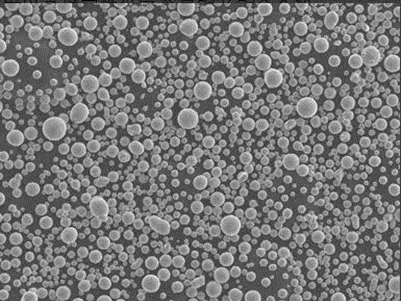
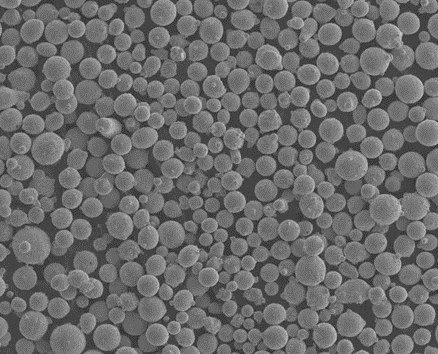
In powder form, H13 is optimized for additive manufacturing feed behavior. Particle shape, size distribution, oxygen level, and surface cleanliness become part of the material definition, not just the chemistry. Under the framework of ISO/ASTM 52900 の用語, powder characteristics are integral to how an additive manufacturing material is specified and processed.
Why H13 Remains Relevant in AM
H13 remains relevant because tooling is one of the most economically convincing applications for metal AM. Tooling inserts, die components, repair features, and short-run production tools often benefit from conformal cooling, internal vents, weight reduction, or rapid design iteration. H13 supports these advantages while still delivering the heat resistance and hardness expected from a production-grade tool steel.
That is also why H13 is frequently preferred over simpler martensitic stainless steels in thermal tooling environments. A stainless grade may offer easier corrosion performance, but it usually cannot match H13’s combination of hot hardness, temper resistance, and thermal fatigue behavior in die-service conditions.
Core Characteristics of H13 Additive Manufacturing Powder
The defining characteristics of H13 AM powder are hot-work durability, strong hardenability, good temper resistance, and reliable response to heat treatment. The alloy is not chosen because it is the cheapest printable steel or the easiest to machine in every condition. It is chosen because it can be printed, heat treated, and finished into components that survive repeated mechanical and thermal duty.
Its chromium content supports hardenability and oxidation resistance at moderate elevated temperatures. Molybdenum improves hot strength and temper resistance, while vanadium refines carbides and supports wear performance. That combination gives H13 its reputation as a workhorse material for tools exposed to temperature swings, contact pressure, and abrasive wear.
H13 is often selected when a tool must survive both heat and repetition, not just static load.
How H13 Differs from Other Printable Steels
Compared with 316L or 17-4 PH, H13 is far more tooling-oriented and much less corrosion-centered. Compared with maraging steels, H13 generally offers better thermal fatigue resistance and better performance in hot-work environments, though maraging grades may be easier to process for some structural or mold applications. Compared with cold-work steels such as D2, H13 sacrifices some maximum abrasive wear potential in exchange for much better toughness and resistance to heat checking.
For buyers reviewing a broader iron-based alloy powder range, this distinction is critical. H13 is not a general-purpose steel powder; it is a processable hot-work tool steel intended for demanding industrial service where heat, wear, and cycle life all matter.
化学組成
The chemistry of H13 is built around iron with moderate carbon and carefully balanced chromium, molybdenum, and vanadium additions. Those elements are responsible for the alloy’s well-known response to hardening and tempering, as well as its ability to retain useful strength in repeated hot-work service. Minor variations can exist by producer and powder route, but most qualified H13 powder stays close to the recognized composition window for the grade.
Typical Composition of H13 tool steel powder
| エレメント | Typical wt.% Range | 冶金上の役割 | Functional Effect |
|---|---|---|---|
| フェ | バランス | Base matrix | Forms the steel matrix that transforms to martensitic structure after hardening |
| C | 0.32–0.45 | Hardness and carbide formation | Supports hardenability, wear resistance, and final hardness after heat treatment |
| Cr | 4.75–5.50 | Hardenability and oxidation resistance | Improves through-hardening response, temper resistance, and moderate high-temperature stability |
| モ | 1.10–1.75 | Hot strength and secondary hardening | Improves temper resistance, hot hardness, and resistance to softening |
| V | 0.80–1.20 | Carbide refinement | Enhances wear resistance and helps control grain growth during heat treatment |
| Si | 0.80–1.20 | Deoxidation and temper response | Assists steelmaking cleanliness and contributes to strength |
| ムン | 0.20–0.50 | Deoxidation and hardenability support | Aids processing and contributes modestly to hardenability |
| P / S | Low residuals | Impurity control | Must remain low to preserve toughness and reduce crack susceptibility |
The carbon level in H13 is deliberately moderate rather than extreme. That balance helps the alloy reach meaningful hardness while still maintaining toughness and resistance to cracking under thermal cycling. In AM, this trade-off is valuable because the printed part must survive both the build process and the service environment.
What Each Major Alloying Element Does
Chromium is essential for hardenability and for maintaining hardness after thermal exposure. It also improves resistance to scaling relative to plain carbon steels, although H13 is not a corrosion-resistant stainless steel. In tooling environments, chromium’s main benefit is how it supports a durable hardened structure.
Molybdenum is a major reason H13 remains stable during tempering. It helps the alloy resist softening at elevated temperature and improves performance in hot-work service. Vanadium, meanwhile, contributes fine hard carbides that increase wear resistance and support grain refinement, which helps maintain toughness when heat treatment is properly controlled.
Why Composition Control Matters in Powder Feedstock
The chemistry of a wrought H13 bar and the chemistry of a powder lot may share the same nominal alloy label, but the AM feedstock requires stricter attention to oxygen, nitrogen, trace contamination, and evaporation-sensitive elements during melting. Powder atomization conditions can influence surface oxides, satellite content, and flowability, which then affect build quality.
For that reason, a certificate of analysis should be read together with powder characterization data rather than in isolation. A nominally correct H13 chemistry is necessary, but it is not sufficient for robust AM processing.
Composition and Heat-Treatment Response
The reason H13 is so widely used in tooling is not chemistry alone, but chemistry plus heat-treatment response. The alloy is designed to transform into a hard martensitic structure and then be tempered to a practical balance of hardness and toughness. In AM parts, this response remains central, although printed microstructures can alter the starting condition before heat treatment.
That difference is one reason printed H13 process windows are closely linked to post-build thermal schedules. The alloy’s value depends on how chemistry, microstructure, and tempering interact rather than on composition alone.
物理的および機械的特性
H13 is valued because it can be heat treated to high hardness while still preserving useful toughness and heat-check resistance. Its property profile is different from that of stainless steels, structural low-alloy steels, or nickel superalloys. For tooling engineers, the most important questions are usually hardness after tempering, resistance to softening, thermal fatigue performance, and compressive durability under cyclic load.
Typical Properties of H13 Tool Steel Components
| プロパティ | 代表値 | 単位 | 試験基準 |
|---|---|---|---|
| 密度 | 7.75–7.80 typical | g/cm³ | Archimedes / density measurement practice |
| Solidus–liquidus range | 1,400–1,450 typical | °C | Thermal analysis |
| Ultimate tensile strength | 1,400–1,900 typical | MPa | ASTM E8 tensile testing method after suitable heat treatment |
| Yield strength, 0.2% offset | 1,200–1,600 typical | MPa | ASTM E8 / comparable ISO methods |
| 伸び | 5–12 typical | % | ASTM E8 / comparable ISO methods |
| Hardness after hardening and tempering | 44–52 typical | HRC | ASTM E18 |
| 熱伝導率 | 24–28 typical | W/m-K | Thermophysical measurement methods |
| 弾性率 | 205–215 typical | GPa | Tensile or resonance methods |
These values are representative for heat-treated H13 and should be interpreted as typical industrial ranges rather than universal guaranteed minimums. Additive manufacturing route, orientation, internal porosity, retained austenite level, and final temper condition all influence the result. For tooling, final heat treatment often changes performance more than small differences in printed density alone.
Hardness and Temper Resistance
The most commercially important property of H13 is its ability to maintain a useful hardness level after repeated heating. Many steels can be hardened once; fewer can resist temper softening during service. H13’s alloy design allows it to remain effective in dies and molds that cycle thermally thousands of times.
This temper resistance is why H13 often outperforms simpler steels in die-casting and extrusion service. When a tool sees hot contact, rapid cooling, and repeated stress, a steel that softens too fast will lose dimensional accuracy, edge stability, and service life.
Strength, Toughness, and Thermal Fatigue
H13 does not deliver the highest possible hardness among tool steels, but it offers a more balanced combination of strength and toughness. That balance reduces the likelihood of catastrophic cracking in parts that see both mechanical stress and temperature gradients. For AM tooling, this is especially relevant because conformal cooling can intentionally create sharp local thermal differentials that the steel must survive.
耐熱疲労性 is therefore one of H13’s most practical advantages. In service, tools often fail not from one overload event but from a large number of smaller heating and cooling cycles that initiate surface cracks and propagate them over time.
Thermal Conductivity and Cooling Efficiency
H13’s thermal conductivity is moderate rather than exceptional. It is much lower than copper alloys, but higher than many nickel superalloys and adequate for mold and die applications when paired with good tool design. In AM, internal cooling channels can compensate for the alloy’s conductivity by bringing coolant closer to heat-generating surfaces.
This is why H13 is frequently used for conformal-cooled inserts while copper alloys are reserved for localized high-heat extraction zones. The steel supplies mechanical integrity and heat-check resistance, while geometry provides the cooling advantage.
Surface Condition and Post-Processing Effects
As-built H13 surfaces are rougher than machined tool steel surfaces and usually require finishing for demanding tooling contact areas. Machining, polishing, nitriding, coating, or EDM finishing may be applied depending on the intended use. Hot isostatic pressing can also be used when fatigue-critical or crack-sensitive service justifies the extra processing step.
Because AM H13 tooling is rarely used exactly as printed, performance should be evaluated on the finished tool state. The relevant material is the combined outcome of powder quality, build strategy, heat treatment, and surface engineering.
仕様および取り扱いグレード
Specifications for H13 powder typically combine chemistry limits with powder behavior metrics. End users usually assess particle size distribution, apparent density, tap density, Hall flow, oxygen content, morphology, and internal cleanliness in addition to the alloy designation itself. This is consistent with AM qualification practice, where feedstock behavior is tightly linked to process stability.
Typical H13 tool steel powder supply grades
| Supply Grade | 代表的なPSD範囲 | 見かけ密度 | タップ密度 | ホールの流れ | 酸素含有量 | 真球度/形態 | Cross-Reference / Typical Use |
|---|---|---|---|---|---|---|---|
| Fine LPBF grade | 15-45 µm | 4.2–4.8 g/cm³ typical | 4.8–5.5 g/cm³ typical | 16–25 s/50 g typical | ≤0.08 wt.% typical | Highly spherical, low satellites | Fine-detail laser powder bed fusion |
| Standard LPBF grade | 15–53 µm | 4.3–4.9 g/cm³ typical | 4.9–5.6 g/cm³ typical | 15–24 s/50 g typical | ≤0.08 wt.% typical | 球形 | General SLM / LPBF production |
| EBM or coarse PBF grade | 45-106 µm | 4.4–5.0 g/cm³ typical | 5.0–5.7 g/cm³ typical | 14–23 s/50 g typical | ≤0.08 wt.% typical | Spherical, broader PSD | Thicker layers and electron-beam builds |
| DED / cladding grade | 53-150 µm | 4.5–5.1 g/cm³ typical | 5.1–5.8 g/cm³ typical | 13–22 s/50 g typical | ≤0.08 wt.% typical | Spherical, feeder-stable | Directed energy deposition and repair |
| Standards alignment row | Supplier-specific | Often assessed per ASTM B212 practice | Often assessed per ASTM B527 practice | Often assessed per ASTM B213 practice | Supplier-specific | Verified by SEM and image analysis | Often cross-referenced to ASTM, ISO, DIN, GB, and EN purchasing conventions |
The 15–53 µm cut is common for laser powder bed fusion because it balances recoating behavior with layer quality. Coarser fractions are more relevant for deposition-based processes where powder feeding stability matters more than very fine feature definition.
H13 Powder Standards and Cross-Reference Logic
H13 itself is a familiar grade in tool steel standards, but AM powder purchasing often uses a hybrid specification model. Buyers may refer to conventional H13 chemistry expectations while separately defining powder characteristics, acceptable gas content, and morphology criteria. That is why a powder specification sheet often looks more detailed than a bar-stock material certificate.
For particle sizing, labs frequently use the ASTM B214 sieve analysis practice alongside laser diffraction or image-based analysis where appropriate. Flow behavior is often discussed using Hall measurements, but experienced users know that Hall flow alone does not capture the full spreadability behavior of spherical tool steel powders.
PSD Selection by Additive Process
Fine powder supports thin layers, better surface finish, and higher feature resolution in laser bed systems. Standard LPBF cuts are usually the default for printed mold inserts, die features, and prototype tools. Coarser fractions are useful where higher deposition rate is the goal, such as repair, feature addition, or cladding onto a steel substrate.
In real production, the process matters as much as the alloy. A supplier may offer the same chemistry in several PSD cuts because the optimal powder for LPBF is not automatically optimal for DED or spray-based applications.
Powder Quality Markers Beyond Size
球状粉末の形態 is crucial for H13 because irregular particles tend to reduce spreadability and can increase defect risk in printed layers. Oxygen control is also important, especially if the end use requires high toughness and consistent response to hardening and tempering. Satellite reduction, low moisture pickup, and stable reuse behavior all contribute to build repeatability.
When engineers compare H13 with other printable tooling materials, they sometimes review neighboring categories such as titanium alloy powder systems for lightweight molds or aerospace fixtures. In most tooling applications, however, H13 remains the more practical steel when hot hardness and wear resistance are the main priorities.
製造工程
H13 powder can be produced by several atomization routes, each affecting cost, sphericity, cleanliness, and powder size distribution. For most industrial volumes, gas atomization is the baseline process. More specialized routes such as VIGA, EIGA, or PREP may be considered where purity, morphology, or very tight process control justifies added cost.
Powder-Making Route Comparison
| プロセス | 球形度 | 酸素ピックアップ | PSDコントロール | スループット | 相対的なコスト |
|---|---|---|---|---|---|
| ガスアトマイズ(GA) | 高い | 低い | グッド | 高い | 中程度 |
| 真空誘導ガスアトマイズ法(VIGA) | 非常に高い | 非常に低い | 非常に良い | 中~高 | 中~高 |
| 電極誘導ガスアトマイズ法(EIGA) | 非常に高い | 非常に低い | 非常に良い | ミディアム | 高い |
| プラズマ回転電極プロセス(PREP) | Extremely high | 非常に低い | グッド | 低~中 | 非常に高い |
| 水の霧化 | 低~中程度 | より高い | 中程度 | 高い | 低い |
For H13, water atomization is included mainly as a contrast. It can be suitable for press-and-sinter or other conventional powder metallurgy uses, but it is generally less desirable for high-performance AM because particle shape is less spherical and oxygen pickup is higher.
Gas Atomization for H13 AM Powder
Gas atomization is widely used because it offers a practical combination of productivity and powder quality. Molten H13 is disintegrated by inert gas into droplets that solidify into mostly spherical particles. After sieving and classification, the resulting powder can meet the requirements of LPBF, DED, or related processes depending on the cut selected.
For tooling steels, GA is often the best economic answer. It can produce large quantities with good morphology, but process control is still essential to avoid excessive satellites, undesirable fines, and chemistry drift during melting.
VIGA, EIGA, and PREP Differences
VIGA improves atmosphere control by melting under vacuum and atomizing in a protective environment, which is valuable when powder cleanliness is critical. EIGA reduces contamination opportunities associated with melt-contact hardware and can deliver very clean spherical powder. PREP creates extremely spherical particles from a rotating consumable electrode, but usually at higher cost and lower throughput.
In H13, these premium routes may be chosen when powder consistency is prioritized over raw production volume. That can matter for highly qualified tooling inserts, crack-sensitive geometries, or research programs seeking tightly controlled feedstock effects.
Sieving, Classification, and Reuse Strategy
After atomization, the powder is classified into process-specific size bands. This step determines how the material spreads, packs, melts, and feeds. A nominal H13 chemistry can behave very differently in a printer if the fines tail is too heavy or if coarse particles reduce layer uniformity.
Reuse strategy also deserves attention. Recycled powder may show changes in oxygen, surface oxidation, and size distribution, especially after repeated exposure to thermal cycling in the machine. For production tooling, reuse policies are best tied to measured powder data and coupon performance rather than a fixed number of allowed cycles.
Heat Treatment After Printing
Most printed H13 parts undergo stress relief, hardening, and tempering, with the exact route adjusted to build density and target hardness. Some applications also use HIP before final heat treatment to reduce internal porosity. The goal is to convert the printed structure into a stable tooling microstructure with predictable hardness and toughness.
This post-build route is part of why H13 works so well in practice. The powder and the build merely create the geometry; heat treatment creates the functional tool steel condition.
業界別の用途
H13 tool steel powder is used where tooling, wear, heat, and production cycling intersect. Its additive manufacturing value is strongest in components that benefit from internal cooling, complex geometry, localized repair, or reduced lead time compared with conventional toolmaking routes.
Tooling, Dies, and Mold Inserts
The most established application is mold and die tooling. H13 is widely used for die casting cores, hot-work dies, injection mold inserts, extrusion tooling, and trim dies because it tolerates cyclic heating better than many other steels. Additive manufacturing adds value by enabling conformal cooling channels that are difficult or impossible to machine conventionally.
This capability is particularly important in plastic injection molding and die casting, where cycle time and thermal balance strongly affect output and part quality. A well-designed conformal-cooled insert can reduce local hot spots, improve dimensional consistency, and extend tool life.
Automotive and Industrial Manufacturing
Automotive manufacturing uses H13 AM powder for short-run tooling, prototype dies, fixture wear surfaces, and motorsport-adjacent hot components. Industrial manufacturers use it for punches, mandrels, shear components, and spare tooling where conventional lead times are too long or geometry is too complex for efficient machining.
In these sectors, H13 is often selected not because the part itself is exotic, but because the manufacturing economics favor fast tool iteration. Tooling often drives production speed, so even moderate gains in thermal control or maintenance interval can justify the material choice.
Aerospace and Energy
Aerospace uses are more selective than in tooling, but H13 can still be relevant for ground tooling, forming tools, repair dies, and durable fixtures. In energy and heavy industry, it is used for wear-and-heat exposed components, valve tooling, hot-work service parts, and selected repair builds.
H13 is not a turbine superalloy, so it is not the default choice for extreme oxidation environments. But where the component needs a steel-like combination of machinability, hardness, and thermal fatigue resistance, it can be a practical option.
Repair, Feature Addition, and Hybrid Manufacturing
Directed energy deposition and laser cladding allow H13 powder to be used for localized repair on worn dies and mold surfaces. Rather than replacing a large expensive tool, a manufacturer can rebuild a damaged edge, corner, or cavity surface and then machine it back to tolerance. This is often one of the fastest-return applications for H13 powder.
Across the use cases shown in the metal AM applications overview, repair and hybrid tooling are especially compelling because they combine material performance with direct cost avoidance. The business case often comes from reduced downtime as much as from the material itself.
Where H13 Is Not the Best Choice
H13 is usually not the first option when corrosion resistance is the dominant requirement, when extreme thermal conductivity is needed, or when the component works mainly at low temperature without wear. In those cases stainless, copper, maraging, or even aluminum alloys may be more appropriate.
That limitation is useful rather than negative. It keeps material selection focused on the conditions where H13 genuinely solves an engineering problem instead of being treated as a default steel powder for every application.
代替材料との比較
H13 should be evaluated against other printable tooling and engineering materials rather than against a generic idea of steel. Each alternative changes the balance among hardness, thermal conductivity, corrosion resistance, printability, and cost.
H13 tool steel powder vs alternative AM materials
| 素材 | 密度 | Strength / Hardness Potential | 相対的なコスト | 印刷適性 | 耐食性 | 最適なユースケース |
|---|---|---|---|---|---|---|
| H13工具鋼パウダー | 高い | High hardness with good hot-work stability | 中~高 | パラメータを適切に制御すれば良好 | 中程度 | Hot-work dies, mold inserts, thermal-cycling tooling |
| マルエイジング鋼粉末 | 高い | Very high strength, good toughness | 高い | 非常に良い | 中程度 | High-strength tooling, inserts, aerospace fixtures |
| 17-4 PH ステンレス粉末 | 高い | 中~高 | ミディアム | 非常に良い | グッド | Corrosion-aware tooling and general industrial parts |
| D2-type tool steel powder | 高い | Very high wear resistance | ミディアム | 中程度 | 低~中程度 | Abrasive wear tools with less thermal cycling |
| CuCrZr銅合金粉 | ミディアムハイ | Moderate strength, high conductivity | 高い | 中程度 | 中程度 | Rapid heat extraction inserts and thermal management |
Against maraging steel, H13 usually wins in hot-work resistance and temper stability, while maraging often wins in simplified strength development and dimensional predictability after aging. Against 17-4 PH, H13 is clearly superior for hot tooling but less corrosion resistant. Against D2, H13 is tougher and far better suited to repeated heat cycling, while D2 may lead in abrasive wear under colder service conditions.
When H13 Delivers the Best Value
H13 delivers the best value when the part is both a tool and a thermal component. That is the case for mold inserts, die-casting cores, extrusion tooling, and repair zones that repeatedly see elevated temperature. In those applications, the alloy’s property balance is more important than maximizing any one single metric.
It is less compelling when thermal conductivity is the overriding goal. In that scenario, a copper alloy may remove heat more effectively, though it will not provide H13’s hardness or hot-work durability.
Material Family Perspective
Compared with nickel superalloys, H13 is much more economical and more tooling-centric, but less oxidation-resistant at extreme temperature. Compared with aluminum alloys, it is heavier and harder to print into thin lightweight structures, but far more durable as a working tool surface. Compared with cold-work tool steels, its advantage is the ability to survive heat without rapid loss of performance.
For teams comparing across material families, related options such as copper-based alloy powders are often considered for cooling inserts used alongside H13 tool bodies. That kind of hybrid material strategy is increasingly common in advanced tooling design.
当社
Shanghai Truer Technology Co., Ltd, which operates am-printing.com, states that it was established in 2009 and created its additive manufacturing business in 2019. According to the information presented on its 会社概要ページ, the company integrates powder-making equipment and powder supply for additive manufacturing, with core technologies that include Selective Electron Beam Melting equipment, Plasma Rotating Electrode Process powder-making equipment, and Gas Atomization. The same company context describes a powder portfolio covering TiNi, TiTa, TiAl, TiNbZr, CoCrMo, and nickel-based, cobalt-based, titanium-based, copper-based, aluminum-based, and stainless steel spherical powders for processes such as SLM, SEBM, DED, laser cladding, PM, MIM, HIP, cold and hot spraying, welding, and coating across industries including 3C electronics, hand tools, remote control cars, medical, aerospace, and nuclear power.
よくあるご質問
Q1. Is H13 tool steel powder good for 3D printing molds and dies?
Yes. H13 is one of the most suitable printable steels for molds, dies, and inserts that must resist heat checking, softening, and wear. Its biggest advantage in AM is that it combines a proven hot-work alloy system with geometry benefits such as conformal cooling channels.
Q2. What hardness can H13 tool steel powder achieve after heat treatment?
Typical finished hardness is often in the mid-40s to low-50s HRC, depending on the thermal schedule and service target. Some tools are tempered toward the lower end to improve toughness, while others stay harder for wear-critical duty.
Q3. Is H13 tool steel powder better than maraging steel powder for tooling?
It depends on the application. H13 is usually better for hot-work tooling and repeated thermal cycling, while maraging steel is often favored for very high strength, easier age-hardening response, and some precision mold applications.
Q4. Which particle size distribution is common for H13 AM powder?
For laser powder bed fusion, 15–45 µm and 15–53 µm are common ranges. Coarser cuts such as 45–106 µm or 53–150 µm are more typical for DED, cladding, or other higher-deposition processes.
Q5. Does H13 tool steel powder require post-processing after printing?
Almost always. Stress relief, hardening, and tempering are standard, and machining or polishing is usually needed on functional surfaces. Depending on the duty cycle, users may also apply HIP, nitriding, or coatings to further improve tool life.
Q6. When should engineers avoid H13 tool steel powder?
H13 is usually not the best choice when corrosion resistance, very high thermal conductivity, or low-cost general fabrication is the priority. In those cases, stainless steels, copper alloys, or other AM powders may provide a better overall balance of properties and processing efficiency.