簡単な回答
Inconel 713 nickel alloy powder is a precipitation-strengthened nickel-base superalloy powder engineered for high-temperature service. It is chosen for additive manufacturing when parts must retain strength, resist oxidation, and tolerate thermal cycling better than common structural alloys. For turbine-adjacent hardware, energy components, and hot-environment industrial parts, Inconel 713 is most valuable where elevated-temperature capability matters more than low cost, easy machining, or room-temperature ductility.
What Is Inconel 713 nickel alloy powder
Inconel 713 nickel alloy powder is the spherical powder form of a castable nickel-base superalloy developed for high-temperature structural service. Within the broader Inconel alloy family overview, it belongs to the group of chromium-containing nickel alloys known for oxidation resistance and strength retention at elevated temperature. In powder form, the alloy is adapted for additive manufacturing routes such as laser powder bed fusion, electron beam processing, directed energy deposition, and selected powder metallurgy workflows.
Inconel 713 Nickel Alloy Powder in the Superalloy Family
Inconel 713 is best understood as a nickel superalloy designed around high-temperature stability rather than general-purpose corrosion service alone. Compared with more commonly discussed AM grades such as Inconel 625 or Inconel 718, it is more strongly associated with cast hot-section hardware and with applications where creep resistance and oxidation resistance matter over long exposure periods. That makes it a specialized powder, not a universal nickel grade.
Its microstructure is typically strengthened by a high fraction of gamma-prime precipitates, supported by alloying additions such as aluminum and niobium, with chromium contributing oxidation and hot-corrosion resistance. This chemistry pushes the alloy toward service in heat-stressed environments, especially where steady elevated temperature is more important than exceptional weldability or broad-form ductility.
Why Inconel 713 AM Powder Exists
The reason Inconel 713 exists is straightforward: many components operate in conditions where stainless steels lose strength too quickly and where lighter alloys cannot survive oxidation, creep, or sustained heat. A nickel-base superalloy provides the needed thermal stability, but not every nickel superalloy behaves the same way. Inconel 713 was developed to deliver a particularly useful blend of castability, strength at temperature, and environmental resistance.
As AM feedstock, that same metallurgical logic still applies. The powder form allows engineers to create internal channels, topology-optimized structures, repair geometries, and lower-volume parts that would be difficult or uneconomic to cast or machine conventionally.
Core Characteristics of Inconel 713 Powder
The defining characteristics of this alloy are gamma-prime-strengthened microstructure, strong oxidation resistance, useful creep performance, and comparatively high hardness after suitable thermal treatment. In practice, that means it is more attractive for hot hardware than for parts that mainly need formability or easy post-machining.
It also behaves differently from nickel alloys chosen for corrosion in aqueous service. Inconel 713 is not usually the first recommendation for pump housings or marine fasteners; it is more often evaluated for vanes, nozzles, combustion-adjacent hardware, turbocharger-related parts, and industrial components exposed to repeated high-temperature duty.
Inconel 713 is selected less for general-purpose versatility than for reliable strength in sustained heat.
Distinguishing Inconel 713 from Other AM Nickel Alloys
Compared with Inconel 718, Inconel 713 generally offers stronger inherent hot-section orientation but a narrower process window and less forgiving weldability. Compared with Inconel 625, it sacrifices some fabrication ease in exchange for better elevated-temperature strength. Compared with cobalt-base hot-section alloys, it often offers a more familiar nickel-alloy qualification path while still supporting serious thermal duty.
That positioning matters when reviewing a broader [nickel superalloy powder catalog]. Many nickel grades are available for AM, but only a smaller subset is intended primarily for sustained service at temperatures where gamma-prime stability becomes the central design issue.
Why Powder Form Changes the Material Discussion
A bar, casting, or weld wire designated as Inconel 713 is not automatically equivalent to an AM powder lot of the same chemistry. Powder use introduces new variables: particle size distribution, flow rate, apparent density, oxygen pickup, satellite content, and reuse stability. Under the vocabulary established by ISO/ASTM 52900 の用語, these feedstock characteristics are part of the manufacturing system rather than incidental packaging details.
For AM engineers, that means the alloy designation is only the beginning. Final performance depends on chemistry, powder morphology, process parameters, build atmosphere, heat treatment, and inspection discipline together.
化学組成
Inconel 713 nickel alloy powder is formulated around a nickel-rich matrix with chromium, aluminum, molybdenum, niobium, and titanium contributing oxidation resistance and precipitation strengthening. Composition ranges vary slightly by producer and by whether the reference is cast Inconel 713 or Inconel 713C purchasing practice, so published values should be read as representative industrial targets rather than a single universal certificate.
Typical Composition of Inconel 713 nickel alloy powder
| エレメント | Typical wt.% Range | 冶金上の役割 | Functional Effect |
|---|---|---|---|
| ニー | バランス | Base matrix | Provides the high-temperature austenitic matrix that supports strength and corrosion resistance |
| Cr | 12.0–14.0 | Oxidation and hot-corrosion resistance | Promotes protective oxide formation in high-temperature service |
| アル | 5.5–6.5 | Gamma-prime former | Drives precipitation strengthening and improves oxidation behavior |
| モ | 4.0–5.0 | Solid-solution strengthening | Improves high-temperature strength and creep resistance |
| Nb + Ta | 1.8–3.0 | Carbide and precipitate contributor | Supports hot strength and microstructural stability |
| ティ | 0.5–1.0 | Gamma-prime contributor | Assists precipitation strengthening and phase balance |
| C | 0.08–0.20 | カーバイドフォーマー | Contributes grain-boundary strengthening when controlled properly |
| Zr | 0.05-0.15 | Grain-boundary modifier | Improves hot ductility and creep behavior in small amounts |
These ranges describe the chemistry envelope most users expect from an Inconel 713-type powder. In purchasing practice, residual elements such as iron, silicon, manganese, copper, sulfur, and boron are also monitored because even low-level variations can alter cracking tendency, oxidation behavior, or response to thermal treatment.
Role of Chromium, Aluminum, and Molybdenum
Chromium is the alloy’s first line of defense against oxidation and hot corrosion. It supports a stable surface scale, especially when the component experiences repeated thermal exposure in air or combustion-related environments. Without sufficient chromium, the alloy would lose much of its environmental durability.
Aluminum is equally important but for a different reason. It is central to gamma-prime formation, which provides much of the alloy’s high-temperature strength. Molybdenum then adds solid-solution strengthening, helping the matrix resist deformation during sustained heat exposure.
Grain-Boundary Chemistry and Carbon Control
Carbon, zirconium, and minor boron-type additions are often underappreciated in superalloy discussions because their levels are low, but they are highly influential. Properly controlled, they improve grain-boundary strength and creep resistance. Poor control can instead promote brittleness, casting-style defects, or inconsistent AM response after repeated thermal cycling.
That matters particularly in powder production. Trace contamination from melting practice, atmosphere control, or feedstock handling can shift a powder lot from acceptable to problematic even when the major alloying elements still appear on target.
Why Composition Control Matters More in Hot-Section Alloys
For room-temperature structural alloys, modest chemistry variation may still leave a usable product. For a hot-section nickel alloy, the tolerance is smaller because the property target is more demanding. A few tenths of a percent in aluminum, chromium, or niobium balance can affect precipitate fraction, oxidation behavior, and crack sensitivity.
As a result, composition review for Inconel 713 powder is not just a certificate exercise. It directly informs build strategy, post-build heat treatment, and the eventual decision on whether the alloy is suitable for a specific service temperature window.
物理的および機械的特性
The physical and mechanical profile of Inconel 713 reflects its role as a heat-resistant structural alloy. It is substantially denser than titanium and aluminum alloys, harder to machine than many steels, and less ductile at room temperature than precipitation-hardenable nickel grades aimed at broader fabrication. In return, it offers the combination designers usually want in hot-section hardware: retained strength, oxidation resistance, and microstructural stability under heat.
Typical Properties of Inconel 713 Nickel Alloy Powder Parts
| プロパティ | 代表値 | 単位 | 試験基準 |
|---|---|---|---|
| 密度 | 7.8–8.0 typical | g/cm³ | Archimedes / ASTM-style density methods |
| 融点範囲 | 1,260–1,340 typical | °C | Thermal analysis |
| Ultimate tensile strength | 900–1,150 typical | MPa | ASTM E8 / ISO 6892 after suitable heat treatment |
| Yield strength, 0.2% offset | 650–850 typical | MPa | ASTM E8 / ISO 6892 |
| 伸び | 2–8 typical | % | ASTM E8 / ISO 6892 |
| 硬度 | 32–40 typical | HRC | ASTM E18 |
| 弾性率 | 200–220 typical | GPa | Tensile or resonance methods |
| 熱伝導率 | 11–15 typical | W/m-K | Comparative thermophysical methods |
These values are representative rather than universal. AM route, porosity level, build orientation, heat treatment, HIP status, and machining allowance can shift the result meaningfully. In nickel superalloys, microstructure control often matters as much as nominal composition.
Strength Profile at Elevated Temperature
The main reason to select this alloy is hot-section performance. While many engineering metals post impressive room-temperature strength numbers, far fewer can retain a useful fraction of that strength after prolonged exposure to heat. Inconel 713 remains relevant because its precipitate-strengthened structure is built for that environment.
This strength retention is especially valuable in components that see continuous thermal load rather than short intermittent peaks. Designers choosing the alloy are usually more concerned with long-duration thermal integrity than with room-temperature toughness alone.
Hardness, Ductility, and Machining Implications
Inconel 713 is relatively hard compared with many AM metals, and its room-temperature elongation is limited. Those traits are not defects; they are part of the trade-off for elevated-temperature capability. But they do affect process planning, especially if the part requires extensive finish machining after printing or hot isostatic pressing.
Low ductility also means defect control becomes more important. Lack-of-fusion porosity, residual stress, and brittle grain-boundary features are less tolerable in this alloy than in more forgiving AM grades. Process discipline must therefore be tighter from powder intake through final heat treatment.
Thermal Conductivity and Oxidation Behavior
Thermal conductivity is modest by engineering-metal standards, which can influence build strategy during laser processing. Heat does not dissipate as quickly as it does in copper or aluminum alloys, so scan strategy and energy density matter. In service, however, the more important consideration is often 耐高温酸化性, supported by the alloy’s nickel-chromium-aluminum chemistry.
For combustor-adjacent and turbine-adjacent parts, that oxidation behavior is often the property that makes the alloy economically worthwhile. A cheaper alloy that degrades early in heat may cost more over the part life than a premium superalloy that remains stable.
Fatigue and Creep in AM Components
For Inconel 713, fatigue cannot be separated from surface quality and internal defect population. Rough as-built surfaces, unclosed pores, or untempered residual stress fields can reduce fatigue resistance sharply. HIP and finish machining frequently play an outsized role in achieving a reliable component.
Creep is even more application-specific. Since the alloy is often chosen for time-at-temperature duty, the relevant question is not merely whether it is strong, but whether it stays dimensionally stable and crack-resistant under sustained thermal load for the required service interval.
仕様および取り扱いグレード
Specification practice for Inconel 713 nickel alloy powder is driven more by process compatibility and powder behavior than by a single globally dominant AM standard. Buyers usually qualify the powder through a combination of chemistry limits, PSD, flowability, density metrics, oxygen level, morphology, and build-trial data rather than by relying on the alloy name alone.
Typical Supply Grades and Powder Specifications
| Supply Grade | 代表的なPSD範囲 | 見かけ密度 | タップ密度 | ホールの流れ | 酸素含有量 | 真球度/形態 | Cross-Reference / Typical Use |
|---|---|---|---|---|---|---|---|
| Fine LPBF grade | 15-45 µm | 4.2–4.6 g/cm³ typical | 4.8–5.3 g/cm³ typical | 16–24 s/50 g typical | ≤0.10 wt.% typical | Highly spherical, low satellites | Fine-detail laser powder bed fusion |
| Standard LPBF grade | 15–53 µm | 4.3–4.7 g/cm³ typical | 4.9–5.4 g/cm³ typical | 15–23 s/50 g typical | ≤0.10 wt.% typical | 球形 | General SLM / LPBF production |
| EBM / coarse PBF grade | 45-106 µm | 4.4–4.8 g/cm³ typical | 5.0–5.5 g/cm³ typical | 14–22 s/50 g typical | ≤0.10 wt.% typical | Spherical, broader PSD | Electron-beam and thicker-layer builds |
| DED / cladding grade | 53-150 µm | 4.5–4.9 g/cm³ typical | 5.1–5.6 g/cm³ typical | 13–21 s/50 g typical | ≤0.10 wt.% typical | Spherical, feed-stable | Directed energy deposition and laser cladding |
| Standards alignment row | Supplier-specific | Typically measured by ASTM B212/B703 practice | Often measured by B527 practice | Often measured by B213 practice | Supplier-specific | Verified by SEM and image analysis | Purchasing logic may cross-reference ASTM, ISO, AMS, GB, and DIN conventions |
The most common LPBF cut is still the 15–53 µm range, but machine architecture can shift the preferred window. Coarser cuts are favored when feed consistency or thicker layers matter more than extremely fine feature resolution.
Inconel 713 Nickel Alloy Powder Standards Logic
Unlike ubiquitous AM grades such as 316L or Inconel 718, Inconel 713 is often qualified through project-specific technical agreements. That is partly because the alloy is more specialized and partly because hot-section performance depends heavily on post-build route and final inspection.
Particle size distribution is commonly checked under the framework of the [ASTM B214 sieve analysis standard], while Hall flow values are commonly discussed using the [ASTM B213 Hall flow standard]. Those methods are not unique to Inconel 713, but they are familiar reference points for powder buyers evaluating feedstock consistency.
Powder Metrics That Deserve Close Attention
For this alloy, size distribution alone is not enough. Buyers should focus on apparent density, tap density, flow consistency, oxygen pickup, fines content, and satellite population because all of those influence recoating or feeding behavior. Since the alloy can be crack-sensitive, powder cleanliness and morphology are unusually important.
A visually spherical powder is not automatically a qualified powder. The more demanding the service environment, the more likely it is that the end user will require build coupons, metallography, and tensile verification alongside standard powder test results.
Supply Grade Selection by Process
Fine grades suit detailed internal passages and thin-wall geometries in laser systems. Coarser grades are often a better fit for EBM or DED, where stable feeding and broader melt pools matter more than ultra-fine layer resolution. Some buyers also separate virgin-only grades from lots intended for controlled reuse environments.
When thermal performance becomes even more important than oxidation resistance alone, engineers sometimes compare Inconel 713 against a broader [refractory metal powder range]. In most cases nickel superalloys remain the practical choice because they offer a better balance of processability, oxidation resistance, and manufacturability than very high-melting refractory systems.
製造工程
Making high-quality Inconel 713 powder requires strict control over melting, atomization, solidification, and classification. Although the alloy is less reactive than titanium, it is still a premium feedstock whose performance depends on chemistry retention, low contamination, and highly repeatable particle morphology.
Powder-Making Route Comparison
| プロセス | 球形度 | 酸素ピックアップ | PSDコントロール | スループット | 相対的なコスト |
|---|---|---|---|---|---|
| ガスアトマイズ(GA) | 高い | 低い | グッド | 高い | 中程度 |
| 真空誘導ガスアトマイズ法(VIGA) | 非常に高い | 非常に低い | 非常に良い | 中~高 | 中~高 |
| 電極誘導ガスアトマイズ法(EIGA) | 非常に高い | 非常に低い | 非常に良い | ミディアム | 高い |
| プラズマ回転電極プロセス(PREP) | Extremely high | 非常に低い | グッド | 低~中 | 非常に高い |
| Plasma atomization / specialty route | Extremely high | 非常に低い | 非常に良い | ミディアム | 高い~非常に高い |
The table highlights the typical trade-offs rather than fixed rules. In practice, the best route depends on lot size, cost target, purity requirement, and the AM process the powder must serve.
Gas Atomization for Nickel AM Powder
Gas atomization is often the most economical route for nickel superalloy powder at industrial scale. The molten alloy stream is broken into droplets by high-pressure inert gas, producing predominantly spherical particles that can be classified into AM-ready PSD ranges. For many Inconel 713 programs, GA offers the best balance between output and powder quality.
Its limitations are familiar: satellites, wider PSD tails, and possible chemistry drift if melting discipline is poor. Still, when well executed, GA is the baseline production route for high-volume nickel AM powder.
VIGA, EIGA, and PREP Trade-Offs
VIGA improves atmosphere control and often produces more consistent chemistry retention, which is valuable for precipitation-strengthened superalloys. EIGA avoids some melt-contact concerns and is attractive where contamination risk must be minimized. PREP generates extremely spherical particles with very low satellite content, but at substantially higher cost and typically lower throughput.
For a crack-sensitive hot-section alloy, the attraction of these premium routes is not cosmetic. Better sphericity, cleaner surfaces, and tighter chemistry control can translate into more stable spreading, fewer process anomalies, and more predictable post-build behavior.
Why Spherical Morphology Matters
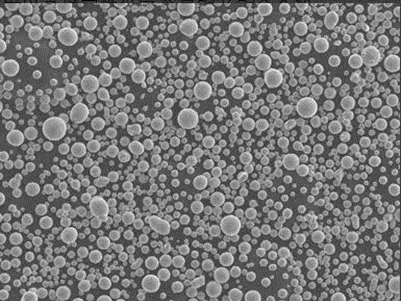
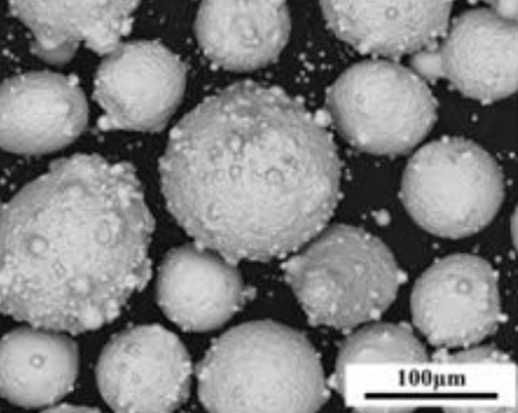
Spherical AM powder improves packing uniformity, layer consistency, and feed behavior. In laser systems, that supports stable energy absorption and reduces the chance of local powder-bed disturbance. In DED, it improves flow through powder feeders and helps maintain a consistent deposition rate.
The relevance is even greater for a heat-resistant alloy like Inconel 713 because process irregularities can amplify hot-cracking risk. Better powder does not guarantee defect-free builds, but it reduces one of the most avoidable sources of instability.
Classification, Sieving, and Reuse Control
After atomization, powder is sieved and classified into target size bands. That classification step is not a minor downstream operation; it determines whether the powder will match the recoating and melt-pool behavior the machine recipe expects. Industrial users commonly reference the measurement logic of ASTM powder test methods for PSD and flow because those methods provide a common language across supplier and customer teams.
Reuse management is equally important. Nickel superalloy powder can shift in fines balance, oxide content, and flow behavior over repeated cycles. For critical components, reuse policy should be based on measured data, not on an assumed number of safe recycles.
Post-Build Thermal Route
Inconel 713 parts are seldom judged in the as-built condition alone. Stress relief, solution treatment where appropriate, and aging-style thermal schedules are used to stabilize the microstructure and improve service readiness. HIP may also be used to reduce internal porosity and support fatigue or creep performance in demanding parts.
This post-build route is not optional background information. It is part of what the material really is in application, especially for a superalloy selected primarily for heat-resistant service.
業界別の用途
Inconel 713 nickel alloy powder is used where temperature, oxidation, and thermal cycling are the dominant design constraints. The value proposition is strongest when failure at heat would be costly, dangerous, or operationally disruptive, and when AM geometry freedom adds clear engineering benefit.
Aerospace and Turbine Hardware
Aerospace and stationary gas turbine applications are the most natural fit. The alloy is suited to nozzles, turbine-adjacent brackets, combustor-support hardware, heat-resistant housings, and complex flow-path components where conventional casting may be slow or inflexible. For AM, the ability to integrate cooling geometry or consolidate multiple pieces into one build is often as important as the alloy choice itself.
Compared with more general nickel grades, Inconel 713 is selected when designers want higher creep capability and better heat persistence over time. That focus makes it more specialized, but also more valuable in the right thermal envelope.
Energy, Oil and Gas, and Thermal Processing Equipment
In the energy sector, the alloy is relevant to burners, nozzles, hot-gas hardware, and industrial heat-processing components. In oil and gas, it is more likely to appear in localized high-heat applications than in broad downhole corrosion service, where other nickel alloys may be more appropriate. The central question is always temperature exposure profile, not simply corrosion category.
Industrial furnaces and thermal processing lines are another logical use case. Fixtures, supports, and hot-zone hardware may justify Inconel 713 when service heat is persistent and replacement downtime is expensive.
Turbocharger, Motorsport, and Performance Systems
Turbocharger turbines, high-performance exhaust-adjacent parts, and motorsport heat hardware are areas where the alloy’s temperature capability becomes practical at smaller scale. AM can shorten development time for these parts, especially when prototypes need rapid iteration around internal flow geometry or mounting configuration.
This does not mean the alloy is automatically suitable for every automotive application. In mainstream high-volume programs, cost pressure usually shifts attention back to cheaper stainless or lower-nickel options unless the temperature demand is truly severe.
Repair, Rebuild, and Hybrid Manufacturing
Directed energy deposition and laser cladding can also make use of Inconel 713-type powder in repair or hybrid workflows. Rather than printing a full part from scratch, engineers may restore damaged hot-section features or add heat-resistant surfaces to a substrate. That hybrid path can be economically attractive where the base component is expensive and the worn zone is localized.
Across many [industrial AM application sectors], this repair logic is one of the least discussed but most practical reasons to keep specialized nickel powder grades in service.
Where the Alloy Is Less Appropriate
Inconel 713 is usually not the first-choice powder for medical implants, low-temperature structural brackets, or corrosion-only applications with minimal heat. It is also not the easiest alloy to print when the manufacturing objective is simple, low-cost throughput. If thermal performance is not a primary requirement, more forgiving nickel, cobalt, iron, or even titanium powders may offer a better overall answer.
That discipline matters because AM material selection should be application-first, not alloy-first. A premium superalloy is only economical when its property set is genuinely required.
代替材料との比較
No alloy should be evaluated in isolation. Inconel 713 nickel alloy powder competes with other nickel superalloys, selected cobalt alloys, and sometimes lower-cost heat-resistant steels depending on service temperature and life requirement.
Inconel 713 Nickel Alloy Powder vs Alternative AM Materials
| 素材 | 密度 | Strength at Elevated Temperature | 相対的なコスト | 印刷適性 | Oxidation / Hot Corrosion Resistance | 最適なユースケース |
|---|---|---|---|---|---|---|
| Inconel 713 nickel alloy powder | 高い | 非常に高い | 高い | 中程度 | 非常に良い | Hot-section parts, turbine-adjacent hardware, long heat exposure |
| インコネル718粉末 | 高い | 高い | 高い | 良い~非常に良い | グッド | Broad aerospace AM, strong mechanical parts with easier qualification |
| インコネル625粉 | 高い | 中~高 | 高い | 非常に良い | 素晴らしい | Corrosion-heavy service and complex AM parts needing better fabricability |
| CoCrMo粉末 | 高い | 高い | 高い | グッド | 非常に良い | Wear, heat, and medical or industrial service with cobalt-alloy advantages |
| 17-4 PH ステンレス粉末 | ミディアムハイ | 中程度 | ミディアム | 素晴らしい | 中程度 | Cost-sensitive structural parts with limited high-temperature exposure |
Against Inconel 718, Inconel 713 is more specialized. The former is easier to qualify in many AM environments and is the more common default choice, but the latter may be stronger in sustained hot duty. Against Inconel 625, Inconel 713 offers superior high-temperature structural orientation, while 625 offers better fabrication friendliness and general corrosion emphasis.
When Inconel 713 Wins the Comparison
The alloy wins when thermal exposure is persistent enough that a general-purpose nickel alloy begins to look marginal. It is especially compelling when the part must hold geometry, resist oxidation, and survive repeated thermal cycling without moving to much more expensive exotic systems.
It does not win on cost, machining ease, or broad printability. That is why the material is best treated as a targeted solution rather than a default answer.
Comparison with Other Material Families
Compared with cobalt alloys, Inconel 713 often offers a more familiar nickel-superalloy property framework, though cobalt systems may lead in some wear or specific hot-corrosion scenarios. Compared with stainless steels, it is decisively better for high heat but substantially more expensive. Compared with titanium alloys, it is far heavier yet far more capable in sustained oxidizing thermal service.
Engineers making these trade-offs often review adjacent materials such as [cobalt-based alloy powders] to see whether the service environment is more creep-driven, wear-driven, or corrosion-driven. That comparison usually clarifies whether a nickel-base superalloy is truly the best fit.
当社
Shanghai Truer Technology Co., Ltd, which operates am-printing.com, states that it was established in 2009 and created its additive manufacturing business in 2019. Based on the information presented on its [company background page], the business integrates 3D-printing powder-making equipment and powder supply, with core technologies including Selective Electron Beam Melting equipment, Plasma Rotating Electrode Process powder-making equipment, and Gas Atomization. The same company context identifies a powder portfolio that includes TiNi, TiTa, TiAl, TiNbZr, CoCrMo, and nickel-based, cobalt-based, titanium-based, copper-based, aluminum-based, and stainless steel spherical powders, serving processes such as SLM, SEBM, DED, laser cladding, PM, MIM, HIP, cold and hot spraying, welding, and coating across industries including medical, aerospace, nuclear power, 3C electronics, hand tools, and remote-control vehicle components.
よくあるご質問
Q1. Is Inconel 713 nickel alloy powder good for additive manufacturing?
Yes, but it is best for targeted high-temperature applications rather than general-purpose printing. Its value comes from strength retention and oxidation resistance in heat, while its challenge is a narrower process window than more forgiving nickel grades such as Inconel 625 or 718.
Q2. What is the difference between Inconel 713 and Inconel 718 powder?
Inconel 718 is the more common AM alloy because it is broadly qualified and easier to process in many systems. Inconel 713 is more specialized toward sustained elevated-temperature service and hot-section hardware, where creep and oxidation resistance can matter more than fabrication ease.
Q3. Which particle size is typical for Inconel 713 nickel alloy powder?
For laser powder bed fusion, 15–45 µm and 15–53 µm are common target cuts. Coarser fractions such as 45–106 µm or 53–150 µm are more typical for electron beam or directed energy deposition routes, where feed stability and thicker layers are prioritized.
Q4. Is Inconel 713 powder difficult to print?
It can be more demanding than widely used AM nickel grades because crack sensitivity and microstructure control require tighter parameter discipline. Success usually depends on high-quality powder, controlled atmosphere, optimized scan strategy, and a well-qualified post-build heat-treatment route.
Q5. What industries use Inconel 713 nickel alloy powder most often?
The strongest fit is in aerospace, gas turbines, energy hardware, thermal processing equipment, and selected motorsport or turbocharger-related systems. These are environments where elevated temperature, oxidation, and time-at-heat dominate the design brief.
Q6. When should engineers avoid Inconel 713 nickel alloy powder?
It is usually not the right choice when the part mainly needs low cost, easy machining, or room-temperature structural performance. If heat resistance is not the primary requirement, alloys such as 17-4 PH, Inconel 625, or even titanium powders may provide a better balance of cost, printability, and end-use performance.