간단한 답변
CoCrMo powder for dental additive manufacturing is a spherical cobalt-chromium-molybdenum alloy feedstock designed for metal 3D printing of crowns, bridges, bars, and removable partial denture frameworks. It is widely chosen because it offers high stiffness, strong corrosion resistance in the oral environment, reliable thin-wall printability, and stable post-processing behavior. For dental laboratories and contract manufacturers using laser powder bed fusion, it often delivers a better balance of fit accuracy, framework rigidity, and long-term durability than more general-purpose stainless steel powders.
What Is CoCrMo powder for dental additive manufacturing
CoCrMo powder for dental additive manufacturing is a pre-alloyed metal powder based on cobalt, chromium, and molybdenum, produced in a spherical form for additive manufacturing processes such as selective laser melting and related powder bed fusion workflows. In practical terms, it belongs to the broader family of cobalt-based biomedical and wear-resistant alloys rather than the titanium, stainless steel, or nickel superalloy families. For dental use, the powder is optimized not only for alloy chemistry but also for particle morphology, flowability, and layer-spreading consistency.
CoCrMo powder for dental additive manufacturing within the cobalt alloy family
The alloy is closely associated with high-performance cobalt-chromium-molybdenum grades used in medical and dental engineering. Unlike casting alloys supplied as ingots, rods, or coarse powders, AM-grade CoCrMo is controlled around particle size distribution, surface condition, and oxygen content so it can build dense parts layer by layer. Readers comparing related cobalt alloy powder solutions will notice that dental CoCrMo is typically positioned toward fine detail resolution, high repeatability, and precision framework production.
Why the dental sector adopted CoCrMo AM powder
Dental restorations place unusual demands on a material. A framework must remain dimensionally stable under bite force, resist corrosion in saliva and food-acid exposure, support thin connectors, and still allow finishing, polishing, and fit adjustment after printing. CoCrMo met these requirements in conventional dental metallurgy long before digital workflows became mainstream, which is why it transitioned naturally into metal additive manufacturing when laboratories began replacing investment casting with scanned and printed production routes.
Distinguishing features of a dental 3D printing powder
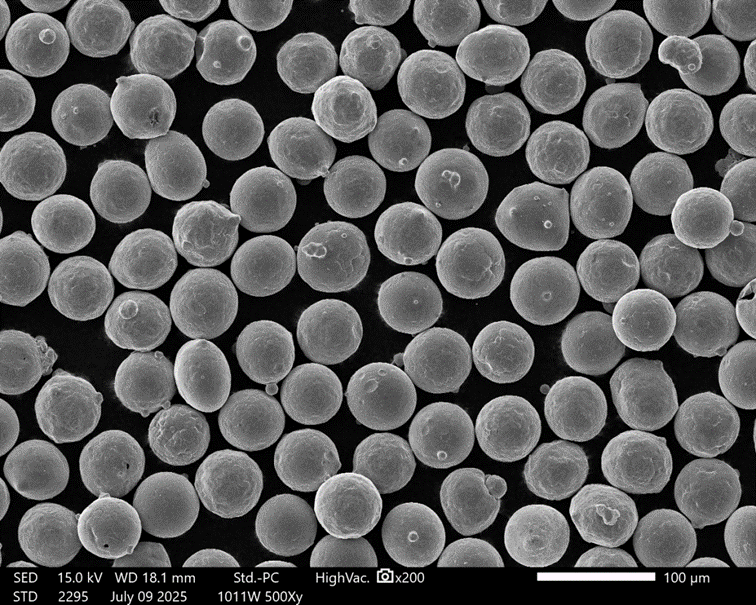
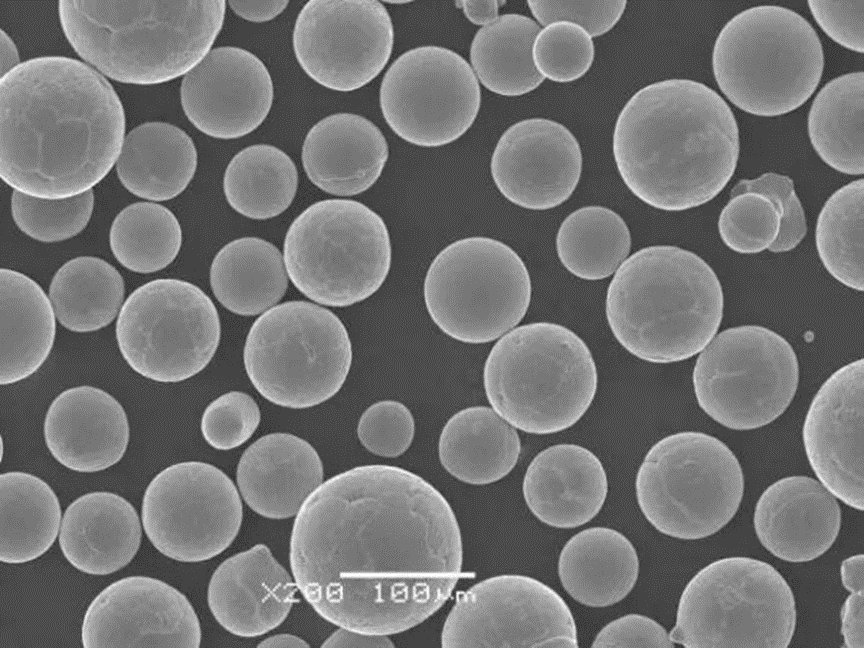
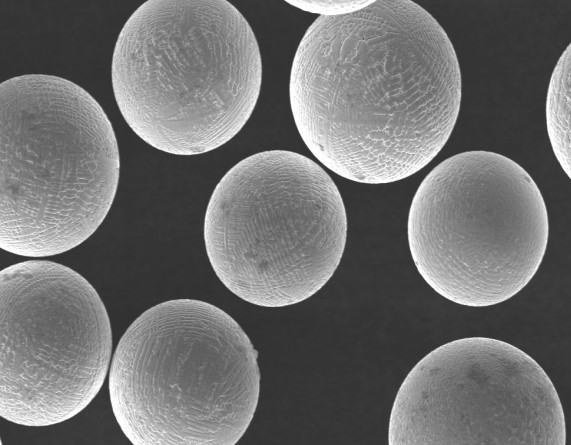
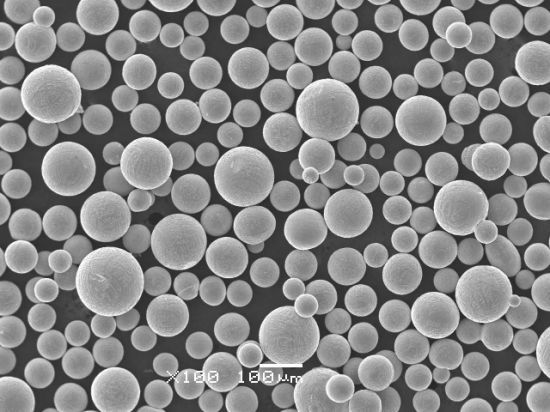
A dental AM powder is not defined by chemistry alone. It must spread evenly, pack consistently, respond predictably to laser energy, and maintain low contamination through handling and recycling. In that sense, 구형 분말의 형태 is not a cosmetic feature; it is a core processing requirement for reliable dental builds.
How it differs from neighboring alloy options
Compared with titanium alloys, CoCrMo is heavier but significantly stiffer. Compared with 316L stainless steel, it is more application-specific for rigid dental frameworks and generally offers a different wear and hardness profile. Compared with nickel-based superalloys, it is not meant for extreme high-temperature service but is far better aligned with oral-environment corrosion resistance and fine dental geometries.
In dental metal 3D printing, the alloy chemistry matters, but powder behavior often determines whether a restoration fits on the first try.
화학 성분
The chemistry of CoCrMo powder for dental additive manufacturing generally follows the established cobalt-28 chromium-6 molybdenum alloy family, although exact limits vary by supplier, internal specification, and the intended process route. Some grades are tailored specifically for dental laser powder bed fusion, while others are adapted from broader biomedical or wear-resistant cobalt alloy standards. In all cases, metallurgical performance depends on both nominal composition and the way the powder is atomized, classified, and handled.
| 요소 | Typical Content (wt%) | Typical Range or Limit (wt%) | 야금학적 역할 | Relevance to Dental AM |
|---|---|---|---|---|
| 코발트 (Co) | 잔액 | 잔액 | Base matrix, high-temperature strength, wear support | Provides the structural foundation and high modulus |
| 크롬(Cr) | 27.0–30.0 | 26.0–30.0 | Forms passive oxide film, improves oxidation and corrosion resistance | Helps parts resist saliva, cleaning agents, and food-acid exposure |
| 몰리브덴(Mo) | 5.0–7.0 | 5.0–7.0 | Solid-solution strengthening, pitting resistance | Supports strength and localized corrosion resistance |
| 탄소(C) | 0.02–0.25 | Often controlled below 0.35 max | Influences carbide formation, hardness, and wear behavior | Affects hardness-ductility balance and finishing response |
| 실리콘(Si) | 0.2–1.0 | Usually 1.0 max | Deoxidation and melt process support | Helps maintain melt cleanliness during powder production |
| 망간(Mn) | 0.1–1.0 | Usually 1.0 max | Deoxidation and alloy processing support | Contributes to chemistry control and consistency |
| 철(Fe) | 0.1–0.75 | Commonly 0.75 max | Residual element to be controlled | Excess can alter corrosion-focused alloy behavior |
| 니켈(Ni) | 추적 | Often limited to 0.5 max | Residual element control | Managed for chemistry stability and end-use consistency |
| Phosphorus / Sulfur | 추적 | Very low, supplier specific | Impurity control | Lower levels support cleanliness and toughness |
Chromium as the corrosion-resistance driver
Chromium is the element most responsible for forming the passive surface film that makes CoCrMo effective in the oral environment. It allows the alloy to resist many of the wet, chloride-containing, and mildly acidic conditions that restorations see over time. This is one reason cobalt-chromium-molybdenum alloys are frequently discussed alongside the ASTM F75 cobalt alloy standard in biomedical materials contexts, even when a specific powder lot is qualified under a supplier’s own AM production specification.
Molybdenum and the stability of thin printed structures
Molybdenum contributes more than a simple strength increase. It helps improve resistance to localized corrosion and supports the alloy’s response in thin sections where dental frameworks concentrate load. For additive manufacturing, that matters because bridges, clasps, and bars often rely on narrow geometries rather than heavy bulk sections.
Carbon control and carbide behavior
Carbon deserves special attention because it influences carbide formation, which in turn affects hardness, abrasion resistance, and ductility. A higher carbide fraction can improve wear behavior, but too much carbide can reduce elongation and make delicate structures less forgiving during finishing or adjustment. This is why powder buyers should view carbon limits together with heat-treatment strategy rather than as an isolated number.
Residuals and powder cleanliness in CoCrMo powder for dental additive manufacturing
Residual elements are kept low to protect consistency, but oxygen is often the most operationally important non-primary variable in AM powder. Elevated oxygen can affect surface chemistry, flow, and melt-pool response over multiple reuse cycles. For dental production, 분말의 청정도 is therefore part of process capability, not just a certificate entry.
물리적 및 기계적 특성
CoCrMo powder for dental additive manufacturing is valued because it produces parts with high stiffness, strong tensile performance, good wear behavior, and stable corrosion resistance after proper processing. Actual properties depend on build orientation, laser parameter set, machine platform, support strategy, heat treatment, and final finishing operations. Even so, typical ranges are consistent enough to explain why the alloy remains a reference material for printed dental frameworks.
| 속성 | 일반 값 | 단위 | Typical Test Standard / Basis |
|---|---|---|---|
| 밀도 | 8.2–8.5 | g/cm³ | 대표적인 합금 범위 |
| 솔리더스 온도 | 1,280–1,350 | °C | 대표적인 합금 범위 |
| 액화 온도 | 1,350–1,450 | °C | 대표적인 합금 범위 |
| 궁극의 인장 강도 | 900–1,350 | MPa | Printed and heat-treated typical range |
| 수율 강도 | 600–1,000 | MPa | Printed and heat-treated typical range |
| 휴식 시 신장 | 3–12 | % | Build and heat-treatment dependent |
| 경도 | 300–450 | HV | Typical finished range |
| 탄성 계수 | 190–230 | GPa | Typical cobalt alloy range |
| 열 전도성 | 12–18 | W/m-K | 일반적인 실온 범위 |
Why high modulus matters in dental frameworks
For many dental substructures, rigidity is at least as important as ultimate strength. A bridge or removable partial denture component that flexes too much may create fit issues or functional instability even if it does not fracture. This is why high rigidity remains one of the strongest reasons to choose CoCrMo over lighter alloys for thin, load-bearing designs.
Hardness, wear response, and polishing
CoCrMo typically reaches a hardness level that supports wear resistance and edge retention in functional contact zones. That advantage comes with a trade-off: grinding, support removal, and polishing must be controlled carefully because the material is less forgiving than softer alloys. In skilled dental production, however, this hardness can help restorations maintain geometry through finishing operations.
Thermal behavior during laser processing
The alloy’s thermal conductivity is moderate relative to copper-rich materials and lower than what would be expected from highly conductive heat-transfer alloys. During LPBF, that means scan strategy, hatch spacing, contour exposure, and support placement all matter for residual stress and distortion control. Uniform powder layers are especially important because dental geometries are fine-featured and can amplify local heat imbalance.
Why property data must be interpreted carefully
Published mechanical values often come from standard test coupons rather than actual restorations. A tensile bar cools differently from a multi-unit bridge or a fine removable partial denture framework, and that affects microstructure and residual stress. For purchasing and validation, the better question is not only what the coupon achieves, but whether the printed dental geometry meets fit, deflection, and post-processing requirements under the user’s qualified workflow.
사양 및 제공 등급
In procurement, the alloy name CoCrMo is only the beginning. A useful powder specification also defines particle size distribution, morphology, apparent density, tap density, Hall flow, oxygen content, and the intended AM process route. Dental LPBF generally favors narrower, finer particle cuts than directed energy deposition or laser cladding because restorations require thin layers, clean contouring, and accurate reproduction of small details.
| 성적 / 학용품 신청서 | Typical PSD (µm) | 겉보기 밀도(g/cm³) | Tap Density (g/cm³) | Hall Flow (s/50 g) | 산소 함량 | Sphericity / Standards Cross-Reference |
|---|---|---|---|---|---|---|
| Ultra-Fine Dental LPBF | 10-30 | 4.2–4.8 | 4.8–5.5 | 13–20 | Low, product specific | Very high; supplier dental AM grade |
| Standard Dental LPBF | 15-45 | 4.3–4.9 | 4.9–5.6 | 12–19 | Low, product specific | High; common for crowns and frameworks |
| General Fine AM Grade | 15-53 | 4.2–4.8 | 4.8–5.5 | 13–20 | Low, product specific | High; broadly suitable for LPBF |
| DED / 클래딩 등급 | 45-105 | 4.5–5.2 | 5.1–5.9 | 11–17 | Product specific | High; generally too coarse for dental detail |
| Coarse Engineering Grade | 53-150 | 4.6–5.3 | 5.2–6.0 | 10–16 | Product specific | Good; non-dental bulk AM use |
| Cross-Reference Grade Set | Product specific | Test method based | Test method based | Test method based | Product specific | May align with ASTM, ISO, GB, or DIN references |
Particle size distribution for CoCrMo powder for dental additive manufacturing
Fine cuts such as 10–30 µm and 15–45 µm are common because they support thin recoating layers and better detail resolution on margins, connectors, and lattice-like understructures. Broader size windows may still print well on certain machines, but they often trade surface quality or contour sharpness for easier powder handling. In a dental context, the preferred range is usually driven by the validated machine parameter set rather than by a universal rule.
Standards, terminology, and cross-reference practice
Most users combine chemistry references, powder test methods, and AM terminology when qualifying a powder for production. Process language is commonly aligned with the ISO/ASTM 52900 적층 제조 용어, while chemistry and mechanical benchmarks may be compared against medical or dental alloy precedents. For this reason, one purchase specification may contain a mix of supplier limits, international test methods, and internal laboratory acceptance criteria.
Flowability and packing metrics
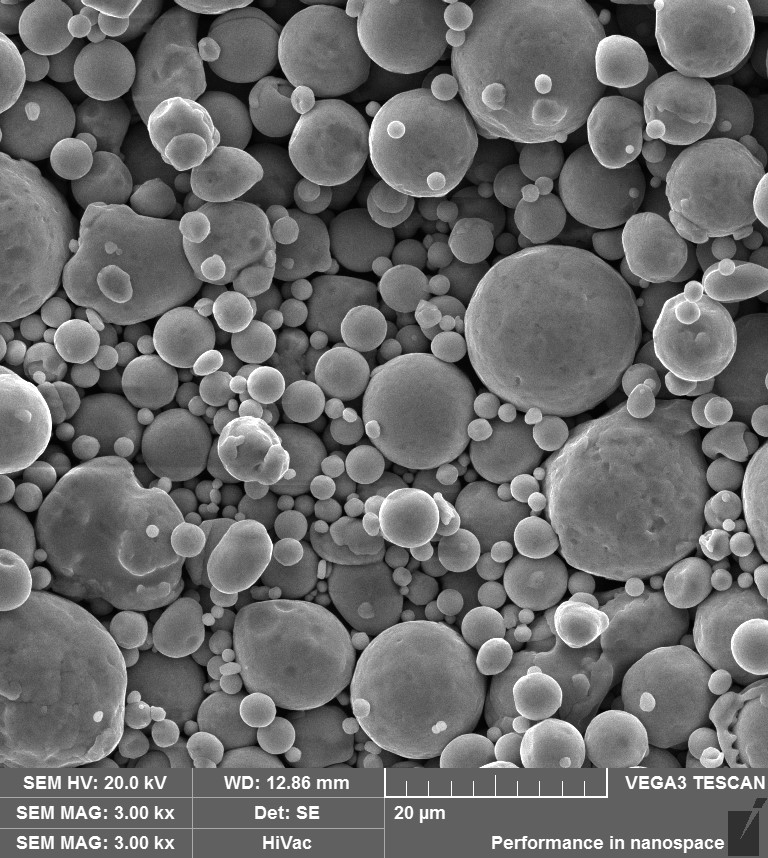
Apparent density, tap density, and Hall flow are indirect but useful indicators of whether a powder will spread consistently and fill the build area uniformly. A powder can meet chemistry targets and still perform poorly if it contains excessive satellites, wide size variation, or surface oxidation. In fine dental builds, a recoating defect that would be minor on a large industrial part can become critical on a thin coping or clasp.
Available grades in a broader AM materials portfolio
Suppliers that support multiple alloy families usually position CoCrMo dental grades alongside titanium, stainless, and specialty cobalt powders rather than as a stand-alone offering. Buyers comparing titanium powder selections 또는 iron-based spherical powders should note that dental CoCrMo generally demands tighter control over fine-detail build behavior than many general engineering powders.
제조 프로세스
The production route used for CoCrMo powder has a direct effect on particle shape, internal porosity, oxygen pickup, surface satellites, and lot-to-lot consistency. Gas atomization is the dominant industrial route for most commercial dental AM powder, but PREP, VIGA, and EIGA are also relevant where premium cleanliness or morphology is required. The best process is not simply the most advanced process name; it is the route that delivers the right balance of quality, output, and cost for the user’s validated application.
| 프로세스 | 구형성 | Oxygen Pickup Risk | PSD 제어 | 처리량 | 상대적 비용 | Typical Fit for Dental CoCrMo |
|---|---|---|---|---|---|---|
| 가스 분무(GA) | 높음 | Low with inert atmosphere | 좋음 ~ 매우 좋음 | 높음 | 보통 | Mainstream route for dental LPBF powder |
| 준비 | 매우 높음 | 낮음 | 보통 | 낮음에서 보통 | 높음 | Premium route for very spherical powder |
| VIGA | 높음 | Very low to low | 좋음 ~ 매우 좋음 | 보통 | 보통에서 높음 | Clean melt handling for precision AM powder |
| EIGA | 높음 ~ 매우 높음 | 매우 낮음 | 양호 | 보통 | 높음 | Specialty route for high-cleanliness feedstock |
| 물 분무 | 낮음에서 보통 | 더 높음 | 보통 | 높음 | 낮음 | Usually unsuitable for fine dental LPBF work |
Gas atomization for mainstream AM powder production
In gas atomization, a molten alloy stream is broken into droplets by high-velocity inert gas. Those droplets solidify into mostly spherical particles that are later sieved or air-classified into the desired size range. For dental LPBF, GA remains the most practical route because it combines industrial throughput with good control over morphology and a cost level that supports routine production.
PREP and premium spherical particle quality
Plasma Rotating Electrode Process begins with a rotating alloy electrode whose tip is melted by plasma, causing droplets to detach and solidify into highly spherical powder particles. PREP powders often show low satellite content and excellent flowability, which can be advantageous in precision AM applications. The trade-off is lower throughput and a higher production cost compared with mainstream gas atomization.
VIGA and EIGA for cleaner process control
Vacuum induction gas atomization and electrode induction gas atomization are relevant when atmosphere control and contamination management are especially important. These routes can produce very clean AM powders with strong lot consistency if upstream melting and handling are well controlled. For users who monitor chemistry drift closely over repeated print cycles, this cleaner processing window can be a meaningful advantage.
Post-atomization handling matters too
No powder process should be judged only by its atomization label. Sieving, blending, packaging, storage atmosphere, and handling discipline all affect final performance. As explained in NIST research on AM powder characterization, size distribution, morphology, and chemistry must be interpreted together because each influences how the powder behaves during spreading and melting.
산업별 적용 사례
Although the phrase CoCrMo powder for dental additive manufacturing points first to dentistry, the alloy family also connects to medical engineering, wear-related components, and specialized industrial development. The dental grade itself is usually optimized for high-detail LPBF rather than for large structural parts, but the material’s combination of hardness, stiffness, and corrosion resistance gives it relevance beyond one market segment.
Dental restorations and prosthetic frameworks
This is the primary use case. The powder is commonly used to print crowns, copings, bridges, bars, and removable partial denture frameworks where repeatable fit and stable thin sections are essential. Digital nesting allows many patient-specific parts to be built in one job, reducing several variables associated with traditional casting workflows.
Medical and biomedical engineering
The broader CoCrMo alloy family has deep roots in biomedical materials science because of its corrosion resistance and mechanical reliability. Even when a given powder lot is intended specifically for dental production rather than for orthopedic implants, the metallurgy is familiar to medical device engineers. That shared background supports the alloy’s reputation as a robust metal system for small, demanding parts.
Tooling, wear parts, and research builds
Outside dental production, fine cobalt alloy powders may be used for small wear components, specialty fixtures, or R&D parts that need strong edge retention and corrosion resistance. Dental-grade powder is not always the lowest-cost option for these uses, but its fine PSD and stable spreading behavior can be useful in highly detailed builds. In portfolios that also include nickel superalloy feedstocks, CoCrMo typically occupies the wear-and-rigidity niche rather than the extreme-heat niche.
Aerospace, energy, and industrial evaluation
The dental grade is not the standard material for mainstream aerospace structures, automotive brackets, or oil and gas bulk hardware. Even so, the alloy can be relevant in specialized evaluation programs where fine geometry, wear resistance, or corrosion behavior matters more than low mass. This is why the material appears in multi-sector additive manufacturing portfolios that serve medical, aerospace, and industrial customers through a common powder-processing base.
대체 소재와의 비교
Material selection in dental AM is rarely driven by a single property. Engineers must consider modulus, density, corrosion resistance, hardness, printer compatibility, and total workflow efficiency from build preparation through finishing. CoCrMo powder for dental additive manufacturing remains a benchmark for rigid frameworks, but alternatives may be better in lightweight, lower-cost, or more general-purpose scenarios.
| 재질 | 밀도(g/cm³) | 일반적인 체력 수준 | Printability in LPBF | 내식성 | 상대적 비용 | Typical Best-Fit Use |
|---|---|---|---|---|---|---|
| CoCrMo powder for dental additive manufacturing | 8.2–8.5 | 높음 | 매우 좋음 | 높음 | 보통 | Crowns, bridges, bars, RPD frameworks |
| Ti-6Al-4V 분말 | 4.4–4.5 | 높음 | 양호 | 우수 | 높음 | Lightweight biomedical and specialized dental parts |
| 316L 스테인리스 스틸 파우더 | 7.9–8.0 | 보통 | 우수 | 매우 좋음 | Moderate to low | General prototyping and corrosion-resistant components |
| CoCrW dental alloy powder | 8.3–8.7 | 높음 | 좋음 ~ 매우 좋음 | 높음 | 보통에서 높음 | Alternative rigid dental framework applications |
| Ni-based superalloy powder | 8.1–8.5 | High, especially at temperature | 양호 | 높음 | 높음 | Heat-resistant industrial parts rather than routine dental work |
CoCrMo versus titanium alloys
Titanium’s most obvious advantage is lower density, and in some medical contexts that makes it highly attractive. However, its lower modulus means it is less stiff than CoCrMo, which can matter when thin framework deflection must be minimized. For restorations where rigidity and dimensional control are priorities, 치수 안정성 often favors CoCrMo.
CoCrMo versus stainless steel
316L is well known for easy printability and broad availability, but it is a more general engineering material than a dental-specific framework alloy. CoCrMo usually offers a more suitable balance of hardness, wear performance, and long-term rigidity for demanding dental substructures. Stainless steel can still be useful in prototyping or lower-demand applications where cost sensitivity dominates.
CoCrMo versus other cobalt-based powders
Not all cobalt alloys are interchangeable. Changes in tungsten, carbon, or residual-element control can shift density, hardness, ductility, and finishing behavior. That is why material comparison should be based on certified powder data, print parameters, and final-part requirements rather than on the generic label “cobalt-chrome.”
당사
Shanghai Truer Technology Co., Ltd was established in 2009 and created its additive manufacturing business in 2019. Operating am-printing.com, the company describes its work as integrating 3D printing powder-making equipment and services with spherical metal powders to support engineering applications of additive manufacturing. Its published powder portfolio includes TiNi, TiTa, TiAl, TiNbZr, CoCrMo, plus nickel-based, cobalt-based, titanium-based, copper-based, aluminum-based, and stainless steel powders, while its equipment and process scope includes SEBM systems, PREP powder-making equipment, gas atomization, SLM, SEBM, DED, laser cladding, powder metallurgy, MIM, HIP, cold and hot spraying, welding, and coating. The company also states that it operates a joint innovation center for metal 3D printing with laboratories and experts and serves sectors including 3C electronics, hand tools, remote control cars, medical, aerospace, and nuclear power; those capabilities are outlined across its industrial application overview and its company background profile.
자주 묻는 질문
Q1. Is CoCrMo powder for dental additive manufacturing biocompatible enough for routine restorations?
The alloy family has a long history in dental and biomedical use, but suitability depends on the exact grade, impurity control, and the qualification route used for the finished restoration. Buyers should evaluate powder chemistry, cleanliness, traceability, and the validated build-and-post-process workflow together. Final part compliance is determined by the entire manufacturing chain, not by the alloy name alone.
Q2. What particle size is usually best for CoCrMo powder for dental additive manufacturing?
For laser powder bed fusion, fine distributions such as 10–30 µm or 15–45 µm are common because they support thin layers and improved detail resolution. The optimal cut still depends on the machine optics, layer thickness, recoater system, and validated parameters. A narrower PSD is often preferred for small and intricate dental geometries.
Q3. Why is CoCrMo powder often chosen instead of cast cobalt-chromium alloy for digital dental workflows?
Additive manufacturing removes several variability sources associated with casting, including pattern distortion, investment behavior, and casting shrinkage uncertainty. It also allows multiple patient-specific components to be produced in one digitally controlled build job. For laboratories focused on repeatability, that can improve fit consistency and reduce remakes.
Q4. Can CoCrMo powder for dental additive manufacturing be reused after printing?
Yes, but reuse should be governed by a controlled powder-management protocol. Typical practice includes sieving, removal of condensate or spatter contamination, monitoring oxygen trends, and blending reclaimed powder with virgin powder within validated limits. Uncontrolled reuse can gradually shift flowability and print consistency, especially in fine dental builds.
Q5. How does CoCrMo compare with titanium for removable partial denture frameworks?
CoCrMo is heavier than titanium, but it also provides higher stiffness, which is often beneficial in thin framework sections and clasped designs. Titanium may be attractive where lower mass is a priority, yet CoCrMo remains a leading option when rigidity and shape retention matter most. The final choice should follow the required design behavior, machine capability, and finishing workflow.
Q6. What should buyers verify before ordering CoCrMo powder for dental additive manufacturing?
They should check nominal chemistry, particle size distribution, oxygen content, apparent density, tap density, Hall flow, morphology, packaging condition, and the intended additive process route. It is also important to confirm whether the grade is qualified specifically for dental LPBF rather than offered only as a general industrial cobalt alloy powder. Batch consistency, documentation, and machine compatibility are usually as important as the nominal alloy designation.