간단한 답변
CoCrNi medium entropy alloy powder is a cobalt-chromium-nickel feedstock engineered for metal additive manufacturing processes such as laser powder bed fusion, electron beam melting, and directed energy deposition. It is chosen for AM parts when designers need an unusual combination of high strength, ductility, corrosion resistance, and stable behavior from room temperature down to cryogenic service. Compared with many conventional AM powders, it offers a broader strength-toughness window, making it especially relevant for demanding structural components, advanced tooling, and research-driven qualification programs.
What Is CoCrNi medium entropy alloy powder
CoCrNi medium entropy alloy powder belongs to the broader family of medium-entropy alloy materials: multi-principal-element alloys formulated with fewer major elements than classic five-element high-entropy systems, but still designed to exploit compositional complexity and severe lattice distortion. In practice, the best-known CoCrNi compositions are near-equiatomic or slightly adjusted around the cobalt, chromium, and nickel corners of the ternary system, and they are usually processed as a single-phase FCC solid solution after appropriate melting and atomization.
In additive manufacturing, that matters because the alloy is not simply a variant of CoCrMo or a nickel superalloy with a different label. CoCrNi was developed to deliver a more favorable balance of strength, ductility, strain hardening, and fracture resistance than many conventional structural alloys, especially under low-temperature loading. Research on CrCoNi has repeatedly highlighted its exceptional damage tolerance and the way deformation twins and stacking-fault-mediated mechanisms support both strength and elongation.
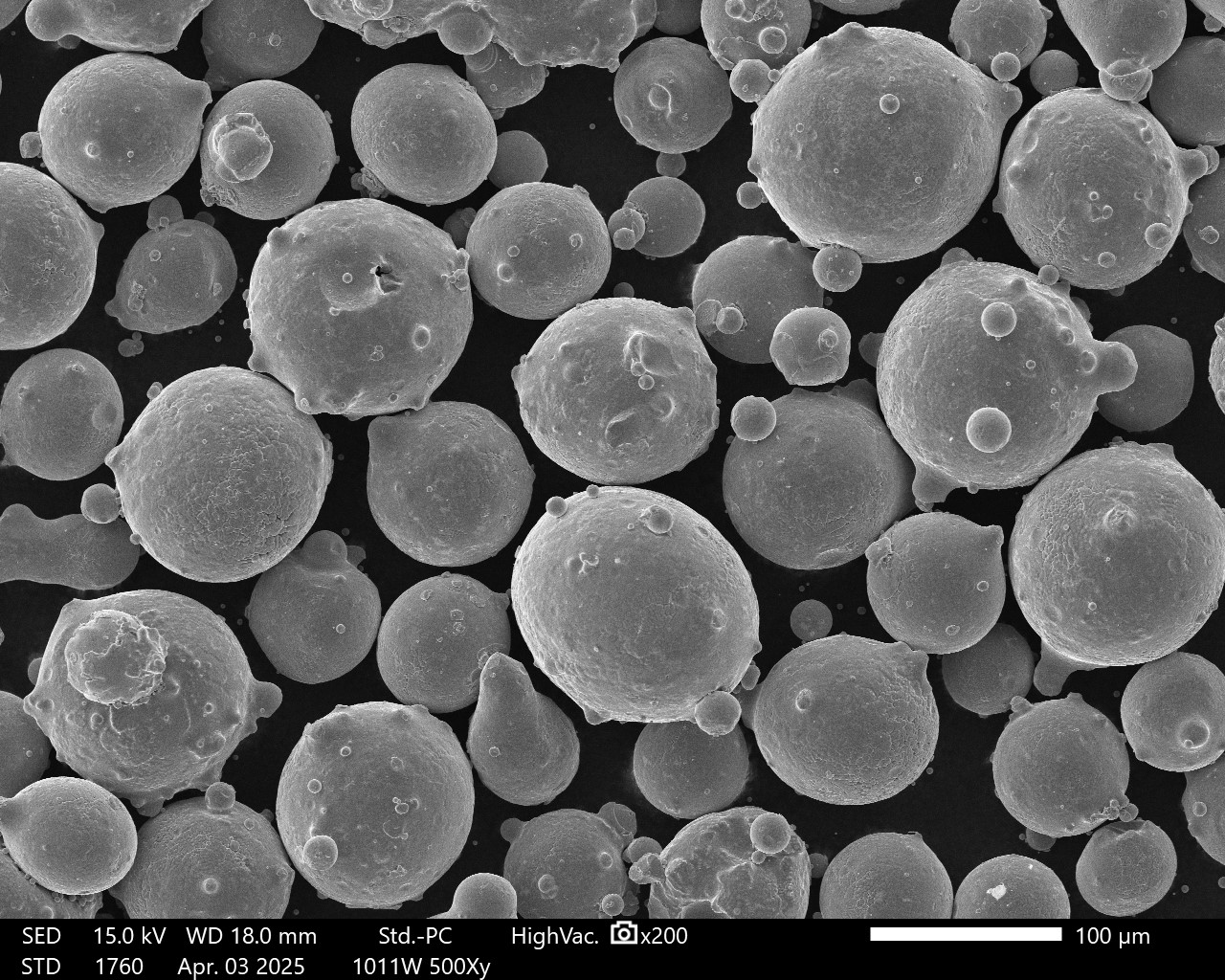
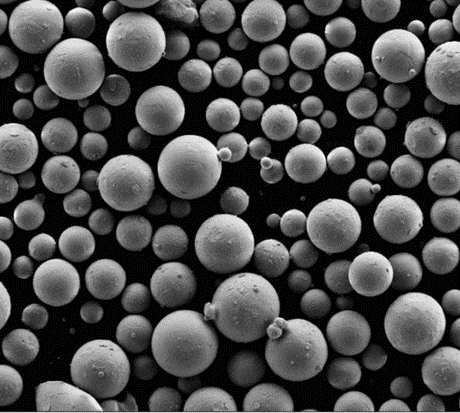
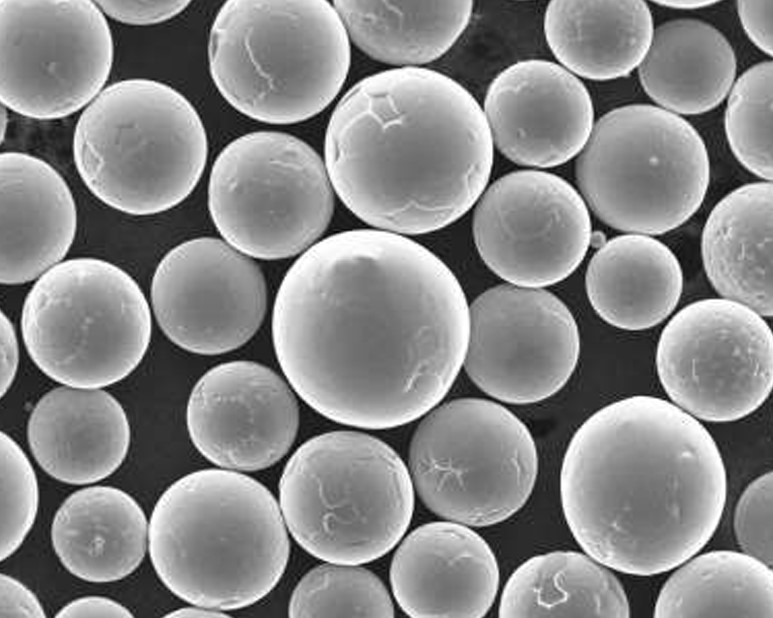
A second reason the material attracts AM attention is process compatibility. The alloy is commonly prepared as gas-atomized feedstock for powder-bed systems, and published AM studies have used gas-atomized or vacuum inert gas atomized CrCoNi powders for laser-based processing. That makes CoCrNi relevant not only as a laboratory alloy, but as a realistic single-phase FCC structure feedstock for industrial powder supply chains that already handle spherical metal powders.
For readers comparing entropy-alloy families, the broader advanced HEA powder range helps place CoCrNi within the transition from exploratory alloy design to application-oriented AM materials. The terminology used across these alloy classes aligns with the ISO/ASTM 52900 vocabulary for additive manufacturing, which defines the common language for AM processes and feedstocks.
CoCrNi is widely regarded as a model medium-entropy alloy because it combines concentrated solid-solution chemistry with unusually strong work hardening and damage tolerance.
화학 성분
Most CoCrNi medium entropy alloy powder sold for AM evaluation is based on a near-equiatomic chemistry. Suppliers may control composition in either atomic percent or weight percent, but for powder procurement and certificate review, wt% is the usual commercial language. Minor variation is normal because atomization yield, raw material purity, and customer requirements all affect how tightly cobalt, chromium, and nickel are centered around the target.
| 요소 | 일반적인 구성(wt%) | Typical Control Range (wt%) | Metallurgical Role in CoCrNi Medium Entropy Alloy Powder |
|---|---|---|---|
| 코발트 (Co) | 33.0 | 31.5–34.5 | Contributes strength, thermal stability, and helps support the FCC matrix with strong work-hardening behavior |
| 크롬(Cr) | 33.0 | 31.5–34.5 | Improves oxidation and corrosion resistance through passive film formation; also affects stacking-fault behavior |
| 니켈(Ni) | 33.0 | 31.5–34.5 | Stabilizes the FCC solid solution, supports ductility, and improves processability in AM thermal cycles |
| 철(Fe) | 0.20 | ≤0.50 | Usually a residual impurity from feedstock or melting practice; low levels are tolerated but tightly controlled |
| 실리콘(Si) | 0.10 | ≤0.30 | Residual deoxidation-related element; excess can alter solidification behavior and secondary phase tendency |
| 탄소(C) | 0.02 | ≤0.05 | Kept low to minimize carbide formation and preserve ductility and single-phase stability |
| 산소(O) | 0.04 | ≤0.08 | Controlled as an interstitial impurity because high oxygen can change flowability, inclusions, and printed toughness |
| 질소(N) | 0.01 | ≤0.03 | Usually residual unless intentionally alloyed; small additions can strengthen, but uncontrolled pickup is undesirable |
The three principal elements each do more than provide nominal composition. Chromium drives passivation, cobalt supports strength and thermal robustness, and nickel stabilizes ductility in the FCC matrix. The alloy’s attractive property set is tied not just to its chemistry, but to how that chemistry influences stacking-fault energy, deformation twinning, and local chemical order.
For powder buyers, impurity control matters almost as much as nominal Co-Cr-Ni balance. Oxygen, carbon, and nitrogen influence not only corrosion behavior but also melt pool response, spatter susceptibility, and final defect population in powder-bed fusion. Studies on gas-atomized CoCrNi AM feedstock have explicitly discussed oxygen content because interstitials can shift both strength and ductility.
This is one area where CoCrNi powder differs from many off-the-shelf cobalt alloys. A conventional cobalt alloy powder lineup may emphasize wear and biomedical service, while CoCrNi is more often specified for its structural damage tolerance and research-grade compositional precision.
물리적 및 기계적 특성
The exact physical and mechanical performance of CoCrNi medium entropy alloy powder depends on two separate states: the powder itself and the printed or consolidated material. Powder users care about morphology, oxygen, flow, and packing; end users care about density after printing, strength, elongation, hardness, and corrosion resistance. For this reason, the table below lists representative values for fully dense AM-built or wrought-equivalent CoCrNi material, alongside common physical constants used during process selection.
| 속성 | 일반 값 | 단위 | Test Standard / Reference Basis |
|---|---|---|---|
| 밀도 | 8.2–8.5 | g/cm³ | Typical literature range for near-equiatomic CoCrNi |
| Solidus–Liquidus / Melting Range | 1320–1380 | °C | Typical calculated / reported processing range |
| 궁극의 인장 강도 | 900–1100 | MPa | Representative room-temperature literature values |
| 항복 강도(0.2%) | 300–550 | MPa | Representative room-temperature literature values |
| 휴식 시 신장 | 40–70 | % | Representative room-temperature literature values |
| 비커스 경도 | 180–260 | HV | Typical annealed or as-built equivalent range |
| 탄성 계수 | 210–230 | GPa | Reported elastic-property range for CrCoNi systems |
| 열 전도성 | 10–16 | W/m-K | Typical engineering estimate for concentrated FCC alloy |
| Printed Relative Density | >99.0 | % | Typical optimized PBF process outcome |
| Fracture Toughness Trend | 매우 높음 | qualitative | Strongly temperature- and microstructure-dependent |
At room temperature, equiatomic CrCoNi has been reported with tensile strengths near 1 GPa and failure strains around 70% in some benchmark studies, while yield strength varies widely with grain size, thermomechanical history, and AM post-processing. That variability is important: CoCrNi is not a precipitation-hardened alloy with one fixed datasheet number, but a microstructure-sensitive system whose properties can be tuned over a broad window.
The most distinctive feature is cryogenic toughness. Published work has shown that strength, ductility, and fracture toughness can all improve as temperature decreases, a rare combination among structural alloys. That is why CoCrNi draws attention for low-temperature structures, impact-critical parts, and damage-tolerant AM demonstrators.
Hardness data in the literature are likewise microstructure-dependent. Annealed CoCrNi can sit near the lower end of the hardness range, while defect-engineered, nanotwinned, or heterostructured variants can increase significantly. AM routes that retain fine cells, twins, or oxygen-assisted dispersoid effects may shift both strength and hardness upward, sometimes at the expense of maximum ductility if impurity levels rise too far.
For practical AM process development, thermal conductivity and modulus are usually treated as engineering inputs rather than universal constants. Compared with copper alloys, CoCrNi conducts heat modestly; compared with titanium alloys, it is denser and usually stiffer. That combination generally favors stable melt pool retention but also means higher part mass than lightweight systems such as the titanium powder family for AM.
사양 및 제공 등급
Commercial CoCrNi medium entropy alloy powder is usually ordered by particle size distribution, morphology, chemistry, and impurity limits rather than by a long-established aerospace alloy designation. Unlike 316L, Ti-6Al-4V, or IN718, CoCrNi does not yet have one dominant, universally adopted AM purchasing standard. Instead, suppliers typically use internal grade codes backed by chemical certificates, PSD reports, and powder characterization data referenced to common AM powder methods such as the ASTM F3049 powder characterization guide, ASTM B212, ASTM B213, and ASTM B527.
The most common grades are aligned with process windows: fine PSD for laser powder bed fusion, coarser PSD for electron beam systems, and tailored fractions for DED, cladding, or thermal spray. Buyers should request not only nominal PSD but also D10, D50, D90, apparent density, tap density, Hall flow, oxygen, and image-based sphericity. For qualification work, it is also useful to ask whether powder is virgin, blended, or recycled-lot compatible under the supplier’s internal control plan.
| Supply Grade | 일반적인 PSD 범위 | 겉보기 밀도 | 탭 밀도 | 홀 흐름 | 산소 함량 | 구형도 / 형태 | 일반적인 표준 상호 참조 |
|---|---|---|---|---|---|---|---|
| CCN-15/53 | 15-53 µm | 4.3–4.8 g/cm³ | 5.0–5.6 g/cm³ | 14–20 s/50 g | ≤800 ppm | 높고, 대체로 구형이다 | Used with ASTM F3049 guidance; test methods often ASTM B212/B213/B527 |
| CCN-20/63 | 20–63 µm | 4.4–4.9 g/cm³ | 5.1–5.7 g/cm³ | 15–21 s/50 g | ≤800 ppm | High, low-satellite spherical powder | Suitable for LPBF and hybrid AM qualification |
| CCN-45/105 | 45-105 µm | 4.5-5.0g/cm³ | 5.2–5.8 g/cm³ | 13–18 s/50 g | ≤700 ppm | 구형이며, 분포 범위가 더 넓은 | Common for EBM, DED, and cladding feedstock studies |
| CCN-53/150 | 53-150 µm | 4.6–5.1 g/cm³ | 5.3–5.9 g/cm³ | 12–17 s/50 g | ≤700 ppm | Spherical, coarse cut | Typical for directed energy or spray-style applications |
Because there is no single dominant AMS or ASTM alloy-grade number for CoCrNi powder, procurement documents often use a hybrid format: proprietary composition window plus AM powder test standards. A well-written purchase specification might therefore reference chemistry in wt%, morphology requirement, oxygen maximum, and test methods for apparent density, flow, and tap density, rather than claiming equivalence to an unrelated legacy alloy standard. That approach is more technically honest and reduces qualification confusion.
Many buyers also ask whether CoCrNi can be cross-compared with established cobalt, nickel, or stainless AM powders during screening. It can, but only as a development benchmark, not as a direct substitution. For broader portfolio context, the 산업용 적층 제조(AM) 응용 분야 개요 is useful because it shows how powder specifications often change with part geometry, machine type, and end-use sector.
제조 프로세스
CoCrNi powder for additive manufacturing is most commonly produced by inert gas atomization or vacuum-based atomization routes, with PREP used when very high sphericity and low contamination are prioritized over cost and yield. The best route depends on whether the buyer values large-volume throughput, narrow impurity control, or premium morphology for the most demanding powder-bed applications. Published AM studies on CrCoNi have specifically reported gas atomization and vacuum inert gas atomization as successful routes for producing spherical feedstock.
| Process Route | Typical Feed Form | 구형성 | Oxygen Pickup Risk | PSD 제어 | 처리량 | 상대적 비용 | 가장 적합한 사용 사례 |
|---|---|---|---|---|---|---|---|
| GA (Gas Atomization) | Melted ingot / master alloy | 높음 | Medium | 양호 | 높음 | 보통 | General-purpose AM powder production |
| VIGA (Vacuum Inert Gas Atomization) | Vacuum-melted alloy | 높음 | 낮음~중간 | 좋음 ~ 매우 좋음 | Medium | 보통에서 높음 | Cleaner chemistry and lower contamination |
| EIGA (Electrode Induction Gas Atomization) | Bar / electrode feed | 매우 높음 | 낮음 | 매우 좋음 | Medium | 높음 | Reactive or high-purity spherical feedstock |
| PREP(플라즈마 회전 전극 공정) | Rotating electrode | 매우 높음 | 매우 낮음 | 보통 | 낮음~중간 | 높음 | Premium spherical powder with low satellites |
Gas-Atomized CoCrNi AM Powder
GA remains the default route for most CoCrNi development programs because it balances productivity and quality. A molten stream is disintegrated by high-pressure inert gas, producing predominantly spherical particles with manageable satellite content and commercially relevant yield. For LPBF and EBM, GA offers the best overall economics when chemistry control and post-sieving discipline are in place.
PREP for High-Cleanliness Spherical CoCrNi Powder
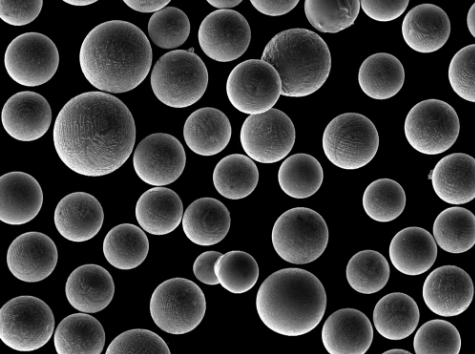
PREP starts from a rotating electrode melted by plasma, so the droplets separate from the parent material under highly controlled conditions. The result is often 구형 분말의 형태 with very low contamination and fewer satellites than many conventional atomization routes. The trade-off is lower throughput, coarser economics, and less flexibility when very fine cuts are required. These trade-offs are well understood across AM powder production even though PREP is more commonly associated with premium titanium and specialty alloys.
VIGA and EIGA Trade-Offs
VIGA adds vacuum melting discipline before inert-gas breakup, helping control dissolved gases and inclusions. EIGA is even more purity-oriented because it atomizes from a solid electrode feed, which can reduce crucible-related contamination. For CoCrNi, these routes are attractive when the program goal is research reproducibility, low interstitial content, or medical and aerospace traceability rather than minimum powder cost.
Across all routes, the critical powder attributes are morphology, chemistry consistency, and low impurity control. A beautiful PSD is not enough if oxygen rises during atomization, handling, or recycling. CoCrNi’s mechanical advantage depends on keeping the alloy close to its intended solid-solution state while minimizing inclusions and uncontrolled interstitial pickup.
For readers benchmarking atomized feedstocks across alloy families, the nickel powder catalog for additive manufacturing provides a useful contrast because nickel superalloys often prioritize high-temperature phase engineering, whereas CoCrNi prioritizes strength-ductility synergy and fracture tolerance.
산업별 적용 사례
Aerospace and Space Structures
CoCrNi medium entropy alloy powder is increasingly discussed for structural AM parts that must tolerate impact, cyclic loading, or low-temperature service. Its outstanding fracture resistance and strain-hardening response make it interesting for brackets, load-bearing test coupons, ductile joints, cryogenic hardware concepts, and advanced lattice structures where crack arrest is more important than absolute weight minimization. That said, it competes with titanium and nickel alloys rather than replacing them outright.
Medical and Surgical Technology
CoCrNi is not the same material as standard implant-grade CoCrMo, so medical use demands fresh qualification rather than assumption-based substitution. Still, its corrosion resistance, cobalt-nickel-chromium chemistry, and mechanical resilience make it relevant for exploratory orthopedic, instrument, and patient-specific device research where a highly damage-tolerant FCC alloy is desirable. Any medical deployment would need biocompatibility, corrosion, and regulatory validation at the printed-part level.
Oil, Gas, and Chemical Processing
The combination of corrosion resistance and high ductility makes CoCrNi attractive for valve trims, wear-sensitive fittings, low-temperature service components, and corrosion-mechanical research environments. In these sectors, the material’s value is less about being the hardest alloy available and more about resisting brittle failure in aggressive or cyclic conditions. Where chloride, sour, or low-temperature conditions dominate, that balance can matter more than headline strength.
Automotive, Motorsports, and Energy
In automotive and energy systems, CoCrNi powder is most realistic for premium, low-volume, or performance-critical parts rather than commodity mass production. Examples include high-durability fixtures, test hardware, cryogenic fluid components, AM heat-shield substructures, and parts that benefit from high absorbed energy before fracture. Because the alloy is relatively dense and cobalt-bearing, it is rarely the first choice for cost-sensitive lightweighting.
Tooling, Research Hardware, and Functionally Graded Concepts
Tooling and materials R&D are currently among the strongest use cases. CoCrNi prints are widely used to study microstructure control, defect tolerance, oxygen effects, heterostructures, and deformation mechanisms under AM thermal histories. That makes the powder relevant not only for end parts but also for calibration builds, repair studies, and multi-material experiments paired with steels, nickel alloys, or copper alloys.
대체 소재와의 비교
When engineers evaluate CoCrNi medium entropy alloy powder, the real question is seldom whether it is “better” than every other AM powder. The better question is which performance envelope matters most: low density, high-temperature creep, corrosion, biomedical familiarity, or damage tolerance. CoCrNi is strongest where strength, ductility, and crack resistance must coexist.
| 재질 | 밀도(g/cm³) | Typical Room-Temp Strength Profile | 인쇄 가능성 | 내식성 | Relative Powder Cost | Best-Known Advantage |
|---|---|---|---|---|---|---|
| CoCrNi Medium Entropy Alloy | 8.2–8.5 | High UTS with high elongation | Good after parameter development | 높음 | 높음 | Exceptional toughness and work hardening |
| CoCrMo | 8.3–8.5 | Moderate to high strength, lower ductility focus | 성인 | 매우 높음 | 높음 | Wear resistance and established medical familiarity |
| IN718 | 8.1–8.2 | High strength after heat treatment | Very mature | 양호 | 높음 | High-temperature capability and established aerospace qualification |
| Ti-6Al-4V | 4.4–4.5 | 높은 비강도 | Very mature | 높음 | 높음 | Low density and strong aerospace/medical adoption |
| 316L 스테인리스 스틸 | 7.9–8.0 | Moderate strength, high ductility | 우수 | 좋음 ~ 매우 좋음 | 보통 | Cost-effective, forgiving AM processing |
Compared with CoCrMo, CoCrNi usually offers a more research-driven structural profile, with stronger emphasis on ductility and fracture resistance than on classic wear-dominant performance. Compared with IN718, it does not offer the same precipitation-hardened high-temperature pedigree, but it can outperform in ambient-to-cryogenic toughness. Compared with Ti-6Al-4V, it sacrifices weight efficiency for higher density and often higher absolute ductility under suitable microstructures.
Against 316L, CoCrNi is the premium option when austenitic corrosion resistance alone is not enough and the design calls for a higher strength-toughness combination. That is why the alloy is best viewed as a specialized structural AM powder, not a general-purpose stainless replacement. A useful baseline for powder metrology in these comparisons is the NIST report on metal powder testing, which summarizes widely used methods for apparent density, flow, and tap density.
당사
Shanghai Truer Technology Co., Ltd., the company operating am-printing.com, was established in 2009 and created its additive manufacturing business in 2019. Based on the company information published in its corporate profile page, Truer works across metal AM powder making equipment and powder supply, including SEBM equipment, PREP powder making equipment, GA-related powder production, and spherical metal powders such as TiNi, TiTa, TiAl, TiNbZr, CoCrMo, and broader nickel-, cobalt-, titanium-, copper-, aluminum-, and stainless-based systems. The company states that it supports processes including SLM, SEBM, DED, laser cladding, PM, MIM, HIP, spraying, welding, and coating, and serves industries such as medical, aerospace, nuclear power, 3C electronics, hand tools, and remote-control vehicles.
자주 묻는 질문
Q1. Is CoCrNi medium entropy alloy powder the same as CoCrMo powder?
No. CoCrNi is a three-principal-element medium-entropy alloy focused on structural strength-ductility balance, while CoCrMo is a more established cobalt alloy family usually selected for wear resistance, corrosion performance, and biomedical familiarity. They may overlap in some applications, but they are not direct datasheet equivalents.
Q2. Can CoCrNi medium entropy alloy powder be used in laser powder bed fusion?
Yes. Published studies have reported gas-atomized and vacuum inert gas atomized CrCoNi powders processed by laser-based additive manufacturing. As with any emerging alloy, successful printing depends on parameter development, oxygen control, and post-build heat-treatment strategy rather than on chemistry alone.
Q3. What particle size is best for CoCrNi medium entropy alloy powder?
For LPBF, a fine spherical fraction such as 15–53 µm or 20–63 µm is typically preferred because it balances layer packing and flowability. Coarser fractions such as 45–105 µm are more common for EBM, DED, or cladding-style processes where feed behavior and beam interaction differ.
Q4. Why is CoCrNi often discussed for cryogenic applications?
Because CrCoNi has shown the unusual ability to increase strength while retaining or even improving ductility and fracture toughness as temperature drops. That combination is rare in structural alloys and is one of the main reasons the material stands out in advanced materials research.
Q5. Does CoCrNi medium entropy alloy powder have an established ASTM or AMS alloy grade number?
Not in the same mature sense as alloys like Ti-6Al-4V or IN718. Most commercial procurement today relies on supplier composition windows plus common AM powder characterization standards for chemistry, flow, density, and particle size rather than a single universally recognized legacy grade designation.
Q6. When should engineers choose CoCrNi medium entropy alloy powder instead of more common AM powders?
It is the right candidate when the design problem is governed by toughness, ductility, and damage tolerance rather than minimum cost or minimum density. In other words, if a component must survive demanding loading, complex geometry, and potentially low-temperature service, CoCrNi can justify evaluation even when more conventional powders remain the default starting point.