간단한 답변
hollow-free CM247LC powder is a nickel-based superalloy powder engineered to minimize internal voids inside individual particles, which matters because hollow particles can transfer gas porosity into additively manufactured parts. For metal AM, high-quality hollow-free feedstock improves powder packing, reduces the risk of trapped-gas defects, and supports more stable melting behavior in demanding turbine alloys such as CM247LC. It is most valuable where engineers need high-temperature capability and tighter powder-quality control than standard commodity feedstock can provide. (pmc.ncbi.nlm.nih.gov)
What Is hollow-free CM247LC powder
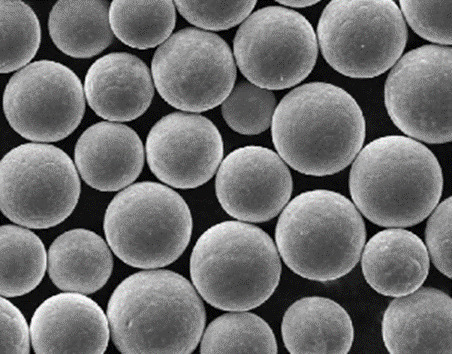
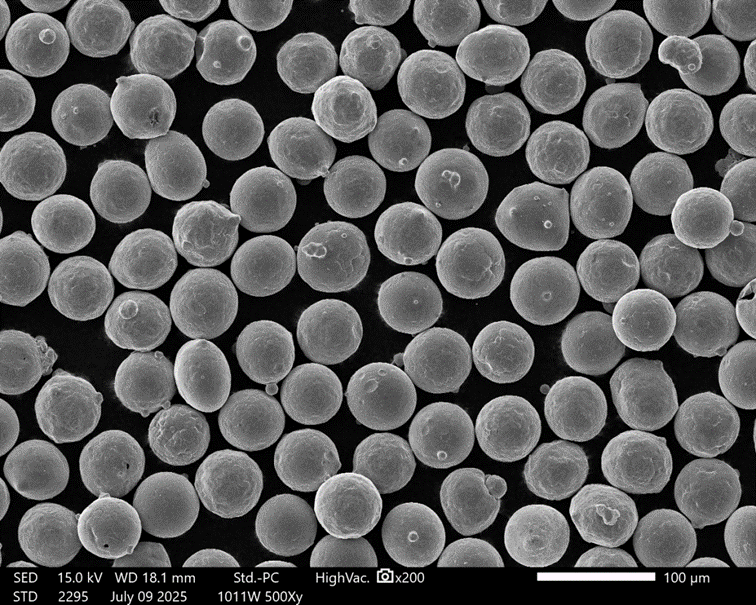
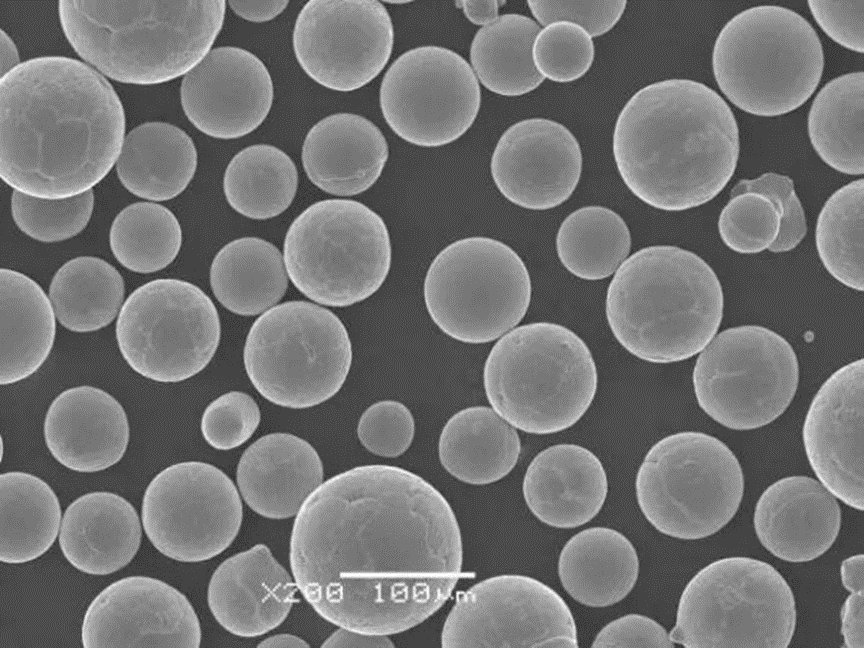
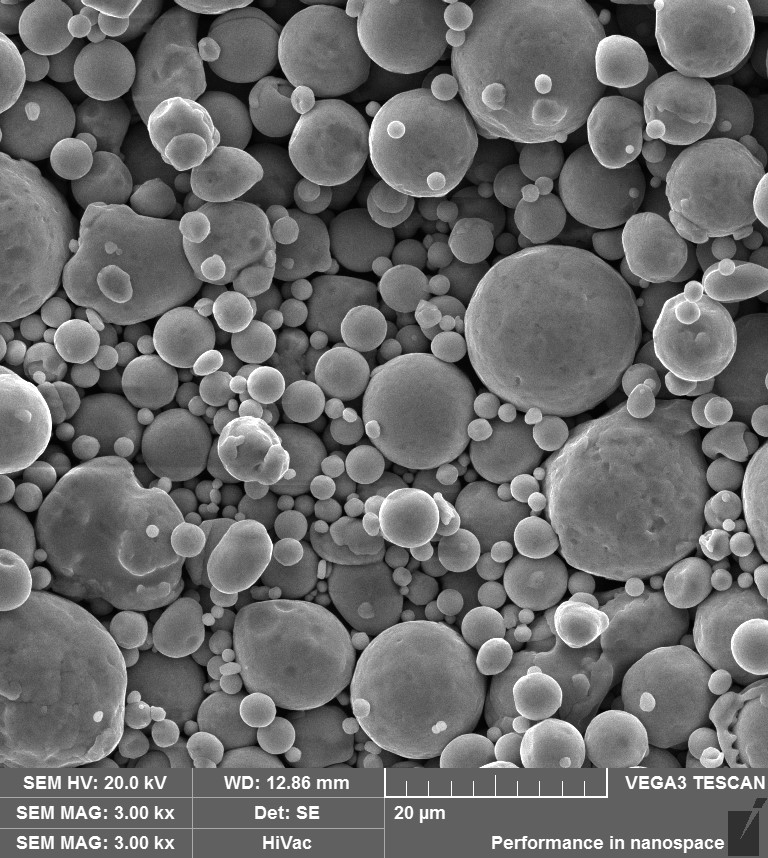
Hollow-free CM247LC powder is the powder form of CM247LC, a cast-derived nickel superalloy in the MAR-M247 family, produced and screened so that particles are highly spherical and have minimal internal porosity. In powder terminology, “hollow-free” does not imply absolute zero defects in every particle; it means the powder is manufactured and qualified to keep hollow-particle frequency as low as practicably possible for additive manufacturing, hot isostatic pressing, and other high-performance powder routes. (etheses.bham.ac.uk)
Why the “Hollow-Free” Descriptor Matters
For AM powders, particle shape is only part of the quality story. A powder can look spherical from the outside and still contain internal voids created during atomization, gas entrapment, or rapid shell solidification. Those hollow particles are undesirable because they can rupture or survive into the melt pool and contribute to porosity in the finished part, particularly in laser-based processing. (openurl.ebsco.com)
CM247LC as a High-Temperature Nickel Superalloy
CM247LC belongs to the class of precipitation-strengthened nickel superalloys with a high gamma-prime fraction, which is why it is associated with turbine blades, vanes, and other hot-section hardware. Its chemistry was designed to deliver strong creep resistance, oxidation resistance, and retained strength at elevated temperature, but those same metallurgical features also make it difficult to process by conventional laser powder bed fusion. (etheses.bham.ac.uk)
Hollow-Free CM247LC Powder Versus Standard AM Powder
The difference is not the base alloy name but the expected powder integrity. A hollow-free grade aims for better internal soundness, lower entrapped-gas defect frequency, and more consistent particle behavior during recoating or feeding. That makes it relevant in premium AM workflows where particle integrity is treated as a process variable rather than a background assumption. The general terminology used for these powder-based routes follows ISO/ASTM 52900 적층 제조 용어집. (sciencedirect.com)
Why This Powder Exists
Engineers turn to this type of feedstock when the cost of a powder defect is high: aerospace coupon programs, hot-section prototype parts, HIP consolidation, or repair builds where pores are difficult to tolerate. Teams comparing turbine alloys usually review broader nickel superalloy powder options before narrowing the selection to CM247LC, because the alloy offers superior thermal capability but also a narrower AM processing window. (sciencedirect.com)
화학 성분
CM247LC is a complex nickel superalloy whose chemistry is tuned for high-temperature mechanical strength rather than easy weldability. The alloy uses a nickel-rich matrix strengthened by a large volume fraction of gamma-prime precipitates, while chromium, tungsten, cobalt, tantalum, hafnium, and minor grain-boundary elements support oxidation resistance, creep strength, and microstructural stability under turbine-like service conditions. (etheses.bham.ac.uk)
| 요소 | Typical Content (wt%) | Common Range (wt%) | Main Metallurgical Role |
|---|---|---|---|
| Ni | 잔액 | 잔액 | Matrix phase supporting phase stability and high-temperature strength |
| Cr | 8.0–8.2 | 7.8–8.5 | Oxidation and hot-corrosion resistance |
| Co | 9.0–9.5 | 9.0–9.5 | Matrix strengthening and gamma-prime solvus control |
| W | 9.5 | 9.3–10.0 | Strong solid-solution strengthening and creep resistance |
| Al | 5.5–5.7 | 5.5–5.7 | Primary gamma-prime former |
| Ta | 3.1–3.3 | 3.0–3.3 | Gamma-prime strengthening and carbide contribution |
| Hf | 1.3–1.5 | 1.3–1.5 | Grain-boundary strength and carbide stability |
| Ti | 0.7–1.0 | 0.7–1.0 | Additional gamma-prime strengthening |
| Mo | 0.5–0.7 | 0.5–0.7 | Solid-solution strengthening |
| C | 0.07–0.10 | 0.07–0.10 | Carbide formation and grain-boundary control |
| B | 0.01–0.02 | 0.01–0.02 | Grain-boundary cohesion |
| Zr | 0.005–0.015 | 0.005–0.015 | Grain-boundary strengthening and castability support |
The Strengthening System in hollow-free CM247LC powder
Aluminum, titanium, and tantalum form the backbone of the alloy’s gamma-prime strengthening response. Their combined effect gives CM247LC much better elevated-temperature capability than easier AM alloys such as Inconel 625, but it also increases cracking susceptibility during rapid thermal cycling. That is why powder quality and process strategy must be considered together, not separately. (etheses.bham.ac.uk)
Why Tungsten, Cobalt, and Hafnium Are Important
Tungsten and cobalt heavily reinforce the matrix at high temperature, while hafnium improves grain-boundary behavior and carbide stability. These elements are a major reason CM247LC is associated with hot-section service rather than general-purpose corrosion-resistant printing. They also contribute to higher density and a more specialized cost structure compared with lighter titanium or lower-alloy nickel powders. (etheses.bham.ac.uk)
Lower Carbon, Not Lower Performance
The “LC” suffix means low carbon relative to earlier related grades, not low strength. CM247LC was developed to preserve very strong high-temperature performance while reducing some of the grain-boundary and casting-related liabilities of predecessor compositions. In modern AM discussions, it remains a high-γ′ nickel superalloy first and an easy-to-process powder only second. (scribd.com)
물리적 및 기계적 특성
Any property table for CM247LC has to be read carefully because consolidated properties depend strongly on route, density level, crack control, heat treatment, and grain structure. Room-temperature tensile data from cast, HIPed, and additively manufactured material can differ meaningfully, yet the alloy’s selection logic remains tied mainly to elevated-temperature strength retention, creep resistance, and oxidation behavior. (journals.sagepub.com)
| 속성 | 일반 값 | 단위 | Test Standard / Basis |
|---|---|---|---|
| 밀도 | 8.5–8.6 | g/cm³ | Nominal alloy value from published CM247LC compositions |
| 용융 범위 | 1310–1375 | °C | 일반적인 합금 용융 범위 |
| Ultimate tensile strength | 890–1240 | MPa | Typical consolidated condition; process dependent |
| 수율 강도 | 660–1040 | MPa | Typical room-temperature range; process dependent |
| 신장 | 4–8 | % | Typical room-temperature consolidated range |
| 경도 | 380–450 | HV | Typical aged or consolidated range |
| 열 전도성 | 10-14 | W/m-K | Typical Ni-superalloy room-temperature range |
| 내산화성 | 높음 | Qualitative | Relative performance in elevated-temperature service |
What the Numbers Mean for Additive Manufacturing
These values are best treated as screening ranges rather than guaranteed deliverables. For example, defect-free metal-material-extrusion CM247LC reported room-temperature yield strength of 660.4 MPa, tensile strength of 891 MPa, and elongation of 7.56%, while other AM and post-processed routes have reported higher strength after more favorable consolidation or thermal histories. (journals.sagepub.com)
Why Powder Soundness Affects Final Properties
A nominally correct alloy chemistry cannot compensate for poor particle integrity. If a powder lot contains a significant hollow-particle fraction, trapped gas can become a source of internal porosity, which may reduce fatigue life and degrade part consistency even if density values still look acceptable on first inspection. That is why internal powder defects are discussed alongside spreadability, oxygen content, and particle sphericity in advanced AM qualification. (sciencedirect.com)
In high-value AM, internal powder defects matter because they can become internal part defects.
High-Temperature Capability Is the Real Selection Driver
CM247LC is rarely chosen because it posts the best room-temperature elongation. It is chosen because the alloy remains mechanically useful at temperatures where more printable grades begin to lose performance margin. This is the same design logic that has kept nickel superalloys central to turbine technology for decades. The broader metallurgical context is summarized in the nickel superalloy overview. (en.wikipedia.org)
Why Hollow-Free Powder Is Still Not a Shortcut
Even premium powder does not remove the alloy’s process difficulty. CM247LC remains sensitive to cracking in laser-based AM because crack formation is driven by alloy composition, thermal gradients, segregation behavior, and strain accumulation as much as by powder morphology. Hollow-free feedstock reduces one risk factor, but not the entire risk stack. (doi.org)
사양 및 제공 등급
For procurement, hollow-free CM247LC powder is normally specified by chemistry, particle size distribution, morphology, oxygen level, flow behavior, apparent density, tap density, and internal particle quality. In practice, “hollow-free” is usually implemented as a supplier quality target supported by microscopy, sectioning, or tomography-based inspection rather than by a single universal industry threshold. (openurl.ebsco.com)
| Typical Grade / Reference Row | PSD Range (µm) | 겉보기 밀도(g/cm³) | Tap Density (g/cm³) | Hall Flow (s/50 g) | Oxygen Content (wt%) | Sphericity / Standards Note |
|---|---|---|---|---|---|---|
| 고품질 LPBF 등급 | 15-45 | 4.7–5.1 | 5.2–5.7 | 13–20 | 0.02–0.08 | High to very high; optimized for thin layers and fine features |
| Standard PBF Grade | 15-53 | 4.8–5.3 | 5.3–5.9 | 12–18 | 0.02–0.07 | High to very high; common for laser powder bed development |
| Medium Universal Grade | 20-63 | 4.9–5.4 | 5.4–6.0 | 11–17 | 0.02–0.06 | High sphericity; suitable for broader AM and HIP feedstock use |
| 거친 DED / 클래딩 등급 | 45-105 | 5.0–5.5 | 5.6–6.2 | 10–16 | 0.01–0.05 | High sphericity; better for blown-powder delivery |
| Cross-Reference Practice Row | By project spec | By lot | By lot | By lot | By lot | Commonly aligned to internal QA plus ISO/ASTM powder terminology and customer aerospace requirements |
Particle Size Distribution for hollow-free CM247LC powder
The most common powder cuts for high-value AM work are in the 15–45 µm and 15–53 µm range because they balance layer uniformity with acceptable flow. Coarser fractions are more suitable for DED, laser cladding, and some HIP canning workflows. The right PSD is route-specific, since beam diameter, layer thickness, and recoating mechanics all influence powder-bed stability. (sciencedirect.com)
Standards and Cross-Reference Logic
There is no single globally dominant ASTM or AMS designation that fully defines hollow-free CM247LC feedstock in the way a buyer might define a more standardized structural alloy. Instead, users often combine nominal chemistry, powder morphology limits, and route-specific test methods under a broader AM standards framework, frequently referencing the ASTM 적층 제조 표준 카탈로그 during qualification planning. (iso.org)
How “Hollow-Free” Is Verified in Practice
Because external morphology does not reveal internal voids reliably, serious users typically rely on cross-sections, metallography, or X-ray-based analysis on representative lots. The goal is to confirm low levels of intra-particle porosity, not merely good outward roundness. This distinction is crucial when specifying premium powder for defect-sensitive turbine hardware. (sciencedirect.com)
Related Powder Families in Qualification Programs
When project teams benchmark CM247LC against other material systems, they often compare it with [cobalt alloy powder grades] for wear and hot-corrosion resistance, or with alternative nickel superalloys for easier printability. That wider screening step is common because CM247LC solves a temperature problem, not every manufacturing problem. (sciencedirect.com)
제조 프로세스
The powder-making route largely determines whether hollow particles become a persistent issue. Gas atomization is the highest-throughput industrial method, but reviews and defect studies consistently note that it can generate hollow particles, satellites, and broader PSD spreads if process conditions are not tightly controlled. Plasma-based and electrode-based routes usually cost more but often offer cleaner morphology and lower internal porosity. (openurl.ebsco.com)
| 프로세스 | Typical Sphericity | Hollow / Oxygen Risk | PSD 제어 | 처리량 | 상대적 비용 | Typical Fit |
|---|---|---|---|---|---|---|
| GA | 높음 | Moderate hollow-particle risk; low to moderate oxygen risk | 양호 | 높음 | Medium | Mainstream AM powder production with strong economics |
| 준비 | 매우 높음 | Low hollow-particle risk; very low contamination risk | 양호 | 낮음~중간 | 높음 | Premium spherical powder for demanding alloys |
| VIGA | 높음 ~ 매우 높음 | Lower contamination; hollow control better than basic GA when optimized | 좋음 ~ 매우 좋음 | Medium | 중간 높음 | Cleaner atomized powder for advanced alloys |
| EIGA | 매우 높음 | Low contamination and low defect tendency | 매우 좋음 | Medium | 높음 | High-purity spherical powder with reduced crucible influence |
| 물 분무 | 낮음~중간 | Poor fit for premium hollow-free AM feedstock | 보통 | 높음 | Lower | Bulk PM, not typical for turbine-class AM powder |
Gas Atomization and Hollow Particle Formation
In gas atomization, hollow particles can form when gas becomes entrapped in droplets or when rapid solidification creates a shell around a gas-containing core. Those particles may still appear spherical, which is why external SEM checks alone are not enough if the application is porosity-sensitive. Recent reviews of atomized AM powder repeatedly identify hollow powders as a quality concern in high-end feedstock production. (openurl.ebsco.com)
PREP and Other Routes for hollow-free CM247LC powder
PREP generates droplets from a rotating electrode melted by plasma, and this route is widely associated with excellent sphericity, low contamination, and reduced internal porosity compared with many atomized powders. EIGA and VIGA can also produce premium feedstock, especially when cleanliness and controlled melting are priorities. For difficult superalloys like CM247LC, these routes are attractive because lower gas-entrainment risk at the powder stage can simplify downstream quality control. (advanced.onlinelibrary.wiley.com)
Trade-Offs Between Quality and Cost
The more a process is optimized for spherical, clean, low-defect powder, the more throughput usually falls and cost usually rises. That is why commodity alloys often stay with gas atomization, while specialty turbine alloys can justify more expensive routes when powder defects carry a high qualification penalty. Hollow-free CM247LC powder typically belongs to the second category, where internal soundness can be worth more than maximum output. (sciencedirect.com)
Powder Quality Does Not Eliminate CM247LC Cracking
This point remains essential. Even if the powder is highly spherical and internally sound, CM247LC is still a crack-sensitive alloy in many laser-based AM conditions because of its high gamma-prime fraction, segregation behavior, and strain development during solidification. Published studies in 2024, 2025, and 2026 continue to focus on crack suppression, process modification, and microstructure control for this alloy family. (doi.org)
산업별 적용 사례
CM247LC is a specialist alloy, so its applications are concentrated in places where high thermal exposure and creep loading outweigh concerns about cost or processing difficulty. Hollow-free powder becomes most relevant when designers want to reduce one source of defect transfer from powder to part in already demanding manufacturing environments. (sciencedirect.com)
Aerospace Turbine Components
Aerospace remains the clearest fit. CM247LC is associated with turbine blades, vanes, shrouds, combustor-adjacent hardware, and experimental hot-section geometries where service temperatures exceed the comfort zone of easier AM alloys. In these cases, a low-hollow powder specification can support better process stability and lower defect risk during development or repair builds. (sciencedirect.com)
Industrial Gas Turbines and Energy Systems
Land-based power generation uses many of the same material logic pathways as aero engines: heat, oxidation, creep, and long exposure times. CM247LC therefore appears in industrial gas turbine studies, upgrade concepts, and hybrid manufacturing routes where conventional joining or indirect AM strategies are used to handle its processing challenges. Hollow-free feedstock is valuable here because component quality requirements are stringent and failure modes are expensive. (pmc.ncbi.nlm.nih.gov)
Repair, HIP, and Hybrid Manufacturing
Not every CM247LC application involves direct net-shape LPBF. The alloy is often discussed in powder HIP, canister-based approaches, and hybrid methods where AM creates tooling or local geometry while consolidation happens by a separate route. This matters because it broadens the practical use case for hollow-free powder beyond conventional layer-by-layer printing alone. (pmc.ncbi.nlm.nih.gov)
Where hollow-free CM247LC powder Is Less Suitable
Medical implants, general automotive hardware, and routine industrial corrosion service are not the natural home of CM247LC. The alloy is comparatively dense, expensive, and difficult to process, so many of those applications are better served by titanium, cobalt-chromium, stainless, or easier nickel grades. When low density is a primary design goal, a titanium alloy powder lineup will usually be more relevant than a turbine superalloy. (en.wikipedia.org)
Matching Alloy Choice to Process Choice
Material selection should be made alongside process selection, not after it. Teams that review process routes such as SLM, SEBM, DED, laser cladding, HIP, and PM often start from a wider metal AM application portfolio to map service environment against manufacturability, then decide whether CM247LC’s temperature performance offsets its narrower processing window. (iso.org)
대체 소재와의 비교
The real decision is rarely “CM247LC or nothing.” More often, engineers compare CM247LC with alloys that are easier to print, cheaper to qualify, or better suited to corrosion, weight, or wear priorities. Hollow-free powder improves the feedstock side of the equation, but the alloy still has to outperform those alternatives in the final service environment. (sciencedirect.com)
| 재질 | 밀도(g/cm³) | Strength Profile | 인쇄 가능성 | High-Temperature Capability | Corrosion / Oxidation Profile | 상대적 비용 |
|---|---|---|---|---|---|---|
| hollow-free CM247LC powder | 8.5–8.6 | Very high at elevated temperature | 도전적 | 우수 | Strong oxidation and hot-corrosion resistance | 높음 |
| 인코넬 718 분말 | 8.1–8.2 | High general structural strength | 매우 좋음 | 좋음 ~ 매우 좋음 | 우수한 내산화성 및 내식성 | 중간 높음 |
| 인코넬 625 분말 | 8.4–8.5 | 보통에서 높음 | 양호 | 양호 | 뛰어난 내식성 | 중간 높음 |
| CoCrMo 파우더 | 8.3–8.5 | 높은 경도 및 내마모성 | 양호 | 보통에서 양호 | Very good wear and corrosion behavior | 높음 |
| Ti-6Al-4V 분말 | 4.4–4.5 | 높은 비강도 | 매우 좋음 | 보통 | Good corrosion resistance, lower hot-section ceiling | 높음 |
CM247LC Versus Inconel 718
Inconel 718 is easier to qualify in LPBF and therefore dominates many aerospace AM programs. CM247LC, however, retains an advantage when the design target moves deeper into creep-driven or hotter turbine duty, provided the project can tolerate a more difficult development path. Hollow-free powder strengthens the CM247LC case, but it does not make the alloy as forgiving as 718. (sciencedirect.com)
CM247LC Versus Inconel 625
Inconel 625 is a robust corrosion-resistant alloy, but it is not a direct substitute for a high-gamma-prime turbine superalloy. Where corrosion and fabricability dominate, 625 may be the smarter choice. Where sustained high-temperature strength dominates, CM247LC remains in a different category. (en.wikipedia.org)
CM247LC Versus Cobalt and Titanium Systems
Cobalt alloys can outperform nickel systems in certain wear or hot-corrosion scenarios, while titanium excels when mass reduction is critical. Neither one is a universal replacement for CM247LC in classic turbine hot-section service. In some extreme concepts, engineers even compare turbine superalloys with refractory metal powder grades when service temperature requirements approach the practical edge of nickel-based materials. (en.wikipedia.org)
당사
Shanghai Truer Technology Co., Ltd., the company operating am-printing.com, was established in 2009 and created its additive manufacturing business in 2019. According to the company context provided, its activities include integrating powder-making equipment and services with spherical metal powder supply, with stated core technologies in SEBM equipment, PREP powder-making equipment, and gas atomization; its published portfolio includes TiNi, TiTa, TiAl, TiNbZr, CoCrMo, and nickel-based, cobalt-based, titanium-based, copper-based, aluminum-based, and stainless steel powders for SLM, SEBM, DED, laser cladding, PM, MIM, HIP, spraying, welding, and coating in sectors such as 3C electronics, hand tools, remote control cars, medical, aerospace, and nuclear power. Additional corporate background appears on the 회사 소개 페이지.
자주 묻는 질문
Q1. What does “hollow-free” mean in hollow-free CM247LC powder?
It means the powder is manufactured and qualified to minimize internal voids inside individual particles. In practice, the term usually signals low intra-particle porosity rather than a literal guarantee that every particle is defect-free. That distinction matters because hollow particles can act as a source of trapped-gas porosity in finished AM parts. (openurl.ebsco.com)
Q2. Why is hollow-free CM247LC powder important for laser powder bed fusion?
LPBF depends on stable powder spreading and predictable melt-pool behavior, so internal powder defects can become part defects. A low-hollow feedstock reduces one route for gas-related porosity and improves confidence in powder-bed consistency. It does not, however, solve CM247LC’s intrinsic cracking tendency by itself. (sciencedirect.com)
Q3. Is hollow-free CM247LC powder always made by PREP?
No. PREP is one premium route associated with very spherical, low-contamination powder, but VIGA and EIGA can also be used for high-quality feedstock. Gas atomization remains common industrially, though it generally requires tighter control if the goal is to suppress hollow particles in demanding AM powder. (sciencedirect.com)
Q4. Can hollow-free CM247LC powder make crack-free printed parts?
It improves the starting feedstock, but crack-free parts still depend on processing strategy, thermal management, scan design, and post-processing. CM247LC is a hard-to-weld, high-gamma-prime alloy, so cracking control remains a central challenge even with premium powder. Several recent studies focus specifically on crack suppression rather than on powder shape alone. (doi.org)
Q5. What particle size is typical for hollow-free CM247LC powder?
Common ranges include 15–45 µm, 15–53 µm, 20–63 µm, and 45–105 µm, depending on whether the target process is LPBF, DED, cladding, or HIP-related handling. Finer cuts are favored for detailed powder-bed builds, while coarser cuts are more practical for blown-powder systems. Final selection should match layer thickness, beam size, and powder delivery method. (sciencedirect.com)
Q6. Which industries benefit most from hollow-free CM247LC powder?
The strongest fit is aerospace propulsion, industrial gas turbines, and advanced hot-section repair or hybrid manufacturing programs. These sectors value the alloy’s temperature capability enough to justify stricter feedstock controls and more complex qualification work. For routine industrial or medical applications, easier and less specialized powders usually make more economic and manufacturing sense. (pmc.ncbi.nlm.nih.gov)
Learn more: