간단한 답변
IN738LC powder for directed energy deposition is a nickel-based superalloy feedstock used when deposited material must survive high heat, oxidation, and long thermal exposure better than general-purpose AM alloys. It is typically selected for turbine repair, hot-section feature rebuilding, and high-value component restoration because it offers stronger elevated-temperature capability than easier-to-process alloys such as Inconel 625 or 718. In practice, the choice comes down to service temperature: if the part will live in a thermally aggressive environment, IN738LC is often the more appropriate DED material despite its tighter processing window.
What Is IN738LC powder for directed energy deposition
IN738LC powder for directed energy deposition is the powder-feed form of IN738LC, a precipitation-hardenable nickel-base superalloy developed for severe high-temperature service. It belongs to the broader family of cast and turbine-class superalloys rather than the more forgiving nickel alloys often used as default AM materials. That distinction matters because the alloy was designed first for hot-section performance and only secondarily adapted to additive routes.
The “LC” suffix stands for low carbon, differentiating the alloy from earlier IN738 chemistry variants. Lower carbon helps balance carbide formation and grain-boundary behavior while preserving the high-temperature strength associated with the alloy’s precipitation response. In engineering terms, IN738LC sits in the class of alloys chosen when creep resistance, oxidation resistance, and microstructural stability at heat are more important than room-temperature ductility or broad weldability.
Directed energy deposition, as defined in directed energy deposition terminology, is an additive process in which focused thermal energy melts materials as they are being deposited. Unlike powder bed fusion, DED feeds powder directly into the melt pool, which makes it particularly useful for repairing expensive parts, adding material to existing substrates, and building large near-net-shape features. That process logic aligns well with IN738LC because many of the parts made from or repaired with this alloy are already large, thermally loaded, and costly to replace.
Why IN738LC Is Different from Easier Nickel AM Powders
IN738LC is best understood as a gamma-prime-strengthened nickel superalloy with a comparatively narrow process window. Its aluminum and titanium levels are high enough to generate excellent precipitation strengthening, but those same elements also make the alloy more crack-sensitive during rapid thermal cycling. As a result, the powder is used where the service requirement justifies tighter control of heat input, substrate preheat, bead overlap, and post-deposition heat treatment.
Powder Form Matters in Directed Energy Deposition
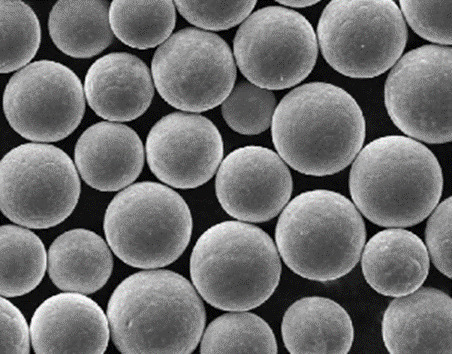
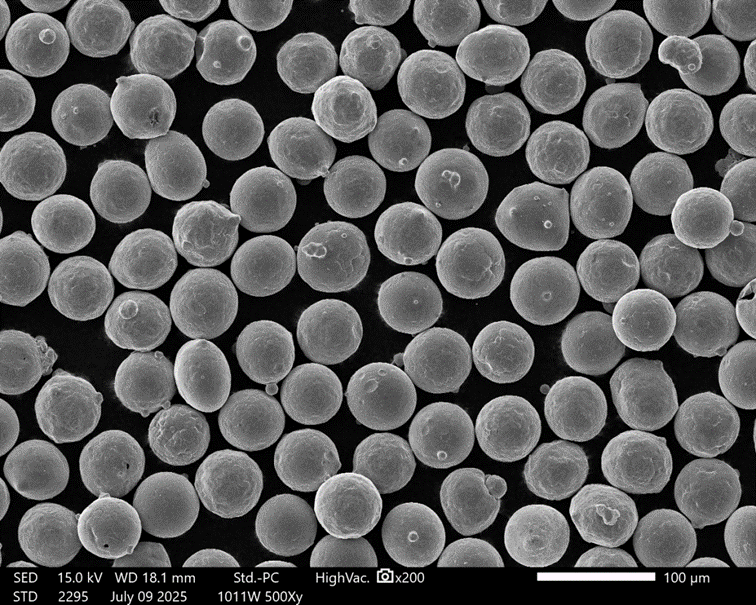
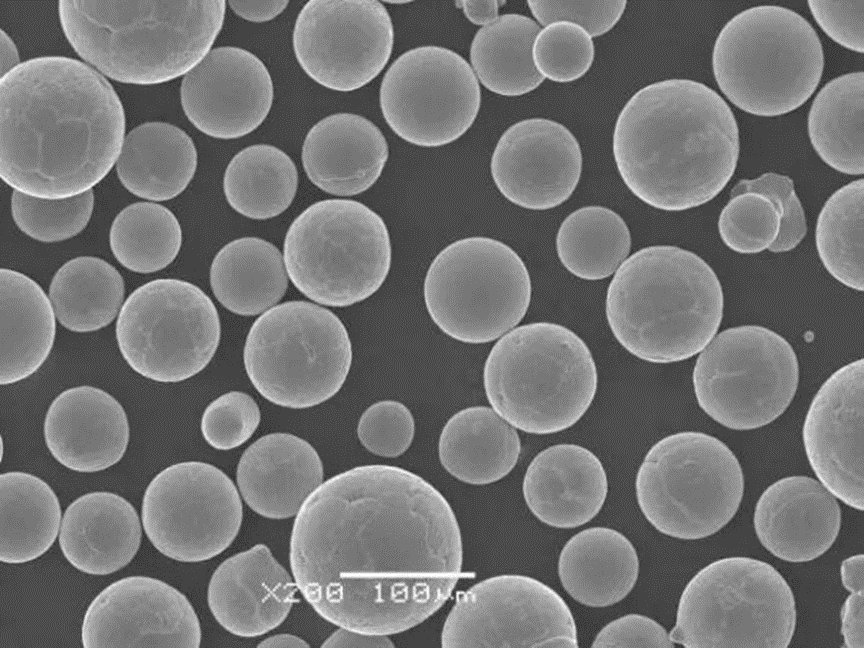
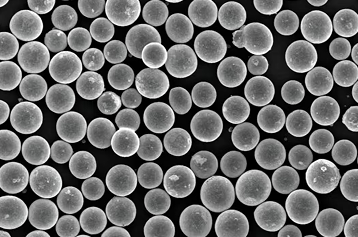
DED feedstock requirements are not identical to those of laser powder bed fusion. The powder must flow consistently through a nozzle, tolerate carrier-gas transport, and enter the melt pool in a stable stream. For that reason, IN738LC powder for directed energy deposition is usually supplied in coarser spherical particle-size ranges than powder bed grades, with morphology optimized for feed consistency rather than ultra-thin layer spreading.
Where It Fits in the Nickel Superalloy Landscape
Among high-temperature feedstocks, IN738LC occupies a position above many common corrosion-led nickel alloys in thermal capability, but it is also less forgiving during deposition. Engineers comparing it with other high-heat materials often start from a broader 니켈 합금 분말 포트폴리오 to understand where it sits relative to 625, 718, and other superalloy chemistries used across additive manufacturing, cladding, and repair work.
In DED, powder quality controls deposition stability as much as chemistry controls service performance.
화학 성분
IN738LC derives its performance from a carefully balanced nickel-base chemistry that combines oxidation resistance, matrix strengthening, gamma-prime formation, and grain-boundary control. Unlike simpler corrosion-resistant alloys, it depends on multiple alloying elements working together across several strengthening mechanisms. That complexity is precisely why the alloy performs so well in hot sections and why powder certification must go beyond a simple “nickel alloy” label.
| 요소 | Typical wt.% | 주요 역할 | Practical Effect in DED Deposits |
|---|---|---|---|
| 니켈(Ni) | 잔액 | Matrix phase | Provides the continuous superalloy base structure |
| 크롬(Cr) | 15.7–16.3 | Oxidation and hot-corrosion resistance | Helps maintain scale protection at elevated temperature |
| 코발트 (Co) | 8.0–9.0 | Matrix strengthening and phase stability | Supports hot hardness and thermal stability |
| 텅스텐(W) | 2.4–2.8 | Solid-solution strengthening | Improves creep and high-temperature load-bearing ability |
| 몰리브덴(Mo) | 1.5–2.0 | Solid-solution strengthening | Adds elevated-temperature strength to the matrix |
| 알루미늄(Al) | 3.2–3.7 | Gamma-prime former | Drives precipitation hardening after heat treatment |
| 티타늄(Ti) | 3.2–3.7 | Gamma-prime former | Increases strength, but also raises cracking sensitivity |
| 탄탈륨(Ta) | 1.5–2.0 | Strengthening and carbide effects | Improves hot strength and structural stability |
| 니오븀(Nb) | 0.6–1.1 | Supplemental strengthening | Assists precipitate and matrix hardening |
| 탄소(C) | 0.08–0.13 | Carbide formation | Influences grain-boundary strengthening and ductility balance |
| 지르코늄(Zr) | 0.03–0.08 | Grain-boundary strengthening | Supports creep life and boundary cohesion |
| 붕소(B) | 0.005–0.015 | Grain-boundary cohesion | Important in controlling boundary integrity at temperature |
Role of Aluminum and Titanium in IN738LC Powder for Directed Energy Deposition
Aluminum and titanium are the critical elements behind the alloy’s precipitation-hardening response. They form the gamma-prime phase that gives IN738LC its strong elevated-temperature mechanical profile. In DED, however, their presence also makes processing less forgiving because high gamma-prime potential can amplify solidification cracking and strain-age cracking risks if the thermal cycle is poorly managed.
Grain-Boundary Additions and Why They Matter
Boron, zirconium, and carbon are present in small amounts, but they are disproportionately important. These elements affect grain-boundary cohesion and carbide morphology, which directly influence creep behavior and long-term structural reliability. In a deposited build or repair, where repeated reheating can alter local microstructure, tight control of these minor elements is essential.
Oxidation Resistance Versus General Corrosion Resistance
Chromium gives IN738LC strong resistance to oxidation and hot corrosion, but the alloy is not primarily selected for room-temperature chemical corrosion duty. That is one reason engineers do not treat it as a simple substitute for Inconel 625. Instead, they choose it when long exposure to hot gas, cyclic thermal loading, or combustion-adjacent environments dominates the design case.
물리적 및 기계적 특성
The most useful way to view IN738LC property data is as a combination of intrinsic alloy capability and process-dependent deposit performance. Catalog values can describe the alloy family, but DED outcomes will vary with powder quality, substrate compatibility, heat accumulation, dilution, and post-build heat treatment. For critical parts, deposit-specific qualification data always matter more than generic brochure numbers.
| 속성 | 일반 값 | 단위 | Test Standard / Basis |
|---|---|---|---|
| 밀도 | 8.10–8.20 | g/cm³ | Typical alloy reference value |
| Solidus temperature | 1230–1240 | °C | Typical alloy reference value |
| Liquidus temperature | 1310–1320 | °C | Typical alloy reference value |
| Ultimate tensile strength | 1050–1250 | MPa | Typical heat-treated deposit range |
| 0.2% yield strength | 780–980 | MPa | Typical heat-treated deposit range |
| 신장 | 2–8 | % | Process and orientation dependent |
| 경도 | 35–43 | HRC | Typical aged condition |
| 열 전도성 | 11–15 | W/m-K | 대략적인 실온 범위 |
| 탄성 계수 | 200–220 | GPa | Typical room-temperature engineering value |
| Useful oxidation-led service range | Up to about 900 | °C | Application dependent, not a universal design allowable |
Room-Temperature Data Versus High-Temperature Service Data
Many buyers look first at tensile strength and hardness, but those values do not explain why this alloy is chosen. The main advantage of IN738LC is high-temperature strength retention, especially under oxidation and creep-limited conditions. If the design problem is purely room-temperature strength, other nickel or iron-based powders can be easier and less expensive to qualify.
Mechanical Response in As-Deposited and Heat-Treated Conditions
As-deposited DED material can show property scatter depending on bead overlap, dilution from the substrate, and thermal history during the build. Heat treatment is therefore central to unlocking the intended precipitation-strengthened microstructure. When process control is good, the alloy can develop a strong combination of hardness, tensile strength, and oxidation-focused service capability, but without thermal discipline the same chemistry can produce cracking or reduced ductility.
Thermal Behavior Relevant to Repair and Build Strategy
The alloy’s melting range is suitable for laser-based DED, yet its solidification path still demands attention. Engineers must account for thermal gradients, residual stress, and reheating of earlier layers or underlying substrate material. That is why preheating, interpass temperature control, and final stress-relief or aging schedules are not optional details but part of the material system itself.
For readers interested in how feedstock and defect measurement affect metal AM consistency, the NIST additive manufacturing research programs offer useful context on process monitoring and powder-related variability.
사양 및 제공 등급
For DED procurement, chemistry alone is not enough. A technically acceptable IN738LC chemistry can still perform poorly if the powder has too many satellites, too broad a fines tail, or inadequate flow characteristics. In practice, a usable specification combines composition limits with morphology, gas-content control, and flowability metrics relevant to nozzle-fed deposition.
| Supply Grade | 일반적인 PSD | 겉보기 밀도 | 탭 밀도 | 홀 흐름 | 산소 함량 | 구형도 / 형태 | Typical Cross-Reference |
|---|---|---|---|---|---|---|---|
| Fine DED grade | 45–90 µm | 4.4–4.9 g/cm³ | 5.0–5.5 g/cm³ | 15–22초/50g | ≤300 ppm typical | Highly spherical, low satellite content | ASTM B212 / ASTM B213 / ASTM B527 / gas analysis reporting |
| Standard DED grade | 53–105 µm | 4.5-5.0g/cm³ | 5.1–5.6 g/cm³ | 14–20 s/50 g | ≤300 ppm typical | Spherical for stable nozzle feeding | ASTM and ISO test-method cross-reference |
| Coarse DED grade | 75–150 µm | 4.6–5.1 g/cm³ | 5.2–5.7 g/cm³ | 50g당 13–19초 | ≤350 ppm typical | Flow-optimized spherical fraction | Laser cladding and high-rate deposition use |
| Repair-focused grade | 63–125 µm | 4.5-5.0g/cm³ | 5.1–5.6 g/cm³ | 14–20 s/50 g | Lot-specific agreement | Controlled fines and high circularity | Program-specific acceptance plan |
| Documentation cross-reference | By specification | By lot | By lot | By lot | By lot | By lot | ASTM / AMS / ISO / DIN / GB reporting format |
Particle Size Distribution for IN738LC Powder for Directed Energy Deposition
Typical DED powder size ranges are significantly coarser than powder bed fractions because stable powder transport matters more than thin-layer packing. Common ranges include 45–90 µm, 53–105 µm, 63–125 µm, and 75–150 µm. The correct range depends on nozzle diameter, carrier gas, laser spot size, desired deposition rate, and whether the job emphasizes edge repair, wall building, or broader laser cladding geometry.
Powder Metrics That Directly Affect Deposition
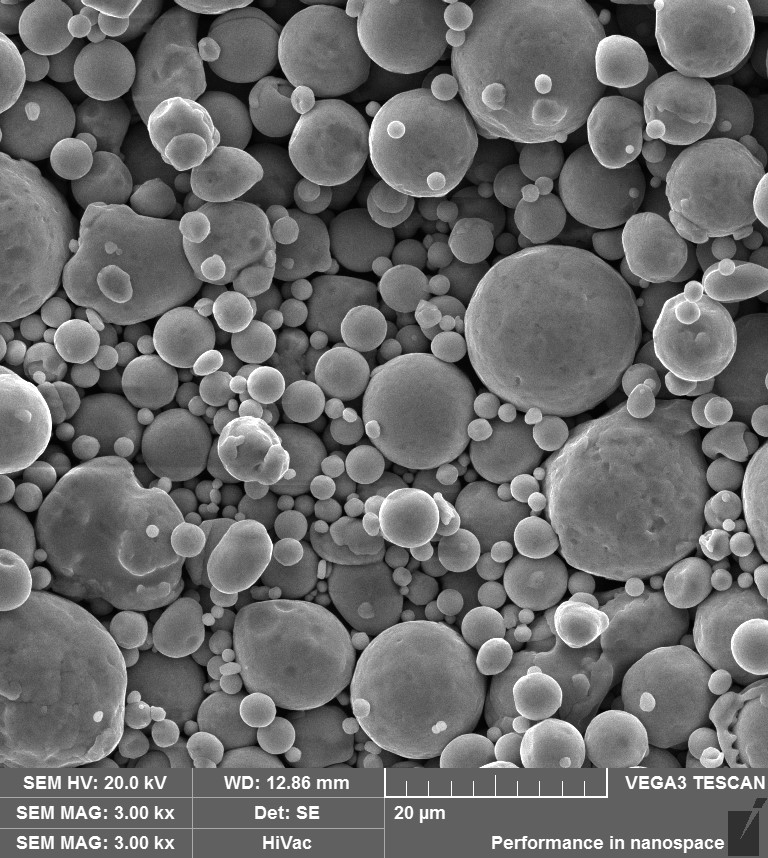
Apparent density, tap density, Hall flow, and oxygen content are not just purchasing checkboxes. They influence feed consistency, powder mass-flow stability, and the probability of oxidation-related defects in the deposit. Spherical morphology with low satellite content is particularly valuable because it improves carrier-gas transport and reduces erratic feeding through the nozzle.
Standards Framework and Cross-Reference Practice
DED feedstock qualification usually pulls test methods from broader powder and AM standards rather than relying on one material-specific global standard. Users often combine chemistry certification with density, flow, and gas analysis methods published through ASTM standards and publications. In customer specifications, those methods may then be mapped to internal requirements or to regional ASTM, ISO, AMS, DIN, and GB documentation systems.
Available Grades and Adjacent Material Families
Suppliers typically position IN738LC as a repair-grade or high-temperature DED powder rather than a commodity AM alloy. It may be offered alongside titanium, cobalt, stainless, and refractory feedstocks so engineers can compare service temperature against weight, wear, or corrosion priorities. Where low density is more important than hot strength, a broader 티타늄 합금 분말 제품군 may become more relevant than nickel superalloys.
제조 프로세스
Powder manufacturing route affects far more than appearance. It influences particle shape, internal porosity, satellite formation, oxygen pickup, and the breadth of the particle-size distribution. For IN738LC, those differences matter because the alloy already has a restricted process window; inconsistent feedstock only narrows it further.
| 프로세스 | Typical Sphericity | Oxygen Pickup Risk | PSD 제어 | 처리량 | 상대적 비용 | Main Advantages | Main Trade-Offs |
|---|---|---|---|---|---|---|---|
| 가스 분무(GA) | 좋음 ~ 매우 좋음 | 낮음에서 보통 | 양호 | 높음 | 보통 | Scalable production, broad availability, flexible size cutting | Can show more satellites if control is weak |
| 진공 유도 가스 분무법 (VIGA) | 매우 좋음 | 낮음 | 좋음 ~ 매우 좋음 | 중간에서 높음 | 보통에서 높음 | Cleaner melt environment and strong lot consistency | Higher equipment and processing cost |
| 전극 유도 가스 분무법 (EIGA) | Very good to excellent | 매우 낮음 | 양호 | Medium | 높음 | High purity and low contamination potential | More limited supply routes and higher cost |
| 플라즈마 회전 전극 공정(PREP) | 우수 | 매우 낮음 | 체로 거른 후 적당히 | Medium to low | 높음 | Dense particles, excellent roundness, premium cleanliness | Lower throughput and higher cost per kilogram |
Gas Atomization for Commercial DED Powder Supply
GA remains the most common industrial route for spherical metal powder because it combines scalability with relatively good morphology. Molten alloy is disintegrated by high-velocity inert gas into droplets that solidify as free-falling particles. For IN738LC, GA can produce suitable DED feedstock when atomization, inert-gas handling, and post-sieving are well controlled.
VIGA and EIGA for Cleaner Superalloy Feedstock
VIGA improves atmospheric control during melting and atomization, reducing contamination risk and often improving lot consistency. EIGA pushes cleanliness further by avoiding some crucible-related contamination pathways associated with other methods. For high-temperature nickel superalloys that are sensitive to chemistry shifts and oxide formation, these routes can be attractive when the application places a premium on purity.
PREP and Spherical Powder Performance
PREP is widely associated with superior particle roundness and dense morphology. It generates droplets from a rotating consumable electrode melted by plasma, producing a high-quality spherical powder with very low contamination potential. For demanding applications, powder morphology stability can justify PREP even when throughput is lower and the final powder is more expensive.
Matching the Powder Route to the End Use
The best route is not always the most advanced route. Repair programs with strict aerospace-style qualification may prioritize morphology and cleanliness, while industrial cladding operations may favor throughput and cost efficiency. When service temperature climbs beyond what mainstream nickel alloys comfortably handle, engineers may also compare IN738LC against adjacent 내화 금속 분말 종류, especially for non-oxidizing thermal environments.
산업별 적용 사례
IN738LC powder for directed energy deposition is not a universal-use AM feedstock. It earns its place where part value is high, deposited volume is localized, and the thermal duty cycle is severe. In many industries, that means repair and targeted material addition are more relevant than full-volume additive part production.
Aerospace and Turbine Hot-Section Components
Aerospace is the clearest fit because gas-turbine hardware operates under exactly the sort of thermal conditions that justify this alloy. DED can rebuild worn seal surfaces, restore edge geometry, repair local damage, or add material to hot-section components where replacement cost is high. That is why repair and feature restoration is often the primary economic case for using IN738LC powder in additive workflows.
Industrial Gas Turbines and Stationary Power Equipment
The same logic extends to land-based energy systems. Turbine vanes, combustor-adjacent hardware, thermal shields, and other hot gas path components can benefit from localized deposition rather than full replacement. In these settings, the alloy’s oxidation resistance and strength at temperature matter more than maximizing deposition ease.
Oil and Gas Thermal Hardware
IN738LC is not the default nickel choice for broad corrosion exposure in upstream or chemical service, but it can be relevant for thermal process hardware where heat loading dominates. Components exposed to burners, hot gas, or cyclic thermal fatigue may justify the alloy, particularly when DED is being used for restoration rather than greenfield manufacturing.
Automotive, Motorsport, and Thermal Test Components
Mainstream automotive applications usually do not need a turbine-class superalloy, but motorsport and engine-development environments sometimes do. Exhaust-adjacent fixtures, burner rigs, dyno test hardware, and thermal development components can benefit from a material that preserves integrity under repeated heat cycles. In such cases, the powder is chosen not for general affordability but for solving a specific temperature-driven problem.
Tooling, Research, and Multi-Alloy Process Development
IN738LC also appears in research and specialized tooling programs that examine crack mitigation, preheating strategies, and hybrid manufacturing methods. Its challenging deposition behavior makes it a useful benchmark for advanced DED parameter development. Many of those end uses overlap with the broader industrial AM application areas served by metal powder suppliers and process integrators.
대체 소재와의 비교
Material selection for DED should begin with the service environment, not with the easiest alloy to print. IN738LC competes most directly with other nickel powders, but in some applications it also overlaps with cobalt alloys, stainless steels, and advanced specialty materials. The right comparison is therefore not just “which alloy is stronger,” but “which alloy solves the actual failure mode.”
| 재질 | 밀도(g/cm³) | Strength Level | High-Temperature Capability | Relative DED Printability | Corrosion / Oxidation Resistance | Relative Powder Cost | 가장 적합한 사용 사례 |
|---|---|---|---|---|---|---|---|
| IN738LC powder for directed energy deposition | 8.1–8.2 | 높음 | 매우 높음 | Moderate to difficult | Very good oxidation, good hot-corrosion resistance | 높음 | Hot-section repair and thermally loaded deposits |
| 인코넬 718 분말 | 8.19 | 매우 높음 | 높음 | 양호 | 양호 | 보통에서 높음 | Structural builds with easier qualification |
| 인코넬 625 분말 | 8.44 | 보통에서 높음 | 보통에서 높음 | 매우 좋음 | Excellent general corrosion resistance | 보통 | Corrosion-led cladding and repair |
| CoCrMo 파우더 | 8.3–8.5 | 높음 | High in wear and hot-wear service | 양호 | Very good wear and corrosion resistance | 높음 | Wear-focused overlays and specialty components |
| 316L 스테인리스 스틸 파우더 | 7.9–8.0 | 보통 | Limited for true hot-section service | 우수 | Good general corrosion resistance | 낮음 | Cost-sensitive builds outside extreme thermal duty |
IN738LC Versus Inconel 718
Inconel 718 is often preferred for DED because it has better process tolerance and broader additive qualification history. IN738LC becomes more attractive when service temperature and oxidation resistance move to the center of the specification. DED repair of hot-section components is the clearest scenario in which its more difficult processing is justified.
IN738LC Versus Inconel 625
Inconel 625 is a workhorse deposition alloy because it offers strong corrosion resistance and good process stability. However, it is not optimized for the same level of precipitation-strengthened high-temperature strength as IN738LC. If the operating environment is primarily thermal rather than chemical, IN738LC usually provides the more appropriate material basis.
When Cobalt, Stainless, or Other Families Are Better Options
Cobalt alloys are strong candidates when wear, galling, or hot-surface durability matter as much as oxidation resistance. Stainless steels can be excellent in cost-sensitive DED work where temperatures are far below turbine-class service. In lightweighting-driven design, aluminum or titanium may win outright, while in ultra-high-temperature specialty programs engineers may benchmark against cobalt and other advanced feedstocks such as cobalt alloy powder grades.
당사
Shanghai Truer Technology Co., Ltd., the company operating am-printing.com, was established in 2009 and created its additive manufacturing business in 2019. According to the information presented on its 회사 소개 페이지, the business integrates 3D printing powder-making equipment and powder supply, with core technologies that include Selective Electron Beam Melting equipment, Plasma Rotating Electrode Process powder-making equipment, and gas atomization-related capabilities. Its stated powder portfolio includes TiNi, TiTa, TiAl, TiNbZr, CoCrMo, and spherical nickel-based, cobalt-based, titanium-based, copper-based, aluminum-based, and stainless steel powders, while the end processes served include SLM, SEBM, DED, laser cladding, powder metallurgy, MIM, HIP, cold and hot spraying, welding, and coating across sectors such as aerospace, medical, nuclear power, 3C electronics, hand tools, and remote control cars.
자주 묻는 질문
Q1. Is IN738LC powder for directed energy deposition mainly used for repair or for new part production?
It is used for both, but repair and localized rebuilding are usually the stronger industrial case. Many IN738LC applications involve high-value components where only a worn edge, damaged surface, or thermally stressed feature needs to be restored. That aligns naturally with DED, which can add material exactly where it is required.
Q2. What particle size is commonly used for IN738LC powder for directed energy deposition?
Typical DED cuts include 45–90 µm, 53–105 µm, 63–125 µm, and 75–150 µm. The best range depends on nozzle design, carrier gas settings, laser power, and whether the job prioritizes precision, deposition rate, or cladding-style coverage. Coarser fractions are often preferred for stable feeding and higher build rates.
Q3. Why is IN738LC harder to process than Inconel 625 or Inconel 718 in DED?
Its chemistry contains strong gamma-prime-forming elements, especially aluminum and titanium, which help deliver elevated-temperature strength but reduce process tolerance. That makes the alloy more sensitive to cracking under steep thermal gradients and repeated reheating. Successful deposition usually requires tighter control of preheat, interpass temperature, and post-deposition heat treatment.
Q4. Does IN738LC powder for directed energy deposition need spherical morphology?
Highly spherical morphology is strongly preferred because DED relies on steady nozzle feeding and a stable powder stream. Irregular particles, excessive satellites, or too many fines can disrupt flow behavior and alter the melt pool. In a narrow-window alloy like IN738LC, feed instability can quickly become a defect problem.
Q5. Can IN738LC powder for directed energy deposition also be used for laser cladding?
Yes, in many cases it can. DED and laser cladding both use directed material delivery into a melt pool, so coarser IN738LC spherical powders may be suitable for either process depending on equipment settings and the desired dilution level. The final choice should still be based on substrate compatibility, service environment, and deposit geometry.
Q6. What should buyers verify before qualifying IN738LC powder for directed energy deposition?
They should verify chemistry, particle-size distribution, apparent density, tap density, Hall flow, oxygen content, and morphology, along with lot traceability and packing integrity. It is also important to confirm the intended substrate alloy, deposition parameters, preheat strategy, and heat-treatment route before production qualification begins. For this material, powder quality and thermal process discipline are inseparable from final deposit reliability.