간단한 답변
Spherical Al6061 powder is a gas-atomized aluminum-magnesium-silicon alloy feedstock used in additive manufacturing, powder metallurgy, thermal spray, and laser cladding. It is chosen for 3D printing applications when engineers need low density, good corrosion resistance, heat-treatable strength, and familiar post-processing behavior in a well-known structural aluminum grade. Its main advantage is balanced performance rather than maximum printability, so it is often selected for lightweight industrial parts, fixtures, housings, and prototypes where machinability and broad engineering acceptance matter.
What Is spherical Al6061 powder
Spherical Al6061 powder is the powder form of 6061 aluminum alloy, a precipitation-hardening grade from the 6xxx series. In conventional mill-product form, 6061 is one of the most widely specified wrought aluminum alloys in global manufacturing because it combines moderate-to-high strength, useful corrosion resistance, weldability, and relatively straightforward machining. When the same alloy is converted into spherical powder, it becomes suitable for powder-based production routes that require repeatable flow, controlled packing, and stable feed behavior.
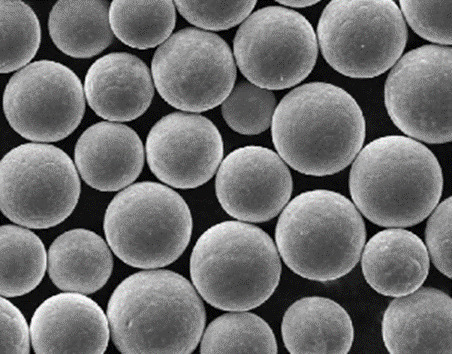
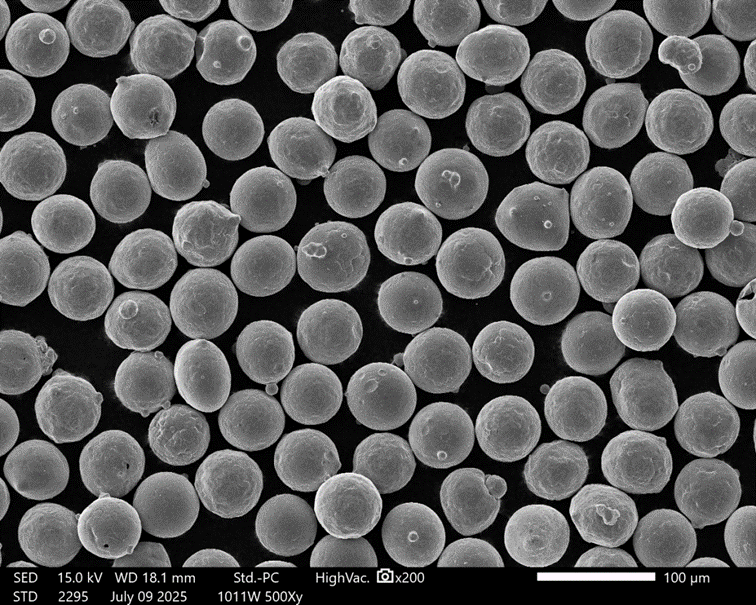
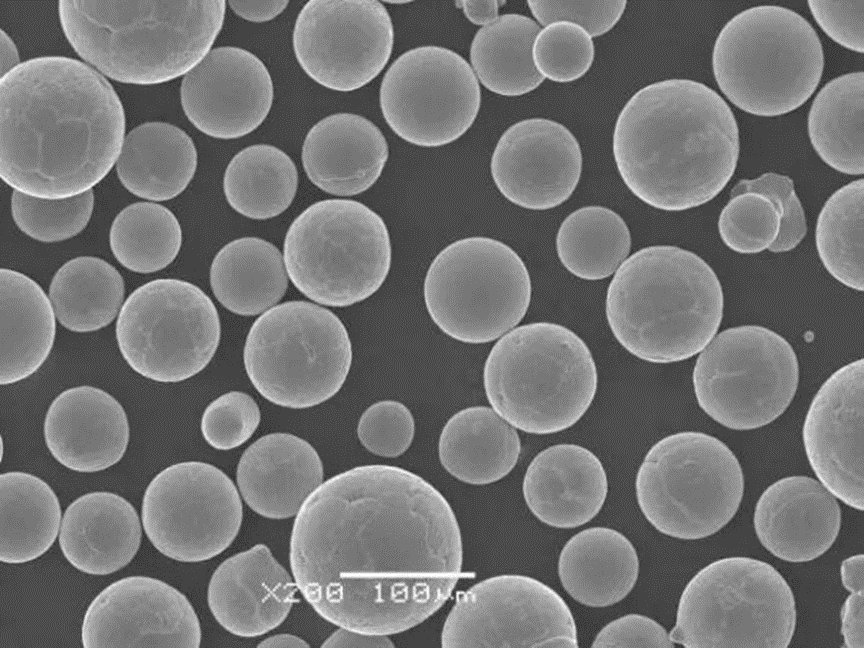
The word “spherical” is not a marketing adjective. It refers to particle morphology produced by atomization methods that solidify molten droplets into near-round particles. That shape is important because powder-bed and powder-fed systems depend on even layer spreading, predictable feeding through hoppers or nozzles, and reduced interparticle friction compared with irregularly crushed powder.
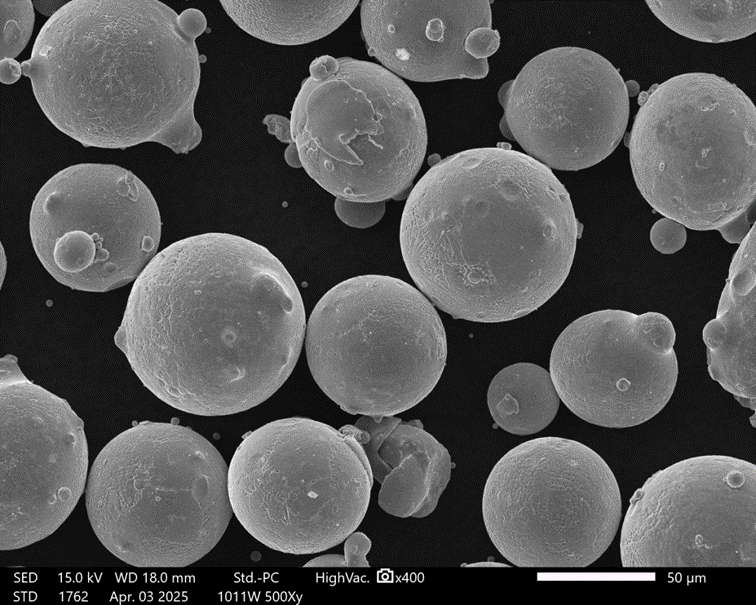
Al6061 as a 6xxx-series additive manufacturing powder
Al6061 belongs to the Al-Mg-Si family. Its key strengthening mechanism comes from magnesium and silicon combining to form magnesium silicide precipitates during heat treatment. That metallurgical pathway is why Al6061 differs from silicon-rich aluminum AM powders such as AlSi10Mg, which are optimized more around castability and print-window tolerance than around reproducing the service profile of a classic wrought alloy.
For engineers, the appeal of Al6061 powder is familiarity. Designers, machinists, and quality teams already understand how 6061 behaves in structural applications, surface finishing, anodizing, joining, and general corrosion environments. The powder format extends that known alloy into additive routes rather than introducing a completely unfamiliar material system.
Why industry uses spherical aluminum powder instead of irregular powder
In additive manufacturing and precision coating processes, feedstock consistency often matters as much as nominal alloy chemistry. Spherical particles generally provide better powder flow, more uniform apparent density, improved packing in the powder bed, and fewer spreading defects during recoating. Those factors influence part density, surface finish, and build stability.
A buyer evaluating aluminum feedstock will therefore look at two questions at once: is it the right alloy, and is it the right powder form? A nominal 6061 chemistry made by a poor powder process may meet a certificate but still underperform in the machine.
How Al6061 differs from other aluminum AM options
Compared with AlSi10Mg, Al6061 usually offers a more familiar structural alloy identity but can be harder to process in laser-based AM because of crack sensitivity and thermal behavior. Compared with 7075, it generally sacrifices peak strength potential in exchange for a better corrosion profile and broader industrial comfort level. Compared with commercially pure aluminum, it provides a much better combination of strength and functional engineering utility.
In metal AM, powder performance is defined by chemistry, particle shape, surface condition, and process compatibility together rather than by alloy designation alone.
Manufacturers comparing material families often place Al6061 beside broader aluminum alloy powder grades to determine whether lightweight structural behavior, conductivity, or printability should lead the material decision.
화학 성분
The chemistry of Al6061 is standardized as a wrought aluminum alloy composition, but powder producers must also manage oxidation, trace contamination, and volatilization effects during melting and atomization. In practice, additive manufacturing users care not only about whether the powder falls inside nominal composition limits, but also whether the chemistry is consistent from batch to batch and stable enough to support repeatable heat-treatment response.
| 요소 | Typical Content (wt%) | Main Metallurgical Role | Functional Effect in Powder or Printed Part |
|---|---|---|---|
| 알루미늄(Al) | 잔액 | Base matrix | Delivers low density, corrosion-resistant oxide film, and good thermal conductivity |
| 마그네슘(Mg) | 0.80-1.20 | Precipitation strengthening with Si | Critical for age hardening; influences strength development after heat treatment |
| 실리콘(Si) | 0.40-0.80 | Forms Mg2Si | Supports hardening and influences melt behavior during rapid solidification |
| 구리(Cu) | 0.15-0.40 | Secondary strengthening | Can improve strength but may modestly reduce corrosion resistance if elevated |
| 크롬(Cr) | 0.04-0.35 | Microstructure control | Helps stabilize grain structure and supports corrosion performance |
| 철(Fe) | 0.00-0.70 max | 잔류 불순물 | Excess iron can form brittle intermetallic phases and reduce toughness |
| 망간(Mn) | 0.00-0.15 max | Minor structural influence | Usually present at low level; supports microstructural balance |
| 아연(Zn) | 0.00-0.25 max | Residual element | Controlled to avoid unintended property shifts |
| 티타늄(Ti) | 0.00-0.15 max | Grain refinement aid | May contribute to solidification control at low levels |
The role of magnesium and silicon in spherical Al6061 powder
Magnesium and silicon are the alloy’s functional center. Their ratio determines the amount and effectiveness of precipitation strengthening that can be developed during thermal processing. If magnesium is lost during melting or atomization, the powder may still be called Al6061, yet its aging response and final mechanical properties can drift away from expectation.
That is especially relevant for spherical powder because fine particles present high surface area and process exposure. Powder manufacturing therefore requires composition verification after atomization rather than relying only on the original melt charge.
Impurity control and oxide behavior
Every aluminum powder particle forms a native oxide shell. In small amounts that is normal and unavoidable, but excessive oxygen or moisture exposure can increase oxide burden, reduce fusion consistency, and complicate powder reuse strategies. Fine fractions are particularly sensitive because more surface area means more opportunity for surface oxidation.
For this reason, serious specifications for spherical aluminum feedstock combine alloy chemistry with controls on oxygen content, storage atmosphere, and packaging integrity. This is one of the reasons gas atomized powder is preferred over lower-grade irregular powders in demanding AM workflows.
Why composition tables do not tell the full story
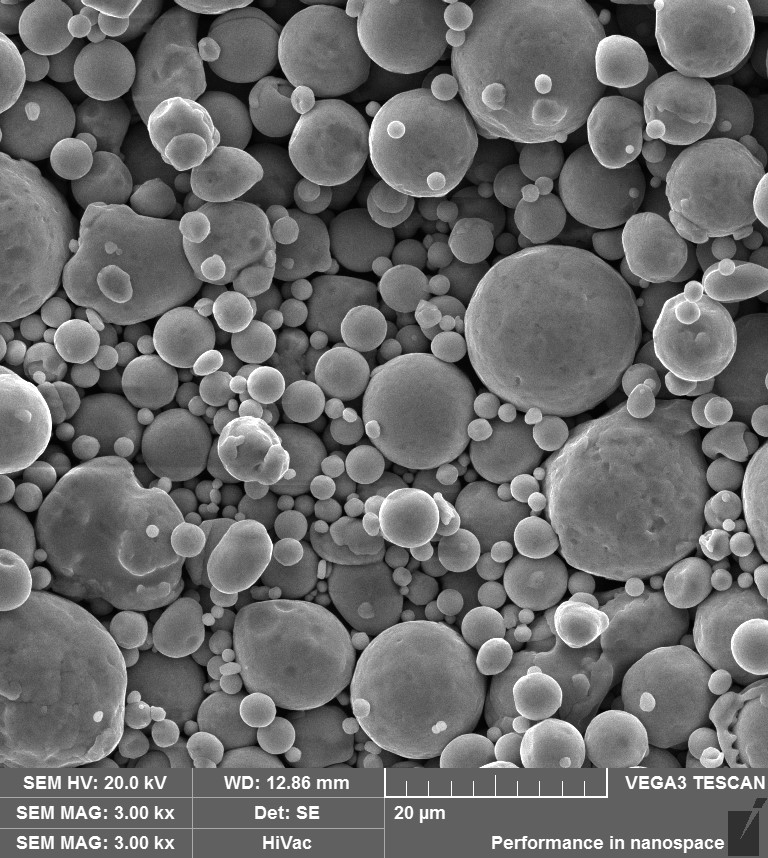
Chemical composition defines alloy identity, but it does not fully define printability. Two Al6061 powders can share similar chemistry and still behave differently if they differ in particle roundness, satellite content, or oxide thickness. Engineers therefore qualify chemistry alongside morphology, flowability, and PSD rather than treating any one data point as sufficient.
For background on the base alloy in wrought form, the 6061 aluminum alloy overview provides useful context on composition ranges and conventional engineering uses.
물리적 및 기계적 특성
The properties of spherical Al6061 powder should be read in two layers. The first layer concerns intrinsic alloy characteristics such as density, melting range, elastic modulus, and corrosion behavior. The second layer concerns the consolidated part after additive manufacturing, densification, and heat treatment. Printed performance depends strongly on build parameters, porosity, orientation, and post-processing, so the values below are best understood as representative engineering ranges rather than guaranteed outcomes for every AM platform.
| 속성 | 일반 값 | 단위 | Test Standard or Condition |
|---|---|---|---|
| Solid density | 2.70 | g/cm³ | Typical room-temperature alloy value |
| 용융 범위 | 582-652 | °C | Typical alloy reference range |
| Ultimate tensile strength | 260-340 | MPa | Typical heat-treated condition; AM values vary by process |
| Yield strength, 0.2% offset | 220-280 | MPa | Typical aged condition |
| 휴식 시 신장 | 6-17 | % | Process- and orientation-dependent |
| 경도 | 80-100 | HB | Typical for aged structural condition |
| 탄성 계수 | 68-70 | GPa | 일반적인 실온 값 |
| 열 전도성 | 150-170 | W/m-K | Typical by condition and temper |
| 열팽창 계수 | 23-24 | µm/m·K | Approximate range from ambient to elevated temperature |
Why low density matters in Al6061 AM parts
The single clearest advantage of spherical Al6061 powder is weight reduction. At around 2.70 g/cm³, it enables structural parts that are far lighter than steel, nickel, or cobalt alternatives. This makes the alloy attractive for robotics, aerospace brackets, electronics housings, automotive fixtures, and portable industrial systems where mass influences performance, handling, or energy efficiency.
Light weight also affects downstream economics. In many geometries, less mass means lower inertia, easier manual handling, and simpler support structures than denser metals would require.
Mechanical performance after printing and heat treatment
Al6061 is valued not because it delivers the highest aluminum strength in all conditions, but because it provides a balanced response after heat treatment. When printed successfully and then stress relieved or aged appropriately, it can achieve property levels suitable for many secondary and semi-structural components. Its familiar machinability is another reason it remains attractive in prototype-to-production workflows.
That said, laser-based AM of 6061 can be less forgiving than silicon-rich cast aluminum powders. High reflectivity, oxide films, rapid solidification, and crack tendency mean process development is often more demanding.
Thermal and corrosion characteristics
Al6061 conducts heat far better than titanium and most steels, which helps in thermal management-adjacent structures and housings. It also forms a protective oxide layer that supports good atmospheric corrosion resistance in many indoor and outdoor service environments.
This combination of conductivity, corrosion resistance, and moderate strength is a large part of the alloy’s continuing relevance. It is rarely the strongest or the most conductive option, but it occupies a practical middle ground that fits a broad range of engineering applications.
사양 및 제공 등급
Powder specification turns alloy identity into process-ready feedstock. For spherical Al6061 powder, buyers normally assess particle size distribution, apparent density, tap density, Hall flow or related flow metrics, oxygen content, morphology, and packaging condition in addition to chemical composition. Different machines require different particle size windows, so a supplier serving multiple additive platforms will often classify the same alloy into several commercial cuts.
| Supply Grade or Reference | 일반적인 PSD 범위 | 겉보기 밀도 | 탭 밀도 | 홀 흐름 | 산소 함량 | Sphericity or Morphology | Standards or Cross-Reference |
|---|---|---|---|---|---|---|---|
| Fine LPBF grade | 15-45 µm | 1.35-1.55 g/cm³ | 1.55-1.75 g/cm³ | 18-28 s/50 g* | ≤0.20 wt% typical | High sphericity, low satellite level | Internal AM grade to Al6061 composition limits |
| Standard LPBF grade | 15-53 µm | 1.40-1.60 g/cm³ | 1.60-1.80 g/cm³ | 17-26 s/50 g* | ≤0.20 wt% typical | Spherical, screened for recoating stability | Common powder-bed fusion range |
| Coarse deposition grade | 45-105 µm | 1.45-1.65 g/cm³ | 1.65-1.85 g/cm³ | 15-24 s/50 g* | ≤0.22 wt% typical | Free-flowing coarse spherical powder | Suitable for DED and some spray uses |
| Cladding or spray grade | 53~150 µm | 1.50-1.70 g/cm³ | 1.70-1.90 g/cm³ | 14-22 s/50 g* | ≤0.25 wt% typical | Controlled coarse morphology | Used in laser cladding and thermal spray |
| Chemistry basis row | - | - | - | - | Controlled by batch | Microscopy verified | Often aligned with wrought 6061 composition frameworks such as ASTM aluminum alloy standards |
| Terminology and AM QA row | - | - | - | - | QA-plan dependent | Morphology documented | Process terms commonly aligned with ISO/ASTM 52900 AM terminology |
*For fine aluminum powders, Hall flow can be method-sensitive, and some lots may require alternate flow reporting depending on particle size and instrument setup.
Typical particle size ranges for spherical aluminum AM powder
For laser powder bed fusion, 15-45 µm and 15-53 µm are common distributions because they support thin layer deposition and acceptable packing density. For directed energy deposition, laser cladding, and related blown-powder processes, coarser fractions such as 45-105 µm or 53-150 µm are more typical because they feed more reliably through powder nozzles.
The best PSD depends on more than machine type. Recoater design, laser spot size, layer thickness, shielding gas behavior, and desired surface finish all influence the practical specification.
Standards and qualification logic
There is no single universal specification that automatically qualifies Al6061 powder for every AM process. Instead, manufacturers combine alloy chemistry references, powder test methods, internal acceptance criteria, and machine-specific print validation. The NIST additive manufacturing resources are useful for understanding why AM qualification depends on process control as much as on raw material certificates.
Batch documentation and handling expectations
Aluminum powder users usually expect lot traceability, PSD data, oxygen reporting, and packaging that limits moisture uptake. Because fine aluminum powder is sensitive to storage conditions, packaging under inert gas or tightly controlled dry conditions is common for high-quality feedstock.
제조 프로세스
The production route determines whether Al6061 powder behaves like a precision AM feedstock or merely like a generic metal powder. For high-value additive manufacturing, gas atomization is the standard route because it can generate near-spherical particles with controlled size distribution, relatively low contamination, and good scalability. Other methods such as PREP, VIGA, and EIGA are also relevant for technical comparison, even if they are not equally common for conventional Al6061 supply.
Gas atomization for spherical Al6061 powder
In gas atomization, a molten Al6061 stream is disintegrated by high-velocity inert gas jets into tiny droplets. These droplets solidify rapidly in flight and are later collected, sieved, and classified into the target size fractions. The resulting powder typically shows good roundness, acceptable flow behavior, and morphology appropriate for recoating or nozzle feeding.
Gas atomization is widely used because it balances powder quality and production efficiency. For aluminum alloys, inert atmosphere control is essential to limit oxidation and preserve magnesium content as closely as possible.
PREP and premium powder routes
PREP, or Plasma Rotating Electrode Process, forms droplets from a rotating electrode melted by plasma. It is better known for premium reactive alloys such as titanium, but it is still relevant in discussions of powder quality because it can produce highly spherical, clean particles. VIGA and EIGA add further control over melting atmosphere and contamination pathways, which can be valuable when extreme powder cleanliness is needed.
These premium routes, however, usually come with lower throughput or higher cost than standard gas atomization. For most Al6061 programs, the practical question is not whether PREP can make good powder, but whether the incremental quality gain justifies the process penalty for the intended application.
| Process Route | Basic Principle | 구형성 | Oxygen Pickup Risk | PSD 제어 | 처리량 | 상대적 비용 | Typical Relevance to Al6061 |
|---|---|---|---|---|---|---|---|
| 가스 분무(GA) | Inert gas breaks molten stream into droplets | 좋음 ~ 매우 좋음 | Low with proper control | 매우 좋음 | 높음 | 보통 | Main commercial route for AM-grade Al6061 |
| VIGA | Vacuum induction melting followed by gas atomization | 매우 좋음 | 낮음 | 매우 좋음 | 중간에서 높음 | 보통에서 높음 | Used where tighter melt cleanliness is required |
| 준비 | Plasma-melted rotating electrode ejects droplets | 우수 | 매우 낮음 | 양호 | Medium | 높음 | Technically strong but less common for routine Al6061 |
| EIGA | Electrode induction melting plus gas atomization | Very good to excellent | 매우 낮음 | 좋음 ~ 매우 좋음 | Medium | 높음 | Useful where crucible contamination must be minimized |
| 물 분무 | Water jets disrupt molten stream | Poor to fair for AM | 높음 | 양호 | 높음 | 낮음 | Usually unsuitable for premium spherical AM powder |
Post-atomization classification and powder finishing
After atomization, powder is not yet ready for shipment. It must be classified, sieved, inspected, sampled, and packaged. These steps remove oversized particles, excessive fines, and agglomerates that could compromise flow behavior or part quality.
For aluminum powder, this stage is especially important because handling can increase contamination risk if not tightly controlled. Even high-quality atomized powder can degrade if it is exposed to humidity, blended poorly, or stored in unsuitable containers.
Why process route affects end-use decisions
Process route affects morphology, oxide level, satellite population, and lot-to-lot consistency. Those characteristics influence spreading, laser absorption behavior, and defect sensitivity in the build. Companies that work across several metal families often compare Al6061 with titanium alloy powder materials or denser engineering powders when selecting the most appropriate feedstock for a given production route.
산업별 적용 사례
Spherical Al6061 powder is used where lightweight structural performance, corrosion resistance, and established aluminum engineering practice matter more than extreme temperature capability or peak hardness. Its adoption is strongest in sectors that already trust 6061 in wrought or machined form and want to extend that familiarity into additive or powder-based manufacturing.
Aerospace and lightweight industrial hardware
In aerospace, Al6061 powder is suitable for non-engine-zone brackets, housings, covers, ducts, fixtures, and secondary support structures. It is also useful in ground-support tooling and low-volume customized hardware, where low mass and machinability after printing are important.
Although titanium dominates many critical aerospace AM applications, aluminum remains valuable for lighter-duty structures. In these cases, Al6061 can offer a lower-cost, lower-density alternative where operating temperatures and structural demands remain within its range.
Automotive, motorsport, and robotics
Automotive development teams use aluminum powders for prototype brackets, custom mounts, lightweight enclosures, and manufacturing fixtures. In robotics, reduced mass can improve actuator efficiency and dynamic response, so Al6061 is attractive for end effectors, arm accessories, and housing components.
The alloy is particularly practical where printed parts will still undergo machining, drilling, threading, or surface finishing after build. That workflow suits Al6061 because engineers already know how the alloy behaves in secondary operations.
Electronics, tools, and thermal-adjacent structures
For 3C electronics, hand tools, and industrial devices, Al6061 powder supports customized housings, carriers, jigs, and structural frames. Its conductivity is not as high as copper, but it is often high enough for components that need to spread heat while remaining mechanically useful and lightweight.
When heat transfer becomes the overriding design requirement, engineers may shift toward copper-based alloy powders instead. When wear, temperature, or corrosion conditions become far harsher, the comparison may move toward nickel superalloy feedstocks or other specialty systems.
Laser cladding, spraying, and powder metallurgy
Al6061 spherical powder is not limited to powder-bed fusion. Coarser grades can be used in directed energy deposition, laser cladding, cold or hot spraying, and selected powder metallurgy routes. In those processes, free-flowing spherical morphology is still valuable because it improves feed consistency and deposition control.
Where Al6061 is less suitable
Medical implants are not a typical application for Al6061 powder, and very high-temperature service is outside its practical range. It is also not the best first-choice alloy where maximum as-printed crack tolerance is required; silicon-rich AM aluminum grades generally remain easier to process in many laser systems.
대체 소재와의 비교
Material selection for additive manufacturing is always comparative. Engineers choosing spherical Al6061 powder are really asking whether its combination of density, cost, printability, corrosion resistance, and post-processing familiarity is better suited to the job than other available powders.
| 재질 | 밀도(g/cm³) | 일반적인 체력 수준 | Relative Printability | 내식성 | Relative Material Cost | 열 전도성 | 가장 적합한 사용 사례 |
|---|---|---|---|---|---|---|---|
| Spherical Al6061 powder | 2.70 | Moderate to high after heat treatment | 보통 | 양호 | 보통 | 높음 | Lightweight structural parts with familiar 6061 behavior |
| AlSi10Mg 분말 | 2.67 | 보통에서 높음 | 매우 좋음 | 양호 | 보통 | 보통 | General-purpose aluminum LPBF production |
| 7075 aluminum powder | 2.81 | 높음 | Difficult to moderate | 보통 | 보통에서 높음 | 보통 | High-strength lightweight applications with tighter controls |
| Ti-6Al-4V 분말 | 4.43 | 높은 비강도 | 좋음 ~ 매우 좋음 | 매우 좋음 | 높음 | 낮음에서 보통 | Aerospace and medical structures requiring higher performance |
| 316L 스테인리스 스틸 파우더 | 7.90-8.00 | 보통 | 우수 | 매우 좋음 | 보통 | 낮음 | Corrosion-resistant industrial parts where weight is less critical |
Al6061 versus AlSi10Mg
This is usually the most practical comparison in aluminum additive manufacturing. AlSi10Mg tends to print more easily because its higher silicon content reduces hot cracking and widens the process window. Al6061 may still be preferred where users want a wrought-like alloy identity, familiar machining response, or alignment with existing 6061-based engineering practice.
Al6061 versus 7075
7075 offers higher peak strength potential, but that comes with more demanding corrosion and process considerations. For many industrial applications, Al6061 is the more balanced option because it combines acceptable strength with easier downstream handling and better general corrosion behavior.
Al6061 versus titanium and stainless steel
Titanium delivers much higher specific strength and better high-performance credentials, while stainless steel offers easier printability and strong corrosion resistance at much higher density. Additive manufacturing powder selection therefore comes down to whether mass reduction, build robustness, or ultimate mechanical performance matters most in the end-use part.
당사
Shanghai Truer Technology Co., Ltd., which operates am-printing.com, was established in 2009 and created its additive manufacturing business in 2019. According to its published company profile, it integrates 3D printing powder-making equipment and services with metal AM powders, including gas atomization and PREP-related capabilities, and it also works with Selective Electron Beam Melting equipment. Its powder portfolio includes TiNi, TiTa, TiAl, TiNbZr, CoCrMo, and spherical nickel-, cobalt-, titanium-, copper-, aluminum-, and stainless-steel powders for applications in SLM, SEBM, DED, laser cladding, powder metallurgy, MIM, HIP, spraying, welding, and coating across sectors such as 3C electronics, hand tools, remote-control cars, medical, aerospace, and nuclear power. A concise factual profile appears on the company’s manufacturer background page.
자주 묻는 질문
Q1. Is spherical Al6061 powder suitable for laser powder bed fusion?
Yes, but it usually requires a narrower and more carefully developed parameter window than silicon-rich aluminum powders. Its suitability depends on machine optics, shielding, scan strategy, layer thickness, and post-build heat treatment. Many users treat it as a high-value engineering alloy rather than the easiest-entry aluminum AM powder.
Q2. What particle size is best for spherical Al6061 powder in 3D printing?
For laser powder bed fusion, 15-45 µm and 15-53 µm are the most common commercial ranges. Coarser fractions such as 45-105 µm are more typical for directed energy deposition or cladding. The best size range depends on the equipment, target density, and surface-finish requirements.
Q3. Why is gas atomized spherical Al6061 powder preferred over irregular aluminum powder?
Gas-atomized spherical powder generally flows better, packs more uniformly, and spreads more consistently across the build plane. Those characteristics improve process stability and reduce the risk of recoating defects or uneven layer density. Irregular powder may be acceptable for some powder metallurgy uses, but it is usually less suitable for precision AM.
Q4. How does spherical Al6061 powder compare with AlSi10Mg powder?
AlSi10Mg is usually easier to print because its chemistry is more tolerant of rapid solidification and crack-sensitive thermal cycles. Al6061 is often selected when users want a more familiar structural alloy with established machining and corrosion behavior. The trade-off is typically between easier processing and closer alignment with traditional 6061 engineering practice.
Q5. Does spherical Al6061 powder need heat treatment after printing?
In most structural applications, yes. Stress relief and age-hardening are commonly evaluated to improve dimensional stability and develop useful strength levels. The exact cycle depends on build density, residual stress condition, and whether the target is to approximate a wrought-like aged temper.
Q6. What should buyers verify before qualifying a batch of spherical Al6061 powder?
They should check chemistry, particle size distribution, apparent density, tap density, flow behavior, oxygen level, morphology, and packaging condition rather than relying on alloy name alone. Batch traceability and reuse strategy are also important, because aluminum powder performance can shift if handling and storage are not tightly controlled. Machine-specific print validation remains essential even when the incoming powder data look acceptable.