간단한 답변
Spherical copper powder is a high-conductivity metal feedstock made with rounded particles for additive manufacturing, powder metallurgy, thermal spray, and related advanced processes. It is chosen when a part must transfer heat or electricity efficiently while still benefiting from controlled powder flow, dense packing, and consistent layer deposition. In practice, it is most valuable for heat exchangers, cooling inserts, electrodes, induction components, RF hardware, and other copper parts where functional conductivity matters more than maximum strength or the easiest possible print window.
What Is spherical copper powder
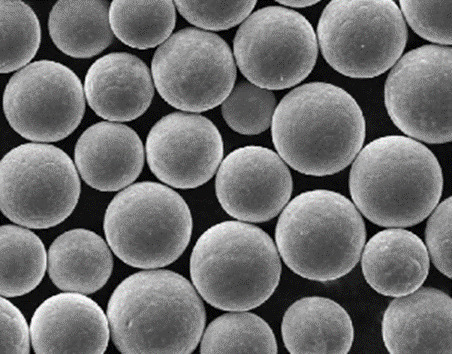
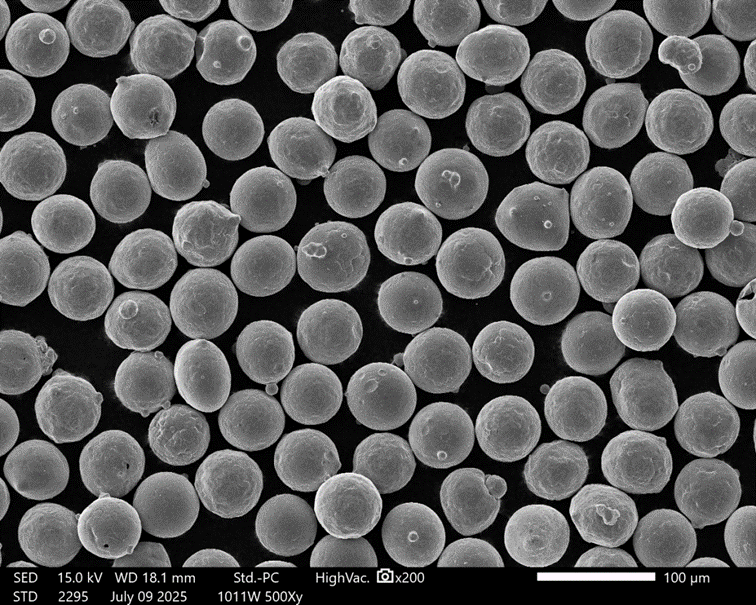
Spherical copper powder is copper that has been produced in particulate form with a predominantly rounded or near-spherical particle shape. In additive manufacturing, that geometry is not a cosmetic detail. It directly affects how the powder flows through hoppers, spreads across build plates, packs into thin layers, and melts under concentrated energy sources.
From a materials standpoint, spherical copper powder belongs to the broader family of nonferrous metal powders used for functional rather than purely structural performance. Copper is fundamentally different from stainless steel, titanium, or nickel superalloys in why engineers specify it. Most copper powder applications prioritize electrical conductivity, thermal conductivity, and diffusion of heat rather than high specific strength or high-temperature creep resistance.
Why particle shape matters in copper AM powder
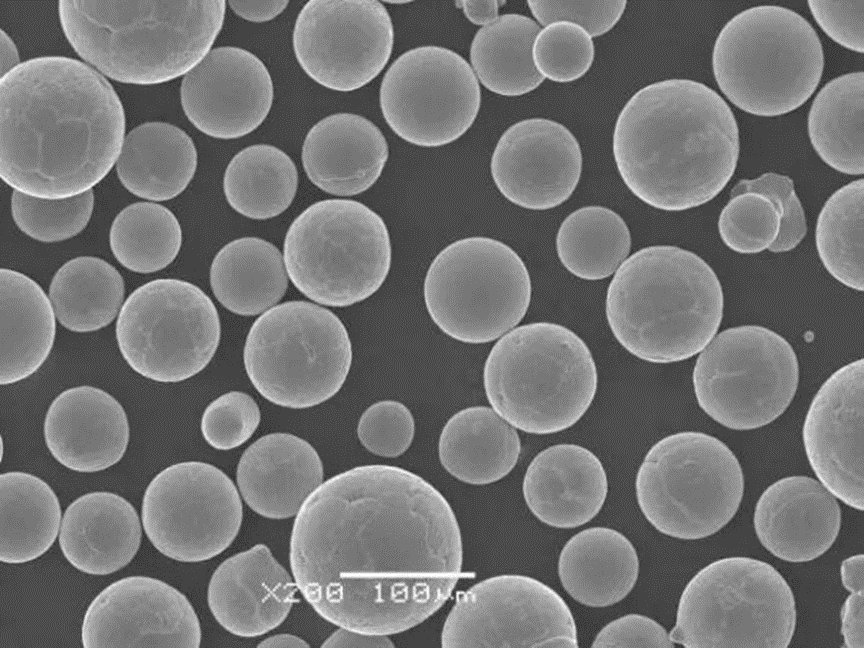
Copper can exist in dendritic, irregular, flake-like, and spherical powder forms. Each morphology suits different industrial uses. Flake copper may work in conductive inks or friction materials, while irregular copper may fit some conventional powder metallurgy routes. For additive manufacturing and precision powder feeding, however, spherical morphology is usually preferred because it improves flow consistency and reduces mechanical interlocking between particles.
This is particularly important in laser powder bed fusion and directed energy deposition, where process stability depends on the powder behaving predictably from layer to layer. Spherical particles also tend to provide better apparent density and more uniform recoating than irregular shapes.
Where spherical copper powder fits in the copper materials family
Spherical copper powder may refer to commercially pure copper or to copper-based alloys such as CuCrZr, bronze, or brass compositions produced with spherical morphology. When engineers use the term generically, they are often discussing the feedstock class rather than one exact chemistry. That distinction matters because pure copper emphasizes conductivity, while copper alloys may sacrifice some conductivity to gain hardness, strength, or thermal stability.
For buyers reviewing process-specific feedstocks, a broader copper alloy powder range can help clarify whether the application calls for pure copper, precipitation-strengthened copper, or a more wear-resistant copper-based system. The real selection question is usually not whether copper is needed, but which copper chemistry best matches the performance target.
Key characteristics of spherical copper powder
Copper offers very high thermal and electrical conductivity, solid corrosion resistance in many service environments, good ductility, and compatibility with brazing and joining operations. In powder form, those traits are combined with process-dependent factors such as oxygen level, particle size distribution, apparent density, and satellite content. Together, these define whether the powder will behave as premium AM feedstock or as a more general industrial metal powder.
The alloy family also has a well-known challenge: copper reflects laser energy strongly and conducts heat away from the melt pool rapidly. That makes processing more demanding than many steels or nickel alloys. As a result, success with spherical copper powder depends not only on alloy chemistry but also on machine capability, atmosphere quality, and tight powder control.
In copper additive manufacturing, conductivity is the reason to choose the material, but powder quality is the reason it actually works.
Why the material exists in powder form
Copper in bulk form is already widely used as bar, wire, plate, and forged stock. Powder form exists because some shapes and internal features are difficult or uneconomical to make conventionally. AM allows engineers to build conformal cooling channels, lightweight heat-transfer lattices, integrated manifolds, customized electrodes, and compact electrical geometries that would be impractical to drill or braze from multiple components.
That is the real industrial value of spherical copper powder: it allows copper’s functional advantages to be combined with geometric freedom. In many use cases, the powder is not replacing traditional copper; it is enabling copper designs that conventional processes cannot produce efficiently.
화학 성분
Copper powder looks chemically simple compared with multi-element superalloys, but that simplicity makes impurity control more important, not less. Small amounts of oxygen, phosphorus, iron, lead, sulfur, or nickel can affect conductivity, oxide behavior, joining response, and qualification outcomes. For high-end powder applications, the difference between acceptable and poor performance may be measured in trace-element control rather than bulk alloy changes.
| 요소 | Typical Content (wt%) | Role in the Material | Functional Effect in Powder and Built Parts |
|---|---|---|---|
| 구리(Cu) | Balance, typically ≥99.7 | Base matrix metal | Provides high electrical conductivity, high thermal conductivity, ductility, and corrosion resistance |
| 산소(O) | 0.01-0.10 typical, grade-dependent | Surface oxide and residual impurity | Excess oxygen can reduce conductivity, affect fusion behavior, and lower densification efficiency |
| 인(P) | ≤0.03 typical | Residual or deoxidation-related element | Higher levels reduce conductivity but may influence oxygen control in some copper grades |
| 철(Fe) | ≤0.05 typical | 잔류 불순물 | Can lower conductivity and introduce harder inclusions if elevated |
| 납(Pb) | ≤0.01 typical | Undesired residual | Usually tightly limited because it is unfavorable for high-purity conductive parts |
| 유황(S) | ≤0.01 typical | Undesired impurity | Can negatively affect hot workability and joining behavior |
| 니켈(Ni) | ≤0.05 typical | 잔류 불순물 | Small amounts may slightly increase strength, but reduce maximum conductivity |
| 아연(Zn) | ≤0.05 typical | 잔류 불순물 | Controlled to preserve purity and consistent thermal/electrical performance |
| 은(Ag) | ≤0.05 typical | Trace residual element | Usually minor at low levels, but may appear in refined copper feedstocks |
Purity drives conductivity performance
In spherical copper powder, purity is directly tied to function. A structural steel part can tolerate certain residual elements without losing its main reason for existence. Copper cannot. If the application is an electrode, RF part, or heat sink, electrical and thermal conductivity are primary performance metrics, so impurities that scatter electrons or alter heat flow have an outsized effect.
This is why technical buyers pay close attention to chemistry certificates even when the composition table appears simple. The powder may still be called copper, but not all copper powder performs equally in high-conductivity applications.
Oxygen control in spherical copper powder
Oxygen is the most important secondary variable because it is linked to surface oxidation. Every fine copper particle has a large surface-area-to-volume ratio, which means the oxide film matters more than it would in bulk stock. Excess oxide can reduce conductivity, change absorptivity, interfere with fusion, and influence powder reuse over multiple build cycles.
In AM, oxygen is also a process variable. A powder with acceptable initial chemistry can drift if it is repeatedly exposed to air, stored poorly, or handled under uncontrolled humidity. That is why serious powder programs treat storage and reuse strategy as part of feedstock qualification rather than as an afterthought.
Trace elements and specification discipline
Iron, sulfur, lead, and nickel are usually kept as low as practical in premium copper powders. Their main impact is less about tensile strength and more about downstream performance consistency, brazability, conductivity, and regulatory acceptability in some applications. For companies setting internal material acceptance procedures, the terminology and characterization framework in ISO/ASTM 52900 용어 helps clarify how feedstock variables are defined across additive manufacturing workflows.
물리적 및 기계적 특성
The most important properties of spherical copper powder become fully meaningful only after consolidation into a dense part, coating, or deposit. Powder itself has bulk metrics such as flowability and apparent density, but the reason engineers buy copper is the final functional performance of the built material. In that respect, copper stands apart from many AM metals because thermal and electrical behavior are often more important than tensile data.
| 속성 | 일반 값 | 단위 | Test Standard or Condition |
|---|---|---|---|
| Solid density | 8.93-8.96 | g/cm³ | Typical room-temperature copper value |
| 녹는점 | 1083-1085 | °C | Pure copper reference value |
| Ultimate tensile strength | 180-260 | MPa | Typical dense annealed to moderately worked condition |
| Yield strength (0.2% offset) | 60-180 | MPa | Strongly condition-dependent |
| 휴식 시 신장 | 20-45 | % | Dense consolidated copper, process-dependent |
| 경도 | 45-85 | HB | Annealed to lightly work-hardened condition |
| 탄성 계수 | 110-128 | GPa | 일반적인 실온 값 |
| 열 전도성 | 330-390 | W/m-K | High-purity condition, density-dependent |
| 전기 전도성 | 85-100 | % IACS | Grade- and process-dependent |
| 열팽창 계수 | 16-17 | µm/m·K | Approximate engineering range |
Thermal conductivity as the lead property
The strongest reason to use spherical copper powder is thermal conductivity. Copper moves heat far better than steels, titanium alloys, or nickel superalloys, which is why it is so attractive for heat exchangers, conformal cooling inserts, and localized thermal management features. In these parts, every point of porosity or oxide-related interruption can reduce heat transfer efficiency.
That is also why final density matters so much. A copper part that is dimensionally accurate but not sufficiently dense may meet geometric inspection while still underperforming in real thermal service.
Electrical conductivity and current-carrying applications
Electrical conductivity is equally important in busbar-adjacent hardware, induction coils, electrode bodies, current-transfer components, and RF devices. In such applications, resistive losses translate directly into heat generation and efficiency loss. A dense, clean copper structure can therefore improve both functional performance and system durability.
For this reason, copper powder selection often includes more attention to chemistry purity and oxygen than a typical structural alloy procurement would require. The end-use metric is not just strength per kilogram; it is conductivity per unit volume.
Mechanical properties in context
Copper is ductile and reasonably tough, but it is not generally chosen for the highest-load structural applications. Compared with titanium, high-strength aluminum, or nickel-based materials, it offers modest tensile and yield values. That is not a weakness in the wrong sense; it simply reflects that copper is a function-led material rather than a strength-led one.
In many real applications, this is acceptable. Cooling blocks, electrodes, and heat spreaders do not need the same property profile as turbine parts or load-bearing brackets. They need to survive service while doing a thermal or electrical job exceptionally well.
Why published property values vary widely
AM copper data varies because the material is highly process-sensitive. A part made by laser powder bed fusion may differ substantially from one made by electron beam, directed energy deposition, or cold spray, even if both are called copper. Build density, oxygen pickup, energy absorption, and post-processing all shift the final property set.
To compare those values responsibly, engineers often align test logic with broader materials references such as the NIST materials data resources while still validating the powder on their own machines. No generic table can substitute for process-specific qualification.
사양 및 제공 등급
Specifications for spherical copper powder combine chemistry control with powder engineering metrics. A technically acceptable copper feedstock must match the intended process route in particle size, roundness, oxide level, density behavior, and flow characteristics. Fine powder bed material and coarser deposition material can share nearly identical chemistry yet behave very differently in production.
| Grade or Reference Type | 일반적인 PSD 범위 | 겉보기 밀도 | 탭 밀도 | 홀 흐름 | 산소 함량 | Sphericity or Morphology | Standards or Cross-Reference |
|---|---|---|---|---|---|---|---|
| Fine LPBF grade | 15-45 µm | 4.5~5.0 g/cm³ | 5.0-5.6 g/cm³ | 14-22 s/50 g | ≤0.08 wt% typical | High sphericity, low satellites | Internal AM grade for fine-layer powder bed builds |
| Standard LPBF grade | 15-53 µm | 4.6~5.2 g/cm³ | 5.2-5.8 g/cm³ | 13-21 s/50 g | ≤0.08 wt% typical | Spherical and screened for uniform recoating | Common laser bed size range |
| DED grade | 45-105 µm | 4.8-5.4 g/cm³ | 5.4-6.0 g/cm³ | 12-19 s/50 g | ≤0.10 wt% typical | Free-flowing spherical powder | Directed energy deposition feedstock |
| Cladding or spray grade | 53~150 µm | 4.9~5.6 g/cm³ | 5.5-6.2 g/cm³ | 11-18 s/50 g | ≤0.12 wt% typical | Coarser spherical fraction | Laser cladding and thermal spray use |
| Standards reference row | - | - | - | - | Controlled per batch | Morphology verified by microscopy | Chemistry and powder QA commonly cross-checked to ASTM, ISO, GB, or DIN style specifications |
| Documentation row | - | - | - | - | Reported on certificate | PSD and shape documented | Purchase specs often combine internal AM limits with customer qualification plans |
Particle size distribution for AM copper powder
Particle size distribution determines how the powder layers, melts, and feeds. For laser powder bed fusion, 15-45 µm and 15-53 µm are widely used because they support relatively thin layers and stable recoating. For DED, cladding, and spray systems, coarser fractions are usually preferred to improve transport through nozzles and support thicker deposition streams.
The correct size window depends on the machine, not just the material. Laser spot size, layer thickness, shielding gas flow, and recoater design all influence which PSD delivers the most stable process behavior.
Apparent density, tap density, and flow
Apparent density reflects how the powder naturally packs under gravity, while tap density shows how packing improves under mechanical settling. Together, these metrics help characterize how efficiently the powder may pack in the feed system or powder bed. Hall flow provides a practical indication of powder movement, although very fine metallic powders may require complementary methods for a full picture of behavior.
For copper, these bulk metrics influence more than handling convenience. More consistent powder packing tends to support more uniform melting and more consistent part density, which in turn affects conductivity.
Oxygen, satellites, and reuse stability
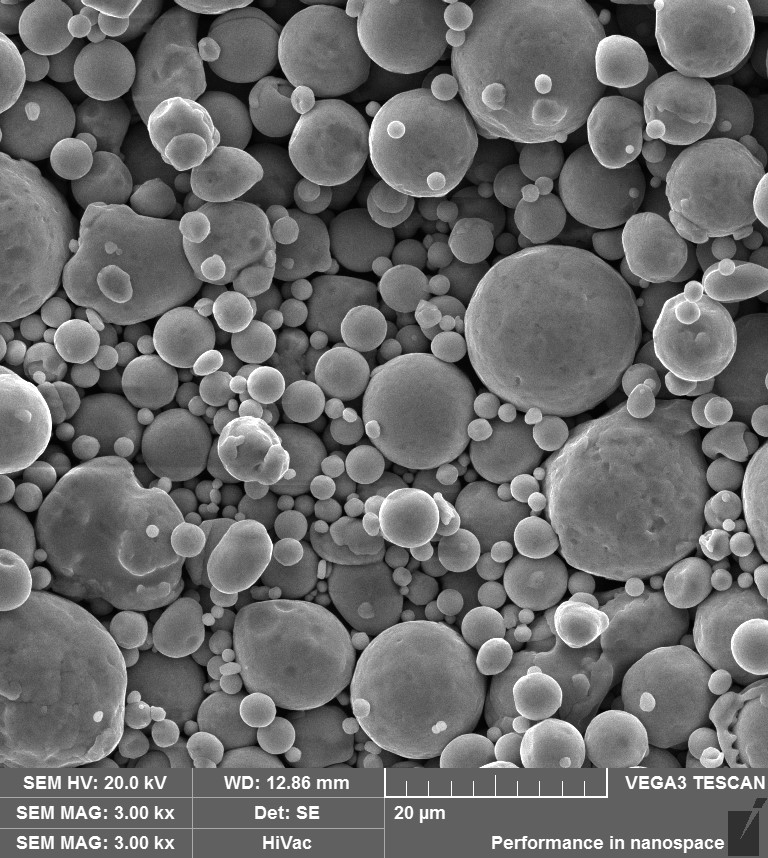
Oxygen level and satellite content are critical in spherical copper powder. Excess satellites can reduce flow and produce irregular spreading, while rising oxygen can increase oxide burden and reduce conductivity. Powder reuse therefore requires disciplined sieving, atmosphere control, and traceability.
Buyers qualifying reusable feedstock should define acceptable change windows rather than validating only virgin powder. The relevant question is not simply whether the first build works, but whether the powder remains stable through repeated production cycles.
Standards and supply logic
There is no single all-purpose AM designation that fully defines spherical copper powder across every build technology. Most users therefore write specifications that combine alloy purity, PSD, morphology, oxygen, and process intent. When a project may change direction toward different thermal or electrical materials, engineers sometimes compare copper against an aluminum powder product family or other low-density alternatives before locking the final feedstock.
제조 프로세스
Manufacturing route is one of the biggest determinants of powder quality. In copper systems, the atomization method influences particle roundness, oxygen pickup, internal porosity, size distribution, and commercial cost. Because copper’s AM performance is already more demanding than that of many other metals, feedstock quality established during powder manufacture becomes especially important.
| Process Route | Basic Principle | 구형성 | Oxygen Pickup Risk | PSD 제어 | 처리량 | 상대적 비용 | Typical Relevance to Copper Powder |
|---|---|---|---|---|---|---|---|
| 가스 분무(GA) | Inert gas disrupts a molten copper stream into droplets | 좋음 ~ 매우 좋음 | Low with strong inert atmosphere control | 매우 좋음 | 높음 | 보통 | Main commercial route for spherical copper AM powder |
| VIGA | Vacuum induction melting followed by gas atomization | 매우 좋음 | Very low to low | 매우 좋음 | 중간에서 높음 | 보통에서 높음 | Useful for improved cleanliness and tighter atmosphere control |
| 준비 | Plasma melts a rotating electrode and ejects droplets | 우수 | 매우 낮음 | 양호 | Medium | 높음 | Suitable for premium morphology, but less common for mainstream copper supply |
| EIGA | Electrode induction melting with gas atomization | Very good to excellent | 매우 낮음 | 좋음 ~ 매우 좋음 | Medium | 높음 | Chosen when contamination control is critical |
| 물 분무 | High-pressure water disintegrates the melt stream | Poor to fair for AM | 높음 | 양호 | 높음 | 낮음 | Usually unsuitable for premium spherical AM copper feedstock |
Gas atomization and mainstream spherical copper powder production
Gas atomization is the dominant commercial method for producing spherical copper powder used in additive manufacturing and related advanced processes. In this route, molten copper is broken into droplets by high-velocity inert gas, and those droplets solidify into rounded particles during flight. The powder is then collected, sieved, classified, tested, and packaged.
Its appeal lies in the balance between throughput, particle quality, and cost. When atmosphere control is strong, gas atomization can produce copper powder with sufficiently low oxygen and sufficiently good sphericity for demanding AM applications.
PREP, VIGA, and EIGA trade-offs
PREP is known for excellent morphology and low contamination because the powder forms from a rotating electrode rather than a conventional melt stream. For copper, that can be attractive in premium applications, but the process is generally more expensive and not always necessary for mainstream industrial use.
VIGA and EIGA improve melt cleanliness and atmosphere control, which can be valuable when conductivity is critical and oxygen limits are tight. These routes may justify their cost in high-end feedstocks, especially where buyers treat cleanliness as a functional requirement rather than just a quality preference.
Post-atomization classification and powder finishing
After initial powder production, the material must be classified into size cuts, stripped of oversized particles and excessive fines, and checked for satellites, chemistry, and bulk properties. These steps are essential because even a chemically correct copper powder can perform poorly if it is not well screened or if its shape distribution is inconsistent.
Packaging is part of manufacturing quality too. Copper powder must be protected from uncontrolled oxidation during storage and transport, especially in finer AM-grade fractions with high surface area.
How process choice affects end-use economics
The cheapest powder is not always the lowest-cost solution. A lower-grade copper powder may look attractive on price, yet produce poor layer spreading, lower density, lower conductivity, or unstable reuse behavior. In many production programs, those hidden costs outweigh the initial powder saving.
That economic logic becomes clearer when users compare copper with structurally driven materials such as 니켈 기반 합금 분말. Nickel systems may cost more per kilogram, but if the function is heat transfer or current carrying, they are not true substitutes for copper. The correct comparison is between feedstocks that can actually perform the same job.
산업별 적용 사례
Spherical copper powder is used in industries where geometry complexity must be combined with conductivity. That makes it especially relevant in electronics, energy, tooling, and aerospace subsystem design. Unlike general-purpose structural powders, copper feedstock is usually selected because the part has a clear functional task related to heat or current.
Electronics and electrical systems
Electronics manufacturing is a natural fit for spherical copper powder. Components such as heat spreaders, custom current paths, antenna-related hardware, induction parts, and specialized conductive housings benefit from copper’s ability to move both heat and electricity effectively. Additive manufacturing adds value when the geometry includes internal passages, tight packaging, or integrated multi-function features.
These applications also highlight why conductivity cannot be treated as a secondary property. If the part is meant to carry current, every defect that raises resistive loss becomes a performance issue.
Thermal management and cooling structures
Heat exchangers, cooling inserts, mold cooling blocks, and compact thermal control devices are among the strongest use cases for copper powder. AM allows conformal channels and complex internal surfaces that increase heat-transfer efficiency beyond what straight-drilled passages can typically achieve.
This is where high-conductivity copper feedstock becomes strategically important. Designers are not merely replacing a machined part with a printed part; they are redesigning the thermal architecture around copper’s conductivity and AM’s geometric freedom.
Aerospace and energy equipment
In aerospace and energy systems, copper powder is relevant in components such as thermal management hardware, current-carrying interfaces, induction devices, and combustion-adjacent cooling structures. These are not always the most visible parts in a system, but they can be critical to thermal stability and efficiency.
Where high service temperature or oxidation resistance becomes the dominant need, engineers may shift away from copper and toward 내화 금속 분말 종류. That shift usually indicates that conductivity remains important, but thermal survivability has overtaken it as the primary constraint.
Tooling, molds, and industrial manufacturing aids
Copper-based inserts are widely used where faster heat extraction improves cycle time and dimensional repeatability. AM copper powder is especially valuable when cooling must follow a complex contour or reach a local hotspot that conventional drilling cannot access.
Medical and oil-and-gas relevance
Copper is not typically a first-choice implant metal, so medical use is more likely to involve equipment components, thermal devices, or specialized tooling rather than long-term implanted hardware. In oil and gas, copper powder has a narrower role, generally tied to thermal or electrical subsystems rather than primary load-bearing parts exposed to severe downhole conditions.
대체 소재와의 비교
Selecting spherical copper powder is always a comparative exercise. Engineers must decide whether the project needs maximum conductivity, lower density, higher strength, easier printability, or greater corrosion resistance. The most realistic alternatives are often copper alloys, aluminum AM powders, stainless steels, and titanium alloys.
| 재질 | 밀도(g/cm³) | 일반적인 체력 수준 | Relative Printability | Electrical/Thermal Conductivity | 내식성 | 상대적 비용 | 가장 적합한 사용 사례 |
|---|---|---|---|---|---|---|---|
| Spherical copper powder | 8.93-8.96 | 낮음에서 보통 | Moderate to difficult | 우수 | 양호 | 보통에서 높음 | Conductive and heat-transfer parts with complex geometry |
| CuCrZr 구리 합금 분말 | 8.8-8.9 | 보통에서 높음 | 보통 | 매우 좋음 | 양호 | 높음 | Cooling hardware needing more strength than pure copper |
| AlSi10Mg 분말 | 2.67 | 보통에서 높음 | 매우 좋음 | 보통 | 양호 | 보통 | Lightweight aluminum AM parts with broader process window |
| 316L 스테인리스 스틸 파우더 | 7.90-8.00 | 보통 | 우수 | 낮음 | 매우 좋음 | 보통 | Corrosion-resistant industrial components where conductivity is secondary |
| Ti-6Al-4V 분말 | 4.43 | 높은 비강도 | 좋음 ~ 매우 좋음 | 낮음 | 매우 좋음 | 높음 | Lightweight high-performance structural parts |
Spherical copper powder versus CuCrZr
This is often the most meaningful same-family comparison. CuCrZr gives up some maximum conductivity in return for higher strength and better performance under certain thermal-mechanical demands. If the component must carry more load while still managing heat effectively, CuCrZr may be the better compromise.
Copper versus aluminum powders
Aluminum powders are much lighter and often easier to process in lightweight structural applications, but they do not match copper’s thermal or electrical conductivity. If heat transfer or current carrying is the main objective, aluminum is usually selected only when mass reduction overrides pure functional efficiency.
Copper versus stainless steel and titanium
Stainless steel and titanium are stronger structural materials in many AM scenarios and can be easier to qualify mechanically. However, they are not real substitutes where conductive performance defines part success. Functional conductivity advantage is what keeps copper in a distinct category despite its more demanding process behavior.
당사
Shanghai Truer Technology Co., Ltd., the company operating am-printing.com, was established in 2009 and created its additive manufacturing business in 2019. Based on the company information provided, its activities include integrating 3D printing powder-making equipment and services with spherical metal powders for engineering applications, with core technologies that include Selective Electron Beam Melting equipment, Plasma Rotating Electrode Process powder-making equipment, and Gas Atomization where relevant. Its powder portfolio covers TiNi, TiTa, TiAl, TiNbZr, CoCrMo, and spherical powders across nickel-, cobalt-, titanium-, copper-, aluminum-, and stainless-steel families for processes including SLM, SEBM, DED, laser cladding, powder metallurgy, MIM, HIP, cold or hot spraying, welding, and coating in sectors such as 3C electronics, hand tools, remote-control cars, medical, aerospace, and nuclear power; additional company background is available on the company information page.
자주 묻는 질문
Q1. Is spherical copper powder good for metal 3D printing?
Yes, but it is usually considered a specialized AM material rather than an entry-level one. It is highly valuable when thermal or electrical conductivity is the core design requirement, although it typically needs tighter parameter control than stainless steel or many aluminum powders.
Q2. Why is spherical copper powder preferred over irregular copper powder?
Spherical particles generally flow better, spread more evenly, and pack more consistently than irregular particles. Those characteristics help stabilize powder delivery and improve the likelihood of achieving dense, repeatable copper parts.
Q3. What particle sizes are common for spherical copper powder in additive manufacturing?
Laser powder bed fusion commonly uses fine fractions such as 15-45 µm or 15-53 µm. Directed energy deposition, thermal spray, and cladding more often use coarser grades such as 45-105 µm or 53-150 µm for more reliable powder feeding.
Q4. How does spherical copper powder compare with CuCrZr powder?
Pure or near-pure copper emphasizes maximum conductivity, while CuCrZr offers a more balanced combination of conductivity and strength. If the part’s main job is moving heat or current, copper is often favored; if it must also tolerate higher mechanical loads, CuCrZr may be more suitable.
Q5. What should buyers verify before qualifying spherical copper powder?
They should verify chemistry, oxygen content, particle size distribution, apparent density, tap density, flow behavior, sphericity, and satellite level. Batch traceability, storage conditions, and reuse strategy are also important because powder condition can change over time and directly affect density and conductivity.
Q6. Which industries rely most on spherical copper powder?
The most common users are electronics, thermal management, tooling, energy, and aerospace subsystem developers. These industries use it for heat exchangers, cooling inserts, induction parts, electrodes, RF hardware, and other geometrically complex components where high conductivity is a functional requirement rather than a secondary benefit.