간단한 답변
4140 MIM steel powder is a low-alloy chromium-molybdenum steel feedstock designed for metal injection molding and, in some cases, adjacent powder-based manufacturing routes. It is typically chosen when engineers need a combination of high strength, heat-treat response, wear resistance, and better toughness than plain carbon steels at a controlled part cost. For precision parts, 4140 is especially useful in gears, levers, locking components, tooling hardware, and structural small parts that must hold tolerances after sintering and finishing.
What Is 4140 MIM steel powder
4140 MIM steel powder is a powdered form of AISI 4140, a chromium-molybdenum medium-carbon alloy steel that has long been used in wrought, forged, and machined components requiring a balance of strength and toughness. In the MIM context, the alloy is adapted into fine powder feedstock suitable for mixing with binders, injection molding, debinding, and sintering into near-net-shape parts.
4140 MIM Steel Powder Within the Low-Alloy Steel Family
Among ferrous powders, 4140 sits in the low-alloy steel powder category rather than the stainless or tool-steel categories. Its identity comes from its chromium and molybdenum additions, which distinguish it from simpler MIM materials such as 4605 or plain iron-carbon systems. Those additions improve hardenability and tempering response, making the alloy attractive for parts that must be heat treated after sintering.
In practical terms, 4140 occupies the middle ground between economical carbon steels and more highly alloyed, corrosion-resistant materials. It is not the cheapest MIM feedstock available, but it often provides a stronger property ceiling and more reliable post-sinter heat-treatment performance than lower-alloy alternatives.

Why 4140 Exists as a MIM Feedstock
MIM is used when a component is too small, too complex, or too expensive to machine efficiently from bar stock. A wrought 4140 part may offer excellent properties, but if the geometry includes internal contours, undercuts, thin ribs, or high-volume repetition, the manufacturing cost can rise quickly. Converting the alloy into powder feedstock allows complex parts to be molded close to final shape and then densified.
That is the real purpose of 4140 MIM steel powder: not to replace every wrought 4140 component, but to bring the familiar metallurgy of 4140 into a process suited to compact, intricate, repeatable parts. Within a broader iron alloy powder portfolio, it belongs to the class of structural ferrous powders used when load-bearing performance matters more than cosmetic corrosion resistance.
How 4140 MIM Differs from Wrought 4140
The chemistry target may resemble standard 4140 steel, but the material state is very different. Wrought 4140 begins as a fully dense cast-and-worked product, while MIM 4140 starts as powder and reaches its final microstructure only after molding, binder removal, sintering, and often quench-and-temper treatment. Residual porosity, shrinkage control, and carbon management therefore matter far more in MIM than they do in bar-stock machining.
This difference explains why engineers should not assume that a MIM 4140 datasheet will mirror a wrought 4140 handbook value. MIM parts can achieve excellent strength, but their properties depend strongly on final density, pore morphology, and thermal history. A well-sintered and properly heat-treated MIM part can perform impressively, yet its qualification path is distinct from that of wrought steel.
Core Characteristics of 4140 MIM Feedstock
The main technical attractions are hardenability, heat-treat flexibility, good dimensional efficiency in complex shapes, and a useful strength-to-cost balance. Chromium increases hardenability and supports wear resistance. Molybdenum helps with tempering response and high-temperature strength retention during thermal processing. Carbon enables quench-and-temper strengthening, provided that carbon pickup or loss is controlled during debinding and sintering.
Powder morphology also matters. For MIM, the feedstock is usually much finer than standard laser powder bed fusion material, because fine particles improve packing and sinterability. Whether the powder is gas atomized, water atomized, or blended into a tailored feedstock, the key requirement is that it molds uniformly and densifies predictably.
Why Engineers Still Specify 4140
4140 remains widely specified because it is familiar, forgiving, and versatile. Designers know how it responds to carburizing alternatives, through-hardening schedules, machining, grinding, and black-oxide or coating systems. That familiarity reduces development risk when a program moves from machined parts to MIM.
As a material category, it also aligns well with the way ISO/ASTM 52900 적층 제조 용어 distinguishes powder-based manufacturing routes by feedstock and process logic. While MIM is not the same as laser powder bed fusion, the same powder-quality concerns—particle size, contamination, and consistency—still shape the outcome.
In small structural parts, process control often matters as much as nominal alloy chemistry.
화학 성분
A 4140 MIM feedstock aims to preserve the standard chemistry logic of AISI 4140 while accounting for powder processing and sintering behavior. The alloy is centered on iron with medium carbon and moderate chromium-molybdenum additions, producing a steel that responds well to quench and temper cycles. In MIM, phosphorus, sulfur, oxygen, and carbon control are particularly important because they influence embrittlement risk, shrinkage behavior, and final density.
Typical Chemistry of 4140 MIM steel powder
| 요소 | Typical wt.% Range | 야금학적 역할 | Functional Effect |
|---|---|---|---|
| Fe | 잔액 | Base matrix | Forms the structural matrix and carries the alloy system |
| C | 0.38–0.43 | Strengthening and hardenability element | Enables martensitic transformation and raises hardness after heat treatment |
| Mn | 0.75–1.00 | Deoxidizer and hardenability aid | Improves hardenability and supports hot processing response |
| Si | 0.15–0.35 | 탈산제 | Contributes modest strengthening and melt cleanliness |
| Cr | 0.80-1.10 | Alloying for hardenability and wear | Improves through-hardening, wear resistance, and oxidation resistance relative to plain carbon steel |
| Mo | 0.15–0.25 | Tempering and hardenability element | Enhances hardenability and resists softening during tempering |
| P | ≤0.035 | Residual impurity control | Must be limited because excess phosphorus reduces toughness |
| S | ≤0.040 | Residual impurity control | Improves machinability in some steels but is generally kept low for strength and toughness in MIM |
| O | Typically controlled, often ≤0.20 in powder | Interstitial / contamination control | Excess oxygen can hinder sintering and reduce ductility |
The composition is familiar to anyone who has worked with AISI 4140 in wrought form. What changes in MIM is the sensitivity of each element to processing. Carbon, for example, is not merely a chemistry number on a certificate; it is a moving variable during debinding and sintering. If the furnace atmosphere is not well controlled, the part can decarburize or carburize, shifting hardness and dimensional behavior.
Metallurgical Role of Chromium and Molybdenum
Chromium is the defining alloy addition that lifts 4140 above plain medium-carbon steel. It slows transformation during cooling, which makes thicker sections—or in MIM, denser cross-sections—more likely to harden uniformly during quenching. That gives the alloy its reputation for dependable response in shafts, gears, and fast-loaded parts.
Molybdenum works with chromium rather than replacing it. In 4140, molybdenum improves resistance to temper embrittlement and helps retain useful strength after thermal cycles. That becomes valuable in MIM because thermal exposure is unavoidable during debinding, sintering, and post-sinter heat treatment.
Carbon Control in 4140 MIM Steel Powder
Carbon is the element that most strongly affects final hardness and strength, but it is also one of the easiest to disturb during processing. A part that sinters under a mildly oxidizing atmosphere can lose carbon from the surface, while a carbon-rich atmosphere or binder residue can increase local carbon content. Either deviation can alter distortion, case condition, and heat-treatment response.
For that reason, experienced processors pay close attention to furnace atmosphere, dew point, binder selection, and thermal profile. In MIM 4140, composition control is inseparable from process control. The alloy can only deliver predictable properties when the carbon target survives the whole route from powder blending to final temper.
Residuals, Oxygen, and Powder Cleanliness
Phosphorus and sulfur are kept low because they can reduce toughness or create weak points after sintering. Oxygen deserves equal attention even though it is not a classic alloying element. Oxides on particle surfaces can slow densification, trap pores, and reduce ductility in the finished part.
That is one reason why buyers evaluating fine ferrous feedstock often compare lot data the same way they would compare NIST materials data resources or published alloy references: not just by nominal chemistry, but by the quality of the measurement and the relevance of the test condition. For MIM, powder cleanliness affects process yield as directly as chromium or molybdenum content does.
물리적 및 기계적 특성
The mechanical value of 4140 MIM steel lies in the fact that it can be sintered into complex parts and then heat treated to achieve a useful range of performance. Final properties depend on density, section thickness, furnace control, and post-sinter thermal treatment, so any table should be read as representative rather than universal. In practice, engineers qualify 4140 MIM by condition: as-sintered, sinter-hardened, or quenched and tempered.
Typical Properties of 4140 MIM Parts Made from 4140 MIM steel powder
| 속성 | 일반 값 | 단위 | 테스트 표준 |
|---|---|---|---|
| 소결 밀도 | 7.55–7.80 typical | g/cm³ | Archimedes / MPIF-style density method |
| 용융 범위 | 1,415–1,450 typical | °C | Thermal analysis |
| Ultimate tensile strength | 900–1,500 typical | MPa | ASTM E8 / ISO 6892 |
| Yield strength, 0.2% offset | 650–1,200 typical | MPa | ASTM E8 / ISO 6892 |
| 신장 | 2–12 typical | % | ASTM E8 / ISO 6892 |
| 경도 | 25–45 typical | HRC | ASTM E18 |
| Young’s modulus | 180–205 typical | GPa | Tensile / resonance methods |
| 열 전도성 | 35–43 typical | W/m-K | Comparative thermophysical method |
| Fatigue behavior | Strongly density- and surface-dependent | - | Rotating-bend / axial fatigue methods |
The most important word in that table is “typical.” MIM 4140 parts can vary significantly depending on whether they are left as-sintered or pushed to a higher strength level through quenching and tempering. A high-density, well-heat-treated part can approach the structural role expected of wrought alloy steel in small components, while a lower-density or minimally treated part may be better suited to moderate-load service.
Density and Why It Drives Everything
Sintered density is central to performance because porosity influences strength, toughness, fatigue resistance, and dimensional stability. In MIM, even a small shift in pore size or pore connectivity can have an outsized effect on fatigue life. That is why density is often one of the first acceptance criteria reviewed in structural 4140 parts.
Higher density usually improves tensile properties and machinability, but it may also require tighter control of feedstock and furnace conditions. Engineers looking for high-end performance should evaluate not only the average density, but also the uniformity of densification across thick and thin sections.
Heat Treatment Response of 4140 MIM Components
One reason 4140 remains attractive is its flexibility after sintering. It can be quenched and tempered to achieve higher hardness and strength, or tempered more gently when toughness and dimensional stability are the priority. That flexibility helps MIM producers tune one base geometry for different service requirements.
The catch is that residual porosity changes heat flow and transformation behavior compared with fully dense wrought material. Hardness can still be excellent, but quench severity and tempering practice may need adjustment. In MIM, standard alloy knowledge remains useful, yet it has to be applied with an understanding of porous microstructures.
Wear, Toughness, and Service Balance
4140 is often chosen because it delivers a balanced property set rather than an extreme one. It generally offers better toughness than very high-carbon steels and better strength than simpler iron-based MIM grades. When surface wear is important, the alloy can also accept coatings, nitriding, or black-oxide finishing depending on the application.
This balance is why the material is common in moving assemblies. Springs are usually not its first choice, and corrosive chemical service may call for stainless steel instead, but for gears, pawls, lock parts, hand-tool internals, and actuator pieces, 4140 is a credible engineering middle ground.
사양 및 제공 등급
For 4140 MIM, specification discipline begins with powder size and ends with part-level validation. Because MIM feedstock uses fine powder blended with organic binder, the particle distribution is generally much finer than laser powder bed fusion feedstock. Buyers also pay close attention to flow, tap density, oxygen, and lot-to-lot repeatability because those variables affect molding uniformity and sintering shrinkage.
Typical Supply Options for 4140 MIM steel powder
| Grade / Supply Condition | 일반적인 PSD 범위 | 겉보기 밀도 | 탭 밀도 | 홀 흐름 | 산소 함량 | 구형도 / 형태 | Cross-Reference / Typical Use |
|---|---|---|---|---|---|---|---|
| Fine MIM grade | D50 often 6–12 µm; D90 commonly <22 µm | 2.8–3.6 g/cm³ | 4.0-5.0 g/cm³ | Often not preferred for very fine MIM powders | ≤0.20 wt.% typical | Fine spherical to rounded | Standard MIM feedstock for small structural parts |
| Premium spherical MIM grade | D50 often 8–15 µm; controlled fines | 3.0–3.9 g/cm³ | 4.2–5.2 g/cm³ | Conditional / application-specific | ≤0.15 wt.% typical | High sphericity, low satellites | High-consistency molding and better feed homogeneity |
| Coarser press-and-sinter crossover grade | 15-45 µm | 3.2–4.2 g/cm³ | 4.5–5.5 g/cm³ | Measurable in many lots | ≤0.20 wt.% typical | Rounded to spherical | PM or specialty binder-based routes rather than fine MIM |
| Water-atomized economy grade | Broad, often under 20 µm after classification | 2.6–3.3 g/cm³ | 3.8–4.8 g/cm³ | 변수 | ≤0.30 wt.% typical | Irregular to semi-rounded | Cost-sensitive MIM where sintering and rheology are validated carefully |
| Standards alignment row | Supplier-specific | - | - | Frequently referenced to ASTM B213 flow test methods when applicable | Supplier-specific | Verified by SEM / image analysis | Compared against AISI 4140 chemistry practice, MPIF methods, ISO test logic, and internal qualification plans |
Unlike AM powder specifications built around 15–53 µm or 45–105 µm cuts, MIM feedstocks often rely on fine-particle statistics such as D10, D50, and D90 because the molded flow behavior depends heavily on the fine end of the distribution. A powder that is ideal for recoating in laser powder bed fusion would usually be too coarse for high-performance MIM.
Standards and Cross-Reference Logic
There is no single universal document that fully defines “4140 MIM steel powder” across chemistry, powder morphology, molding behavior, sintering, and final mechanical performance. Engineers typically combine chemistry expectations from AISI 4140 practice with powder-test methods, internal MIM specifications, and part-level qualification plans. That layered approach is normal in precision powder metallurgy.
For dimensional and tolerance-sensitive production, standards for finished parts may matter more than alloy family naming alone. Buyers therefore treat the material standard, the powder test standard, and the final part drawing as three connected but distinct control documents.
What Procurement Teams Usually Ask For
A complete purchase package often includes chemistry, laser or sedimentation PSD, oxygen and carbon data, apparent density, tap density, morphology images, and binder-compatibility notes if the powder is supplied as a feedstock-ready material. For structural programs, customers also request shrinkage data, debinding profile guidance, sintering window recommendations, and mechanical properties in the specified heat-treated condition.
That information matters because MIM is sensitive to feedstock consistency. A small change in fine fraction or oxygen level can alter viscosity, molding pressure, debinding behavior, and final density. Many sourcing teams route such technical questions through a documented powder inquiry contact rather than relying on a single datasheet line.
Powder Form, Flow, and Molding Behavior
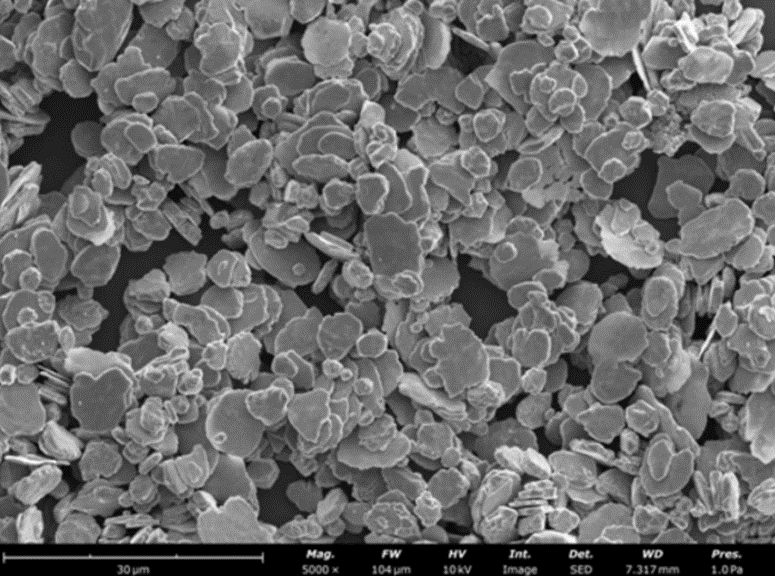
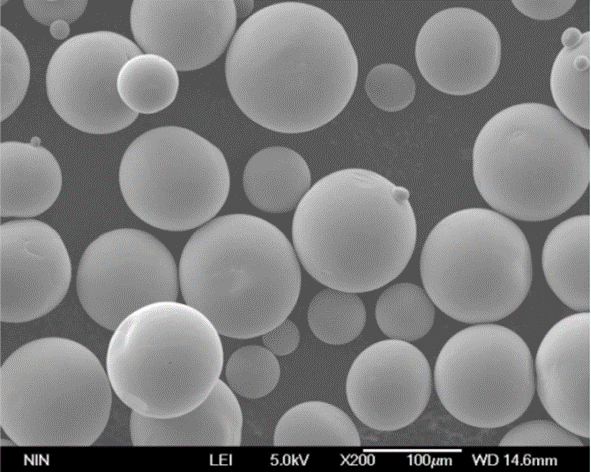
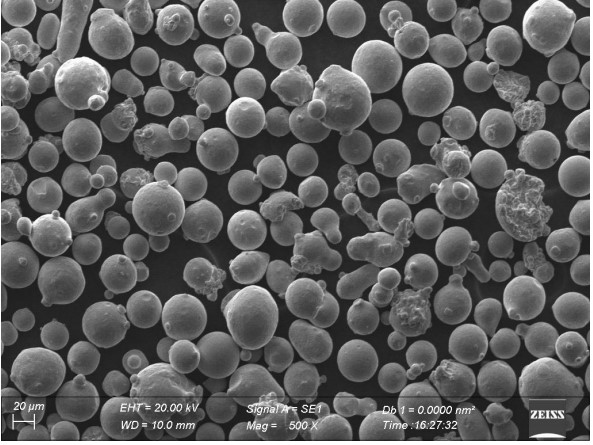
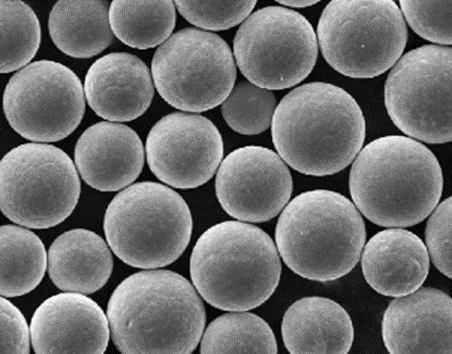
A frequent misconception is that the “best” MIM powder is always the most spherical one. Sphericity helps packing and cleanliness, but binder wetting, surface chemistry, and particle-size breadth are equally important. In some MIM systems, a carefully controlled irregular or semi-rounded powder can still perform well if the rheology and sintering profile are optimized for it.
That is why qualification cannot stop at morphology images. The true measure of suitability is whether the powder molds uniformly, debinds without cracking, and sinters to the targeted density and dimensions.
제조 프로세스
The route used to produce 4140 powder shapes both performance and cost. For MIM, powder can be made by gas atomization, water atomization, or less commonly by premium routes such as VIGA, EIGA, or PREP. The powder-making method influences sphericity, surface oxide level, particle-size control, and ultimately the behavior of the feedstock during mixing, molding, and sintering.
Powder-Making Routes Relevant to 4140 MIM steel powder
| 프로세스 | 구형성 | 산소 픽업 | PSD 제어 | 처리량 | 상대적 비용 |
|---|---|---|---|---|---|
| 물 분무 | 낮음~중간 | 보통에서 높음 | Good after classification | 높음 | 낮음 |
| 가스 분무(GA) | 높음 | 낮음에서 보통 | 양호 | 높음 | 보통 |
| 진공 유도 가스 분무법 (VIGA) | 매우 높음 | 낮음 | 매우 좋음 | 중간에서 높음 | 보통에서 높음 |
| 전극 유도 가스 분무법 (EIGA) | 매우 높음 | 매우 낮음 | 매우 좋음 | Medium | 높음 |
| 플라즈마 회전 전극 공정(PREP) | Extremely high | 매우 낮음 | Good, often less efficient for fine MIM cuts | 낮음~중간 | 매우 높음 |
Gas Atomization and Water Atomization Trade-Offs
For 4140 MIM, gas atomization is often preferred when the goal is clean, spherical powder with good rheology and predictable densification. The particles are smoother and less oxidized than water-atomized powder, which can help with binder mixing and sintering response. However, this quality advantage usually comes at a higher feedstock cost.
Water atomization remains important because it is economical and scalable. Its particles are more irregular, which can reduce flowability but sometimes improve green strength in compacted systems. In MIM, whether that trade-off is acceptable depends on the binder system and the demanded mechanical performance of the final part.
VIGA, EIGA, and PREP in Context
Premium powder-making methods such as VIGA, EIGA, and PREP are technically impressive, but they are not always economically rational for 4140 MIM. VIGA improves cleanliness and chemistry control by combining vacuum melting with gas atomization. EIGA and PREP produce very clean, highly spherical particles, but these methods are more often justified for reactive or high-value alloys such as titanium rather than commodity structural steels.
That said, they are still useful benchmarks. They show what the upper end of powder morphology and contamination control looks like. For especially demanding fine-powder applications, the comparison can inform whether the extra powder quality translates into better molding stability or merely adds cost without enough process benefit.
Why Debinding and Sintering Matter More Than the Atomizer Alone
Powder making is only the first half of the manufacturing story. After atomization or classification, 4140 MIM powder is compounded with binder, pelletized, injection molded, debound, and sintered. Each one of those steps can change carbon balance, pore structure, and dimensional behavior.
That is why debinding and sintering often dominate the final result. A premium spherical powder cannot rescue a poorly tuned thermal cycle, and a moderately priced powder can still produce strong parts if the furnace atmosphere and shrinkage control are well managed. In MIM, route integration matters more than any single process step.
Post-Sinter Heat Treatment
Most structural 4140 MIM components are not used straight out of the furnace if demanding strength is required. Quenching and tempering are common because they unlock the alloy’s main advantage over simpler MIM steels. Depending on geometry, some producers may also machine critical surfaces, grind wear points, or apply black oxide, phosphate, nitriding, or coating systems after heat treatment.
These secondary steps should be considered part of the material system rather than add-ons. When engineers specify 4140, they are typically specifying a powder-plus-process combination, not just a powder chemistry.
산업별 적용 사례
4140 MIM is best suited to high-volume or medium-volume small parts that need structural performance without the cost of extensive machining. Its strength, toughness, and heat-treatment response make it more versatile than plain iron MIM materials, while its cost remains lower than many stainless or nickel alloys. The result is a material favored in mechanical assemblies rather than highly corrosive or cosmetic environments.
Automotive and Mobility Components Using 4140 MIM Steel Powder
Automotive applications are one of the most natural fits. Typical uses include pawls, shift parts, small gears, locking elements, sensor housings, rocker components, actuator internals, and compact drivetrain hardware. These parts benefit from 4140’s ability to combine complex geometry with post-sinter hardening.
The same logic extends to motorcycles, e-bikes, and compact mobility systems. Where a component must carry repeated load in a limited envelope, 4140 often offers a more attractive balance than plain iron or austenitic stainless steel.
Tooling, Hand Tools, and Mechanical Hardware
MIM 4140 is also common in tool-related components such as ratchet internals, trigger parts, clamps, fixtures, latches, and couplings. Many of these parts require wear resistance and good edge integrity but do not need the full expense of tool steel. That places 4140 in a useful middle zone for mechanical hardware.
The alloy also works well in products with large part counts and moderate dimensional complexity. In such programs, near-net shaping can reduce machining hours while preserving the heat-treat response that designers expect from conventional alloy steel.
Oil and Gas, Energy, and Industrial Equipment
For oil and gas or energy equipment, 4140 MIM can be suitable for small wear-prone parts, valve internals, connectors, retainers, and instrument hardware operating in non-severe corrosion environments. It is less appropriate where chloride resistance, sour service compliance, or elevated corrosion immunity are mandatory. In those cases, stainless or nickel-based materials may be safer choices.
This distinction matters because 4140 is a structural alloy first and a corrosion-resistant alloy second. Its best industrial applications are therefore those where strength and hardenability matter more than long-term exposure to aggressive media.
Aerospace, Medical, and Precision Devices
Aerospace use tends to focus on non-flight-critical small hardware, ground-support parts, or precision mechanism components rather than corrosion-critical or temperature-critical structures. Medical use is generally limited to non-implant tools, fixtures, and device internals because 4140 does not offer the corrosion profile needed for many patient-contact roles. In both sectors, application fit depends on regulatory pathway and environment.
A broader view of part categories can be seen through these industrial application sectors, where MIM and powder-based forming are used for compact precision components across different end markets. The common thread is geometric complexity paired with repeatable production.
Where 4140 Is Not the Best Choice
4140 is not ideal for highly corrosive wet service, lightweight structures, or parts that demand maximum ductility after sintering. Stainless steels, titanium alloys, or nickel alloys may be more appropriate in those cases. The main reason to choose 4140 is its cost-to-strength ratio in mechanical duty, not universal compatibility with every environment.
대체 소재와의 비교
Comparing 4140 with alternative powders is the fastest way to understand its real role. Engineers rarely choose a material in isolation; they choose among a family of process-compatible options with different trade-offs in strength, corrosion behavior, printability, and price. For MIM, the most common comparison set includes 17-4 PH stainless, 316L stainless, 4605 low-alloy steel, and in some cases tool steel grades.
4140 MIM steel powder vs competing powder materials
| 재질 | 밀도(g/cm³) | Strength Level | 내식성 | 상대적 비용 | 공정성 | 가장 적합한 사용 사례 |
|---|---|---|---|---|---|---|
| 4140 MIM steel powder | 7.55–7.80 sintered | High after heat treatment | 보통 | Medium | Good in qualified MIM routes | Structural precision parts, gears, latches, actuator hardware |
| 17-4 PH 스테인리스 분말 | 7.60–7.75 sintered | 높음 | 좋음 ~ 매우 좋음 | 중간에서 높음 | 매우 좋음 | Corrosion-conscious structural parts and device hardware |
| 316L stainless powder | 7.55–7.75 sintered | 보통 | 우수 | Medium | 매우 좋음 | Corrosion-resistant parts with lower strength demand |
| 4605 low-alloy steel powder | 7.40–7.70 sintered | 보통에서 높음 | 낮음에서 보통 | Lower | 양호 | Cost-sensitive structural parts with simpler performance targets |
| Tool steel MIM powder | 7.50–7.80 sintered | 매우 높은 경도 | 낮음에서 보통 | 높음 | More demanding | Wear-critical parts, cutting or forming hardware |
Against 17-4 PH, 4140 usually gives up corrosion resistance but can remain attractive when alloy cost and conventional heat-treatment familiarity matter. Against 316L, it offers significantly higher strength potential, though it lacks stainless performance in wet or chemically active environments. Against 4605, 4140 often provides a stronger and more heat-treat-responsive alloy platform at somewhat higher cost.
How Selection Decisions Usually Play Out
If the part lives in a humid, washdown, or chemical environment, stainless grades often win even if 4140 could meet the strength target. If the part is a compact structural mechanism inside a dry assembly, 4140 is often the more efficient choice. That is especially true when designers need strength and wear resistance but do not want the added cost of higher-alloy systems.
When the comparison expands beyond steels, engineers may also consider titanium alloy powders for lightweight parts 또는 nickel-based powder grades for high-heat service. Those materials solve different problems, which helps clarify 4140’s niche: economical, strong, heat-treatable precision ferrous parts.
당사
Shanghai Truer Technology Co., Ltd, which operates am-printing.com, states that it was established in 2009 and created its additive manufacturing business in 2019. According to the company profile presented on its corporate background page, its activities include integrating 3D-printing powder-making equipment and services with metal powder supply; its core technologies include Selective Electron Beam Melting equipment, Plasma Rotating Electrode Process powder-making equipment, and Gas Atomization; and its powder portfolio includes TiNi, TiTa, TiAl, TiNbZr, CoCrMo, as well as nickel-based, cobalt-based, titanium-based, copper-based, aluminum-based, and stainless steel spherical metal powders. The company also describes a joint innovation center for metal 3D printing and support for processes including SLM, SEBM, DED, laser cladding, PM, MIM, HIP, cold and hot spraying, welding, and coating for industries such as medical, aerospace, nuclear power, 3C electronics, hand tools, and remote-control vehicle components.
자주 묻는 질문
Q1. Is 4140 MIM steel powder the same as standard AISI 4140 steel?
It follows the same alloy family and broadly similar chemistry logic, but it is not the same material state as wrought bar or plate. MIM parts begin as fine powder and develop their final density and microstructure through molding, debinding, sintering, and heat treatment. That means final properties depend more heavily on porosity and thermal processing than in wrought 4140.
Q2. What particle size is typical for 4140 MIM steel powder?
Most MIM feedstocks use very fine powder, often with D50 values in the single-digit to low-teens micron range and D90 values kept relatively low for sinterability. Exact distribution depends on binder system and molding requirements. The powder is generally much finer than steel powder intended for laser powder bed fusion.
Q3. Can 4140 MIM parts be heat treated after sintering?
Yes, and that is one of the main reasons the alloy is chosen. Quench-and-temper treatment can significantly raise hardness and strength, provided the sintered density and carbon balance are appropriate. Heat-treatment schedules should be qualified on actual MIM geometry rather than copied directly from wrought-steel practice.
Q4. Is 4140 MIM steel powder better than 17-4 PH stainless for structural parts?
It is better in some dry mechanical applications where high strength and conventional alloy-steel economics matter most. It is not better when corrosion resistance is a primary requirement, because 17-4 PH offers a stronger stainless performance profile. The correct choice depends on service environment, finishing, and regulatory needs.
Q5. What defects matter most when qualifying 4140 MIM components?
The most critical issues are usually residual porosity, carbon variation, distortion, cracking during debinding, and inconsistent hardness after heat treatment. Surface-connected pores can also hurt fatigue performance and coating quality. Good qualification therefore combines metallography, density checks, dimensional inspection, and condition-specific mechanical testing.
Q6. Which industries rely most on 4140 MIM steel powder?
Automotive, industrial hardware, tools, consumer mechanical products, and energy-related equipment are among the strongest users. These sectors value the alloy because it supports intricate small parts that still need real structural performance after sintering and tempering. Aerospace and medical use is more selective and usually limited to non-corrosion-critical, non-implant precision components.