간단한 답변
Aluminium 1350 powder is a high-purity aluminum powder based on the 1xxx series, typically containing at least 99.5% Al, and it is selected when conductivity, low density, and corrosion resistance matter more than peak structural strength. For additive manufacturing, it is best suited to conductivity-focused, thermal-management, and specialty near-net-shape applications rather than mainstream load-bearing parts. Engineers choose it when they need clean chemistry, low alloy complexity, and the possibility of producing lightweight components with excellent electrical and thermal performance, provided the process is tuned for aluminum’s reflective surface and tenacious oxide film.
What Is Aluminium 1350 powder
Aluminium 1350 powder belongs to the commercially pure aluminum family and is derived from the 1xxx series grade known in wrought product form for its high conductivity and low impurity content. In powder form, the grade is adapted for additive manufacturing, thermal spray, powder metallurgy, and related advanced manufacturing routes where particle shape, oxygen control, and spreadability matter as much as nominal chemistry. Unlike AlSi10Mg or other cast-style AM aluminum alloys, Aluminium 1350 is not designed primarily for strength through alloying additions.
That distinction is important because Aluminium 1350 powder is usually chosen for function-first applications. Its appeal lies in conductivity, corrosion behavior in many environments, and predictable aluminum-rich chemistry rather than age hardening or high as-built mechanical strength. For designers working on current-carrying parts, thermal interfaces, lightweight conductive structures, or custom precursor blends, it offers a very different value proposition from structural aluminum AM powders.
Aluminium 1350 powder within the aluminum family
In the aluminum alloy system, 1350 sits very close to pure aluminum. It is broadly associated with electrical applications in conventional industry because the low alloy content helps preserve conductivity. When translated into powder form, that same chemistry supports use cases in which current flow, heat transfer, or corrosion resistance is more important than maximizing tensile strength.
This is why Aluminium 1350 powder should not be treated as a direct substitute for every aluminum AM feedstock. Compared with silicon-bearing grades, it is more difficult to process in laser-based systems because it lacks the silicon that often improves castability, lowers cracking sensitivity, and stabilizes melt-pool behavior. The material is therefore more specialized than common production AM grades.
Why the grade exists in powder form
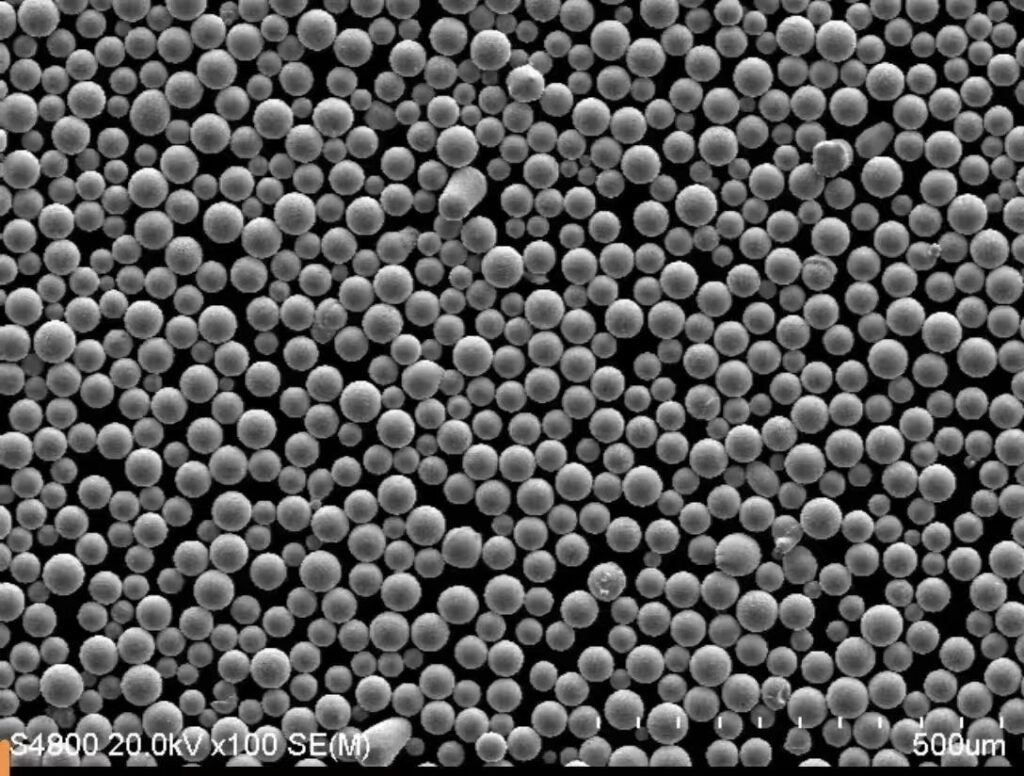
Powder form opens up processing routes that bar, sheet, and wire cannot address as efficiently. In additive manufacturing and powder metallurgy, fine spherical particles enable complex geometry, controlled porosity, localized deposition, and blending with other functional materials. For Aluminium 1350, powder form is particularly attractive when the application demands electrical and thermal conductivity in a near-net-shape part or coating.
The material also plays a role in development work. Because it is chemically simple, it can serve as a baseline powder in alloy development, surface engineering, and custom blend formulation. That gives researchers a cleaner starting point than multi-element casting alloys.
What makes it different from AlSi10Mg and other AM alloys
Most commercial aluminum AM work is built around alloys with wider processing windows than pure or near-pure aluminum. Aluminium 1350 powder, by contrast, is selected despite its narrower process window because it retains purer aluminum properties. That means users accept more processing difficulty in exchange for better conductivity and a chemistry that behaves more like aluminum itself and less like a cast alloy.
In aluminum additive manufacturing, the easiest powder to print is rarely the best powder for conductivity-driven design.
Nomenclature and market context
Depending on supplier practice, the same material may appear as Aluminum 1350 powder, Aluminium 1350 powder, Al 1350 powder, or high-purity 1350 aluminum spherical powder. The regional spelling varies, but the technical identity remains the same: a 1xxx-series aluminum powder with tightly limited impurity content. Buyers should therefore verify the certificate and particle specification instead of relying only on shorthand product names.
화학 성분
The chemistry of Aluminium 1350 powder is intentionally simple. The grade is centered on aluminum, with only small impurity allowances for silicon, iron, copper, manganese, magnesium, zinc, and titanium. This low-alloy profile is what preserves conductivity, but it also means the material does not benefit from the strengthening mechanisms seen in heat-treatable aluminum systems.
Typical composition of Aluminium 1350 powder
| 요소 | Typical wt% | Main Metallurgical Role | Effect on Processing and Performance |
|---|---|---|---|
| Al | ≥99.5 | 비금속 매트릭스 | Delivers low density, high conductivity, corrosion resistance, and the core behavior of commercially pure aluminum |
| Si | ≤0.10 | Residual impurity control | Higher silicon may improve castability slightly but reduces conductivity and changes solidification behavior |
| Fe | ≤0.40 | Common residual impurity | Raises strength modestly in some cases but can reduce conductivity and form intermetallic constituents |
| Cu | ≤0.05 | Residual control | Excess copper lowers corrosion resistance and shifts the chemistry away from pure-conductivity applications |
| Mn | ≤0.01 | Residual control | Minimal intended role; excessive levels can alter workability and impurity profile |
| Mg | ≤0.05 | Residual control | Small amounts may influence oxidation and strength, but too much undermines 1350-grade purity intent |
| Zn | ≤0.05 | Residual control | Typically kept low to maintain chemical cleanliness and stable conductivity |
| Ti + others | 추적 | Grain-control or residual trace content | Normally present only at very low levels; excessive traces can reduce consistency |
The critical point is that the chemistry is not trying to maximize strength. Instead, the composition is built around maintaining a high-aluminum matrix with low alloy drag on conductivity. In practical terms, that makes 1350 more comparable to EC-grade aluminum than to structural 6xxx or 7xxx powder systems.
Role of aluminum in Aluminium 1350 powder
Aluminum is both the matrix and the functional property driver. Because it dominates the composition, the powder retains the low density and high thermal and electrical conductivity associated with commercially pure aluminum. This is the reason Aluminium 1350 is considered for busbar-like geometries, conductive housings, heat-spreading structures, and powder blends intended to preserve high aluminum content.
Impurity effects and conductivity
Even modest increases in iron and silicon can reduce electrical conductivity. In wrought conductor products, those effects are well known, and the same principle applies in powder-based routes. For AM users, preserving chemistry becomes especially important because oxygen pickup and surface contamination can further distance the final part from ideal conductivity.
Why low-alloy chemistry changes print behavior
Pure and near-pure aluminum powders generally present a more difficult AM processing challenge than silicon-bearing grades. They reflect laser energy strongly, form stable oxide films, and do not have the same solidification assistance from eutectic-forming alloy additions. That is why oxide-sensitive process window is a central concept when discussing Aluminium 1350 powder for advanced manufacturing.
물리적 및 기계적 특성
The properties of Aluminium 1350 powder must be separated into powder properties and consolidated-part properties. Powder users care about apparent density, flowability, PSD, and morphology, while design engineers usually focus on density, conductivity, hardness, and strength after printing, sintering, or HIP. Because Aluminium 1350 is used across multiple process routes, reported part properties can vary substantially with porosity level and thermal history.
Typical physical and mechanical properties
| 속성 | 일반 값 | 단위 | 시험 기준 / 조건 |
|---|---|---|---|
| 실제 밀도 | 2.70 | g/cm³ | Typical bulk value for 1350 aluminum |
| 겉보기 밀도 | 1.30–1.70 | g/cm³ | Typical spherical powder range, morphology dependent |
| 녹는 범위 | 643–657 | °C | Typical 1350 alloy range |
| 홀 흐름 | 16–30 | s/50 g | Typical spherical powder, ASTM B213 context |
| 수율 강도 | 20–60 | MPa | Typical consolidated condition, route dependent |
| 인장 강도 | 60–120 | MPa | Typical consolidated or annealed condition, density dependent |
| 신장 | 10–35 | % | Typical dense material, strongly process dependent |
| 경도 | 20–35 | HB | Typical pure aluminum range |
| 열 전도성 | 220–235 | W/m-K | Typical high-purity aluminum range |
| 전기 전도성 | 60–62 | % IACS | Typical 1350-grade benchmark |
These values show why Aluminium 1350 powder is not a strength-led material. Its most compelling metrics are low density and very high conductivity relative to common AM aluminum alloys. In a printed or sintered state, however, those conductivity advantages are realized only if porosity and oxygen contamination are controlled tightly.
Mechanical profile of Aluminium 1350 powder parts
Consolidated 1350 components are typically soft and ductile relative to silicon-bearing or precipitation-hardening aluminum alloys. Yield and tensile strength may be adequate for enclosures, thermal parts, and conductive structures, but they are usually far below the levels expected from AlSi10Mg or aerospace 7xxx systems. That is not a defect of the grade; it is the expected trade-off for higher purity.
Conductivity and thermal management advantages
The strongest case for Aluminium 1350 powder is often thermal and electrical performance. Where a part must carry current, dissipate heat, or reduce weight in a conductive assembly, 1350 can outperform stronger but less conductive alternatives. Engineers comparing it with a [copper alloy powder portfolio] often do so when trying to balance conductivity against mass, corrosion behavior, and manufacturability.
AM process implications
In laser-based systems, pure aluminum’s reflectivity and oxide layer can limit energy coupling and make defect control harder. Users often need a tightly controlled atmosphere, higher energy density, optimized hatch spacing, and disciplined powder handling. This means high-purity aluminum feedstock can be technically rewarding, but only when process qualification is treated as part of the material selection decision.
사양 및 제공 등급
Commercial supply of Aluminium 1350 powder is typically organized by particle size distribution, morphology, oxygen level, and intended process route rather than by one universal AM specification. Buyers usually request spherical morphology for additive manufacturing and may accept broader distributions or different shape factors for thermal spray and conventional powder metallurgy. Because pure aluminum is oxidation-sensitive, specification packages often pay close attention to oxygen, moisture exposure, and packaging.
Typical Aluminium 1350 powder grades and specification windows
| Supply Grade / Condition | PSD 범위 | 겉보기 밀도 | 탭 밀도 | 홀 흐름 | Oxygen / Sphericity / Cross-Reference |
|---|---|---|---|---|---|
| Al1350-AM15-45 | 15-45 µm | 1.35–1.60 g/cm³ | 1.65–1.95 g/cm³ | 18–28 s/50 g | O typically 0.05–0.20 wt%; high sphericity; LPBF-oriented development grade |
| Al1350-AM15-53 | 15-53 µm | 1.30–1.58 g/cm³ | 1.60–1.92 g/cm³ | 17–27 s/50 g | O typically 0.05–0.22 wt%; general AM and binder-jet trial grade |
| Al1350-DED45-105 | 45-105 µm | 1.40–1.68 g/cm³ | 1.72–2.00 g/cm³ | 16–24 s/50 g | O typically 0.04–0.18 wt%; spherical morphology for directed energy deposition |
| Al1350-SP53-150 | 53-150 µm | 1.42–1.70 g/cm³ | 1.75–2.05 g/cm³ | 15–23초/50g | O typically 0.04–0.18 wt%; coarser thermal spray or cladding cut |
| Standards / Test Context | - | ASTM B212 | ASTM B527 | ASTM B213 | Chemistry aligned to supplier or customer spec; terminology referenced to [ISO/ASTM 52900 terminology] |
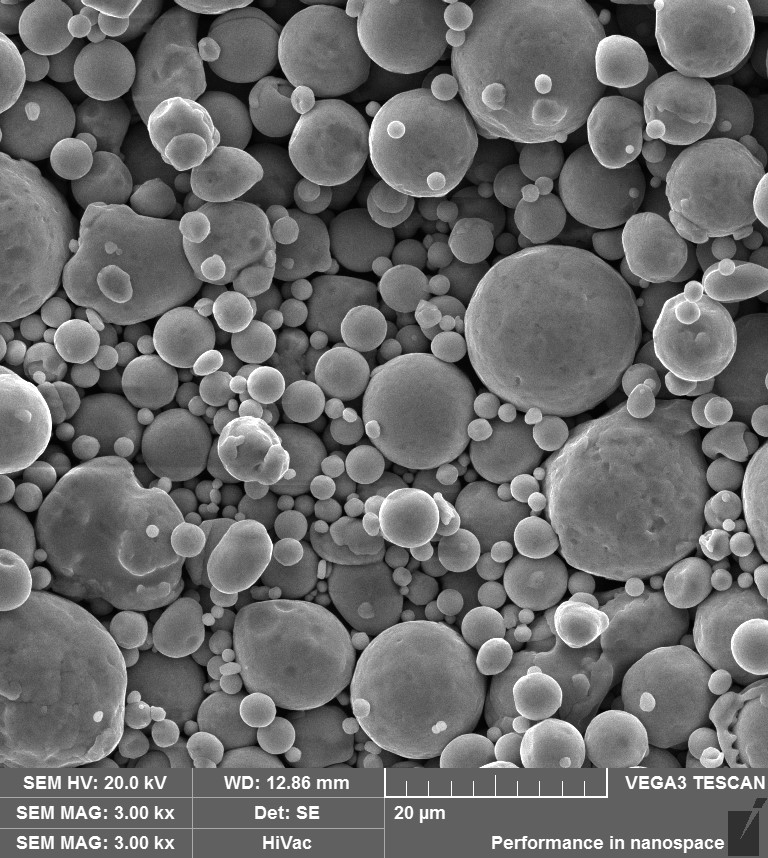
The finest cuts are usually selected for powder bed or MIM-style evaluation, while coarser cuts support DED, spray, or cladding processes. Apparent density and flow should be viewed together because a high-flow spherical powder may still behave differently across recoaters if the PSD is unusually narrow or contains excessive satellites.
Aluminium 1350 powder particle size selection
For LPBF research, 15–45 µm or 15–53 µm is a practical starting range because it supports thin-layer recoating. DED typically favors 45–105 µm to improve powder stream stability. Thermal spray and laser cladding often move even coarser, especially when high deposition efficiency matters more than ultrafine geometric precision.
Standards and test methods
No single global standard defines every aspect of Aluminium 1350 powder for AM, so producers and buyers often combine aluminum chemistry standards with metal-powder test methods. Powder flow is commonly checked using the [ASTM B213 Hall flow method], while apparent density may be reported under the [ASTM B212 apparent density method]. This layered approach is typical in emerging and specialty AM materials.
What purchasers usually specify
A serious purchase specification usually includes chemistry, PSD, oxygen, moisture-control requirements, Hall flow, apparent density, tap density, and morphology expectations. For highly conductive applications, some users also require electrical conductivity targets after consolidation. That is especially relevant because minor chemistry drift and porosity shifts can produce a meaningful reduction in final performance.
제조 프로세스
The production route used for Aluminium 1350 powder largely determines whether it is suitable for advanced AM. Because aluminum oxidizes readily and has low density, powder-making must control atmosphere, droplet solidification, and post-atomization handling carefully. In most cases, spherical AM-grade 1350 powder comes from atomization rather than mechanical milling.
Comparison of powder-making routes
| 프로세스 | 구형성 | 산소 픽업 | PSD 제어 | 처리량 | 상대적 비용 |
|---|---|---|---|---|---|
| 가스 분무(GA) | 높음 | 낮음에서 보통 | 양호 | 높음 | Medium |
| 준비 | 매우 높음 | 매우 낮음 | 양호 | Medium | 높음 |
| VIGA | 높음 | 낮음 | 매우 좋음 | Medium | 높음 |
| EIGA | 매우 높음 | 매우 낮음 | 매우 좋음 | Medium | 높음 |
| 물 분무 | 낮음에서 보통 | 보통에서 높음 | 광범위 | 높음 | 낮음 |
Gas-atomized Aluminium 1350 powder
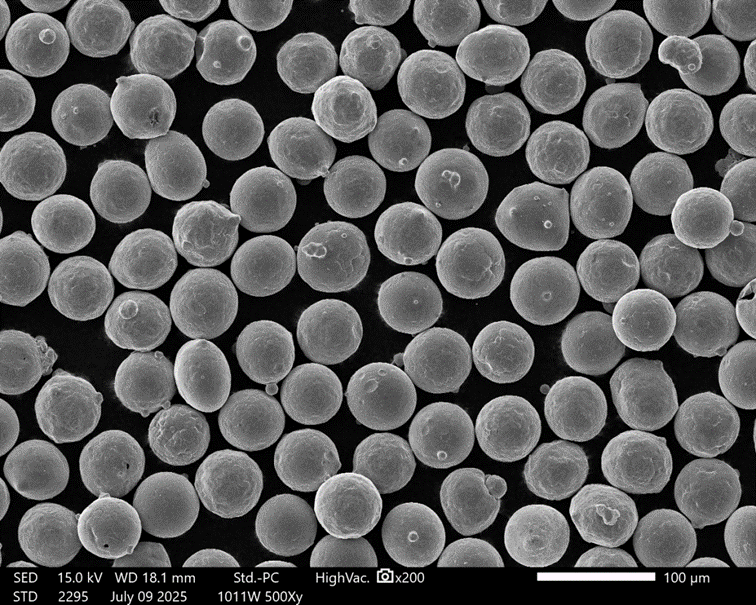
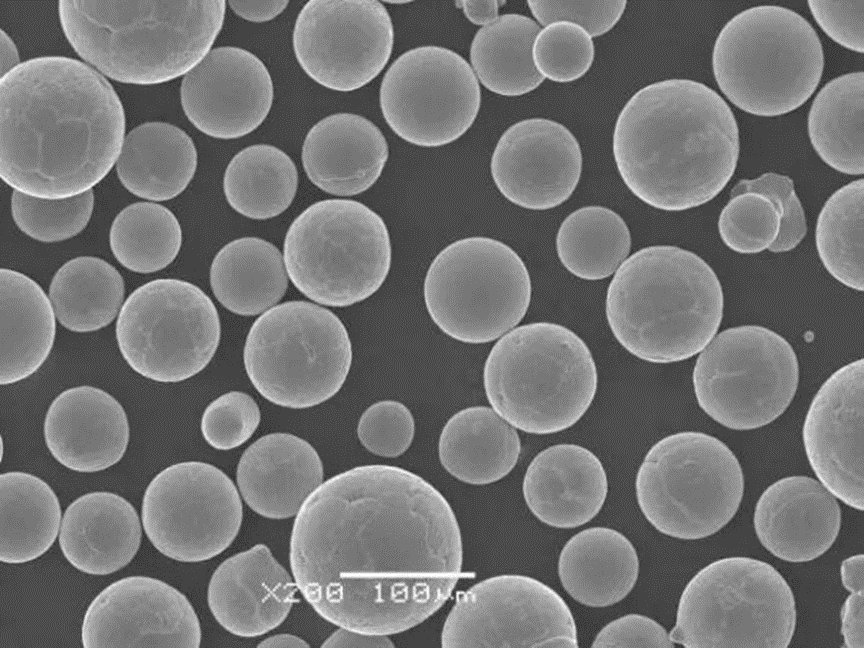
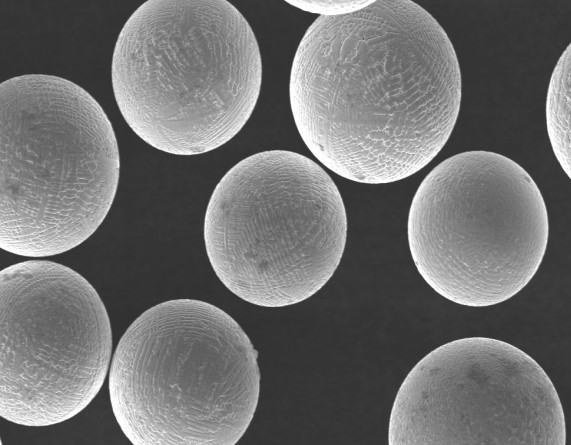
Gas atomization is the most practical and widely relevant route for spherical 1350 aluminum powder. Molten aluminum is disintegrated by inert gas, creating droplets that solidify into near-spherical particles with relatively good flow and packing. For AM uses, gas atomization provides the best balance of cost, throughput, and morphology.
The challenge is oxide control. Aluminum forms oxide almost immediately, so even well-produced powder will carry a surface oxide shell. The production goal is not to eliminate oxide entirely, but to minimize oxygen pickup and keep the oxide layer thin, stable, and consistent from batch to batch.
PREP and premium spherical aluminum feedstock
PREP can theoretically produce extremely spherical aluminum particles with low contamination, but it is less common for commercially pure aluminum than for high-value reactive or specialty alloys. Its main benefit is morphology quality; its drawback is higher cost relative to the value proposition of a conductivity-driven aluminum grade. In practice, users usually encounter PREP more often in titanium systems than in 1350 aluminum.
VIGA and EIGA for controlled atmosphere production
Vacuum induction gas atomization and electrode induction gas atomization are relevant when tighter atmosphere control is needed. These routes can help reduce contamination and narrow the distribution of powder characteristics, which is valuable for R&D-grade material or sensitive AM qualification programs. However, cost and equipment complexity typically limit them to specialized supply chains.
Why process route affects final AM performance
For Aluminium 1350 powder, morphology quality is directly tied to spreadability, while oxygen level influences fusion behavior. A powder with satellites, broad size scatter, or elevated oxygen can behave very differently in LPBF than a cleaner, narrower distribution. That is why spherical morphology for AM is not a marketing phrase but a functional requirement when stable recoating and consistent conductivity are the design targets.
산업별 적용 사례
Aluminium 1350 powder is best understood as a functional material rather than a universal structural AM alloy. It appears where designers value conductivity, weight reduction, corrosion resistance, and chemistry simplicity. Some of its most promising applications sit outside the mainstream of high-strength aerospace brackets and instead in thermal, electrical, and surface-engineering domains.
Electrical and power systems
The most natural application space for 1350 aluminum is electrical hardware. Busbar-like geometries, conductive connectors, lightweight current-carrying frames, and custom electrical housings can all benefit from its combination of low mass and strong conductivity. In additive manufacturing, this becomes particularly attractive for low-volume or customized electrical parts that would be inefficient to machine from wrought stock.
Thermal management and electronics
Heat spreaders, cooling interfaces, lightweight heatsink structures, and integrated thermal features are also strong candidates. While pure copper remains superior in conductivity, aluminum 1350 can offer an appealing performance-to-weight balance. For some designs, it becomes a practical alternative to heavier conductive systems and complements broader [aluminum alloy powder options] where strength is not the dominant requirement.
Aerospace and lightweight industrial hardware
In aerospace and satellite-adjacent hardware, pure aluminum powder is more likely to appear in specialty thermal or conductive subcomponents than in primary load-bearing structures. Similar logic applies in industrial equipment, where non-structural conductive parts can benefit from low density and simpler corrosion behavior. Compared with many [titanium alloy powder grades], 1350 sacrifices strength but offers lower cost and far higher conductivity.
Coatings, cladding, and surface engineering
Coarser Aluminium 1350 powder grades are also relevant in thermal spray, cold spray, and laser cladding applications. In those cases, the goal may be to restore conductivity, provide sacrificial corrosion behavior, build conductive pathways, or create lightweight aluminum-rich surfaces. Powder shape and oxide level still matter, but the process window differs from powder bed fusion.
Research, blends, and advanced materials development
Research teams use high-purity aluminum powders as baseline materials for alloy design, composite feedstocks, and functional porosity studies. Because the chemistry is simple, changes in properties can often be tied more clearly to reinforcement additions, process parameters, or post-treatment conditions. That makes Aluminium 1350 powder valuable not only as a product material but also as a development platform.
대체 소재와의 비교
Material selection for conductive and lightweight AM parts usually involves trade-offs among conductivity, printability, strength, and cost. Aluminium 1350 powder competes most directly with AlSi10Mg, pure copper, and sometimes 6061- or 7075-type development powders depending on the application. Its advantage is not maximum strength or easiest printability, but conductivity-centered performance in a very light metal system.
Aluminium 1350 powder versus alternative AM powders
| 재질 | 밀도(g/cm³) | Main Advantage | 상대적 비용 | Printability / Process Fit | Corrosion / Service Profile |
|---|---|---|---|---|---|
| Aluminium 1350 powder | 2.70 | High conductivity, low density, simple chemistry | Medium | More challenging in LPBF; good in DED, spray, PM, and specialty AM | Good general aluminum corrosion resistance |
| AlSi10Mg 분말 | 2.67 | Mature AM printability, better strength, wide industry adoption | Medium | Excellent LPBF maturity and broad parameter availability | Good corrosion resistance, though conductivity is lower than 1350 |
| 순수 구리 분말 | 8.96 | Very high electrical and thermal conductivity | 높음 | Challenging but increasingly viable in advanced AM systems | Good conductivity-focused service, heavier and more reflective |
| 6061-type aluminum powder | 2.70 | Better balanced strength potential after heat treatment | 중간 높음 | More process-sensitive than AlSi10Mg; still developing in AM | Good all-around engineering profile |
| 7075계 알루미늄 분말 | 2.81 | High strength potential | 높음 | Crack-sensitive and far less forgiving in AM than AlSi10Mg | Moderate corrosion profile, strength-led rather than conductivity-led |
Compared with AlSi10Mg, 1350 offers better conductivity but a narrower print window and lower strength. Compared with pure copper, it gives away conductivity but wins decisively on weight. Against 6061- and 7075-type powders, it is less structural but often easier to justify where conductivity-first applications dominate the design brief.
When Aluminium 1350 is the better choice
Aluminium 1350 is the better choice when current flow, heat transfer, and lightweighting are more important than high static strength. It is also attractive when a low-alloy baseline chemistry is desirable for research, coatings, or blended feedstock development. If the design instead requires mature LPBF processing and stronger load-bearing performance, AlSi10Mg will often remain the more practical solution.
당사
Shanghai Truer Technology Co., Ltd., operating am-printing.com, was established in 2009 and created its additive manufacturing business in 2019. According to its published profile, the company integrates 3D printing powder-making equipment and services with metal powder supply, including Selective Electron Beam Melting equipment, Plasma Rotating Electrode Process powder-making equipment, and Gas Atomization capability. Its stated portfolio includes TiNi, TiTa, TiAl, TiNbZr, CoCrMo, and spherical powders across nickel-based, cobalt-based, titanium-based, copper-based, aluminum-based, and stainless steel materials, while its process coverage extends to SLM, SEBM, DED, laser cladding, powder metallurgy, MIM, HIP, cold and hot spraying, welding, and coating for sectors including 3C electronics, hand tools, remote control cars, medical, aerospace, and nuclear power; the company outlines this background on its [company profile page].
자주 묻는 질문
Q1. Is Aluminium 1350 powder good for metal 3D printing?
Yes, but mainly for niche conductivity-focused or thermal-management applications rather than general structural AM. It can be valuable in LPBF, DED, binder-based, or spray-related workflows when the process is tuned carefully for pure aluminum behavior.
Q2. How does Aluminium 1350 powder differ from AlSi10Mg powder?
Aluminium 1350 is much purer and therefore offers higher electrical and thermal conductivity. AlSi10Mg is easier to print and usually delivers better mechanical strength, which is why it dominates mainstream aluminum AM production.
Q3. What is the main benefit of Aluminium 1350 powder?
Its main benefit is the combination of very low density and high conductivity. That makes it attractive for lightweight electrical parts, thermal components, conductive coatings, and development programs where chemically simple aluminum is preferred.
Q4. Is Aluminium 1350 powder difficult to process in LPBF?
Relative to many other AM aluminum grades, yes. High reflectivity, oxide formation, and the absence of silicon-based solidification assistance mean the parameter window is usually tighter and requires careful atmosphere and energy control.
Q5. Which particle size is typical for Aluminium 1350 powder?
For powder bed and fine AM trials, 15–45 µm or 15–53 µm is common. Directed energy deposition and thermal spray usually use coarser cuts such as 45–105 µm or 53–150 µm, depending on feed stability and deposition objectives.
Q6. What should buyers verify before ordering Aluminium 1350 powder?
They should verify aluminum purity, impurity limits, oxygen content, particle size distribution, apparent density, Hall flow, and morphology. They should also confirm whether the powder is optimized for LPBF, DED, spray, or PM, since process fit is just as important as chemistry for this grade.