간단한 답변
Hastelloy N nickel alloy powder is a nickel-molybdenum alloy powder developed for high-temperature corrosion resistance and structural stability in aggressive environments, especially where fluoride salts, thermal cycling, and oxidation resistance matter. It is a strong candidate for additive manufacturing parts used in energy, chemical processing, aerospace-adjacent hardware, and high-temperature tooling because it combines good fabricability with robust service performance. Compared with more common AM superalloys, Hastelloy N is chosen less for peak turbine strength and more for corrosion reliability, metallurgical stability, and service life in salt-bearing or chemically severe conditions.
What Is Hastelloy N nickel alloy powder
Hastelloy N nickel alloy powder is the powder form of a nickel-based corrosion-resistant alloy best known for its historical association with molten-salt reactor development and other high-temperature corrosive environments. In wrought form, the alloy was engineered around nickel and molybdenum, with controlled additions of chromium, iron, and other elements to balance oxidation behavior, hot workability, and microstructural stability. In powder form, it becomes suitable for additive manufacturing, laser cladding, hot isostatic pressing, powder metallurgy, and advanced repair applications.
The alloy belongs to the broader Ni-Mo corrosion-resistant family rather than the precipitation-hardened turbine-superalloy class. That distinction matters. Hastelloy N is not typically selected because it offers the highest room-temperature tensile strength among nickel alloys; it is selected because it retains useful mechanical integrity while resisting environments that are hostile to many stainless steels and even to some high-temperature superalloys.
Hastelloy N nickel alloy powder in the nickel-alloy family
Within nickel-based AM materials, Hastelloy N sits closer to corrosion-engineering alloys than to high-gamma-prime aerospace grades. Alloys such as Inconel 718 are optimized for high strength through precipitation hardening, whereas Hastelloy N relies more on solid-solution strengthening and carefully balanced chemistry for chemical durability and thermal stability. That gives it a distinct application profile.
This is why engineers often compare Hastelloy N not only with Inconel 625 and C-276, but also with other materials used in hot corrosive service. When temperature, salt chemistry, and long-duration exposure dominate the design brief, alloy selection shifts away from a simple “highest strength wins” logic.
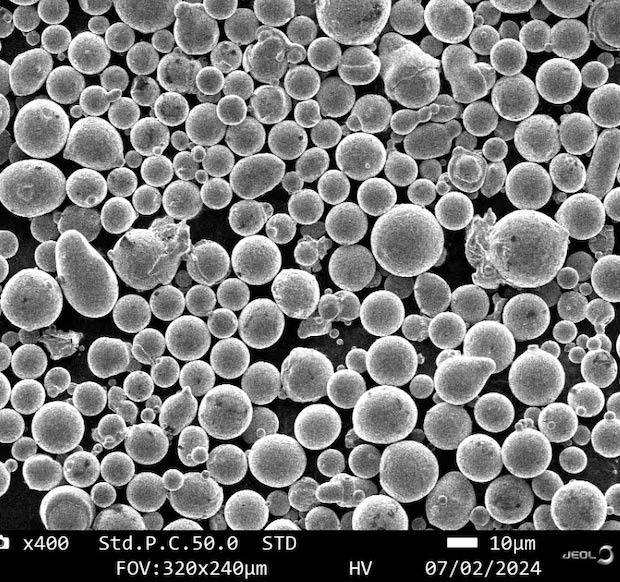
Why Hastelloy N exists as an AM powder
The conversion from wrought stock to spherical powder expands what can be done with the alloy. Complex internal channels, thin-wall corrosion coupons, compact heat-management hardware, near-net-shape energy components, and repair layers all become more feasible through powder-based manufacturing. In research and pilot-scale energy systems, this matters because geometry freedom and short development cycles are often as valuable as base alloy performance.
Distinguishing features of Hastelloy N powder
The defining features are high nickel content, substantial molybdenum, useful high-temperature oxidation resistance, and known compatibility with fluoride-salt environments compared with many alternative engineering alloys. The alloy also has good weldability by nickel-alloy standards, which helps explain why it translates reasonably well into several powder-processing routes.
In severe-service AM, the best alloy is often the one that survives the environment, not the one that advertises the highest headline strength.
For readers mapping the broader category, the site’s nickel superalloy powder range helps place Hastelloy N among other corrosion-resistant and high-temperature nickel materials with different design priorities.
화학 성분
Hastelloy N uses a relatively focused nickel-molybdenum chemistry, with modest chromium and iron plus tightly controlled minor elements. As with many nickel alloys, the exact balance is not arbitrary: each element supports a specific combination of corrosion resistance, phase stability, oxidation control, and manufacturability. In powder form, chemistry consistency also affects atomization behavior, oxygen pickup, and cracking sensitivity during consolidation.
Typical composition of Hastelloy N nickel alloy powder
| 요소 | Typical wt% | 야금학적 역할 | AM 관련성 |
|---|---|---|---|
| Ni | 잔액 | Primary matrix; provides corrosion resistance, ductility, and high-temperature stability | Governs alloy identity, weldability, and broad corrosion performance |
| Mo | 15.0–18.0 | Main solid-solution strengthener; improves resistance to hot corrosive media and fluoride salts | Critical to severe-environment durability and high-temperature strength retention |
| Cr | 6.0–8.0 | Improves oxidation resistance and supports surface stability at elevated temperature | Helps balance hot corrosion and air-side oxidation in AM parts |
| Fe | 4.0–6.0 | Cost control, phase balance, and processability support | Influences weldability and microstructural response during repeated thermal cycling |
| Si | ≤1.0 | Minor deoxidation and processing influence in controlled amounts | Excess can promote brittle phases or alter printability |
| Mn | ≤0.8 | Deoxidation aid and residual control | Supports melt cleanliness during powder production |
| C | ≤0.06 | Controlled low to reduce carbide-related embrittlement while maintaining stability | Important for crack sensitivity and long-term service behavior |
| Cu | ≤0.35 | Residual impurity control | Excess can be detrimental in high-temperature corrosive duty |
| P | ≤0.04 | 잔류 불순물 | Must remain low to limit embrittlement |
| S | ≤0.03 | 잔류 불순물 | Low sulfur is important for hot workability and crack resistance |
The major design message is simple: molybdenum does the heavy lifting for corrosion performance, while chromium provides a complementary oxidation benefit. Nickel remains the continuous matrix that holds those benefits together under thermal and chemical stress. When powder buyers evaluate certificates, these are the elements that deserve the closest attention.
Role of molybdenum in Hastelloy N nickel alloy powder
Molybdenum is the key differentiator. It raises resistance to aggressive chemical attack and contributes meaningfully to high-temperature strength by solid-solution strengthening the nickel matrix. In the specific historical context of molten fluoride salts, molybdenum-rich nickel alloys gained attention because they resisted degradation better than many common steels and stainless grades.
Minor elements and stability considerations
Low carbon and controlled silicon are especially important in a demanding alloy such as Hastelloy N. Excessive carbide formation or unwanted intermetallic behavior can undermine ductility, weldability, and long-term service stability. For AM, these limits matter because thermal cycling during building may expose the alloy repeatedly to temperatures where segregation effects become visible.
Hastelloy N chemistry versus related alloys
Compared with C-276, Hastelloy N usually contains less chromium and is more tightly associated with fluoride-salt and nuclear materials discussions. Compared with Inconel 625, it leans less on niobium-based strengthening logic and more on nickel-molybdenum corrosion engineering. The broader Hastelloy alloy family background is useful for understanding why alloys that all carry a nickel base can still serve very different environments.
물리적 및 기계적 특성
Hastelloy N is not a one-dimensional material. Engineers typically assess it using a combination of density, melting range, room-temperature strength, elevated-temperature capability, hardness, ductility, thermal conductivity, and corrosion behavior. For powder-derived parts, these properties also depend on density, heat treatment, build orientation, and whether the part remains as-built, HIPed, or fully solution-treated.
Typical properties of Hastelloy N nickel alloy powder parts
| 속성 | 일반 값 | 단위 | 시험 기준 / 조건 |
|---|---|---|---|
| 밀도 | 8.85–8.95 | g/cm³ | Typical nominal alloy density |
| 녹는 범위 | 1300–1380 | °C | 대표적인 합금 범위 |
| 궁극의 인장 강도 | 690–830 | MPa | Typical consolidated or solution-annealed range |
| 항복 강도(0.2%) | 280–420 | MPa | Typical condition-dependent range |
| 신장 | 30–45 | % | Typical solution-annealed or well-densified condition |
| 경도 | 180–240 | HB | Typical annealed to moderately worked condition |
| 탄성 계수 | 200–215 | GPa | 일반적인 실온 범위 |
| 열 전도성 | 10-14 | W/m-K | 일반적인 실온 범위 |
| Oxidation Service Usefulness | Up to about 700–900 | °C | Environment-dependent engineering range |
The property profile reflects a corrosion-engineering alloy with respectable strength and very good ductility. It is strong enough for many structural duties, but its real advantage shows up when those duties occur in chemically severe, high-temperature settings. In other words, the alloy earns its value through performance retention, not through maximum strength alone.
Mechanical behavior of Hastelloy N AM powder parts
In additively manufactured form, Hastelloy N can achieve dense parts with useful toughness if powder quality and thermal management are well controlled. Because it is not a strongly precipitation-hardened superalloy, its behavior can be more forgiving during welding and remelting than some crack-sensitive aerospace grades. That said, porosity, segregation, and residual stress still need to be managed carefully.
High-temperature and corrosion performance
The alloy’s reputation was built in conditions where ordinary stainless steels would struggle. Hot fluoride salts, reducing environments, and elevated-temperature chemical systems are the natural context for Hastelloy N. This does not make it universal, but it does make it unusually relevant when service chemistry is a central design risk.
Property trade-offs against other nickel alloys
The trade-off is that Hastelloy N is not the standard default for gas-turbine hot-section hardware or ultra-high-strength AM applications. Alloys such as Inconel 718 may surpass it in strength after age hardening, while C-276 may be favored in certain broader corrosion scenarios. The decision therefore depends on temperature, chemistry, and fabrication route as much as on tensile data.
This is where molten-salt corrosion resistance becomes the decisive differentiator. If the environment contains fluoride salt or analogous hot corrosive media, the property table alone does not tell the full story. Service compatibility often outweighs simple strength ranking.
사양 및 제공 등급
Commercial Hastelloy N powder is usually specified by chemical composition, particle size distribution, morphology, flow characteristics, apparent density, tap density, oxygen content, and intended manufacturing route. Because the alloy is more specialized than mainstream AM feedstocks such as 316L or Inconel 718, buyers often encounter supplier-specific powder grades rather than a single broadly standardized AM designation. Terminology alignment is often handled through the ISO/ASTM 52900 적층 제조 용어집, especially in qualification documents.
Typical Hastelloy N nickel alloy powder grades
| Supply Grade / Condition | PSD 범위 | 겉보기 밀도 | 탭 밀도 | 홀 흐름 | Oxygen / Sphericity / Cross-Reference |
|---|---|---|---|---|---|
| HN-PBF15-45 | 15-45 µm | 4.4–5.0 g/cm³ | 5.0–5.7 g/cm³ | 13–20초/50g | O typically ≤0.08 wt%; high sphericity; laser PBF fraction |
| HN-PBF15-53 | 15-53 µm | 4.5–5.1 g/cm³ | 5.1–5.8 g/cm³ | 50g당 13–19초 | O typically ≤0.08 wt%; common additive manufacturing cut |
| HN-DED45-105 | 45-105 µm | 4.6–5.2 g/cm³ | 5.2–5.9 g/cm³ | 12–18 s/50 g | O typically ≤0.06 wt%; suitable for DED and cladding |
| HN-PM53-150 | 53-150 µm | 4.7–5.3 g/cm³ | 5.3–6.0 g/cm³ | 11–17 s/50 g | O typically ≤0.06 wt%; PM, spray, and HIP feed |
| Test / Standards Context | - | ASTM B212 typical | ASTM B527 typical | ASTM B213 typical | Chemistry aligned to Hastelloy N / UNS N10003-type references; morphology and PSD supplier-qualified |
These values are typical engineering ranges rather than fixed universal specification limits. Different atomization routes and sieve cuts will shift apparent density and flow. For a specialized nickel alloy, buyers should focus on the total powder package rather than on PSD alone.
Hastelloy N nickel alloy powder by process route
Fine 15–45 µm and 15–53 µm fractions are generally aimed at laser powder bed fusion. Coarser 45–105 µm and 53–150 µm ranges are more appropriate for directed energy deposition, laser cladding, thermal spray, and some HIP or PM routes. The best grade depends on layer thickness, feeder design, and whether the target is a fully dense component, a repair layer, or a near-net-shape blank.
What standards matter in powder qualification
Because Hastelloy N is a relatively specialized alloy, test method standards often carry more practical weight than a single universal AM alloy standard. Apparent density, tap density, and Hall flow are commonly measured through established powder methods, and internal procurement documents usually add chemistry windows, oxygen limits, and morphology requirements. In that context, the ASTM B212 겉밀도 측정법 is often referenced alongside related flow and tap-density practices.
What buyers should verify before purchase
For this alloy, purchasers should ask for chemistry certificate, PSD distribution, oxygen level, morphology evidence, flow data, and intended process fit. They should also check whether the supplier has characterized the powder for laser PBF, DED, laser cladding, or HIP, because optimal particle size and surface condition vary by route. When the end use involves salt exposure or high-temperature chemical service, traceability becomes especially important.
제조 프로세스
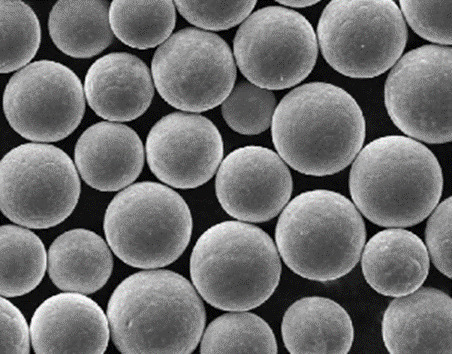
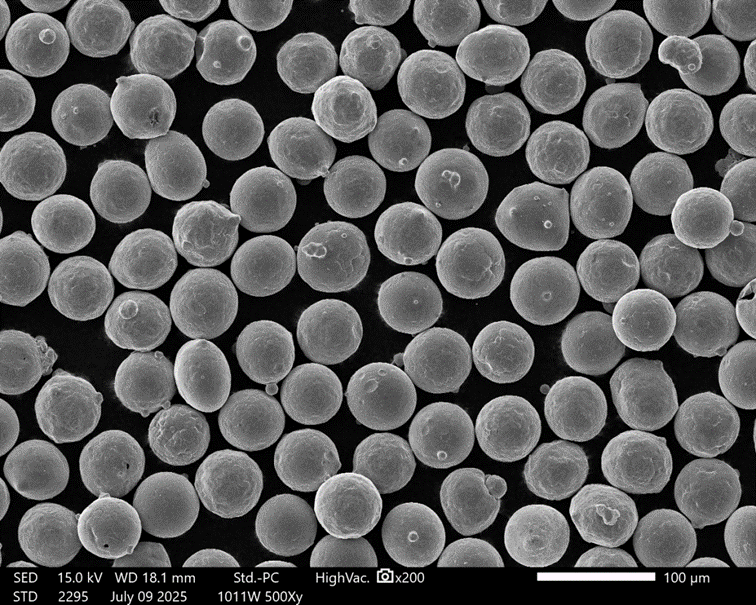
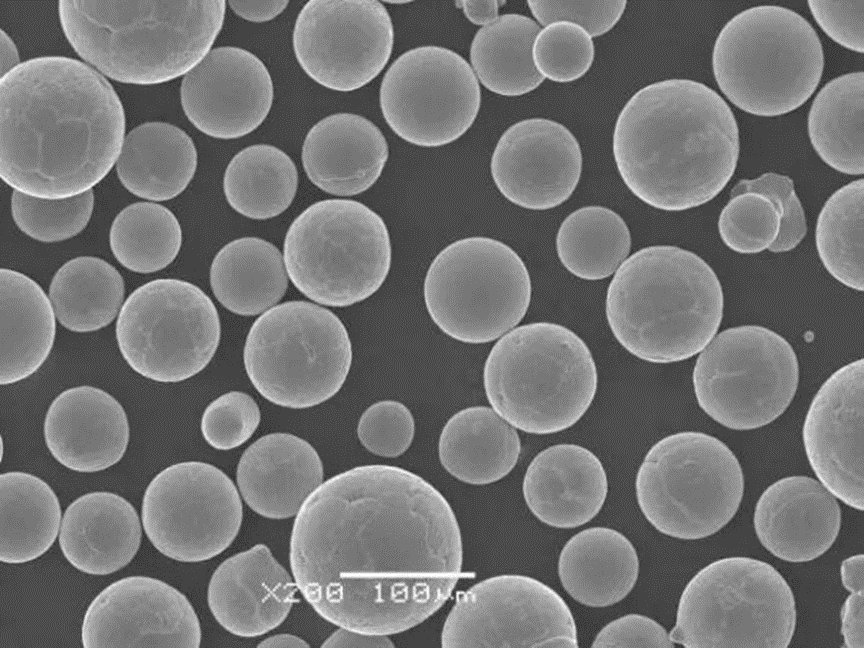
Hastelloy N powder can be produced by gas atomization, vacuum induction gas atomization, electrode induction gas atomization, plasma rotating electrode process, and related advanced routes. The chosen process influences particle sphericity, oxygen pickup, internal porosity, satellite formation, and batch consistency. For a corrosion-critical alloy, these factors affect not only printability but also downstream densification and service reliability.
Powder-making routes for Hastelloy N nickel alloy powder
| 프로세스 | 구형성 | 산소 픽업 | PSD 제어 | 처리량 | 상대적 비용 |
|---|---|---|---|---|---|
| 가스 분무(GA) | 높음 | 낮음에서 보통 | 양호 | 높음 | Medium |
| 진공 유도 가스 분무법 (VIGA) | 높음 ~ 매우 높음 | 낮음 | 좋음 ~ 매우 좋음 | Medium | 중간 높음 |
| 전극 유도 가스 분무법 (EIGA) | 매우 높음 | 매우 낮음 | 매우 좋음 | Medium | 높음 |
| 플라즈마 회전 전극 공정(PREP) | 우수 | 매우 낮음 | Good, often with cleaner coarse fractions | Medium | 높음 |
| Plasma Atomization / Similar Plasma Routes | 우수 | 매우 낮음 | 매우 좋음 | Lower to medium | 높음 |
Gas-atomized Hastelloy N powder
Gas atomization is typically the most practical route for commercial Hastelloy N powder. A controlled molten stream is disintegrated by inert gas, producing mostly spherical particles with good flowability and scalable output. For AM, GA often provides the best balance of morphology, availability, and cost.
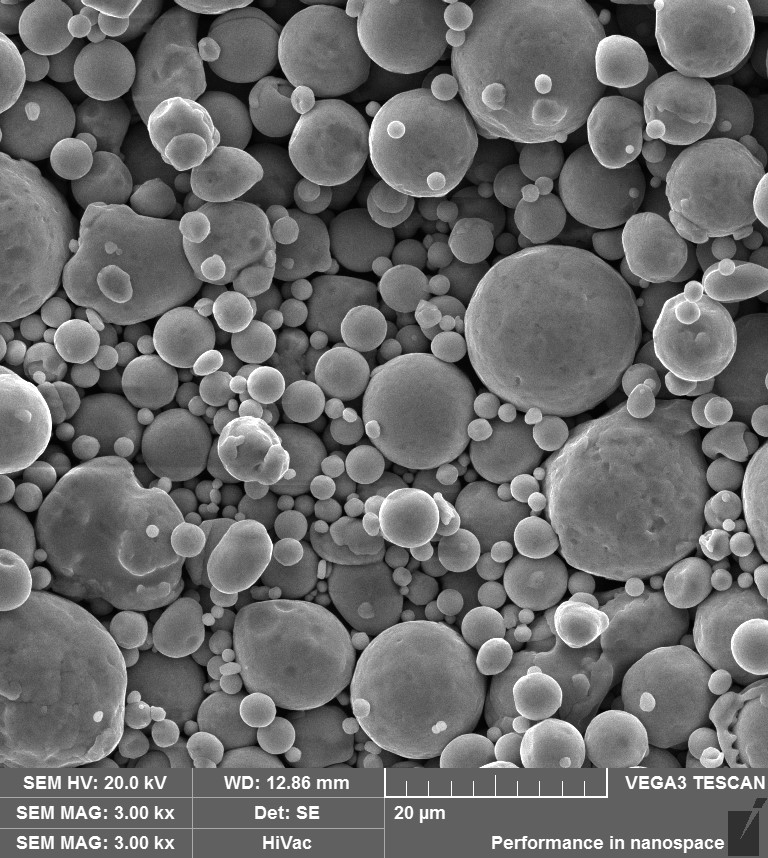
The main drawbacks are satellite particles, possible oxide pickup, and some lot-to-lot variation if atomization parameters are not tightly controlled. These issues are manageable, but they matter because powder cleanliness affects layer uniformity, densification, and defect rate.
PREP, VIGA, and EIGA trade-offs
PREP and advanced vacuum-based atomization routes tend to produce cleaner, more spherical powders with lower contamination risk. This can be valuable for demanding energy, nuclear-adjacent, or research applications where property consistency and low inclusion content are important. The trade-off is cost, and in some cases a narrower economic case for high-volume powder production.
Why manufacturing route matters for Hastelloy N AM powder
Powder route affects more than machine feeding. Particle shape influences recoating and packing density; oxygen and contamination affect melt behavior; and internal powder defects can carry through into built parts if parameters are not optimized. In a high-value nickel alloy, the cost of downstream failure is far larger than the cost of better feedstock control.
Route selection by end use
Laser powder bed fusion usually favors fine gas-atomized or vacuum-atomized spherical powder. Directed energy deposition and laser cladding can tolerate coarser cuts and may use different flow priorities. For powder metallurgy or HIP feedstock, the emphasis often shifts toward bulk uniformity, chemistry control, and economical packing behavior.
This is why 구형 분말의 형태 remains a central purchasing criterion. A chemistry-perfect powder with poor shape consistency can still create build instability, uneven energy absorption, and lower final density. Engineers comparing adjacent high-temperature feedstocks sometimes review the site’s refractory metal powder category when service temperature exceeds the practical range of conventional nickel alloys.
산업별 적용 사례
Hastelloy N is a specialized alloy, so its application map is narrower than that of generic stainless steel or Inconel 625. But where it fits, it fits for strong technical reasons. The common thread is exposure to corrosive media at elevated temperature, especially when geometric complexity or low production volume makes powder routes attractive.
Energy systems and molten-salt hardware
The alloy is most strongly associated with molten-salt environments, including reactor research hardware, salt-handling components, loop systems, heat-transfer devices, and corrosion test coupons. In these settings, powder-based production can enable internal passages, compact instrumentation housings, and rapid design iteration. For experimental and pilot-scale hardware, the value of AM is often design freedom rather than simple piece-part cost.
Chemical processing and hot corrosion service
Hastelloy N can also be considered for aggressive chemical process equipment, especially where hot corrosive conditions challenge stainless steels. Examples include nozzles, flow-control parts, reaction hardware, seals, and corrosion-resistant overlays. The exact fit depends on the chemistry, because no nickel alloy dominates every corrosive environment.
Aerospace-adjacent and thermal systems
In aerospace and advanced industrial systems, Hastelloy N is relevant less for turbine blades and more for ducts, thermal enclosures, experimental hot-zone hardware, and chemically exposed support components. When the environment includes oxidation plus corrosive deposits or unusual salts, the alloy becomes more interesting than standard superalloys.
Tooling, repair, and surface engineering
Laser cladding and repair represent another natural use case. Hastelloy N powder can be used to deposit corrosion-resistant layers on selected substrates where full-bulk exotic alloy construction would be too expensive. This is especially attractive in pilot plants, valves, thermal rigs, and test equipment.
Where Hastelloy N is less suitable
Medical implants are not a mainstream application because the alloy’s value proposition is high-temperature corrosion engineering rather than implant biocompatibility. Automotive mass production is also not an obvious target due to cost and niche service conditions. If the main requirement is lightweight performance rather than hot corrosion resistance, the titanium alloy powder portfolio is usually the more relevant comparison set.
A process-oriented view across sectors appears in the company’s industry application pages, where powder use spans AM, cladding, PM, and related manufacturing routes.
대체 소재와의 비교
Hastelloy N should be compared against materials that solve nearby service problems, not just against whatever nickel alloy is most familiar. In practice, the closest alternatives are often Inconel 625, Hastelloy C-276, Inconel 718, and high-alloy stainless steels. Each brings a different mix of corrosion resistance, cost, printability, and temperature capability.
Hastelloy N nickel alloy powder versus alternative materials
| 재질 | 밀도(g/cm³) | 일반적인 체력 수준 | Relative Powder Cost | 인쇄 가능성 | Corrosion / Best-Fit Use |
|---|---|---|---|---|---|
| Hastelloy N nickel alloy powder | 8.85–8.95 | 보통에서 높음 | 높음 | Good with parameter development | Strong in fluoride-salt and hot corrosive service; energy and chemical hardware |
| 인코넬 625 | 8.4–8.5 | 보통에서 높음 | 높음 | 매우 좋음 | Broad corrosion resistance and good weldability; general high-performance AM |
| 하스텔로이 C-276 | 8.8–8.9 | 보통 | 매우 높음 | 양호 | Exceptional broad-spectrum corrosion resistance in many aggressive chemical media |
| 인코넬 718 | 8.1–8.2 | Very high after aging | 높음 | 우수 | Structural high-strength aerospace and industrial hot-section applications |
| 316L stainless steel | 7.9–8.0 | 보통 | 낮음~중간 | 우수 | Cost-effective corrosion resistance where service severity is lower |
Against Inconel 625, Hastelloy N is more specialized and less universal, but it can be the better fit in fluoride-salt and certain hot-corrosion scenarios. Against C-276, the decision often comes down to exact chemistry and budget, because C-276 is famous for very broad corrosion resistance but can be harder to justify economically in some projects.
Against Inconel 718, Hastelloy N clearly loses on precipitation-hardened strength but competes on corrosion logic in hostile chemical service. Against 316L, it is far more expensive, yet also far more credible for severe high-temperature corrosion. The correct comparison therefore depends on whether the design is driven by strength, corrosion, thermal exposure, or a specific salt environment.
당사
Shanghai Truer Technology Co., Ltd., the operator of am-printing.com, was established in 2009 and created its additive manufacturing business in 2019. According to its published company information, Truer works across metal 3D printing powder-making equipment and powder supply, including Selective Electron Beam Melting equipment, Plasma Rotating Electrode Process powder-making equipment, and Gas Atomization, and it lists spherical metal powders such as TiNi, TiTa, TiAl, TiNbZr, CoCrMo, plus nickel-based, cobalt-based, titanium-based, copper-based, aluminum-based, and stainless steel powders. The company also states that it serves SLM, SEBM, DED, laser cladding, powder metallurgy, MIM, HIP, cold and hot spraying, welding, and coating for industries including 3C electronics, hand tools, remote control cars, medical, aerospace, and nuclear power; additional background appears on its corporate profile page.
자주 묻는 질문
Q1. Is Hastelloy N nickel alloy powder mainly used for molten-salt applications?
Yes, that is one of its most distinctive use cases. The alloy is historically associated with molten fluoride salt environments, which is why it continues to attract attention in advanced energy systems, corrosion testing, and high-temperature experimental hardware.
Q2. How does Hastelloy N nickel alloy powder compare with Inconel 625?
Inconel 625 is generally a broader-purpose AM nickel alloy with very good weldability and corrosion resistance across many environments. Hastelloy N is more specialized and tends to be chosen when the service environment, especially hot salt chemistry, aligns with its nickel-molybdenum design strengths.
Q3. Can Hastelloy N nickel alloy powder be used in laser powder bed fusion?
Yes, provided the powder has suitable sphericity, low contamination, and an AM-appropriate particle size range such as 15–45 µm or 15–53 µm. Successful builds still depend on machine parameters, atmosphere control, and post-processing strategy.
Q4. What industries are most likely to use Hastelloy N nickel alloy powder?
Energy, chemical processing, high-temperature R&D, corrosion engineering, and selected aerospace-adjacent thermal systems are the most relevant sectors. It is a niche alloy, so its use is usually driven by environment-specific engineering requirements rather than by general-purpose manufacturing demand.
Q5. What particle sizes are typical for Hastelloy N nickel alloy powder?
Fine AM grades commonly fall in the 15–45 µm and 15–53 µm ranges for laser powder bed fusion. Coarser fractions such as 45–105 µm and 53–150 µm are more common for directed energy deposition, laser cladding, thermal spray, and some HIP or PM applications.
Q6. What should buyers check before ordering Hastelloy N nickel alloy powder?
They should verify chemical composition, particle size distribution, oxygen content, apparent density, tap density, flowability, and particle morphology, along with the intended manufacturing route. For critical energy or corrosion-service parts, buyers should also confirm traceability, powder cleanliness, and whether the supplier has characterization data for the target process and environment.