간단한 답변
Inconel 738LC nickel alloy powder is a precipitation-strengthened nickel-base superalloy powder designed for high-temperature service, especially where oxidation resistance, creep strength, and hot-corrosion performance matter. It is usually chosen for additive manufacturing when the part will see sustained thermal exposure well above the comfort zone of general engineering alloys, and when complex geometry can justify AM despite the alloy’s known crack sensitivity. In practice, that means turbine-adjacent hardware, hot-section prototypes, and other severe-duty components are its strongest use cases.
What Is Inconel 738LC nickel alloy powder
Inconel 738LC nickel alloy powder is the powder form of IN738LC, a cast nickel-base superalloy originally developed for hot-section gas-turbine service. The “LC” suffix means low carbon, distinguishing it from higher-carbon variants by improving castability and balancing carbide content while retaining the alloy family’s high-temperature strength and environmental resistance. In powder form, it is processed for additive routes such as laser powder bed fusion, electron beam melting, and directed energy deposition, provided the process window is carefully controlled.
Within the broader Inconel alloy family overview, IN738LC sits among the more heavily gamma-prime-strengthened nickel superalloys rather than the easier-to-print, more weldable grades such as Inconel 625 or 718. That composition choice is exactly why the alloy performs well in elevated-temperature service, but it is also why additive manufacturing engineers treat it as a difficult material with a higher hot-cracking tendency than more forgiving nickel powders.
Inconel 738LC nickel alloy powder in the superalloy family
The alloy belongs to the precipitation-hardened nickel-chromium-cobalt class, with aluminum and titanium driving gamma-prime formation and elements such as tungsten, tantalum, and molybdenum contributing additional solid-solution and phase-strengthening effects. That makes it materially different from solid-solution-strengthened nickel grades and better suited to prolonged high-temperature duty where creep rupture, oxidation, and thermal fatigue all matter at once.
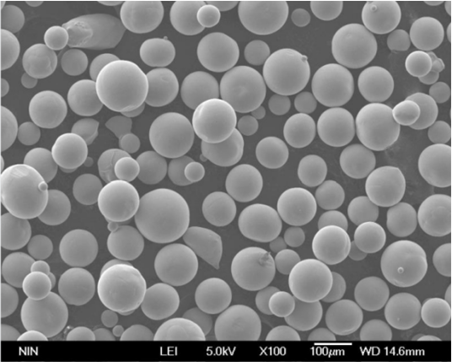
Why this AM powder exists
Turbine and energy hardware often requires geometries that are difficult to cast, machine, or cool efficiently using conventional production routes. Additive manufacturing offers a way to shorten development cycles, consolidate features, and prototype or produce intricate sections, but only if the powder can deliver stable melting behavior and acceptable defect control. IN738LC powder exists at that intersection: a proven turbine alloy adapted to modern AM process chains.
Core characteristics of spherical Inconel 738LC powder
The defining characteristics are 고온 강도, oxidation resistance, hot-corrosion resistance, and relatively high gamma-prime content. The trade-off is that IN738LC is more crack-prone during additive processing than many other commercial nickel alloys, so powder quality, scan strategy, preheat practice, and heat treatment are unusually important.
IN738LC is valued for service at elevated temperatures up to about (980\,^\circ\mathrm{C}), but its composition also makes it challenging to process additively.
Distinguishing IN738LC from 718, 625, and CM247LC
Compared with Inconel 718, IN738LC offers better hot-section capability at the upper end of turbine operating temperatures, but 718 is generally easier to print and qualify. Compared with Inconel 625, IN738LC is materially stronger at temperature because it relies far more on gamma-prime strengthening. Compared with CM247LC, IN738LC occupies a similar high-performance superalloy space, though program-specific choices often turn on cracking behavior, repair strategy, and qualification data rather than on a single property value.
화학 성분
Inconel 738LC nickel alloy powder is compositionally complex by AM standards, and that chemistry is the reason the alloy remains relevant for severe-duty applications. Commercial powder datasheets commonly present it as a nickel-balance alloy with chromium, cobalt, aluminum, titanium, tungsten, molybdenum, tantalum, niobium, carbon, zirconium, and boron in controlled ranges. A representative additive-manufacturing powder datasheet lists approximately 16% Cr, 8.5% Co, 3.5% Al, 3.4% Ti, 2.6% W, 1.7% Mo, 1.7% Ta, 0.9% Nb, 0.1% C, less than 0.08% Zr, and about 0.01% B, with nickel as the balance.
| 요소 | Typical Content (wt%) | Common Range (wt%) | 야금학적 역할 |
|---|---|---|---|
| Ni | 잔액 | 잔액 | Matrix phase; supports high-temperature stability and corrosion resistance |
| Cr | 15.5–16.5 | 15.5–16.5 | Oxidation and hot-corrosion resistance through protective surface scales |
| Co | 8.0–9.0 | 8.0–9.0 | Matrix strengthening and improved hot-strength stability |
| Al | 3.2–3.7 | 3.2–3.7 | Major gamma-prime former; essential for precipitation hardening |
| Ti | 3.2–3.7 | 3.2–3.7 | Gamma-prime former; boosts strength but also raises cracking sensitivity |
| W | 2.4–2.8 | 2.4–2.8 | Solid-solution strengthening and creep resistance |
| Mo | 1.5–1.9 | 1.5–1.9 | Solid-solution strengthening and elevated-temperature performance |
| Ta | 1.5–2.0 | 1.5–2.0 | Strengthening, gamma-prime support, and creep resistance |
| Nb | 0.7–1.1 | 0.7–1.1 | Supplemental strengthening and microstructural control |
| C | 0.08–0.13 | 0.08–0.13 | Carbide formation for grain-boundary strengthening in controlled amounts |
| Zr | 0.03–0.08 | 0.03–0.08 | Grain-boundary strengthening and ductility support in small additions |
| B | 0.005–0.015 | 0.005–0.015 | Grain-boundary cohesion and creep rupture support |
The alloy’s mechanical behavior is heavily tied to the combined aluminum-plus-titanium level, because those elements promote the gamma-prime (\gamma’) phase that makes nickel superalloys strong at temperature. Research on additive IN738LC frequently highlights that high (\gamma’)-forming content is also one reason the alloy is difficult to weld or print without cracking. In other words, the same chemistry that creates turbine performance also narrows the AM process window.
Metallurgical role of gamma-prime formers in Inconel 738LC nickel alloy powder
Aluminum and titanium are not minor tweaks in this alloy; they are central to its identity. Their contribution to gamma-prime precipitation is why IN738LC outperforms lower-strength nickel grades in high-temperature creep and tensile environments, especially after an appropriate solution-and-aging schedule. That benefit comes with processing consequences, because high gamma-prime fractions can increase strain-age and solidification cracking tendencies during AM thermal cycling.
Why impurity control matters in nickel superalloy AM powder
Oxygen, nitrogen, moisture exposure, and unwanted residual contamination can all undermine repeatability in AM powders. The NIST powder metrology work emphasizes that flowability, spreadability, particle size distribution, and related powder attributes directly affect part quality; for crack-sensitive superalloys, these controls matter even more because the process already operates close to metallurgical limits.
Practical chemistry documentation for buyers
For procurement, chemistry should be confirmed through lot-specific certificates rather than generic brochure ranges alone. Serious aerospace or energy users typically want the full elemental analysis, controlled interstitials, and trace residuals because small compositional shifts can move cracking behavior, heat-treatment response, and long-term service stability in opposite directions.
물리적 및 기계적 특성
Property data for IN738LC must always be tied to condition. Cast, heat-treated, laser powder bed fused, electron-beam-built, and HIP-treated material can show meaningfully different tensile ductility, defect tolerance, and fatigue performance. Even so, the alloy is consistently positioned as a nickel superalloy for service up to roughly (900) to (980\,^\circ\mathrm{C}), where oxidation resistance and creep strength are more important than room-temperature ductility.
| 속성 | 일반 값 | 단위 | 시험 기준 / 조건 |
|---|---|---|---|
| 밀도 | 8.1–8.3 | g/cm³ | 실온에서의 일반적인 합금 값 |
| 용융 범위 | 1230–1340 | °C | Typical alloy range from supplier and handbook data |
| Ultimate tensile strength | 1100–1260 | MPa | Typical heat-treated AM or cast-room-temperature range |
| Yield strength (0.2%) | 850–1000 | MPa | Typical room-temperature range, condition dependent |
| 신장 | 8–20 | % | Strongly dependent on porosity, orientation, and heat treatment |
| 경도 | 35–45 | HRC | Typical precipitation-strengthened condition |
| 열 전도성 | 11–15 | W/m-K | Typical room-temperature engineering range |
| 내산화성 | 높음 | qualitative | Relative to many engineering alloys in hot gas paths |
| Recommended service regime | up to about 900–980 | °C | Application dependent, not a universal design limit |
A recent study of selective laser melted IN738LC reported room-temperature mechanical performance around 970 MPa yield strength, 1263 MPa ultimate tensile strength, and 33% elongation for optimized material, illustrating how strong the alloy can be when process control and microstructure are favorable. Those results are not universal production values, but they show why the alloy remains attractive despite its print difficulty.
High-temperature behavior of Inconel 738LC additive manufacturing powder
The reason engineers tolerate the processing difficulty is that IN738LC remains structurally useful at temperatures where many common alloys lose too much strength. Published work and turbine-industry use both emphasize creep resistance, thermal stability, and hot-corrosion performance, making the alloy more appropriate for vanes, blades, and combustor-adjacent structures than for general-purpose brackets or housings.
Strength versus printability trade-off
This is not a nickel alloy chosen for ease of manufacturing. Its performance envelope comes from a chemistry that is intrinsically less weldable and more crack-sensitive than easier AM grades, which is why some development programs rely on preheating, tailored scan strategies, or alternative deposition routes to reach acceptable integrity. In selection terms, 내산화성 and creep capability are the reasons to accept that added process complexity.
Thermal conductivity and design implications
IN738LC is not a high-conductivity alloy in the way copper alloys are; its thermal conductivity remains modest, as is typical for nickel superalloys. Designers therefore choose it for temperature capability and environmental durability, not for rapid heat extraction, which is why it competes more directly with other superalloys than with conductive copper-based AM materials.
사양 및 제공 등급
Commercial Inconel 738LC nickel alloy powder is usually sold by particle size range, morphology, and process intent rather than by one universally harmonized AM material sheet. In practice, buyers qualify it through chemistry, PSD, oxygen content, apparent density, tap density, flow, and sphericity, using internal process controls alongside industry terminology such as the ISO/ASTM 52900 vocabulary standard.
| Supply Grade / Reference | 일반적인 PSD 범위 | 겉보기 밀도 | 탭 밀도 | 홀 흐름 | 산소 함량 | 구형성 | Cross-Reference / Notes |
|---|---|---|---|---|---|---|---|
| IN738LC-LP15 | 15-45 µm | about 4.0–4.3 g/cm³ | about 4.8–5.2 g/cm³ | about 15–18 s/50 g | typically ≤0.03 wt% | 높은 | Fine LPBF grade; similar to commercial AM datasheets |
| IN738LC-LP15/53 | 15-53 µm | about 4.0–4.4 g/cm³ | about 4.9–5.3 g/cm³ | about 15–19 s/50 g | typically ≤0.03 wt% | 높은 | Common PBF-L range for denser recoating and broader machine compatibility |
| IN738LC-DED45 | 45-105 µm | about 4.2–4.6 g/cm³ | about 5.0–5.5 g/cm³ | about 13–18 s/50 g | typically ≤0.03 wt% | 높은 | DED or laser cladding grade where feeder stability matters |
| IN738LC-Coarse53 | 53-150 µm | about 4.3–4.8 g/cm³ | about 5.1–5.6 g/cm³ | about 13–17 s/50 g | typically ≤0.03 wt% | 높은 | Coarser range for broader thermal spray or deposition use |
| PSD methods row | 합의에 따라 | n/a | n/a | n/a | n/a | n/a | Sieve analysis and laser diffraction are both common, depending on cut size |
| Standards row | n/a | ASTM B212 / ISO 3923-1 | supplier method or MPIF logic | ASTM B213 / ISO 4490 | inert-gas fusion by agreement | image analysis | Powder acceptance typically combines generic powder standards with internal specs |
Commercial AM data for 738LC powder often centers on fine spherical cuts such as 15–45 µm, and one supplier datasheet lists typical Hall flow around 16 s/50 g and apparent density around 4.1 g/cm³ for that size range. Those are useful screening values, but they should not replace machine-specific spreadability and printability trials.
Inconel 738LC nickel alloy powder for LPBF versus DED
Fine fractions are generally preferred for laser powder bed fusion because they support thin layers, better packing, and higher geometric resolution. Coarser fractions are more suitable for directed energy deposition, where consistent powder feed and melt-pool capture are more important than ultra-fine surface finish or thin-wall definition. The NIST powder bed fusion overview helps explain why layer behavior and powder delivery are process-specific rather than interchangeable.
Standards logic and cross-reference practice
There is no single globally dominant AMS-style purchase specification used for every additive IN738LC powder lot. Instead, procurement commonly combines generic powder test standards, internal aerospace or turbine quality plans, and customer-approved process windows. That is typical for advanced superalloy powders whose acceptance is driven as much by print behavior as by nominal chemistry.
Lot repeatability and reuse
Powder reuse deserves close scrutiny for this alloy because recycling can shift fines content, oxidation state, and flow behavior, all of which matter for crack-prone nickel AM systems. Published IN738LC work has specifically compared virgin and reused powders, reinforcing that reuse policy should be qualified as part of the manufacturing route rather than treated as a routine housekeeping issue.
제조 프로세스
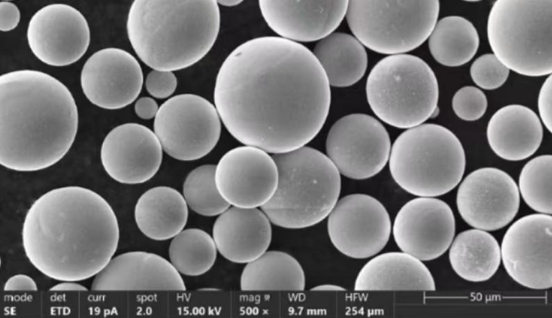
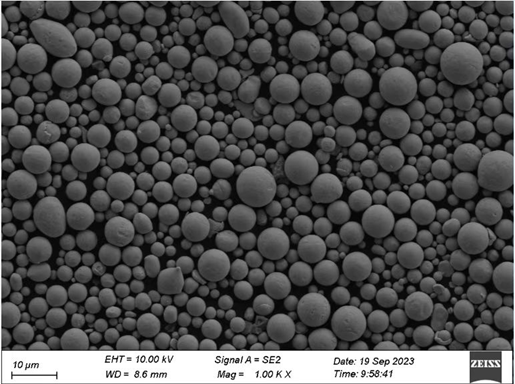
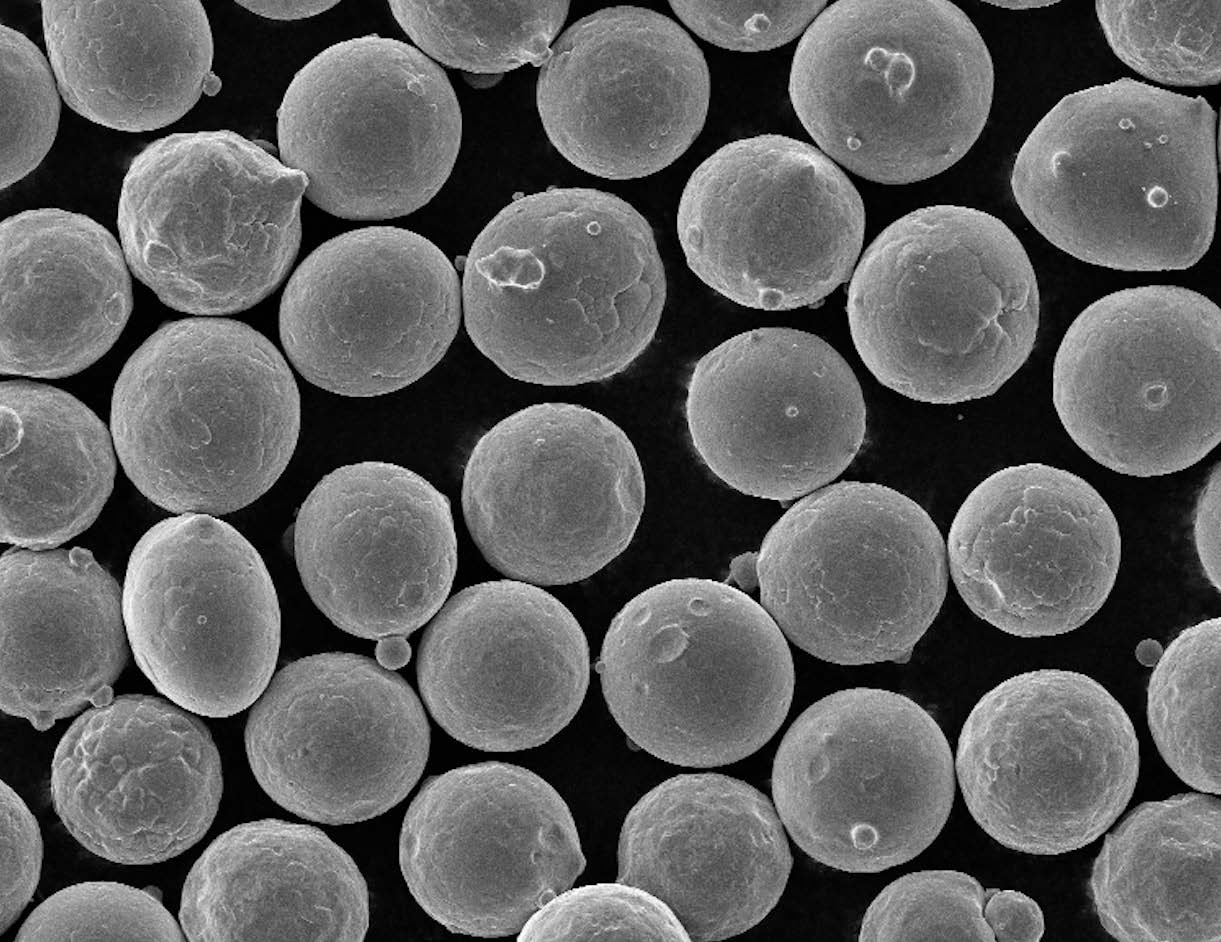
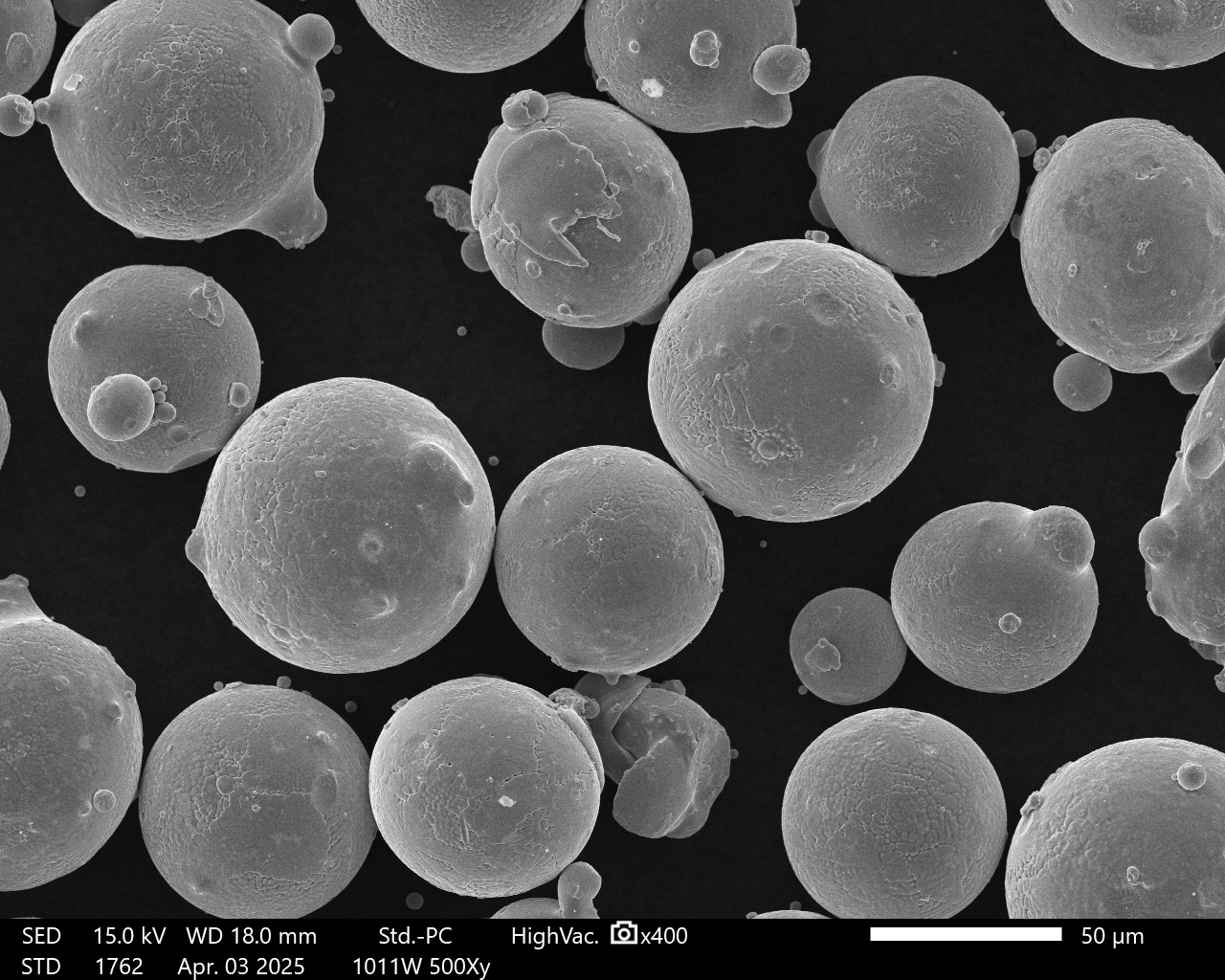
Most Inconel 738LC nickel alloy powder for additive manufacturing is made by inert-gas atomization or vacuum-assisted atomization routes that target spherical morphology and low contamination. That production logic is standard across high-end AM feedstocks because good flowability, consistent PSD, and low oxygen pickup are prerequisites for stable recoating and predictable melting.
| 프로세스 | Feedstock Form | Typical Sphericity | 산소 픽업 | PSD 제어 | 처리량 | 상대적 비용 | Practical Trade-Off |
|---|---|---|---|---|---|---|---|
| 가스 분무(GA) | pre-alloyed melt | 높은 | low to medium | good | 높은 | 중간 | Most common route; good balance of cost and output |
| 진공 유도 가스 분무법 (VIGA) | vacuum-melted alloy | 매우 높음 | 낮음 | very good | 중간 | 중간에서 높음 | Better cleanliness and tighter chemistry control |
| 전극 유도 가스 분무법 (EIGA) | alloy electrode | 매우 높음 | very low | very good | 중간 | 높은 | Reduced crucible contamination risk for premium powders |
| 준비 | rotating alloy electrode | 매우 높음 | very low | good | 낮음 | 매우 높음 | Excellent morphology but lower throughput and higher cost |
| Plasma atomization / specialty refinement | wire or refined feedstock | high to very high | 낮음 | good | low to medium | 높은 | Useful for premium spherical quality, but less common for this alloy |
Gas-atomized Inconel 738LC nickel alloy powder
Gas atomization is the mainstream industrial route because it can make large volumes of spherical powder with acceptable chemistry control and commercial economics. For a demanding alloy like IN738LC, the best gas-atomized powders aim for low satellites, narrow size bands, and minimized oxygen pickup so that the printing process is not made harder than the alloy already is.
VIGA and EIGA for higher cleanliness
Vacuum-assisted atomization routes can improve melt cleanliness and reduce contamination from melting hardware. That matters in superalloys because residual contamination can influence inclusions, fatigue response, and crack initiation, especially when the part is destined for turbine service or other highly stressed thermal environments.
PREP trade-offs for nickel superalloy AM powder
PREP is associated with excellent sphericity and clean powder surfaces, but it is usually a higher-cost route with lower throughput than gas atomization. For IN738LC, it can make sense where premium morphology or specialty qualification justifies the cost, but many users will still select high-quality atomized powder first because the limiting factor is often print cracking rather than marginal differences in powder roundness.
Processability challenges after powder making
Powder quality alone does not solve IN738LC’s AM difficulty. Research and patent literature both show that crack mitigation often requires coordinated control of powder, laser strategy, preheat, support design, and post-processing, which is why the alloy is usually reserved for applications where its service performance clearly outweighs its manufacturing burden.
In sourcing discussions, engineers often compare this alloy not only with a broader 니켈 초합금 분말 제품군 but also with cobalt-based AM powder options when the design emphasis shifts toward wear, hot corrosion, or alternative turbine material strategies.
산업별 적용 사례
IN738LC is not a universal nickel powder; it is a hot-section material. The public technical record consistently ties it to environments where oxidation, creep, hot corrosion, and thermal exposure govern material choice more than easy manufacturability does. That makes turbine-related applications far more typical than consumer, medical, or general industrial uses.
Aerospace and gas-turbine hardware
Aerospace and industrial gas turbines are the clearest fit. Additive work on IN738LC has focused on airfoils, vanes, and other hot-section geometries where established cast-alloy performance is attractive but geometric flexibility, tooling speed, or repair logistics create a reason to print. ASTM publication records also show qualification work on electron-beam-built IN738LC airfoils for gas-turbine evaluation.
Power generation and energy
Land-based turbine hardware for power generation is another natural application area, especially for prototype or low-volume parts where conventional tooling and casting lead times are expensive. Here the alloy’s value comes from high-temperature stability and hot-gas durability rather than from exceptional room-temperature toughness.
Repair, refurbishment, and near-net-shape restoration
Directed energy deposition and related processes can make IN738LC relevant to repair or build-up strategies on high-value turbine parts. That route does not remove the metallurgical challenges, but it can be attractive when localized restoration is more economical than full replacement and when the operating environment demands a true superalloy rather than a lower-performance substitute.
Automotive, medical, and tooling limits
Automotive use exists mainly in niche motorsport or turbo-related heat applications rather than mainstream volume production, because cost and process sensitivity are too high for ordinary components. Medical use is uncommon, since other titanium or cobalt-chromium systems are far more established for implant and surgical applications. Tooling is possible but usually over-specified unless the tool truly sees extreme heat. A broader view of sector fit appears in these metal powder application examples.
Where Inconel 738LC powder makes economic sense
The alloy delivers the strongest return when downtime, temperature capability, or development speed matters more than raw powder price or process convenience. If a part can be made from 718, 625, or a lower-cost iron-based system without sacrificing service life, those routes will usually be easier to qualify and cheaper to run. IN738LC becomes rational only when the service envelope genuinely needs it.
대체 소재와의 비교
Material selection rarely happens in isolation. Engineers evaluating Inconel 738LC nickel alloy powder typically compare it with Inconel 718, Inconel 625, CM247LC-class superalloys, and occasionally cobalt-based hot-service materials, depending on whether the limiting factor is creep strength, oxidation, crack sensitivity, or print maturity.
| 재질 | 밀도(g/cm³) | 고온 강도 | 인쇄 가능성 | Oxidation / Hot Corrosion | 상대적 비용 | Best-Fit Position |
|---|---|---|---|---|---|---|
| Inconel 738LC nickel alloy powder | 8.1–8.3 | 매우 높음 | difficult | very strong | 높은 | Turbine hot-section AM where service temperature dominates |
| 인코넬 718 분말 | about 8.2 | 높은 | good to very good | good | 중간에서 높음 | General aerospace AM, easier qualification, lower crack risk |
| 인코넬 625 분말 | about 8.4 | moderate at high temperature | very good | excellent corrosion, lower creep strength | 중간 | Corrosion-heavy service and easier AM processing |
| CM247LC-type powder | about 8.6–8.8 | 매우 높음 | difficult to very difficult | very strong | 높은 | Extreme superalloy duty with similar AM challenges |
| CoCrMo / cobalt superalloy powder | about 8.3–8.9 | 높은 | 중간 | strong hot corrosion and wear | 높은 | Wear and thermal service where cobalt systems are preferred |
Compared with 718, IN738LC offers a better fit for the upper end of hot-section duty but is harder to print and usually less forgiving in post-build defect tolerance. Compared with 625, it is much more of a true turbine-strength alloy, though 625 remains easier to process and better suited to general corrosion-driven parts. Compared with CM247LC, the two alloys often occupy adjacent design space, with the final choice depending on crack management strategy and established program data more than on a simple brochure ranking.
The alloy also sits in a different selection category from copper-based spherical powders 그리고 iron-based AM feedstocks, because those materials are usually chosen for conductivity, cost, or general structural use rather than for sustained hot-section turbine exposure.
당사
Shanghai Truer Technology Co., Ltd., operating am-printing.com, was established in 2009 and created its additive manufacturing business in 2019. According to its company background and capabilities, the company integrates 3D printing powder-making equipment and powder supply, with technologies that include SEBM equipment, PREP powder-making equipment, and gas atomization; its powder portfolio includes TiNi, TiTa, TiAl, TiNbZr, CoCrMo, and broader nickel-based, cobalt-based, titanium-based, copper-based, aluminum-based, and stainless steel spherical powders for SLM, SEBM, DED, laser cladding, powder metallurgy, MIM, HIP, spraying, welding, and coating across sectors such as medical, aerospace, nuclear power, 3C electronics, hand tools, and remote-control cars.
자주 묻는 질문
Q1. Is Inconel 738LC nickel alloy powder hard to print?
Yes. IN738LC is widely regarded as a difficult AM alloy because its high gamma-prime-forming chemistry increases susceptibility to solidification and liquation cracking during rapid thermal cycling. That is why successful builds often require tightly tuned parameters, preheating, and carefully controlled powder condition.
Q2. What is the difference between Inconel 738LC and Inconel 718 powder?
Inconel 718 is generally easier to print, weld, and qualify, which is why it is one of the most common AM nickel alloys. IN738LC, by contrast, is selected when the part must retain better strength and environmental resistance deeper into turbine-style temperature regimes, even though processing becomes more demanding.
Q3. What particle size is common for Inconel 738LC nickel alloy powder?
For LPBF, a fine spherical cut such as 15–45 µm or 15–53 µm is common. For DED or cladding, coarser fractions such as 45–105 µm are more typical because consistent feeder delivery matters more than thin powder layers.
Q4. Is Inconel 738LC powder used mainly in aerospace?
Aerospace and industrial gas turbines are the most established applications in the public literature. The alloy can also be relevant to stationary power generation, repair strategies, and limited high-temperature industrial components, but it is not usually the first choice for general engineering AM.
Q5. Does powder reuse matter for IN738LC additive manufacturing?
Yes, because reuse can change fines balance, surface condition, and flow behavior, all of which influence print stability and defect formation. For a crack-sensitive alloy like IN738LC, reuse limits should be validated with the same seriousness as scan parameters or heat treatment.
Q6. What should buyers ask for when sourcing Inconel 738LC nickel alloy powder?
They should request full chemistry, oxygen limits, particle size distribution, Hall flow, apparent and tap density, morphology evidence, and condition-specific mechanical data after the intended AM and heat-treatment route. It is also sensible to ask whether the supplier has experience with crack-sensitive turbine superalloys and to define up front whether the powder is meant for LPBF, EBM, DED, repair, or qualification trials; technical inquiries can be directed through the supplier’s 엔지니어링 문의 페이지.
Learn more:
- DS – Ni – forAM 738LC VG – 3292HOG.indd
- 인코넬
- Analysis of Data Streams for Qualification and Certification of Inconel 738LC Airfoils Processed through Electron Beam Melting
- Investigation of Microstructure and Mechanical Performance of IN738LC Superalloy Thin Wall Produced by Pulsed Plasma Arc Additive Manufacturing
- Additive Manufacturing Powder Metrology Laboratory | NIST
- Microstructural evolution and high-temperature strengthening mechanisms of the IN 738LC superalloy prepared by selective laser melting – DOAJ
- WO2019207518A1 – Powder composition for additive manufacturing – Google Patents